Wednesday, February 26, 2020

Glendale homeless shelter is open for business


https://bloximages.chicago2.vip.townnews.com/qchron.com/content/tncms/assets/v3/editorial/7/d9/7d93faf5-649d-5a1a-ab35-cd8341c6622a/5e4e87ee1e652.image.jpg?resize=750%2C500

Queens Chronicle

 It’s open.

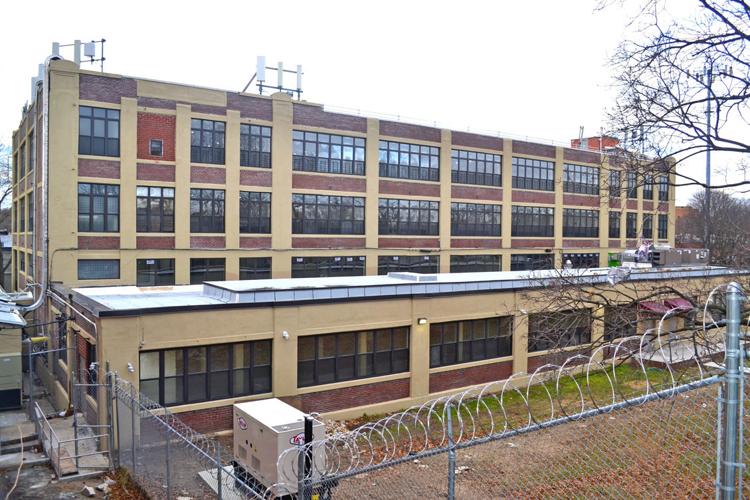
After community residents voiced concern and anger repeatedly over the project, which was on-again and off-again for several years, the homeless shelter for 200 single men at 78-16 Cooper Ave. in Glendale has started receiving residents.

“Today, we proudly open our doors at the Cooper Rapid Rehousing Center, the first and only transitional housing facility in the Maspeth community, which is now providing high-quality shelter and dedicated employment services to single adult men experiencing homelessness as they work hard to restabilize their lives,” a Department of Homeless Services spokesperson said in an email Friday.

A Manhattan Supreme Court judge last week threw out a lawsuit filed by shelter opponents who said the city bypassed environmental reviews required for the project.
But Councilman Bob Holden (D-Middle Village), a longtime critic of the shelter, said his office was told last Friday that eight men had moved in “despite no contract yet signed nor the property having a certificate of occupancy.”

According to the lawmaker, his chief of staff spoke with the deputy commissioner of DHS and was told the men were moved in without a contract because City Comptroller Scott Stringer had given the green light and the contract was “ready to go.”

Holden said the Comptroller’s Office said that no contract had been registered or signed and that what DHS was doing wasn’t approved by the Comptroller’s Office.

A spokesperson for the Comptroller’s Office told the Chronicle that the office “had no communication with DHS before they moved people in and no contract has been submitted to our office.”

Holden asked Department of Buildings Commissioner Melanie La Rocca and her staff why the property was granted a temporary certificate of occupancy, “considering there is an ongoing audit of the plans and permits, with 14 challenges, two of which are safety issues. The DOB claims that they did their due diligence in granting the temporary certificate of occupancy and will continue the audit.”

A spokesperson from the DOB said safety issues from the audit were resolved on Feb. 12. On the same day, the applicants received a temporary certificate of occupancy after it was determined that the building was safe to occupy.

Holden said challenges filed by the Glendale-Middle Village Coalition would likely have delayed the shelter from opening for six to 12 months, which is why the DHS opted for placement using the temporary certificate of occupancy. The coalition filed objections on various grounds, including zoning and fire code. The next step for the coalition is the Board of Standards and Appeals.

“This is the DHS’s disgraceful attempt at circumventing the legal process that is currently underway from the Glendale community,” Holden said.

“No contract has yet been signed, and there are still legal actions on DOB grounds. This fight is not over, despite the DHS acting as a rogue agency and usurping laws, regulations and process.”

The DHS did not immediately respond for comment.

State Sen. Joe Addabbo Jr. (D-Howard Beach) spoke at different protests against the shelter. He found out about the opening from Glendale residents, not city officials.

“It’s been, I guess, a trademark, really, for this administration not to incorporate the community or the electeds,” he told the Chronicle Monday.

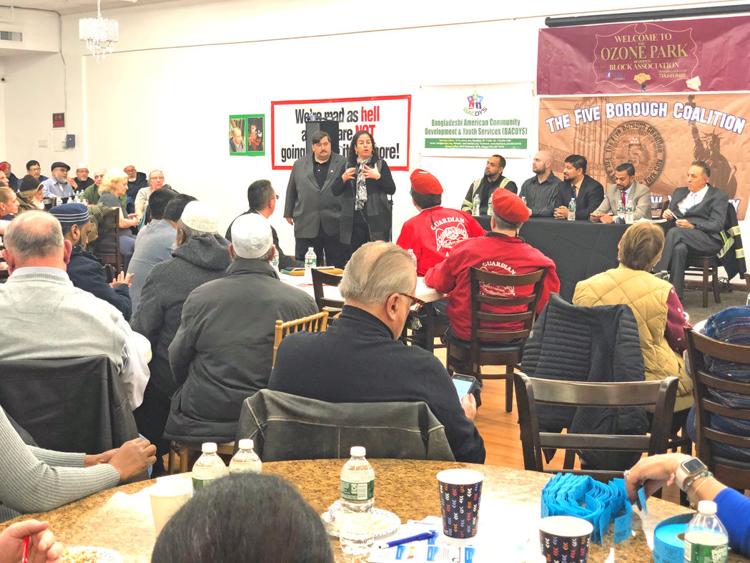
Ozone Park residents want state troopers to help bring down crime


https://bloximages.chicago2.vip.townnews.com/qchron.com/content/tncms/assets/v3/editorial/9/23/9237365c-d137-54e6-93df-f02ed07b3c33/5e4e8010c6f3b.image.jpg?resize=750%2C563


Queens Chronicle

 State lawmakers are asking Gov. Cuomo to assign state troopers to an area of Ozone Park that has been the scene of several brutal street crimes in recent months.

The precincts that cover the area known as Cityline in the western part of Ozone Park are “spread too thin,” said Assemblyman Mike Miller (D-Woodhaven). “We wanted to get as much help as we can.”

Miller, Assemblywoman Stacey Pheffer Amato (D-Rockaway Park) and Assemblyman Eric Dilan (D-Brooklyn) made the request last Friday.

State police are already a presence in the city at state-owned bridges and tunnels and on some roadways. But stationing troopers in neighborhoods would be new in New York City.

Last year, at the request of Nassau County Executive Laura Curran, troopers were dispatched to the Village of Hempstead on Long Island to aid the local police with a growing gang violence problem.

The appeal for police help is the latest development to come out of community uproar over a rising tide of crime on the western edge of Ozone Park and on the other side of the Brooklyn border in Cypress Hills.

The area, whose residents are largely Bangladeshi, lies at the junction of three different precincts — the 106th, 102nd and 75th — and is therefore overlooked by regular police patrols, local leaders contend.

“It’s a unique area,” said Pfeffer Amato.

Tuesday, February 25, 2020

Judgement pay means death for NYC small businesses


It’s been six months since Gov. Andrew Cuomo signed a law barring the practice of making small businesses sign away legal rights in exchange for high-interest, high-risk cash advances.

But that change doesn’t apply to New Yorkers.


The so-called confessions of judgment are illegal — but only for lenders located out of state. The law, passed after a Bloomberg News expose, was aimed at ending a flood of nonpayment cases clogging county courts.


A review by THE CITY of state court records found that small businesses in New York are continuing to sign papers with in-state lenders that leave them defenseless if they struggle to make payments amid interest rates hitting as high as 200%.


The court records show confessions of judgment being used to collect debts from everything from local restaurants to nail salons to a nightclub to an accounting firm, among other small businesses. Cab drivers who borrowed to buy their own taxi medallions have been hit hard by the judgments, too, as highlighted in a New York Times series.


On Feb. 11, a Midtown food hall outpost of the Chinese street food mini-chain Mr. Bing and its owner, Brian Goldberg, were sued in state Supreme Court by Lower Manhattan-based Capital Advance Services after accepting a $25,000 cash advance less than a month earlier, court records show.


To take the money — at a 25% interest rate — Goldberg signed a confession of judgment, a statement that admitted failure to honor the debt. That meant if he could not make his daily payments of $465.63, the lender had the right to collect the advanced sum in full.

Capital Advance Services is demanding $30,731 plus interest.


“We’re trying our best to deal with it. I can’t say anything more,” Goldberg told THE CITY when reached by phone.


Capital Advance Services did not respond to a request for comment.


Goldberg’s legal battle follows the shuttering of another Manhattan foodie magnet, City Bakery, just days after a cash advance company obtained a judgment against its owner — who also signed away his right to defend himself in court.


“The biggest loser, unfortunately, in this legislation are New Yorkers,” said Shane Heskin, an attorney who works with small-business borrowers ensnared by high-interest cash advances.

Bushwick bike spite racks

"Hi I saw your post about the spite racks and wanted you to know that Ridgewood is not alone.
I took these pics early Sunday morning (before 8am) along Irving Ave in Bushwick. It's the same story - the bike racks were installed last year and they didn't bother to put bikes in them. And judging by the lack of bikes all these months later, there isn't much of a market here as none have migrated over from racks in other neighborhoods." - anonymous

Monday, February 24, 2020

City Council's tunnel visions for the BQE


  https://external-content.duckduckgo.com/iu/?u=https%3A%2F%2Fthenypost.files.wordpress.com%2F2018%2F09%2F180920-bqe-wealthy-residents.jpg%3Fquality%3D90%26strip%3Dall%26w%3D618%26h%3D410%26crop%3D1&f=1&nofb=1


NY Daily News/MSN

 New York City officials on Monday pitched an $11 billion tunnel to keep cars off a crumbling stretch of the Brooklyn-Queens Expressway.

A consulting firm hired by the City Council last year floated the tunnel idea as an alternative to the city Department of Transportation’s previous plan to fix the dilapidated road, which would have cost $4 billion to repair and to build a temporary highway above the beloved Brooklyn Heights Promenade during construction.

The tunnel would stretch 3 miles from the Gowanus Expressway where it meets the Prospect 

Expressway to the BQE’s south Williamsburg trench near Bedford Ave. It’s modeled after similar projects in other U.S. cities, such as Boston’s 1.5-mile “Big Dig” tunnel that ended up costing the city $22 billion.

The Council’s consultant also recommended another $3.2 billion idea pitched by architecture firm Bjarke Ingels Group last year to build a park atop a new capped six-lane highway adjacent to the promenade.

Council Speaker Corey Johnson called the rebuilding of the highway a “once-in-a-lifetime opportunity,” but declined to endorse either pitch.

If the city goes with the tunnel option, it would cost more than the estimated $7.2 billion price tag for the first two phases of the Second Ave. subway, which hopes to extend the Q line to East Harlem over the next decade.

The tunnel, which the consultant said would take seven to 10 years to construct, would cost about 35% more. The MTA expects the first two phases of the Second Ave. subway will draw an additional 290,000 daily riders, while the Council’s consultant said the proposed tunnel would be used by some 153,000 vehicles a day.

The BQE tunnel idea was met with skepticism by other Council members, who questioned the city’s ability to build large-scale projects.

“We haven’t been able to build anything on this scale since the ’60s,” said Councilman Joseph Borelli (R-S.I.). “I am less concerned about the price tag than I am over whether a future mayor will have the intestinal fortitude to see it through.”

The DOT is in the middle of an environmental review process for all of the proposals to fix the BQE that is expected to drag on for at least another year.


Mayor de Blasio is utilizing a shady app to avoid keeping records of his communications

NY Daily News

Mayor de Blasio has joined the 21st century — and found a way to hide his communications.

Hizzoner joined encrypted messaging app Signal over the weekend. The tech lets users send disappearing messages to one another and protects the content with encryption.

So if the mayor wanted to discuss something controversial with an aide or campaign contributor, all he’d have to do is time his messages to disappear after a few minutes and the public would never know.

De Blasio’s use of the app poses legal and ethical problems, said Alex Camarda, a senior policy adviser for good government group Reinvent Albany.

“We don’t think that any elected official should be using an app that does not preserve communications that are subject to the Freedom of Information Law and the records archiving laws,” he said.


Under state law, “any information kept, held, filed, produced or reproduced by, with or for an agency ... in any physical form whatsoever” is subject to FOIL requests requiring agencies including the mayor’s office to turn over the info.

“We don’t see how it’s possible to use that kind of app and be in compliance with those laws,” Camarda said of Signal.

This is SOP for our secretive and above all laws mayor. I tend to think he's been pulling this craven stunt for years during his daily Park Slope Y workout routine.

Sunday, February 23, 2020

Immigrants have been very very good for NYC


https://thenypost.files.wordpress.com/2020/02/statue-of-liberty.jpg?quality=90&strip=all&w=915

NY Post

Immigrants love New York — they always have.
 
And they are having the greatest economic effect here, out of all the states, according to a new report.
The WalletHub study compared the economic impact of foreign-born populations on the 50 states and the District of Columbia. It used 23 indicators to determine which states benefit the most — and least — from immigration.
 
New York was No. 1 because “foreign-born population is almost 23 percent, second-highest in the country, and more than 12 percent of its households are made up of second-generation immigrants,” the report said, adding, “The percentage of income generated by immigrant households is over 25 percent, the highest in the nation.”
 
WalletHub analyst Jill Gonzalez attributed New York’s immigrant bounty to a number of factors.
 
“Some of the reasons immigrants have the highest economic impact in New York include the third-largest share of foreign-born workforce, over 27 percent, and the second-largest share of foreign-born business owners, over 25 percent,” she said. “The state also has the second-largest share of active physicians who are international medical graduates, 37 percent.”
 
In addition, New York has a large number of international students and enjoys the “brain gain” and innovation brought by immigrants.
 

Liz Crowley and generational nepotism infects faculty staffing at a public school

https://thenypost.files.wordpress.com/2020/02/031213budget18jm.jpg?quality=90&strip=all&w=904 
NY Post


The sister and nephew of Liz Crowley, an ex-city councilwoman running for Queens borough president, are getting special treatment as teachers in a city middle school, a whistleblower charges.

The politician’s sister, Patricia Crowley, returned to IS 5 the Walter Crowley School — named for their late councilman uncle — after a higher-paying Department of Education assignment to land an easy gig supervising kids in a detention room, insiders told The Post.
In what one staffer called “cronyism,” Patricia’s son, Eugene Cullivan, a day-to-day substitute, was filling in for an art teacher on leave. But when that teacher returned in November, Principal Kelly Nepogoda let Cullivan keep the class full-time instead of returning it to the licensed specialist.
“This is not just about favoritism. It’s about hurting students,” a veteran DOE teacher said. “The art students are subjected to a substitute when an experienced, licensed teacher is available.”
The veteran called it “preferential treatment” for the politically-connected duo. The Crowley sisters’ cousin is Joe Crowley, the longtime congressman and former Queens Democratic Party boss defeated in 2018 by primary challenger Alexandria Ocasio-Cortez.
Patricia Crowley declined to discuss the arrangement. Nepogoda did not return a call or answer an email. Liz Crowley did not return calls. A special election for borough president is set for March 24.
Patricia Crowley, 50, is licensed to teach children in pre-K to 6th grade, and special education. She taught 6th grade science at IS 5 before taking a special, two-year DOE assignment as a “peer evaluator” in other schools, making $141,300 last school year.
Since returning to IS 5 in September, her salary reverted to $121,862,  the DOE said. She doesn’t teach a class, but supervises the SAVE, or in-house suspension, room. Typically five to 10 students at a time come from various classes with work assigned by their regular teachers.
A SAVE teacher may help kids with questions, but no lesson planning or grading is required. It’s considered an easy, less stressful job.
Crowley could be teaching a regular class, or helping reduce class size, the DOE veteran said: “Her services should be utilized helping students with the greatest need, instead of being put in a practically phantom job.”
Her son Cullivan, 27, was subbing for an art teacher on medical leave when the school year started, Nepogoda granted his request to keep the class after the art teacher returned on Nov. 22.  Nepogoda assigned the art teacher a class of students scheduled for music, replacing a music teacher she had removed for alleged misconduct. The school is now without a music teacher.


Flushing middle school children are contemplating thoughts of suicide

https://thenypost.files.wordpress.com/2020/02/jhs.jpg?quality=90&strip=all&w=915NY Post

Kids aren’t talking about soccer or English class in the halls of JHS 189 in Flushing.

They’re talking about killing themselves.

Sixty students have expressed suicidal thoughts in the past year, Principal Magdalen Radovich told a recent gathering of nearly two dozen elected officials and community leaders. The Department of Education claimed Radovich “misquoted” the figure but refused to give The Post any data.
None of the children made good on their threats, and parents were called in each case. But shocked local lawmakers are calling it a crisis.

“If 60 kids on the Upper East Side talked about suicide, Mayor de Blasio would be there interjecting himself,” Assemblyman Ron Kim fumed of Hizzoner, whose wife, Chirlane McCray, has made mental health her signature cause.

“Sixty … is a staggering number, but even one is too many,” said City Councilman Peter Koo, who attended the Feb. 7 legislative breakfast at the school along with Kim and Flushing Chamber of Commerce’s John Choe.

Just the mention of the 60 cases — about 8% of Daniel Carter Beard School’s roughly 740 sixth-, seventh- and eighth-graders — sucked the oxygen out of the room, the men said.

The movers and shakers had even been scheduled to tour the school but ran out of time because they peppered the principal with so many questions about the suicide talk.
 
“It is shocking to me that central DOE has not yet communicated this data with us,” Kim said. “How could DOE have dropped the ball in addressing these issues?”
Radovich brought up the figure after she asked for the group’s buy-in for a mental health and wellness center on campus.

“She was trying to make the point that she had never seen anything like this in her years of being an educator,” Kim said.

Kim also wants a deeper discussion of what is behind the scary talk. He and Choe, the Chamber’s executive director, contend the crisis doesn’t stem from peer pressure or group think, but from Flushing’s lack of affordable housing and skyrocketing commercial rents.

De Blasio kicks meeting attendee out for exercising First Amendment right

For those who don't have facebook and are viewing this on other browsers besides Chrome. Here's the whole hearing. Where our mayor shows contempt and gives condescending responses to every other citizen who had the mike. Start it at the 25 minute mark to save time. JQ LLC

Ridgewood bike spite racks

"Last fall, Citibike expanded into Ridgewood.
I walked around Ridgewood this weekend and was struck at how few bikes were in the newish CitiBike racks in the hood.
At first glance, it looks like the program is quite popular in the neighborhood as there's hardly a bike to be found.
But upon further discussion with neighbors, the truth came out. "They put the racks in last year but never stocked them with bikes." "They took away parking spots for this but didn't supply any bikes." "Why did they do this? Anyone here who wants to ride a bike already owns one."

And there you have it. Anything to make life more inconvenient for drivers, eh Polly?" - Anonymous


This post by New York Gentrification Watch (which focused on Citibike's expansion into yet to gentrified mostly Black neighborhoods in Brooklyn, they do still exist) last summer predicted and now confirms this spiteful disservice to the citizens of Ridgewood. This should qualify as a land use issue.- JQ LLC

 Last week on Curbed, via the NY Daily News, it was reported that a nonprofit, New York Communities for Change, commissioned a study to look at how well Citi Bike was serving NYC residents. Conducted by the Urban Politics and Research Governance Group and called “Bridging the Boroughs,” it came to the totally shocking, unseen and far out of left field conclusion that Citi Bike is being used exclusively by a young white affluent demographic

 Initially, my reaction to the Bridging the Boroughs study was, “No DUH. Of course.” But a few minutes into reading about it, alarm bells immediately started going off. Here’s why:

That Citi Bike is exclusively catering to a demographic that doesn’t include the poor and people of color shouldn’t have been a surprise to anybody. It’s so obvious that I can’t even believe people would waste time creating a study based around this very obvious fact. After all, this is who that service is for–tech-oriented, upper middle class white millennial-age transplants who have the money and the time to waste on what’s essentially a luxury.

Why is Citi Bike a luxury? Because no one needs it to commute by bike in NYC. They just…well, don’t. Wanna commute? No problem. Go to a bike store, a Sears, a Target, a local NYC bargain basement, Craigslist or a thrift shop. Pick any one of a number of bikes available. Take it home. Then take it out whenever you need to go somewhere. If you don’t have the space to store a bike, then get a folding bike.

Easy peasy, right? That’s what I did. That’s what hundreds of thousands of people around NYC did and continue to do. Did we need a Citi Bike to start bike commuting? No.

 But you see, here’s the thing–some people don’t want to get into bike commuting the “easy peasy” way. For one, to go out and buy a mass-produced bike like any Tom, Dick or Harry would make you like everyone else. If you’re a privileged snot from a particular demographic, you can’t do that because you’re not like everyone else. Your bike has to be niche. It has to come in a unique design and color and be associated with something distinctive that sets it apart from the bikes that everyone else is using.

Furthermore, it’s simply too mundane, “lo-tech” and old-fashioned to grab a mass-market bike and roll it out the door like every other human being. Gadgetry must be involved, as well as a highfalutin way of acquiring and using said bike. This is so your ride acquires a level of sophistication and coolness that makes you superior to the dumb, older, unsophisticated masses who aren’t smart or cool enough to use a bike that requires a smartphone. If you have to spend more money than necessary on a service to get this experience, all the better. That only makes it worth paying more money for, because this turns it into a luxury that most can’t afford.

It was people like this for whom Citi Bike was created, people who have the disposable income–and the waste of time–to use a system in which they have to jump through hoops to commute by bike. Urban planners, Big Development and their political cronies know this. It’s why Citi Bike was rolled out in the first place. Contrary to everyone’s assertions that it was about making bike riding more accessible to New Yorkers, Citi Bike seems to me to have been a cynical strategy to alert certain affluent demographics on the west coast and perhaps in Europe that NYC was now “up to their standards” and worth moving to.

Saturday, February 22, 2020

REBNY bought their man for Queens

https://thenypost.files.wordpress.com/2020/02/donovan-richards-queens-01.jpg?quality=90&strip=all&w=618&h=410&crop=1NY Post


The powerful Real Estate Board of New York is throwing its muscle behind Councilman Donovan Richards to become Queens’ next borough president — and is helping to fundraise for the Far Rockaway Democrat, The Post has learned.

“We firmly believe Council Member Donovan Richards would best serve in this role,” wrote REBNY president James Whelan in an email that was sent to the organization’s board last week and obtained by The Post.

Whelan pointed to Richards support for rezonings and for controversial public-private partnerships to pay for rehabbing decrepit public housing developments as reasons for backing him.

“We can’t expect to see eye-to-eye with every elected official on every issue,” he added. “We can expect, and should support, those candidates who are willing to have direct, honest conversations about ways we can work together to move the City forward — and we believe Donovan is that candidate.”

Whelan’s Feb. 14 email called for REBNY’s deep-pocketed members to contribute to Richards’ campaign and included an invite to a Feb. 19 fundraiser organized by Queens real estate broker Eric Benaim.

They got theirs...


Friday, February 21, 2020

5 Pointz hits the jackpot, judge rules against Wolkoff


5Pointz in January 2013. Photo courtesy of Ezmosis via Wikimedia Commons.

Artnet
 
In a sweeping 32-page decision eviscerating the legal arguments of a disgruntled Queens real estate developer, a US Appeals Court affirmed the rights and monetary damages awarded to a group of graffiti artists whose works were destroyed without warning or consent in 2013.

The artists sued the developer, Gerald Wolkoff, in 2013 for violating their rights after he whitewashed their work at the famous 5Pointz graffiti art mecca in New York to make way for condos. A jury ruled in favor of the artists in November 2017, but it was up to a judge to determine the extent of the damages.

In February 2018, Brooklyn Supreme Court judge Frederick Block awarded the artists a total $6.75 million in a landmark decision. The sum included $150,000—the maximum legal penalty—for each of the 45 destroyed works at the center of the case.

The trial was a key test of the Visual Artists Rights Act (VARA), which grants visual artists certain “moral rights” for their work. Previous VARA cases rarely made it to trial, and were instead settled privately.

But the act, which was added to copyright laws in 1990, disallows the modification of works in ways that could be considered harmful to artists’ reputations, and grants protections to artworks deemed to be of “recognized stature.”

In his appeal, Wolkoff challenged practically every aspect of the decision by Judge Block, from the amount of the award, to the suggestion that the graffiti murals at 5Pointz merited protection under the “recognized stature” clause.

But Wolkoff was rebuffed on all points in the latest ruling, and the court took the additionally extraordinary step of citing his own lawyers against him. “Wolkoff’s own expert acknowledged that temporary artwork can achieve recognized stature,” according to the decision.

The ruling also took Wolkoff to task for making misrepresentations about how his business would have been harmed if he did not move to immediately whitewash the works. In his arguments, Wolkoff claimed that certain tax credits available to him would have expired if he did not move quickly to paint over the works.

Yet he did not even have a demolition permit for the building when he began his campaign to cover up the murals.

Congratulations 5 Pointz, you all earned every penny from this disingenuous arrogant jerk.

Andrew Cuomo is mad that President Trump is ruining his congestion pricing plan


https://thenypost.files.wordpress.com/2020/02/congestion-39.jpg?quality=90&strip=all&w=915US-NYC-FEATURE

NY Post
 
Gov. Andrew Cuomo on Thursday claimed that President Donald Trump is holding “hostage” plans to pay for key subway upgrades through congestion pricing as retaliation for New York’s refusal to grant federal immigration authorities access to driver’s license records.

“Will they hold congestion pricing hostage? Yes,” Cuomo told reporters at an unrelated press conference. “That’s how they do business.”

“It doesn’t happen without the federal government’s approval and right now, they’re not approving it,” he said.

The comments came in response to reports in the Wall Street Journal and Politico that the Trump administration has refused to say for months whether the tolling program can move forward without a full environmental review.

MTA officials have said congestion pricing will pay for $15 billion of the agency’s $51.5 billion plan for needed subway and commuter rail improvements.

State officials hoped to have the tolls in place by the start of 2021, but federal environmental reviews typically take two years or more to complete.

Well, maybe the state can come up with the funding if Cuomo would stop jerking off and finally legalize pot, that way taxes accrued from the sales can pay for improving the subway and highways instead of extracting it from car owners and occupational drivers wallets.

When fences make bad neighbors

Well folks, Gothamist has done it again. The blog that hates anything associated with perceived outer borough "whiteness" recently featured in an article the story of a loving Asian family who bought a home in Broadway-Flushing and wanted to erect a fence "to protect their kids" but was being thwarted by the big bad white homeowners association. Except that is not the case at all. Paul Graziano, urban planner, put together this rebuttal which also serves as a great Queens history lesson and a guide to others with, or seeking to buy, property in a deed restricted neighborhood. I'll also add that the homeowner in the Gothamist article has owned his home for 17 years and therefore must have been well aware of what he could and could not do with it. If not, then shame on him. Happy reading!

Gothamist Response RE Broadway Flushing Deed Restrictions February 21st 2020 by queenscrapper on Scribd


Gothamist Response RE Broadway-Flushing Deed Restrictions - Addendum - February 21st 2020 by queenscrapper on Scribd

Thursday, February 20, 2020

Worker crushed to death at development site in Jamaica


CBS NY

 One construction worker is dead and another injured after a construction collapse in Queens Thursday.

Firefighters rushed to the site on 94th Avenue in Jamaica to try and save the workers after a wall collapsed at the site.

The Department of Buildings say it permitted demolition to take place at the the existing three story building where the collapse took place.

The DOB has issued a partial stop-work order at a neighboring lot, but that didn’t prevent Thursday’s demolition.

Wednesday, February 19, 2020

CB7 tells future lower income tenants of Flushing Creek towers, let them have buckets


Very Oniony hoax article concerning greenpoint pipeline

Citibike rolls out new fleet of illegal ebikes


NY Daily News

Citi Bike riders are about to get a boost.


The bike-sharing company will roll out a new line of e-bikes Wednesday, 10 months after its entire fleet of electric two-wheelers was pulled from service after a braking issue catapulted several riders over the handlebars and sent them to the hospital.


The new e-bikes, which give riders a little extra pickup when they pedal, were designed specifically for New York City, said Citi Bike spokesman Cory Epstein. Unlike the old models, they have a motor on the back wheel, instead of the front, and have drum brakes that do not lock up.

Citi Bike’s old e-bikes had “roller brakes” that did not have power modulators, skirting the brake manufacturer’s specifications.

 The new rides appear to be safer. During a test ride Tuesday, a Daily News reporter slammed an e-bike’s front brake at top speed. The bike came to a comfortable stop instead of throwing its rider to kingdom come.

As I documented for at least a year on social media with #EbikesAreMotorcycles, the safety issue isn't just with these bikes but the people that use them 

Tuesday, February 18, 2020

Violent anti-violence activist earned more city money than the mayor last year


NY Daily News


An embattled anti-violence advocate accused of threatening a neighbor with a Bloods gang attack was paid a whopping $282,990 salary using city money, documents reveal.
Shanduke McPhatter’s astonishing earnings for fiscal year 2019 exceeded Mayor de Blasio’s salary of $258,541.

City Hall ordered McPhatter to reduce his salary following an audit by the Mayor’s Office of 

Criminal Justice. McPhatter’s paycheck was slashed to $157,828 in July, a mayoral spokeswoman confirmed.

The advocate’s nonprofit, Gangtas Making Astronomical Community Changes, has a $2.3 million deal for a wide array of services in 2020 to reduce violence behind bars and on the streets. 
Documents and tax records indicate the vast majority of the group’s funding comes from the city. A 

 City Hall spokesman confirmed the entirety of McPhatter’s salary was paid by the city. The vast majority of G-MACC’s funding comes through city contracts, documents show.

“Many millions of taxpayer dollars are allocated to community based organizations across the city and the integrity of the process is paramount,” said Councilman Joe Borelli (R-Staten Island). “I hope the city can come together with us in the Council to ensure this doesn’t happen in the future.”

McPhatter’s group, commonly known as G-MACC, has partnered with the city since 2014 on anti-violence initiatives. Its members have led conflict mediation at Rikers Island and juvenile detention facilities. G-MACC also ran a program called “Mackin’ to Be Elite” through the Education Department.

City Hall credits G-MACC for no shootings in a roughly six-block stretch of East Flatbush between May 2019 and January 2020 .

McPhatter’s salary steadily increased as G-MACC expanded its partnership with city agencies including the Department of Correction, Administration for Children’s Services and Mayor’s Office of Criminal Justice. He earned $85,000 in 2016 as the group’s CEO, according to filings with the Comptroller’s Office. That figure jumped to $115,585 in 2017 then $134,196 the following year before ballooning to $282,990, tax records show.

Landmarks Preservation Commission has spent over $60,000,000 on new office space that's still not done


THE CITY

It took nine months and $8 million to build a two-story library near Van Cortlandt Park in The Bronx last year.

Meanwhile, a project to repair office space and construct a hearing room for the city Landmarks Preservation Commission’s new home has ballooned to an estimated $62 million — and the completion date has been delayed four years.

The budgeted cost has jumped by $33 million since 2016 due to structural problems discovered inside the historic Postal Telegraph Building in Lower Manhattan, according to records from the city’s Department of Design and Construction (DDC).

The expected bill dwarfs the commission’s $7.2 million annual operating budget.

“DDC has to get better with rolling with scope changes,” said Jonathan Bowles, executive director of the nonprofit Center for an Urban Future.

Near the end of Mike Bloomberg’s mayoral tenure, the commission asked for additional space, noting its staff had grown 35% “to meet demand for the increasing number of permit applications.”

The Landmarks Commission’s move — from the Municipal Building at 1 Centre St. into six floors at the landmarked 253 Broadway, near Murray Street  — was approved by the city’s budget office and the department that oversees office space.

The expanded office space and modern hearing room inside the city-owned building initially was expected to be ready by December 2017, records show. But the project is currently 39% complete and is now set to be finished in Spring 2021, according to DDC.

“A lot of additional work was added since the project was created,” said Ian Michaels, a DDC spokesperson, noting some of the repairs were tied to unavoidable safety measures.

Engineers discovered a leaky roof, asbestos and damaged terra-cotta ceilings, he said. They also cited needs to remove abandoned wiring, repair water damage from old leaks, restore sidewalk vaults and install a new central exhaust line for bathrooms to get up to code.

The issues have led to 119 so-called “work change” orders so far, Michaels said.

Mayor Robert F. Wagner created the Landmarks Preservation Commission in 1965 to protect historic and architecturally significant structures. The agency, comprised of a panel of 11 commissioners supported by a staff of 84, receives around 14,000 applications a year from property owners seeking to make changes to their landmark buildings.

Mayor de Blasio and NYC's First Lady will only pay less than $9,000 in property taxes for their two homes next year


Patch

 A sneak peek at Mayor Bill de Blasio's anticipated property taxes next year has hizzoner's online critics wondering: "How is it that @NYCMayor only pays $4493.33 on a $1.76 Million dollar Park Slope home, when other NY'ers are taxed through the roof?" 

Twitter user @odonnell_r posed this question along with a photo of de Blasio's and his wife Chirlane McCray's notice of property tax for their 11th Street property. The Jan. 15 notice and the amount has been confirmed by Patch through public Department of Finance record


But it doesn't tell the whole story — a twisty tale of multiple homes and New York City's antiquated tax system that many, including the mayor himself, have criticized as unfair and due for change.

For one, it's not de Blasio's and McCray's only high-dollar Park Slope property on 11th Street — they own a $1.88 million home also with an estimated $4,493.33 in upcoming taxes.
That's about $9,000 in expected taxes on just shy of $4 million worth of property, for the math-averse.

The homes' taxes at that time about $3,600 each, according to records.

So when the mayor received notices dated Jan. 15, 2020 about his expected upcoming property taxes he actually learned his taxes would go up.


Several Twitter users expressed surprise at de Blasio's taxes.

"I pay 4900 for my home in Staten Island , it's worth is about 550,000. How does he do it," wrote @Joeyjoe15090312.

"I pay double that on an attached house in queens. Doubled since this fool took office. This has to change and fast," wrote @Onivasa316.

Saturday, February 15, 2020

Judge orders circumcision on luxury tower development


New York Times

 In an extraordinary ruling, a State Supreme Court judge has ordered the developers of a nearly completed 668-foot condo tower on the Upper West Side to remove as many as 20 or more floors from the top of the building.

The decision is a major victory for community groups who opposed the project on the grounds that the developers used a zoning loophole to create the tallest building on the West Side north of 61st Street. A lawyer representing the project said the developers would appeal the decision.

Justice W. Franc Perry ordered on Thursday that the Department of Buildings revoke the building permit for the tower at 200 Amsterdam Avenue near West 69th Street and remove all floors that exceed the zoning limit. Exactly how many floors might need to be deconstructed has yet to be determined, but under one interpretation of the law, the building might have to remove 20 floors or more from the 52-story tower to conform to the regulation.

“We’re elated,” said Olive Freud, the president of the Committee for Environmentally Sound Development, one of the community groups that brought the suit.

“The developers knew that they were building at their own peril,” said Richard D. Emery, a lawyer representing the community groups that challenged the project before the foundation was even completed. Mr. Emery said this decision sent a warning to other developers who proceed with construction in spite of pending litigation.

The question at the heart of the suit was whether the developers had abused zoning rules to justify the project’s size.

It is common for developers to purchase the unused development rights of adjacent buildings to add height and bulk to their project. But in this case opponents of the project argued that the developers, SJP Properties and Mitsui Fudosan America, created a “gerrymandered,” highly unusual 39-sided zoning lot to take advantage of the development rights from a number of tenuously connected lots. Without this technique, the tower might have been little more than 20 stories tall, instead of the nearly finished 52-story tower that now stands.

The decision also sets an important precedent, said Elizabeth Goldstein, the president of the Municipal Art Society of New York, one of the advocacy groups that brought the suit against the project.

“The way this zoning lot was constructed has been invalidated, and that is extremely important,” Ms. Goldstein said, adding that the decision would deter other developers from attempting similar strategies.

Scott Mollen, a lawyer with the firm Herrick, Feinstein, which is representing the project, said the ruling contradicted earlier decisions from the Department of Buildings and the Board of Standards and Appeals that were based on a long-established zoning interpretation. SJP, one of the developers, said they would “appeal this decision vigorously.”

Felony crimes made big jumps this year in the "Safest Big City", especially in the "World's Borough"


New York City experienced its worst January for serious crime in five years, according to NYPD data set for release Tuesday and expected to show an ongoing spike that department officials attribute to the state's new bail reform law.


The latest Compstat data through Feb. 2, shows that total overall serious felonies — such as homicide, burglary, robbery and auto theft — are up 16.4% over the same period in 2019. The increase is 6% when compared to 2015, the data shows.


After years of steady declines in crime, the city has seen double digit increases in burglaries, grand larcenies and auto theft — the latter up 70% over 2019 — since Jan. 1. Robberies and felonious assaults saw single digit increases. A positive trend within the data shows homicides down nearly 20% since the same period last year and a decrease in rapes by 18%, according to the latest data.

 In January, serious felonies citywide continued to rise throughout the month. NYPD Commissioner Dermot Shea is scheduled to talk about the overall upward trend Tuesday during his monthly crime briefing. He is again expected to call on the legislature in Albany to tinker with the bail law, which took effect Jan. 1. The new law eliminates bail for most nonviolent crimes.

Ridgewood Post

Crime across the city and in the borough of Queens jumped significantly in the first month of 2020 — which top NYPD brass attributes to bail reform.


Major crimes spiked 20 percent in the first 26 days of the year in Patrol Borough Queens North — which includes Long Island City, Sunnyside, Astoria, Jackson Heights, Ridgewood, Forest Hills and Flushing — as compared to the same period in 2019.


There were 758 serious crimes from Jan. 1 through Jan. 26, 2020 in Queens North; up from 629 during the same period in 2019, according to NYPD data.
Major crimes climbed 31 percent for the same 26-day period from the year prior in Patrol Borough 

Queens South — which includes the Rockaways, Jamaica, Queens Village and south. There were 712 crimes committed from Jan. 1 through Jan. 26, 2020; up from 543 in 2019, according to NYPD data.

Queens Chronicle

 
Days before a new civilian patrol was set to begin in the neighborhood, a 60-year-old man was robbed and severely beaten in broad daylight in the Cityline section of Ozone Park that borders on Brooklyn.

Graphic photos of the victim, Shahab Uddin, bleeding profusely from the face, posted on Facebook sparked residents to call an emergency meeting of the Ozone Park Residents Block Association this week to deal with what they are characterizing as a neighborhood “crime wave.”


“The brutality of this crime really got to me,” Sam Esposito, head of the OPRBA and a former police officer, told the Chronicle.


Uddin was walking home from Liberty Avenue on 76th Street at around 11 a.m. Sunday when he was attacked from behind by a lone assailant who beat him and stole his cell phone and wallet, his family said.


He has been hospitalized since then, unconscious with severe facial wounds and bruises, according to Esposito.


It is the second time in three months someone in the largely Bangladeshi community near the border with Brooklyn has been badly beaten in an unprovoked attack.


In November, a man on his way to work was set upon by a group of young men at the elevated A-train station at Liberty Avenue and 80th Street, a few blocks from the site of Sunday’s assault.


That attack spawned a neighborhood rally that drew several hundred people to protest what was called poor police coverage in a crime-prone section of Ozone Park.


Crime has “been going up over the last 18 months and we knew it,” said Esposito.


The most recent crime stats seem to bear him out.


In January, when crime citywide rose sharply, the 106th Precinct — which covers Ozone Park and Howard Beach — saw robberies jump 58 percent over last year. Felonious assaults were up 57 percent.

Although the bail reform laws are a major factor in this precipitous rise in crime, the New Bad Days have been here for quite some time.


Queens, Bronx and Manhattan civic groups continue their battles against borough tower prisons


Patch

  A group of homeowners in Kew Gardens, Forest Hills and Briarwood is planning to sue the city in a last-ditch effort to stop a new jail from going up in their neighborhood and get the mayor's office to return to the drawing board.

The group, which calls itself the Community Preservation Coalition, is preparing to file an Article 78 lawsuit over the city's decision to approve building a new jail in Kew Gardens, part of a $9 billion plan to replace the detention facilities on Rikers Island with a new jail in every borough except Staten Island by 2026.

Article 78 refers to a civil law that empowers New Yorkers to challenge decisions made by public agencies or officials on the grounds that it was unlawful, arbitrary or capricious.

"We really want them to do a meaningful review," Kew Gardens Civic Association President Dominick Pistone told Patch in an interview. "We don't think they've fulfilled their obligations under the City Charter."

The New York City Charter lays out a series of design and funding details that officials must include for a capital project to be approved by the mayor. 

Members of Queens Community Board 9, which voted unanimously against the Kew Gardens jail plan last year, previously accused the mayor's office of failing to meet those requirements in a Sept. 27 letter to the City Council. 

The Kew Gardens Civic Association, which is helping spearhead the legal effort, sent a letter to homeowners Wednesday soliciting contributions to fund the lawsuit, pitching it as "an investment in preserving your home," according to a copy obtained by Patch.

NY Post

A group of South Bronx residents is suing the city in a bid to block a new jail from coming to their neighborhood as part of Mayor Bill de Blasio’s larger efforts to shutter the Rikers Island prison complex.

The suit, filed Tuesday in Bronx Supreme Court on behalf of the Diego Beekman Mutual Housing Association and other parties, seeks to halt construction on a 19-story, 886-bed jail planned for the site of the NYPD’s tow pound in Mott Haven — a neighborhood located in the nation’s poorest congressional district.

It alleges the de Blasio administration and City Council broke the law by snubbing alternative sites for the jail, failed to reveal the true environmental impact of the project to residents and snubbed the entire public-review process.

“The Mayor and Council Speaker broke the law and rigged the process to saddle a low-income community of color with a jail, plain and simple,” said Arline Parks, CEO of Diego Beekman Mutual Housing Association, which represents 5,000 residents in 38 buildings.

NY Daily News

 The city’s plan to construct a jail in Chinatown routinely neglected community input, including 
Native Americans concerned about the possibility of large amounts of human remains in the area of the planned facility, a lawsuit set to be filed Friday claims.


The suit, which will be filed by Neighbors United Below Canal and American Indian Community House, claims the city’s plan will cause “irreparable damage to indigenous lands” and that the city failed to adequately reach out to neighborhood organizations and affected residents.


“The work and outreach that’s gone into this lawsuit is work the city should have been doing in the first place," said Jan Lee, who runs Neighbors United Below Canal. “It’s a robust case because we did meaningful outreach to our neighbors and came to realize just how deeply negligent the mayor’s plan was from the very beginning.”


The suit, which was shared with the Daily News, also alleges the city violated its own land use procedure, in which the City Council must approve projects before they can be built, by changing the proposed location of the Manhattan facility from 80 Centre St. to 124-125 White St. at the last minute. The White St. location is where the borough’s current jail , known as “The Tombs,” stands.


“Although the community was not pleased with the initial proposal to build a new jail structure at 80 Centre Street, the change of location was even worse,” a draft of the lawsuit reads, noting that the new plan puts the jail near residences, small retailers and a senior center.


The city also identified that there is a “moderate to high” possibility of Native American remains at the site of the proposed Chinatown jail, but still failed to reach out to the indigenous community, neighborhood advocate Christopher Marte told the Daily News.

Man looks forward to city contract to build more tiny houses under de Blasio's latest plan to build "affordable" housing


Entrepreneur Tom Saat built a teeny, tiny house in Queens.


“It has a stand-up shower, compost toilet, full-size refrigerator and a second-story high enough to stand in,” said Saat, a 57-year-old Turkish immigrant who worked on his 300-square-foot home in Astoria before moving it to a Long Island City industrial warehouse last year.


“It took my family more than a year to build,” he said. “I have a construction background and watched a lot of YouTube videos. God bless the internet.”


Tom Saat sits atop the roof of tiny house he built. Photo: Courtesy of the Saat family

Saat, who runs a business as a general contractor, is among those excited about the de Blasio administration’s bid to boost affordable housing by easing restrictions on backyard dwellings and basement apartments. The mayor revealed the proposal last week ahead of his State of the City address at the American Museum of Natural History.


“People should be allowed to put tiny houses in their backyard — or someone else’s backyard with their permission,” said Saat, who actually lives in Lower Manhattan. “And there should be lots assigned for tiny-house owners.”


Saat’s eight-foot-wide, 23.5-foot long house on wheels, with an electronic, retractable second floor, cost roughly $50,000 to build. He and his family eventually moved it out of an industrial warehouse in Long Island City on Thanksgiving Day last year and headed to a more affordable lot upstate in Stormville, N.Y.


Saat conceded that his little home, while cozy, does not comply with city building codes in its current state: The 6.5-foot second-story ceiling does not meet the required minimum clearance, for instance, and the bathroom uses removable plastic bags for waste.


“Number one goes into a separate container which can include a small chlorine tablet inside for keeping it clean, germ- and odor-free,” he said. “Number two goes into the plastic bag area and sawdust, or other natural dust made from coconut shell, is used to cover number two each time it is used. Once or twice a month, this bag is replaced.”


If the city were to ease restrictions, Saat said, he would consider offering classes on building tiny homes in the boroughs. He had planned to offer classes in Queens before heading north.


De Blasio administration officials predict at least 10,000 additional units, including newly approved basement apartments and tiny backyard homes, could be added to the city within the next 10 years under the proposed changes, which the City Council must approve.

I think it's necessary to also post the conclusion of this article, which throws this ridiculous (and gross idea) into the growing dung heap of de Blasio's housing policies:

Other architects, however, remained a bit skeptical.


Lorena del Río, an assistant professor of architecture at The Cooper Union who has worked on affordable housing in Madrid, said, “It’s not going to resolve the bigger problem. Affordable housing should have even higher standards in terms of design so that people don’t end up living in a closet.”


The solution to the city’s housing crunch, she suggested, involved more alliances between the public and private sectors — and the “political will” to regulate housing prices.


“That is the future of affordable housing,” she said. “Not tiny houses.”

 Not only should people not end up living in a closet, but people shouldn't end up shitting in plastic bags every day.