Showing posts with label population. Show all posts

Friday, March 31, 2023

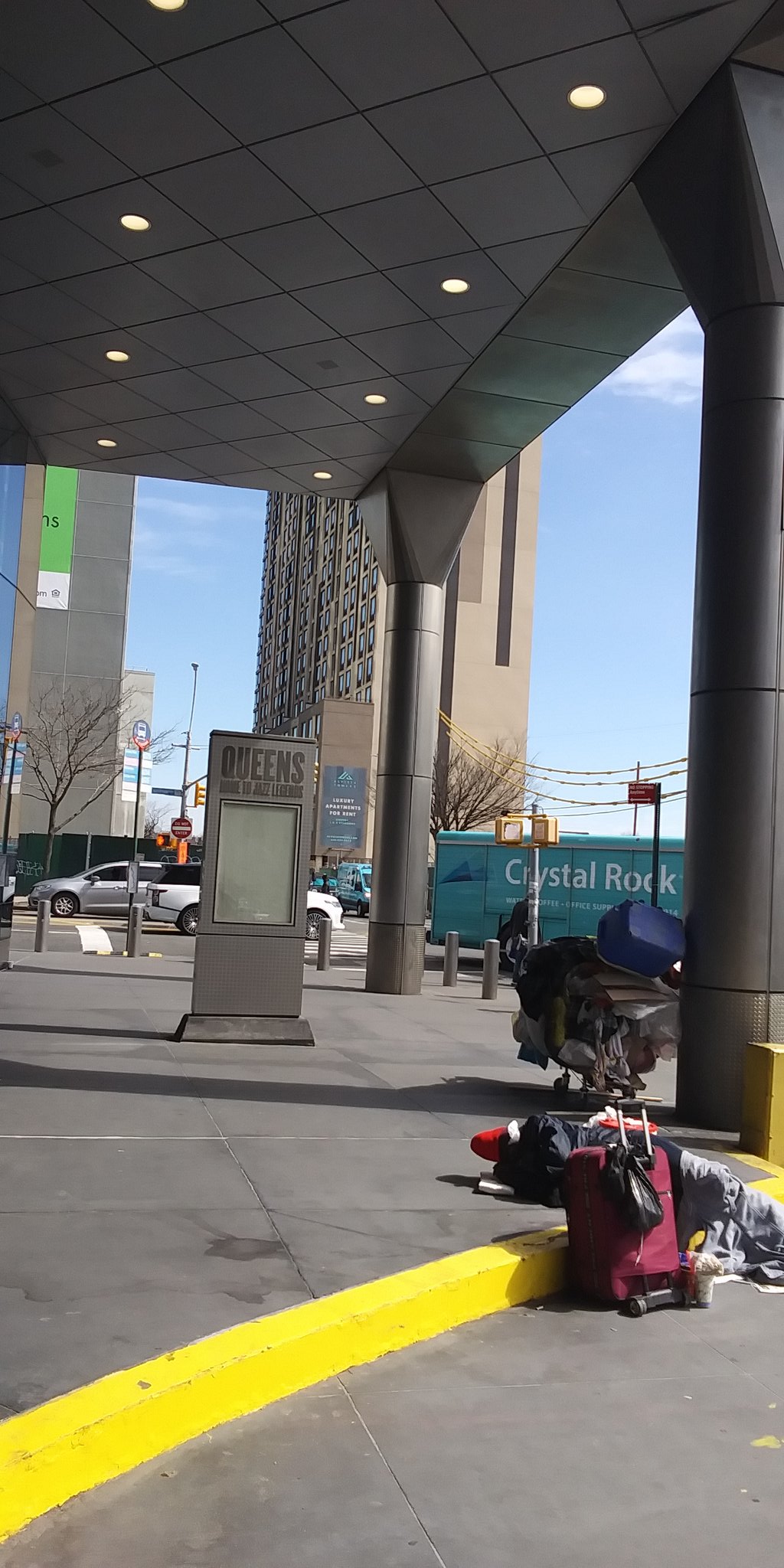
Queens winning in losing residents

Image 

NY Post

New York City is becoming the shriveled Apple.

Three of Gotham’s five boroughs saw some of the largest population declines in America last fiscal year, with only Manhattan bucking the post-COVID trend, according to US Census data released Thursday.

The population of Queens County plummeted by 50,112 residents in the 12 months ending July 1, 2022 — the third largest raw drop of any county in the US, behind only Los Angeles County (90,704) and Chicago’s Cook County (68,314).

Right behind Queens on the list of declines was Kings County (Brooklyn), which lost 46,970 residents over the same period, and Bronx County, where the population dropped by 41,143 residents.

Richmond County — also known as Staten Island — saw its population drop by just 2,351 residents over the same one-year period.

By contrast, Manhattan — which lost nearly 100,000 residents in 2021 — was the only borough that reversed its decline, with the population increasing by 17,472 residents in fiscal year 2022.

The increase is largely down to foreign and domestic migration.


Sunday, February 23, 2020

Immigrants have been very very good for NYC


https://thenypost.files.wordpress.com/2020/02/statue-of-liberty.jpg?quality=90&strip=all&w=915

NY Post

Immigrants love New York — they always have.
 
And they are having the greatest economic effect here, out of all the states, according to a new report.
The WalletHub study compared the economic impact of foreign-born populations on the 50 states and the District of Columbia. It used 23 indicators to determine which states benefit the most — and least — from immigration.
 
New York was No. 1 because “foreign-born population is almost 23 percent, second-highest in the country, and more than 12 percent of its households are made up of second-generation immigrants,” the report said, adding, “The percentage of income generated by immigrant households is over 25 percent, the highest in the nation.”
 
WalletHub analyst Jill Gonzalez attributed New York’s immigrant bounty to a number of factors.
 
“Some of the reasons immigrants have the highest economic impact in New York include the third-largest share of foreign-born workforce, over 27 percent, and the second-largest share of foreign-born business owners, over 25 percent,” she said. “The state also has the second-largest share of active physicians who are international medical graduates, 37 percent.”
 
In addition, New York has a large number of international students and enjoys the “brain gain” and innovation brought by immigrants.
 

Wednesday, January 1, 2020

Getting the hell out of Dodge

From the NY Post:

Despite the nation’s longest economic expansion, the Empire State is actually losing population, an analysis of US Census data released Monday reveals.

The total state population as of mid-2019 was 19,453,561 — a drop of 76,790, or 0.4 percent, from the previous year, according to the study by the Empire Center for Public Policy.

...the high cost of living may be catching up with the Big Apple region, historically a magnet for newcomers that offset population losses in economically struggling upstate.

New York’s population has been stagnant over the past decade, with a modest 75,459 increase in residents since 2010, a growth rate of just 0.4 percent, ranking 46th-lowest out of 50 states.

Stagnant growth has real consequences.

The state will likely lose at least one and possibly two congressional seats — and political clout — after the next official decennial census count because of its failure to grow compared to other states.

New York, continuing a decades-long trend, was a net exporter of residents to other states — with 180,649 more residents moving out than moving in from other states over the previous 12 months.

Friday, December 22, 2017

NY is really good at making people leave

From the Daily News:

New York over the past year continued to lose more residents to other states than it gained — even as the overall population grew slightly thanks to a continued influx of immigrants, Census data shows.

During the 12-month period ending July 1, the state lost a net 190,508 residents to other states, according to the data. That pushed the net outmigration to over 1 million people since 2010 — the largest of any state, according to a review by the Empire Center, a fiscal watchdog group.

The net loss since 2010 is actually less than the net migration outflow of nearly 1.6 million during the comparable period of 2000-07, the Empire Center’s E.J. McMahon said in the review.

“The stories continue to be a lack of economic opportunity upstate ... and downstate it’s just cost,” McMahon said. “The city and downstate can’t hold people because there’s not enough affordable living.”

Thursday, December 22, 2016

NYS population went down this year

From NY1:

Fewer people are living in New York State, although it may not be that noticeable.

According to the latest census figures, New York saw its population drop by about 1,900 between July 2015 and July 2016.

While that's only a decrease of .01 percent, it's the first time the state's population has fallen since 2006.

More than 191,000 people in total left the state during the year ending on July 1.

That number was offset by the fact that New York led the country in foreign immigration and had more births than deaths.

New York has also lost nearly 850,000 people over the past six years, the most of any state.

Wednesday, November 2, 2016

We simply must overdevelop the hell out of NYC

From the Daily News:

Relentless growth fueled by immigration, people arriving from other parts of the country and more residents simply staying put will push an already swelling population past the 9 million mark in the decade beginning 2030.

The growth rate — similar to the average increase of 75,054 between 2010 and 2015 — is forcing city leaders and policy experts to confront how to house, transport, and school another half million people.

The population, which was at 8.55 million last year, is projected to reach 9.03 million by 2040 at the latest.

For Manhattan, Queens, and Staten Island, the highest level of growth is projected to be in the 2010-2020 period, with growth slowing thereafter.

Mayor de Blasio, who spoke at a Crain’s New York Business breakfast on preparations for the population surge Tuesday, says the city will need to be taller, denser, and conquer neighborhood fears that development will force locals out.

“It’s true there are types of development that can exacerbate inequality and reduce inclusion. There’s also types of development that can increase inclusion, that can open up opportunity. And we have to have a good and clear conversation about what the difference is,” he said.


Hey remember when Mayor Bloomberg created PlaNYC 2030 because we were supposed to hit the 9M mark by then? Oh well, what's 10 more years?

Allowing bigger density incentivizes developers to buy up currently affordable housing and replace it with new, unaffordable housing. I'm not sure why we are still pretending that we don't get that fact.

Thursday, March 24, 2016

NY1's dumb population analysis

From NY1':

The five boroughs added more than 55,211 people in the year that ended last July 1, bringing the city’s population to more than 8,550,000, according to an estimate released Thursday by the U.S. Census Bureau.

It's the first time in history that more than 8.5 million people have called the city home.

“It shows that we're a place that people want to be, want to come, want to stay, want to grow a family,” says Carl Weisbrod, chairman of the city’s Planning Commission.

The city's population has been on the upswing for some time. With the new numbers released Thursday, the city has grown by more than 375,000 people in just the last five years, an increase of 4.5% -- or more than the entire population of Pittsburgh.

For several years, Brooklyn led the five boroughs in population growth, but that changed last year.

According to the Census Bureau, Queens added the most number of people last year 16,700. Brooklyn was a close second, at 16,015, followed by the Bronx (13,687), Manhattan (7,552) and Staten Island (1,257).

The growth will inevitably put new strains on the city's infrastructure. But it's a relatively good problem to have, as the five boroughs continue to be the place where people want to live.


This is a good problem to have? It means taxes go up for everyone with infrastructure problems outpacing upgrades. Overcrowded schools, trains, roads. Busted sewers. What great problems to have!

Saturday, January 16, 2016

Traffic not Uber's fault

From the Daily News:

New York’s traffic troubles aren’t Uber’s fault.

Instead, Mayor de Blasio's long-awaited $2 million congestion study puts the blame on deliveries, construction and New Yorkers themselves.

“Population and job growth, increased construction activity, growth in the number of deliveries, and record levels of tourism have all contributed to the reductions in vehicle speeds,” the report on Uber and the growing for-hire vehicle industry found.

The popularity of car service apps like Uber was only a “contributor to overall congestion,” not a driver of heavy traffic in the city’s central business district, the report said.

De Blasio’s long-awaited traffic congestion study put the blame on “population and job growth, increased construction activity, growth in the number of deliveries, and record levels of tourism.”
The study also found that the total number of miles traveled by all vehicles in the city stayed flat between 2014 and 2015 — so trips in Uber and Lyft appear to be making up the decline in yellow taxi pick ups.

The conclusions in the report fly in the face of Mayor de Blasio's suggestion last summer that Uber’s explosive growth was slowing down traffic in Manhattan.

Friday, October 30, 2015

Projects produce lots of trash

From Crains:

The true population served by the New York City Housing Authority has always been hard to pin down because the customary tally of more than 620,000 people overlooks multitudes who have been welcomed into legal residents' units but aren’t named on a lease or otherwise listed in authority records. But indisputable evidence of their existence is collected each week by the city’s Department of Sanitation. In trucks.

The waste-collection data suggest the Housing Authority's actual ranks are at least 100,000 larger than the official number.

Last Friday, NYCHA Chair Shola Olatoye was speaking at an annual summit hosted by the Municipal Art Society when she mentioned Department of Sanitation Commissioner Kathryn Garcia and the informal, rubbish-based census.

“She can tell [our population] based on our tonnage,” Olatoye said.

Specifically, the authority estimates that the city’s Strongest collect 380 million pounds of refuse each year from NYCHA developments. If the average New Yorker each piles 756 pounds of trash into garbage trucks annually, as data from the latest Mayor’s Management Report indicates, then accordingly about 502,600 people are living in NYCHA projects.

Monday, October 5, 2015

City enters Supreme Court fight re: voting district lines

From the Daily News:

The de Blasio administration has joined a Supreme Court fight that could change the way voting districts are carved up to exclude residents like immigrants and felons from the population count, the Daily News has learned.

If successful, Evenwel vs. Abbott would dramatically change the political landscape in immigrant-rich communities like New York, because it would draw districts to include only eligible voters.

Immigrants, felons who have lost the right to vote and children would be excluded.

In court papers filed last week, the city’s Law Department said rewriting the rules would punish New York City for its diverse population.

It would “effectively wipe millions of individual residents and entire families off the map, rendering those residents and their unique needs invisible to our local democracy,” the brief read.

The brief argues that the city’s use of total population in apportioning districts “conforms with fundamental tenets of representational democracy.”

It ensures that “all residents are entitled to equal representation, a principle of particular importance given the nation’s historic commitment to diversity, inclusion and robust civic involvement and debate,” the brief adds.

Zachary Carter, head of the city Law Department, said that counting everyone in an electoral district is important because all residents use city services, not just those eligible to vote.

Friday, March 27, 2015

Lots of people jumping ship

From AM-NY:

The New York-New Jersey-Pennsylvania metro area added 90,797 people between July 2013 and 2014, the third biggest gain in the U.S. But the New York metro area was unable to make the top 20 list of fastest-growing urban areas.

People nonetheless are still flocking to the city, but mainly from outside the U.S. International migration accounted for 85,438 new residents in a 12-month period ending June 2014, compared with 82,022 from July 2010 and 2011. Queens, long known as the most diverse borough, attracted the most people from other countries last year, with 27,072 people.

Domestically, however, more people moved out of the city than moved here over the past three years. Including people who moved to another borough, between 2013 and 2014:

Brooklyn lost 32,731 people, compared with 14,908 people between 2010 and 2011
Manhattan lost 21,582 people, compared with 3,620 in the 12-month period ending June 2011.
Queens lost 25,836 people, compared with 17,093 in 2011.
Bronx lost 17,199 people, compared with 18,237 in 2011.
Staten Island lost 2,044 people, compared with 2,099 in 2011.

Sunday, May 18, 2014

Overdevelopment strains subway infrastructure

From the NY Times:

The math problem of the New York City subway system is no secret, its remainders spilling onto the platforms where luckless travelers watch full trains come and go.

In the last 20 years, daily ridership has increased by some two million, to roughly 5.5 million, with little change in the system’s capacity.

Amid this surge, perhaps no train has been tested like the L line, facing down the dual strains of rapidly growing Brooklyn neighborhoods and a transit map devoid of many viable options nearby.

The authority said this week that it would add 33 round trips on the L on Saturdays and 22 on Sundays beginning this fall, helping to relieve persistent overcrowding and shaving about a minute off the average wait time. Three weekday evening trips will also be added.

Transit officials had already planned to add eight weekday and eight weekend round trips next month. In 2012, the authority added 16 trips on each weekday for the L, 11 on Saturdays and seven on Sundays.

Yet as the neighborhoods have grown, gentrifying one eastbound stop at a time, even these service changes have struggled to keep pace. On Thursday morning, at the Morgan Avenue station, Marisol Santiago and her home attendant, Germania Dmeza, could not board a train around 8:30 a.m. and just watched the young faces roll by.

When a second train came, Ms. Santiago muscled in, but could not carve enough space for them both. The doors closed.

“This is normal at this hour,” said Ms. Dmeza, her charge shuttling toward Manhattan alone.

According to agency data, ridership on the L increased at every station last year. At Bedford Avenue, weekday ridership has grown by more than 50 percent since 2007. Much of the increase has come during off-peak hours.

Saturday, April 19, 2014

Why Asians love Bayside

From NY1:

On Bell Boulevard, there are signs that the demographics in Bayside are changing. Whites still account for the majority of the residents, but census numbers show that the Asian population has tripled in the last two decades.

In 1990, the number of Asians living here was a little more than 5,000. Today, it's around 15,000, according to census estimates.

There are 10,000 Chinese and Korean residents here, and while their population is on the rise, the number of white residents are declining, according to Census estimates from 2008 to 2012. There were 30,000 white residents in 1990. Today, 21,000 live here. Many are not only leaving the neighborhood, but the city as well.

"Cause it's so expensive," said one resident. "It's crazy here. My day will come."

So what's the draw for many Asians? Most say it's the neighborhood's high-performing school district and the after-school programs in the area.

The other part is the beautiful homes and quiet tree-lined streets.

Thursday, April 17, 2014

The pros and cons of gentrification in Astoria

From NY1:

There has always been a mix of cultures in Astoria, but an influx of new residents is changing the face of the neighborhood once again. NY1's Ruschell Boone filed the following report.

If you've been to Astoria lately, you may have noticed that a lot has changed here. People no longer call it a Greek area. Many ethnic groups have carved out a section for themselves. It's known as diverse neighborhood, but census numbers show that whites are moving here in larger numbers than any other group.

The government says that while the overall population declined between 2000 and 2012, the percentage of white residents increased from 45 percent to 51 percent. Latinos make up 28 percent, Asians 14 percent and blacks 5 percent. The population is 75,000.

So what's the attraction? Well, many said it's got a small town vibe in a big city. It's also a quick train ride to Manhattan, and the real estate prices here are a lot cheaper than in that borough.

However, there's also a downside, according to some people. The new residents have increased the demand for newer housing, parking spaces, restaurants, stores and other amenities.

"Then, you see all the Starbucks and all the Victoria Secrets and all the big box stores," said one person. "That's the part that we don't like."

Saturday, April 5, 2014

How many more people can we absorb?

From the Queens Chronicle:

Queens County is growing, and the population of the borough is nearing an all-time high of 2.3 million, Census figures estimated last week.

Nearly halfway through the decade, the U.S. Census Bureau estimated the borough’s population as 2,296,175, an increase of 2.9 percent from 2010, or about 65,000 people. That makes the borough larger than every city in the country except New York, Los Angeles and Chicago and more populous than 15 states.

Queens is still not as large as Brooklyn, which topped 2.5 million and was the fastest-growing borough so far this decade. Both boroughs grew by just under 1 percent in 2013 alone, and were the second and third fastest-growing counties in the state.

Queens is still the 10th most-populated county in the nation, though it may soon be surpassed by the faster-growing and geographically much larger Riverside County, Calif.

The results of the 2010 Census, which claimed the borough had only grown by a mere 1,343 people since 2000, baffled many who pointed to the spur in development and demand for real estate, especially in Western Queens and Flushing, over the previous decade as a sign the population of Queens had to have grown by a larger number. Most notable was that Astoria lost a significant number of residents according to the 2010 Census, a claim officials found questionable at the time as the neighborhood has attracted new immigrants and residents from elsewhere in the country during the past decade.

Periodic updates since the 2010 Census have shown the population of the borough growing far more rapidly. Queens grew by about 40,000 people between 2010 and 2012 and another 25,000 since.

Thursday, June 13, 2013

Columbia pushes for lots more development

From the Wall Street Journal:

In the coming decades, New York could confront a problem many cities would love to have: too many people and nowhere to put them.

The city is expected to add one million more residents by 2040, but there likely won't be room for hundreds of thousands of them unless a small city of new housing is built, according to a report by a Columbia University think tank.

The most logical location for all this new housing: the city's waterfront neighborhoods, including Long Island City and Willets Point in Queens, Red Hook in Brooklyn and the Financial District, according to the report by the Center for Urban Real Estate at Columbia University.

Whether residents want more apartments in their neighborhoods remains to be seen. In places such as Williamsburg where Bloomberg administration rezonings brought new residents, the result has been subway cars so packed that commuters wait for several trains to pass, lengthy kindergarten wait lists and promised parks that have yet to be delivered. The city has also yet to master the art of making tightly packed blocks of new glass towers feel like neighborhoods, rather than sterile enclaves.

Finding places for new people in the city isn't as simple as putting development in less-dense neighborhoods. More than a quarter of the city's housing is in single-family structures, meaning there's still plenty of room to go up to accommodate more people.

But in many of those areas prices aren't high enough to justify the cost of building new 40-story towers. It's unclear, for example, whether there's enough demand for the 10,000 to 15,000 units the report said could be accommodated along Queens Boulevard, a 12-lane thoroughfare through the heart of the borough.

That much of the development would be along the waterfront raises serious questions after superstorm Sandy, when residents in Lower Manhattan, Long Island City and Red Hook were out of their homes for weeks or months.

Thursday, March 7, 2013

Homeless numbers hit new high

From the Daily News:

The number of homeless people recorded in city shelters each night has topped 50,000 for the first time, a new report has found.

An average of 50,135 people — including 21,034 children — slept in shelters each night in January, the Coalition for the Homeless said.

The report released Monday said there are now more homeless people in the city than at any time since the Great Depression.


From AM-NY:

A report released Tuesday found there were more than 50,000 New Yorkers living in shelters a night in January but the city's Department of Homeless Services say there's more to the numbers than meets the eye.

The Coalition for the Homeless' annual report found that the population residing in city shelters increased 61% since Mayor Michael Bloomberg took office in 2002 and blamed the increase on his policies.

DHS Commissioner Seth Diamond remarked that the findings in the coalition's State of the Homeless report don't tell the whole story because there are fewer families entering shelters this year and finding homes for them doesn't happen overnight.

Tuesday, April 10, 2012

5 lbs of sausage in a 1 lb bag!

From the Daily News:

Recent Queens population statistics show the borough is growing despite a lackluster showing in the 2010 Census.

Officials say the new numbers boost their claim the Census count was flawed.

From April 2010 to July 2011, the population of Queens grew by 17,126, according to data released last week but the U.S. Census Bureau.

The new figures place the population of Queens at 2,247,848.

Census results released last year stated the population grew by just 1,343 from 2000 to 2010.


It was flawed because of sanctuary city policies and tone of illegal conversions. But let's blame it on incompetence instead.

Monday, October 17, 2011

Several factors led to diner's demise


From the Times Ledger:

The Forest Diner on 108th Street in Forest Hills closed last month after slinging food for about 30 years, and some residents said its passing was a watershed moment in the history of the neighborhood.

Chai Frouz owns a store next to the diner near 63rd Drive and said the area is not the same as when the diner opened in the 1980s.

“There used to be a line to get in there on Sundays,” said Frouz, “But not anymore. The neighborhood changed.”

The numbers back up his story.

According to data from the 2000 and 2010 U.S. Census, the population in both Rego Park and Forest Hills declined from 44,189 to 43,600 and 70,204 to 68,733 people, respectively.

Citywide, the weak growth numbers reported by the census were disputed by Mayor Michael Bloomberg.

In Rego Park and Forest Hills, those population declines went hand-in-hand with housing vacancy rates that in some cases doubled over the 10-year period.

In 2000, the rental vacancy rate in Rego Park was 2 percent. In 2010, it was 3.8.

That number jumped from 2 percent to 4.4 percent in Forest Hills over the same period.

The two neighborhoods also became more diverse in the 10 years between each Census, with Asian and Hispanic populations increasing by several percentage points.

A representative from Zand Realty, which is trying to sell the vacant space, said the economy was to blame for the diner’s closing.

Thursday, August 4, 2011

NYS residents leaving in droves

From the NY Times:

The tally of people New York has lost to other states since 2000 is the highest it has been in three decades, but unlike the situation in the 1970s, the surplus of births over deaths has kept the population from declining.

Over all, it rose to 19.4 million from 18.9 million, according to the 2010 census.

An analysis of census data by the Empire Center for New York State Policy at the Manhattan Institute found that in the latest decade, New York gained 895,150 immigrants from abroad. The number people who left for other states outnumbered the number who arrived from other states by more than 1.5 million; it is the second consecutive decade in which domestic migration loss was the highest of any state as a percentage of population. All in all, the population declined by 675,00 as a result of migration since 2000.

Twenty other states, mostly in the Northeast and Midwest, lost more residents than they gained to domestic migration. Combining domestic and foreign migration, New York — with the third highest rate of loss — was one of 13 states that suffered a net loss.