Showing posts with label homeless. Show all posts

Monday, February 17, 2025

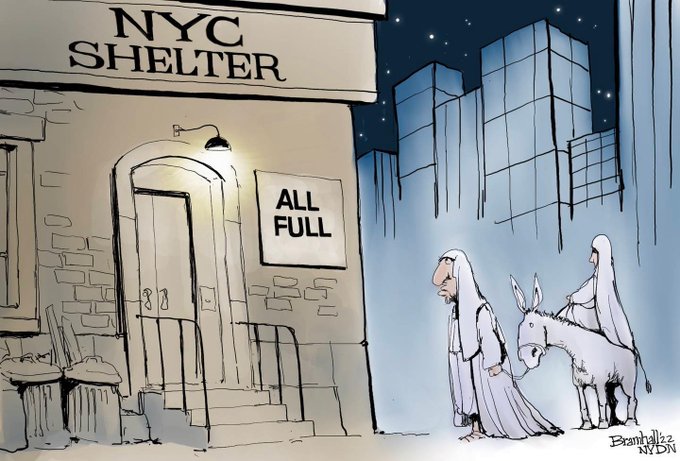
The circle of life of the homeless industrial complex

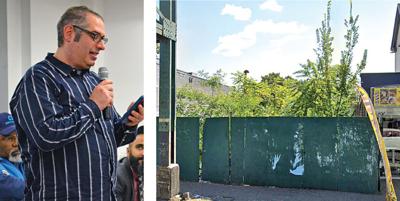
Permits filed for a shelter in Richmond Hill 1

Queens Chronicle 

 Elected officials representing Northeast and Eastern Queens are pleased that Gov. Hochul announced on Feb. 13 the closure of the controversial Humanitarian Emergency Response and Relief Center situated on the grounds of the Creedmoor Psychiatric Center in Queens Village.

Councilwoman Linda Lee (D-Oakland Gardens), Assemblyman Ed Braunstein (D-Bayside) and state Sen. Toby Ann Stavisky (D-College Point) issued a statement on the closure.

“Our offices have received confirmation from the Governor’s administration that the Creedmoor HERRC will be closing — a long-awaited and welcome decision for our community,” said the electeds in the joint statement. “For the past year and a half, residents have shown great patience while enduring the placement of a humanitarian shelter housing over 1,000 single adult males.”

The Governor’s Office said it will support the Eastern Queens’ community when it comes to public safety, affordability and quality of life issues in a statement.

“The State of New York stepped in to support the city’s effort to shelter tens of thousands of migrants by offering state-owned land to shelter these individuals,” said Matt Janiszewski, a spokesman for Hochul’s office. “Governor Hochul believes it’s entirely appropriate that the Creedmoor HERRC is one of the first shelters to close and did not offer the city a renewed lease at this site.”

As previously reported, two Cuban fugitive brothers, one who had a gun, were found at the tent city last year. Some of the migrants have utilized a playground meant for students at PS 18, which is across the street from the shelter. The Services Now for Adult Persons senior center is also on the Creedmoor complex, and some seniors have been intimidated by the men. 

“Since the shelter’s inception, our offices have consistently urged both [Mayor Adams] and the governor to acknowledge and address the community’s legitimate concerns,” the Northeast and Eastern officials continued. “In our joint letter to both administrations last month, we specifically requested that Creedmoor be prioritized for closure due to its detrimental impact on the surrounding area. With two social services centers and an elementary school nearby, it was evident from the start that this location was unsuitable for such a facility ... we look forward to seeing this transition take place beginning in March.”

Community Board 13 leaders also welcomed the news that what they called the wrongly sited HERRC was closing.

CB 13 members had problems with the site also being near a Little League complex and the Cross Island Y.

“Queens Community Board 13 thanks City Council Member Linda Lee, State Senator Toby Stavisky, Assembly Member Ed Braunstein and Borough President Donovan Richard for their staunch advocacy on behalf of our community throughout,” said CB 13 Chair Bryan Block, District Manager Mark McMillan and Land Use Subcommittee Chair Corey Beark in a joint statement via email. “This removal cannot happen too soon!”

 Queens Chronicle


Parents recently grew concerned when reports emerged about a permit being filed for a shelter at 118-08 Jamaica Ave., an empty lot in Richmond Hill.

Per the permit listed on the city Department of Buildings database, the building is proposed to be five stories tall with 12,407 square feet of space for the facility, which would include 129 beds.

The proposed shelter, to the dismay of many residents on neighborhood Facebook groups, is within walking distance of the Richmond Hill Library, PS 51, PS 90, Richmond Hill High School and the future elementary school slated to be built at 120-08 Jamaica Ave.

At Tuesday night’s Community Board 9 meeting at Queens Borough Hall, resident Paul Trust spoke on behalf of the Richmond Hill Block Association.

“We understand that at this juncture, a permit has been filed and no decision has been made regarding the fate of this property,” Trust said. “It is vital that the safety of the community remains a top priority.”

He said the corridor and the nearby intersection of Lefferts and Jamaica avenues have been “problematic.”

“Just recently, one of our members was accosted at Lefferts and Jamaica Avenue by a gentleman who became aggressive and shouted expletives when he asked for money and wanted more than the dollar that was given,” Trust said.

The architect on the permits is listed as Michael Kang, and the owner of the property is Gunnveet Sandhu.

According to both public records and Trust’s testimony during the public forum, Sandhu is part of the Sandhu Group, based out of Inwood, NY.

Back in December, during testimony at a City Council meeting, Councilmember Susan Zhuang (D-Brooklyn) expressed concerns about the group, which she said accrued multiple violations and fines totaling more than $140,000 across its developments.

The Sandhu family was charged with bribery in the third degree and a Class D felony, Zhuang said at the time.

The Sandhu Group declined to comment on the permit filed for 118-08 Jamaica Ave.

Hey, I know that pit.

Sunday, October 20, 2024

The plutocrats of poverty


Gothamist 

Nepotism. Self-dealing. Executive salaries in the high six figures.

These are some of the allegations leveled in a new report on New York City’s multibillion-dollar shelter system released by city investigators on Thursday.

The review, which began in 2021, found a range of potential improprieties at 51 nonprofits that receive taxpayer funds to provide shelter and services for clients of the city Department of Homeless Services, which manages the biggest municipal shelter system in the United States. On an average night, over 87,000 people stay at the more than 500 New York City shelters funded by the department.

The city’s Department of Investigation found multiple instances of apparent conflicts of interest, potential nepotism and failure to comply with competitive bidding requirements on the part of shelter providers, according to the nearly 100-page report.

“City-funded nonprofit service providers pose unique compliance and governance risks, and comprehensive city oversight is the best way to stop corruption, fraud, and waste before it starts,” Department of Investigation Commissioner Jocelyn Strauber said in a statement. “Today’s report provides ample evidence of the risks specific to nonprofits and shortcomings in city oversight and makes 32 recommendations to strengthen controls around this essential network.”

In some cases, insiders were paid outside of their normal compensation through personal business interests involving the shelter where they worked, such as security companies that staffed those shelters — and were owned by the nonprofits they served. In other cases, shelter providers told investigators they did not employ any immediate relatives of senior employees or board members, which would violate their city contracts — but the investigators later found that adult children of shelter executives had been employed by the nonprofits for years.

 Multiple nonprofit executives received more than $500,000 annually, and in some cases more than $700,000 annually, in compensation from the shelter providers and related organizations. Investigators emphasized these salaries were funded largely or in part by taxpayer dollars and said the city lacks sufficient rules to guard against excessive compensation.

Many of the groups have annual revenues in the tens or even hundreds of millions of dollars. More than 90 nonprofit contractors now provide shelter services for the city, up from at least 70 just a few years ago, according to the report. New York City has a decades-old legal right to shelter that generally requires that a bed be provided to anyone who needs one — though this right was curtailed for migrants earlier this year.

The report comes as the city faces a stubborn housing and homelessness crisis exacerbated by the migrant influx since the spring of 2022. The homeless services department’s budget for shelters rose to $4 billion in fiscal year 2024, up from $2.7 billion two years earlier, according to the report. Migrant shelters run by NYC Health and Hospitals — called humanitarian relief centers — were not covered by the review and are being separately monitored by city investigators and a major accounting firm.

A spokesperson for the city’s Department of Social Services, which oversees the shelters, said it has “completely stopped doing business with a number of providers highlighted in the report,” and taken other steps to strengthen accountability for the nonprofit contractors.

“To be clear, this report does not reflect our current contracting and oversight processes given that the review began years ago prior to the current administration, but we look forward to continuing on these improvements to better serve New Yorkers,” the agency said in a statement.

Monday, July 17, 2023

Next stop Adamsvilles, Aqueduct and Creedmoor


https://nypost.com/wp-content/uploads/sites/2/2023/07/NYPICHPDPICT000014160902.jpg?w=1024

NY Post 

Mayor Eric Adams’ administration is eyeing the Aqueduct Racetrack and Creedmoor Psychiatric Center in Queens as new locations for massive emergency tent cities that would help temporarily shelter the relentless influx of migrants in the Big Apple, officials said Sunday.

City Hall notified Queens Borough President Donovan Richards late Saturday that officials would be touring the grounds of both sites this week, he confirmed to The Post.

If they are deemed suitable, the tent cities would open on the grounds of Aqueduct and Creedmoor at the end of July, Richards said.

The City first reported the locations were in play to be converted into encampments housing 1,000 migrants each.

Both sites are on state property and Gov. Kathy Hochul would have to approve the plans, officials said.

“As the mayor has said, all options are on the table as we deal with this crisis and no humanitarian relief centers are final until announced,” an Adams spokesperson said Sunday.

“With over 53,000 asylum seekers currently in the city’s care, we need additional support from state and federal partners.”

While racing at Aqueduct has been on the decline, one of the state’s cash cows — the Genting NY-Resorts World casino — is located next to the race track and attracts gamblers who use the parking lots there.

That could potentially complicate use of the site as a migrant encampment.

Many of Queens’ hotel airports — particularly those near JFK and LaGuardia — have already been converted into migrant shelters.

Richards said his borough has been doing its part in aiding the asylum seekers, but the Adams ally also emphasized there must be better coordination and communication between City Hall and Queens elected officials.

“I understand we are in a crisis. I’m not playing the NIMBY game here,” Richards said, referring to the acronym for the phrase “not in my backyard,” used to refer to people who oppose undesirable developments in their neighborhoods.

Wednesday, February 8, 2023

Career homeless services bureaucrat DSS Commissioner quits and runs away from the city's homeless crisis

https://cloudfront-us-east-1.images.arcpublishing.com/tronc/RBUH2EZ56JDMXB3SB2HGXQ4TMU.jpg

NY1

While appearing on “Inside City Hall” on Tuesday night, Gary Jenkins, the city’s Department of Social Services commissioner who oversees the troubled homeless shelter system, announced his resignation.

The commissioner's move comes as the city is grappling with an affordable housing crisis and influx of asylum seekers that has put pressure on the shelter system.

He told his staff earlier in the day of his impending resignation earlier Tuesday.

“I’ve decided to step down from my position as Commissioner for the Department of Social Services and explore other opportunities that have been presented to me," Jenkins said on "Inside City Hall."

Jenkins' final day is March 3 and leaves the embattled department after only serving for a year. Mayor Eric Adams first appointed Jenkins in January of 2022.

His portfolio includes overseeing the Department of Homeless Services and the city’s Human Resources Administration. 

“There’s no discord, there’s no running away. This was something that was already planned," Jenkins said. “I’m just going to take some time off. Decompress and spend some quality time with my family and get back into this in the month of April.” 

Adams recently said that going into his first year in office, the city’s shelter system had about 45,000 New Yorkers in its care. Meanwhile, close to 40,000 migrants have come to New York from the southern border with over 26,000 asylum seekers still in the city’s care. 

In a statement on Tuesday, the mayor thanked the commissioner for his nearly 40-year career in public service including helping an estimated 1,100 unsheltered New Yorkers under the Mayor’s subway safety plan. 

"Commissioner Jenkins also brought his own experience living in a shelter as a child to the job, a unique understanding of the struggles families in shelters face and a steadfast commitment to treating all of our clients with dignity and care. I'm incredibly grateful to Gary for his decades of service and wish him the very best in his next chapter,” added the Mayor. 

While in office, Jenkins faced a series of scandals including leaving the city in August amid the start of the migrant crisis. 

Jenkins also faced scrutiny after firing a spokeswoman over an alleged cover-up of department violations related to migrant families sleeping at an intake shelter in The Bronx. The incident violated the city’s right to shelter law. 

Adams defended Jenkins in both instances, at one point saying that he had the “utmost confidence” in the commissioner. 

Jenkins previously served as first deputy commissioner of HRA where he started his career holding numerous positions.

A few hours later...

NY Post

A migrant tried to commit suicide at the city’s new shelter in Brooklyn on Tuesday, police said.

The 26-year-old man was found suffering from self-inflicted stab wounds inside the recently opened shelter at the Brooklyn Cruise Terminal around 2:15 p.m., cops said.

The man used a shaving razor to cut his right forearm in one of the bathrooms of the housing facility, sources said. He was taken to Lutheran in stable condition.

The Cruise Terminal mega-shelter opened in late January and houses up to 1,000 single adult migrant men.

Last week, advocates and migrants who had been housed at Manhattan’s Watson Hotel protested the city’s decision to relocate single men to the Redhook facility to make room at the hotel for migrant families with children.

Dozens of migrants had camped outside the Hell’s Kitchen hotel in protest for two nights following Adams’ announcement, with activists claiming the new Brooklyn shelter would not provide the single men the same services they had been receiving.

And in one of his final actions as DSS Commissioner, Jenkins and Mayor Adams bails out a bankrupt tower hotel to shelter thousands of migrants, since the Brooklyn Terminal isn't working out so well.

NY Post

New York City is converting the world’s tallest Holiday Inn hotel into the Big Apple’s sixth mega-shelter for its surging migrant population, Mayor Eric Adams announced Tuesday.

The deal will supply 492 rooms for adult families and single women, Adams said in a statement.

“With more than 44,000 asylum seekers arriving in the last 10 months alone, we have helped provide shelter and support to nearly as many asylum seekers as the number of New Yorkers we already had in our shelter system when we first came into office,” he said.

Terms of the contract weren’t announced, but The Post reported last month that the owner of the 50-story hotel in Manhattan’s Financial District had an agreement in place to charge NYC Health + Hospitals a nightly rate of $190 per room.

At full capacity, that would amount to $93,500 a day, or an estimated $10.5 billion through May 1, 2024.

Details of the pact were contained in court documents tied to bankruptcy proceedings involving the hotel, owned by Chinese developer Jubao Xie, which is saddled with debts that include $11 million in interest on loans.

Saturday, December 24, 2022

Holden demands homeless services conflict of interest investigation of Comptroller Lander and Wife

 https://pbs.twimg.com/media/FkvMRzBXkAE1eKd?format=jpg&name=small


NY Daily News

A New York City Councilman is demanding the Department of Investigation probe possible conflicts of interest between Comptroller Brad Lander and his wife’s role as a consultant for nonprofits his office is supposed to oversee.

Councilman Bob Holden (D-Queens) made the request last month to DOI Commissioner Jocelyn Strauber and Carolyn Miller, executive director of the city’s Conflicts of Interest Board, in a letter the Daily News obtained Friday.

As The News first reported in July, Lander’s office, which serves as the city’s fiscal watchdog, approved about $550 million in contracts with nonprofits that are members of an umbrella group that his wife, Meg Barnette, oversees.

Lander has noted repeatedly that he received a seal of approval from the Conflicts of Interest Board for his office’s review of contracts with nonprofits tied to Nonprofit New York, where Barnette serves as CEO and president.

But Holden does not view that as sufficient.

In his letter dated Nov. 29, the councilman notes that as president and CEO of Nonprofit New York, Barnette “has an interest in the success of over 4,000 nonprofit organizations.”

Some of those have contracts with the city that Lander’s office signs off on.

“There must be transparency so that New Yorkers know that there is no conflict of interest between what is best for New York City taxpayers and the financial interests of Brad Lander and his family,” Holden wrote.

“Media reports routinely feature nonprofit social-service providers that are not fulfilling their contractual obligations and in many cases committing criminal acts,” he continued. “Unfortunately, the Comptroller’s office never publicly audits these providers. The public should know if the Comptroller’s wife is consulting for the same nonprofits the Comptroller is supposed to oversee to prevent waste, fraud, and abuse.”

Naomi Dann, a spokeswoman for Lander, accused Holden and The News of a “willful misunderstanding of basic facts.”

“The Conflicts of Interest Board has repeatedly affirmed present no conflict,” she said

Wednesday, November 30, 2022

Mayor Adams orders involuntary removal of mentally disturbed people from public places and the subway

 https://pbs.twimg.com/media/FiCjbswXEAEA_6R?format=jpg&name=large

New York Times

Acting to address “a crisis we see all around us” toward the end of a year that has seen a string of high-profile crimes involving homeless people, Mayor Eric Adams announced a major push on Tuesday to remove people with severe, untreated mental illness from the city’s streets and subways.

Mr. Adams, who has made clearing homeless encampments a priority since taking office in January, said the effort would require involuntarily hospitalizing people who were a danger to themselves, even if they posed no risk of harm to others, arguing the city had a “moral obligation” to help them.

“The common misunderstanding persists that we cannot provide involuntary assistance unless the person is violent,” Mr. Adams said in an address at City Hall. “Going forward, we will make every effort to assist those who are suffering from mental illness.”

The mayor’s announcement comes at a heated moment in the national debate about rising crime and the role of the police, especially in dealing with people who are already in fragile mental health. Republicans, as well as tough-on-crime Democrats like Mr. Adams, a former police captain, have argued that growing disorder calls for more aggressive measures. Left-leaning advocates and officials who dominate New York politics say that deploying the police as auxiliary social workers may do more harm than good.

Other large cities have struggled with how to help homeless people, in particular those dealing with mental illness. In California, Gov. Gavin Newsom recently signed a law that could force some homeless people with disorders like schizophrenia into treatment. Many states have laws that allow for involuntary outpatient treatment, and Washington State allows people to be committed to hospitals if a judge finds that they pose a threat to themselves or others.

Officials in New York said the city would roll out training immediately to police officers, Emergency Medical Services staff and other medical personnel to “ensure compassionate care.” But the city’s new directive on the policy acknowledges that “case law does not provide extensive guidance regarding removals for mental health evaluations based on short interactions in the field.”

The policy immediately raised questions about who, exactly, would be swept up in it, and some advocates for people with mental illness warned it could face legal challenges.

Existing state laws allow both the police and medical workers to authorize involuntary hospitalization of people whose behavior poses a threat of “serious harm” to themselves or others. Brendan McGuire, chief counsel to the mayor, said on Tuesday that workers would assess people in public spaces “case by case” to see whether they were able to provide basic needs such as food, shelter and health care for themselves.

The city directive states that “unawareness or delusional misapprehension of surroundings” or “delusional misapprehension of physical condition or health” could be grounds for hospitalization.


Saturday, October 8, 2022

From Sanctuary City to Emergency City


AMNY 

Mayor Eric Adams declared a city State of Emergency Friday over the more than 17,000 migrants who have come to the Big Apple seeking shelter since April, calling on Washington and Albany to provide the city with additional resources to handle the influx.

During a live streamed speech at City Hall Friday morning, Adams said the city has been doing all it possibly can to handle the thousands of asylum seekers who are getting bussed here by southern states like Texas after coming from South and Central America across the southern border. This includes stretching the shelter system to nearly 100 percent capacity, opening 42 emergency hotel shelters and building a tent-like shelter on Randall’s Island – first cited for Orchard Beach in the Bronx – he’s dubbed a Humanitarian Relief and Response Center (HERRC).

The emergency declaration, the mayor said, is coupled with an executive order intended to expedite construction of the HERRC.

“New York City is doing all we can, but we are reaching the outer limit of our ability to help,” Adams said. “Today I’m declaring a state of emergency in the city of New York and issuing an executive order. This executive order will direct all agencies to coordinate their efforts to construct the humanitarian relief centers. We are also suspending certain land use requirements to expedite this process.”

Without mentioning them by name, Hizzoner blasted southern elected officials like Texas Governor Greg Abbott for bussing thousands of asylum seekers to the five boroughs every day without coordinating with his administration or so much as a heads up of when and how many buses will be arriving. Adams repeated what has become a common refrain that Abbott and others are exploiting the city’s “right to shelter” law – that requires it to house anyone seeking shelter – for “political gain.”

“Our right to shelter laws, our social services, and our values are being exploited by others for political gain,” he said. “New Yorkers are angry. I am angry too. We have not asked for this. There was never any agreement to take on the job of supporting thousands of asylum seekers. This responsibility was simply handed to us without warning as buses began showing up. There’s no playbook for this, no precedent.”

And the responsibility of accepting 17,000 asylum seekers and counting comes with a hefty price tag. The mayor said his administration expects to spend at least $1 billion on handling this crisis alone by the end of the current fiscal year next June.

Sunday, September 25, 2022

Welcome to Adamsville

https://nypost.com/wp-content/uploads/sites/2/2022/09/nyc-camps-001.jpg?quality=75&strip=all

NY Post 

The Big Apple will begin setting up large tents to house intake centers and cots for the flood of migrants arriving daily as the months-long influx from the southern border has overwhelmed city shelters, Mayor Adams announced Thursday.

City Hall laid out the plan as officials revealed that more than 2,000 additional migrants — predominantly asylum seekers fleeing Venezuela — had streamed into the five boroughs over just the last week.

That brings the total number to an estimated 13,600, the bulk of which — 10,300 — are staying in city shelters.

“More than 100 years ago, Ellis Island opened its doors to welcome in those ‘yearning to breathe free,’ ” said Hizzoner in an accompanying statement. “Now, more than ever, it’s clear that we are again dealing with a humanitarian crisis created by human hands.”

He added, “While other leaders have abdicated their moral duty to support arriving asylum seekers, New York City refuses to do so.”

The first of the emergency shelter facilities will consist of five tents set up in a parking lot at Orchard Beach in The Bronx.

It will have enough beds to house up to 1,000 adults, who officials say will stay there for one to four days as they do initial assessments of their health and welfare before placing them into the city’s shelter system.

So Adams went from destroying homeless people's tents in public spaces earlier in the year to building  big tents in public spaces. This is going to blowback big time into more encampments on the streets and green areas.  

Sunday, August 7, 2022

Ruff times at Rufus King Park

https://bloximages.chicago2.vip.townnews.com/qchron.com/content/tncms/assets/v3/editorial/0/9a/09adecb5-33d2-57f7-96d4-720cf55c8d82/62ebe80e2c413.image.jpg?resize=750%2C999

Queens Chronicle 

Last Thursday, Tunisia Morrison shared to Twitter a post displaying individuals passed out on benches in Rufus King Park, one with a needle stuck in his arm, and an image of human defecation in a fountain she says is frequented by children. The images were part of a presentation she and other members of the Friends of Dogs at Rufus King Park organization, a coalition of approximately 70 dog owners in the area, have been showing to elected officials in an effort to secure a dog run for the park.

The movement has gained more than 300 signatures on a petition posted to Change.org.

They say the dog run is necessary as a result of two issues. One, park enforcement officers in the area are strict in their enforcement of leashing rules, leaving the dogs with nowhere to roam. Even when dog owners circumvent the rules and let the dogs loose, they often encounter garbage and hazardous materials posing a risk to the animals’ safety, as well as the general state of the park as a community gathering space.

“I have a photo of a dog’s face that is three times the size it should be from rat poisoning and no signs across Downtown Jamaica that says that they dropped any,” Morrison said. “There’s a dog with a needle in its face. There’s a dog whose paw is literally ripped off from a bottle cap.”

“I didn’t know if I should post them because I live here and want to be proud of where I’m at, but if I’m sending this to elected officials already and trying to gain support around this dog run, then I’m 100 percent going to post these on Twitter and say, how is this OK for us or animals?” she added.

Parks Department rules stipulate dogs must be leashed at all times while on park grounds, unless in a designated unleashing zone or in a dog run. Still, Morrison says park enforcement officials frequently ignore more egregious violations, such as fighting and drug use, to chide community members over leashing violations.

A spokesperson for Councilman James Gennaro (D-Hillcrest), within whose district Rufus King Park falls, says it is the role of park enforcement officers to act as a liaison for the NYPD and the city Department of Mental Health and Hygiene, as park enforcement officers lack the training required to handle potentially dangerous situations stemming from a mentally ill or drug-influenced person.

“If you actually can’t help this community in mitigating what’s happening in it, why the investment?” Morrison said. “Because that investment could have went into the dog run.”

“I don’t know why the New York City Parks Department does not want to invest as they should in building up quality of life, but this is the [story] of living in the 114- ZIP code, going back way before I was born,” she added.

Friday, July 29, 2022

City resorts to hotels and the Podolskys again to shelter the homeless

https://0d4g9qvxfl-flywheel.netdna-ssl.com/wp-content/uploads/2022/07/20220715CityLimitsShelterHotels-9498Dim1920X1280-771x514.jpg

 City Limits

With the number of families in homeless shelters on the rise, New York City officials have once again turned to a pair of notorious landlords closely aligned with Mayor Eric Adams’ top aide to secure extra bed space.

Brothers Stuart and Jay Podolsky—known for profiting off of poorly-maintained housing, and recent clients of Adams’ Chief of Staff Frank Carone—are leasing at least three of their hotels to the city for use as shelters for homeless families. The sites include the Marcel in Gramercy, which reopened to homeless families earlier this month; the Apollo in Harlem, where staff said families began staying July 2; and the Ellington in Morningside Heights, where work crews began prepping for the return of homeless residents in June after the city moved families out a year earlier.

Despite the Podolskys’ sordid pasts, city officials have long leased hotels and tenement buildings from the brothers for use as temporary homeless shelters. In 2017, the property owners retained Carone, then a partner in the law firm Abrams Fensterman, to represent them in negotiations with the de Blasio administration that led to the sale two years later of 17 buildings housing homeless families in the city’s scandal-scarred “cluster site” program. Under that scheme, the Department of Homeless Services (DHS) placed families on a temporary basis in privately-owned apartments they leased at exorbitant prices. The Podolskys managed to extract $173 million from the city in the portfolio sale—$30 million more than the value assessed by an independent appraiser—after raking in millions from the cluster rentals.

Among advocates for the rights of homeless New Yorkers, the deal was seen as a key step toward finally eliminating the cluster site program that stuck families in miserable—at times fatal—conditions overseen by notoriously neglectful landlords. In the case of the Podolskys, the problems extended beyond neglect: the brothers have been convicted of harassing low-income renters in a campaign of “terror,” prosecutors said, and accused in 2019 of cheating on their taxes while renting apartments to the city.

Still, they managed to cash out with Carone—at the time, attorney for the Brooklyn Democratic Party and a key bundler for then-Mayor Bill de Blasio—at the center of the agreement.

In his first six months as Adams’ gatekeeper, Carone has faced several accusations of influence-peddling and scrutiny of his business ties. But City Hall spokesperson Fabien Levy said Carone had no hand in the latest Podolsky deals and that he sought to avoid conflicts of interest with the Department of Social Services (DSS) when he was appointed to the government post.

“He was not a part of the decision-making process of choosing this site as a shelter,” Levy said. “In fact, months ago, he proactively asked DSS’s general counsel to create a list of matters that he may have worked on or touched on in his capacity as an attorney prior to his joining this administration so that we could properly note and recuse himself from participation in any decision-making or discussion. As such, this matter was never even brought to Frank.”

City Limits submitted a Freedom of Information Law request for the shelter contracts to see how much the Podolskys are getting paid and how many Podolsky hotels are used to house homeless New Yorkers. City-contracted nonprofits rent rooms in at least two others, the Longacre and the ParkView, for homeless adults.

City Hall’s assurances have yet to assuage good government experts, who raised concerns about the latest deal with the Podolskys when contacted by City Limits. Reinvent Albany Executive Director John Kaehny said the agreements illustrate deeper problems with the way social service business gets done in New York City.

“It’s such a rich broth of conflicts of interest with all these powerful people in the city,” Kaehny said. He also criticized the Podolskys’ history of past criminal activity and allegations of tenant harassment.

“The Podolskys are a concern because of more than just their connection with Frank Carone. They seem to be not very good landlords or to be not very good vendors,” Kaehny said. “This far into being a social welfare state, we don’t have better options?”

Wednesday, June 8, 2022

Kathy Clown revives homeless and broke hotels for affordable housing conversions


PIX News 

 New York has relied on hotels to temporarily house the homeless for years, but now underutilized hotel space will be converted into permanent housing under a new plan announced by Gov. Kathy Hochul on Tuesday.

Over the last several years, the homeless crisis in New York City has grown more visible and harder to manage. The coronavirus pandemic shined a light on an existing problems: a lack of affordable housing and a continued reliance on hotels to temporarily house the homeless. Robin, a homeless New Yorker PIX1 News met on the Bowery, is not a fan.

“The hotels, you had no services really, just basically food,” Robin said. “That’s about it really. And a place to sleep.”

Hochul’s new plan involves a detailed application process for hotel owners and developers to convert their facilities. She said that run-down hotels can present a safety risk in their respective neighborhoods.

“With hotels hit so hard by the pandemic, many of them never reopened, an opportunity has arisen to use vacant hotels in a way that’ll lift people up and give them yes, the dignity of a home,” Hochul said.

PIX11 News began reporting on the de Blasio administration’s reliance on homeless hotels almost six years ago. That plan used taxpayer dollars to house the homeless in hotel rooms, with no social service, alongside regular, paying guests. Mayor Eric Adams says this time around, converted hotels will become supportive housing.

“New York needs affordable housing, we cannot argue with that. And to not focus on converting hotels that are currently there, currently on the market, sitting empty – converting those hotels into now apartments with permanent housing,” Adams said. “Repurposing these housing is going to allow older adults, those with families, to take these older buildings and now utilize them to give someone a newer life, a life where they can feel they are receiving the housing they deserve.”

Sunday, March 20, 2022

Jamaica is still a mess


Queens Chronicle

Borough President Donovan Richards, joined by several other community leaders, led a walking tour of Jamaica Avenue from Parsons Boulevard to 165th Street to address quality-of-life issues in the rapidly changing downtown area.

During the tour on March 11, business, crime, homelessness, drugs, busways and poor infrastructure were just some of the topics discussed by Richards, fellow elected officials, business owners and other community stakeholders.

Richards said that Downtown Jamaica needs a facelift that may cost hundreds of millions of dollars.

“The pavers got to go, new lighting, paving the boulevard over, planting new trees for clean air, but aesthetically this whole place needs an uplift,” said Richards. “The vacancy rate is 6 percent, because the customer base is so loyal. But imagine how much more of Southeast Queens would shop here if it felt safe, if it felt modern and if the city made a commitment in addressing many of the systemic issues here.”

Richards, City Council Speaker Adrienne Adams (D-Jamaica), Mayor Adams, state Sen. Leroy Comrie (D-St. Albans) and new edition Councilwoman Nantasha Williams (D-St. Albans) all grew up in the Jamaica region, said the borough president.

“What we have discussed is putting together a task force,” said Richards. “This can’t just be a one-day tour. We need to meet monthly, not to just talk, but to incentivize the agencies to do some improvements here as well.”

Those agencies will have no shortage of issues to address.

Property owners say that they have trouble trying to lease to quality tenants in Jamaica, according to Jennifer Furioli, the executive director of the Jamaica Center Business Improvement District.

“One of the biggest issues that people are concerned about is the quality of retail here,” said Furioli. “We have property owners who are trying to lease to responsible tenants.”

Mark Lucaj, the property manager of the retail building at 159-02 Jamaica Ave., which includes Jamaica Multiplex Cinemas, said the landowner that he represents missed out on a deal with a national retailer as a tenant.

“They want a safe place to operate,” said Lucaj. “We had a national retailer come in for one of vacant spaces, which was vacant for some time ... they saw someone peeing on the side of the building and said that this is not for us.”

Lucaj said that retailers who come to Jamaica want to see a clean, safe and walkable area.

“You got the traffic at least,” Richards said, as dozens of people walked by the corner of the movie theater.

The building where the movie theater, eateries and other retail outlets reside used to be a parking lot over 20 years ago, Lucaj told the Queens Chronicle.

“The landowner here was one of the first people to invest in this area 20 years ago and saw what Jamaica could be,” said Lucaj. “They built this building and it now it’s a landmark to a certain extent ... People reference the movie theater and say, ‘That building. Got it.’”

Samantha Champagnie, who co-owns the Golden Krust Caribbean Restaurant with her husband, Conrad, at 92-21 Parsons Blvd., said that a man pulled down his pants in front of the place on March 6.

“We had to get him out of the store because he was dealing with a mental health issue,” said Champagnie. “We have people with those issues, but it doesn’t seem like there is any place for them to go.”

Champagnie, Conrad and Beverly Hills Furniture storeowner Leran Ruben also had issues with the new busways that were implemented on Jamaica Avenue, a major shopping corridor.

“These busways have impacted my business,” said Ruben. “It’s decreased foot traffic from more than 50 to 75 percent. Passenger vehicles from Sutphin Boulevard all the way to 168th Street can’t stop by for business.”

Queens Chronicle 

Six days after a Queens Chronicle report on placard abuse was released Leran Ruben, one of the business owners who had made complaints about city workers parking in truck-loading docks and busways, which was causing traffic in Jamaica and driving customers away, had a meeting at his store with representatives of the NYPD’s crime lab and the city Department of Transportation on Feb. 16.

“They said they are going to look into the placard abuse and discuss with their employees who were abusing and who wasn’t abusing it,” said Ruben. “What I got out of the meeting, was that only someone who was on active duty is allowed to use their placard, and not just someone coming to work.”

Earlier, Ruben said he noticed most of the placard vehicles seem to belong to members of the NYPD Forensics Laboratory at 150-14 Jamaica Ave., which is near his business, Beverly Hills Furniture, at 149-01 Jamaica Ave.

Ruben was confounded by why employees at the crime lab would park in busways when they have their parking garage at the corner of their building.

“They said only part of the garage was theirs,” said Ruben about the crime lab employees. “Some of the garage belongs to the court, some of it belongs to the Police Department and some of it belongs to the parole officers.”

After sending the story to the Mayor’s Office, Ruben said that he got a call from Deputy Inspector Brian O’Sullivan of the Transportation Bureau.

“He’s a gentleman,” said Ruben. “He said that he was going to make sure that his officers were not abusing plaques over here, but he has no pull over other agencies. He said he will reach out to parole officers and others to see if they could assist in this matter.”

Despite the meeting, not much has changed since, according to Ruben.

“But, when you go outside, I don’t see any improvement,” said the furniture store owner on March 1. “When the placards take up the truck parking and the passenger vehicle parking, trucks don’t get to stop where they need to stop to unload.”

Ruben showed the Queens Chronicle pictures from Feb. 22 of placard vehicles taking up a loading spot, resulting in a truck double-parking in the road and buses going in the opposite lane to get around the delivery driver.

Another truck had to park in the crosswalk to get enough space to deliver goods.

“Nobody is obeying the bus lane, so it’s not even serving its purpose to increase speeds for public transportation,” said Ruben. “Now this is forcing pedestrians to scatter in the streets, which is unsafe.”

With too much traffic plaguing the area and a lack of parking spots for customers, even at metered parking spaces, which were also taken up by placard vehicles, the third-generation entrepreneur has lost 50 to 75 percent of his once-thriving business.

Approximately 90 businesses in Downtown Jamaica are struggling with the same issue.

Monday, January 31, 2022

Adams says more homeless shelters coming


NY Post 

Mayor Eric Adams on Sunday hinted at opening more homeless shelters throughout the Big Apple — as he took aim at some “sacred cow” neighborhoods whose residents have waged war against the facilities.

Adams called out areas that haven’t “had their share of shelters” though stopped short of offering any specifics for how to get vagrants off the streets amid the city’s surging crisis.

“Homelessness is a New York problem,” Hizzoner said at a press conference at Jacobi Hospital in the Bronx.

“We can’t have any sacred cows where some communities believe they are not going to shoulder the burden. That is not going to happen.”

Adams made the comments after being asked about a proposal to have three homeless shelters — which would house up to 540 single adult men — set up in the Bronx’s Community Board 11 region.

I’m going to look at this particular issue. Find out what’s happening. I’m going to communicate with [Department of Homeless Services] and see exactly what’s taking place here,” the mayor insisted.

“I don’t want to overburden certain communities with shelters,” he added.

“You know, I lived on the verge of homelessness as a child. I know what it is not to have a home, I know that. And I also know what it is to oversaturate certain communities with shelters.” 

Saturday, January 1, 2022

Homeless de Blasio shelters in hotel

 NYC Mayor Bill De Blasio and family's belongings stand outside of Gracie Mansion in Manhattan. 

NY Post

Mayor Bill de Blasio plans on leaving Gracie Mansion true to form: late!

Movers were at the mayor’s official residence on Friday to pack de Blasio’s stuff into a pair of vans, but City Hall said the perpetually tardy bureaucrat would remain there overnight, even though Mayor-elect Eric Adams succeeds him immediately after the stroke of midnight.

With one of de Blasio’s two Park Slope houses rented out and the other undergoing extensive remodeling, sources said he would be relocating to the Marriott hotel in downtown Brooklyn.

It’s unclear how long de Blasio plans to stay there. It was not clear who is paying for the hotel stay.

And even though he could have declined it, law enforcement sources also said that taxpayers will continue to pick up the tab for de Blasio to be protected by an NYPD security detail for at least six months.

Wednesday, December 1, 2021

Gimme safer shelter


QNS 

Victor Lopez, 59, has been struggling to hold a job for most of his life. Since the pandemic hit, he got passed around to different homeless shelters, where Lopez said he faced terrible violence. Now, all he wants is to find a safe haven at the Hungry Monk shelter in Ridgewood.  

Lopez said he’s been to many shelters throughout the city but never felt more unsafe than in Harry’s Place in Bed-Stuy, Brooklyn. Close to 50,000 people in New York City are experiencing homelessness and Lopez knows his situation is not unique.

“It’s terrible,” Lopez said. “It’s crazy in there. Why would they put me in a shelter like that? I didn’t give anyone any trouble. I’m out here trying to get better and get help, not to fight with people.”

Lopez has been trying to get a bed at the Hungry Monk facility, but unfortunately, no beds are available. Father Michael Lopez (no relation), who started the nonprofit, said they have rarely had a free bed since they opened in 2019.

Lopez’s problem is indicative of a larger issue faced by many around Queens and the rest of the city. Council member Robert Holden said Department of Homeless Services Commissioner Steven Banks is to blame. Holden said Banks had been an advocate for the large “warehouse” shelters that pack people in without privacy and barely any security, resulting in the dangerous conditions Lopez spoke of. 

Banks announced his decision to step down last week. Holden is hoping this will kick off a more responsible homeless response.

“I would much rather have smaller, faith-based shelters along with letting a community have a say in where they would be located,” Holden told QNS. “The organizations that run the big shelters for the city have contracts that they often do not fulfill, such as providing adequate security, etc. Banks did not hold them accountable. Residents of the shelter often harass neighborhood residents and shopkeepers, as well as steal from them. Banks also created a culture of corruption, with one scandal after another.”


Saturday, November 27, 2021

NYC Social Services Dept. official doesn't think homeless people can get or spread COVID

Thursday, November 18, 2021

City doing the homeless hotel shuffle with tenants displaced by Hurricane Ida

https://cdn.vox-cdn.com/thumbor/jg1oyQnDUagczkq7lUbGZxVzN5Y=/0x0:3000x2000/920x613/filters:focal(1875x250:2355x730):format(webp)/cdn.vox-cdn.com/uploads/chorus_image/image/70152437/111621_ramos_ida_families.0.jpg

 THE CITY

Families flooded out of Queens homes by the record-breaking Ida rainstorm may soon be forced by the city to relocate from a Radisson hotel near Kennedy Airport and move a borough away.

The looming trip to one of two hotels in downtown Brooklyn could take place before Thanksgiving, the Ida evacuees say they’ve been told by the city Department of Housing Preservation and Development.

“We just want more time,” Eileen Bendoyro, 52, said Tuesday after being informed she and her 13-year-old son Christopher would have to move to Brooklyn after staying at the South Jamaica Radisson since the epic Sept. 1 storm.

 Our activities are in Queens. We have small kids, babies, people who are disabled — to go to Brooklyn, it’s too far,” she said of the group still at the airport hotel.

Bendoyro’s basement apartment in East Elmhurst flooded, destroying nearly everything, she said. A week later, President Joe Biden and other elected officials visited the neighborhood, stopping at an alleyway around the corner from her apartment.

But the visit didn’t help her find a place to stay. She was among 20 families still at the hotel on Thursday when HPD told them they’d have to move by Monday, she said.

By Tuesday, just nine families remained, and they were then told by city officials they could get an extra five days at the Radisson. 

 An HPD spokesman said the city has provided emergency quarters to more than 380 families since the remnants of Hurricane Ida hit and is working to get people into permanent housing.

“We’ve secured extended stays in hotels in downtown Brooklyn for many of those who remain in our care, and will continue to work with the families staying at hotels in Queens to get them back on their feet,” the spokesman, Anthony Proia, said in a statement.

Tuesday, November 9, 2021

100,000

https://cdn.vox-cdn.com/thumbor/f2X5wDdyyDcz0DYqdTN45S_R8mc=/0x0:3000x2000/920x613/filters:focal(1260x760:1740x1240):format(webp)/cdn.vox-cdn.com/uploads/chorus_image/image/70112227/110221_jackie_robinson_school.0.jpg

THE CITY

Nearly 1 in 10 New York City public school students were homeless last school year, a staggering rate that has barely budged for several years.

About 101,000 students lived in unstable, or temporary, housing in the 2020-2021 school year, according to an analysis of state data released Monday by Advocates for Children. That’s a larger number of children than the entire school district of Denver.

Homeless students face a host of barriers to education in any given year, especially in terms of attendance. In a year when the COVID pandemic continued to disrupt in-person schooling and place extraordinary challenges on families and students across the five boroughs, homeless students faced even more hardships.

Accessing classwork and instruction — which was difficult for many children last school year — was sometimes impossible for homeless students and their families. Family shelters did not have Wi-Fi and are only getting it now, following a lawsuit from Legal Aid. Even students equipped with city-issued internet-enabled iPads struggled to log on for classes because shelters had spotty connections to the cell service that those devices depend on.

Now, advocates are looking ahead to Mayor-elect Eric Adams in hopes that he’ll take aggressive steps to curb student homelessness and address their dire educational outcomes.

Just 29% of homeless students passed their grades 3-8 reading exams, while just 27% passed math — both about 20 percentage points lower than their peers living in stable housing, according to 2019 data. Sixty-one percent of homeless students graduated on time in the school year before the pandemic, compared to 84% of their peers with stable housing.

“We are hopeful that given the incredibly poor outcomes we’re seeing, particularly for students in shelter, that Mayor-elect Adams’ administration will recognize the crisis for what it is,” said Jennifer Pringle, director of Project Learning In Temporary Housing at Advocates for Children.

More than 3,800 students had no shelter and lived in cars, parks or abandoned buildings, while another 200 students lived in hotels or motels, according to the Advocates for Children report.

Another 28,000 lived in city shelters, while about 65,000 students lived “doubled-up” with friends or family. (Information was not available for roughly 3,900 students, the organization said.)

Though the rate was similar to prior years, the overall number of homeless students — 94% of them Black or Hispanic — appeared to have fallen by 9.5% year-over-year. That decrease could be due in part to a drop in student enrollment across the system, which lost more than 3% of its students last school year. Additionally, schools may have faced more challenges in identifying where students lived because the majority of children chose to learn remotely — an issue that advocates also flagged last year.

Homeless students were far less likely to show up for remote or in-person school last year. Between January and June 2021, attendance rates for students living in shelters were roughly 10 to 14 percentage points less than students in stable housing, according to city data analyzed by Advocates for Children.

The struggles have continued this year. The first couple weeks of this school year, the attendance rate was about 73% for those in temporary housing, rising to 78% more recently, compared to the citywide rate hovering around the “high 80s and low 90s,” according to what education department officials have shared with Advocates for Children.

Tuesday, September 21, 2021

Eric Adams's hotels reset


 Bloomberg

Eric Adams, the Democratic nominee for New York City mayor, called for tens of thousands of shuttered hotel rooms to be turned into housing to ease the city’s housing insecurity.

Adams, speaking at a campaign event on Monday, said the city has a chance to reverse years of bad planning and convert hotels that have become eyesores. The Brooklyn borough president and former cop said he was looking to turn 25,000 rooms into housing, adding that the city should foot much of the bill.

“The combination of Covid-19, the economic downturn, and the problems we're having with housing is presenting us with a once in a lifetime opportunity,” Adams said in remarks outside of the Phoenix Hotel, a vacant property in Brooklyn’s Sunset Park neighborhood. “We can use this moment and find one solution to solve a multitude of problems.”

Adams echoed other recent initiatives to bolster housing security across the U.S. Earlier Monday, Bloomberg CityLab reported that the White House is launching a new national initiative, “House America,” to combat rising homelessness. In August, then-New York Gov. Andrew Cuomo signed a bill that would finance the purchase of distressed hotels and commercial office properties by nonprofits to convert them into affordable housing.

The need for such housing remains urgent in New York City, where more than 45,000 people were being housed in city shelters at last count, and thousands more are grappling with unsheltered homelessness.

The new state law would address, at best, a small slice of Adams’ target of 25,000 units. It sets aside $100 million to help finance building purchases, splitting units evenly between low-income households and people experiencing homelessness. But converting hotels is pricey in New York City. Manhattan hotels sold at a median price of $275,000 per unit in the fourth quarter of 2020, according to data from PWC’s Manhattan Lodging Index. The 100-room Z NYC Hotel in Long Island City, a Queens neighborhood, sold for $384,000 a room in May.