Showing posts with label displacement. Show all posts

Sunday, December 14, 2025

Ixnay the IBX

The IBX the MTA, accidental Governor Kathy Hochul and the urbanist cult lobbyists love so much is going to require eminent domain to get it done. 

This means over a decade of construction that's going to cause damages to homes and displacement of residents and also the destruction of the environment by razing trees and green space all long the transit line that will stretch from middle class Middle Queens to low area median income towns in South Brooklyn.

This transit plan must be terminated.

Thursday, November 18, 2021

City doing the homeless hotel shuffle with tenants displaced by Hurricane Ida

https://cdn.vox-cdn.com/thumbor/jg1oyQnDUagczkq7lUbGZxVzN5Y=/0x0:3000x2000/920x613/filters:focal(1875x250:2355x730):format(webp)/cdn.vox-cdn.com/uploads/chorus_image/image/70152437/111621_ramos_ida_families.0.jpg

 THE CITY

Families flooded out of Queens homes by the record-breaking Ida rainstorm may soon be forced by the city to relocate from a Radisson hotel near Kennedy Airport and move a borough away.

The looming trip to one of two hotels in downtown Brooklyn could take place before Thanksgiving, the Ida evacuees say they’ve been told by the city Department of Housing Preservation and Development.

“We just want more time,” Eileen Bendoyro, 52, said Tuesday after being informed she and her 13-year-old son Christopher would have to move to Brooklyn after staying at the South Jamaica Radisson since the epic Sept. 1 storm.

 Our activities are in Queens. We have small kids, babies, people who are disabled — to go to Brooklyn, it’s too far,” she said of the group still at the airport hotel.

Bendoyro’s basement apartment in East Elmhurst flooded, destroying nearly everything, she said. A week later, President Joe Biden and other elected officials visited the neighborhood, stopping at an alleyway around the corner from her apartment.

But the visit didn’t help her find a place to stay. She was among 20 families still at the hotel on Thursday when HPD told them they’d have to move by Monday, she said.

By Tuesday, just nine families remained, and they were then told by city officials they could get an extra five days at the Radisson. 

 An HPD spokesman said the city has provided emergency quarters to more than 380 families since the remnants of Hurricane Ida hit and is working to get people into permanent housing.

“We’ve secured extended stays in hotels in downtown Brooklyn for many of those who remain in our care, and will continue to work with the families staying at hotels in Queens to get them back on their feet,” the spokesman, Anthony Proia, said in a statement.

Friday, April 9, 2021

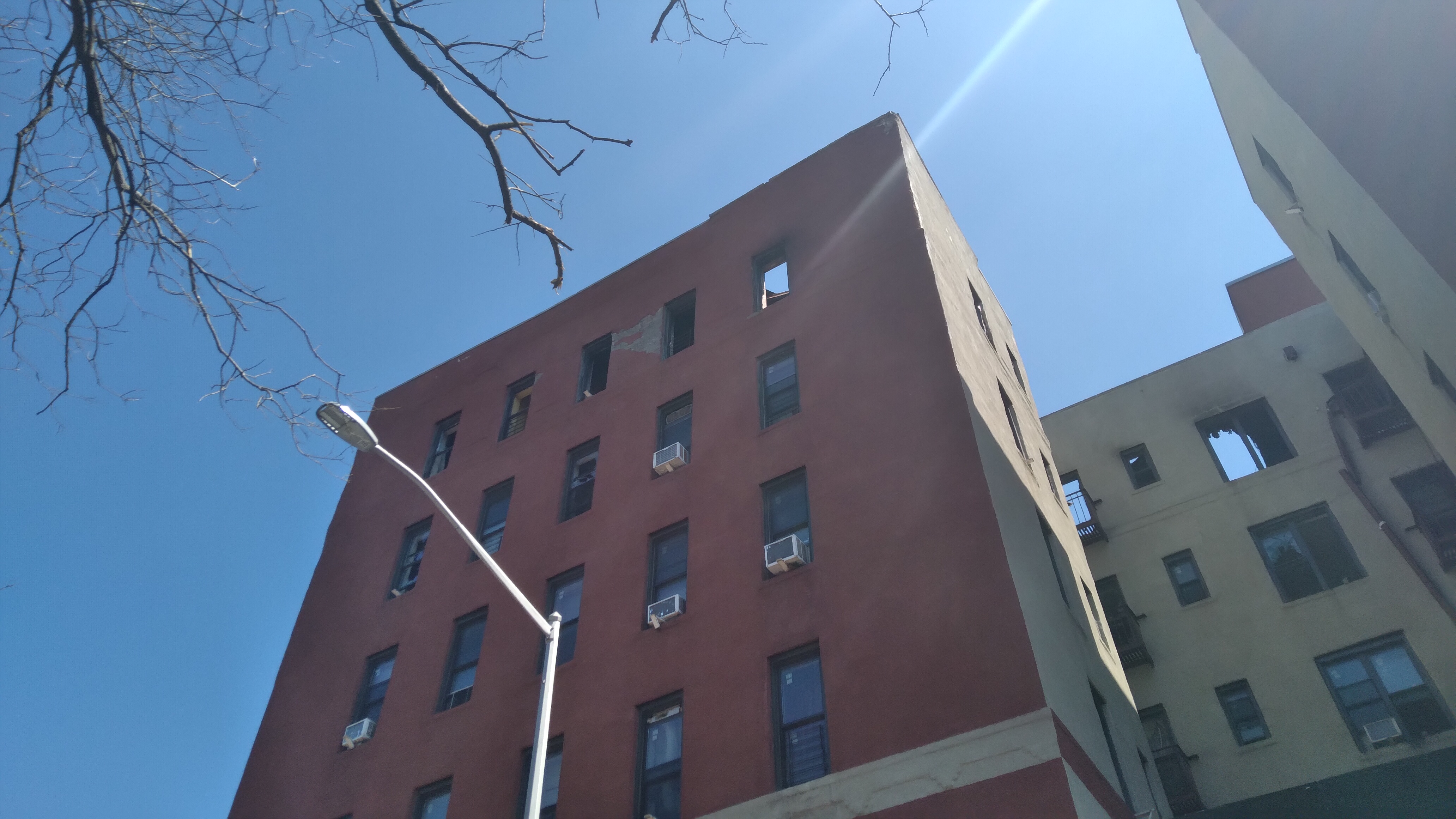
Queens is still burning and more housing insecure


Impunity City 

 When Mayor de Blasio gets done trying to produce the recovery of all of us by emceeing performance arts venues in Brooklyn and Lincoln Center, maybe some time can be dedicated for his Housing Preservation and Development and Human Resources Administration to make sure these 400 residents who have had their lives upended from getting disenfranchised from their homes and belongings and make sure the owners of this complex, KEDEX PROPERTIES LLC, renovates and restores these apartments as quickly as possible.

And since there is still not much known about how this inferno started, right at the start of the afternoon no less, let’s be positively certain that when this LLC decides to demolish these actual affordable housing buildings and build some garishly designed tower they better let these residents that got displaced be allowed to return without any conditions. Instead of letting more low income people become gentrification collateral damage.


Saturday, February 29, 2020

No city for old people


City Limits 

Florina, 62, and her husband, who is 63, haven’t paid rent on their rent-regulated Bronx apartment in months.

The husband has not been able to work in 16 years and is blind. Florina does sporadic cleaning work to bring in extra income but is otherwise retired. Neither receives any kind of disability or Social Security benefit, due to their immigration status.

In January of 2019, Florina received a notice saying that her rent would go up by 30 percent, an amount the family couldn’t pay.

The couple are one of a few dozen residents of a building in the Bronx who are now on a rent strike. 

The couple, along with their children and grandchildren, with whom they live, are protesting a Major Capital Improvement – a rent hike on regulated units intended to fund building-wide repairs that they said raises their rent beyond what they can pay. The hike was approved prior to last summer’s rent reforms, which curtailed the practice. They are also protesting deteriorating conditions in their home.

In response, their landlord took the couple to court in an attempt to evict the family. Their hearing has been postponed until March, thanks to the intervention of a lawyer. But Florina and her husband still fear they will be evicted, along with their working age children and young grandchild.
Florina is fortunate, she says, that she lives with children – her son, 39, works at a bakery and her daughter, 30, is a home-health aide. While their combined income does not pay for the increased rent on their apartment, being partially supported by a younger generation is not something all elder New Yorkers have.

Many elder New Yorkers without such family ties and with little retirement savings end up displaced, segregated to an adult home, or worse, shuffled into the city’s homeless shelter system when they become ill.

“Sadly a lot of older, disabled people believe ‘they can’t throw me out into the street’,” says Justin La Mort, a housing lawyer with the group Mobilization for Justice who works with elders. “The bad news is, in fact, they can. It’s just a matter of time.”

The city uses a patchwork of social services and subsidies to keep elders aging in place, but they can be difficult to qualify for and their funds are limited. For those without savings or income from work, federal programs—SSI, SSDI or social security—can come too late and, when they do arrive, may not meet the high cost of rent in New York City. The result is a permanent sense of precarity among the city’s most vulnerable, sometimes culminating in homelessness or displacement.

A lack of retirement savings compounds the problem. According to the commissioner of the city’s Department of Consumer Affairs, half of New Yorkers 55 and older have no money in traditional retirement accounts. 40 percent of New Yorkers between 50 and 64 have less than $10,000 saved in such accounts. Nationally, 29 percent of adults above 55 have neither a pension nor retirement savings, according to the Government Accountability Office.

This lack of assets can have material effects when older adults face hardships: a recent study from the non-profit Robin Hood looked at material hardship, spurred by housing insecurity, job loss or illness. The study found that 53 percent of New Yorkers experienced such hardship for at least one year in the survey’s four year timespan.

According to the same report, 23 percent of respondents experienced poor health between 2012-2018. The study also found housing subsidies and rent regulations had reduced the poverty rate by 5 percent.

Elders who become disabled suddenly can find themselves in a grey area where social services can’t help them. Awaiting disability benefits, for which they may be rejected, they could find themselves in arrears and face evicted for unpaid rent. Still others who receive Supplemental Security Income (SSI) or Social Security Disability Insurance (SSDI) may be surprised to learn that their income is less than what they owe in rent but too much to qualify for a city or state subsidies to prevent homelessness. 

As City Limits has reported, the percentage of older adults in New York City’s shelter population is increasing. There is no way to determine how many elders become homeless each day through eviction, as eviction data made public by the city does not include age as a data point. While the number of adults in city shelters who are age 65 and above increased 300 percent between 2004 and 2017, older adults who are evicted don’t always enter shelter. And seniors don’t have to be formally evicted to be displaced by the threat of eviction; if they move out ahead of being uprooted by a marshal, or take a buyout, the result can be the same. Few elders are fortunate enough to find more affordable housing in the city, and some are forced to relocate to other states.

Evictions have been decreasing overall across New York City, thanks to a raft of pro-tenant legislation that closed loopholes for regulated apartments and provide access to counsel. Evictions executed by city marshals decreased 25 percent between January 2019 and January 2020. But for tenants who can no longer gain any income from work because they are elderly or disabled, eviction or displacement are more difficult to put off.

Monday, September 24, 2018

The problem with CEQR

From City Limits:

The city’s environmental review method overlooks the residential displacement impact of development on New York neighborhoods, where socio-economic demographics are rapidly shifting through private and public rezonings, a new report finds.

During a city-initiated rezoning or project, the city must do an environmental review to understand and assess the impact a proposed project may have in the neighborhood. The review follows a Technical Manual as a guide—and the new report from Pratt Center for Community Development raises important questions about the manual.

The Mayor’s Office of Environmental Coordination is charged assisting city agencies to carry out environmental reviews in accordance with state and federal law and advises the mayor on environmental policies, according to its website. The City Environmental Quality Review or CEQR is mandated by the State Environmental Quality Review Act. According to the Mayor’s Office of Environmental Coordination website, CEQR is a disclosure process and not an approval process. It helps support decisions made by agencies such as approvals of rezoning or variance applications, funding, or issuance of discretionary permits.

The Pratt report says, “Despite community groups vocalizing concerns and despite quantifying large numbers of vulnerable residents, recent Environmental Impact Statements have concluded that rezonings will not displace residents at a significant level.”

It refers to four problematic points in the CEQR Technical Manual. First, the technical manual dismisses the potential for inequitable impacts by race and ethnicity by not making a review of the impacts on race/ethnicity a requirement. Second, only low-income tenants living in one- to four-unit buildings are considered vulnerable to displacement because the technical manual does not consider rent-regulated units as vulnerable. Third, the potential for displacement in gentrifying neighborhoods is dismissed because, the Pratt report says, “…if rents are increasing in an area and presumably displacement is occurring, Environmental Impact Statement authors are to conclude it is not possible that a proposed action could make the situation any worse…”

And fourth, Environmental Impact Statement authors use their own discretion in determining a finding of significant impact. Says Pratt: “The Technical Manual provides specific guidance to analysts in some areas but when it comes to the most important aspect—the final determination—the manual is noticeably open to analysts’ subjective conclusions.”

Friday, January 23, 2015

Landlords may foot bill for tenant displacement

From DNA Info:

Landlords of unsafe buildings could be forced to pay for displaced tenants' temporary housing while their apartments are being fixed under proposed legislation in the City Council.

Councilwoman Margaret Chin is renewing her push for the bill, which was introduced last year, in the hopes of making it easier for New Yorkers to find temporary housing after their homes are vacated by the city for falling into disrepair.

Chin hopes that shifting the burden of temporary housing onto landlords will prevent the Department of Housing Preservation and Development from passing stringent new rules governing applications for temporary housing, which she said would make it more difficult for tenants to apply and receive help.

Chin's measure would allow the city to require landlords to keep 10 percent of the building's rent roll in escrow, and the city would be able to seize five years' worth of that money if the building is vacated because of safety violations. HPD would then use that money to cover the cost of temporarily housing the displaced tenants.

Wednesday, October 26, 2011

A real cliffhanger in the Bronx

From the NY Times:

In late September, residents of 5 of the 17 apartments at the idyllic Villa Charlotte Brontë cooperative in the Bronx were waiting for permission to go home after Tropical Storm Irene caused a landslide at the building.

They are still waiting.

Although there is no visible structural damage to the idiosyncratic assemblage of eight buildings that sits atop the cliff at Spuyten Duyvil, there is concern that the landslide destabilized the foundations of the two westernmost buildings overlooking the Hudson River.

The remedial plan, presented to the Department of Buildings by the co-op’s engineering firm, Birdsall Services Group in White Plains, calls for at least $500,000 in repairs to stabilize the cliff and shore up the affected foundations.

The tentative return date for the displaced tenants is early December. Until then, they are allowed to enter their homes to pick up or drop off belongings, but they must do so on the honor system: lingering is against the rules.

In the meantime, the displaced tenants are living in borrowed apartments or staying with friends. One of the affected, Richard Sime, said he found it puzzling that there was no mechanism by which he and the other displaced tenants, including the superintendent, could absolve the city and the co-operative of liability.