Showing posts with label nursing home. Show all posts

Tuesday, July 12, 2022

Nursing home magnate buys future hotel in LIC


 The Real Deal

A hotel to become a Staybridge Suites in Long Island City now belongs to a nursing home operator who has been active in New York City dealmaking.

Centers Health Care’s Daryl Hagler bought the property at 38-59 11th Street where the unopened 240-key hotel stands for $63 million from an entity called 559 Development LLC, according to city records filed Monday.

Centers Health Care declined to comment. It wasn’t immediately clear who controls the entity that sold the property. The seller of 38-59 11th Street paid $6.2 million for the site in 2013, according to city property records.

The hotel was complete at the time of its sale, said Josh Zegen of Madison Realty Capital, which lent developer Teddy Li $46 million in 2019 to help finish the 183,000-square-foot hotel and community facility. Construction had begun in 2018.

It’s unclear when the 24-floor Staybridge Suites will open. IHG Hotels & Resorts, Staybridge’s parent company, did not comment by press time.

 Hagler has been involved in several deals across New York City in recent months. In May he purchased the nearby 100,000-square-foot former DeNobili cigar factory at 35-11 9th Street in Astoria and its 6,000-square-foot parking lot for $26.4 million from real estate investor Bruce Brickman.


Monday, February 8, 2021

St. Albans nursing home gave residents risky hydroxychloroquine cocktail treatment without notifying their relatives


 THE CITY

 Yvonne Parson wasn’t in the room when her father died. Like millions of people with relatives inside one of the country’s many nursing homes this past year, she couldn’t be.

James Hutcherson, a 93-year-old resident of New York State Veterans’ Home at St. Albans, had been living in the state-run Queens facility for four years, after being diagnosed with Parkinson’s disease and dementia. Parson says she visited him twice a week, paid his medical bills and oversaw his care, communicating regularly with the nursing staff.

By March 2020, however, those communications became more difficult. Gov. Andrew Cuomo ordered all nursing facilities closed to visitors and, soon after, COVID-19 infiltrated St. Albans. On April 8, Parson got the call she never wanted: Her father had died, a doctor explained.

Weeks later, Parson received her father’s final medical bill in the mail. Scanning the list of prescriptions, she paused on two drugs she didn’t recognize: hydroxychloroquine and azithromycin. She had known everything about his medical treatment. Why didn’t she know about this?

Hydroxychloroquine, an antimalarial drug first approved in the United States in 1955, was used widely throughout the country last spring as an experimental treatment for COVID-19. The drug, often combined with the antibiotic azithromycin, had been touted for months by officials at every level of government — most prominently by then-President Donald Trump.

The state, which licenses and inspects all 613 nursing homes in New York, allowed the facilities to administer hydroxychloroquine to patients exposed to the virus, even after public health experts cautioned against its use in non-hospital settings or for elderly and vulnerable patients.

Both drugs carry potential side effects, including anemia, neuromuscular damage, vision impairment and, of greatest concern, fatal heart arrhythmia. While rare in healthy patients, the risks increase with age and comorbidities like kidney or cardiovascular disease, experts say.


Sunday, January 24, 2021

Middle Village nursing home withheld shots from patients because of state regs

https://s3-media3.fl.yelpcdn.com/bphoto/A9SmT28sknPg18I-QfnxUw/o.jpg 

NY Post

A Queens nursing home in the midst of a COVID-19 outbreak withheld potentially lifesaving vaccines from rehab patients, leaving a city councilman’s 96-year-old mother and others to catch the contagion.

Dry Harbor Nursing Home in Middle Village — where 44 residents have tested positive for COVID-19 since Dec. 22 — vaccinated its long-term residents shortly before Christmas, but not patients admitted for short-term care after being discharged from hospitals, Councilman Robert Holden told The Post.

Holden’s mom, Anne, and others finally did get shots in a second vaccination round on Jan. 13, but it was “too little, too late,” the furious Queens Democrat said.

Anne Holden, 96, was diagnosed with COVID-19 on Wednesday and admitted to NewYork-Presbyterian Hospital in Queens, where she remained on Saturday. 

“If she had gotten the shot before Christmas, she would have been eligible to get the second shot in January. The earlier the better,” Holden said.

“They knew the numbers were going up,” he added. “They should have done more –inoculated everybody as quickly as possible to stem the outbreak.”

Dry Harbor staff told Councilman Holden that it was following a state policy that gave priority for the vaccines to permanent nursing-home residents.

Sunday, May 24, 2020

Veterans Nursing Home releases names of residents who succumbed to COVID-19 in defiance to Cuomo's Health Department death counts

THE CITY

Workers at a 250-bed state-run veterans nursing home in Queens are circulating a list naming nearly 50 residents who died during the coronavirus crisis — an act of defiance and remembrance ahead of Memorial Day.

The list identifies 48 veterans or spouses of veterans who passed away between March 27 and April 29 at the New York State Veterans Home in St. Albans, one of five veterans nursing homes operated directly by the state Department of Health.

Staff members, who served many of the fallen veterans for years, have been critical of facility administrators for their handling of the outbreak — and accuse them of failing to publicly account for the full scope of fatalities.

“In memory of our beloved veterans,” reads the one-page list. “These veterans deserve justice!!”

 THE CITY

A Queens veterans nursing home run by the state Department of Health has been violating protocols set by the department itself that are intended to keep patients and staff safe from coronavirus, multiple staffers told THE CITY.

This includes not separating roommates when only one was suspected of having COVID-19, and failing to isolate those infected in a separate section of the facility with a dedicated team of staff members.

And like their counterparts at private nursing homes, workers at the 250-bed New York State Veterans’ Home in St. Albans say protective gear has been in short supply and at times absent — with recommended N95 masks handed out just once in late March and expected to last for weeks.

Only last week were supplies replenished, they said.

Meanwhile, the staffers say, the home had suffered resident deaths totaling at least twice or even three times the official tally of 19 that was publicly reported through May 1— essentially by the state Department of Health to itself.

“There was just no effort to try to even maintain any kind of minimizing transmission or anything,” said one staffer. “Nobody took it seriously.”

State Department of Health officials countered that the home has been a “leader in its response to the COVID-19 pandemic” — and that the agency is ensuring all of its coronavirus guidelines are followed.

On Tuesday, the health department released new and more detailed statistics on coronavirus fatalities in individual nursing homes across the state. They showed nine confirmed COVID fatalities at the Queens veterans’ home and another 24 presumed to be caused by the virus.

Friday, May 8, 2020

The nursing home with the most deaths from COVID-19 is in Glen Oaks


 https://external-content.duckduckgo.com/iu/?u=https%3A%2F%2Ftse1.mm.bing.net%2Fth%3Fid%3DOIP.xB6slU9aaKR8ajQG82geQgHaFR%26pid%3DApi&f=1

Patch

When Mary Ann Sudlow showed up at Long Island Jewish Medical Center one day in late April, she was dehydrated and her kidneys were failing. She had tested positive for the new coronavirus earlier that day at the rehabilitation center next door, where she was recovering from a hip replacement.

Six weeks before she ended up in a hospital ICU, the 85-year-old was seemingly healthy and living on her own. Then it became painful to walk. She landed in the operating room for surgery to replace her hip, then, on March 30, she moved to the Parker Jewish Institute for Health Care and Rehabilitation to recover.

What Sudlow's family didn't know was that, four days prior, Parker had reported its first confirmed case of COVID-19, the disease caused by the new coronavirus. Sudlow tested positive for the virus just under a month after arriving at Parker.

She was immediately transferred to Long Island Jewish, which is next to Parker but run independently. There, ICU doctors told her family it was only a matter of time. She died three days later.

Interviews with the families of four current or recent Parker residents, including Sudlow, paint a picture of a facility under siege amid the coronavirus pandemic, with too few protective measures, not enough health care workers and little-to-no communication about what's going on inside — claims the facility disputes.

To Sudlow's son, Michael, what happened can be summed up by a text message he got one day from his brother: "The nursing home is who killed mom."

Saturday, April 25, 2020

Escape from an Elmhurst adult care center


Propublica

As the coronavirus races through nursing homes and assisted living facilities across the country, many desperate family members are finding themselves like Roland, unable to learn the truth about what is happening inside.
 

In story after story, the owners of beleaguered facilities — because of greed, incompetence or fear — have kept the reality of circumstances murky or misleading.

 Many state health departments nationwide are refusing to provide up-to-date, or in some cases any, facility-specific numbers on COVID-19 deaths or infections to the family members of residents, to journalists or even to local politicians. 

And in New York, which has just begun releasing some information, state officials are relying on nursing homes to accurately report deaths and infections.
 

As a result, family members and local officials are turning into detectives and activists, forming alliances to track down clues about what’s happening inside the homes and what, if anything, state health departments are doing about it.

The U.S. Comfort and Jacob Javits triage hospital went to waste


 https://navylive.dodlive.mil/files/2020/03/Comfort2.jpg

NY Post

New York health officials were warned in writing that a Brooklyn nursing home where 55 patients have died of coronavirus was overwhelmed — weeks before it began topping the state’s official list of resident COVID-19 deaths, damning emails show.


Cobble Hill Health Center CEO Donny Tuchman sent a desperate email to state Health Department officials on April 9, asking if there was “a way for us to send our suspected covid patients” to the hospital built inside the Javits Convention Center or the US Naval hospital ship Comfort — the under-utilized federal medical facilities on Manhattan’s West Side.


“We don’t have the ability to cohort right now based on staffing and we really want to protect our other patients,” Tuchman wrote in a chain of the emails reviewed by The Post.
 
He was denied.

I was told those facilities were only for hospitals” to send their overflow patients, Tuchman said.
At the time Tuchman sent his plea, only 134 of the 1,000 beds at the Javits Center were full and the Comfort — which had just been reconfigured to treat up to 500 COVID-19 patients — had a mere 62 on board.

Adding insult to injury, the Navy hospital ship wound up treating just 179 patients before Gov. Cuomo on Tuesday said it was no longer needed.

So I ask again, but to #PresidentCuomo and the New York State Dept. Of Health and not when but why haven't they. Although Javits was available and had plenty of beds.


https://blogger.googleusercontent.com/img/b/R29vZ2xl/AVvXsEjAm-07LG3splEbon0EPw88omcQN1lIuYlpxwUEu70gfELU-JLzx23spvQdU9Mt9aUQJNHIL3hOobIIOkjhfzub2DYyUsFKixSb0hVd5fhyNH5vrJqlyX9gnpK-fPTOwotEqbqHj7jGOrs/s640/Screenshot_2020-04-16+JQ+LLC+Impunity+City+on+Twitter+When+the+fuck+is+the+city+going+to+open+these+other+triaged+hospitals%255B...%255D.png

Update: We should all ask FEMA, the Department of Defense and the President too, looks like Javits went to waste as well.

Gothamist

The federal government is moving forward with plans to shutter the little-used field hospital inside the Javits Center, as the rate of COVID-19 hospitalizations in New York continues to decline. The USNS Comfort, also practically empty, is expected to soon depart as well, President Donald Trump announced earlier this week.

"We are encouraged by the data which suggest the curve is flattening in New York and we are working with the city and state to begin the strategic drawdown of resources," a spokesperson for the Federal Emergency Management Agency told Gothamist on Friday.

The spokesperson said there was no set date for either closure. But according to a FEMA official who spoke with ABC News, the Navy ship will leave New York as soon as April 30th. The Javits Center is slated to close on April 30th, according to the unnamed official.


The two facilities have treated 1,100 patients in total, and never came close to approaching their full capacity. As of Friday, just 32 patients were receiving care aboard the Comfort, which has space for 1,000 people, the FEMA spokesperson said. Of the 2,500 beds inside the Javits Center reserved for COVID-19 patients, only 141 were full.

Hospital workers have previously complained about the strict intake procedures at the two Department of Defense facilities, pointing to a 25-point checklist that excluded many would-be patients from being transferred from overrun hospitals, according to the Post.


Friday, April 24, 2020

Andrew Cuomo's Department of Health sends COVID-19 infected elderly people to nursing homes expecting them to die

https://external-content.duckduckgo.com/iu/?u=https%3A%2F%2Ftse1.mm.bing.net%2Fth%3Fid%3DOIP.Y1InFTbyF4YwxSebkE3-xQHaEm%26pid%3DApi&f=1
NY Post

 The first coronavirus patients admitted to a Queens nursing home under a controversial state mandate arrived along with some grim accessories — a supply of body bags, The Post has learned.

An executive at the facility — which was previously free of the deadly disease — said the bags were in the shipment of personal protective equipment received the same day the home was forced to begin treating two people discharged from hospitals with COVID-19.

“My colleague noticed that one of the boxes was extremely heavy. Curious as to what could possibly be making that particular box so much heavier than the rest, he opened it,” the exec told The Post Thursday.

“The first two coronavirus patients were accompanied by five body bags.”

Within days, three of the bags were filled with the first of 30 residents who would die there after Gov. Cuomo’s Health Department handed down its March 25 directive that bars nursing homes from refusing to admit “medically stable” coronavirus patients, the exec said.

Like clockwork, the nursing home has received five body bags a week — every week — from city officials.

“Cuomo has blood on his hands. He really does. There’s no way to sugarcoat this,” the health care executive added.

 Why in the world would you be sending coronavirus patients to a nursing home, where the most vulnerable population to this disease resides?”
\
Since March 25, the Queens nursing home has admitted 17 patients from hospitals who tested positive for coronavirus, but in a bitter irony most of them have fared well, the exec said. Those who have died passed away without a test or while awaiting the results from one.

“The rest of the people are dropping like flies — literally like flies — and most of them have been with us for years,” the exec added.

COVID-19 has killed at least 3,540 residents of New York’s nursing homes and adult care facilities as of Wednesday, according to the most recent state Health Department data

Friday, April 17, 2020

Death threat made to Flushing nursing home following revelation of a high amount of COVID-19 related deaths


PIX News

Update by THE CITY

  An inventory of COVID-19 deaths at New York nursing homes released by the Cuomo administration Friday provides an incomplete picture of how dire the situation is inside the facilities, medical workers and elected officials said.

 The long sought-after list of nursing homes and adult care facilities whose residents have died of confirmed or suspected COVID-19 only accounts for one-third of the 3,316 such deaths reported statewide as of Wednesday. 

That’s because the new data excludes deaths of residents who were transferred to hospitals — and, in some cases, doesn’t report fatalities thought to be COVID-related where formal virus tests weren’t conducted. 

The state’s data sheet says only “some” nursing homes reported the number of “presumed” COVID-19 deaths. Only one-fifth of the city’s 171 nursing homes were identified by name in the latest state data. Of them, nine reported 30 or more deaths stemming from COVID-19.

 Gov. Andrew Cuomo acknowledged that the information might be incomplete since nursing homes self-report the deaths that occurred in their facilities to the state. “We only know what they tell us,” Cuomo told reporters in Albany.

  But City Council member Mark Treyger (D-Brooklyn) said a lack of widespread testing at nursing homes is deflating the number of known patient fatalities because not every nursing home is reporting deaths where there wasn’t a confirmed positive. 

The testing deficit also is clearing the path for introducing the virus from outside — because asymptomatic staff members have been allowed and even encouraged to work, he noted. 

Treyger said he’s been hearing a host of concerns about nursing homes in southern Brooklyn, and called on the city and state to come up with an action plan to ensure adequate levels of staffing, protective equipment and testing kits. 

“I believe the situation at nursing homes is much worse than what’s being reported to the public,” said Treyger.

Saturday, April 11, 2020

Nursing home patients are gravely forgotten as the coronavirus curve "flattens"


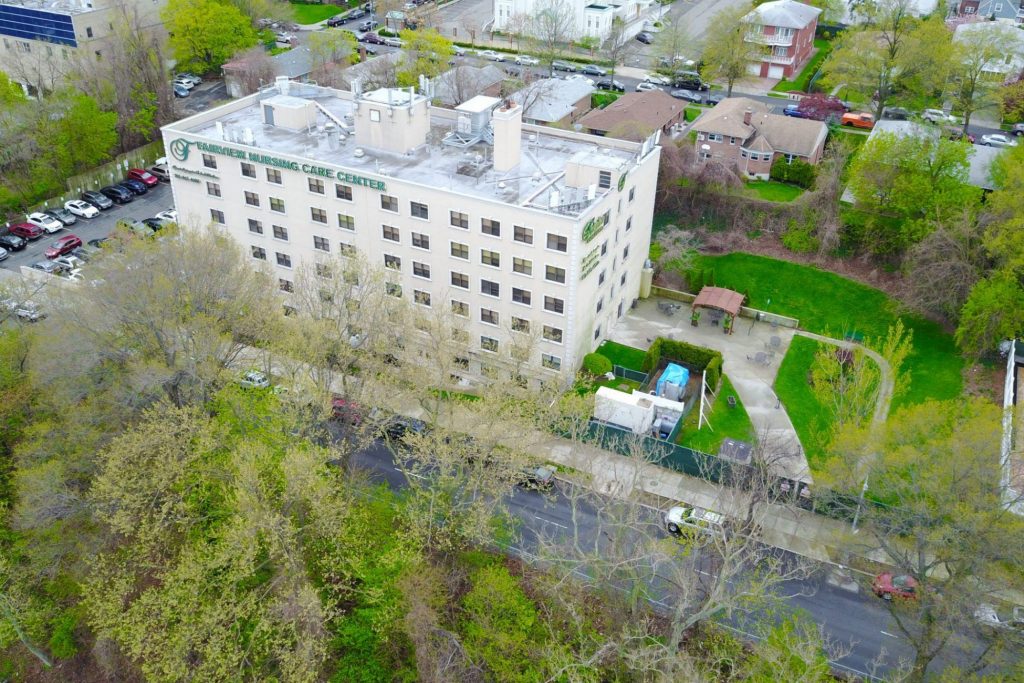
https://www.fairviewrehab.com/wp-content/uploads/2017/06/Fairview-Rehab-and-Nursing-Home-aerial1-e1500310350589.jpg

Gothamist

On Monday morning, at a private nursing home in Queens, a registered nurse arrived for what she thought would be a job interview. She found more than a dozen prospective applicants, all of them responding to the same urgent, unsolicited text message from the Fairview Rehab & Nursing Home. 

They were whisked through a brief training session and hired on the spot.

The nurse leading the orientation, who’d started at the facility only three days earlier, explained that much of Fairview’s regular staff and management are out sick with COVID-19. There are more than forty residents for every nurse, she said, before asking who in the group could begin a double shift immediately.

The situation inside disturbed even battle-hardened medical professionals. According to multiple healthcare workers who spoke to Gothamist this week, a majority of the 200 residents at Fairview are suffering from acute pressure ulcers — gaping sores on their shoulders or elbows or pelvic bones, indicating they haven’t been turned over in days.

One nurse was so horrified by what she saw she began taking detailed notes of her shifts, which she shared with Gothamist. Her accounts, relayed here, were confirmed by multiple staff members at Fairview. (We’ve agreed to withhold the names of some of the healthcare workers, because they were not authorized to speak to the press.)

“They’re slumped over in bed, just laying there rotting,” said one nurse. Another staff member, reached by phone mid-shift, said she wasn’t sure who was in charge at Fairview anymore. “It’s crazy in here right now,” she said. “Everything you’re hearing is true.”

Left unsupervised, some of the new personnel roamed the five-story building, finding shortages of gloves, hand sanitizer, stethoscopes and, most concerningly, medication. When they can’t locate a certain pill, they’re told to note that a resident refused it, rather than record it as out of stock, according to two of the employees.

Tests for COVID-19 are hard to come by at nursing homes across New York, and while nurses say they were told of at least one positive patient at Fairview, it’s not clear who else may be infected. Many of Fairview’s residents are in need of medical care typically offered at hospitals, employees said.

Some nursing assistants, newly out of school and certified through an emergency federal waiver, are given high-level tasks. One of them is observed inserting a nasal oxygen cannula upside down. The potentially deadly error is caught in time, but not before sending the elderly resident into a gasping fit of hypoxia.

By the end of their first shift, multiple newly-hired workers had quit, citing fear of being named in an inevitable malpractice suit.

“I don't think anyone is going in there and getting better,” said one nurse. “They’re in there getting worse.”

Repeated inquires to Fairview were not returned.

Press Republican 

New York's biggest concentration of COVID-19 deaths has come at state-licensed nursing homes — though the state has so far opted to keep a lid on the identity of the specific facilities.

A total of 860 New Yorkers have died from the virus at nursing homes since the pandemic reached the state five weeks ago, according to new state data.

And while the Cuomo administration in recent days enhanced the amount of data it makes available to the public regarding virus infections, the state Department of Health is so refraining from identifying the specific nursing homes where the contagion has taken lives.

The tally of infections at nursing homes and prisons — both representing places where scores of people live in close quarters — is growing daily, just as the state's overall death toll is also mounting.

Total statewide deaths so far stood at 5,489 Tuesday, April 8, up 731 in one day — the highest number of fatalities since the first death last month.

However, late Tuesday, New York City officials said it counted 806 fatalities alone in the city's five boroughs over the previous 24 hours, portending another alarming increase in deaths when the statewide data is updated Wednesday.

Though state officials imposed bans on visits to nursing home patients to curb the spread, patient deaths have now been recorded at nearly 300 facilities across the state. State Health Department officials say they are not revealing the locations of the homes because to do so could violate patient privacy rights.

This might be the tally of all those buried at Hart Island recently, which I believe also includes the under tallied homeless population

Monday, March 30, 2020

NYC nursing homes also lack adequate medical supplies to prevent COVID-19 contagion


THE CITY

Nursing homes have emerged as a second major front in New York’s battle to stem the coronavirus crisis — with their residents accounting for 15% of COVID-19 deaths in the state, the state Department of Health revealed Sunday.

Like staffers at many city hospitals, nursing home industry officials say they’re suffering from shortages of protective equipment and testing kits — even as they’re caring for a population with the highest risk of succumbing to the virus.

“I’m not getting the equipment I need to properly protect my staff and to properly protect my patients — and that is my absolute biggest concern,” said Scott LaRue, CEO of ArchCare, a network of five nursing homes with 1,700 beds in the city and upstate that’s affiliated with the Archdiocese of New York.

LaRue, who confirmed residents in his network have tested positive for COVID-19, said he spent Sunday delivering thousands of items of protective equipment to his facilities — but that it was barely enough for one day.

He said his workers don’t have enough surgical gowns and face shields to keep them safe when caring for symptomatic patients.

“We’ve been buying rain ponchos and beautician gowns off of Amazon,” said LaRue.


Tuesday, October 17, 2017

The mysterious and creepy abandoned nursing home

Hi Crappie, I was wondering if anyone knows what's going on with the Nursing Home that's on the beach in Neponsit. I remember that Mayor Giuliani ordered an evacuation in the middle of the night in the winter because of structural problems with the building.There was an outcry that some people died from the move and there was talk that the mayor was doing his developer friends a favor by condemning the property. Recently I was at Riis Park and noticed a police car sitting by the building all day. What's up?

The Nursing Home on the boardwalk at 116 street has a dead tree hanging over it's main entrance.The tree was half dead before Hurricane Katrina pushed the boardwalk against the building. You think someone would have removed the dead tree before it clobbers someone and they will sue the city for millions.

Thanks

- Rich


Thursday, April 27, 2017

Rivington House bill killed by senate committee

From DNA Info:

A bill introduced in the wake of the Rivington House scandal aimed at preventing future nursing home closures has been rejected by the State Senate's Health Committee.

The "Rivington Act," named for the Lower East Side nursing home for HIV/AIDS patients that in 2015 was shuttered and sold to condo developers, would have created a community-driven vetting process to make it more difficult for an operator to close a nursing home.

The bill would have required the Department of Health commissioner to disseminate a report to city and state officials as well as the local community board assessing the impact the closure would have on the community. Community members and elected officials would have then made recommendations to DOH before the agency made a decision on the plan to close.

It was first introduced by State Sen. Daniel Squadron, Assemblywoman Yuh-Line Niou and Assemblywoman Jo Anne Simon last year.

But the bill was voted down Tuesday afternoon by the Senate's Health Committee after committee chair State Sen. Kemp Hannon recommended a "No" vote, noting the bill was not "near shape" to become law.

"I don’t think it's in anywhere near shape to possibly become law, so I would recommend a 'No' vote, but if Senator Squadron’s going to pursue — and he’s not a shy one about pursuing — pursue the discussion we may see this bill again," said Hannon at Tuesday's committee hearing.

"It's defeated, but we will see it again," Hannon said after the vote.

Wednesday, September 28, 2016

Fuzzy memory on Rivington House deal

From the NY Post:

First Deputy Mayor Tony Shorris suffered numerous memory lapses about the Rivington Street nursing-home fiasco, telling investigators more than two dozen times that he couldn’t recall incidents, ­emails or details, records show.

Mayor Bill de Blasio’s right-hand man claimed he couldn’t remember a meeting with Stacey Cumberbatch, a city commissioner, or the content of any conversations they had about Rivington in 2014.

His schedule showed a July 25, 2014, meeting with Cumberbatch, then head of the Department of Citywide Administrative Services, where the deal was on the agenda.

Shorris also said he believed his decision that the property should remain a nursing home — rather than be sold on the open market — was communicated to the agency.

But he couldn’t recall how.

“I’ve asked myself that question. I do not remember the exact mechanism. I just don’t,” he told investigators for city Comptroller Scott Stringer, according to a transcript of the July 27 interview obtained by The Post through public-disclosure laws.

Asked if he had met with Cumberbatch about Rivington in 2014, Shorris replied, “Probably. I can’t say I remember exactly.”

Thursday, July 28, 2016

Smoking gun memo revealed

From Bowery Boogie:

The Department of Investigation, whose scathing report last week proved a mishandling by the de Blasio Administration in the Rivington House deed fiasco, released evidence late yesterday that the Mayor’s office deliberately covered up crucial information regarding the ongoing investigation.

Specifically, a deal memo from July 2014 that weighed the pros and cons of allowing the sale of the Rivington House nursing home and potential deed lifting that required use of the facility as a nonprofit. Take a look at “Option 2″ of the document (go to link),”transfer property to another nonprofit.” The advantage to keeping it so was listed as “maintaining property under city oversight and creates needed housing in a high value neighborhood.” But the drawback stated was “no revenue” presumably for the city.

The Allure Group purchased the Rivington House from VillageCare in 2015 for $28 million, paid the city $16.1 million to lift a restrictive deed, then sold the property to developers Slate Property Group, China Vanke Co., and Adam America Real Estate for $116 million earlier this year.


meanwhile, de Blasio was cracking jokes about it while attending the DNC.

Monday, March 24, 2014

Still no plans for Neponsit Health Care Center

From The Wave:

Waiting might be the new pastime in Rockaway. Residents wait for sand replenishment, for Build It Back to get started, for a new boardwalk, insurance payments, building permits, and so on. With all this waiting, it’s easy to overlook a soaring symbol of idleness – the Neponsit Health Care Center, closed since 1998.

Nearly sixteen years after it was abruptly closed on orders from the Giuliani administration, the beachfront property sits unused and decaying but costing the city plenty.

The Neponsit property, located at 149-25 Rockaway Beach Boulevard, is maintained by the New York City Health and Hospitals Corporation (HHC), and it pays a lot of money for it to sit idly. The various buildings aren’t being used but HHC says it pays $266,000 annually for security and basic repairs to the property. When asked about Sandy damage, HHC made no mention of flood damage but said that “the property sustained significant damage to the guard booth and fencing as a result of Hurricane Sandy.” The cost for repairs: $139,000.

Even though it is has been pouring hundreds of thousands of dollars every year into the crumbling eyesore, HHC says it has “no plans for a new structure or new use of the property.”

A covenant in the deed for the land says that it can only be used for a park or a public health facility and this can only be changed by an act of the state legislature.

Many ideas for the land have been presented at various meetings. A hearing was held in November 2006 as HHC wanted public comment on a plan to turn over the facility to the City of New York and opening the site to the development of single family homes. This idea received mixed reviews. Some community members offered alternative suggestions such as a hotel, a school and a rehabilitation center for “Wounded Warriors.” Following the hearing, the HHC vote to turn the property over to the City was postponed indefinitely and the buildings continue to go unused. The carrying costs continue as well.


The land can only be used as a park or health facility, so naturally, the city wanted to develop it into homes.

Sunday, May 26, 2013

The latest numbers from the Shafran campaign

Austin Shafran's campaign contribution breakdown

Total $58,802 as of 3/11/13
$87,217 as of 5/11/13

Disclosure Period 8                                    $28,415      3/12 to 5/11

Total Number of Contributions $28,415
Total Number of Contributors 169

Shafran Family/Friends                                         5                  $3,385

Political/Lobbyists                                               13                    $635

Real Estate / Developers / Construction               10                 $2,150

Lawyers                                                             28                  $4,640

Unions                                                                 6                   $4,150

Parker Jewish Institute                                         2                      $350

Union Plaza Nursing Home                                   1                  $1,000

57.4% of contributions come from these categories $16,310
38.5% of contributors come from these categories 65

Other important info:

Bundlers
Amount Bundled/Connected to Bundlers:             22                    $4,125

Christopher Renfroe                                            15                    $2,200

Ryan Walsh (ran unsuccessfully for 2001 City Council                  $1,925
race in the 20th District as a Republican)

36 of 169 contributors, or 21.3%, are from the 19th Council District.
$5,275* of $28,415 or 18.6%, is from the 19th Council District.

*However, $3,175 of that total is from himself; his mother; father; and aunt. Discounting those contributions, it's $2,100 or 7.4%.

Friday, March 22, 2013

Taxpayer-funded Lexus?

From the NY Post:

A Queens nursing-home director billed taxpayer-funded Medicaid for his . . . Lexus!

The 240-bed Elmhurst Care Center overcharged Medicaid by some $1.65 million — including more than $105,000 in expenses for a Lexus used by Executive Director Mark Persaud and another vehicle assigned to the marketing executive, Gov. Cuomo’s Medicaid probers claim.

The six-year audit, conducted by state Office of Medicaid Inspector General James Cox, concluded that expensing the program for the hospital administrator’s luxury vehicle was beyond the pale.

“Costs pertaining to luxury automobiles are not related to patient care. Consequently, disallowances were necessary,” said the OMIG audit, which examined billings from 2000 to 2006.

Elmhurst Care insisted the expenses were aboveboard.

Saturday, January 26, 2013

Long Island Sounds like B.S.


From the NY Times:

New York City’s health commissioner ardently defended the city’s decision not to evacuate hospitals and nursing homes before Hurricane Sandy, facing down withering questions Thursday from City Council members who contended that some old people may have died as a result.

The commissioner, Dr. Thomas A. Farley, said that the city and state health commissioners — ultimately reporting to the mayor — had made the best decision they could using information from the National Weather Service, which he said initially showed the brunt of the storm hitting Long Island Sound.

By the time on Sunday that it was clear the storm was threatening the city more directly, he said, “We couldn’t have accomplished the evacuation of everybody in Zone A before zero hour,” which appeared to be as early as midnight.


Part of Long Island Sound lies between Queens and the Bronx, so a storm surge should have been expected regardless of where along the Sound the storm touched down. Plus, the hurricane would obviously have had to pass over land before reaching Long Island Sound. (Makes me wonder if the health commissioner, city council and NY Times know where LI Sound actually is, since this was not explored further.) And how is it that City officials got different information from the National Weather Service than every media outlet that reported on the storm? I recall phrases like, "storm of the century" and maps showing the amazing width of the storm well before midnight, all of them showing a direct hit on NYC.

Of course, the decision to not evacuate had more to do with piss-poor planning: there was no place to send the evacuees and it cost a lot of money that the administration didn't want to spend. And despite the nonsense Farley spewed during this dog-and-pony show, people DID die after being evacuated, because the places they were sent were not prepared to take care of them. Here's what some of them are going through now. Sad, isn't it?

Monday, December 10, 2012

Problems at Far Rockaway nursing home


From the Daily News:

Sandy has piled on to a hospital bankruptcy debacle to write a prescription for disaster.

Conditions have deteriorated at a Rockaway health facility that cares for some of the most at-risk patients, sources told the Daily News.

The Peninsula Center for Extended Care and Rehabilitation is under siege with an overload of patients, frazzled employees and a lack of fresh food, several staffers told The News on Thursday.

The nursing home, affiliated with the shuttered Peninsula Hospital, has been receiving patients from nearby facilities severely compromised by the superstorm.

“It’s exasperating. We’re short-staffed,” said one employee who requested anonymity. “It’s a nightmare. It just seems like there’s no end in sight.”

The 200-bed nursing home is filled to the brim and doesn’t have enough staff to properly care for the frail patients, employees said.

The number of residents assigned to each nursing team has nearly doubled, several staffers said, and there isn’t a working kitchen to provide the residents with food. Meals are being shuttled in from an outside facility.

“The patients are starting to act out,” said the staffer. “They’re used to a certain standard of care and it’s lacking on all sides. I feel very sorry for them.”

“Patient safety is at risk,” said another worker who also requested anonymity.


Who allowed the nursing home to repopulate when these problems were evident?