Showing posts with label fema. Show all posts

Friday, September 9, 2022

State and city shafts the poor immigrants left homeless after Ida


City Limits 

Vicente Guerrero, 40, finds it hard to believe that a year has already passed.

“It can’t be a year since the flooding,” Guerrero said by phone on Sept. 1, the one-year anniversary of the day the remnants of Hurricane Ida passed through New York, washing away everything in his three-bedroom basement apartment in Flushing, Queens.

After losing his belongings, Guerrero slept on the couch of a friend in Manhattan—a fellow food delivery worker like himself—for more than four months, until he finally found a room in a three-bedroom apartment in Queens that he could afford, and that was not in a basement.

Guerrero’s home was one of 11,000 damaged by floods from Hurricane Ida, according to Gov. Kathy Hochul’s office. As the one-year anniversary of the storm passed this week, many of those impacted continue on a slow recovery: homeowners who filed a negligence claim against the city are getting denied, and more than 100 displaced people who were placed in hotels are still in them.

And while 41,367 households across New York state were approved for $223.3 million in disaster assistance from the Federal Emergency Management Agency (FEMA), another Ida relief fund established by the city and state to help undocumented storm victims has been less impactful.

The Ida relief fund for “excluded” New Yorkers was set up by the city and state for people who suffered damages from the historic flooding but didn’t qualify for aid administered by FEMA because of their immigration status. But a year later, after extending the application period several times, just a fraction of the funding has been used. The program closed to new applicants definitively on April 29.

According to New York’s Department of State, out of 554 applicants, 373 were approved for aid and 330 have received a cash payout to cover what they lost. In total, just under $2 million—or $1,901,034—of the $27 million allocated for the program has been used and distributed to storm victims as of Sept. 1.

Advocates point to several reasons for the lackluster participation numbers. The relief fund was announced by city and state officials on Sept. 26, more than 20 days after the storm hit New York, when some victims would likely have already moved out of damaged residences without documenting the losses they’d suffered.

The six community-based organizations (CBOs) charged with reviewing applications and administering the funds have explained that there are multiple checks to go through before an applicant can access funding, and relies largely on a victim’s ability to gather evidence of damages.

That was one of the reasons Guerrero said he never applied for the fund: Along with a general distrust of government programs, he anticipated it would be difficult for him to substantiate what he spent related to his displacement since he was more focused on surviving in the immediate aftermath of the storm, rather than documenting every step of his loss, he said. 

Those who applied and were approved could receive a maximum of $72,000, including up to $36,000 in grants for housing-related assistance and up to $36,000 in assistance for other needs, like vehicle damage, moving expenses, and childcare. So far, 34 percent of the dispersed aid went to direct housing-related assistance, while the majority was for the “other needs assistance” category.

Since May, when the fund closed for good, 42 new applicants received a reimbursement. It’s unlikely that the 43 applicants still pending will receive the maximum aid amount, and even if that happens, there would still be several millions left unused from the $27 million allocated for the program.


Friday, January 21, 2022

Ida flood homeowner victims are still getting shafted by Biden

Queens Post 

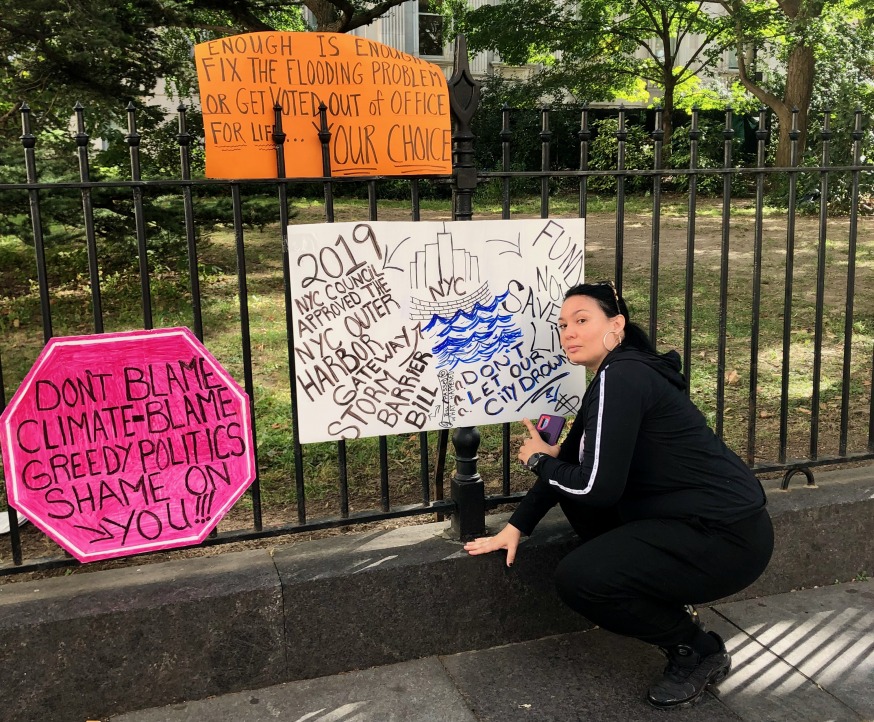
Nearly four months after the remnants of Hurricane Ida killed 13 New Yorkers, residents in the hardest-hit areas like Woodside are still struggling with government agencies for financial assistance to repair flood damage.

Many of the victims allege that the damage to their homes is the result of the city’s failure to fix the drainage and sewerage system. They cited decades-long calls for updates to the sewer system.

Linda Carlson, who has lived in her Woodside home since 1994, took on four feet of water when Ida struck on Sept. 1, with three inches of rain falling in just an hour. A contractor quoted her $34,000 in damages. “I was one of the lucky ones,” she said.

Carlson was approved for $11,773.68 in assistance from the Federal Emergency Management Agency, more than what many of her neighbors were approved for, she said.

She was granted an additional $1,419.86 when she appealed the offer—and said others affected by Ida should also contest what’s offered. “Everybody should. This was caused by the city,” she said. “We’ve been fighting for decades to have the infrastructure upgraded.”

Danette Rivera nearly drowned in her Woodside home where she’s lived for 14 years. Her son, who is legally blind, had to pull her out of the basement through a small window as it filled with seven and a half feet of water, she said.

“I’m grateful that I’m a survivor. Not everyone has that story to tell,” she said. “But I’m angry, I’m upset and I’m pissed off. This shouldn’t have happened to me, and it shouldn’t have happened to anybody else. People shouldn’t have died.”

Rivera, who estimates that the cost to repair the damage to her home is about $64,000, also applied for assistance from FEMA, but would not say how much she was offered.

The amount she was approved for fell well short of the cost of the damage, she said.

Like Carlson, she appealed her offer, but received a letter asking for documentation she said had already been sent to the agency. “The appeal process seems like it’s a gimmick,” Rivera said. “Basically, it’s like a runaround.”

FEMA spokesman Scott Sanders told the Queens Post late last year that there could be a variety of reasons why someone might receive less funding than they had hoped. “If you gave me a thousand different applicants, there’s a thousand different stories in there,” he said.

Federal disaster funds, he said, are “not a substitute for insurance. It can supplement insurance, but it can’t duplicate assistance people may get from other sources.”

Majority Leader Senator Schumer has a lot of 'splaining to do also.


Sunday, October 17, 2021

Woodside homeowner still having issues with FEMA emergency funding after phony consoling by the Blaz

https://nypost.com/wp-content/uploads/sites/2/2021/10/Julia-Nieves2.jpg?quality=90&strip=all&w=744

NY Post 

A Hurricane Ida flooding victim that Mayor Bill de Blasio wrapped his arms around in an emotional scene last month called out Hizzoner on the radio Friday, saying the feds failed to deliver the aid he promised.

“You hugged me and told me that FEMA would take care of everything,” Woodside resident Julia Nieves told de Blasio during his weekly appearance on WNYC’s ‘Brian Lehrer Show’. “Unfortunately, FEMA didn’t give the [$36,000] to anyone in our Woodside homes.”

De Blasio had toured the damage along with U.S. Rep. Alexandria Ocasio-Cortez (D-Queens/The Bronx) and U.S. Senate Majority Leader Chuck Schumer, following days of complaints from locals about City Hall’s lackadaisical preparation and sluggish response to the flooding.

The $36,000 referenced by Nieves is the maximum award available for homeowners through the U.S. government’s disaster relief program — but locals, including Nieves, say they’ve received just a fraction of that amount.

“I can’t replace the water heater, a boiler, replace all the walls,” she added. “You were in my basement and saw what happened to my walls! They had to remove everything because of the mildew and the smell was horrific.”

 Instead, the retiree said on the radio program that she’s been forced to refinance her home to come up with the $11,000 for her new water heater and boiler — and she still needs to buy a new refrigerator, washer and dryer.

“How does this work for everyone in the community of Woodside, Queens who [was] flooded by Ida,” she concluded plaintively — leaving de Blasio on the defensive and promising the city would intervene.

“Julia, look, we’ve got to get you more help, that’s the bottom line,” Hizzoner said. “I saw the destruction in your basement. It’s clearly a lot of money, we’ve got to get you back on your feet.” 

She should also go after Senate Majority Leader Chuck Schumer to find out why FEMA is dragging their feet.


Tuesday, June 29, 2021

Cuomo kills wetlands for BJ's


 Curbed


Saturday, May 2, 2020

Breaking News: Mayor de Blasio suddenly doesn't want to convert hotels into homeless shelters

The Intercept

Mayor Bill de Blasio’s administration is opposing legislation that would allow thousands of at-risk homeless New Yorkers to live in vacant hotel rooms for the duration of the coronavirus crisis, claiming the price tag is too hefty — but according to advocates, legislators, and City Council staff, the program could be paid for using federal government funds.

The 80,000 New Yorkers who sleep in the city’s shelters, streets, and subways are among the most vulnerable to Covid-19, the disease caused by the novel coronavirus. On Wednesday, the mayor announced that the city would move 1,000 people experiencing homelessness into double-occupancy hotel rooms each week going forward, in addition to the 2,500 who had already been given hotel rooms. But homeless individuals and advocates say this isn’t nearly commensurate with the severity or urgency of the crisis.

City Council member Steve Levin has introduced legislation to offer all residents of congregate shelters and all unsheltered single adults — 12,000 people in total — the option to relocate to some of the 100,000 vacant private hotel rooms across the city. On the current course, Levin told The Intercept, it’s “inevitable” that New York’s shelters will see the devastating outbreaks experienced by shelters in other cities. Already, 94 of the city’s roughly 100 congregate shelters, where single adults live as many as 20 to a room and eat in communal areas, have seen at least one positive Covid-19 case.

De Blasio’s administration opposes the bill, testifying at a Council hearing that it would cost the city $495 million over six months. “I don’t see that as a real number,” Levin told The Intercept. The city has not answered the Council’s questions about how it arrived at the estimate but appears not to have factored in the steep drop in the market rate for hotel rooms amid the pandemic. Levin estimates the bill will cost just $108 million, excluding operational and social services costs.

Regardless of the total price, it is likely that the bill can be footed by the Federal Emergency Management Agency, or FEMA, which reimburses costs for approved state disaster response programs. FEMA is currently funding California Gov. Gavin Newsom’s “Project Roomkey,” which will eventually house tens of thousands of people in 15,000 hotel rooms.

Wow, good work there Levin. Although you should include those other costs that way you can expose de Blasio lies better.

Wonder what Maspeth and East New York think of the Mayor's harsh decision.

Saturday, April 25, 2020

The U.S. Comfort and Jacob Javits triage hospital went to waste


 https://navylive.dodlive.mil/files/2020/03/Comfort2.jpg

NY Post

New York health officials were warned in writing that a Brooklyn nursing home where 55 patients have died of coronavirus was overwhelmed — weeks before it began topping the state’s official list of resident COVID-19 deaths, damning emails show.


Cobble Hill Health Center CEO Donny Tuchman sent a desperate email to state Health Department officials on April 9, asking if there was “a way for us to send our suspected covid patients” to the hospital built inside the Javits Convention Center or the US Naval hospital ship Comfort — the under-utilized federal medical facilities on Manhattan’s West Side.


“We don’t have the ability to cohort right now based on staffing and we really want to protect our other patients,” Tuchman wrote in a chain of the emails reviewed by The Post.
 
He was denied.

I was told those facilities were only for hospitals” to send their overflow patients, Tuchman said.
At the time Tuchman sent his plea, only 134 of the 1,000 beds at the Javits Center were full and the Comfort — which had just been reconfigured to treat up to 500 COVID-19 patients — had a mere 62 on board.

Adding insult to injury, the Navy hospital ship wound up treating just 179 patients before Gov. Cuomo on Tuesday said it was no longer needed.

So I ask again, but to #PresidentCuomo and the New York State Dept. Of Health and not when but why haven't they. Although Javits was available and had plenty of beds.


https://blogger.googleusercontent.com/img/b/R29vZ2xl/AVvXsEjAm-07LG3splEbon0EPw88omcQN1lIuYlpxwUEu70gfELU-JLzx23spvQdU9Mt9aUQJNHIL3hOobIIOkjhfzub2DYyUsFKixSb0hVd5fhyNH5vrJqlyX9gnpK-fPTOwotEqbqHj7jGOrs/s640/Screenshot_2020-04-16+JQ+LLC+Impunity+City+on+Twitter+When+the+fuck+is+the+city+going+to+open+these+other+triaged+hospitals%255B...%255D.png

Update: We should all ask FEMA, the Department of Defense and the President too, looks like Javits went to waste as well.

Gothamist

The federal government is moving forward with plans to shutter the little-used field hospital inside the Javits Center, as the rate of COVID-19 hospitalizations in New York continues to decline. The USNS Comfort, also practically empty, is expected to soon depart as well, President Donald Trump announced earlier this week.

"We are encouraged by the data which suggest the curve is flattening in New York and we are working with the city and state to begin the strategic drawdown of resources," a spokesperson for the Federal Emergency Management Agency told Gothamist on Friday.

The spokesperson said there was no set date for either closure. But according to a FEMA official who spoke with ABC News, the Navy ship will leave New York as soon as April 30th. The Javits Center is slated to close on April 30th, according to the unnamed official.


The two facilities have treated 1,100 patients in total, and never came close to approaching their full capacity. As of Friday, just 32 patients were receiving care aboard the Comfort, which has space for 1,000 people, the FEMA spokesperson said. Of the 2,500 beds inside the Javits Center reserved for COVID-19 patients, only 141 were full.

Hospital workers have previously complained about the strict intake procedures at the two Department of Defense facilities, pointing to a 25-point checklist that excluded many would-be patients from being transferred from overrun hospitals, according to the Post.


Saturday, March 21, 2020

President Trump sends 42 billion dollars from FEMA to New York State


The Trump administration has issued a Major Disaster Declaration for New York, the epicenter of the coronavirus outbreak in the United States, officials said.

The emergency declaration Friday from the Federal Emergency Management Agency (FEMA) unlocks access to a nationwide pot of $42 billion in vital aid from the Disaster Relief Fund, as the number of confirmed New York cases soar and critical medical supplies remain scarce, according to Senate Minority Leader Charles Schumer.

“With no time to waste, the administration heeded the call and approved the nation’s first Major Disaster Declaration in response to the coronavirus, right here in New York,” Schumer said in a statement.

“With more and more cases confirmed here each day, it’s imperative that the federal government does everything within its power to stem the spread of the deadly coronavirus.”

 The declaration is typically ordered in the wake of natural disasters, like Hurricane Sandy or other major storms and flooding events.


Tuesday, October 29, 2019

7 years after Hurricane Sandy, homeowners and public housing residents in flood zones are still not protected

https://www.carbonbrief.org/wp-content/uploads/2015/10/hurricane-sandy-damage-new-york.jpg

THE CITY

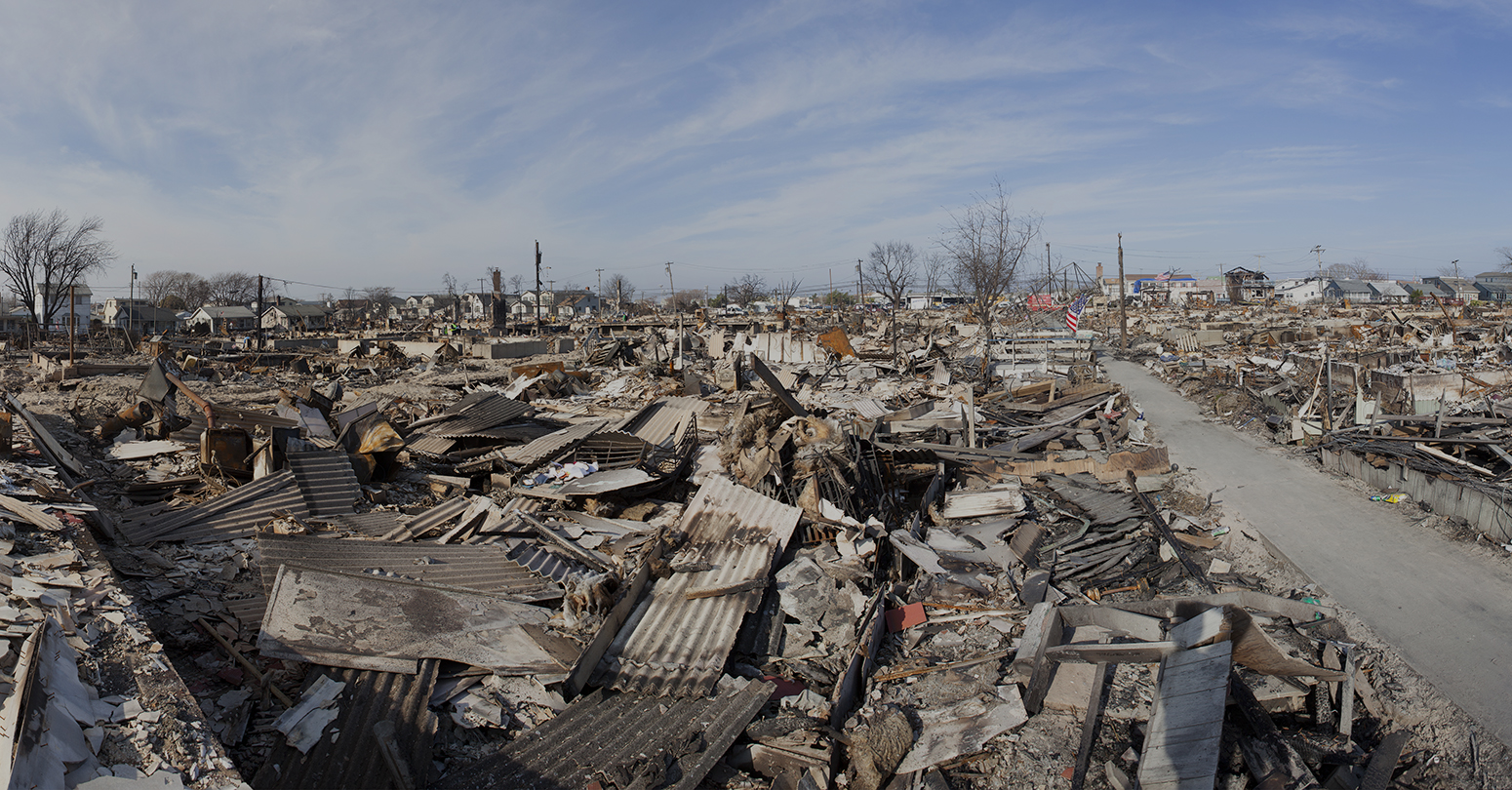
Seven years after Superstorm Sandy deluged New York City, more than eight out of 10 properties in coastal areas the federal government deems extremely vulnerable to the next disaster are without flood insurance, an investigation by THE CITY found.

Meanwhile, the number of flood insurance policies protecting New Yorkers has dropped markedly since the end of 2013 in two of the boroughs hardest hit by the storm: Staten Island, which saw an 18% decline, and Queens, which experienced an 8% decrease.

Residents of roughly 250,000 houses and apartments within red-flagged flood zones are left exposed — thanks to the high cost of insurance policies and a protracted disagreement between local and federal officials.

City and Washington bureaucrats are at least five years away from forging a common set of flood maps that will determine who must buy insurance — leaving New Yorkers reliant on risk ratings little changed since the 1980s.

Mayor Bill de Blasio is disputing the map the Federal Emergency Management Agency (FEMA) created in 2015, which significantly expanded areas identified for high risk of flooding, based on Sandy’s path of destruction.

So for now, only property owners with federally backed mortgages who are living within the old, pre-Sandy zone — last updated by FEMA in 2007 — are required to purchase flood insurance.

Homeowners end up mired in confusion over seemingly contradictory rules: In some cases, people whose properties were devastated by Sandy are living without flood insurance while new or rebuilt homes next door must be made floodproof.

As it all gets sorted out, many homeowners are rolling the dice — skipping often-pricey flood insurance and praying another storm doesn’t send the waters of New York Harbor, Jamaica Bay or Buttermilk Channel barrelling into their living rooms.

“I know the danger. Trust me, I know,” said Semyon Krugolets, 66, a retired cabinet maker whose Staten Island home took on two feet of water during Sandy. “But sometimes you have to make these decisions.”

THE CITY


In March 2015, Mayor Bill de Blasio trekked to Brooklyn’s Red Hook Houses to announce what he dubbed the biggest single Federal Emergency Management Agency grant in history: $3 billion to rebuild and upgrade city public housing developments slammed by Superstorm Sandy in 2012.

He declared construction would begin right away in NYCHA complexes still reeling from the storm that left more than 80,000 tenants without electricity, heat and elevators for weeks — making some residents virtual prisoners in their homes.

But a review by THE CITY found that seven years after Sandy damaged 200 buildings in 35 developments along waterfronts from Red Hook to the Rockaways to the Lower East Side, work has been completed in just two complexes, with a third development nearly done.

And while the mayor pledged that the federal money would be used to stormproof entire NYCHA developments slammed by Sandy, his promise proved premature: FEMA ultimately agreed to pay only for specific buildings battered when the superstorm hit on Oct. 29, 2012.

 Meanwhile, records show city investigators flagged an alarming spike in costs at one NYCHA Sandy rebuild project at the very site where the mayor announced the FEMA grant: the Red Hook Houses.

A vendor’s project proposal jumped from $89,000 to more than $500,000 — and a manager told investigators this happened because de Blasio was pressuring them to get the job done faster, according to a city Department of Investigation report.
Among the findings of THE CITY’s review:

• Construction projects at 31 of the 35 damaged developments missed their original start dates, in some cases by a few months, but in most instances by a year or more. Work at the Lower East Side’s Riis Houses, for example, was scheduled to begin in the fall of 2015 but didn’t start until six months ago.

• The FEMA-funded fixup has been completed at only two NYCHA developments: Lower East Side Rehab and Ocean Bay (Oceanside) in the Rockaways. Work at Harlem’s Rangel Houses is 99% complete, while NYCHA just awarded a contract for the Lincoln Houses in East Harlem. The rest are now under construction, including seven that NYCHA promised will wrap up by year’s end.

• Records show NYCHA hired one contractor later caught cheating workers on wages, another that ended up barred from doing city school construction, and another arrested on charges of stealing heating oil from a competitor when he had an emergency Sandy contract selling heating oil to NYCHA.

Monday, July 9, 2018

Developers love flood zones

From the NY Times:

Rather than retreating from flood-prone neighborhoods after Hurricane Sandy, some developers are wading deeper into waterfront markets, especially in Queens and Brooklyn, where they are finding large parcels of land close to mass transit. These are calculated risks, bolstered by years of flood-zone price growth and unwavering demand.

Whether these new apartment buildings can endure another major storm does not seem to be a concern for most residents, who are glad to have new options in inventory-starved markets. Critics, though, ask whether the neighborhoods can withstand the surge of new development and the stress it will add to an already strained infrastructure. These new buildings might remain unscathed in a flood, they say, but what about the damage caused by the torrent around them?

Waterfront building has continued apace since Hurricane Sandy, and it could soon accelerate. As of January, there were roughly 12,350 new apartments under construction or planned in the city’s worst flood zones, according to Localize.city, a real-estate data website. That means 12.4 percent — or roughly one in eight new apartments — will be built in a high-risk flood zone, up from 10.7 percent in 2014, said Tal Rubin, the company’s vice president of research. And last year, 2,362 flood-zone units were completed — nearly double the number delivered in 2014, she said.

The largest share of these buildings is on the southern tip of Brooklyn, in areas like Brighton Beach, Coney Island and Gravesend, where a total of 45 projects — about a third of all flood-zone buildings — are rising. They represent a combined 1,571 units. Pricier precincts near Manhattan, like Long Island City in Queens, and Greenpoint and Williamsburg in Brooklyn, had the most units overall, with a total of 5,561 apartments in 20 buildings, accounting for 45 percent of new flood-zone units.

Thursday, May 3, 2018

Brooklyn CB is fighting back against illegal curb cuts


From Brooklyn Daily:

The mayor must step in to force city agencies to crack down on selfish Bensonhurst homeowners who take away already-scarce street parking spots by illegally cutting their curbs and paving their front lawns into driveways, according to the neighborhood’s district manager.

“The [Buildings] violations are all bark, no bite,” said Marnee Elias-Pavia.

Pavia sent Hizzoner Community Board 11’s recommendations for how agencies should punish offending homeowners in an April 18 letter after board members unanimously adopted the resolution to do so at its April 12 general meeting. In the letter, Pavia outlined the decades-old problem and its environmental impact — made worse by the fact that the Federal Emergency Management Agency classified some affected areas as particularly susceptible to flooding, which the proliferation of concrete and lack of grass promotes, she wrote.

“Our topography creates a bowl effect and prevents tidal and storm water absorption,” she wrote. “We must address the lack of absorption created by the removal of front yards in the northern portion of the district to increase absorption and resiliency.”

CB11 demands that the buildings agency make inspecting and even re-inspecting properties with alleged illegal curb cuts and driveways a higher priority — especially for flood zones — and to notify the community board when properties receive violations for illegal curb cuts or driveways. The letter also wants the city to improve inter-agency communication by having the Department of Buildings coordinate with agencies in charge of roads, parks and environmental concerns.

“There needs to be a sharing of information [among the agencies] — there’s an environmental impact, so the Department of Buildings should be sharing with the Parks Department,

Pavia also wrote that the city should increase and enforce fines for violations, push homeowners to use permeable pavements on legitimate driveways to help drain stormwater, and require homeowners to fix curb-cut violations before selling their properties — among other suggestions.

Saturday, August 19, 2017

Development along coast is questioned

From DNA Info:

Critics of the city's plan to build a school, offices and 1,000 apartments on the Long Island City waterfront called it "irresponsible" to develop the site because it's located in a hurricane evacuation zone that's prone to flooding during storms.

Advocates said they would rather see the two city-owned parcels — located next to the East River at the end of 44th Drive — converted to public parkland, with plantings, oyster beds and other green infrastructure to help make the area more resistant to floods.

"We think continuing to build in a flood plain is irresponsible," said Diane Hendry, a member of the LIC Coalition, an advocacy group that launched a petition last week opposing the city's plans. "The land is a natural wetlands. It should be preserved. We do not want this land used for 1,000 luxury units."

The city's Economic Development Corporation and developer TF Cornerstone are planning the mixed-use project, which will include a 600-seat school, offices and light manufacturing space, as well as at least 1,000 apartments, a quarter of which will be set aside for affordable housing.

The development will rise on two sites across the street from one another: 5-40 44th Drive, currently a Department of Transportation facility, and 4-99 44th Drive, which includes a Department of Education parking lot and the shuttered Water's Edge restaurant.

The site is located within Hurricane Evacuation Zone 1, what the city has designated as the most likely to flood during a storm. The parcels also sit on the border between two FEMA flood zones with the highest risk of flooding, according to a map from the agency.

Wednesday, October 19, 2016

Feds amend flood maps

From Crains:

Federal officials have agreed to amend New York City's flood maps a year after the de Blasio administration filed an appeal on the grounds the charts were too pessimistic.

The new maps will likely shrink the boundaries that dictate who must purchase flood insurance, and may prescribe lower flood elevations, which would save some building owners money in flood-insurance premiums.

"Our city needs precise flood maps that reflect real risks, both today and years from now—and we have to do that fairly," Mayor Bill de Blasio said in a statement.

Flood insurance is required for any homeowner in a flood zone with a federally backed mortgage, but for decades the government subsidized premiums, which came back to haunt the National Flood Insurance Program after payouts from a series of catastrophic storms depleted its cash reserves.

Sunday, July 31, 2016

Firefighter and wife lied about Sandy damage


From CBS:

An FDNY firefighter and his wife stood accused Monday of lying to the Federal Emergency Management Agency to collect thousands of dollars in Superstorm Sandy benefits.

As CBS2’s Ali Bauman reported, 12-year FDNY veteran Christopher Poje, 43, and his wife, Margaret, 39, walked out of court in Queens after their arraignment Monday afternoon,

Christopher and Margaret Poje both face grand larceny charges, while Margaret Poje also faces forgery charges.

Sunday, June 28, 2015

City disapproves of FEMA's flood maps

From the Daily News:

In a move to help homeowners who face the risk of drowning in huge insurance bills, the city is appealing new FEMA maps that nearly double the number of city properties in flood zones.

Officials say up to 35% of the area the feds designated as flood-prone is labeled inaccurately.

The FEMA maps, which came out in January, placed about 400,000 city residents in flood zones, up from 218,000 under the old ones. The feds’ huge flood zone included 71,500 buildings, nearly twice the 36,000 that the old FEMA maps had.

Many of the homes affected are in Canarsie, Brooklyn, and Howard Beach and the Rockaways in Queens.

Saturday, February 14, 2015

Feds to pay for Rockaway boardwalk rebuild

From the Daily News:

The city is poised to snag $480 million in federal funds for a storm-proof boardwalk in Rockaway, officials said on Wednesday.

The Federal Emergency Management Agency signed off on a deal to repair or replace more than 1 million square feet of boardwalk beams ravaged by Hurricane Sandy in 2012.

“It's great news that FEMA has green-lighted this massive federal grant,” said U.S. Sen. Charles Schumer, who lobbied for the funds.The new boardwalk is scheduled to be completed by Memorial Day 2017. Sections will remain open while work continues.

City and state officials still need to approve the deal, but it isn’t expected to hit any major roadblocks.

Friday, February 6, 2015

Sandy victims can pay money back slowly

From the Daily News:

Seniors at a Queens assisted living facility made homeless by Hurricane Sandy will not have to dig into their meager bank accounts to pay back federal disaster relief aid, lawmakers announced Tuesday.

About 30 residents of Belle Harbor Manor in Rockaway were driven to panic in November when the Federal Emergency Management Agency sent letters asking them to return funds because they were also reimbursed by insurance companies.

“I will sleep better tonight,” said Angelo Cantanzaro, who has lived at the complex for 10 years and was asked by FEMA to repay almost $2,500. “The poor people got a break.”

The residents had collectively received $108,598, with most of that money intended to cover temporary housing, according to data obtained through a previous public records request.

They were moved to different state-funded shelters, and they used the money to purchase vital items such as food and clothing.

Sunday, December 7, 2014

Tunnels get federal money

From AM-NY:

The Hugh L. Carey and Queens Midtown tunnels are getting $336 million of repairs from federal superstorm Sandy aid, officials announced Thursday.

The money for the MTA from the Federal Emergency Management Agency will go toward fixing architectural, mechanical and electrical parts and temporary flood walls at entrances, and elevating key equipment, according to federal officials.

The aid will also cover an emergency generator at the Governors Island ventilation building near the Carey (Brooklyn Battery) tunnel. The tunnels, which together see more than 100,000 cars a day, were flooded with about 80 million gallons of water during Sandy.

Monday, November 10, 2014

Assisted living residents asked to return Sandy aid money


From CBS New York:

Several assisted living residents in Queens received a shock recently after FEMA asked for reimbursement on aid given out following Superstorm Sandy.

Residents of the Belle Harbor Manor assisted living center in the city’s Rockaway Peninsula spent four months after Superstorm Sandy moving through a series of emergency shelters due to flooding at the facility.

Now, the Federal Emergency Management Agency wants at least a dozen of those disabled, elderly and mostly poor residents to return thousands of dollars in disaster aid.

“We’re on a fixed income. I don’t have that kind of money!” said 61-year-old Robert Rosenberg, who suffers from a spinal disability and other chronic health problems.

FEMA said the money should never have been paid out since it was meant for temporary housing and instead the residents were moved from one state-funded shelter to another.

Following the storm, residents were forced to move to a huge evacuation center set up inside a Brooklyn armory, then live four-to-a-room at a hotel in a crime-plagued neighborhood, then to a halfway house on the grounds of a partly abandoned psychiatric hospital in Queens, where they bunked on cots and were barred from having visitors in their rooms.

Thursday, August 7, 2014

Emergency housing for storms, not the homeless

From Brick Underground:

My first impression of the three-bedroom on the edge of Brooklyn Heights? It’s airy and light, 800 square feet, with a view of the Manhattan Bridge and One World Trade Center to boot. Somewhat sparsely furnished, it’s outfitted in a crisp, unfussy style that’s modern without being cold. In short, it’s the opposite of what I’d expect to live in if, say, a tornado had just leveled my apartment building.

But that’s exactly what it is: a prototype of an urban post-disaster shelter that could become New York’s answer in the event of another Hurricane Sandy.

For the last week, Jim McConnell, an assistant commissioner for strategic data in the city’s Office of Emergency Management, and his husband, Joe Hickey, have been acting as guinea pigs, living in the place and recording their observations. Another 30 OEM staffers have signed up to do the same.

Why all the testing? The problem is that in a place as densely populated as New York, other types of post-disaster housing, like the infamous FEMA trailers used in New Orleans after Hurricane Katrina, don’t work—particularly if victims of a hurricane, tornado, earthquake or explosion have to live in the place for a year or more until permanent housing is built. No, in New York City, we need multi-story accommodations that mimic our full-time abodes.

The prototype, situated on a city-owned lot next door to OEM’s headquarters, is a three-story building with an apartment on each floor: a 500-square-foot one-bedroom on the ground floor, an 800-square-foot three-bedroom on the second floor, and a 500-square-foot one-bedroom on the third floor.

The structure took a mere two days to put up, but it’s built to last for 50 years and can be moved to different sites. As many as 20 of them can go up on a single lot, preferably close to affected neighborhoods so disaster victims can stay close to transit and schools. This past April, the prototype was trucked to the city and constructed at a cost of $1.5 million. (The price should come down if and when it’s mass produced.)


Shouldn't these be built now to alleviate the emergency homeless crisis, and not shelved for 100-year storms? Oh wait, we sold all the city owned land for $1 to developers of luxury condos. Never mind.