Showing posts with label homeless hotels. Show all posts

Sunday, October 2, 2022

Migrant aftershock Delight

https://queenspost.com/wp-content/uploads/2022/09/Shelter.jpg

Sunnyside Post 

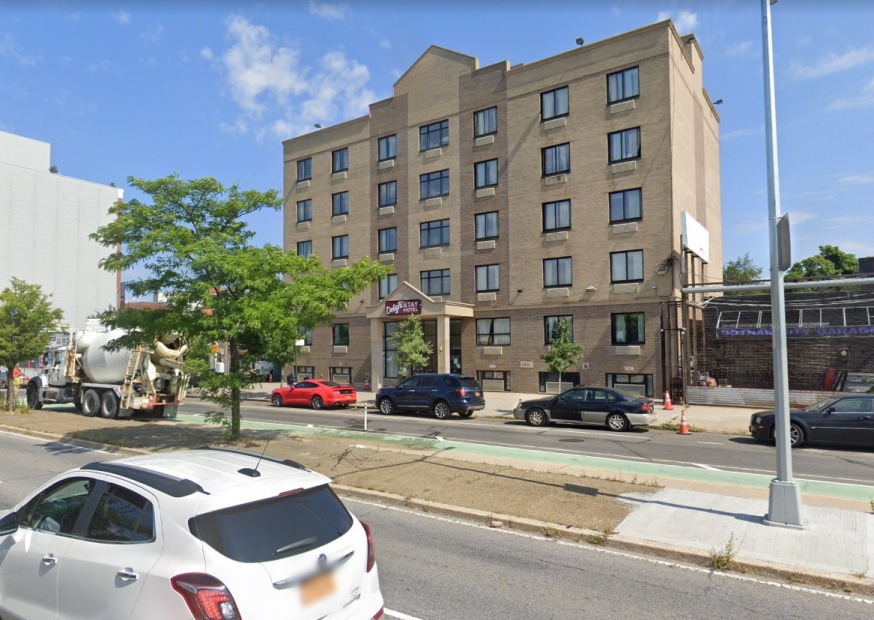
A hotel on Queens Boulevard in Woodside, which for many years had been used as a homeless shelter to accommodate families in need, is now being used exclusively by single unhoused men, according to multiple sources.

The facility, formerly known as the Quality Inn and located at 53-05 Queens Blvd., had been used as a shelter for families dating back to 2016, when the de Blasio administration began housing people at the 72-room location without first notifying the community.

Last year, the Department of Social Services transitioned the shelter to be for single adults only—and then earlier this month it was designated for single men only. The building is now called the Delight Stay Hotel.

Community Board 2 chair Morry Galonoy said the board was notified of the recent change, although after it had gone into effect. Many residents are also aware of the transition prompting mixed opinion on social media.

The Department of Social Services, however, would not confirm or deny whether the facility was being used exclusively for men or by asylum seekers.

But the agency did say that it has seen an increase in need for its services, with it providing shelter for more than 11,000 asylum seekers including many single men.

 "We are … seeing an extraordinary uptick in the number of single adult men seeking asylum and in need of shelter services,” a spokesperson for DSS said in a statement. “As we continue to add emergency capacity to the shelter system, we are also identifying ways in which we can more effectively manage our existing network of shelter sites to address the unprecedented need for shelter services for certain populations while making sure that we are prioritizing stability and continued supports for all clients receiving our services at all times.”


Thursday, August 18, 2022

Hotel homeless shelters are back big time


NY Post

City officials are urgently seeking another 5,000 rooms in Big Apple hotels to house migrants bound for New York City from the southern border, The Post has learned.

There is no price tag attached to the request that was released Wednesday, which was made under the emergency contracting powers invoked by Mayor Eric Adams when the migrant crisis first began in the city.

It marks a dramatic expansion of the city’s efforts to secure temporary housing for the recent arrivals, sources say.

The Department of Homeless Services had previously asked nonprofit social service providers to send in proposals to rent rooms and provide aid for 600 families set to be housed in a luxury Midtown hotel, the Row NYC on 8th Avenue.

The new request for providers to secure thousands of rooms in hotels across the city is in addition to that, city officials confirmed.

And it would come on top of the estimated 200 already secured and providing housing for families at the Skyline Hotel on 10th Avenue.

If fully implemented, it would bring the number of hotel rooms rented for migrants in the city shelter system up to nearly 6,000.

City Hall estimates that more than 4,000 migrants, many of whom are seeking asylum, have arrived in the five boroughs in recent weeks — and have become the subject of a high-profile feud between Hizzoner and Texas Gov. Greg Abbott.

Adams accused Abbott and the Arizona governor of shipping the migrants to New York without telling local officials, claims that both denied at the time.

However, Abbott said he was shipping migrants to the East Coast cities in protest of President Biden’s “willful ignorance” regarding the border crisis.

Sunday, August 7, 2022

Ozone Park hotel is a homeless shelter again


 Queens Chronicle

Amidst the city scrambling to find space to house an influx of asylum seekers and increasing homeless in New York City, one former Ozone Park shelter has been reactivated to meet the demand.

“The need for space has a direct correlation to New York being a sanctuary city,” Councilwoman Joann Ariola (R-Ozone Park) told the Chronicle.

She learned last week from the community board that the Travelodge on Redding Street would be converted back into a shelter.

That location and the adjacent Ozone Inn & Suites were previously used to shelter homeless families but were phased out by the city in the fall of 2021. Now, the one location will be used to house up to 75 families. So far, approximately 60 families had already moved in.

On Monday, the Mayor’s Office announced an emergency procurement declaration that allows the city to contract quickly with shelters and service providers.

“Over the past two months, we have seen a significant increase in the number of asylum seekers arriving in our city’s shelter system,” Mayor Adams said in a statement.

“To fulfill our city’s legal and moral mandate to provide quality shelter to anyone experiencing homelessness, and to ensure we are providing appropriate services to asylum seekers, we are immediately issuing an emergency procurement declaration to rapidly procure additional shelter and services to serve these individuals and families.”

According to officials, approximately 4,000 asylum seekers have entered the city shelter system since late May, largely contributing to the 10 percent increase in the city Department of Homeless Services’ census.

More than 100 additional asylum seekers are seeking housing each day, the Mayor’s Office stated in a press release.

As of May, there were nearly 50,000 homeless people, including over 15,000 children, living in the city’s shelter system, according to the Coalition for the Homeless.

The city is in talks with the federal government to seek reimbursements for the emergency costs.

Ariola said there will be bi-weekly meetings at the Travelodge with her office, Community Board 10, the NYPD and the DHS.

“I’m concerned about how the families are being treated and I’m concerned about any type of negative impact that could have on the surrounding community,” said Ariola.


Thursday, June 2, 2022

The trial run Queens Borough Tower Jail


Impunity City 

 This scene takes place in Fresh Meadows at this hotel steps away from the Horace Harding Expressway and also a strip mall and public school. This hotel, which has clearly failed to generate any business, was subjected to numerous scoops and solidarity condemnation from the community and elected officials representing the district for it’s use as a homeless shelter for men who were recently released from Rikers Island and was used during the pandemic as housing for a hundred inmates during the pandemic to prevent the spread of COVID-19 on the island’s facilities. Which was irresponsibly made possible following former Mayor de Blasio and the City Council cronies collaborative effort to shut down Rikers to build four tower jails in the boroughs except for Staten Island. But from the optics of this building, it seems that  this hotel in Fresh Meadows is being used as a trial run tower jail while the official tower jail in Kew Gardens gets developed and which has already started it’s construction.

 It’s utterly amazing that the city approved this hotel on a quaint residential block like this. Who in their right mind thought that tourists would dwell here while vacationing in the city and it’s much to big and out of the way to be utilized for prostitution and sex trafficking.

 Upon close inspection, the optics in the front entrance belie the element that’s being housed here as cars line up on the sidewalk obstructing most of the entrance of the hotel, despite the ample parking in the lot behind it and the garage inside the building, conveying a palpable sense of security for their neighbors across the street and the passerby young and old.


Monday, May 9, 2022

Hotel homeless shelter in Queens tied to agent of the city community affairs commissioner

 https://cdn.vox-cdn.com/thumbor/sW3eNaGxsxKU1GINDrZsfDEEiZo=/0x0:928x619/920x613/filters:focal(423x88:571x236):format(webp)/cdn.vox-cdn.com/uploads/chorus_image/image/70847018/kriezman_crop.0.jpg 

THE CITY

For months on end last year, residents protesting a planned homeless shelter in Queens struggled to get somebody — anybody — at Mayor Bill de Blasio’s City Hall to hear their argument that enough was enough.

The neighborhoods of Queens Community Board 3 — covering East Elmhurst, Jackson Heights and North Corona — already hosted four shelters, and several hotels within the district were temporarily housing homeless individuals during the pandemic.

Behind the scenes, LGA Hospitality LLC, the owners of the property, fought back, hiring a politically wired lobbyist firm, James Capalino Associates, to move the project along, obtain all required permits and roll over local resistance.

Today the shelter, located at 112-16 Astoria Boulevard near LaGuardia Airport, is scheduled to open soon, but local leaders are now hoping for a more sympathetic ear from de Blasio’s successor, Mayor Eric Adams. As Queens Community Board 3 Chairperson Frank Taylor put it, “We’re happy to have the new administration and we’re hopeful.”

There might be a problem with that.

The key portal to City Hall for neighborhood residents is the Mayor’s Community Affairs Unit (CAU), the division within the Mayor’s Office that helps citizens and community boards navigate the city’s bureaucracy. CB3 worked with de Blasio’s CAU on the shelter issue and planned to do so with Adams’ team.

In January, however, Mayor Adams named as his new commissioner of CAU Fred Kreizman — one of the lobbyists who had been retained by the shelter builder, LGA Hospitality LLC, to seek support from City Hall.

Wow,” Taylor said when told of Kreizman’s dual roles. “Anytime we’re going into these things, we’re apprehensive because of what has happened. We’ve not been listened to. The only thing we can do is that this administration, if that gentleman has that type of connection, what else can we do but fight? And let the community know why are Black and brown neighborhoods being overburdened with these shelters?”

Monday, February 28, 2022

2,000

https://queenspost.com/wp-content/uploads/2022/02/Pams-Place.jpg

LIC Post 

Many Dutch Kills and Queensbridge residents have been calling for assistance in dealing with quality-of-life issues stemming from the local homeless shelters, according to Queens Community Board 1.

Florence Koulouris, the district manager for Community Board 1, told board members at their monthly meeting Feb. 15 that there have been about two thousand 911 calls over the past year from Dutch Kills and Queensbridge residents regarding incidents at the surrounding shelters.

There are several shelters in the Dutch Kills/Queensbridge area–all within close proximity to one another.

“Our local residents have seen remarkable events occurring… and are fearful for their safety, due to the lack of desperately needed services for the [shelter] residents placed in hotels,” Koulouris said.

She said that there have been complaints about public defecation, urination, intimidation, sexual activity, drug use—and that there are video tapes of homeless residents involved in trespassing and theft.

She gave a breakdown of the number of complaints concerning shelter residents in the Dutch Kills/Queensbridge section of Long Island City for the 12-month period through Feb.1, 2022.

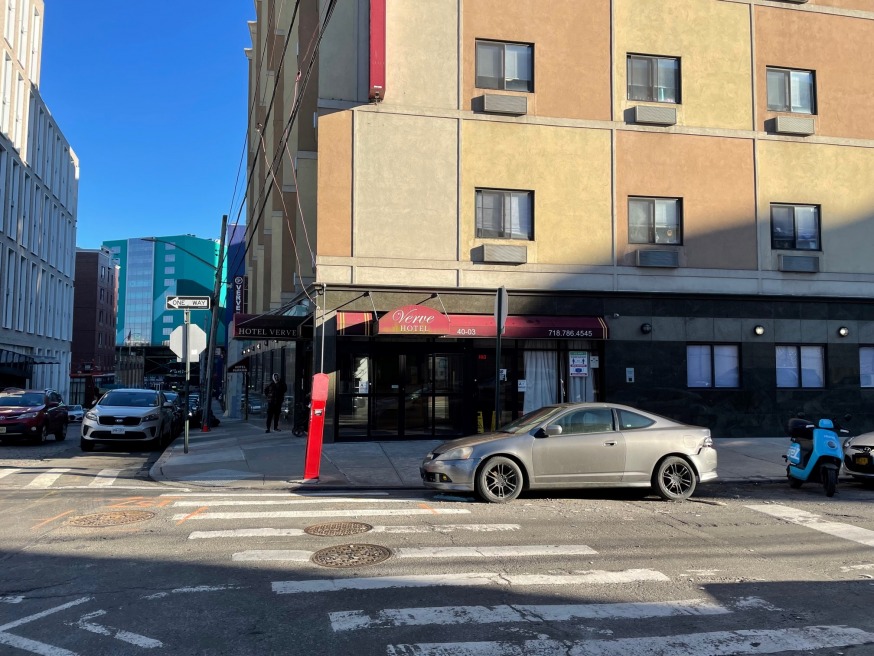
Koulouris said that there were 107 911 calls concerning residents of the Quality Inn LIC, located at 30-03 40th Ave.; 219 911 calls pertaining to the residents at the Sleep Inn Hotel at 38-77 13th St.; 1,385 911 calls—leading to 51 arrests—at Pam’s Place, a women’s shelter located at 40-03 29th St., which opened in 2015 and was the former Verve Hotel.

At the Vue Hotel, located at 40-47 22nd St., there were 240 911 calls, leading to two arrests. The data, Koulouris said, was provided by the NYPD 114th Precinct.

Koulouris told board members that the complaints at Pam’s Place have jumped significantly since the DHS removed its “peace officers.” The peace officers, a unit of DHS, provided additional security. The peace officers, however, vacated most shelters more than a year ago due to budget constraints.

George Stamatiades, chair of the Dutch Kills Civic Association, said that residents in the area have been lodging complaints but have gotten nowhere.

“We have been complaining to DHS but it falls on deaf ears,” Stamatiades told the Queens Post.

He said that DHS is just warehousing people at the hotels and not taking care of the medical needs of the residents.

Thursday, July 22, 2021

Still no place to call home


Queens Post 

 On a sunny day in early April, minutes before flames ignited across a 133-unit apartment building on 89th street in Jackson Heights, Andrew Sokolof Diaz returned home from a doctor’s appointment for his two-month-old son.

He opened the windows to get some fresh air, before leaving to take their dog out for a family stroll.

“So I remember opening the windows and feeling a little nostalgic, like aw, this is our little home. I actually remember that feeling,” said Sokolof Diaz, 33, a leader of the building’s tenant association. “And that’s it. The worst possible thing that could have happened, happened.”

Around 1 p.m., the electrical fire, which fire marshals said was sparked by an overloaded power strip, began burning on the top floor of one wing of the six-story, two-address building and spread rapidly, fanned by an apartment door left ajar.

Tenants scrambled outside, some exiting through the main entrance and others climbing down fire escapes, and watched the destruction from the sidewalk. Billowing plumes of smoke clouded the sky for blocks.

It took 12 hours for hundreds of firefighters to quell the eight-alarm blaze, which injured 21 people. Ultimately, the sprawling building’s more than 140 households — about 500 New Yorkers — were displaced from their homes.

 A season later, more than 100 residents of the rent-stabilized, block-long apartment building are without a permanent home. By the tenant association’s count, some 60 families remain in city-sponsored hotel rooms across Queens and Brooklyn, following Red Cross emergency relocation.

They were told they could stay for a month — two months ago.

After losing their homes and in many cases all their possessions, those former tenants are now confronting difficult choices on offer via the city’s affordable housing program. Some are being offered pricey new rentals in the neighborhood and others, apartments on the far side of the borough.

Meantime, displaced families told THE CITY, the Department of Housing Preservation and Development has attempted to relocate them from the hotel rooms to homeless shelters — first on Father’s Day and then again this month.

For families, that would mean leaving Queens entirely, since HPD doesn’t operate any emergency shelters for displaced people in the borough.

“We are just waiting to see what HPD and other organizations are going to do. I really do not want to go to a shelter,” said 16-year-old Kimberly Sinchi, who’s living in a hotel room in Downtown Brooklyn with her parents and her dog.


Friday, September 11, 2020

de Blasios DHS kicks out homeless people from a hotel to move in homeless people kicked out of another hotel


 https://x-default-stgec.uplynk.com/ausw/slices/f9e/5bfbe1a8a307498797b21eb1bbeec0a4/f9efbaac0b2a45e5a3d3953008f461a2/poster_a52e9519702146d2a62b39e22c1fe223.jpeg


PIX News 

  In response to neighbors' complaints, Mayor Bill de Blasio's administration vowed to move hundreds of homeless men out of an Upper West Side hotel to a shelter just south of the Empire State Building, but that shelter is currently full of adult families, many with disabilities.

The city not only neglected to tell the families that they were forcing them to move, it also didn't tell them that they were being transferred out immediately, without time to even pack all of their belongings. The Legal Aid Society is now launching a lawsuit.

The city on Wednesday morning formally announced that it was moving 300 men out of the Lucerne Hotel in one of the city's wealthiest neighborhoods. By Wednesday afternoon, residents of the Harmonia Shelter, on East 31st Street in Midtown, still didn't know that the de Blasio administration had decided to relocate them to make way for the men displaced from the Lucerne.
Maria Lopez has lived at the Harmonia for two years.

"Why are you going to take out families that are doing something positive," she said, "and bring something that's negative? And make it some men's shelter, that don't make no sense."

 NY Post

With little warning, City Hall moved more than a hundred disabled New Yorkers out of their Midtown shelter to make way for the homeless who were booted by Mayor Bill de Blasio from an Upper West Side hotel.

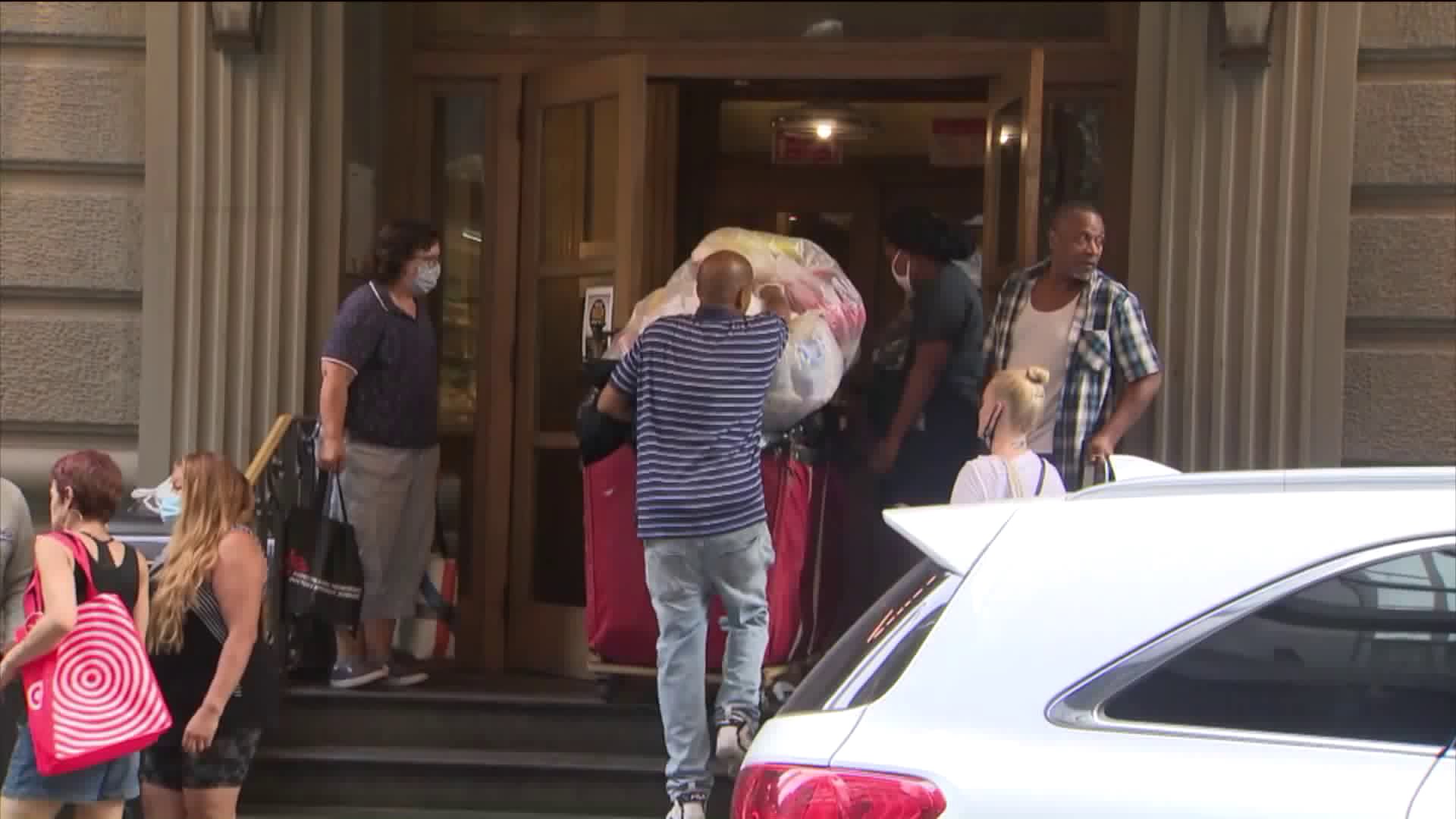
Frustrated and fearful residents of the Harmonia, a former hotel located on East 31st Street, lined the streets with their belongings Thursday as they awaited their sudden transfer to other shelters in the Big Apple’s sprawling system — with some saying they are being moved to Brooklyn and Queens.

“We’ve been living here for two years. We’ve accumulated so much stuff and they want to just bring one bag. I feel mad,” said Moises Oliveras, 44, who suffers from a host of medical issues and lived at the shelter with his wife, Maria.

“They use us like chess pieces. Moving us around like that.”

The Oliverases only found out Wednesday that they were being moved, just a day after City Hall quietly acknowledged its decision to stop housing the homeless in the Lucerne Hotel.

“We’re human beings, man. And they treated us like garbage,” Oliveras added.
An undated fact sheet posted online reports that more than 170 families call the Harmonia home, though it’s unclear how many lived in the facility as of Thursday. The Post observed dozens of residents standing outside near the facility preparing to move.

“It’s unfair. It’s last notice. Everyone is running around. We were just told this yesterday,” said Lisa Feliciano, 49, a childcare provider who has lived at the shelter for eight months with her daughter.

The Mayor's office and the Department of Homeless Services refused to respond about these transfers

de Blasio clearly doesn't have a soul.

Saturday, May 2, 2020

Breaking News: Mayor de Blasio suddenly doesn't want to convert hotels into homeless shelters

The Intercept

Mayor Bill de Blasio’s administration is opposing legislation that would allow thousands of at-risk homeless New Yorkers to live in vacant hotel rooms for the duration of the coronavirus crisis, claiming the price tag is too hefty — but according to advocates, legislators, and City Council staff, the program could be paid for using federal government funds.

The 80,000 New Yorkers who sleep in the city’s shelters, streets, and subways are among the most vulnerable to Covid-19, the disease caused by the novel coronavirus. On Wednesday, the mayor announced that the city would move 1,000 people experiencing homelessness into double-occupancy hotel rooms each week going forward, in addition to the 2,500 who had already been given hotel rooms. But homeless individuals and advocates say this isn’t nearly commensurate with the severity or urgency of the crisis.

City Council member Steve Levin has introduced legislation to offer all residents of congregate shelters and all unsheltered single adults — 12,000 people in total — the option to relocate to some of the 100,000 vacant private hotel rooms across the city. On the current course, Levin told The Intercept, it’s “inevitable” that New York’s shelters will see the devastating outbreaks experienced by shelters in other cities. Already, 94 of the city’s roughly 100 congregate shelters, where single adults live as many as 20 to a room and eat in communal areas, have seen at least one positive Covid-19 case.

De Blasio’s administration opposes the bill, testifying at a Council hearing that it would cost the city $495 million over six months. “I don’t see that as a real number,” Levin told The Intercept. The city has not answered the Council’s questions about how it arrived at the estimate but appears not to have factored in the steep drop in the market rate for hotel rooms amid the pandemic. Levin estimates the bill will cost just $108 million, excluding operational and social services costs.

Regardless of the total price, it is likely that the bill can be footed by the Federal Emergency Management Agency, or FEMA, which reimburses costs for approved state disaster response programs. FEMA is currently funding California Gov. Gavin Newsom’s “Project Roomkey,” which will eventually house tens of thousands of people in 15,000 hotel rooms.

Wow, good work there Levin. Although you should include those other costs that way you can expose de Blasio lies better.

Wonder what Maspeth and East New York think of the Mayor's harsh decision.

Monday, April 6, 2020

Homeless hotels have hundreds of positive COVID-19 cases, but the city wouldn't reveal where they are


https://pix10.agoda.net/hotelImages/7154693/0/9c3ef9e2845a10fa78b20e5f2615cf83.jpg?s=1024x768

NY Post

The city is housing hundreds of homeless people with coronavirus or symptoms of the virus at five Big Apple hotels, sources told The Post.

City officials confirmed that more than 700 spots have been set aside for afflicted homeless people at five undisclosed locations throughout the city, but didn’t say where.

According to the source, however, all five are hotels.

Staffers at two of the locations — a Howard Johnson’s at 235 24th Street in Brooklyn, and Town Place Suites at 38-42 11th Street in Queens — told The Post they were no longer renting rooms to the public because they had been leased out to the city.

A woman answering the phone at the third side, the Radisson at 52 Williams St. in Manhattan, hung up on a reporter.

The telephone was not answered at the two other locations, identified by the source: a Comfort Inn at 548 W. 48th Street in Manhattan and Jamaica Hotel at 183-02 Jamaica Avenue in Queens, which is also identified as a Comfort Inn in some online posts.

There are currently 392 homeless people in isolation at the five sites who either tested positive for the virus or were placed in quarantine “out of an abundance of caution,” the city said.

The city Department of Social Services said 213 homeless people at 93 shelters have tested positive for the virus, with 11 dying from the bug and another 11 leaving after completing quarantine.

Thursday, March 26, 2020

Mayor de Blasio is refusing to release information about what exact areas in the five boroughs have the most COVID-19 cases


Residents of Los Angeles can go to a county website to look up how many confirmed coronavirus cases there are in Beverlywood, or Koreatown, or Echo Park. Officials in Charlotte, North Carolina, have released figures at the ZIP code level. The South Korean government is sending geotargeted texts to alert citizens to positive cases near them.


In New York, now at the center of the outbreak, Mayor Bill de Blasio has resisted releasing what the city knows about a basic question: Where, precisely, is the virus?


Answers could take the form of a number of data points — tests, confirmed infections, hospitalizations or deaths — each of which shed light on a different part of the crisis.


Instead New York, along with several other state and county governments around the country, has released daily data only on the county, or borough, level. That means there is just one figure for COVID-19 cases in all of Kings County — Brooklyn — which has a population larger than 15 states. 

The roughly 4,600 confirmed COVID-19 cases among Brooklyn’s 2.6 million residents account for 8% of the confirmed cases in the entire country. There is also just one coronavirus case figure for the 2.2 million residents of Queens, where there are just over 5,000 confirmed cases.


The lack of detailed information makes it difficult for medical workers, journalists and the public to establish whether particular communities in the city are being harder hit and to get beyond anecdotal accounts of which of the city’s roughly 60 hospitals are already overwhelmed.


Dr. Michael Augenbraun, director of the infectious diseases division at SUNY Downstate Medical Center in central Brooklyn, said that while he knows the city has its hands full, the data could be useful for doctors. “Everyone is struggling to make sense of this evolving picture,” he said. “I think it would be useful to us in the hospitals to get a detailed situational appraisal, to know how much of the burden we are confronting.”


Augenbraun noted that more precise data could reveal important trends in how the disease is affecting different New Yorkers. “There are many things that may correlate with the spread of infectious diseases,” he said. “Race might be one, poverty might be another.”


But some of those same factors, particularly ethnicity and race, may account for the city’s reluctance to make public more localized data that could point to clusters in particular neighborhoods, among certain communities. Around the country, there have been disturbing reports of bias attacks against Asian Americans by assailants blaming Chinese communities for the spread of the virus.


“The risk is that certain communities would be unfairly stigmatized, especially if communities with many COVID-19 cases already shoulder poverty or high crime,” said Dr. Jessica Justman, associate professor of medicine in epidemiology at Columbia University. “On the other hand, communication and information are always important and especially important in a pandemic setting.”

Some experts argue that the city should be releasing more granular information, perhaps even down to the block level.


“More detailed information will allow everyone to target their efforts much more effectively than only county-level information,” said John Mollenkopf, director of the Center for Urban Research at the CUNY Graduate Center.
 
In Newark, the largest city in neighboring New Jersey, Mayor Ras Baraka has disclosed that there were three coronavirus hot spots where residents should take extra precautions. On March 21, the city released detailed maps of the areas, which cover between 50 and 100 square blocks; it did not release the specific number of cases for each area.


New York has held fast on the policy the mayor laid out during a March 12 press conference when he was asked by a reporter if the city could go beyond borough-level numbers and break down cases by neighborhoods. The mayor declined, saying only that the city would release figures in the case of what he called a “cluster.”


“When we say ‘community spread,’ the assumption should be that this is something that is going to reach every corner of the city, whether we like it or not,” he said at the press conference. “And I don’t think it’s particularly productive. I don’t know what you do with that information. I don’t know how you change your life. Unless there is an indication of a cluster, that’s something we absolutely will talk about.”

THE CITY 

The city is sending homeless shelter residents and public hospital patients with coronavirus to hotels — but won’t say where.

And officials aren’t providing hotel staff or the city employees monitoring the infected guests with masks or any other form of protective equipment — instead instructing them to maintain social distance.

“Going into a hotel room with an infected patient is the same as going into a room of a hospital with an infected patient,” said City Councilmember Stephen Levin (D-Brooklyn), who called for protection for the workers.

The news came as officials confirmed the first death of a homeless New Yorker who succumbed to COVID-19.

The city’s Department of Homeless Services and the Health + Hospitals Corporation said the shelter residents and patients sent to the hotels are all experiencing low-level symptoms and do not require intensive medical care.

As of Wednesday, DHS had placed 65 individuals from shelters into hotel rooms.

Among them: residents who are infected, people who came in close contact with those who tested positive and shelter clients with potential coronavirus symptoms who haven’t been tested, officials said.

Overall, the city has lined up 500 rooms in four hotels, though only two facilities were being used as of Wednesday afternoon, officials said.
Isaac McGinn, a DHS spokesperson, declined to reveal the locations of the hotels, citing shelter residents’ privacy.

HHC wouldn’t say how many patients it had sent to the hotels so far. At least one HHC patient with COVID-19, the illness caused by the coronavirus, had no known address and was routed to a hotel, via DHS.

 The number of shelter residents infected with the virus jumped from 17 to 39 between Sunday night and Tuesday night, with the illness spreading from 12 to 27 separate shelters across the city during that time, DHS officials said. Twelve people have been hospitalized — including the unidentified person who died Tuesday.

Queens has the most COVID-19 cases in the city with 6,420 and had the biggest gain in the last 3 days at last count on THE CITY's website.

Followed by Brooklyn with 5,232, Manhattan with 3,616, Bronx with 3,532 (second biggest gain) and Staten Island with 1,166. 

A total of 285 citywide have died by the virus. 

I'm going to take a break for a few days.


Saturday, February 1, 2020

Man gets stabbed to death in front of a hotel homeless shelter


A father of two was fatally stabbed outside a Queens homeless shelter while walking home from work, relatives and police said.

Bodega employee Jose De La Cruz, 54. was minutes away from home when a suspect knifed him several times in the chest outside the Garden Inn and Suites, a hotel-turned-shelter, in Jamaica about 10:15 p.m. Friday.

Medics rushed De La Cruz to Jamaica Hospital, but he could not be saved.

Stunned relatives were struggling to understand Saturday how the Dominican-born man could’ve met such a tragic fate so close to home.

“He was very friendly, loved by the community. He was always smiling," his cousin, Milton Cruz, 41, said.

Witnesses told police that De La Cruz was arguing with another man before he was attacked outside the Baisley Boulevard shelter near 134th Ave.

The Garden Inn and Suites provides rooms to the city’s Department of Homeless Services to house homeless men, authorities said.

Monday, January 13, 2020

"Baby box bill" and DHS fail to protect twins at homeless hotel


From Fox News:

New York City police have reported the tragic deaths of twin two-month-old babies at a shelter for homeless families that was once a LaGuardia Airport motel.

The father woke up from a three-hour afternoon nap and found the infants not breathing in separate cribs, WNBC-TV reported.

The cribs were filled with pillows, the station reported.

Doctors were unable to save them at the hospital, the station reported.


In 2017, Gov. Cuomo signed the "baby box bill." From The National Herald:

The baby boxes, which are designed for infants six months old or younger, will be distributed in areas of the state with the greatest infant mortality rates. They are designed according to the safe infant sleep guidelines of the Academy of Pediatrics and the National Institute of Child Health and Human Development and discourage high-risk behaviors on the part of parents that are associated with Sudden Unexpected Infant Death (SUID). Each baby box has a firm mattress with a fitted sheet which are two key elements for safe sleep.

Parents will also be given educational information on the dangers of co-sleeping and the risks when blankets, pillows, stuffed animals, and loose bedding are used. Many parents of newborns have no idea that these seemingly innocent items in a crib can put a sleeping baby at risk.


So... did DHS not get the memo about the bill? Did the state not supply them? What the f*ck happened here and why is it that it seems no one will be held accountable?

Friday, January 10, 2020

Two month old twins die in hotel homeless shelter

NY Daily News

Authorities are investigating the deaths of 2-month old twins who were staying with their family in a city homeless shelter, police said Friday.

Emergency responders found the twins, a boy and a girl, unconscious around 3 p.m. inside the lobby of the Landing, a Queens hotel that doubles as a city-funded family shelter.

Medics rushed them to Elmhurst Hospital Center where they were pronounced dead.

The babies’ father told cops he put the children down for a nap earlier in the day, but found them lifeless when he went to check on them.

Twin infants died Friday afternoon after they fell unconscious at a Queens homeless shelter, police said.

Cops were questioning the father Friday. No charges have been filed.

“This is a heartbreaking tragedy. We offer our condolences to the family and will provide them with any and all support that we can during this difficult time," said Isaac McGinn, a spokesman for the city Department of Social Services, which is responsible for the shelter system.

Monday, December 9, 2019

Hotel owners are profiting off of the homeless crisis


https://external-content.duckduckgo.com/iu/?u=https%3A%2F%2F2sei0v2s93y31n9ndy1lrzmh-wpengine.netdna-ssl.com%2Fwp-content%2Fuploads%2F2016%2F08%2FMaspeth-rally-web.jpg&f=1&nofb=1

NY Daily News


Owners of dozens of recently-built homeless hotels are saving millions of dollars on city taxes through an obscure rebate program that allowed them to hold on to $12.5 million in the 2018-2019 tax cycle.

Of the owners benefiting from the tax break — known as the Industrial and Commercial Abatement Program — the biggest winners include Sam Chang, Harshad Patel and Riverbrook Equities, according to a New York Hotel Trades Council analysis obtained and vetted by the Daily News.
Chang, for example, has built 49 hotels since 2006.

Of those, 14 have housed the homeless. Five have received ICAP rebates and saved approximately $2.3 million on their 2018-2019 tax bills, city records show.

Chang, who still retains ownership in one of the hotels, the Holiday Inn JFK, saved $791,323 in taxes for that property during the last tax cycle.

In all, 44 homeless hotels appear to have received both the ICAP rebate and homeless subsidies within the past four years, city records show. There are a total of 151 hotels that get ICAP rebates. From 2015 to 2019, homeless hotels that got the rebates saved more than $30 million.

All the while, owners like Chang and other operators who get the tax rebates are getting paid by the city to house the homeless. That money is routed to the hotels through homeless service “management companies,” which get the money directly from the city.

A spokeswoman for Chang’s McSam Hotel Group said the company has done nothing wrong.

“McSam Hotel Group complies with New York City laws, rules and regulations in building hotels. We never build hotels with the intent of housing homeless persons," spokeswoman Lisa Linden said. 

"McSam Hotel Group makes no decisions regarding whether homeless persons are housed in hotels. The management companies make those decisions.”

Harshad Patel said the rebate fulfills its mission of creating jobs and that critics are ignoring the big picture.

“It’s the only reason we are building,” he said. "We have a lot of expenses.”

The city projects it will spend $2.1 billion overall on tackling the homelessness crisis in 2020. In 2018, $384 million went from city coffers to housing homeless people in hotels. Less clear is how much of the city’s homeless budget is going specifically to hotels that already receive the ICAP rebate.

Whatever the cost, affordable housing advocates believe it’s a waste of taxpayer money.

“What the city needs to do is build housing to house the homeless,” said Cea Weaver, Housing Justice for All’s campaign coordinator. “It’s a better use of our resources. It’s better than paying hotel owners twice.”