From the Daily News:
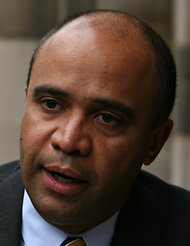
City Council Speaker Melissa Mark-Viverito pressured the Housing Authority to remove the black manager of a Bronx housing development and replace her with a “Spanish manager,” former and current NYCHA workers told the Daily News.
Officials were so eager to make the Speaker’s wish come true that they turned to the city Department of Investigation to help “find something” on the manager.
Mark-Viverito made her ethnic-specific demand during a July 30, 2015, emergency meeting with several NYCHA officials held in her Bronx office, one of the meeting’s participants told the Daily News.
One of NYCHA’s top executives, Senior Vice President for Operations Brian Clarke, participated in that meeting via speakerphone — and later pressured subordinates to address Mark-Viverito’s demand because of the “cultural sensitivity” of the development’s tenants.
The Speaker began the meeting by asking how NYCHA dealt with Spanish-speaking tenants at the Mill Brook Houses in Mott Haven, according to the participants.
Mark-Viverito then confronted Allison Williams, the black manager of Mill Brook who is not fluent in Spanish, according to Williams and her boss, Sibyl Colon, NYCHA’s then-director of Optimal Property Management Department.
Williams says she told Mark-Viverito that — per NYCHA policy — she would rely on a “language bank” of on-call translators when dealing with non-English-speaking tenants.
Colon and Williams say Mark-Viverito responded with anger.
“She started asking me: ‘What do you do when you have to deal with the Spanish residents?’ I don’t speak Spanish. I said I used the language bank. She said — in her words — ‘That's unacceptable.’ I just sat silent.”
Colon, who was also at the meeting, says Mark-Viverito turned to her and stated, “You’re not hearing me. I want a Spanish manager.”
Showing posts with label hispanics. Show all posts
Monday, September 19, 2016
Monday, September 28, 2015
Asia will soon send more immigrants here than the Americas
From AP:
In a major shift in immigration patterns over the next 50 years, Asians will have surged past Hispanics to become the largest group of immigrants heading to the United States, according to estimates in a new immigration study.
The study looks in detail at what will happen by 2065, but the actual tipping point comes in 2055.
An increase in Asian and Hispanic immigration also will drive U.S. population growth, with foreign-born residents expected to make up 18 percent of the country's projected 441 million people in 50 years, the Pew Research Center said in a report being released Monday. This will be a record, higher than the nearly 15 percent during the late 19th century and early 20th century wave of immigration from Europe.
Today, immigrants make up 14 percent of the population, an increase from 5 percent in 1965.
The actual change is expected to come in 2055, when Asians will become the largest immigrant group at 36 percent, compared with Hispanics at 34 percent. White immigrants to America, 80 percent back in 1965, will hover somewhere between 18 and 20 percent with black immigrants in the 8 percent to 9 percent range, the study said.
Currently, 47 percent of immigrants living in the United States are Hispanic, but by 2065 that number will have dropped to 31 percent. Asians currently make up 26 percent of the immigrant population but in 50 years that percentage is expected to increase to 38 percent.
In a major shift in immigration patterns over the next 50 years, Asians will have surged past Hispanics to become the largest group of immigrants heading to the United States, according to estimates in a new immigration study.
The study looks in detail at what will happen by 2065, but the actual tipping point comes in 2055.
An increase in Asian and Hispanic immigration also will drive U.S. population growth, with foreign-born residents expected to make up 18 percent of the country's projected 441 million people in 50 years, the Pew Research Center said in a report being released Monday. This will be a record, higher than the nearly 15 percent during the late 19th century and early 20th century wave of immigration from Europe.
Today, immigrants make up 14 percent of the population, an increase from 5 percent in 1965.
The actual change is expected to come in 2055, when Asians will become the largest immigrant group at 36 percent, compared with Hispanics at 34 percent. White immigrants to America, 80 percent back in 1965, will hover somewhere between 18 and 20 percent with black immigrants in the 8 percent to 9 percent range, the study said.
Currently, 47 percent of immigrants living in the United States are Hispanic, but by 2065 that number will have dropped to 31 percent. Asians currently make up 26 percent of the immigrant population but in 50 years that percentage is expected to increase to 38 percent.
Sunday, November 23, 2014
Special court for sex trafficking victims
From the NY Times:
In the hallway, they speak mostly in Mandarin, in accents from across China. Some speak Korean. They meet with their court-appointed lawyers in the hallway, often helped by an interpreter born in Fujian Province and hired by the city courts. A snazzy dresser, the interpreter bounces from one defendant to the next; he has found himself adding terms to his usual vocabulary: prostitution (“maiyin”), illegal massage (“feifa anmo”), unlicensed massage (“wuzheng anmo”).
This is the Human Trafficking Intervention Court in Queens, which is marking its 10th anniversary next month, and which serves as a model for a statewide 11-court program that began last year. The intention is to change the legal conversation around the multibillion-dollar sex trade by redefining the women in it as victims instead of criminals. Most are offered a deal: Take part in a set number of counseling sessions, usually five or six, and the charges will be dismissed and the record sealed.
After 13 months, the five New York City courts are still a work in progress, their success tracked more in individual stories than statistics.
“This court is not devised to solve the problems of trafficking,” Judge Serita said of the program, “but to address one of the unfortunate byproducts, which is the arrest of these defendants on prostitution charges.”
All defendants in the specialized courts are presumed to be victims at risk, the first of many assumptions made, in part, because of the silence surrounding sex trafficking. That silence also makes it tougher to shift social mores. Not only do the police and the justice system still treat prostitution as a crime, but the women themselves, most undocumented, often don’t define themselves as having been trafficked — whether out of fear, shame or choice.
The Queens court has changed significantly in the decade since Judge Fernando M. Camacho founded it. Dismayed at seeing the same American-born teenage girls reappearing in his court for prostitution, Judge Camacho said he wanted to break the cycle by offering them alternatives to a criminal record or incarceration.
Now, a majority of the defendants who sit in the worn walnut benches are either Latin American women or, even more often, older, undocumented immigrants from Asia, ranging in age from 30 to 50. According to statistics Judge Serita’s court has kept, Asian defendants represented 27 percent of the cases in 2010. In 2014, they have made up 40 percent.
In the hallway, they speak mostly in Mandarin, in accents from across China. Some speak Korean. They meet with their court-appointed lawyers in the hallway, often helped by an interpreter born in Fujian Province and hired by the city courts. A snazzy dresser, the interpreter bounces from one defendant to the next; he has found himself adding terms to his usual vocabulary: prostitution (“maiyin”), illegal massage (“feifa anmo”), unlicensed massage (“wuzheng anmo”).
This is the Human Trafficking Intervention Court in Queens, which is marking its 10th anniversary next month, and which serves as a model for a statewide 11-court program that began last year. The intention is to change the legal conversation around the multibillion-dollar sex trade by redefining the women in it as victims instead of criminals. Most are offered a deal: Take part in a set number of counseling sessions, usually five or six, and the charges will be dismissed and the record sealed.
After 13 months, the five New York City courts are still a work in progress, their success tracked more in individual stories than statistics.
“This court is not devised to solve the problems of trafficking,” Judge Serita said of the program, “but to address one of the unfortunate byproducts, which is the arrest of these defendants on prostitution charges.”
All defendants in the specialized courts are presumed to be victims at risk, the first of many assumptions made, in part, because of the silence surrounding sex trafficking. That silence also makes it tougher to shift social mores. Not only do the police and the justice system still treat prostitution as a crime, but the women themselves, most undocumented, often don’t define themselves as having been trafficked — whether out of fear, shame or choice.
The Queens court has changed significantly in the decade since Judge Fernando M. Camacho founded it. Dismayed at seeing the same American-born teenage girls reappearing in his court for prostitution, Judge Camacho said he wanted to break the cycle by offering them alternatives to a criminal record or incarceration.
Now, a majority of the defendants who sit in the worn walnut benches are either Latin American women or, even more often, older, undocumented immigrants from Asia, ranging in age from 30 to 50. According to statistics Judge Serita’s court has kept, Asian defendants represented 27 percent of the cases in 2010. In 2014, they have made up 40 percent.
Labels:
asians,
court,
hispanics,
human trafficking,
prostitution
Saturday, November 1, 2014
Adams picking up where Vito left off
From Brownstoner:
Brooklyn borough president Eric Adams wants to revive the affordable housing development on a 30-acre piece of land known as the Broadway Triangle. Sandwiched between Bed Stuy, Williamsburg and Bushwick along Broadway near Flushing, the controversial development was halted by a judge’s injunction following a lawsuit by community groups arguing the plans and a rezoning of the area favored Hasidic families and discriminated against blacks and Latinos. In a written review of an unrelated project at 695 Grand Street in Williamsburg, Adams called on the de Blasio administration to resolve the legal dispute so housing can be built, Crain’s reported.
One thing that has changed: Former State Assemblyman Vito Lopez, the king of affordable housing in the area, was heavily involved in the Triangle project, but is no longer in office. The nonprofit group he created to deliver services to constituents, the Ridgewood Bushwick Senior Citizen’s Council, which still exists and continues to be a big landlord and developer in Latino-heavy Bushwick, was one of two developers in the Triangle project, along with nonprofit partner United Jewish Organizations.
Brooklyn borough president Eric Adams wants to revive the affordable housing development on a 30-acre piece of land known as the Broadway Triangle. Sandwiched between Bed Stuy, Williamsburg and Bushwick along Broadway near Flushing, the controversial development was halted by a judge’s injunction following a lawsuit by community groups arguing the plans and a rezoning of the area favored Hasidic families and discriminated against blacks and Latinos. In a written review of an unrelated project at 695 Grand Street in Williamsburg, Adams called on the de Blasio administration to resolve the legal dispute so housing can be built, Crain’s reported.
One thing that has changed: Former State Assemblyman Vito Lopez, the king of affordable housing in the area, was heavily involved in the Triangle project, but is no longer in office. The nonprofit group he created to deliver services to constituents, the Ridgewood Bushwick Senior Citizen’s Council, which still exists and continues to be a big landlord and developer in Latino-heavy Bushwick, was one of two developers in the Triangle project, along with nonprofit partner United Jewish Organizations.
Saturday, August 30, 2014
DeBlasio planning to destroy something that actually works
From Huffington Post:
Even though nearly 70 percent of New York City's public school students are black or Hispanic, very few will be attending the city's most elite public schools when the doors open next week. According to some alumni of these specialized high schools, that doesn't mean their admissions systems are necessarily unfair.
The chance to attend one of the eight exam-based institutions -- like Stuyvesant High School -- depends on the student's score on the Specialized High School Admissions Test (SHSAT). These schools are considered among the city's best, and competition to get in can be fierce.
"In my opinion, the test system is purely on the basis of merit. There's no room for discrimination or bias," Larry Cary, president of the Brooklyn Tech Alumni Foundation, told The Huffington Post.
Cary is part of the newly formed Coalition of the Specialized High School Alumni Organizations, which represents over 100,000 graduates of those New York City schools. This week, the group announced that it believes the admissions process based on a single exam should remain unchanged.
According to data from the NYC Department of Education, black and Hispanic students last year made up only 12 percent of incoming ninth-graders offered spots at the exam-based high schools. This year, the numbers are basically the same: The share of black and Hispanic students accepted to the prestigious schools adds up to 11.5 percent.
The New York state legislature established the entrance exam system in the early 1970s for Stuyvesant, Bronx High School of Science and Brooklyn Technical High School. As more specialized schools opened, they adopted the same system for the most part. (The city has a ninth specialized school, Fiorello H. LaGuardia High School of Music & Art and Performing Arts, that chooses its students based on a combination of auditions and academics.)
Over the years, there have been attempts to reform the admissions process to ensure that the benefits of attending the best public high schools reach all communities in the city. Just this June, state legislators introduced a bill that would require the specialized high schools to factor multiple measures, such as GPA, into their admission decisions, as opposed to relying only on the SHSAT.
The Coalition of the Specialized High School Alumni Organizations disagrees with that approach. The group argues instead for a new initiative to give underrepresented communities access to better SHSAT test preparation and for a policy of letting students on the cusp of admittance apply again.
There are bright children of all races. The reason why there are fewer Black and Hispanic students accepted into prestigious schools is mainly because they tend to be stuck going to shitty middle schools which don't prepare them adequately for test taking of this caliber. So instead of fixing the middle schools, DeBlasio wants to dumb down the admissions process. Of course, the graduates of these schools are smarter than DeBlasio.
Even though nearly 70 percent of New York City's public school students are black or Hispanic, very few will be attending the city's most elite public schools when the doors open next week. According to some alumni of these specialized high schools, that doesn't mean their admissions systems are necessarily unfair.
The chance to attend one of the eight exam-based institutions -- like Stuyvesant High School -- depends on the student's score on the Specialized High School Admissions Test (SHSAT). These schools are considered among the city's best, and competition to get in can be fierce.
"In my opinion, the test system is purely on the basis of merit. There's no room for discrimination or bias," Larry Cary, president of the Brooklyn Tech Alumni Foundation, told The Huffington Post.
Cary is part of the newly formed Coalition of the Specialized High School Alumni Organizations, which represents over 100,000 graduates of those New York City schools. This week, the group announced that it believes the admissions process based on a single exam should remain unchanged.
According to data from the NYC Department of Education, black and Hispanic students last year made up only 12 percent of incoming ninth-graders offered spots at the exam-based high schools. This year, the numbers are basically the same: The share of black and Hispanic students accepted to the prestigious schools adds up to 11.5 percent.
The New York state legislature established the entrance exam system in the early 1970s for Stuyvesant, Bronx High School of Science and Brooklyn Technical High School. As more specialized schools opened, they adopted the same system for the most part. (The city has a ninth specialized school, Fiorello H. LaGuardia High School of Music & Art and Performing Arts, that chooses its students based on a combination of auditions and academics.)
Over the years, there have been attempts to reform the admissions process to ensure that the benefits of attending the best public high schools reach all communities in the city. Just this June, state legislators introduced a bill that would require the specialized high schools to factor multiple measures, such as GPA, into their admission decisions, as opposed to relying only on the SHSAT.
The Coalition of the Specialized High School Alumni Organizations disagrees with that approach. The group argues instead for a new initiative to give underrepresented communities access to better SHSAT test preparation and for a policy of letting students on the cusp of admittance apply again.
There are bright children of all races. The reason why there are fewer Black and Hispanic students accepted into prestigious schools is mainly because they tend to be stuck going to shitty middle schools which don't prepare them adequately for test taking of this caliber. So instead of fixing the middle schools, DeBlasio wants to dumb down the admissions process. Of course, the graduates of these schools are smarter than DeBlasio.
Labels:
Bill DeBlasio,
blacks,
hispanics,
specialized schools,
tests
Friday, June 27, 2014
Council Members want foreclosures condemned
From the Observer:
Council members Donovan Richards, Daneek Miller and Mark Levine rallied with activists and academics on the steps of City Hall today to call on the city to use eminent domain to stop home foreclosures.
They discussed a new report by the left-leaning New York Communities for Change (N.Y.C.C.), which revealed that thousands of African-American and Latino homeowners were still at risk of losing their homes due to foreclosures and underwater mortgages.
Mr. Richards, who represents areas like southeast Queens and the Rockaways that were hard-hit by the foreclosure crisis and Hurricane Sandy, went straight to the point.
“I’m here because I think the people need their bailout. Didn’t the banks get their bailout? So why can’t the people get a bailout?” Mr. Richards said. “Today I stand with N.Y.C.C. to call on New York City to use eminent domain to really seize these mortgages and make a difference in the lives of New Yorkers.”
Financial institutions have aggressively opposed the usage of eminent domain in this instance and questioned its legality–it remains unlikely, observers say, that it will be implemented in New York City. Mr. Levine, however, said the tactic could be viable.
Council members Donovan Richards, Daneek Miller and Mark Levine rallied with activists and academics on the steps of City Hall today to call on the city to use eminent domain to stop home foreclosures.
They discussed a new report by the left-leaning New York Communities for Change (N.Y.C.C.), which revealed that thousands of African-American and Latino homeowners were still at risk of losing their homes due to foreclosures and underwater mortgages.
Mr. Richards, who represents areas like southeast Queens and the Rockaways that were hard-hit by the foreclosure crisis and Hurricane Sandy, went straight to the point.
“I’m here because I think the people need their bailout. Didn’t the banks get their bailout? So why can’t the people get a bailout?” Mr. Richards said. “Today I stand with N.Y.C.C. to call on New York City to use eminent domain to really seize these mortgages and make a difference in the lives of New Yorkers.”
Financial institutions have aggressively opposed the usage of eminent domain in this instance and questioned its legality–it remains unlikely, observers say, that it will be implemented in New York City. Mr. Levine, however, said the tactic could be viable.
Friday, May 2, 2014
Queens: More vibrant, diverse and poor than ever!
From the Daily News:
Poverty in Queens rose the most of all five boroughs in the years after the economic crisis — even as the city as a whole largely rebounded, according to new city data.
The poverty rate in Queens jumped to 22 percent in 2012, up from 16 percent in 2008 — bringing the number of people living under the city poverty line to around 500,000.
“I’ve seen some of the changes with my own eyes,” said Councilman Daniel Dromm, whose district in Jackson Heights is among the poorest in the borough. “We get a huge number of constituents coming in who can’t meet rent, are going to be evicted, or are in illegally converted houses as the only way they can put a roof over their head.”
The study by the city Center for Economic Opportunity spotlighted working families and immigrant communities that have borne the brunt of higher rents and tight jobs market.
An additional 7 percent of the city's Asian population — half of whom live in Queens — fell into poverty, bringing the group's poverty rate to 29 percent. It was the largest increase for any single ethnic group, according to the report.
Poverty in Queens rose the most of all five boroughs in the years after the economic crisis — even as the city as a whole largely rebounded, according to new city data.
The poverty rate in Queens jumped to 22 percent in 2012, up from 16 percent in 2008 — bringing the number of people living under the city poverty line to around 500,000.
“I’ve seen some of the changes with my own eyes,” said Councilman Daniel Dromm, whose district in Jackson Heights is among the poorest in the borough. “We get a huge number of constituents coming in who can’t meet rent, are going to be evicted, or are in illegally converted houses as the only way they can put a roof over their head.”
The study by the city Center for Economic Opportunity spotlighted working families and immigrant communities that have borne the brunt of higher rents and tight jobs market.
An additional 7 percent of the city's Asian population — half of whom live in Queens — fell into poverty, bringing the group's poverty rate to 29 percent. It was the largest increase for any single ethnic group, according to the report.
Wednesday, November 27, 2013
Let the tweeding begin
From The Politicker:One source said Rep. Joe Crowley, head of the Queens Democratic party, is warming to the idea of backing Mark-Viverito, in part because she would be the first Latina speaker and his congressional district is heavily Hispanic.
"It would be a feather for him," said the source, who is involved in Queens County politics, as well as the speaker's race.
Mark-Viverito often touts her early endorsement of de Blasio in the Democratic mayoral primary this year and has said she agrees with most of his political positions.
Mark-Viverito has been the target of some negative stories since entering the speaker's race, and is a polarizing candidate in her own right.
Several sources said Dickens, whose candidacy is considered a nonstarter, was the least impressive of the interviewees and did not have a firm grasp on the rules-reform package.
UPDATE: Councilman Steve Levin, a member of the bloc, said Weprin was impressive too. Levin said Weprin "exhibited a lot of passion. He was passionate. He was moving and he spoke about his experiences as a legislator and about his family."
Friday, September 13, 2013
Corona merchants wary of BID

From the Daily News:
An ambitious proposal to create one of the city’s largest business improvement districts in mostly immigrant Jackson Heights and Corona would hasten gentrification and spoil the area’s Mom and Pop character, business owners charge.
The 82nd St. Partnership currently encompasses eight blocks and 125 businesses — but the proposed Jackson Heights Corona BID would cover Roosevelt Ave. from 82nd St. to 114th St. and include roughly 1,000 businesses, said Partrship executive director Seth Taylor.
That potential expansion has some immigrant merchants concerned they will be priced out of the neighborhood and the area will lose its trademark character.
“They are going to standardize Roosevelt Ave.,” crowed Freddy Castiblanco, owner of Terraza 7, a bar and jazz club. “They want to clean Roosevelt Ave. of that diversity.”
Castiblanco and other local Hispanic entrepreneurs formed the Roosevelt Avenue Community Alliance to block the BID plan.
The group rallied Sunday against the sweeping overhaul — which would require each shop owner to pay a fee for sanitation, security and other services once provided exclusively by the city with regular tax money.
The BID expansion is a component of Councilwoman Julissa Ferreras’ “New Deal” for Roosevelt Ave., which focused on cleaning up the corridor, which cuts through several Queens neighborhoods. Ferreras cites safety issues, poor lighting and cleanliness as the top complaints among residents.
“The current problems on Roosevelt Ave. hurt everyone,” Ferreras said in a statement. “This is why I believe a business improvement district is a solution to this problem.”
So the short answer is yes, they want to gentrify Corona.
Labels:
bid,
Corona,
gentrification,
hispanics,
Julissa Ferreras,
roosevelt avenue,
small business
Saturday, September 7, 2013
A guide to pandering
The NY Times has a "tour" of voting blocs throughout the City.The problems (and the fun) start when those blocs don't vote the way they're "supposed to."
Sunday, July 21, 2013
Let the pandering begin!

What can be said about this Photoshop nightmare? Too many layers of stuff here. The American flag, the Statue of Liberty, an Ellis Island ledger and not one, but two shots of the Queensboro Bridge. We're laying it on a bit thick here. On top of all that, a Vallone with some kind of blotchy skin condition, slicked back hair and his shirt open, revealing a gold chain. Is this what turns on Hispanic voters? I don't think so.

And here's a photo of him actually talking to them, too! Somehow I doubt that this conversation resulted in them telling him that their number one concern was funding for the Vallone Scholarship, but that's the first bullet point under "what matters to our immigrant communities."
It seems to me that immigrants aren't so much concerned with what the Borough President can do about immigration reform (which is nothing) as they are with making sure their kids get into the local school and that the neighborhood is clean, quiet and safe. Just like what the native population wants. And why the focus on keeping people labeled as "immigrants?" Immigrants don't vote. American citizens vote. Once they are naturalized, most non-natives I have come in contact with say, "I am an American," not "I am an immigrant." If you're sending this out to voters, they are American citizens.
7 more weeks of this crap...
Labels:
hispanics,
immigrants,
mailer,
pandering,
Peter Vallone
Tuesday, January 22, 2013
Same old song and dance

From DNA Info:
Backing the building of a new Major League Soccer stadium in Flushing Meadows-Corona Park, State Assemblyman Francisco Moya predicted the addition would be successful for a very specific reason — the soccer-mad population.
He said the area has a lot of Hispanic residents, and Hispanic cultures treat soccer "like a religion."
"We live and breathe the sport," Moya said recently. "It becomes a sense of pride for the team and the city, and that's exactly how it would be for Major League Soccer and Queens. That whole surrounding area is just a soccer community."
This has become the prevailing wisdom: Because of the cultural impact of the sport in Spanish-speaking countries, Corona's largely Hispanic, immigrant population will overwhelmingly support a new stadium if it is built in the nearby park.
But the stadium's opponents are disputing this narrative. The truth, they say, is more nuanced.
"This is the storyline they want: 'Latinos want soccer, and [protesters] don't want to give it to them.' That's a false argument," said Will Sweeney of the Jackson Heights Green Alliance, one of the groups opposed to park development.
"They're trying to make this false choice. We shouldn't have to choose between jobs and parkland. We shouldn't have to choose between having soccer and not having soccer. Let's have soccer in the right place."
Exactly. Since MLS and the pols who
Friday, November 16, 2012
Democrat, Republican...in NYC, it's the same thing
From the NY Times:Adolfo Carrión Jr., a former Bronx borough president and Obama administration official, is all but certain to jump into the 2013 mayor’s race, not as a Democrat, but rather as an independent seeking the Republican nomination, according to his spokesman and others.
Should Mr. Carrión, a strong fund-raiser, prevail in a Republican primary, he could pose a credible challenge to whoever emerges from what is expected to be a wide-open and bruising primary for the Democratic nomination. And though Democrats outnumber Republicans in New York City by more than six to one, no Democrat has won the mayoralty since David N. Dinkins in 1989.
An adviser to Mr. Carrión, Davidson Goldin, said Mr. Carrión had recently left the Democratic Party and was unaffiliated. Mr. Goldin also said that Mr. Carrión, who would need the blessing of three of the five Republican county leaders to run on their line in the city, had been talking to individual chairmen regularly, and was to meet all of them Wednesday night. Mr. Carrión is also seeking the backing of the Independence Party.
From Capital Tonight:
Carrion would be the city’s first Hispanic mayor – a fact that is not lost on his GOP boosters, particularly since the party failed so spectacularly last week in capturing the Latino vote in the presidential race and quite clearly needs to make inroads with that key voting bloc ASAP.
There are several other party switchers angling for the GOP nod in next year’s mayor’s race, including supermarket/oil mogul John Catsimatidis (he made the change in preparation for a 2009 mayoral bid, but then dropped out when Bloomberg announced he would push to overturn term limits and run again); DOE Fund founder George McDonald; and Manhattan Media executive Tom Allon,
In addition, Sen. Malcolm Smith, a Queens Democrat, has been chatting up the GOP chairs in hopes that they’ll give their ballot line to him next year.
MTA Chairman Joe Lhota, a registered Republican, has been talked about as a potential mayoral contender since his success in bringing the subway system back on line after Sandy.
And, of course, there’s always the possibility of some yet-unknown self-financing type throwing his (or her) hat into the ring.
Labels:
Adolfo Carrion,
campaign committee,
democrats,
hispanics,
mayors,
Republicans
Thursday, October 25, 2012
Non-Asians need not apply?

From the Queens Courier:
An Asian supermarket chain is under fire from a trio of picketers who say the company is not colorblind in its hiring practices.
Jim MacDonald and his two pals, Craig Kinsey and Vincent Middleton, say H-Mart only employs Korean or Chinese cashiers and Hispanic backroom workers at its northeast Queens and Long Island stores. The threesome has been picketing outside the location on Union Street in Flushing since late August.
“It’s unfair to block out other ethnic backgrounds and only hire specific ones,” Kinsey said. “Flushing is a diverse community. If you want to show diversity, put your money where your mouth is. Have some diversity in employment.”
The activists say they’ve toured three H-Mart locations in Flushing and two in Nassau County, only to find a disparity in store workers’ ethnicities.
“We saw no African Americans or white Americans working there,” said Kinsey, who is African-American and lives in Flushing. “It’s not fair because of the consistency of this type of trend in those stores.”
MacDonald, 63, of Flushing — who is white — said H-Mart is considered a standard supermarket and should be held to fair hiring procedures.
Labels:
asians,
Bayside,
blacks,
caucasians,
discrimination,
Flushing,
hispanics,
supermarket
Thursday, February 9, 2012
Redistricting hearing at Borough Hall

A friend and I attended yesterday's hearing.
Since it was going on FOREVER AND EVER in a very hot room, we just left our written testimony and exited.
I was #99. They'd only gotten up to #30 at about 5:15pm.
I took some cell phone flix. Here they are.
The hearing room was packed to capacity and overflowing into the hall. If you attended, there was no way I could spot you.
Because it would violate the fire code, the cops had to hold back people outside the building on the steps until accommodations could be made to safely admit more.
I'm also including a cell-flick of my latest art which was included as part of my written testimony that I handed in.
- Jerry Rotondi


"Queens Latino leaders do not participate in the redistricting process that will affect our communities more than anything. Please make some comments at the end of the article on QueensLatino.com." - Javier
Avella addresses Nozzolio:
Labels:
gerrymandering,
hearing,
hispanics,
redistricting,
Toby Stavisky,
Tony Avella
Sunday, October 23, 2011
Census breakdown is interesting
From the Daily News:City demographers who went digging through 2010 Census data have made some surprising discoveries about the nation's most diverse borough.
The number of Ecuadorians in Queens jumped by more than 19% in the last decade, while the Colombian population declined - revealing nuances about the Latino community in the borough.
And while the booming Chinese population has received much attention, the most dramatic increase among Asians was among Filipinos, whose ranks have grown 25% since the 2000 Census.
Half of the city's Asian population lives in Queens, with 39% identified as Chinese, 23% Indian and 13% Korean.
The borough's Hispanic population is divided almost evenly among groups: Puerto Rican, 17%; Ecuadorian, 16%; Mexican, 15%; Dominican, 14% and Colombian, 12%.
Thursday, February 10, 2011
At least someone has a spine
From Queens Latino:When discussing issues important to Latinos in New York one topic that often gets overlooked is “redistricting.” Redistricting is the process in which census data is used to redraw the lines and physical boundaries of electoral districts within a state. The way in which these lines are redrawn affects districts and what elected officials will represent us at all levels of government.
Unfortunately this is a highly politicized, and polarizing topic and some elected leaders prefer to keep the community “in the dark” about this subject. For some of our politicians the process is used as an incumbent protection program designed to keep them in office rather than to change these lines to increase Latino representation. As a result the people that are hurt by these backroom deals by elected officials are Latinos.
Moreover, some of these opportunists use a corrupt practice called ”gerrymandering” – attempting to get a political advantage by creating boundaries that favor incumbents or that keep emerging ethnic groups out of power. So that in many cases despite the growing number of Latinos where we may be able to create two Latino districts they will divide the boundaries of a district in half to protect an incumbent or their own position. As a result Latinos, the group with the fewest representatives in elected office in proportion to its numbers in the population are maneuvered out of power.
Incumbent protection?? Gerrymandering?? Why, Honest Joe Crowley would never partake in that!
Labels:
census,
gerrymandering,
hispanics,
redistricting,
voting
Monday, November 15, 2010
State Senate Dems' bios now in Spanish
I noticed something a little different when I went to the State Senate's page and looked up one of our local senators. There's now a link "En Espanol" at the top of his bio page. Click it and it jumps to the bottom of the page where you can read his bio in Spanish. I browsed around and found this was only on Senate Democrats' pages, and not on the pages of Republicans or any members of the Assembly. This brings to mind a few questions.1) Why is only the bio page translated?
2) Why is Spanish the only foreign language available?
3) Why is the translation only on the Democrats' pages?
4) How much did this cost the taxpayers?
5) Will sessions also be translated into Spanish from now on?
Labels:
democrats,
foreign languages,
hispanics,
internet,
State Senate,
translators
Tuesday, June 29, 2010
Bloomberg just an Archie Bunker!
From the NY Times:Since winning a third term in November, Mayor Michael R. Bloomberg has announced a parade of major appointments: bringing aboard three new deputy mayors and six commissioners and trumpeting most of those arrivals in the Blue Room at City Hall.
All nine are white. All but one is a man.
Those selections are hardly anomalous. Despite a pledge he made when he took office to make diversity a hallmark of his administration, Mr. Bloomberg has consistently surrounded himself with a predominantly white and male coterie of key policy makers, according to an analysis of personnel data by The New York Times.
The city’s non-Hispanic white population is now 35 percent, because of an influx of nonwhite immigrants and other demographic changes in the past two decades.
But Mr. Bloomberg presides over an administration in which more than 70 percent of the senior jobs are held by whites, and he has failed to improve on the oft-criticized diversity record of Mayor Rudolph W. Giuliani.
Labels:
Bloomberg,
diverse,
hispanics,
Rudy Giuliani
Tuesday, May 25, 2010
Judge considers Broadway Triangle lawsuit
From the NY Times:
A Manhattan judge has scheduled a hearing next month to determine whether the city’s plan to develop public housing in a rundown patch of Williamsburg, Brooklyn, would essentially foster segregation.
In a 22-page decision issued on Thursday, the judge, Emily Jane Goodman of State Supreme Court, indicated that there might be some merit in claims that the city’s plan to construct public housing in what is known as the Broadway Triangle could have a discriminatory effect.
A coalition of community groups in Williamsburg said the city and its allies charged forward with the plan without a competitive bidding process and without including a largely nonwhite group that would be affected by the project. The city awarded development bids to two nonprofit groups, the United Jewish Organizations of Williamsburg, which represents part of the fast-growing Hasidic community, and the Ridgewood Bushwick Senior Citizens Council.
Although units in the housing projects would be awarded in a lottery, the Broadway Triangle Community Coalition, which filed a lawsuit to stop the project, said the project was zoned to allow primarily white and Hasidic residents to obtain units.
For example, residents of the predominantly white Community Board 1 area would be given first choice on half of the units, according to Justice Goodman’s decision. (The entire development would be within the Community Board 1 boundaries, but part of the Broadway Triangle lies in the mostly nonwhite Community Board 2 area, the judge wrote.)
The zoning calls for buildings that are six or seven stories high, a move opponents said was intended to accommodate Hasidics, who cannot use elevators on the Sabbath for religious reasons. The plans also call for large apartments, which opponents said would also accommodate Hasidics, who typically have large families.
A Manhattan judge has scheduled a hearing next month to determine whether the city’s plan to develop public housing in a rundown patch of Williamsburg, Brooklyn, would essentially foster segregation.
In a 22-page decision issued on Thursday, the judge, Emily Jane Goodman of State Supreme Court, indicated that there might be some merit in claims that the city’s plan to construct public housing in what is known as the Broadway Triangle could have a discriminatory effect.
A coalition of community groups in Williamsburg said the city and its allies charged forward with the plan without a competitive bidding process and without including a largely nonwhite group that would be affected by the project. The city awarded development bids to two nonprofit groups, the United Jewish Organizations of Williamsburg, which represents part of the fast-growing Hasidic community, and the Ridgewood Bushwick Senior Citizens Council.
Although units in the housing projects would be awarded in a lottery, the Broadway Triangle Community Coalition, which filed a lawsuit to stop the project, said the project was zoned to allow primarily white and Hasidic residents to obtain units.
For example, residents of the predominantly white Community Board 1 area would be given first choice on half of the units, according to Justice Goodman’s decision. (The entire development would be within the Community Board 1 boundaries, but part of the Broadway Triangle lies in the mostly nonwhite Community Board 2 area, the judge wrote.)
The zoning calls for buildings that are six or seven stories high, a move opponents said was intended to accommodate Hasidics, who cannot use elevators on the Sabbath for religious reasons. The plans also call for large apartments, which opponents said would also accommodate Hasidics, who typically have large families.
Subscribe to:
Posts (Atom)