Showing posts with label Broad Channel. Show all posts

Sunday, October 27, 2024

Graveyard Bay


 NY Post

Jamaica Bay is quietly earning a reputation as the Big Apple’s version of the Bermuda Triangle — with at least eight dead bodies discovered in and around the area over the past year, some under mysterious circumstances. 

Investigations into five of the eight “floaters” who washed ashore or turned up in either Jamaica Bay or the nearby Atlantic Ocean side of The Rockaways have been closed, authorities said.

However, many questions still remain.

The “manner of death” on four of the bodies was deemed “undetermined” by the city Medical Examiner’s office, including Emmy-award winning cinematographer and photographer Ross McDonnell, who authorities have said loved to “wild swim” in the ocean and other waterways.

The 44-year-old Irishman’s headless, armless torso washed up on a Breezy Point beach Nov. 17, two weeks after leaving his Brooklyn home. 

 Police initially said they believed McDonnell likely drowned taking a late-night dip, but the ME said it declared the cause of death “undetermined” based on the lack of evidence off the predominantly sparse skeletal remains found.

 Three other deaths remain under investigation by authorities, including Marco Ramirez, 48, of Brooklyn, who was found dead Oct. 15 along the Cross Bay Boulevard shoreline of the Jamaica Bay Wildlife Refuge in Broad Channel, and an unidentified female who washed ashore in Breezy Point on Oct. 5.

City coroners have so far only been able to determine both the cause and manner of death for one of the eight deceased — a headless man whose unidentified remains were found in April by a fisherman near 165th Avenue and Cross Bay Boulevard in Queens.

About a 1,000 feet away, authorities found a rope hanging from the Joseph P. Addabbo Memorial Bridge.

That case was declared a hanging suicide, according to the Medical Examiner’s office.

Councilwoman Joann Ariola (R-Queens), who represents much of The Rockaways, said she expressed concerns to authorities over the summer after the body count reached five — only to be told by law enforcement they didn’t believe the deaths were connected.

Friday, December 15, 2023

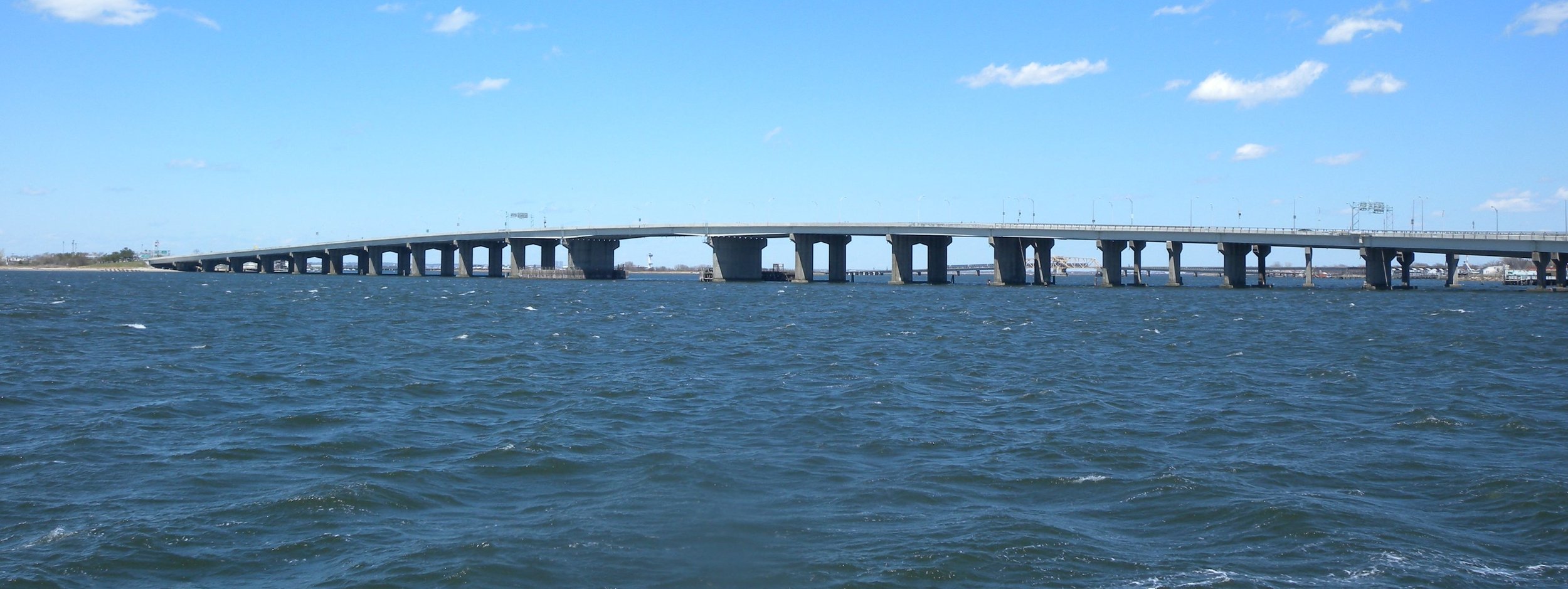
Cross Bay Bridge is free at last

 https://images.squarespace-cdn.com/content/v1/5b9ffe0f1137a680c2c08250/8ccd843d-4535-4669-bf74-f2767fb44ece/Cross_Bay_Br_wide_jeh.jpeg?format=2500w

 Queens Eagle

Queens residents will no longer need to pay the toll on the Cross Bay Veterans Memorial Bridge in Southeast Queens, a major win for locals in the area who often use the bridge to commute and have long complained about the toll’s cost.

Beginning in 2024, residents of Queens who use E-Zpass will get a 100 percent rebate when crossing the bridge, which connects the Rockaway peninsula to Broad Channel and mainland Queens.

The funding comes through a 2018 program called the Outer Borough Transportation Account – which provided additional resources for outer borough transportation improvements – and was heavily pushed by local officials.

“Promises made, promises kept,” said Assemblymember Stacey Pheffer Amato, who has been trying to get the toll changed for locals since she was elected. “After years of hard work and perseverance, my constituents from Lindenwood, Howard Beach, Hamilton Beach and Ozone Park will no longer be penalized. Through the legislation I passed with Senator Addabbo, Queens residents who utilize the New York E-Zpass program and register for the program will get full access to their entire borough, especially the Rockaway Peninsula.”

Crossing the bridge, which gets drivers and pedestrians across Jamaica Bay, is a necessity for some Rockaway locals who need it to get to work in other parts of Queens, Long Island or other parts of the city via the Belt Parkway.

“Finally, the MTA and the governor have listened and are implementing the removal of a barrier to secure economic opportunities for everyone in Queens,” Pheffer Amato said.

Pheffer Amato says that there is a long history of fighting against the toll, one she is happy to bring across the finish line.

“This was always an issue in the community, this unjustified toll,” she said over the phone to the Eagle. “Someone who works at a public school paid an extra over $25 a week to get to their jobs in Queens, through Queens, less than five miles from their home. That to me was the most inequitable part of the toll bridge.”

She said that it took work to figure out the budgeting and the economics, which ultimately led to the usage of the Outer Borough Transportation Account to pick up the tab.

Pheffer Amato’s legislative colleague State Senator Joseph Addabbo called the toll “unfair.”

“This reversal is a monumental victory and an effort that elected officials and residents have been striving to accomplish for decades,” he said. “This achievement will rebate residents for the only intra-borough toll in the city, assist the economic growth and enjoyment of the Rockaway peninsula.”


Wednesday, November 2, 2022

Cross Bay Blvd on the verge of collapse

https://thecity.brightspotcdn.com/dims4/default/af876c5/2147483647/strip/true/crop/2994x1996+0+0/resize/2048x1365!/format/webp/quality/90/?url=https%3A%2F%2Fcdn.vox-cdn.com%2Fthumbor%2FLIVn8I6ch4vj8qOJrrqyang1lIk%3D%2F0x0%3A2994x1996%2F2994x1996%2Ffilters%3Afocal%281497x998%3A1498x999%29%2Fcdn.vox-cdn.com%2Fuploads%2Fchorus_asset%2Ffile%2F24149523%2F102722_04_cross_bay.jpg

THE CITY 

The cracked and crumbling Cross Bay Boulevard, one of the three paths out of the Rockaways, has been the subject of an outsized share of citizen complaints, according to an analysis by THE CITY. 

The thoroughfare has been a problem for decades, according to frustrated residents of Broad Channel. That’s the neighborhood on an island in Jamaica Bay just north of the Rockaways and south of mainland Queens, with the boulevard running through it and A train tracks immediately to the east.

“If there’s a roadway collapse, or if there’s another hurricane, Broad Channel has nowhere to go and people from the center of Rockaway have no way to get out,” local Community Board 14 Chairperson Dolores Orr told THE CITY.

The asphalt of the boulevard is pocked with deep, visible cracks and depressions, even ten years after the devastation of Hurricane Sandy highlighted the need for resiliency work in the area. These days, locals are renewing the call for a complete rebuild of the roadway — which has been the top item on Community Board 14’s capital project list since 1990, including in the most recent budget draft published in mid-October.

Dan Mundy Sr., 85, a lifelong Broad Channel resident and former president of the neighborhood’s civic association, recalled receiving a call in the early 2000s from a local homeowner upset that her house — just doors down from a concrete drainage tunnel that supports a section of Cross Bay Boulevard — shook when trucks passed it. 

Mundy said he eventually learned the problem stemmed from the installation of new sewers in the 1990s — a project that required digging trenches and hollowing out the concrete base that supports both sides of the boulevard. This, he said, in turn destabilized the tunnel — and the boulevard at large — as solid concrete was replaced by a patchwork remedy. 

Three decades later, trucks, buses and even cars thud loudly as they drive over the cracks formed where the tunnel walls meet the road.

 “It’s an accident waiting to happen,” said Mundy, pointing to the tunnel, which is usually walkable when the tide is low but was flooded by a high tide when THE CITY visited Thursday morning. “When you do go under there, you can really see where the concrete is falling off. The [steel] rebars are all sticking out.”

Mundy pointed to another section along the tunnel — also known as a culvert or “sluiceway” to locals —  where he said a pothole has opened up time and again. From inside the culvert, Munday said he can “almost put my hands up to the street” where the weak spot is.

“They keep coming and they fix it, and it falls apart again,” Mundy told THE CITY. “So it’s just a Band-Aid they’re doing on everything here.”

The cracks and potholes along the culvert are just one symptom of how the sewer installations that gutted the boulevard in the 1990s have, over the years, continued to destabilize the nearly century-old roadway, said Mundy. The boulevard is estimated to carry an average of about 25,000 cars a day.

I'm going to put this here like this because the people at the DOT really need the exposure:

The city transportation department, however, seems unworried. “The Cross Bay Boulevard culvert is structurally sound,” DOT spokesperson Vin Barone told THE CITY after conferring with DEP. “DOT is working with its sister agencies to conduct routine inspections while we continue to explore long-term infrastructure upgrades.”

Sure Vinny, tell Ydanis and your fellow bike zealots there to keep exploring, maybe more paint on the bike lanes will stop the next deluge. 


Monday, October 31, 2022

Sunday, April 3, 2022

Endangered Spaces

Snow geese share the landscape with the A train in Broad Channel. The mix of wild natural features and city infrastructure  makes the area distinctive.

New York Times 

Don Riepe pointed to the line on the wall five and a half feet above his kitchen floor. That was where floodwaters reached during Hurricane Sandy in 2012.

His home, a humble two-story wooden structure, is decorated with nautical maps, horseshoe crabs and assorted maritime paraphernalia. It sits right on Jamaica Bay, with a small dock at the water’s edge, where he moors his 22-foot boat. He has a spectacular view of the east end of the bay with the spires of Manhattan in the distance.

Mr. Riepe, a former manager of the Jamaica Bay Wildlife Refuge, considers himself blessed to be surrounded by nature and still have all the perks of a big city a subway ride away. But he knows his neighbors’ time there may be coming to an end. During his four decades living in the area, Hurricane Sandy was the worst Mr. Riepe has seen; the flooring and all the electrical appliances on the first floor of his house were destroyed. Since then, during lesser storms and even high tides, he moves his computer and furniture upstairs, where he sleeps — and he hopes for the best.

Mr. Riepe is just one of tens of thousands of residents who live on the wild fringes of Queens, in communities like Hamilton Beach, Edgemere and Howard Beach, where the ocean threatens to encroach as sea level rises and coastal storms intensify owing to climate change. It is also the focal point of a major environmental restoration project that aims to protect the area — and in fact the whole city — by returning salt marshes and sand dunes to their natural states. How this will affect the community of Broad Channel (the only inhabited island in Jamaica Bay) remains to be seen.

Already, Mr. Riepe’s neighbors are scrambling to adjust to their new climate-changed reality — moving their cars to higher ground on high-tide days, and in some cases converting their ground floors into garages and shifting their living quarters upstairs and out of harm’s way. One thing that they are not yet prepared to do, however, is move out.


Crains New York 

Flushing Meadows–Corona Park, one of the most frequently flooded green spaces in the city, is getting a comprehensive plan on how best to adapt Queens’ largest park to climate change.

This month a congressional spending bill green-lit a $530,322 grant for the Waterfront Alliance to lead a climate resilience plan for the 897-acre park. Those federal dollars, which Queens Rep. Grace Meng requested from Congress last year, will enable the alliance to develop a road map of infrastructure projects and priorities to stymie prolific park flooding, which is only expected to worsen with increasingly heavy rains and sea level rise.

After heavy rainfall, it’s common for huge puddles to transform park basketball courts and fields into ponds for days. Overflow from both Meadow and Willow lakes frequently engulfs trails, making the park a challenge to navigate. Hurricane Ida laid those challenges bare with torrential rains that flooded the park and overflowed onto the Van Wyck Expressway and Grand Central Parkway, which spurred emergency rescues for drivers trapped on the roads.

That’s nothing compared to what’s on the horizon. Without upgrades, much of the green space, which is a former tidal wetland, could be permanently inundated by 2080, the New York Panel on Climate Change said.

Karen Imas, vice president of programs at the Waterfront Alliance, said the city must ensure the park is “prepared for our climate future.” The best way to do that, she said, is by developing a plan with those who know the park best.

“This is really an opportunity to work hand in hand with the community in and around the park and with city agencies to identify what are the greatest hazards and vulnerabilities, and how they can be addressed,” Imas said. That will likely be through a mix of projects, including wetland restoration, bioswales and revamped sewage infrastructure, she added.


Friday, May 8, 2020

Drivers have to pay full toll again crossing the Cross Bay Bridge

Patch

The MTA is suspending a planned toll rebate for Queens residents driving across the Cross Bay Bridge as its revenue plummets during the coronavirus pandemic, state legislators said Tuesday.

The refund, which would go through E-ZPass and apply to drivers whose cars are registered in Queens, was due to go into effect this summer but is now indefinitely postponed.

"To say I'm disappointed by the postponement of the Queens Resident Cross Bay Bridge Rebate is an understatement, but I understand that the MTA is experiencing never before seen economic hardship and tough decisions have to be made during unprecedented times," Assembly Member Stacey Pheffer Amato said. "We fought so hard for this, for our communities, and it was seen as something that would never be able to happen."

Under the current rebate program, Broad Channel and Far Rockaway residents pay a discounted toll of $1.41 with their E-ZPass, then receive a refund for that amount from the MTA, which operates several bridges citywide.

Crossing the bridge, which connects Far Rockaway to the rest of the borough, costs other drivers $2.29 with an E-ZPass or $4.75 without one, according to the MTA.

 The bridge is the city's only crossing that requires drivers to pay a toll to travel within the same borough, according to QNS.com.

Thursday, February 7, 2019

A modern tale of Queens' King of Crap and his port-a-potty empire.


https://farm3.static.flickr.com/2194/2302711366_78be17674c.jpg


New York Intelligencer

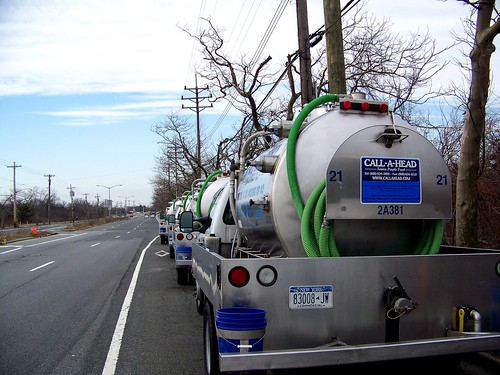
Charles W. Howard is the porta-potty king of New York City. The seat of his vast empire is Broad Channel, Queens; from this windswept rock in Jamaica Bay, you can see the lights of Manhattan twinkling across the water. Early every morning, while the city sleeps, dozens of trucks — tagged with WE’RE #1 AT PICKING UP #2 decals — snake through the five boroughs to clean his 18,000 toilets. The company boasts more than $35 million in annual revenue, thanks in part to “salesgirls” who head out each day in the company’s signature Volkswagen Beetles to poach contracts from competitors who are too shy to sell with sex. Charlie himself arrives at work only around midday in a black Cadillac Escalade. Young female dispatchers and clerks cry “Charlie! Charlie!” while men in orange slickers hose down toilets in the yard.


On a recent Thursday, the gleaming Escalade stops at a pizzeria, and Charlie, 53, steps out, a bit heavy and wearing a rumpled purple dress shirt. He’s brought along Kimberly, the star of his company’s YouTube channel. She’s beautiful, blonde, and his wife. Charlie favors superlatives, like another Queens businessman, and speaks with the accent you’d expect from a man so old-school New York there’s a neighborhood named after his family. And now, not far from Howard Beach, he explains why he’s the greatest toilet man in America. “I had different theories about business,” he says, “and they all turned out to be correct.”

  Nationally, portable toilets are a $2 billion business. Construction rentals are three-quarters of New York’s market, and as America’s real-estate sector has rebounded over the past half-decade, the industry has exploded. Developers pay $100 a month for a pump truck to visit once a week and hoover up blue-tinged waste. Profits are made by building dense routes: lots of toilets at a stop and lots of job sites close together. Events are a growing corner of the business. Go to Smorgasburg and count the toilets: Daily rentals run about $225 each. Use a luxury restroom trailer with flushing toilets at an upstate wedding? It cost the bride’s parents a few thousand bucks just for the night.

 
But now, Charlie might fall off his throne. More than 1,300 former pump-truck drivers, the men who literally haul his shit, are part of a class-action lawsuit that could put him out of business. The rest of the big five covet his empire.


“They would love for us to get destroyed,” Charlie says, though it’s quite a vague “they.” Spend enough time in his world and you wonder if he’s perhaps the most hated man in the city. Kimberly Howard nods. “Business,” she says, “is war.”


Friday, December 1, 2017

Bad contractor in Broad Channel


From PIX11:

...what’s with contractor Dennis Melandro? He STILL hasn’t finished rebuilding Victoria Roehling’s Broad Channel home damaged badly by Hurricane Sandy. She’s paid him $280,000 and he told me back in September that the job could be done within two weeks. Here we are more than two months later and there’s still a lot more to do.

And this week Victoria says she found he’d plugged a long blue extension cord into her home to get electricity for a job he’s doing two houses down. She’s now considering a possible criminal complaint. We’re going to stay on this until Victoria is back home.

Friday, October 20, 2017

Ulrich alleges that Crowley put the squeeze on Broad Channel restaurant owner


From the Queens Chronicle:

Councilman Eric Ulrich (R-Ozone Park) dropped a bombshell on one of his colleagues this week, an allegation that could shake up her bitter race less than three weeks before Election Day.

In a Monday interview with the Chronicle, Ulrich accused Councilwoman Elizabeth Crowley (D-Glendale) of abusing her power as a lawmaker — claiming she sent a “SWAT team” of city agencies after a popular Broad Channel restaurant last year, not long after one of her sons, then an employee of the eatery, was injured in a fight nearby.

The establishment is in his district.

According to Ulrich and Bayview co-owner Anthony Martelli, Crowley’s two sons Dennis, 20, and Owen O’Hara, 19, were involved in a physical altercation about a block away from the restaurant on July 1, 2016.

Two sources with knowledge of the situation told the Chronicle that a criminal investigation into the incident is still ongoing.

However, Martelli said he believed Dennis O’Hara, who worked at Bayview at the time, to be the aggressor, while Ulrich said those who witnessed the incident “all know who kicked the kid’s ass and thinks he deserved it.”

“The irony here is that the kid and his brother are known for making trouble,” Ulrich said. “I don’t want to attack Crowley’s kids or anything, but her son got smart with his mouth and they followed him outside and kicked his ass down the street from the place.”

In response, the Republican lawmaker said his “idiot” colleague prompted a multiagency task force — including officials from the FDNY, the State Liquor Authority, the MTA, the Board of Standards and Appeals and the departments of Buildings and Health and Mental Hygiene — to be deployed to the restaurant on or around Sept. 2, 2016.

“There was never any underage drinking there,” Ulrich said. “But this is what she did. She did everything she could to shut this guy down. It’s like someone went in there with instructions to bang [Bayview] over the head until it got shut down.”

____________________________________________________

Well, the one thing we can all agree with Ulrich on is that Crowley is an idiot. How refreshing for a fellow tweeder to come out and say it, though!

In all seriousness, though, this is a lot to digest, and there are several more allegations at the original link, but let's stick with this for now. We already know that one of the Crowley boys likes to be verbally abusive and this fits in with that pattern. There was no press for some reason about this alleged incident at the time it happened. An assault this violent most certainly was a 911 call and the city's NYPD mapping tool confirms 2 felonious assaults at the location on that day. But if what Ulrich said - "all know who kicked the kid’s ass" - is true, then why have there been no arrests? And why would the mother of these 2 launch her own assault against the restaurant instead of the perp?

What's missing from this story is when Dennis O'Hara was let go from the restaurant. Was it that night? Was it because of this incident which was apparently witnessed by many and with an identifiable suspect? Who exactly did he piss off? It seems to be someone untouchable. A mother's natural inclination, one would think, would be to make sure justice was served to the punk that beat up her kid and not go after a business owner. She's hooked up real good with the PBA and other NYPD unions, so why haven't they arrested the perp?

Why were the MTA and BSA called in? What in tarnation do they have to do with any of this?

Sunday, October 1, 2017

Sandy victims died waiting for Build It Back

From the Queens Chronicle:

More than 900 Howard Beach residents, and close to 6,000 others in Queens, have dropped out of or were booted from the city’s Build it Back program since 2014, according to an analysis by Comptroller Scott Stringer.

The comptroller’s study, detailed in a Sept. 25 letter to the Mayor’s Office of Housing Recovery Operations, states Queens had the largest drop in applicants to the trouble-riddled Sandy recovery initiative — from 9,284 who first sought help to 3,584 today.

Many of those dropoffs occurred in Rockaway, and mostly on the western end of the peninsula. In Howard Beach, there are now 936 fewer homeowners in the Build it Back pipeline. Broad Channel saw 530 applicants get out of the program.

Citywide, 20,275 people sought help from the initiative, first established by Mayor Bloomberg in 2013, but now only 8,310 have or are set to be assisted by the program.

Stringer — along with Councilman Mark Treyger (D-Brooklyn), chairman of the Council’s Recovery & Resiliency Committee — said “the reasons why individual applicants have left the program” are not clear, but are “likely attributable to many causes,” including dissatisfaction with projected timelines, people turning to other sources of aid, getting lost in “the tangle of bureaucracy,” and some being removed for not meeting “stringent entry requirements.”

And in some cases, according to the comptroller, some applicants died while waiting for assistance.

Thursday, August 17, 2017

Queens newspaper publisher may do 20 years in prison

From the Daily News:

A Queens newspaper publisher found herself on the wrong side of a headline after authorities said she was messing with the mob.

Patricia Adams, publisher of The Forum, was arrested Wednesday on a charge of witness tampering in a bizarre offshoot of a loansharking case involving the Bonanno crime family, according to Brooklyn federal prosecutors.

Instead of simply signing off on a story about the scheme, Adams became a key player, using her weekly newspaper to bully a woman out of testifying against a Bonanno associate accused of sexually harassing the woman at his Broad Channel deli.

The harassment accusation against Robert Pisani threatened the freedom he enjoyed after posting $500,000 bail in a $26 million loansharking scheme in and around Howard Beach, officials said.

Adams allegedly stepped in, and tried to make the woman’s father talk his daughter out of cooperating with federal law enforcement.

Days ahead of Pisani’s bail revocation hearing, the local newswoman played hardball with the victim’s dad and said she’d dirty up the daughter in her paper, prosecutors said.

Judge Brian Cogan agreed to release Adams late Wednesday on $150,000 bond. Adams also had to put up her house as collateral.

She’ll be under house arrest, so if she wants to go out and interview people for the paper, she’ll have to get the green light from pretrial services, Cogan said.

Adams is looking at up to 20 years if convicted.

Wednesday, July 26, 2017

If you want something fixed, call the media

From NY1:

Harnisher spent months trying to get the city to fix his property, but instead, he said he got the runaround. That all changed after the 78-year-old reached out to NY1 and we reported on the problem last week. City representatives and EIC have had several meetings since then. The city says repairs will begin next week.

"They have a plan that they are going to put things together with DDC from the city, and they are overseeing it, and they are going to put additional rocks, bring the levels up and address some of these issues," Harnisher said.

Harnisher allowed the city to use his property after they gave him a written promise to return it to its original condition. Initially, the city told us Harnisher would have to go through his insurance company to recover the thousands of dollars in pool repair costs. But since our report, he's reached a comprise with EIC.

"Thank God, speaking to you folks," Harnisher said. "I was frustrated since the middle of April."

Harnisher says he hasn't gotten a date yet as to when the actual construction will start, but he's happy things are finally moving along. He'll be even happier once the job is done.

Thursday, July 13, 2017

City contractors damage property then skedaddle

From NY1:

A busted pool, a broken shed, and a missing fence — that's just some of the damage Frank Harnisher says a city contractor did to his property while working on a project to alleviate chronic flooding on West 11th Road during high tide.

The 78-year-old has fought for months to get the contractor or the city to address the issue. "I can't get them down here, I can't get anybody to talk to me about how they are going to redo my property," he said.

Which was the agreement, according to a 2014 letter from the contracting firm EIC Associates.

Workers used his property at the end of the street to build a cofferdam, a watertight enclosure for construction below the waterline.

The company said it would return the area to its pre-construction condition, but instead Harnisher said it's been one problem after the other.

"When they erected the cofferdam a lot of my property deteriorated, and instead of building it back to its pre-existing condition, they shorted me five feet of property on one side, my existing rock bulkhead on the other side is three feet shorter, and now I'm subject to high tides," Harnisher said.

The contracting firm said it was told to vacate 11th Road to make room for Build it Back construction and couldn't go back.

But when NY1 reached out to the Department of Design and Construction, the agency overseeing the $28 million project, we were told that property that was removed or damaged because of the work will be restored.

Wednesday, July 5, 2017

Hamilton Beach, Broad Channel rezoned

From the Queens Chronicle:

The City Council on June 21 unanimously approved a rezoning of Hamilton Beach and Broad Channel, which permits the construction of single-family homes on most lots in the coastal neighborhoods.

The initiatives were pushed through by Councilman Eric Ulrich (R-Ozone Park), who urged the City Planning Commission to approve the plans at its June 7 meeting — even though the panel had more time to review them.

The rezonings will take effect once signed by the City Clerk — which could happen in the coming days.

Under the rezoning, future residential developments in Hamilton Beach and Broad Channel will be limited to one-family houses, with the possibility of two-family homes only on lots wider than 40 feet in the former area.

In Broad Channel, new developments would be single-family only and the construction of community facilities with sleeping accommodations would be prohibited.

The new rules would also prohibit the construction of semidetached multifamily housing in both communities.

Larger homes are often less storm-resilient and out of character in the low-lying, shoreline neighborhoods.

Wednesday, March 8, 2017

Resiliency is part of new rezonings

From the Queens Chronicle:

The Uniform Land Use Review Procedure has kicked off for a proposed rezoning of Broad Channel and Hamilton Beach, which if passed would only allow for the construction of smaller developments in the low-lying, coastal communities. The Department of City Planning started the process on Feb. 21.

Under the proposed zoning, future residential developments in the communities mostly would be limited to one-family houses, with the possibility of two-family homes only on lots wider than 40 feet in Hamilton Beach. It would also prohibit the construction of semidetached multi-family housing as well as community facilities with sleeping accommodations.

“Our neighborhood is made up of mostly single-family bungalows, some built a hundred years ago, and right next to them are these homes which are completely out of place for the neighborhood,” New Hamilton Beach Civic Association President Roger Gendron said. “With limited access in and out of Hamilton Beach, to continue to allow the overbuilding in our area is unacceptable.”

In Broad Channel, new developments would be single-family only and the construction of community facilities with sleeping accommodations would be prohibited.

Community Boards 10 and 14, which represent Hamilton Beach and Broad Channel, respectively, must hold a public hearing and submit a recommendation on the proposals within 60 days of Feb. 21.

Thirty days after receiving the boards’ recommendations, Borough President Melinda Katz must give her opinion and the city Planning Commission must approve or disapprove them within 60 days after that — the Council must vote on them 50 days later.

Friday, December 30, 2016

To curb cut or not to curb cut?


From PIX11:

Martin Grillo can't believe after decades of serving the city, he says he now has to fight for a driveway to his home.

Grillo has been a paramedic in New York City for 38 years.

He was there on 9/11 and he helped victims who lost their homes to flood waters during Hurricane Sandy.

While he was helping, his home was being ravaged by flood waters.

Now, as part of the Build-it-Back Program, he says, the city promised him a curb-cut driveway that would flow underneath his home to his door.

"I have good and bad days. I can't always walk. I need this driveway," Grillo said.

After 9/11, he has trouble breathing and walking. A driveway would make it easier for him to get in and out if his home, and help him with parking.

"Why don't they just do what they said they would do?" Grillo said.

But after more than a year battling several city agencies, he says he is getting no action and no respect.

Saturday, October 29, 2016

Still Building It Back


From NBC 4:

Walk through the Queens community of Broad Channel with the head of New York’s Build it Back program, and every aspect of the embattled program is crystal clear: there are signs of construction everywhere, but homes are still in limbo. Pei-Sze Cheng reports.

Wednesday, July 20, 2016

Flooding will get worse before it gets better

From The Forum:

The low-lying south Queens communities of Old Howard Beach, Hamilton Beach, and Broad Channel are vulnerable to tidal flooding today, and the conditions are only expected to worsen with projected sea level rise, according to the Department of City Planning, which presented current planning initiatives and priorities for Queens on Monday at a joint meeting of the Borough Board and Cabinet at Borough Hall.

However, particularly in Old Howard, DCP has indicated that it is possible to maintain a strong neighborhood “by supporting resilient retrofits and through investments in street-end infrastructure upgrades.”

Hamilton Beach and Broad Channel are far more challenging, DCP noted. A lack of infrastructure solutions presents obstacles to mitigating the impacts of sea level rise.

The unique built environment of Hamilton Beach and Broad Channel – narrow lots, and narrow, low-lying streets – pose challenges for resilient retrofitting and reconstruction. Existing R2, R3-1, and R3-2 Zoning Districts do not account for narrow lot frontage in the residential areas of these communities, DCP noted. Additionally, new, higher flood elevations present physical and economic challenges to the two commercial corridors: Cross Bay Boulevard and Coleman Square.

However, City Planning pointed out that there are opportunities to identify changes to zoning, both in residential areas and business corridors; to maintain neighborhood character, facilitate customer access to businesses, and enable resilient retrofits and building.

Tuesday, March 29, 2016

A lot of Sandy damaged homes are still not repaired

Forgotten-NY recently visited Broad Channel and stumbled across this house. Many others are sill in disrepair, years after Sandy. Electeds are blaming the DOB.

Monday, August 24, 2015

Kinkajou captured

From the Queens Chronicle:

The kinkajou that had been spotted in a tree in Broad Channel near the Jamaica Bay Wildlife Refuge Center was caught on Wednesday and is under the care of the Animal Care & Control of NYC, according to a National Parks Service spokeswoman.

An email forwarded to the Queens Chronicle from a member of Northeastbirding.com states that the tropical critter had wandered away from the tree it called home for close to a week and was found just south of the visitors' center.

"It was asleep when found, so the capture was easy," the email reads.

An NPS spokeswoman later confirmed the animal's capture and added that it was handed over to the city's animal control unit.