Queens Chronicle
The Department of City Planning provided residents an online
refresher course about zoning ahead of a Zoom town hall about proposed
reforms of Downtown Jamaica and parts of Hollis, last Thursday.
During
the Jamaica Neighborhood Plan Town Hall, people had questions about
what will be developed in the area and if its needs will be met with the
plan.
DCP agency reps said they hope to get more feedback from
community members regarding the rezoning. The initiative would transform
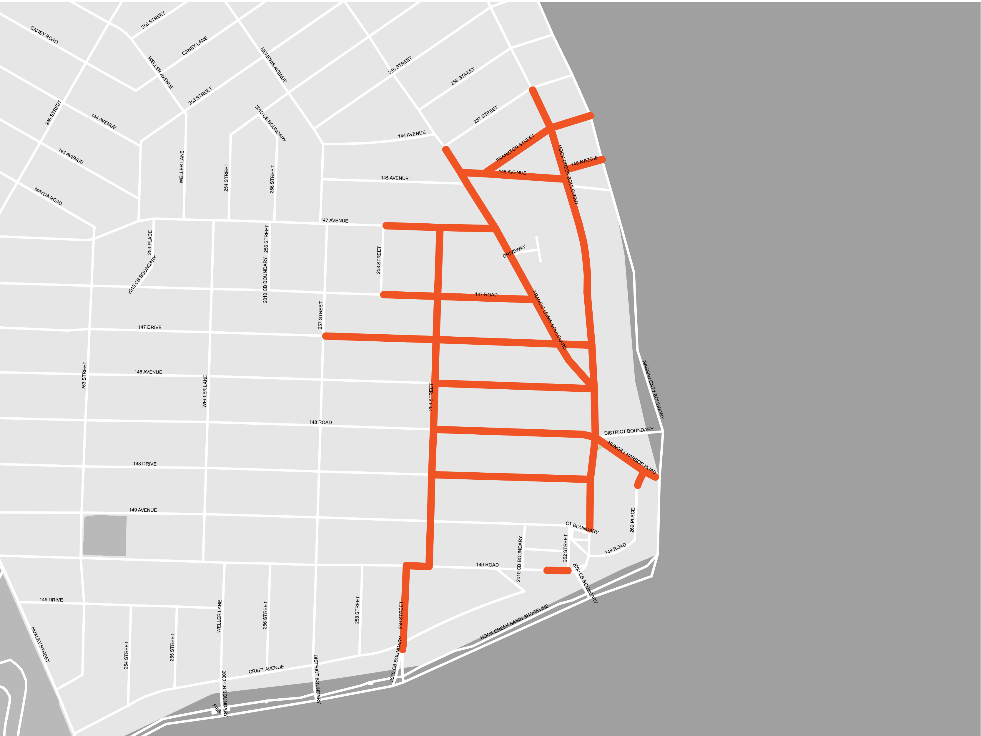
Jamaica Center, the downtown area where straphangers catch the E, J and
Z trains, along with nearby regions stretching to the Jamaica and
Hollis Long Island Rail Road stops to Hillside Avenue in the north and
the Van Wyck Expressway to the west. Last Thursday’s event was designed
to lay the groundwork for an environmental review of the plan. The
proposal also calls for rezoning sections of Dunkirk and 160th streets
and Merrick, Sutphin and Guy R. Brewer boulevards, according to DCP.
There will be no zoning changes to single- or two-family areas, said
Shavvone Jackson, a DCP representative.
More
than 200,000 people who live, work or go to school in and around
Downtown Jamaica would be impacted by the rezoning of the area, said DCP
Borough Planner Alisa Nurmansyah, using data from the 2020 Census.
“Zoning
is a set of rules that control how land in a community can be used,”
said Jasmin Tepale, the senior program manager at DCP, who is overseeing
the Jamaica rezoning plan. “It tells us what you can build and where
you can build it ... this includes the type of uses you see in a
neighborhood like residential or commercial zoning ... and what a
building looks like and how tall it can be.”
The three main types
of zoning districts include residential, commercial and manufacturing,
or R, C and M zoning districts. R1 is a low-density residential
district, while R10 is a high-density district.
The purpose of the
rezoning plan is to build up Downtown Jamaica, which consists of mostly
two- to six-story homes and residential, commercial and manufacturing
buildings to create eight- to 16-story buildings to address the growing
population and low housing production in the area, according to the DCP
presentation.
Data from the American Community Survey, released in
2022, said that from 2010 to 2020, Jamaica’s population increased by
13.4 percent, higher than the rest of the city, which grew by 7.7
percent. Housing production in the area increased by 10.1 percent while
housing production in the city grew by 7.3 percent, which is closer to
the citywide population increase, according to DCP.
Profiles of
Queens Community District 12 (Jamaica, Hollis and St. Albans) said the
population was approximately 225,900 in 2010 and 248,158 in 2022.
U.S.
Census data said that the city’s population was 8,804,190 on April 1,
2020. A World Population Review census said the city’s population
decreased to 7,931,147, but is expected to be around 9 million by 2040,
according to a Fox News report on March 28.
Blossom Ferguson, one
resident who was on the Zoom call, asked if any of the housing will be
available to people with low incomes.
A city Housing Preservation
& Development spokeswoman said that if an area is mapped for
mandatory inclusionary housing, its required that a share of new housing
will be permanently affordable. If a developer comes in to erect a
building with more than 10 units, a percentage of them must be
permanently affordable.
“Do you plan on having condos or co-ops?” Ferguson asked. “Is that already established or still in the works?”
Tepale
said that based on previous feedback, many seniors who would like to
leave their single-family home have expressed interest in still owning
property, and condos and co-ops are something that can be created in
residential zones, along with other housing types.
Lisa
Edwards, another resident, said that she believes the whole rezoning
plan is simply gentrification and that the whole process for the
initiative is undemocratic.
“This has not been properly
publicized,” Edwards said. “It does not allow for community members to
hear each other’s voices and discuss.”
Jackson, who spoke during
the zoning refresher, said there are 38 people on the steering
committee, 26 meetings were held and that DCP has reached out to more
than 2,000 people since May 2023.
“We are going to continue to create opportunities for people to engage in this process,” Jackson said.