Showing posts with label 421a. Show all posts

Friday, December 16, 2022

Developers too stingy to build more apartments


 The Real Deal

The construction pipeline is getting narrower.

There were 351 new building filings in New York City in the third quarter, down 17 percent from the second quarter and 28 percent year-over-year, according to a report from the Real Estate Board of New York.

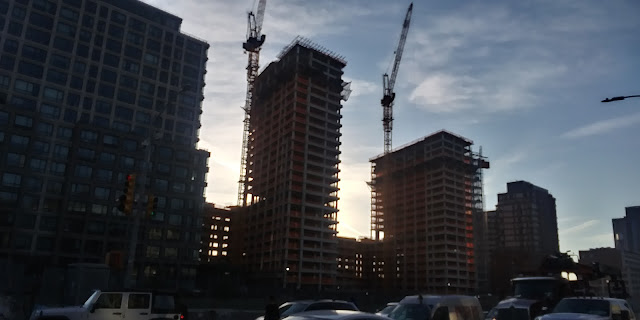
The drop is in part because the 421a property tax break for multifamily development in the city expired June 15, which triggered a rush of filings. The 689 in the first quarter were the most in a quarter since 2014, which, not coincidentally, was just before the previous version of 421a expired.

A drought followed the 2014 surge, and now history is repeating itself. Developers have all but stopped trying to put together investors to pursue rental projects that cannot get the 35-year property tax break. Condo projects were largely excluded from the most recent iteration of 421a.

Rising interest rates have also contributed to the decline, as financing projects of all kinds became more challenging for developers.

But the impact of 421a’s expiration is clear when comparing the slowdown in filings for rental projects to the overall drop in new-building filings. The quarter-over-quarter falloff in rental filings was 62 percent, nearly four times the quarterly decline overall. Only 78 rental projects were filed in the quarter, half as many as in the same period last year.

Those 78 projects are proposed to have 3,346 units, down 46 percent year-over-year and the smallest quarterly number in a decade — since the slump that followed the 2008 financial crisis.

Rental projects in much of the city became dependent on 421a over several decades. Progressives let the tax break lapse, believing it forgave too much property tax for too little affordability. Some predict it will be several years before it is replaced, although an abatement still exists for co-ops and condos.

Wednesday, December 15, 2021

Gowanus rezone approval spurs luxury public housing over-development blowback


The Real Deal 

 Developers have filed plans to build three more largely residential buildings in recently rezoned Gowanus.

Rabsky Group affiliate Galaxy Developers and Monadnock Development each submitted plans for a 22-story building with approximately 300 residential units at 395 Carroll Street and 155 3rd Street, respectively. Avery Hall Investments put in paperwork to build nearly 200 units at 653 Union Street.

A steady flow of Gowanus developments have been filed since October, when it became clear the rezoning would pass.

But that is not the only reason that project filings are piling up at the Department of Buildings. The scheduled expiration of 421a, a generous property tax break for residential construction, in June is prompting developers to get their foundations in the ground by then.

Largavista Companies filed plans to build a 46-story tower with 518 residential units at 30-05 Queens Boulevard in Long Island City. The building will span about 474,000 square feet.

Howard Hughes filed its application to build at 250 Water Street after slogging its way through the Landmarks Preservation Commission and City Council as opponents complained that the project is too tall.

The building clocks in at 26 stories with 324 residential units and 160,000 square feet of commercial space. The site, which abuts the high-rent Financial District, has been a parking lot for decades, despite several attempts to develop it.

Also in Queens, Albert Shirian’s Lions Group filed plans to build a 49-story tower with 363 residential units at 26-32 Jackson Avenue. The company secured construction financing for an adjacent residential project at 27-01 Jackson Avenue with 164 units across 27 stories, the Commercial Observer reported.

Saturday, March 20, 2021

"Affordable" luxury public housing coming to Ozone Park


 Queens Chronicle

The city Department of Housing and Preservation is accepting applications for what it has deemed an affordable housing lottery at 86-15 Rockaway Boulevard, a four-story residential building in Ozone Park.

The 13,900-square-foot development designed by Lu Ning Architecture contains 20 units — six of which are available on NYC Housing Connect for residents at 130 percent of the area median income, ranging in eligible income from $54,858 to $159,640 per household.

The offerings include one studio apartment with a $1,600 monthly rent for incomes ranging from $54,858 to $118,300, and five two-bedrooms with a $2,000 monthly rent for incomes ranging from $68,572 to $159,640.

Prospective renters must meet income and household size requirements to apply for these apartments. Applications must be submitted online or postmarked no later than March 23.

The building is receiving a tax exemption through HPD’s 421a Tax Incentive program. The pet-friendly apartments will feature hardwood floors, energy-efficient appliances and patios or balconies. Amenities include garages, a virtual doorman, storage, a bike room, a recreation room, a central laundry room and community events and classes.


Tuesday, October 27, 2020

421a-holes busted by A.G.

 https://i2.wp.com/www.nationalreview.com/wp-content/uploads/2020/08/Letitia-James.jpg?fit=789%2C460&ssl=1  The Real Deal

 A new investigation into buildings that benefit from the 421a tax abatement by New York Attorney General Letitia James found that four developers in Brooklyn and Queens received the tax break but didn’t live up to the program’s requirements.

The developers’ misdeeds ranged from falsely reporting a full building was vacant to not offering rent-stabilized leases to tenants as the program requires in most cases.

“Rent-stabilization laws exist to protect tenants, and we will not let landlords or developers circumvent them,” James said in a statement. “The agreements announced today affirm my office’s commitment to promoting access to safe, affordable housing for all New Yorkers. This is a notice to all bad actors seeking to take advantage of tenants: Not on my watch.”

None of the developers named in the latest investigation return requests for comment.

The Real Estate Board of New York issued a statement in support of James, adding that such violations are rare, and underscoring the program’s importance for affordable housing.

“We applaud Attorney General James for taking action to ensure that 421a is used only as intended and required under State law,” said James Whelan, president of the Real Estate Board of New York. “The 421a program continues to play a crucial role in the production of much-needed below-market rate housing across New York City — and while bad actors are rare, it is always unacceptable for any developer to try to utilize the program without complying with its rent-stabilization requirements.”

One firm, Tuhsur Development, tried to evict tenants from its property at 63-36 99th Street in Rego Park even though a state investigation found it had overcharged those tenants $22,042.

Friday, November 2, 2018

A deluge of development is headed our way

From Curbed:

According to a report from Localize.city, a platform that provides neighborhood insights based on available New York City data, the city has already saw more than 12,800 new housing units open in the first half of 2018 and another 31,000 are expected to open by 2020 (h/t Wall Street Journal). In all, it is projected that New York will gain 90,000 new apartments between 2016 and 2020.

Per its findings, Localize.city reports that the bulk of these new housing units are being constructed in the outer boroughs—primarily in Brooklyn and Queens. In fact, nearly 60 percent of the new units are opening in neighborhoods Brooklyn or Queens. The only Manhattan neighborhood where a significant portion of these 31,000 new units are being added is the Lower East Side. For instance, Long Island City was ranked first among the top ten neighborhoods that are booming with new units, and by 2020, it’s expected to welcome nearly 6,400 new apartments, though Greenpoint is expected to see the biggest burst of new units by 2020. Williamsburg trailed behind Long Island City, slated to welcome 3,470 new units and Bushwick came in third place.

So what’s driving the residential boom? According to Localize, much of it has to do with the tremendous amount of permits filed by developers back in 2015, when there was a rush to get them in before the state’s 421-a tax abatement expired in January 2016. Many of the developments that are under construction now are the result of those permits and the number of new units under construction are starting to level off, though there is an uptick in the amount of units now hitting the market.

But what’s more important than merely the number of new housing that a particular neighborhood will receive is the implications it can have on the community. “New construction could mean different things in different neighborhoods,” says the report. While in the short term, residents may have to deal with the nuisances that come with construction projects (noise, dust, congestion), the long term effects could result in a shift in demographics, burdened transit systems, overcrowded schools, tension between newcomers and longtime residents, and a change in architectural style within a neighborhood.


YA THINK?

Friday, October 26, 2018

Fresh Meadows landlords slapped with lawsuit by AG

From The Real Deal:

A pair of Queens landlords spent years cheating the state out of almost $500,000 in property taxes by manipulating the 421a program, according to a lawsuit from the New York State Attorney General’s Office.

The lawsuit seeks to ban Queens landlords Ram Cohen, Eldad Cohen and their company ERC Holding, LLC from participating in New York’s real estate industry. It also aims to force them to repay the property taxes they dodged, along with the profits they made from selling their building at 71-44 160th Street in Fresh Meadows.

The brothers finished building the 10-unit building in 2009 and applied for a tax exemption with the city under the 421a law, according to New York State Attorney General Barbara Underwood. The exemption requires the Cohens to abide by rent stabilization laws, but the suit alleges that they stuck tenants with unregulated leases instead. The attorney general’s office previously ordered the Cohens to start treating their tenants as rent-stabilized in 2014, but they did not do so, the lawsuit says.

The Cohens also tried to make their building appear more valuable than it actually was by listing inflated rents on all of their leases and giving tenants separate riders where they would agree to pay lower rents, the suit says. They kept these riders secret from banks, regulatory agencies and a prospective buyer to make the building appear more valuable than it really was and sold it in 2016 for $3.75 million, according to Underwood.

Wednesday, June 13, 2018

421-a rule change causes dip in regulated apartments

From AM-NY:

This spring, the city announced it had given hundreds of property owners one last chance to recoup the 421-a tax benefit by complying with provisions of a perk that aims to encourage the creation of affordable homes.

Now that the May 1 compliance deadline has passed, 730 of the 1,788 targeted properties lost the benefit, according to data provided by the city Department of Finance last month. Collectively, the properties lost about $22.38 million, according to the Department of Finance.

The property tax benefit was launched in the 1970s to spur residential construction. Over the years, it has been extended to co-ops, condos, two- to three-family homes and rental developments.

Although the city yanked 421-a from properties for a variety of concerns, advocates have focused their attentions on rental properties, since they must abide by rent stabilization rules while receiving 421-a.

Earlier this year, at least 367 developments with rental units had 421-a suspended for undisclosed reasons. The new city data shows 175 of these lots have had the benefit reinstated by fulfilling all of the 421-a requirements by May 1.

Saturday, March 10, 2018

Laying down the law

From the NY Post:

The city has suspended a lucrative tax break from more than 1,700 property owners it says aren’t following the rules – a move that could cost them $66 million this year, officials said Friday.

The owners facing removal from the “421-a” tax abatement program failed to file a mandatory Final Certificate of Eligibility.

Officials said 1,788 properties — from three-family homes to multi-family buildings — didn’t register in time, so the city suspended the breaks. The non-compliant properties have a combined 11,022 apartments.

City officials said they’ll reinstate benefits to owners who comply by May 1.

Wednesday, July 12, 2017

63-story skyscraper next to clock tower

From the Queens Gazette:

The Durst Organization has filed plans to develop a 63-story tower in a lot next door to the landmarked Clock Tower Building at Queens Plaza in Long Island City.

The new tower will feature 763 residential units and a public park, plans show. The Durst Organization acquired the parcel from Property Markets Group in December 2016 for $173.5 million., contingent on the renewal of the New York State 421-a tax program that offers tax breaks to developers in exchange for the creation of affordable housing.

State lawmakers approved a new version of the program in spring 2017. Under the program, developers will set aside at least 28 per cent of the Durst tower’s 763 apartments as affordable housing.

An item on the Real Deal website in December said developer Kevin Maloney, of Property Markets Group, indicated that an acquisition note on the clock tower project was coming due, so he felt it was time to sell the property.

The new, 63-story Super Tower will rise 710-feet from ground level and will feature 8,702-square-feet of retail space, according to the plans.

The Durst Organization is not planning any changes to the Clock Tower building, which was awarded landmark status by the city in 2015, a spokesperson for the Durst Organization said.

Sunday, April 16, 2017

New 421a may not help housing market

From Crains:

Finally a deal has been reached to restore the controversial 421-a tax break (excuse me, it is now known as the Affordable New York Housing Program), and the expectation is that it will ignite a boom in residential construction. Well, maybe.

At first glance the numbers support the idea that developers have been in a holding pattern since the tax break expired in late 2015. As the graph shows, building permits accelerated during the recovery from the financial crisis and then soared in 2015 as builders rushed to get approvals before the tax break lapsed. Last year permits fell by 70%, and so far this year we are on pace to issue about 20,000. The city needs more housing than that.

The common theme seems to be that builders have misjudged the incomes of the millennials who have flooded to big cities for jobs in the so-called creative economy. These young people simply can't afford the rents, and the impact is spreading from New York to other thriving cities. San Francisco rents have dropped 5% in the past nine months. Vacancy rates are rising even in Denver and other booming cities. Because development of an apartment building takes several years, a big jump in supply is coming in New York and around the country—further pressuring rents.

Beyond the immediate crunch, demographers are beginning to question how long millennial commitment to city living will last.

A survey released this year showed that young people still want to move to the suburbs. I know two such people (yes, they are journalists) who each plan eventually to leave Brooklyn for a single-family house in a suburb with good schools. One is staying for now because universal prekindergarten is cheaper than preschool in Westchester, but she's still checking the Westchester houses for sale and saving her money.

Friday, April 14, 2017

Similar project, different fate?

From the Times Ledger:

The Durst Organization is moving forward with its Hallets Point mega-project in Astoria now that a replacement for the 421-a tax abatement for developers is in place. The newly branded Affordable New York housing program will provide tax breaks to developers in exchange for desperately needed affordable housing.

When the original program expired in January 2016, one day after Mayor Bill de Blasio helped break-ground for the $1.5 billion complex, Durst scaled back its plans for seven buildings with 2,400 units, 484 of them affordable, to just one building with 163 units. The latter amount was what had been financed before 421-a expired. With a new deal hammered out by Gov. Andrew Cuomo, The Real Estate Board of New York, and the Building and Construction Trades Council of Greater New York that expands the production of affordable housing and provides fair wages for construction workers, Hallets Point has received the green light.

“The passing of ‘Affordable New York’ allows the Hallets Point project to continue,” Durst Organization spokesman Jordan Barowitz said. “We are full steam ahead.”

Tuesday, April 11, 2017

The "new" 421-a

From the NY Times:

It took nearly two years, but Gov. Andrew M. Cuomo on Friday reached an agreement with the New York State Legislature to put back together a long-running affordable housing program, known as 421-a, that gives developers a city tax break in return for building lower-price rental units.

Just do not call it 421-a.

The newly named Affordable New York Housing Program, announced at a news conference in Albany, will annually generate 2,500 units of housing affordable to poor, working-class and middle-class New Yorkers, Mr. Cuomo said. In a change to the nearly 50-year-old program, developers will be required to pay a “fair wage” to construction workers to qualify for the city tax benefits.

At a time when housing costs have escalated well beyond the means of many New Yorkers, the program was a subject of contention between Mayor Bill de Blasio and Governor Cuomo. Both have made affordable housing a hallmark of their administrations.

But some housing groups and budget watchdogs said that the new version of the program will be more expensive than past versions and that it was overly generous to developers.

The city plan, the result of long negotiations with the Real Estate Board of New York, the development industry’s powerful lobbying arm, was scuttled by the governor, in part because it did not have a requirement to pay union wages.

Monday, April 3, 2017

Astoria Cove bait-and-flip?

From Crains:

Anticipating the reinstatement of a key affordable-housing tax break, a landowner has put a sprawling development site on the Queens waterfront up for sale, with a $350 million asking price.

A partnership led by Alma Realty Corp. has hired Cushman & Wakefield investment sales executives Bob Knakal, Robert Shapiro and Adam Spies to sell Astoria Cove, a 2.2 million-square-foot mixed-use development project on nearly 9 acres along the East River in Astoria.

Alma and its partners brought the site to the auction block midway through March, signaling confidence that the return of 421-a, an expired tax break for residential development projects, will be rebooted and will stoke a moribund land market.

State legislators were expected to sign 421-a back into law late last week. Nearly a year and a half earlier, the program expired after the Real Estate Board of New York, the city's most powerful real estate lobbying group, could not come to an agreement with unions in the building trades on whether to require higher wages for certain projects.

In order to receive the zoning to build up to 1.7 million square feet of housing on the site, Alma reached a deal with the city to reserve 25% of the square footage for affordable housing. The firm's plans also included 110,000 square feet of retail space, 300,000 square feet of parking and a roughly 60,000-square-foot school.

If 421-a is reinstated, the buyer of the site could receive 35 years of real estate tax breaks in exchange for building the affordable-housing component of the project. To pave the way for a renewed 421-a, REBNY and the construction unions agreed that workers who build near the Brooklyn and Queens waterfront, like the Astoria Cove project, would be paid a minimum $45 an hour. The mandated minimum wage would be $60 in Manhattan.

Sunday, April 2, 2017

Proposed Astoria Cove site is a disaster


From the Daily News:

Frustrated neighbors for the last few years have bombarded 311 with noise and other complaints. And they’ve called any agency they think can help.

Officials with the state Department of Environmental Conservation confirmed they were investigating complaints at the site at 8-01 26th Ave. in Astoria.

Alma Realty, principal investor of 2030 Astoria Developers, the company intending to build on the site, denied any illegal activity had occurred.

Under state environmental law, anyone found guilty of dumping hazardous waste can face criminal charges and a fine of $37,500 for each day of violation and civil penalties up to $22,500.

Three years ago, the now-blighted lot was going to be the next hot waterfront development — Astoria Cove.

Mayor de Blasio praised it during his 2015 State of the City address — claiming its affordable housing component was a victory for his administration.

But instead of the promised housing, and jobs and community benefits, Astoria Cove brought chaos and frustration, local residents say.

Alma Realty owner Efstathios “Steve” Valiotis — who landed at No. 3 in Public Advocate Tish James’ list of worst landlords in 2016 — pledged to use union workers for all phases of clean-up and construction at the site, according to Build Up NYC, an umbrella-group of various labor groups.

Instead of hiring union workers to do environmental clean-up at the site, he brought in a “low-road” company called Tristate Cleaning Solutions...

Another snag followed.

The state’s 421-A tax abatement program — which gave subsidies to developers including affordable housing in their projects — expired in the summer of 2016. Without the tax break the project was completely stalled, Astoria Cove principals maintained.

Since 2016, no meaningful work has been done on the massive waterfront construction site — but there’s a constant flow of material on and off the property...

Thursday, March 16, 2017

New 421a plan will flood Queens with condos

From The Real Deal:

A budget proposal from the New York State Senate would greatly increase the number of tax exempt condominium projects in the outer boroughs, confirming the fears of Mayor Bill de Blasio and other city officials that such developments could creep back into a renewed 421a developer tax break.

In the Senate Republicans’ latest version of the bill, condo projects outside Manhattan with as many as 80 units could qualify for 421a tax exemptions, up from 35 units in Gov. Andrew Cuomo’s proposal released in January. A cap on the average tax assessment value for benefitting condo units is also raised in the new proposal from $65,000 to $85,000, a change that was first reported by Politico.

Since the 421a program’s expiration in January of 2016, developers have filed offering plans for 15 new outerborough projects consisting of between 35 and 80 condo units, a TRD analysis of data from the New York State Attorney General shows. If 421a became available to developers of this section of the market, there could be many more of these condo projects on the horizon.

Two key Senators in the 421a negotiations have previously expressed an interest in increasing outer-borough condo benefits, prior to Cuomo releasing his own plan. Republican-caucusing Democrat Simcha Felder and Republican Marty Golden, both of Brooklyn, told reporters in December they were looking to expand the tax break for more property owners, but haven’t provided further details.

Calls and emails directed to Golden and Felder were not immediately returned on Wednesday.

Monday, January 30, 2017

421a didn't do what it was supposed to do

From the Daily News:

The city lost out on as much as $2.8 billion in wasted tax breaks for condos under a program meant to spur housing development, according to a new study by a budget watchdog group.

The Independent Budget Office estimates that $2.5 to $2.8 billion of the property tax breaks given out over a decade as part of the 421-a program were wasted because they benefited homeowners rather than advancing the program’s stated goal of encouraging housing development.

Monday, November 21, 2016

New 421a regulations will cause NYC to lose a lot of $

From DNA Info:

Developers have warned that Mayor Bill de Blasio's plan to build 80,000 units of affordable housing would be in jeopardy without the state's 421-a tax break. But a proposed update to that law could actually cost the city billions of dollars in what advocates describe as a "wasteful giveway."

Under a new 421-a agreement up for approval by state lawmakers, the Real Estate Board of New York trade group that represents developers says it needs the program to put shovels in the ground for affordable and market rate rentals.

But an analysis from the Alliance for Tenant Power — a coalition of housing, community and legal service groups — said the new program would cost the city $2.4 billion a year in lost tax revenue.

That’s double the $1.2 billion the program cost the city in 2016, which only yielded about $100 million a year worth of affordable housing, the group said.

Saturday, November 12, 2016

Cuomo brokers 421-a deal

From Crains:

Gov. Andrew Cuomo has brokered an agreement between the city's real estate lobby and the building trades union to revive 421-a, a controversial property tax break for developers that the city and many in the industry believe is essential for the construction of rental housing.

"The deal reached today between these parties provides more affordability for tenants and fairer wages for workers than under the original proposal,” said Cuomo. "While I would prefer even more affordability in the 421-a program, this agreement marks a major step forward for New Yorkers."

The deal was reached between the 100,000 member Building and Construction Trades Council of Greater New York and the Real Estate Board of New York. Key to the agreement is a wage floor for certain construction projects. The revamped program would require average wages of $60 an hour including benefits for construction workers on Manhattan projects containing 300 or more rental units. The average wage for similar sized projects along waterfront Brooklyn and Queens communities would be $45 an hour.

"We applaud Gov. Andrew Cuomo and his administration for bringing all parties together to finalize an agreement on an important public policy that will allow for the development of critical affordable housing, and establishes wage standards for construction workers in New York," said Gary LaBarbera, president of the Building and Construction Trades Council.

Cuomo had previously signed a 2015 law that extended the tax break and increased the amount of affordable housing that would be required in exchange for receiving it. But he held off putting it into place until developers and the construction trades union agreed on how much laborers would be paid at sites getting the tax break. The two sides were originally supposed to reach a pact by January, but negotiations stalled and dragged on until Thursday’s announcement.

Sunday, November 6, 2016

As predicted... new Rockaway building to house homeless

From On Rockaway:

Published reports say that the new building at 9306 Shorefront Parkway will be housing homeless in 30 percent of its units under a new city ruling. Applications for the new 63-unit affordable apartments will close on December 27.

A new report from Crain’s New York Business puts a question mark on the new residential building opening in the near future at 9306 Shore Front Parkway in Rockaway Beach.

According to the highly-respected business newspaper, which is known for its excellent contacts with both business and city government, Mayor Bill de Blasio is apparently attempting to put homeless at the head of the line for affordable housing units such as those planned for the new Rockaway Beach building.


Hey, remember when this was posted which included a remark about it becoming a shelter? Well, BdB fooled us as it will only be part-shelter. What a way to revitalize Rockaway!

They are framing this as "these are for the homeless who can afford an apartment" which makes us wonder why, if they have a job and can pay a modest rent, they don't just move somewhere more affordable.

Saturday, November 5, 2016

BdB forcing affordable housing developers to take in homeless

From Crains:

A top de Blasio official has been calling developers of affordable rental buildings about a new regulation that would require them to house homeless families—the administration's latest attempt to stem the city's record-setting shelter population.

Vicki Been, commissioner of the Department of Housing Preservation and Development, recently made the calls to a handful of developers who received a now-defunct tax exemption called 421-a, according to sources with knowledge of the calls. The tax exemption requires that at least 20% of a building's units be enrolled in the city's affordable housing program.

"This is the latest reform in our effort to address the homeless crisis we face," said an HPD spokeswoman in a statement. "Addressing homelessness is a moral imperative. These new marketing procedures are another new tool we are using to help reduce the burden for families who are being forced out of their homes."

The city has struggled with a surging homeless population that topped a record 60,000 this month, with families with children making up two-thirds of that total. And earlier this year, domestic violence surpassed eviction to become the No. 1 reason for being admitted to a shelter, according to Crain's.

While it is not unprecedented for the city's top affordable housing official to personally call developers to inform them of a new policy, Been's entreaties are a sign that the administration is serious about getting this one off the ground quickly and is willing to exert more pressure on companies to comply.