Showing posts with label towers. Show all posts

Wednesday, July 13, 2022

2,000 for a frickin' studio


Queens Post

The average price paid to nab a studio in Queens in June was over $2,000 per month, with the average for a one bedroom hitting $2,500 for the first time on record, according to a new report by the real estate firm M.N.S.

The average price paid for a studio was $2,045, up 12 percent from June 2021, according to the report. The average for a one bedroom was $2,500, up 16 percent from a year earlier, and the average cost of a two bedroom was $3,322, representing a 23 percent jump year-over-year.

Rental prices increased across the borough, although they skyrocketed in Astoria, Long Island City, Forest Hills and Jamaica, the report revealed. The report did not provide a breakdown for Sunnyside or Woodside.

The average price paid to snag an apartment in Astoria last month was up 32 percent compared to June 2021. In Long Island City, the average rent was up 28 percent from 12 months prior, while in Jamaica and Forest Hills it was up 21 percent and 16 percent respectively.

In Astoria apartments of all sizes saw lofty increases — although it was most notable with the bigger units.

The average rent for a studio apartment in Astoria in June was $2,211. This figure was up 26 percent — from $1,760 — one year prior.

One-bedroom apartments in the neighborhood saw a 28 increase — with the June average being $2,553, up from $1,989 in June 2021.

The average rent to get into a two-bedroom apartment in Astoria was $3,249, up a whopping 41 percent from 12 months prior. The average two-bedroom went for $2,307 in June 2021.

The red-hot Long Island City rental market shows no signs of cooling down.

The average price paid for a studio apartment in Long Island City in June 2022 was $3,144, up 24 percent from a year ago; a one-bedroom fetched $3,970, up 31 percent from 12 months earlier; while a two-bedroom went for $5,463, up 28 percent.

Monday, January 31, 2022

The Billion Dollar District


Queens Post 

The Long Island City condo market in 2021 was its strongest on record—with sales volume reaching nearly $1 billion, about three times the previous record set in 2019, according to a new report.

There were 885 units sold in 2021, with a dollar value of $995 million. The number smashed the 2019 sales volume record of $385 million, when 336 condos were sold.

These findings are part of the 2021 Long Island City Condominium Report released by Patrick W. Smith, an independent real estate analyst and Long Island City-based agent affiliated with The Corcoran Group. (This is NOT independent!-JQ LLC) The report is based on closed condo sales within the confines of 37th Avenue to the north, Borden Avenue to the south, the East River to the west and Northern Boulevard to the east.The report is based on closed condo sales within the confines of 37th Avenue to the north, Borden Avenue to the south, the East River to the west and Northern Boulevard to the east. The area is represented in the shaded area

“The Long Island City market did extremely well in 2021 because sellers priced their units competitively and the demand for Long Island City continues to grow,” said Patrick W. Smith, the author of the report. “Long Island City also remains at a significant discount to Manhattan.”

Smith said that the market also benefited from low interest rates and a stock market that has surged over the past two years. He also said that the job market was particularly strong for many of the buyers who work in the tech, finance and legal industries.

He said that Long Island City’s popularity continues to increase as new stores and businesses come to the area—such as Trader Joe’s on Jackson Avenue—and its waterfront parks gain greater recognition.

The sales volume in both the new development and resale market was extremely strong in 2021, according to the report. There were 728 condos sold in the new development market, up from 270 in 2020. Meanwhile, 157 condos sold in the resale market—a record—significantly higher than the 65 sold in 2020, 85 in 2019 and 95 in 2018.

Prices across the Long Island City market were up. For instance, the average price paid for a condo in 2021 was $1,124,000, up from $1,074,000 in 2020. The average price for a one-bedroom last year was $912,000, up from $900,000 in 2020. Meanwhile, the average sales price for a two-bedroom condo was $1,382,000, up from $1,328,000.

The new development market across Long Island City outperformed, with the average sales price on the 728 units sold coming in at $1,134,000 in 2021, up from $1,048,000 in 2020 when 270 units changed hands.

The average increase can be attributed, in part, to the Skyline Tower development, a 67-story luxury condo building with 802 units at 3 Court Square. Closings in the building began in 2021—and 332 sales were recorded, accounting for $415 million in sales volume. The average price paid for a condo in the Skyline Tower—based on closed data– was $1,251,000 million, pushing up the numbers for the overall market.


Saturday, November 6, 2021

Luxury public housing apartments lottery open for Hunters Point towers

https://qns.com/wp-content/uploads/2021/11/gothampoint_lic-1200x677.jpg

QNS 

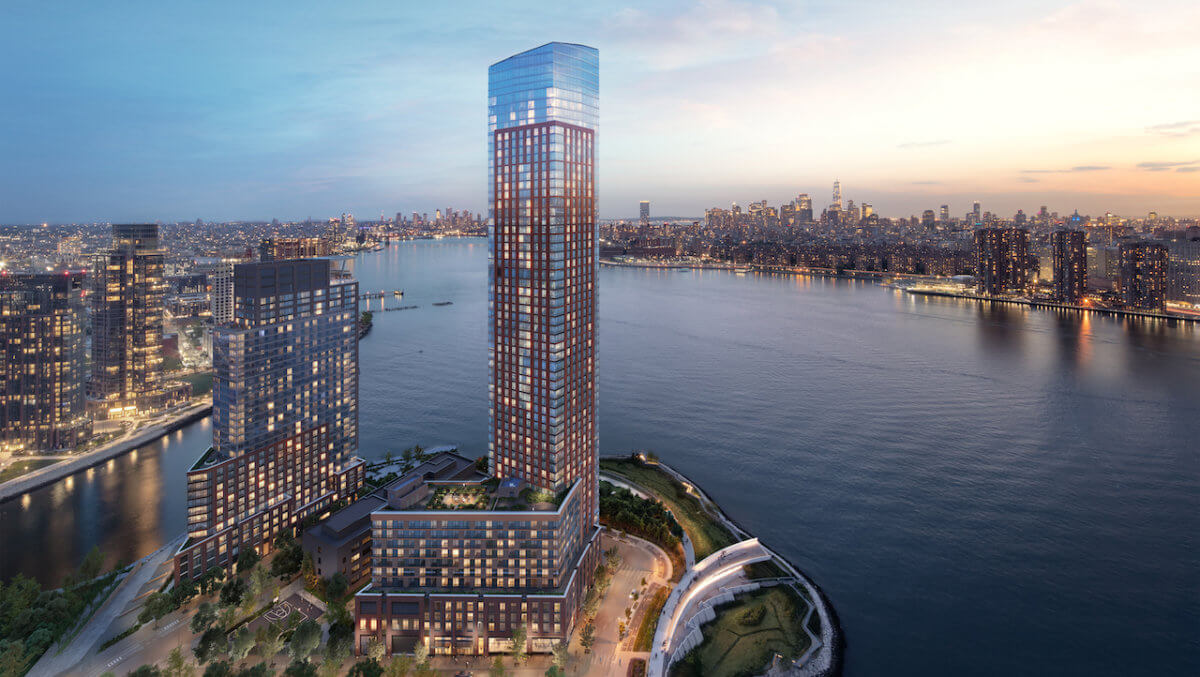
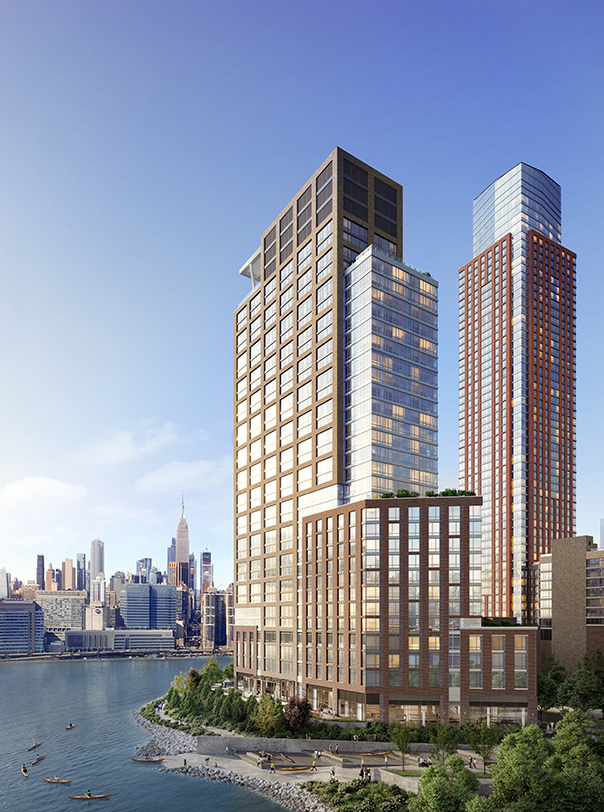
New renderings for the upcoming dual-tower residential project, Gotham Point, located in the Hunters Point South neighborhood of Long Island City, were unveiled and the affordable housing lottery application has opened.

The development, announced two years ago, consists of two towers that will include 1,132 total residences with 75% of units priced at affordable rates, senior housing, shared amenities, community facility and retail space. Gotham Point’s South Tower, or Parcel G, will be 33 stories tall and is estimated to be completed in late 2021 between Second Street and Newtown Creek.

The North Tower, or Parcel F, will stand at 57 stories and is expected to be completed in 2022.

Gotham Organization and RiseBoro Community Partnership, the developers, envisioned Gotham Point to be a mixed-income, multigenerational residential community.

The 847 rent-stabilized units will be available to a wide range of incomes, with maximum income limits ranging from $25,080 to $137,940 for an individual and from $35,790 to $196,845 for a household of four. Minimum income limits range from $15,806 to $73,166 for an individual and from $23,692 to $126,686 for a household of four.

 According to YIMBY, a total of 98 homes will be set aside for low-income seniors in an 11-story dedicated wing, equipped with its own personal lobby space, a lounge and laundry room on each floor, as well as a library and a community room with a shared pantry. RiseBoro will also be leading special programming for the senior community, with senior residences available to individuals across income levels from $15,806 to $85,920.

Friday, November 5, 2021

Rockaway's long belated and selective resiliency concern

Impunity City 

 Climate change was somewhat kind to New York City this year compared to the devastation that continues to happen in other states and nations with tropical storms, hurricanes and tornadoes and the apocalyptic hell fires that are happening frequently in California;  although with the exception of the remnants of Hurricanes Henri and Ida causing record amounts of water vomiting from the sky which led to destruction and sad deaths of the city’s lower income citizens here. Mostly because of the record heat NYC has received this year, with the hottest July on record, this mild weather has also led to what will sure to be the warmest October in this city in 2021, which comes to mind the last time summer stuck around for another month in 2012 when the pleasant weather gave way to the kraken that was Hurricane Sandy a few days before Halloween.

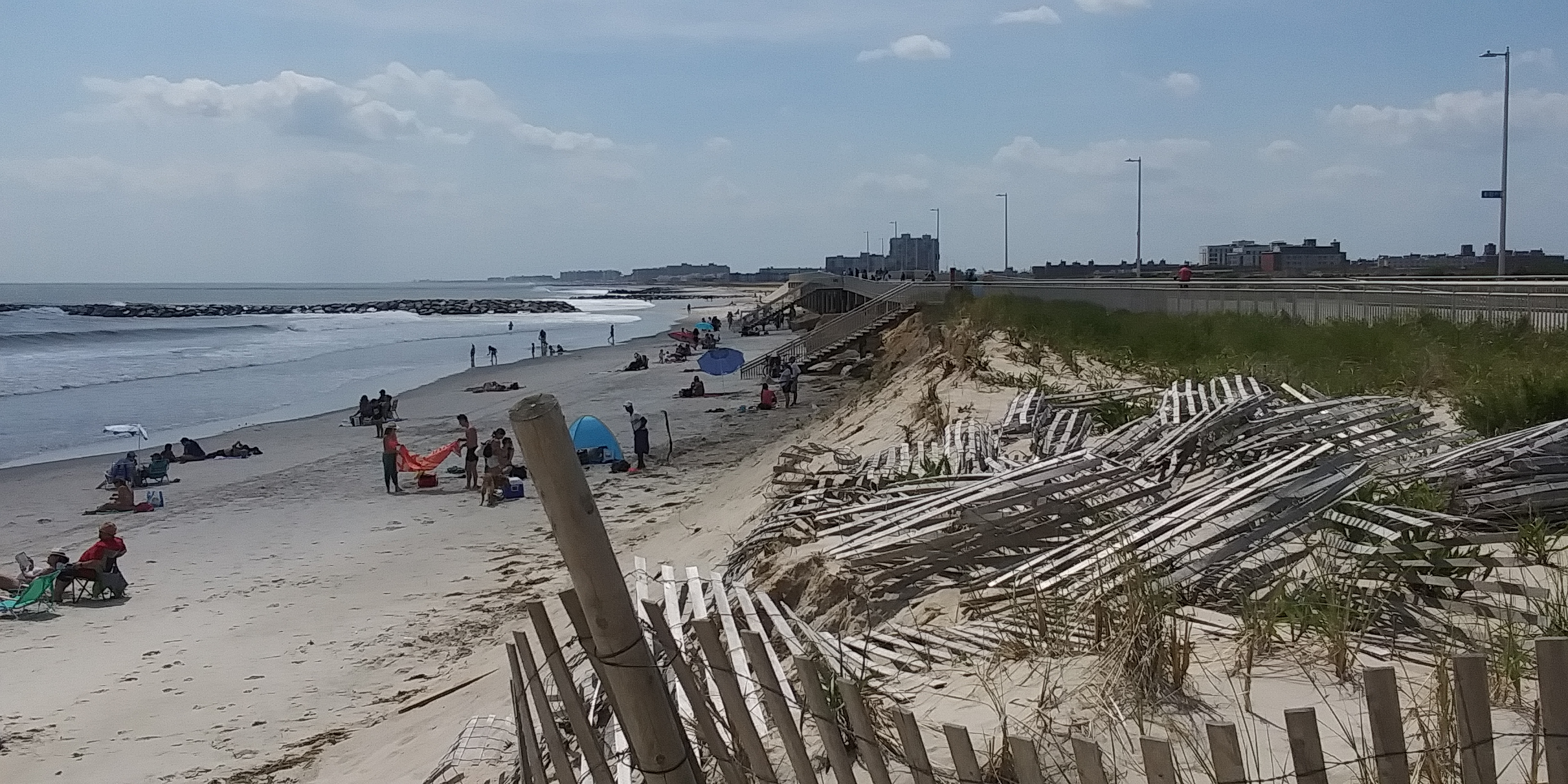
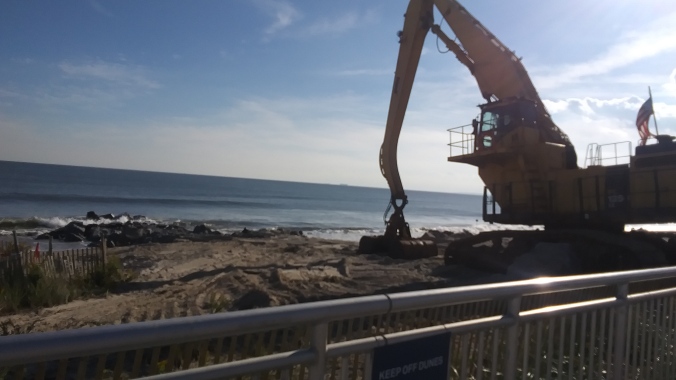
 Sandy laid destruction and death of her own in a 24 hours across the coastal towns and areas and updated flood zones of the five boroughs, notably in Rockaway Beach where she destroyed the entire boardwalk 9 years ago. But with funding from FEMA,  it took a few years to build another boardwalk, this time with rebar and concrete to replace all the wood that was reduced to kindle and also billions of pounds of sand for dunes. This led to longer treks to find some real estate to lay your towels and coolers down on the beach, but at least it provided protection from the hostile waters of the Atlantic that has been rising and eroding the shores of the peninsula for years before that bitch Sandy arrived.

 And nigh a decade later, Rockaway Beach’s shore is in dire straits again. Most evident on the most conveniently accessed and popular beach area at Beach 98 st., the boardwalk entrance ramp to the sand is more fit for kayaking than a path for sunbathing.


Friday, September 17, 2021

Two more luxury public housing towers being squeezed in on Hunters Point

Rendering of Gotham Point South Tower - Courtesy of VUW Studio 

NY YIMBY

The Gotham Organization and RiseBoro Community Partnership have revealed a collection of new renderings for Gotham Point, a dual-tower residential project located within the Hunters Point South mega-development. The property is positioned on Parcel F and Parcel G of Hunter’s Point South, which is among the largest mixed-use residential developments in Long Island City, Queens.

This latest component will include 1,132 rental apartments, 75 percent of which will debut as affordable housing units and age-restricted homes for seniors. Additional components include a publicly accessible underground parking garage, ground-floor retail in the north tower, and a 3,000-square-foot community facility in the south tower. The latter will debut as a new permanent home for Flux Factory, a non-profit organization that provides affordable exhibition and collaborative spaces for new and emerging artists.

“After an incredibly difficult year, New York City seniors deserve to have access to affordable homes with integrated services,” said Scott Short, CEO of RiseBoro. “Gotham Point accomplishes that goal within an iconic project on the LIC waterfront. We look forward to bringing this critical resource to the community and sustaining it for years to come.”

 The south tower at Parcel G topped out earlier this year at 33 stories and is expected to debut in late 2021. The north tower, or Parcel F, will stand 57 stories above ground and is expected to open in 2022. When complete, the project will yield 847 rent-stabilized units with income limits ranging from $15,806 to $137,940 for an individual. Income limits for a four-person household range from $23,692 to $196,845.

A total of 98 homes will be set aside for low-income seniors in an 11-story dedicated wing with its own personal lobby space, a lounge and laundry room on each floor, a library, and a community room with a shared pantry. RiseBoro will be leading special programming for the senior community. These residences will be available to individuals across income levels from $15,806 to $85,920.

Thursday, September 2, 2021

Luxury public housing apartments available at twin towers at Hunters Point

https://queenspost.com/wp-content/uploads/2021/08/TF-Cornerstone.jpg 

Queens Post


TF Cornerstone has extended the deadline for applicants looking to snag an affordable housing unit in one of its towers on the Long Island City waterfront.

The developer announced Tuesday that applications are now being accepted through Sept. 13 to enter the lottery for one of its 534 affordable apartments on offer at 52-03 Center Blvd. The previous deadline was Aug. 31.

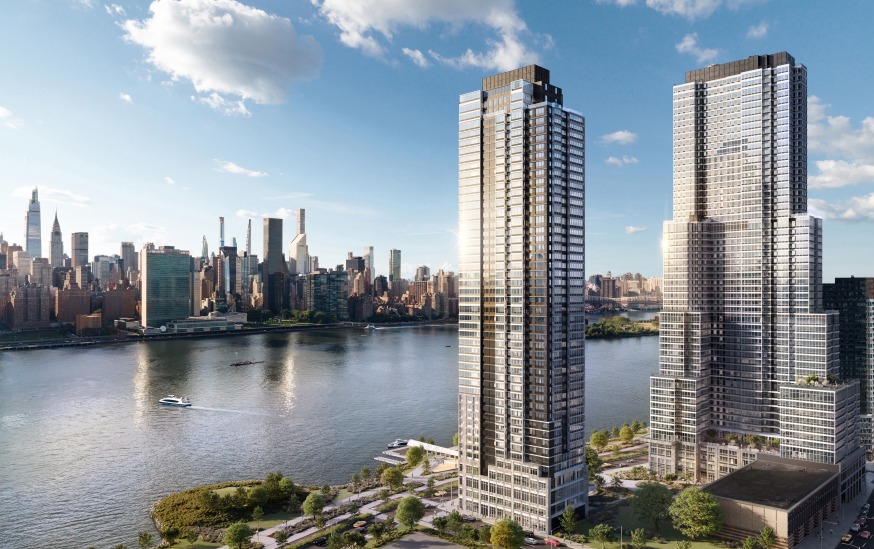
The units are located in one of TF Cornerstone’s two towers going up next to Hunters Point South Park. The apartments are in the developer’s 800-unit north tower. The 55-story north tower also includes 266 market rate units.

The south tower, located next door at 52-41 Center Blvd., is 44-stories high and contains 394 units–185 of which are designated as affordable. The application period for those affordable units ended last year.

The 534 affordable apartments now on offer include studios, one-bedrooms and two-bedrooms and are available to people who make a variety of incomes — from as low as 40 percent of the area median income (AMI) to as high as 165 percent of the AMI (see chart below).

Applicants who meet the eligibility requirements will be entered into the lottery for a unit.

Half of the affordable units are being set aside for residents of Queens Community Board 2, which covers Sunnyside, Woodside and Long Island City. Furthermore, 100 units are being designated for low-income seniors aged 62 and older.


Wednesday, January 20, 2021

The wealthiest New Yorkers are bluffing


Curbed

After ten months of breathless panic over the state of Manhattan’s luxury real-estate market, the industry is sighing with relief as a surge in leases and rental prices suggests that the wealthy New Yorkers who left town at the onset of the pandemic are beginning to return. While Fran Lebowitz and other curmudgeons have cheered on the exodus of the rich, whether or not they return has big implications for the city’s budget and thus vital public services.

According to Douglas Elliman’s December rental report, rents for the biggest and most expensive apartments in Manhattan rose by double-digit percentages compared to the previous month. Rents on smaller apartments and in lower price tiers remained flat or declined slightly, remaining about 20 percent lower than a year ago. This pattern appears to be driven by demand, which is stronger at the high end and weaker below, with discounts of 20 percent compared to a year ago.

Manhattan’s vacancy rate dropped for the first time since the pandemic began, falling from 6.14 percent in November to 5.52 percent (it’s typically between 2 and 3 percent), which is as blunt a signal as you can get that people are returning to the city. The number of new December leases signed in Manhattan was up 36 percent compared to November and a whopping 93.6 percent from a year ago. The basic principles of supply and demand are at work here too; at some point, rents fall so much the deals are just too good to pass up, particularly in desirable Manhattan.

Taken together, these data offer a clear signal that the rich are coming back to New York. The idea that wealthy households would never return to the city was always a little suspect — mostly the fever dream of anti-urban conservatives who grabbed on to temporary post-pandemic migration trends in support of their biases against city life. But with the vaccine rollout underway, the rich are returning in time for what stands to be a memorably jubilant period: the reopening of New York City.

Wednesday, February 12, 2020

Developers and investor consortium looking to supress environmental review of luxury tower development by Flushing Creek


https://cdn.vox-cdn.com/thumbor/YYn97yKmnt_PaVAJ-_BqxywE5HI=/0x0:5340x3560/920x613/filters:focal(2243x1353:3097x2207):format(webp)/cdn.vox-cdn.com/uploads/chorus_image/image/66284373/shutterstock_1377263150.0.jpg

Curbed


Along the banks of the Flushing Creek—one of New York’s most vital and most polluted waterways—dozens of construction cranes loom over the landscape, and half-finished glass towers cast ominous shadows over the water. During heavy rain storms, the waterway regularly swells, flooding pathways in Flushing Meadows-Corona Park, the streets of Willets Point, and even portions of the Van Wyck Expressway. And after those storms, the city’s overtaxed sewer system often pours raw sewage into the creek and Flushing Bay, causing a stench to waft from its brackish waters. Dead fish occasionally float upon its surface.

But this chunk of Queens real estate has been targeted for development by a consortium of landowners and stakeholders, including a group called the Flushing Willets Point Corona Local Development Corporation (FWPCLDC) that has long pushed for revamping the waterfront. Last December, the group quietly submitted plans to redevelop a 29-acre stretch of industrial property along the waterfront, which would include rezoning the northernmost section from manufacturing to residential use.

The proposal calls for creating a Special Flushing Waterfront District, which could accommodate a huge mixed-use development with more than 1,700 apartments, retail, a hotel, and publicly accessible open space (including a riverfront promenade that would connect to the recently opened Skyview Flushing Creek Promenade). Developers also want to integrate a publicly accessible road network with the existing street grid, effectively expanding downtown Flushing. The portion of land that would be rezoned could eventually be home to just under 100 below-market-rate apartments.

While proponents say the development will benefit the community, critics are concerned that development will have “immense impacts” on the fragile condition of the Flushing waterfront. 

“Adding significant residential development could overwhelm the Creek’s overburdened infrastructure that already releases over one billion gallons of raw sewage and stormwater runoff into the Creek every year,” the Guardians of Flushing Bay, a group of environmental activists, said in a statement. “Though the plan aims to provide critical access to a virtually inaccessible swath of the waterfront, it is essential that this project, if enacted, be implemented in a way that would enhance coastal resiliency, recreation opportunities, ecological stewardship and equitable access to the waterfront.”

The proposal comes as downtown Flushing experiences a development boom: Between 2009 and 2019, the neighborhood saw the second-largest number of condos constructed in New York City after Williamsburg, Brooklyn, according to Nancy Packes Data Services, a real estate consultancy and database provider. Over the past five years, rents have climbed by a whopping 21 percent. Although historically home to a largely working- and middle-class Chinese immigrant population, many of Flushing’s new developments—such as the massive The Grand at Skyview Parc, which has two-bedrooms selling for around $1.27 million—cater to a new wave of immigrants with deep pockets.

With Flushing booming, the waterfront remains the last frontier for developers. But given the size of the proposal from the FWPCLDC, as well as the fact that the Special Flushing Waterfront District is situated in a coastal flood hazard area, critics have argued that an environmental impact study—which is not required for this particular project—must be conducted before the plan moves forward.

“They’re adding three million square feet along the waterfront,” says Tarry Hum, chair of the Queens College Department of Urban Studies. “Can you imagine the environmental impact?

Update: Community Board 7 approves the rezoning anyway

 At a tense Monday night meeting, Community Board 7 voted 30-8 to approve a development team’s plan to rezone a large section of land by Flushing Creek.

Dozens of protesters showed up to criticize the land-use application filed by FWRA, a consortium of real estate firms behind the project.

The development group wants to rezone a section of the area so it can construct a 13-tower project with 1,725 residential units and 879 hotel rooms–along with retail and office space–by the waterfront.

The 29-acre property is bound to the north by 36th Avenue, to the east by College Point Boulevard and to the south by Roosevelt Avenue.

FWRA seeks the creation of the Special Flushing Waterfront District and a rezoning in order to move ahead with the proposed plan.

The standing-room only meeting was heated. Activists grew frustrated that they were unable to speak until after FWRA presented its lengthy and time-consuming presentation, which continued on until after 9 p.m.

“Let us speak,” some in the crowd pleaded during FWRA’s presentation.

CB 7 Chairman Gene Kelty walked into the crowd and tried to hush some of the unsatisfied people who were waiting for their turn to speak.

In a video of the meeting, one frustrated woman tells Kelty, “Why are you saying this is a public hearing? This is not a public hearing and you know it.”

The footage shows the CB 7 chairman saying, “It is a public hearing,” uttering a few more words that are drowned out by other noise, and then appearing to lunge at the woman to steal her phone before being stopped by police officers and others.

“Let us speak! Let us speak!” the group chanted as Kelty walked away.


Sunday, November 10, 2019

Developers who donated to de Blasio's corrupt CONY and presidential PACs are first to get air rights for building towers by public housing


NY Daily News

It may not be a bridge, but the city has something to sell you in Brooklyn — and donors to Mayor de Blasio are first in line to benefit.

In what appears to be a textbook “pay-to-play” move, the city is selling NYCHA development rights to builders who gave de Blasio’s campaigns more than $20,000.

Air rights at the Ingersoll Houses near Fort Greene Park in Brooklyn are being sold for $25 million to Maddd Equities, whose chief Jorge Madruga gave $10,000 to Hizzoner’s scandal-plagued Campaign for One New York, plus another $5,350 for his mayoral runs, according to filings. Joy Construction, whose employees gave de Blasio’s mayoral campaigns $5,200, is co-developer on the deal.

The companies plan to build two apartment buildings of about 31 and 33 stories each right next to the New York City Housing Authority buildings in Downtown Brooklyn.

“It absolutely looks terrible,” Susan Lerner, executive director of good government group Common Cause, said. “It definitely violates the spirit if not the letter of our campaign finance law and it removes public assets from public control without public input"

By buying 91,000 square feet of the Ingersoll House’s unused air rights - vertical space available under zoning laws - Maddd Equities and Joy Construction will be able to build about 10 stories higher than their original plans for the lots.

The city and the builders say the deal is a win-win.

The $25 million check will go toward a variety of repairs at the 75-year-old Ingersoll Houses, which will need about $300 million in repairs and maintenance work over the next nine years, according to the city.

The de Blasio administration hopes to raise $1 billion for NYCHA repairs through the sale of unused air rights, that can only be used for properties adjacent to public housing.

“It’s not about taking all of the green space and converting it to buildings at all,” said Jonathan Gouveia, NYCHA’s senior vice president of real estate. “We’re trying to be very strategic in how we insert some buildings so that you’re adding some density and generating some proceeds but at the same time, not dramatically changing the overall feel of the neighborhood.”

The developers plan to set aside 25% of their new towers’ roughly 400 units as “affordable housing.” Households earning 60% of the area’s median income would qualify. The developers say they will work with the local community board to help Ingersoll residents apply for those units.