Showing posts with label east new york. Show all posts

Sunday, February 16, 2025

Congestion pricing forgot to fix this

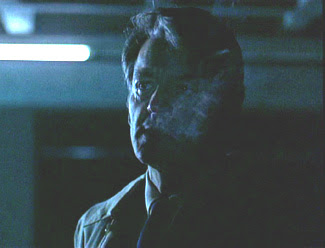
The East New York Bus Depot in Brooklyn. (Evan Simko-Bednarski for New York Daily News) 


NY Daily News

The MTA’s plan to fix the ailing East New York Bus Depot, which has been without a functioning fire sprinkler system for nearly three years, has been pushed back again, the Daily News has learned — a delay that could cost the agency $5 million in overtime.

As previously reported by The News, the MTA has been struggling to fix a 2,000 foot underground pipe at the facility since 2021, when the line responsible for feeding the sprinkler system from the city main failed to hold pressure.

Since then, countless attempts to patch the pipe and plug the leaks have failed, though repair crews have flooded the facility’s boiler room and uncovered asbestos piping beneath a storeroom in the process.

A plan to replace 2,000 feet of leaky subterranean piping with an above-ground loop, first reported by The News, had initially been scheduled for completion in August 2026.

But sources with knowledge of the facility said this week that that date has now been pushed back to late June 2027, nearly an 11-month delay.

A contract for the work, which had been due to be awarded this month, has not yet been solicited — the award is now scheduled for June of this year.

“This project will be awarded and commenced in 2025, as anticipated,” MTA spokesperson Kayla Shults said in response to questions about the reason for the delay. “We look forward to delivering upgrades to this nearly century-old depot,” she added.

The broken subterranean pipe is designed to provide pressurized water to the depot’s thousands of sprinkler heads in the event of a fire. As previously reported by The News, the pipe has repeatedly burst and failed pressure tests.

The repair project — which also includes the replacement of 3,000 sprinkler heads on the depot’s first floor — is expected to cost the MTA more than $4.5 million to complete.

Meanwhile, the transit agency is expected to continue to pay dozens of transit workers overtime to patrol the sweeping facility as a so-called “fire watch,” looking for fire 24 hours a day, seven days a week.

Sunday, May 1, 2022

Department of Transportation Alternatives only give two open streets to east Brooklyn nabes


Patch 

  A new Open Street on its way to the Brownsville Community Justice Center is so far the only car-free street this year in Brownsville and East New York, according to 2022 locations unveiled by the city.

The Open Street — which will close traffic on a Watkins Avenue block in the summer — is the only spot in the two neighborhoods on a list of 150 locations across the city that will take part in the program, which started in the pandemic as a way to give more room for pedestrians, cyclists and outdoor activities.

Brownsville and East New York previously had at least four Open Streets on Blake, Livonia, Williams and Stanley avenues, though studies showed that they were rarely active, likely given the lack of a designated organization to keep them up and running.

Transportation officials did not answer questions from Patch specifically about why the previous Brownsville and East New York Open Streets were not returning, but did say that several former locations were not on the 2022 list because "community partners" who had run the sites did not reapply.

The Open Streets program accepts applications for sites on a rolling basis, meaning more locations could be added as the year goes on, a spokesperson said. The city is working with nonprofit Street Lab to find partners in neighborhoods that have not had Open Streets yet and will offer help to those that join the program.

The city gives $20,000 in funding and a package of barriers, locks and other materials to each nonprofit running an Open Street, according to the department. (Even with the funding, many Open Street organizers have had to set up fundraisers to bring in the thousands of additional dollars needed to run the Open Streets each year).

"Since summer 2021, DOT has been providing full barrier operational support, sanitation, and horticultural maintenance at over 20 Open Streets across the city," the department said. "This precious resource is already being deployed in underserved communities and DOT plans to continue to grow this type of support, which will enable the agency to have a more equitable Open Streets program."

The DOT added that it helped provide local nonprofits and organizations with funding for metal barriers, traffic signs, programming, and movable furniture. The exact hours for each uptown Open Street are not yet set.

"On Earth Day and every day, we are showing the nation how to reimagine our public space at scale and build a greener, healthier, and safer city," New York City Mayor Eric Adams said in a news release. "My administration's commitment to the Open Streets program remains steadfast."

 And 34th Avenue in Jackson Heights has 25 blocks of D.O.T. support 24/7/365 and is run by a top member of Transportation Alternatives. 

 AthensSouth: As True Today As It Was Then

Tuesday, March 3, 2020

East New York homeowners experiencing persistent harassment by vulture real estate investors and speculation


THE CITY


When Mercedes Sandoz fell behind on mortgage payments, a lawyer she didn’t know called her personal phone offering to help — by buying her East New York home for cash.


The mother of five also got daily fliers and knocks on her door from lawyers and investors. That’s because she was on a public list as being at risk of foreclosure.


“I’ve lived in this neighborhood for 33 years, and in the last few years, I’ve felt like it’s a takeover,” said Sandoz, who bought her home in 2000 after years of renting in the area.


Now, she’s joined an effort to protect homeowners from harassment from real estate speculators by designating the neighborhood as Brooklyn’s only “cease-and-desist” zone — an area declared off-limits under state law.


Cease-and-desist protections would allow homeowners to opt into a list restricting would-be house flippers from contacting them — and hit violators with fines, criminal charges or loss of real estate licenses.


Local residents say the designation is badly needed in East New York: A 2018 Center for New York City Neighborhoods report that found investors were flipping more homes at higher rates and for higher profit margins in East New York than anywhere else in Brooklyn.


After a push by residents working with the Coalition for Community Advancement and state Sen. Julia Salazar’s office, the New York Department of State scheduled a public hearing on the cease-and-desist bid for March 5 at 5 p.m. at 127 Pennsylvania Ave.

 The hearing marks a key step toward whether state officials find the “evidence of intense and repeated solicitations” needed to declare a cease-and-desist zone.


The Department of State gained the authority to grant neighborhoods cease-and-desist protections in 1989, but currently has only three designated zones in the city — all in suburban-style, largely white and Asian middle-class areas.


Two cover a swath of northeast Queens, including College Point, Whitestone, Bay Terrace and surrounding areas. The third covers the Country Club neighborhood in The Bronx.

Alexa Sloan with the Coalition for Community Advancement, a band of residents, businesses and houses of worship advocating for East New York and Cypress Hills, said locals have been collecting evidence of solicitation for more than two years. They’ve amassed 540 surveys detailing their experiences.


One of the residents who has been organizing for cease-and-desist protections, Linda Ford, installed a camera outside her house because of frequent visits from would-be buyers offering cash.


“I keep the door locked, and I don’t answer,” said Ford, who inherited her home from her mother and has lived there for more than 50 years. “Sometimes the notes they leave are handwritten, like they’re from a friend.”


After offering sums of cash for far less than properties are worth, many of those investors quickly resell the houses for far higher sums. Rampant flipping can put real estate prices out of reach for local buyers while bumping up existing homeowners’ tax bills.

Tuesday, March 19, 2019

Bill passes to legalize basement apartments which might spur more gentrification


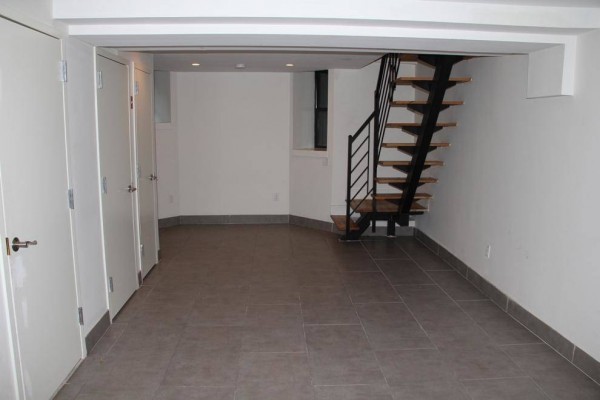
Image result for basement apartment new york

NY Daily News


Marlene Hernandez moved from her two-bedroom apartment in Bushwick to an illegal basement apartment in East New York two years ago out of necessity.

“I simply couldn’t afford Bushwick anymore, I had to go somewhere else,” the 29-year-old single mother of one told the Daily News. “Even if you live with a roommate, you’re paying $1,000, $1,200, to stay in a room. So I figured, why not live in a basement where I can have my own privacy?”

Some 114,000 New Yorkers live in illegal basement apartments, according to the housing advocacy groups Chhaya Community Development Corporation and the Pratt Center for Community Development.

Basement and cellar apartments must meet minimum requirements for light, air, sanitation and exits and be approved by the Department of Buildings.

A bill signed by Mayor Bill de Blasio on March 5 aims to turn illegal basement and cellar apartments into safe, legal, affordable housing, starting with a three-year pilot in East New York and Cypress Hills, Brooklyn.

But the new law has Hernandez worried. She’s paying $1,200 a month for her off-the-books place and argues that New Yorkers in her position may have to keep finding illegal apartments to keep their rent down, or face higher rents for legal apartments.

“My landlord isn’t going to lower my rent,” she said. “What incentive does he have to legalize my apartment?” she said.


The pilot program will provide $12 million in low-interest loans and grants to eligible low- to
middle-income homeowners, living in one- to three-family homes, to convert their basements into legal apartments. If successful, the city would look at expanding the program to other neighborhoods.
A report from the Citizens Housing and Planning Council (CHPC) in 2017 said such a program could add up to 38,000 housing units.

All basement apartments legalized with funds from the grants and loans will have to conform to HPD’s affordable housing rules, which cap rents at 30% of a tenant’s income. Landlords who decide to create legal basement apartments without the city’s help will not have to abide by the income cap.


“If they legalize basement homes, landlords can just take advantage,” Hernandez said. “They know that there are people who are able and willing to pay regular apartment prices for these units.”
Jessica Katz, executive director of CHPC, acknowledged that the pilot’s pathway to legalization opens the door for landlords to raise rents. But, Katz said, the benefits of legalization outweigh the possibility of higher rents.

“There is a risk that the landlords will raise the rent,” Katz said. “We’re trying to find the right balance between bringing up the quality of those apartments and protecting the tenants, but also not scaring off tenants who have in certain ways benefited from the legal gray area that they’re living in.”

If anyone else recalls, this is where Councilman Espinal described these areas which he represents as a guinea pig for this housing plan.

I have a gut feeling that East New York and Cypress Hills are going to become "hot", "hip" and "niche" towns pretty soon.
 

Sunday, March 10, 2019

City approves modular building for affordable housing


https://static1.squarespace.com/static/5b9ffe0f1137a680c2c08250/t/5c80306f104c7b7d7282b838/1551904882784/?format=1000w


Queens Eagle


A proposed 167-apartment development in East New York is one of the first projects using modular construction that the city’s Department of Housing Preservation and Development has selected to finance, the Wall Street Journal reported.

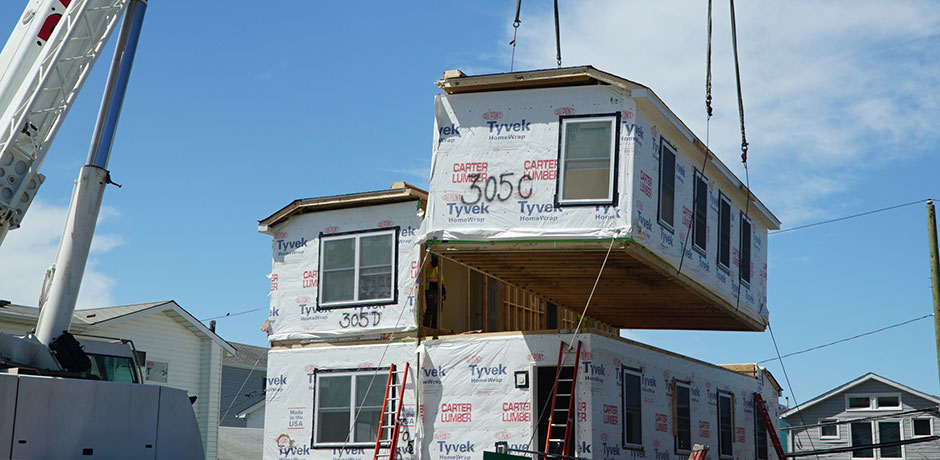
Modular construction refers to the off-site construction of prefabricated, factory-produced units (modules) that are then stacked on top of each other to form a full building. The Build It Back program implemented in Queens and Staten Island after Hurricane Sandy also used modular housing.

The modules will be constructed by FullStack Modular at its factory in the Brooklyn Navy Yard. The proposal was submitted by a development team led by Thorobird Cos. and its local nonprofit partner, Bangladeshi American Community Development & Youth Services.

“Doing modular is a really important, long-term strategy for the city,” said New York City Deputy Mayor Alicia Glen, whose last day on the job was Friday. “We know it saves time, and as it scales up, it will start saving money.”


Wednesday, November 14, 2018

Bill would legalize basement units citywide


From PIX11:

City Council Member Brad Lander says he wants to make sure long-time residents like Thorne can stay in the community, while also providing affordable housing. It's why he's proposed a bill to help homeowners bring illegal basement units up to code.

"We just have been playing a sort of don't ask, don't tell game and that's not good for anybody," said Lander.

Under his proposal, homeowners would receive low interest, subsidized, or forgivable loans depending on their income level. That money would be used transform basements into legal apartments with the help of the Department of Buildings.

In exchange, current or future tenants will receive leases with renewal clauses and affordable rent increases.

"If the house is in proper standard with the basement and pass all it's examination it could be done," said Thorne. "If it fails, it should be out."

If the pilot program is approved it will roll out in East New York sometime next year. If it's successful, it will likely roll out to the rest of the city shortly after.

Sunday, July 1, 2018

East New York to be a basement conversion "guinea pig"


From CBS 2:

“We’ll use East New York as the guinea pig of how this program can work and whether or not it will work,” said Councilman Rafael Espinal, who sponsored the pilot program. “If we’re able to create a successful program, then the hope is that we'll expand it citywide.”

The councilman said in East New York, 75 percent of basement apartments are being rented illegally, which he said is dangerous. So the pilot program will offer homeowners low-interest loans to renovate apartments to make sure they are safe.

Espinal told Kramer he worked with the FDNY and Department of Buildings to develop standards, making sure the apartments have sprinklers, adequate exits, windows and ventilation.

“There’s concerns about, for example, the fact that we have boilers and furnaces in the basement. The bill will allow for homeowners to wall-off those furnaces,” he said.


I'm sure East New York enjoys being referred to as a "guinea pig". Seriously, what elected official talks like this about a neighborhood, and to a reporter no less? And what 2-family homeowner is going to take out a loan to install sprinklers when they can just continue renting out their basements illegally for tax-free $$$ the way 75% of their neighbors do?

Did we land in Oz?

Saturday, February 3, 2018

BDB wants basement apartments legalized

From Crains:

Mayor Bill de Blasio managed to include one new proposal in the preliminary budget he released on Thursday—a pilot program to bring illegal basement apartments above-board.

The mayor revealed his latest plan to tally more living spaces toward his affordable-housing goals during a press conference at City Hall. It calls for the city to expend $5.7 million to bring existing underground apartments in Brooklyn’s East New York section up to code while keeping their rents below market rate.

“We’ve got to keep looking for new ways still to create and preserve affordable housing,” the mayor said. “We have to prove the model first, and we’re going to do that in East New York.”

The mayor estimated that the program, if successful in the impoverished enclave, could let him take credit for creating or preserving 5,000 more apartments citywide. This would appear to encompass about 11% of the current number of basement units, which a 2002 survey put at 45,000 across the five boroughs.


The number one reason landlords install illegal apartments in their basements/cellars is greed. They want the extra tax free income. Another legal unit could mean a change in income tax bracket and the DOF tax assessment also changes. I'm all for people living in safer environments, but this initiative does not jibe with the reasons why illegal apartments exist.

Wednesday, November 29, 2017

Low income neighborhood is in the city's crosshairs

From the NY Times:

As the gateway to a half-dozen subway lines, the sprawling Broadway Junction transit hub commands a prime location at the crossroads of six neighborhoods and serves as the unofficial welcome center in a fast-growing part of New York City.

The problem? It is anything but welcoming.

The dingy warren of passageways and platforms linking the A, C, J, Z, M and L are so packed that rush hour turns into a crawl. Outside, bus stops and a Long Island Rail Road station are plopped down in a depressing terrain of trash-strewn streets, chain-link fences rimmed with barbed wire and panhandlers camped out on sidewalks.

“You could do way better than this,” said Roody Fevry, 32, an exterminator who lives nearby. “It’s like nobody cares.”

Now Broadway Junction may finally get the makeover it has long needed. City officials are taking steps to create a destination stop with nearby restaurants, stores, gyms and other commuter-friendly amenities. Their aim is to turn the tired station and the surrounding area into a bustling economic center for a swath of Brooklyn that has long struggled with unemployment, poverty and crime.

The city’s Economic Development Corporation recently began a $200,000 study to identify potential avenues of economic growth in and around the transit hub — including office, retail and educational uses. A group of elected officials and community leaders has also been convened to come up with a vision for the area. The Brooklyn borough president, Eric Adams, and City Councilman Rafael L. Espinal Jr., a Democrat who represents the area, are the co-chairmen.

Sunday, December 6, 2015

As East New York goes, so goes the rest of the city

From DNA Info:

Nearly 50,000 East New York residents could be displaced by Mayor Bill de Blasio's plan to rezone neighborhoods to spur affordable housing construction, the city comptroller said Thursday.

East New York is the first neighborhood to be rezoned under de Blasio's plan. Many, including Comptroller Scott Stringer, worry the plan will cause a ripple effect of rising rents in existing buildings.

"Instead of strengthening the affordability of this community, the proposed rezoning would instead serve as an engine for displacement," Stringer said.

There are nearly 22,000 units currently in the area, largely in two- to four-family homes that are not subject to rent regulation. Stringer believes that those tenants are at risk for being pushed out if rents across the area start creeping up as a result of the new development.


YES! And if the Zoning for Quality and Affordability gets passed then that exact thing will happen citywide.

Friday, December 4, 2015

Affordable for whom?

From the Daily News:

There's one big problem with Mayor de Blasio’s affordable housing plan for East New York — it’s not affordable, according to a report by city Controller Scott Stringer.

The report, to be released Thursday, finds that 1,896 of the 3,447 affordable units the plan will create could end up too expensive for people who live in the Brooklyn nabe.

The units will be priced at around $1,200 a month, according to the formula that the city is using to determine affordability, Stringer’s report said.

That formula considers a family of three earning $46,620 a year to be “low-income.”

But the typical family in East New York — the first neighborhood to be rezoned under the mayor’s plan — earns just $32,815.

Tuesday, June 9, 2015

"Summer All Out" campaign will target high crime areas

From the Daily News:

Hundreds of cops will flood city streets beginning Monday as part of an aggressive NYPD initiative called “Summer All Out” to stanch the rise in murders and shootings.

More than 330 new police officers will take to some of the city’s grittiest blocks and precincts in an effort to bring this year’s homicide statistics back in line with last year’s historic lows.

The officers taking part in the crimefighting program will be assigned to work peak crime shifts — 4 p.m. to midnight and midnight to 8 a.m. — in areas like the 75th Precinct in East New York, Brooklyn (11 homicides through May 31), the 67th Precinct in East Flatbush, Brooklyn (seven homicides), and the 113th Precinct in St. Albans and Hollis, Queens (seven homicides).

They will also concentrate on public housing developments with the highest crimes rates.

Tuesday, September 30, 2014

Brooklyn area eyed for affordable housing is already overpriced


From PIX11:

Residents and real estate agents in the East New York neighborhood of Brooklyn believe developers are moving in and purchasing property, dramatically raising prices.

“Land is starting to be speculated at 2-3 times what it was going for in just the last year,” said Kyle McCullers, a salesperson with Citi Habitats.

Last Spring Mayor Bill de Blasio announced the city would help build or sustain 200,000 affordable housing units in the five boroughs, with construction starting in East New York.

McCullers believes developers may be purchasing land hoping to benefit from an uptick in funds to build in the area.

“Once you get new development and developers have to cover their cost, what they perceive to be low rent may not be low rent for the folks who are from the neighborhood,” McCullers explained.