Monday, February 19, 2024

Transportation Nihilists and Delinquents

Image

NY Post 

 Two of the Big Apple’s top transportation honchos — known for talking tough at traffic scofflaws — need speed themselves, data reviewed by The Post reveals.

Department of Transportation Commissioner Ydanis Rodriguez and his baby mama Christina Melendez, a top director at the Department of Education, have racked up a staggering 66 traffic violations totaling at least $5,600 in fines the past decade using the same vehicle – including 14 since 2019 for speeding in school safety zones, according to city records.  

The chair of the City Council’s Transportation Committee, Councilwoman Selvena Brooks-Powers (D-Queens), has cruised in a family car that racked up 25 tickets over the past 16 months, including 20 for speeding near schools and another for blowing a red light, records show. 

 It’s unclear how many of the summonses were handed out on Melendez’s Nissan Rogue when Rodriguez was behind the wheel. 

As DOT commissioner for the past two years, he’s enjoyed the perk of having a city vehicle that comes with an assigned driver.

“Ydanis Rodriquez, who gets chauffeured in a giant SUV, and Selvena Brooks-Powers are prime examples of ‘do as I say, not as I do,'” fumed Councilman Robert Holden (D-Queens).

They’re “hypocrites who act as if laws don’t apply to them,” he added. 

Other lefty pols with a long history of being speed demons who’ve racked up plenty of traffic violations include Comptroller Brad Lander, Public Advocate Jumaane Williams, and Manhattan Borough President Mark Levine.

Rodriguez regularly drove Melendez’s Nissan to work at City Hall when he was a Manhattan councilman — even obtaining a parking placard for it — but he and his former domestic partner, who share two daughters, have since split, according to sources. 

The vehicle was slapped with six speeding tickets during the final five months leading up to Rodriguez’s January 2022 appointment by Mayor Adams as DOT commissioner.

Since then, the Nissan has received six parking tickets – including two for misusing a parking permit—and was caught speeding in July and November of last year.  

On March 2, 2023, the vehicle was slapped with two tickets totaling $160 for illegally parking in a spot in lower Manhattan on Warren Street reserved for state senators and assembly members.

The traffic agent noted in the tickets that the car was flashing a Department of Education parking permit. Melendez works nearby as the DOE’s $195,000-a-year executive director of Family and Community Engagement.

A Post photographer on Thursday spotted Melendez getting into the vehicle, which was illegally parked 

Rodriguez, who has cheered congestion pricing and speed cameras and has helped promote City Hall’s anti-car agenda, earns $243,171 and now gets a free ride to work in a city vehicle.

He has not driven his ex’s car since being appointed commissioner two years ago “and is confident he has not received any [traffic] violations in this role,” said DOT spokesman Vincent Barone.

The DOE and Melendez declined to comment.

Brooks-Powers has been a longtime proponent of using speed cameras to help curb traffic accidents and has pushed legislation seeking to reward New Yorkers who report hit-and-run drivers fleeing deadly crashes.

However, a 2019 Nissan the pol has said she shares with her husband Demetrius Powers II racked up 25 tickets totaling $1,395 in fines since September 2022 — including the 20-speed cam violations, records show. 
 Image

 NY Post

Some New York City agencies are using the viral image of Kansas City Chiefs star Travis Kelce screaming at head coach Andy Reid during the Super Bowl to push their policy agendas.

“OUTDOOR DINING TAKES UP LESS THAN .5% OF STREET PARKING IN NEW YORK CITY. PUBLIC SPACE IS FOR EVERYONE, NOT JUST CARS,” posted the city Department of Transportation Monday on X, along with a photo of Kelce jawing on the sidelines at a stone-faced Reid.

Some critics slammed DOT for using the photo of Taylor Swift’s boyfriend barking at his coach to drive home anti-car policies advocated by Transportation Alternatives and other advocacy groups.

“Instead of focusing on filling potholes and installing speed bumps in a timely manner, the DOT prefers to tweet nonsense that New Yorkers couldn’t care less about,” fumed Councilman Robert Holden (D-Queens). “The Department of Transportation Alternatives needs a major change in leadership.”

DOT spokesman Nick Benson quipped that he’s “notoriously bad at lip reading, but I think it’s a safe assumption that Travis Kelce was vociferously expressing his support for outdoor dining in New York City.”

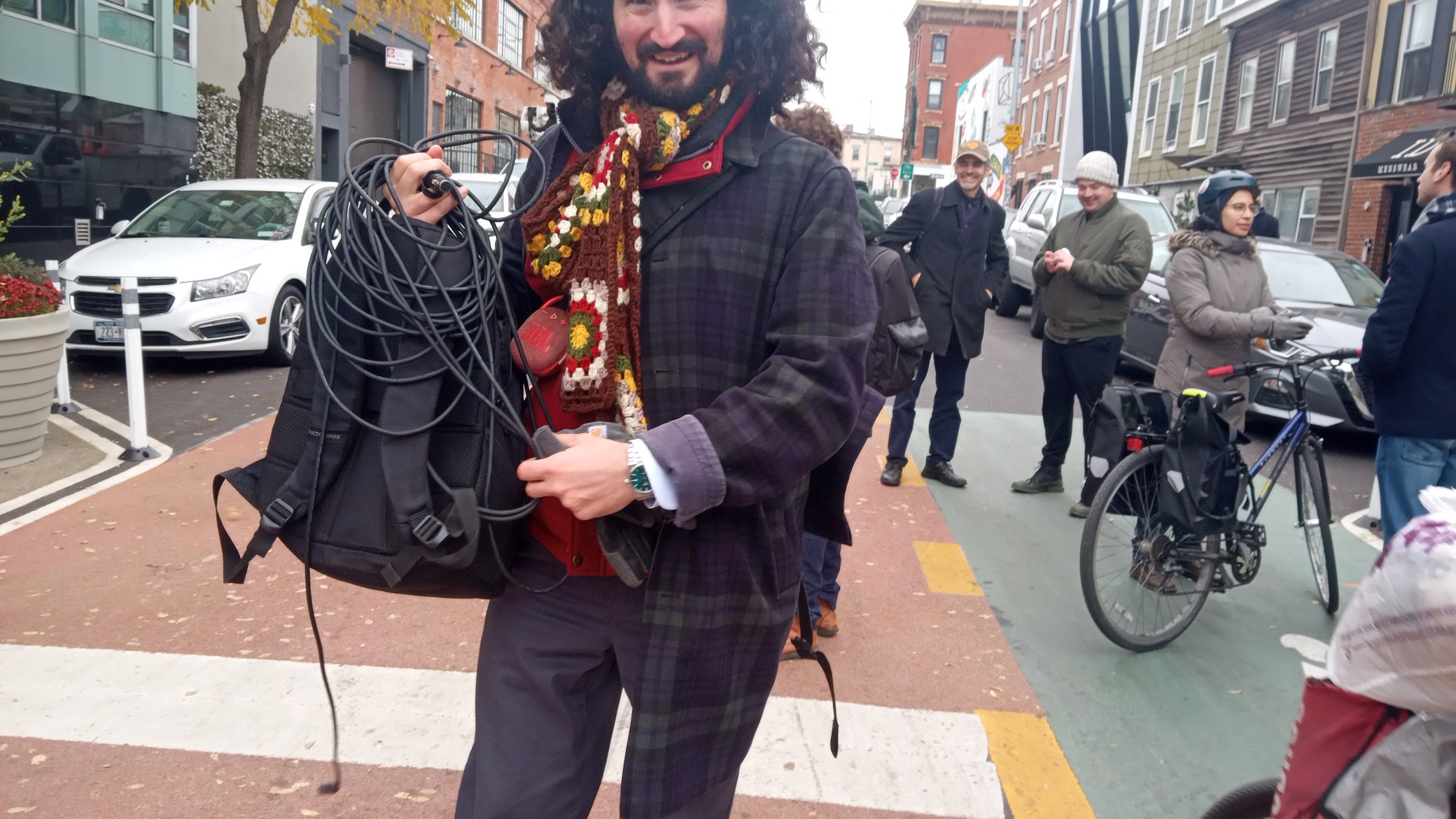
The guy photographed above is Vin Barone, he's in charge of media at the Department Of Transportation Alternatives which includes their obnoxious twitter account (which is also stupidly known as X).


 

Happy President's Day from Queens

 https://external-content.duckduckgo.com/iu/?u=https%3A%2F%2Fmedia.vanityfair.com%2Fphotos%2F626c5735e9997d9f5fa12621%2Fmaster%2Fw_2560%252Cc_limit%2F578546876&f=1&nofb=1&ipt=c9a2a098097ec802543281752e5776c66aaf4273661be3e61232eeedd1f8c4be&ipo=images

Don't call it a City Of Yes: New Jamaica zoning proposal finally revealed

 https://citylimits.org/wp-content/uploads/2024/02/jamaica-draft-zoning-1170x657.jpeg

 City Limits

The city is moving forward on plans to rezone a swath of Jamaica, Queens—what officials say aims to boost both housing and economic opportunities around the area’s many public transit hubs.

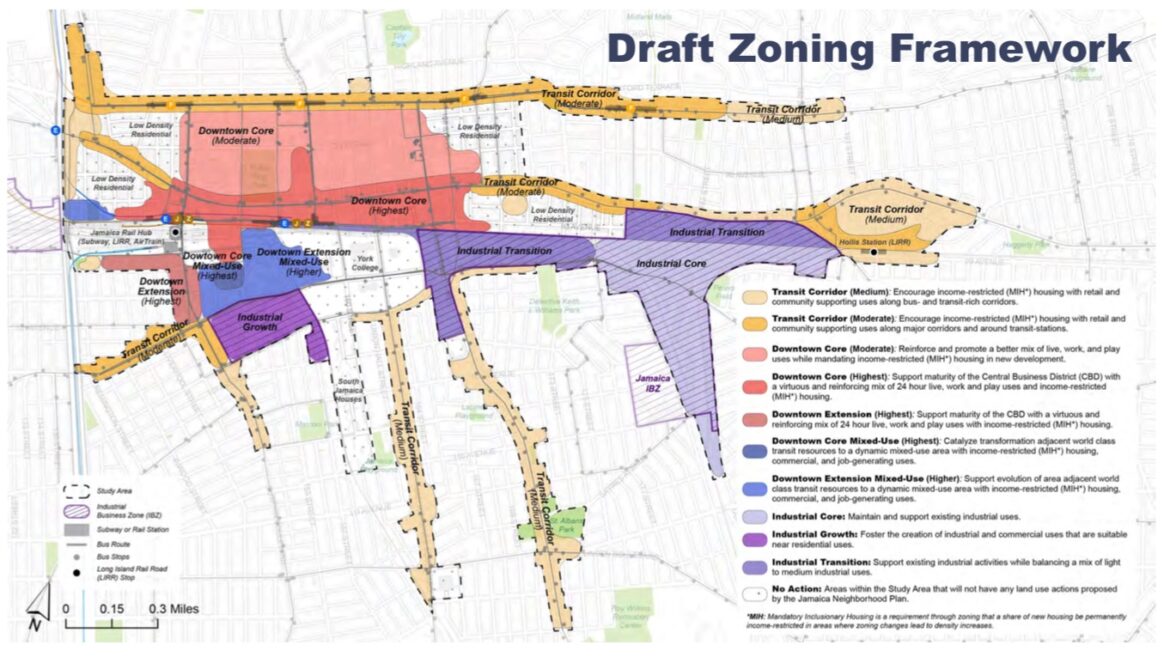
The Department of City Planning (DCP) on Monday unveiled the “Draft Zoning Framework” for the Jamaica Neighborhood Plan—crafted after six months of community workshops and a public survey, and a precursor to a more formal rezoning proposal expected later this year.

The 300-block study area encompasses the Jamaica Rail Hub and surrounding downtown, CUNY’s York College campus, the Hollis LIRR station and several branching-off “transit corridors,” including Hillside and Jamaica avenues and Sutphin, Guy R. Brewer and Merrick boulevards. 

The framework proposes to “increase density and allow housing in appropriate, key areas,” according to a DCP presentation, including through the city’s Mandatory Inclusionary Housing program, which requires new housing in rezoned areas include a portion of income-restricted homes. It would retain several hubs for industrial uses, and prioritize others for “mixed use” development.

 The area is represented by City Councilmember Nantasha Williams, whose district has seen 3,400 new units of city-financed affordable housing since 2014, according to DCP (a tracker published by the New York Housing Conference ranks it 13th out of the city’s 51 Council districts when it comes to affordable development). 

Just more than half of homes in Jamaica are occupied by renters, 59 percent of whom are rent burdened, meaning they spend at least a third or more of their income on housing, according to DCP. The district has a higher homeownership rate than both the borough of Queens and the city as whole, though more than half of its homeowners are considered “mortgage burdened.”

In a statement accompanying the release of the draft framework, Williams—who as the local rep will play a key role during public review of the plan, and the Council’s ultimate vote on it—stressed the importance of ensuring “stakeholders feel their voice is being heard in every step of this process.”

“This zoning framework allows DCP to begin the environmental review process into how much our community can grow in the future and what the needs will be,” Williams said.

The proposal is one of several neighborhood rezonings being pursued by the Adams administration, alongside plans to boost development around new Metro-North stations in the Bronx and in Central Brooklyn. 

It comes as the city grapples with an extreme housing shortage: the most recent survey of the city’s inventory released last week found that just 1.41 percent of rental units were vacant last year, the lowest availability since 1968. 

City Planning expects to release a more formal zoning proposal for Jamaica—to include specific zoning districts and projections for how many new units of housing it aims to create—in the next couple of months, according to a spokesperson. 

The months-long public review process, known as ULURP, will likely begin at the end of the year, the spokesperson added.


Saturday, February 17, 2024

Hollywood Boonddoggle

  Image

Crain's New York

New York’s newly expanded tax credit for film productions is a “net negative” that fails to give taxpayers a return on their investment, even as state leaders have continued pushing to expand it, according to a new study commissioned by the state itself.

New York’s Film Production Credit was grown in last year’s state budget to cover as much as $700 million in costs annually for film and television productions that opt to locate in the state, forgiving 30% of eligible costs for each movie and show. Lawmakers, at the urging of Gov. Kathy Hochul, also extended the program through 2034 — despite longstanding complaints from watchdogs that the incentive may not achieve its stated goal of spurring economic activity and attracting more well-paying jobs.

Those claims are bolstered by the new study by the financial advisory firm PFM Group, which was commissioned by the state’s Department of Taxation and Finance to look into each of New York’s economic development tax credits. The study was required by a 2022 state budget provision and was put together over the course of 2023.

All told, New York gets back just 31 cents for every $1 it invests in film productions through tax breaks, the study concludes after considering the program’s pros and cons. The program has cost the state some $5 billion in the last decade, making it the largest of New York’s many tax incentives.

“Based on an objective weighing of the costs and benefits, the film production credit is at best a break-even proposition and more likely a net cost to NYS,” the authors wrote.

As critics have long argued, the study found that much of the filming activity funded by the credit would have happened in New York regardless, given its existing workforce and infrastructure. And although the productions do attract high-paying jobs, the tax credit’s unlimited duration means it functions more as an “ongoing subsidy” rather than a one-time incentive that could wind down after establishing a steady film industry in the state.

Indeed, many of the productions that continue receiving annual tax credits are long-running television series filmed in New York for years — undercutting the program’s stated goal of attracting new investments. And even the job-creation claim is “inconclusive at best,” the study found. After New York launched the credit in 2004, film industry employment remained stagnant for years until increasing in 2010, and its share relative to the nationwide market has since dropped.

A spokesman for Gov. Kathy Hochul said the office is reviewing the report but pushed back on its conclusions, pointing to other studies that found better results. Among them was a study commissioned by the Empire State Development Corp. which found that New York’s state and local governments reaped a combined $1.70 for every dollar spent on the film tax credit in 2021 and 2022 — although the state by itself (omitting local governments like New York City) still lost out overall, the report found.

“New York's tax credits and incentive programs are critical to growing the state's economy, boosting innovation, and creating good jobs, which is why the Legislature approved them in the first place, and Governor Hochul will continue working with members to improve the programs to maximize benefits for New Yorkers,” spokesman Justin Henry said.

Hochul’s office pointed to the high wages available in film and TV jobs, which often employ people without college degrees. New York has also lost productions to other states that boosted their incentives, such as the 2022 film “White Noise,” which filmed in Cleveland after “extensively scouting New York state,” Hochul’s office said.

The PFM study found that other “qualitative” factors cited by boosters of the tax break are similarly murky, like the exposure that New York state and city might enjoy as a result of all the films and shows set here. Many of those productions, like “Law & Order,” hardly portray New York in a fully positive light, the authors note.

The state’s expansions to the program last year also expanded the credit to cover “above-the-line” salaries for actors, directors, producers and writers, in addition to the “below-the-line” jobs, such as hairdressers and set builders, that had been covered before. Hochul, who pushed for the expansions, argued it would lure more productions to the state and boost an industry that serves as a major union employer.

In the end, the study concludes, the strongest argument for the tax credit may be that it works as a “defense mechanism” — deterring productions from choosing rival states like California and Georgia that offer their own incentives.


Harlem catches Mayor Adams with his pants down trying to move migrants into luxury building

Image 

NY Post

Mayor Eric Adams stunningly reversed course on plans to turn an abandoned luxury Harlem condominium complex into a migrant shelter when he was met with community outrage Thursday night.

Adams’ change of heart came during a surprise appearance at a St. Nicholas House Resident Association meeting packed with dozens of residents furious over the city’s plan for a building development on Adam Clayton Powell Jr. Blvd once marketed as upscale housing.

The 35-story building was quietly slated to become a homeless shelter that could potentially house migrants — a plan that was only revealed to the community this week when some neighborhood residents saw workers bringing bed frames and mattresses inside.

But in the face of pressure, Adams on Thursday night backpedaled. 

“You will not have migrants and asylum seekers in that property,” Adams declared.

The site will instead be used to house long-term New York families experiencing homelessness, a spokesperson for the city Department of Social Services told the outlet in a statement.

The building, originally billed as a lux living space where residents would pay market rates to enjoy an indoor swimming pool and apartments with marble bathrooms, has sat vacant for a decade since developers were forced into foreclosure.

It was then leased to a non-profit that had been working with the city Department of Social Services/Homeless Services to use it as a shelter for either migrants or the Big Apple’s native homeless population.

 Those in attendance at Thursday’s community meeting let Adams know how they felt about the plans to possibly house migrants.

“You are the mayor. We do not want to hear excuses,” one Harlem resident shouted at Adams, CBS New York reported.

Others expressed hope the complex could be turned into affordable housing for neighbors who are struggling to afford their rent.

“We have a dearth of affordable housing we’re being priced out of the community … The lack of respect is absolutely appalling,” Harlem resident Regina Smith said.

Friday, February 16, 2024

FDNY Commissioner Kavanaugh's fire chief patsy pinched by the feds for inspection bribery scheme

 https://pbs.twimg.com/media/GGayC50bkAANwsW?format=jpg&name=240x240


 Brooklyn Paper

Two high-ranking New York City fire department chiefs are being investigated by the FBI and NYC investigators in connection with a corruption probe, the FDNY has confirmed.

The New York Times first reported Thursday that the FBI and city investigators raided the homes and offices of Anthony Saccavino and Brian Cordasco the morning of Feb. 15 as part of a federal investigation into building inspections.

According to the report, the raids were conducted as part of the investigation into whether the chiefs were paid to fast track safety inspections. Neither of the men have been officially accused of any wrongdoing.

An FDNY spokesperson confirmed to Brooklyn Paper that the department has been cooperating with the investigation, stating that Commissioner Laura Kavanagh was alerted to the allegations last year and “immediately” alerted the city’s Department of Investigation.

“The FDNY’s first priority is always keeping New Yorkers safe, and we expect every member of the department to act appropriately,” the FDNY spokesperson said.

Chief of Fire Prevention Anthony Saccavino and Chief Brian Cordasco, who also works at the Fire Prevention Bureau, have both been placed on modified duty, according to the FDNY.

“We are awaiting guidance from DOI regarding further action,” the spokesperson added.

Saccavino was promoted to the head of the FDNY’s Fire Prevention by Kavanaugh following the demotion of the previous chief, Joseph Jardin, who alleged the move was in response to his complaints over corruption, Gothamist reported.

While still unclear whether Thursday’s raid is connected to the FBI probe into Mayor Eric Adams 2021 mayoral campaign, a spokesperson for the Adams administration told Brooklyn Paper “there is no indication of any direct connection to anyone at City Hall.”

“City Hall became aware of this operation when we were notified by FDNY this morning,” the spokesperson said.

In November, Adams denied the existence of an internal City Hall list aimed at fast-tracking fire system approvals for major developers that is reportedly being eyed by the FBI in its probe of his 2021 campaign.

The so-called “Deputy Mayor of Operations List” was first created by former Mayor Bill de Blasio in 2021 and continued under Adams’ administration when he took office in 2022, according to reports. The list was used to help major developers cut to the front of the line in getting needed approvals for construction projects from the FDNY.


Cop-beater migrant arrested after shoplifting and assaulting a guard at Queens Center Mall

https://qns.com/wp-content/uploads/2024/02/GGULL4MWAAAAzjS.jpg

QNS 

One of the migrants who was arrested in the notorious attack on two NYPD officers in Times Square last month was part of a group that allegedly robbed the Macy’s department store inside the Queens Center Mall Tuesday afternoon.

Darwin Andres Gomez-Izquiel, 19, who was staying at the Candler Building migrant shelter at 220 West 42nd St., was busted by cops last night after being spotted at the Times Square 7 train station shortly after the Macy’s robbery, authorities said. He was taken into custody hours after he and three other suspects looted the department store at around 5:30 p.m., stuffing bags full of store merchandise before leaving the location, police said.

A 27-year-old security guard tried in vain to stop them and the robbers struggled with him. One of the suspects punched the guard in the face before the four suspects ran away from the Queens Center Mall westbound on Queens Boulevard with more than $800 in assorted clothing, police said. An NYPD spokesman could not say if Gomez-Izquiel was the assailant in the assault on the security guard, nor could he say whether the other three suspects were migrants as well.

Gomez-Izquiel was transported back to Elmhurst where he was booked at the 110th Preincy on Wednesday afternoon, charged with robbery and petit larceny and is awaiting arraignment in Queens Criminal Court. Last month, he was released without bail for his involvement in the Times Square attack on the two officers.

The security guard suffered minor injuries and refused medical attention at the crime scene.

Avalanche at B.J.'s

Tuesday, February 13, 2024

Tom tops Mazi

  IMG_1204-768×405

Long Island Press

Former U.S. Rep. Tom Suozzi (D-Glen Cove)  has defeated Nassau County Legislator Mazi Melesa Pilip (R-Great Neck) in the special election to replace disgraced former Rep. George Santos in New York’s third congressional district. 

As of press time, the Associated Press had Suozzi winning by a margin of 55% to 45%.

The third district covers a portion of northeast Queens, as well as the entirety of the Towns of North Hempstead and Oyster Bay. With Suozzi’s election, he is now the sole Democratic congressman on Long Island, with the three other seats being held by Republican Reps. Anthony D’Esposito, Andrew Garbarino, and Nick LaLota.

“The only way we’re gonna be in trouble is we let ourselves continue to be divided from within,” Suozzi said in his victory speech. “So this whole campaign has been about how do we communicate to people that we can be better if we work together to try and solve the problems we face in our country, and that’s the message.”

Suozzi held this seat from 2017 to 2023, and comfortably won election to it three times – perhaps most notably when he defeated the then-unknown Santos in 2020. However, Suozzi’s elections to the district were prior to the 2022 redrawing of the district’s lines. With Santos’s large margin of victory over Democrat Robert Zimmerman in 2022, and Suozzi’s slim margin of victory over Pilip, the new district, which now includes portions of southeast Nassau County such as Levittown and Massapequa, may be more of a swing district than it was under Suozzi’s previous tenure.

“I want to say how proud I am of all of you,” Pilip said in her concession speech. “Yes, we lost but it doesn’t end here. I called my opponent to congratulate him. I want to thank chairman Cairo for his hard work. We are not going to give up. We are going to bring common sense to government.”


Sunday, February 11, 2024

Overdosing Ridgewood

  https://patch.com/img/cdn20/users/23773254/20240209/104641/styles/patch_image/public/ridgewoodbuilding___09104216084.png?width=1200

Queens Chronicle

Three men died of apparent drug overdoses Thursday morning in Ridgewood, police said.

The victims were discovered unconscious and unresponsive at about 6:50 a.m. inside an apartment building at or near the corner of Seneca and Putnam avenues, according to an email from Det. Michael Berish of Community Affairs in the 104th Precinct. 

Police had been called by the brother of one of the victims, who met the officers when they arrived, according to the email, which was sent to Jon Kablack, president of the 104th Precinct Community Council.

All three men were pronounced dead at the scene, the email said, adding that “this incident is under preliminary investigation and details are subject to change.”

The victims were not immediately identified.

In response to follow-up questions, the NYPD press office said one victim was 38, one was 39 and one was unidentified; their cause of death will be determined by the Medical Examiner's Office; and the location was the basement of 1724 Putnam Ave.

Berish could not immediately be reached for more information.

Drug overdose deaths remain on the rise in the city.


Toot toot hey beep beep

Vanishing Ridgewood

https://qns.com/wp-content/uploads/2024/01/IMG_5794-1200x800.jpg

Eater 

 Morscher’s, a German and Polish pork store staple, in operation for nearly 70 years, is closing permanently. The Ridgewood butcher shop announced that February 3 would be its last day. QNS reports that Herbert (who also goes by Herbie) Morscher, a co-owner at the pork store, told the publication that their landlord planned to “quadruple” the rent this March. Interestingly, however, Morscher added that the building’s owner, Siegfried Strahl, is a business partner of Morscher’s. Morscher’s opened in 1955, before relocating to its current home at 58-44 Catalpa Avenue two years later. Local businesses, such as Gottscheer Hall, around for a century in Ridgewood, have flooded the comments section with their goodbyes. 

  QNS

Morscher’s Pork Store, an iconic German and Polish butcher shop in Ridgewood, has stood the test of time for decades—but no more.

Despite being a historic piece of Ridgewood, the 58-44 Catalpa Ave. store is slated to close for good on Feb. 3. 

Herbert (Herbie) Morscher, one of three owners of the pork store, says the decision to close up shop wasn’t his doing. He says the owner of the building, Siegfried Strahl, a senior partner in business with Morscher since 1983, is quadrupling the rent come March. 

“I mean, at the end of the game, Yes. We did very well. I did well for my family here, but it is what it is. It’s sad. It’s bittersweet,” says Morscher. 

The farewell to Morscher’s Pork Store represents an end of an era for the Morscher family who have operated the business since its founding. 

Wednesday, February 7, 2024

The Light House

Image 

Who said McMansions were dead? This behemoth carbon footprint is lighting up 149th ave like a thousand suns.

 Image 

It really stands out in the neighborhood. Kinda like the house from the Munsters or the Castle/Spaceship from The Rocky horror picture show. With the amount of electricity being wasted showing off it's worth here, it sort of resembles Deep Space Nine.

Image   

Image 


A city of pure re-imagination...

https://pbs.twimg.com/media/GFx1UojXoAAAApf?format=jpg&name=900x900 

X/Twitter 

The coffee stained picture of the dead cop is pretty pretty pretty good.

Pheonix V. Casino Citifield parkland dispute

 https://images.squarespace-cdn.com/content/v1/5b9ffe0f1137a680c2c08250/f36c4fa8-92dd-4635-9219-94f245eeb1e7/IMG_6353.jpeg?format=2500w

 Queens Eagle

Climate and community advocates over the weekend unveiled a plan to bring a park to the city-owned land currently being used as Citi Field’s parking lot. The plan was pitched as an alternative to Mets owner Steve Cohen’s proposal to bring a casino and entertainment complex to the lot the city has designated as parkland but has never been used as such.

Despite the difference in resources behind the plan – Cohen’s net worth is estimated to be a little less than $20 billion – the park plan dubbed Phoenix Meadows has caught the eye of State Senator Jessica Ramos, who has the ability to make or break any proposal made for the land.

The park plan was unveiled at a rally and march through Downtown Flushing on Saturday by a coalition of local groups opposed to Cohen’s Metropolitan Park. Phoenix Meadows was designed by a coalition of advocates aligned under the group FED UP – or Flushing for Equitable Development and Urban Planning.

The group opposes the unrelated proposed developments at Citi Field and Willets Point, and want to see the land instead used as public park space.

Under the proposal, which is still in its earliest stages, Phoenix Meadows would bring 65 acres of parkland to the lot, with a large sloped park that allows for a parking structure to remain for Mets fans and other Citi Field-goers.

“The idea is that you build parking garages, two to three stories, with the exact same amount of parking that is right now, no net loss, no net gain of parking, same traffic flow, and you build a huge park on top of that parking, you hide the parking with the park,” said Rebecca Pryor, the executive director of the Guardians of Flushing Bay.

While Pryor and others behind the Phoenix Meadows plan touted its environmental impacts – they claim the slanted nature of the park would allow for the control of rainwater in the area that often floods – they also bashed what they said would be negative environmental impacts brought on by Cohen’s casino plan.

“It doubles the number of parking spaces in an area that has some of the highest levels of air toxicity from traffic in the nation,” said Pryor. “It has no plan for flooding protection in an area that frequently floods.”

Cohen has yet to release many details about the proposal, including potential flood protection.

Advocates on Saturday also argued that while the Metropolitan Park plan would serve wealthy visitors, potentially coming at cost for locals, the Phoenix Meadows plan would prioritize those already living in the surrounding neighborhoods of Flushing, Corona and Elmhurst.

In a statement to the Eagle, a spokesperson for Metropolitan Park defended the casino plan, which they said was created after collecting input from locals during several “visioning sessions” they held in 2023.

“This visionary plan is the result of more than a dozen community workshops and hundreds of conversations with local leaders and neighbors,” said spokesperson John Collins. “We believe Metropolitan Park is exactly the kind of revolutionary proposal that community leaders can support.”

Cohen and his partners, Hard Rock, also believe that their plan – which is privately financed – hits on many of the attractions Phoenix Meadows offers, like investments into climate mitigation infrastructure, park space and food vendors.

“We are proud of the vision for Metropolitan Park, a community-led plan that will invest $8 billion to create 25 acres of new public-park space and athletic fields, deliver 15,000 good-paying jobs and careers, modernize the Mets-Willets Point 7 train station, build a Taste of Queens Food Hall and establish workforce training and community development programs.” said Collins.

Despite the land’s designation as parkland, the Phoenix Meadows plan remains a longshot.

There’s currently no money behind the plan – Pryor said that she believes the project could be funded through the state and federal government using funds dedicated to combating climate change. 

You know what's delish about the Phoenix proposal? Transportation Alternatives Lobbyist and Pathological Liar Jim Burke has been pushing Cohen's Metropolitan Park all over social media and this environmentalist group is not only disrupting the Mets owner's plans for a casino but is showing what a brazen hypocrite Burke and Transalt are for supporting a plan that will involve more parking and traffic to the so-called new "green spaces". But it's kinda expected from a cult who proclaims they are reclaiming streets from cars when they have received millions in donor money from uber and lyft. 

  Image

Image


Pete Buttigeig to New York City drivers: Drop dead

https://www.amny.com/wp-content/uploads/2022/08/BQE-Todd-Maisel-1200x797-1.jpeg 

AMNY


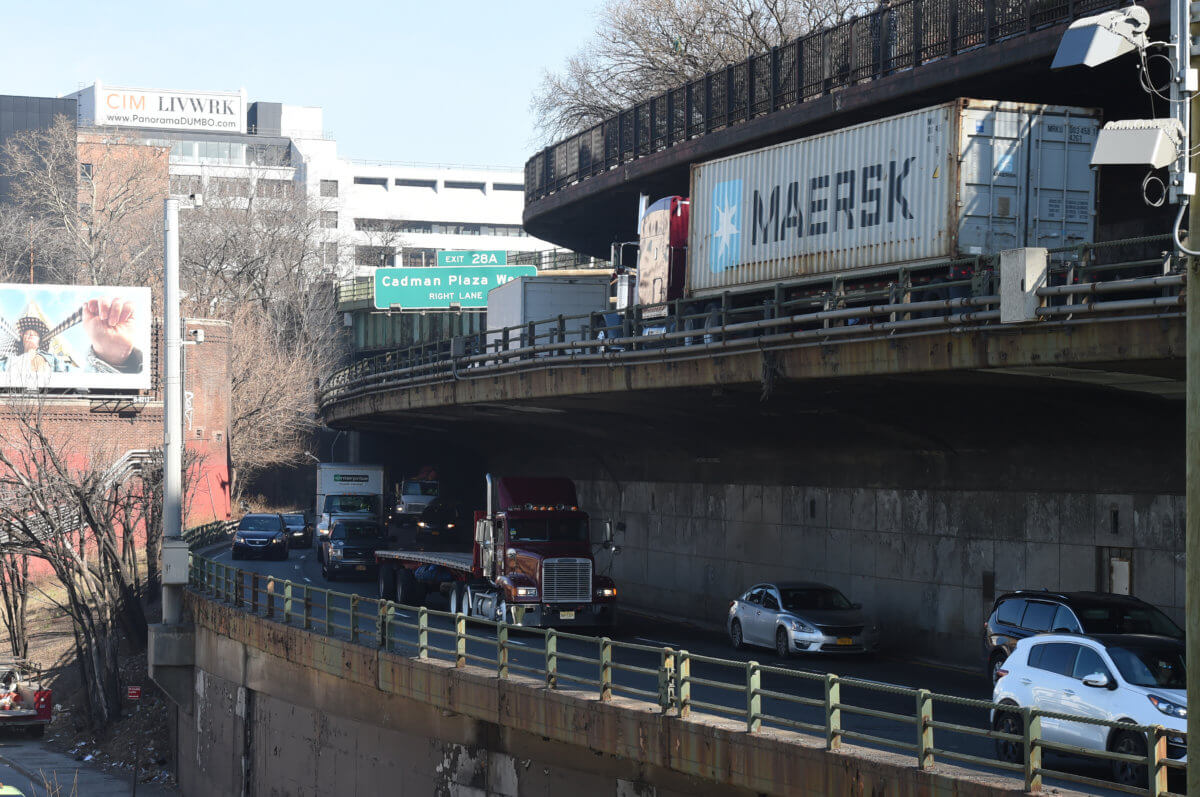
The Biden administration has rejected the city’s applications for $800 million in infrastructure grants to redesign and reconstruct the crumbling triple cantilever section of the Brooklyn-Queens Expressway, amNewYork Metro has learned.

The Federal Highway Administration (FHWA) rebuffed the city Department of Transportation’s (DOT) applications for grants under the Biden administration’s Infra and Mega programs last month, potentially imperiling the Adams administration’s hopes to redesign and rebuild the widely-maligned triple cantilever section of highway in Brooklyn Heights over the next few years.

The 1940s-era highway constructed by “master builder” Robert Moses has been deteriorating for decades, and in 2020, an “expert panel” convened by former Mayor Bill de Blasio warned the cantilever could be unsafe for travel as early as 2026.

After numerous false starts, in 2022 the Adams administration unveiled a series of “reimagining” proposals for the 1.5-mile “BQE Central” section between Atlantic Avenue and Sands Street, which includes the 0.4-mile cantilever and is the only part of the highway directly owned by the city.

The plans — which would cost around $5.5 billion, and would rely significantly on federal money authorized by the 2021 Bipartisan Infrastructure Law — called for either a partial or total reconstruction of the cantilever and to cover it up with greenspace, reconnecting Brooklyn Heights to the East River waterfront.


It was 60 years ago today...


https://external-content.duckduckgo.com/iu/?u=https%3A%2F%2Ftownsquare.media%2Fsite%2F171%2Ffiles%2F2014%2F02%2Fbeatles-arive.jpg%3Fw%3D1200%26h%3D0%26zc%3D1%26s%3D0%26a%3Dt%26q%3D89&f=1&nofb=1&ipt=0133c19195c004e0192873cb0d8fe9f44e492a4a3121305c0fd95c983c40ef95&ipo=images 

NY Daily News

  Even the Beatles didn’t quite comprehend what awaited them in New York on Feb. 7, 1964.

Six days after “I Want to Hold Your Hold” broke through as their first No. 1 hit in the U.S., Paul McCartney, John Lennon, Ringo Starr and George Harrison braced for a warm welcome as Pan Am Flight 101 out of London neared its destination in Queens.

 Never, however, did they expect the spectacle they found when they disembarked.

Some 3,000 fans, many of them smiling, shrieking, hysterical girls who skipped school on a Friday, ambushed JFK Airport, congregating along the rooftop and pushing past police barricades to catch a glimpse of the mop-topped British heartthrobs.

Delighted screams from overwhelmed teens served as the soundtrack as the grinning, waving Beatles stepped off of a Boeing 707 and onto American soil for the first time.

Those screams became a staple of McCartney, Lennon, Starr and Harrison’s two-week trip, during which they made history on “The Ed Sullivan Show,” played back-to-back concerts at Carnegie Hall and journeyed down to Washington, D.C., and Miami Beach.

“No one will understand the emotion of us landing in America,” Starr told the Daily News in 2019. “But it was New York, and all of the music we loved came from there. It was just far out.”

 Wednesday marks the 60-year anniversary of that epic airport arrival, which remains a watershed moment in pop culture that society is still trying to unravel.

February 1964 offered America its first taste of Beatlemania, but the singer-songwriters from Liverpool had already achieved superstardom in their native England behind two full albums, a trio of chart-topping songs and the distinction of being the first pop act to perform before the royal family.

However, Capitol Records, an American subsidiary of the British label EMI, doubted the Beatles could satisfy U.S. ears and repeatedly passed on initial singles such as “Please Please Me,” “From Me to You” and “Love Me Do.”

“I Want to Hold Your Hold” was different. There were no harmonicas, which Capitol decision-makers feared gave previous Beatles songs too much of a blues feel to connect locally.

 Convinced that Capitol couldn’t turn down the upbeat “I Want to Hold Your Hold,” Beatles manager Brian Epstein implored label president Alan Livingston to give the track a chance. Upon listening to the two-and-a-half-minute love song himself, Livingston finally agreed to get behind the Beatles.

 Capitol released “I Want to Hold Your Hand” on Dec. 26, 1963, and dumped money into a publicity campaign to generate excitement about their U.S. arrival six weeks later.

“It’s just a perfect song,” said Kenneth Womack, who teaches a Beatles course at New Jersey’s Monmouth University and has authored more than a dozen books about the band.

“It’s non-threatening. It’s innovative. It has variety to it. It goes to a lot of places for just a few minutes, and it was a perfect introduction to the Beatles’ sound. When the kids of 1964 began to get their hands on other Beatles music that had already been out in England for quite a bit of time at that point, they just kept finding more and more and more of this.”

Americans fell fast for the Fab Four. Often equipped with pins and signs declaring their favorite band member, admirers followed the Beatles’ every move. Hordes of fans surrounded New York’s prized Plaza Hotel, where the Beatles stayed. Some navigated cars as they ran through the neighboring streets. At one point, the crowds required the Beatles’ chauffeur to climb across his car to reach the driver’s seat.

“Beatles Here; 3,000 Kids And a Hotel Ain’t the Same,” read a Daily News headline on Feb. 8, 1964.

“Beatles Blast Off, Kids Go Into Orbit of Ecstacy,” declared another two days later.

Being in America delighted the Beatles, too. McCartney, Lennon, Starr and Harrison, all in their early 20s, adored American music, from girl groups such as the Ronettes to R&B acts including Little Richard.

Upon arriving stateside, the Beatles phoned radio stations and requested other artists’ records instead of their own.

 They wanted to hear more,” Womack said. “‘What are we missing?’ It was doing recon at a certain level. They wanted to hear and to meet the purveyors of this music that was so important to them. I think that’s kind of cool, that they weren’t coming over and just indulging in an easy ego trip. They meant business.”

The Beatles made the most of their visit. McCartney, Lennon and Starr posed for photos in Central Park as Harrison nursed an illness. The foursome later made their U.S. concert debut at Washington Coliseum on Feb. 11 during an overnight trip to the nation’s capital. They returned to New York the next day and played back-to-back concerts at Carnegie Hall, a venue reserved for artists who reached the pinnacle.

Nothing resonated more, though, than their performances on “The Ed Sullivan Show.”

At the time, Sullivan was known as the “Star Maker,” with his appointment-TV variety show offering the biggest platform for entertainers to introduce themselves to a national audience.

A popular narrative suggests Sullivan first learned of the Beatles during an October 1963 visit to London’s Heathrow Airport, where he observed rabid fans waiting for the band to arrive. That wasn’t the case, according to Sullivan’s granddaughter, Margo Precht Speciale, who says a London-based talent scout, Peter Prichard, put the Beatles on her grandfather’s radar.

Epstein had contacted Prichard about getting the Beatles on the “Sullivan Show.” Prichard pitched the band to Sullivan, and shortly thereafter, Epstein met with Sullivan and his son, show producer Robert H. Precht, at New York’s Delmonico Hotel. They hammered out a $10,000 contract for the Beatles to play three “Sullivan Show” sets, marking the program’s first-ever three-performance commitment.

“My grandfather was always trying to get the biggest scoop,” Precht Speciale told The News. “He was a reporter [at the Daily News] for many, many years, and he worked on that show like he was a reporter. He always wanted to get the big scoop. The Beatles, at the time, were that.”

Capitol released “I Want to Hold Your Hand” on Dec. 26, 1963, and dumped money into a publicity campaign to generate excitement about their U.S. arrival six weeks later.

“It’s just a perfect song,” said Kenneth Womack, who teaches a Beatles course at New Jersey’s Monmouth University and has authored more than a dozen books about the band.

“It’s non-threatening. It’s innovative. It has variety to it. It goes to a lot of places for just a few minutes, and it was a perfect introduction to the Beatles’ sound. When the kids of 1964 began to get their hands on other Beatles music that had already been out in England for quite a bit of time at that point, they just kept finding more and more and more of this.”

Americans fell fast for the Fab Four. Often equipped with pins and signs declaring their favorite band member, admirers followed the Beatles’ every move. Hordes of fans surrounded New York’s prized Plaza Hotel, where the Beatles stayed. Some navigated cars as they ran through the neighboring streets. At one point, the crowds required the Beatles’ chauffeur to climb across his car to reach the driver’s seat.

“Beatles Here; 3,000 Kids And a Hotel Ain’t the Same,” read a Daily News headline on Feb. 8, 1964.

“Beatles Blast Off, Kids Go Into Orbit of Ecstacy,” declared another two days later.

Tuesday, February 6, 2024

NYCHAGATE

https://pbs.twimg.com/media/GFqq4F2XkAYXStP?format=png&name=small

 NY Post

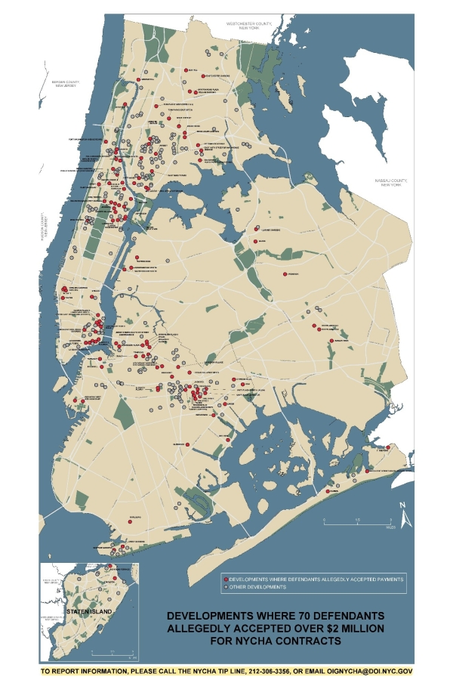
Seventy current and former NYCHA workers were charged Tuesday in a 10-year, $2 million “classic pay-for-play” corruption scheme involving the largest number of federal bribery raps brought in a single day in Department of Justice history.  

Some of the kickbacks to the rogue workers hit well over six figures — and several of the heftiest charges were slapped against a 47-year-old female employee accused of helping an unnamed co-conspirator extort contractors in exchange for work with the agency, court documents claim.

“Babe[,] could you put a company through for someone? All you would need to do is sign the documents as the approved and get anyone to sign as the requestor,” the co-conspirator messaged Angela Williams on Feb. 3, 2022, according to the papers. 

“That has been my side hustle…lol 1k per,” the unidentified person added of the scheme.

The avalanche of bribery and extortion crimes occurred in about a third of the 335 developments in the New York Housing Authority — the country’s biggest public housing agency — when the suspects demanded cash in exchange for lucrative construction, maintenance and no-bid contracts, officials said.

The defendants, all of whom were working for NYCHA at the time, sought between 10% and 20% of the contracts’ values – or kickbacks of between $500 and $2,000 – though some asked for higher amounts, authorities said.

 In total, the dozens of rogue workers received more than $2 million in bribes involving $13 million in contracts between 2013 and 2023, officials said.


The resistance against congestion pricing is getting bigger and bigger


NY Post 

The labor coalition representing New York City’s nearly 400,000 government workers — including uniformed cops, firefighters and other first responders — is backing a federal lawsuit to block the “crazy” $15 congestion toll to enter Midtown.

“We’re not coming into Manhattan once a week for dinner. We’re coming in every day to proudly serve the people of New York City,” Harry Nespoli, head of the NYC Municipal Labor Committee (MLC), told The Post on Monday.

The presidents of the unions that make up the MLC voted overwhelmingly to join the suit filed last month by the United Federation of Teachers union and Staten Island Borough President Vito Fossella, and will issue an amicus brief for the plaintiffs in the case, Nespoli said.

“The congestion toll is just another crazy thing in the city,” Nespoli, who also reps the union of sanitation workers, said.

“No one likes going into our pocket when we’re mandated to come in,” he added. “These are the people who make the city run.”

The MLC’s backing of the lawsuit is evidence of mounting opposition to the controversial new toll to be imposed by the Metropolitan Transportation Authority as early as May to enter the Midtown business district south of 60th Street. 

Transit officials expect the $15 toll to raise $1 billion per year, which will be used to fund $15 billion in bonds to pay for major upgrades to the MTA’s subway, commuter railroads and bus systems.

Drivers will pay significantly less during off-peak hours, as the toll is aimed at helping curb peak-day congestion.

But Nespoli said municipal workers deserve a break — arguing that employees required to work in the Manhattan business district who drive in from the outer boroughs shouldn’t be punished.

“There’s got to be a better way. Pushing the cost onto someone else is not the right way to do it,” he said. “Municipal workers just got raises and now they want to take it away from us.”

 NY Post

Eighteen elected officials have joined a federal lawsuit by the teachers union aimed at blocking the controversial new $15 congestion pricing toll to enter Midtown Manhattan.

More than half the plaintiffs are Democrats whose fellow party members approved the law greenlighting congestion pricing in 2019.

UTF President Mike Mulgrew and Staten Island Borough President Vito Fossella welcomed the growing, bipartisan coalition who object to having constituents and members pay such a high toll to drive into Midtown south of 60th Street.

“As we have said time and time again, congestion pricing is a detriment to those that will be affected by this toll, environmentally and financially, and for people of all walks of life from across the five boroughs and beyond,” said Fosella, who initially joined as a co-plaintiff. “We appreciate the support from elected officials and interested groups, as this fight cannot be won by any one of us alone.” 

The suit argues the plan would move pollution from Manhattan to Staten Island and other parts of the city.

“We are determined to challenge the current regressive and discriminatory plan for congestion pricing;  as now constituted, it will only succeed in moving traffic and pollution from one part of the city to another, even as it increases the economic burden on working- and middle-class communities,” Mulgrew said.

Maybe there needs to be a rally song now since this movement against the congestion tax is growing. A little change in the lyrics to this classic would be perfect.