In a vote affecting the roughly million New York households in
rent-stabilized apartments, the New York City Rent Guidelines Board
voted Monday night to allow rent increases of 2.75 percent for one-year
leases and 5.25 percent for two-year leases beginning Oct. 1.
The
5-4 vote capped a contentious voting session, part of an annual process
in which the city board weighs landlord and tenant economics in setting
permitted rent hikes.
A
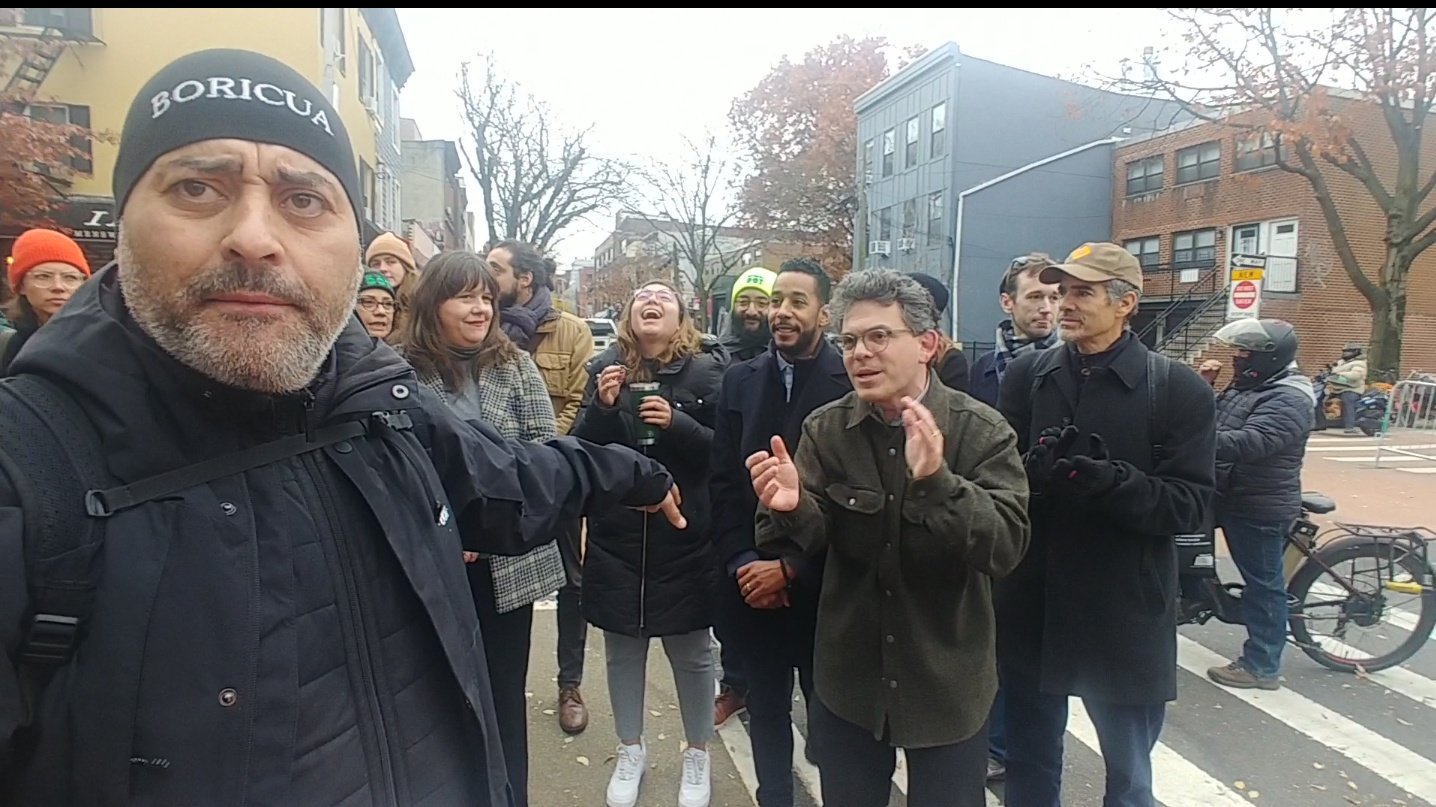
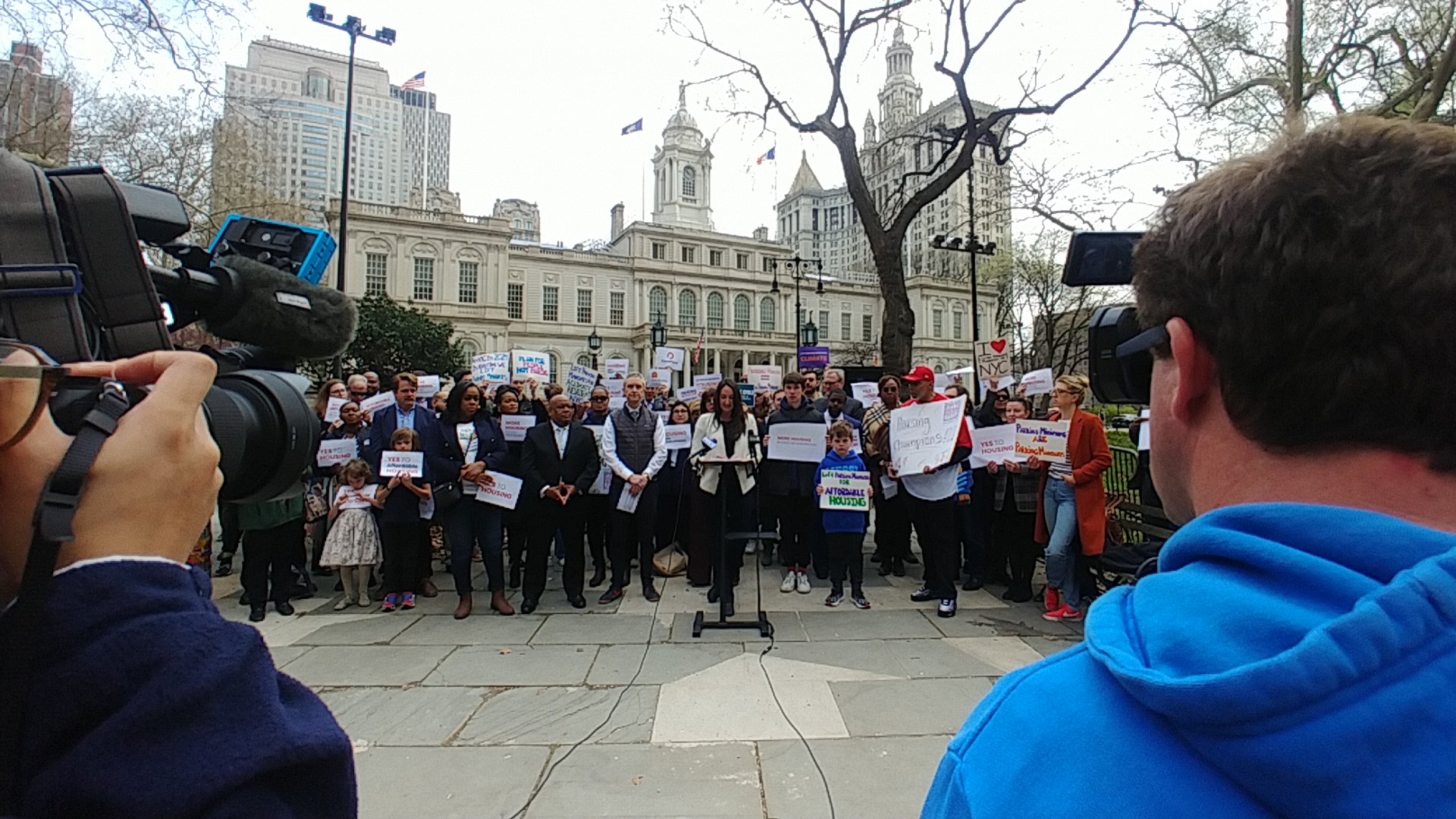
crowded tenant group on the Park Avenue sidewalk outside Hunter College
calling for a rent freeze preceded the vote inside. Eleven
demonstrators were arrested after police ordered them to step away from
the entrance.
The final decision comes after a volatile few months
of meetings, including a preliminary vote April 30 during which two
tenant members of the board walked out in protest. In that earlier
meeting, the board decided on a potential range of rent adjustments of
between 2 and 4.5 percent for a one-year lease and 4 to 6.5 percent for
two-year leases.
Public Advocate Jumaane Williams, a former tenant
organizer, spoke at the protest, calling on the board to decide on the
“lowest rent increase humanly possible.”
“Raising rents on tenants
does not help landlords that are suffering,” Williams said to the
crowd. “You can’t raise rent on people that do not have it.”
Landlords and their representatives assert larger increases are necessary to help them maintain buildings and afford taxes.
“Rent
is income that buildings need to meet escalating costs, and we are
hoping for an upward adjustment that recognizes the need to maintain
buildings that are at and approaching 100 years old,” Michael Tobman of
the Rent Stabilization Association told THE CITY.
According
to an annual report the Rent Guidelines Board produces on building
operating costs, buildings that contain rent stabilized apartments had
expenses projected to increase 3.9 percent this year. Meanwhile, tenant
advocates generally argue that raising rent to make up for operating
expenses will only result in more evictions and homelessness.
“There
are small landlords that are dealing with issues and need assistance,”
Williams told THE CITY. “But we need the landlords to get help from the
state and the city, and not from tenants who can’t afford it.”
That is what one Community Board 13 resident
called Mayor Adams’ City of Yes housing proposal versus the possible
reality of the actual plan, which promises a “little bit more housing in
every neighborhood,” before the board’s Land Use Committee unanimously
voted no on the scheme on Monday.
The purpose of the initiative is
to create 100,000 units of housing citywide for 250,000 people by
allowing new apartment complexes on properties such as church parking
lots and the reconstruction of office buildings, garden apartments,
commercial buildings and accessory dwelling units in both commercial and
residential areas to make them affordable in the future. Residents at
the meeting pointed out that there is no actual language in the mayor’s
plan that guarantees low-cost homes for those who need it most.
“I’m
looking at the numbers associated with increasing the housing stock and
reducing homelessness,” Jax Dolly, a CB 13 resident, said during the
meeting, held online.
“I’m seeing that 17 percent of the
population make $20,000 and below — this is in New York City — and 45
percent make $50,000 and below. When you look at the average rent across
the boroughs, it ranges from $3,000 to $5,000 in average rent.”
Dolly
went on to say that if 3.9 million, or 45 percent of people in the Big
Apple, can’t afford to live in the city, how will upending zoning laws
to house 250,000 people address the housing crisis in 15 years?
“It
makes no sense,” she said. “It feels like three-card Monte here. You
are going to essentially be handing a gift to developers to come and do a
land grab where they can build all of these new units, but they don’t
have to offer below market rate to anyone or if they initially do they
can eventually put it at market rate or above at some point. So how is
this going to address the housing crisis long-term?”
Scott Solomon
from the Department of City Planning said it’s understandable to have
healthy skepticism about 100,000 units putting a dent in the housing
crisis, but there is a lack of homes, and the hope is that with more
housing stock, prices would go down.
Jackie Wilson, a CB 13
member, said she does not see the benefit of the plan for people who
live in Queens or within the board’s area.
“You’re going to pile a
bunch of people [together], you’re going to pile on a bunch of traffic
and there’s going to be fewer resources,” Wilson said. “What’s the
benefit for us?
“What’s the benefit to homeowners here?”
The
idea is that housing would be more affordable because there will be
more options and there can’t be more housing options without more
housing production, said Solomon.
“The goal is, primarily, to facilitate incremental housing growth so that housing prices can stabilize,” Solomon said.
Wilson
said that people in residential areas in Eastern Queens already have
homes, so why should the character of their neighborhoods change to
benefit others while her neighbors potentially lose parking spots due to
the housing development mandate making parking optional wherever any
new housing is created?
“There are thousands of people who do live
here who are leaving often,” Solomon said. “They are leaving the city
because they can’t afford it so they sell their home because they can’t
afford living here anymore, or they live in the area, don’t own a home,
they want to buy a home, they leave the area, the city, the region, the
state.”
Community Board 9 voted against City of Yes for Housing Opportunity at its monthly meeting Tuesday.
Prior
to the vote, during the public forum, residents expressed opposition to
the mayor’s sweeping proposal to update zoning laws, citing
overdevelopment concerns, quality of life and overcrowded schools. The
opinions echoed those of many at a Zoom meeting held a few weeks prior,
where residents living in Community District 9 largely spoke against the
proposal.
The group’s Land Use and Housing Committee, led by
members Sylvia Hack and Andrew Taranto, introduced a resolution against
the zoning text amendment.
When
the resolution was brought before the board, almost all in attendance
voted in favor of the decision to not support the proposal. There were
only two abstentions and no dissent.
Residents of Community District 10 largely do not support City of Yes
for Housing Opportunity — and they’re making it clear to their
community board.
At Board 10’s meeting last week, the community
turned out to make its opposition heard, alongside written notice of
residents’ opinions.
The Howard Beach Lindenwood Civic, led by
Phyllis Inserillo and Barbara McNamara, had spread the word for weeks
about the board’s June 6 meeting, where the Department of City Planning
presented the mayor’s zoning text amendment that aims to loosen
restrictions and address the housing crisis.
The
proposal includes removing parking mandates, legalizing accessory
dwelling units and more housing above businesses, adding
transit-oriented development and a new Universal Affordability
Preference, which would allow developers to add at least 20 percent more
housing to buildings if the additional homes are affordable to
households earning 60 percent of the area median income.
After the
board voted “yes” with conditions to the economic portion of the City
of Yes proposal, which passed the City Council last week, Inserillo, who
is also the chief of staff for Councilwoman Joann Ariola (R-Ozone Park)
but recused herself from her duties for the meeting, cautioned against a
similar type of vote.
She said she had not spoken to a single
person within the confines of Board 10 that supported the text
amendment. She also said that at a City Council Land Use Committee
meeting in April, the chair of the DCP, Dan Garodnick, said a vote of
yes from the community board with conditions is still a yes — even if
those conditions are not met.
“You did that the last time in the
economic portion but you cannot do that again,” Inserillo said. “Our
community does not even want a ‘no’ vote with conditions. This plan will
be a disaster for this community and the only vote we want to hear from
this board is ‘no.’”
“We
say no,” said McNamara during the public forum. “We live here because
we want our suburban feeling while being close enough to go into the
city to enjoy our theaters, museums, restaurants, etcetera. We do not
want ADUs or basement dwellers or housing above our stores on Crossbay
Boulevard or many apartment buildings in old Howard.”
Both Inserillo and McNamara received loud applause from the crowd following their words.
Other
residents spoke on concerns that the new zoning would leave schools
overcrowded and put too much pressure on the neighborhood’s firehouse on
Cross Bay Boulevard, which would have more units to tend to.
The
civic later posted a photo of the meeting turnout on social media,
writing, “Howard Beach is saying NO to the City of Yes at the Community
Board 10 meeting. We have a packed house with standing room only and
there isn’t much more room to stand.
“Together, we have collected
over 2,500 signatures on letters opposing the City of Yes and we will
continue to collect up until the vote. Thank you to everyone who has
signed and a huge thank to all those who have collected letters. Our
voices are being heard loud and clear.”
New York City voters in November could have the power to repeal “misguided and dangerous” “sanctuary city” laws
that severely limit the NYPD’s ability to cooperate with the feds on
immigration matters and are a clear “threat to public safety.”
Joe Borelli (R-Staten Island), Robert Holden (D-Queens) and six other
members of the City Council’s “Common Sense Caucus” fired off a letter
this week to a newly-appointed Charter Revision Commission, asking it to
put a referendum question on the ballot to determine whether to roll
back the “sanctuary” laws that help criminals avoid deportation.
“We are writing to urge the Charter Revision Commission to advance a
ballot initiative asking voters if New York City should repeal recent
so-called ‘sanctuary city’ laws that prohibit members of law enforcement
and other agencies from cooperating with federal authorities to help
detain or remove unauthorized, non-citizens who have committed crimes in
our city,” says the letter dated Tuesday.
“We feel these laws, as currently construed, are not only misguided
and dangerous, they have strayed far from their original purpose of
fostering public safety. Ultimately it should be put to voters to decide
who is right.”
Earlier this month, Holden and Borelli drafted legislation to repeal the sanctuary laws — but they realize it’s a pipe dream to think the Council’s left-wing majority would pass it.
So they’re hoping for better luck with the commission, which was
appointed by Mayor Eric Adams, a retired NYPD cop and moderate Dem who
has said the current rules are too soft on crime.
Some Common Sense Caucus members expect to pitch the referendum plan
in person during a future public hearing hosted by the commission. Both
Holden and Borelli said they believe voters would back their proposed
ballot initiative.
A sweeping manhunt in New York City ended on Tuesday after
23-year-old Angela Sauretti recognized a man in a black hoodie who
entered the 108th Street Grocery in Queens at 1 a.m.
Sauretti was
all but certain this was the face she had seen on Instagram—in an NYPD
wanted poster for a man suspected in the machete-point rape of a
13-year-old girl as she walked with a boy her age last week.
Sauretti
called out to a friend who stood nearby who had also seen the police
Instagram posting. She asked if this was indeed the man more than 60
detectives had been seeking since Thursday’s broad daylight attack in a
park across from the victim’s junior high school.
“I pointed him
out,” Sauretti told The Daily Beast. “I’m like, ‘Yo, that’s him?’ [The
friend] said, ‘Yes, that’s him.’ That’s what confirmed it. And
everything just spiraled from there.”
Sauretti grabbed the man in the hoodie.
“He tried to run, so I put him in a headlock,” she told The Daily Beast.
He continued to struggle and she took an opportunity to administer her own brand of street justice
“He got something that his mother should have done to him,” she said. “I’ll put it that way.”
She added, “As a woman, I had to really set the tone and remind him, ‘It wasn’t a man that did this to you. It was a woman.’”
He kept resisting, allowing her to further impart a particular lesson.
“You
did that to a woman, and a woman got back and did this to you.” she
said. “So it had him contemplating, ‘Maybe I won’t mess with the next
woman.’ Because you never know. There’s nice ones and there's ones that
will really defend themselves and go all out.”
The man protested.
“He
said, ‘Let me explain!’ I’m like, ‘There’s nothing to explain. You’re a
rapist,’” she recalled. “He said, ‘I don’t care.’ I’m like, ‘What do
you mean you don’t care? You’re a rapist.’ He said, ‘I don't care.’”
Not much has been written about what a disaster these open streets have turned into and it's easy to see why. Council member Shekar Krishnan held a sham town hall about this and it mostly was about preserving the open streets than stopping the "traffic violence" that goes on there every day and night.
The Department of Transportation Alternatives is holding a survey for these dangerous open streets tonight in the hopes they will get 88 million dollars to turn those 25 blocks into an official fake park.
Hey Queens! Take our survey to help inform the future capital project vision of the 34th Ave Open Street: https://t.co/syQg96QBGu (closes Friday 6/21) and join us for a design workshop:
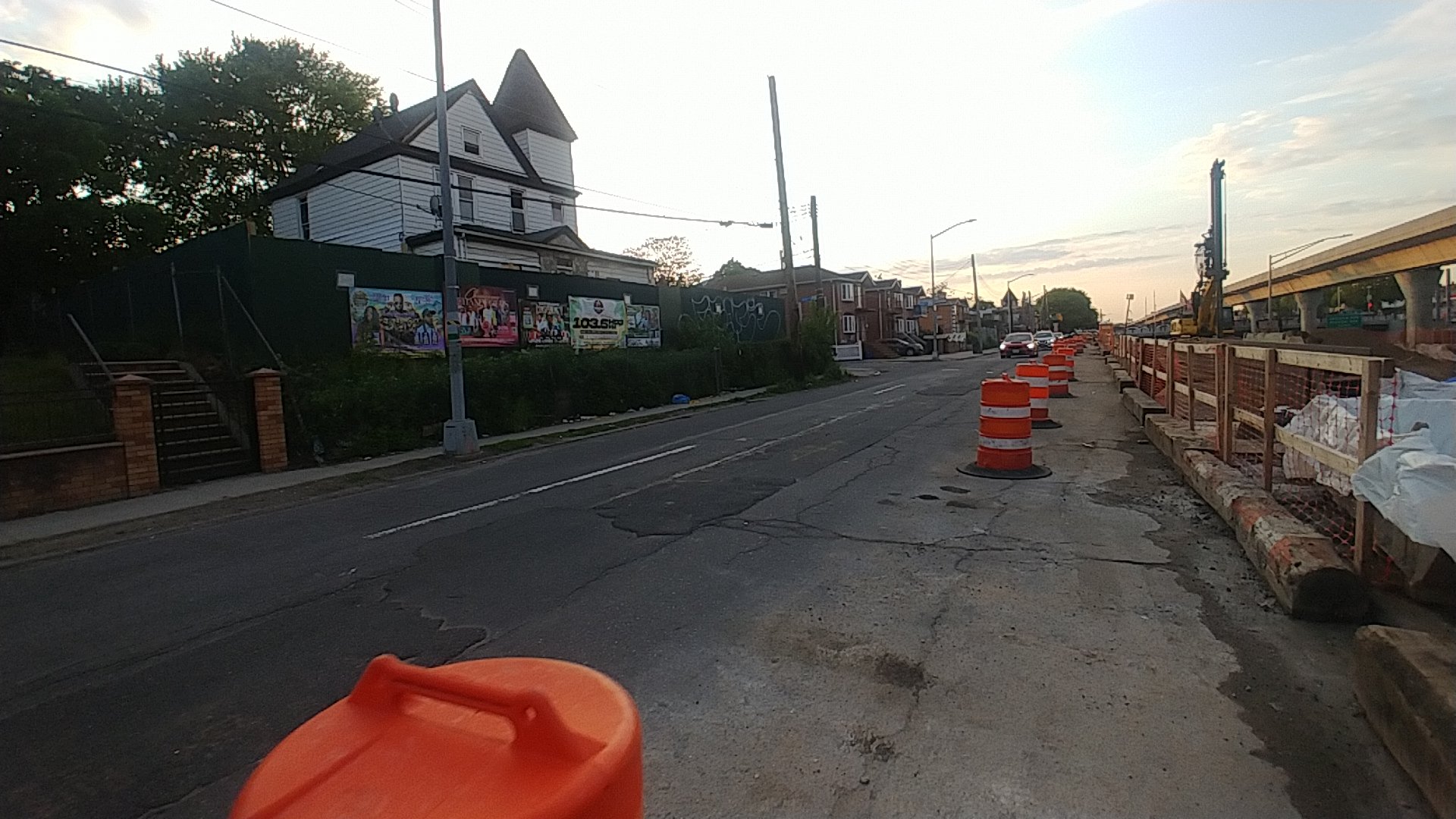
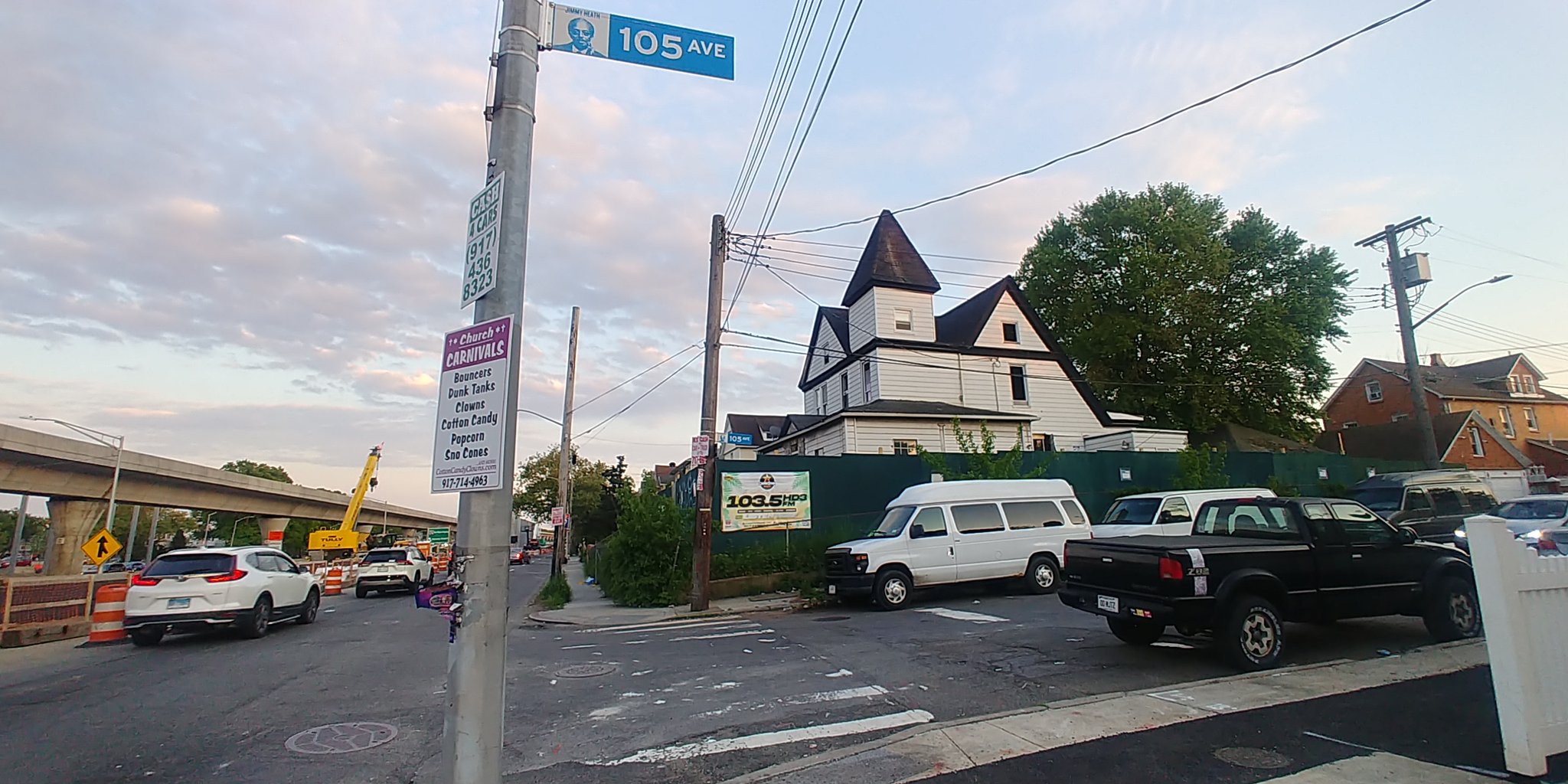
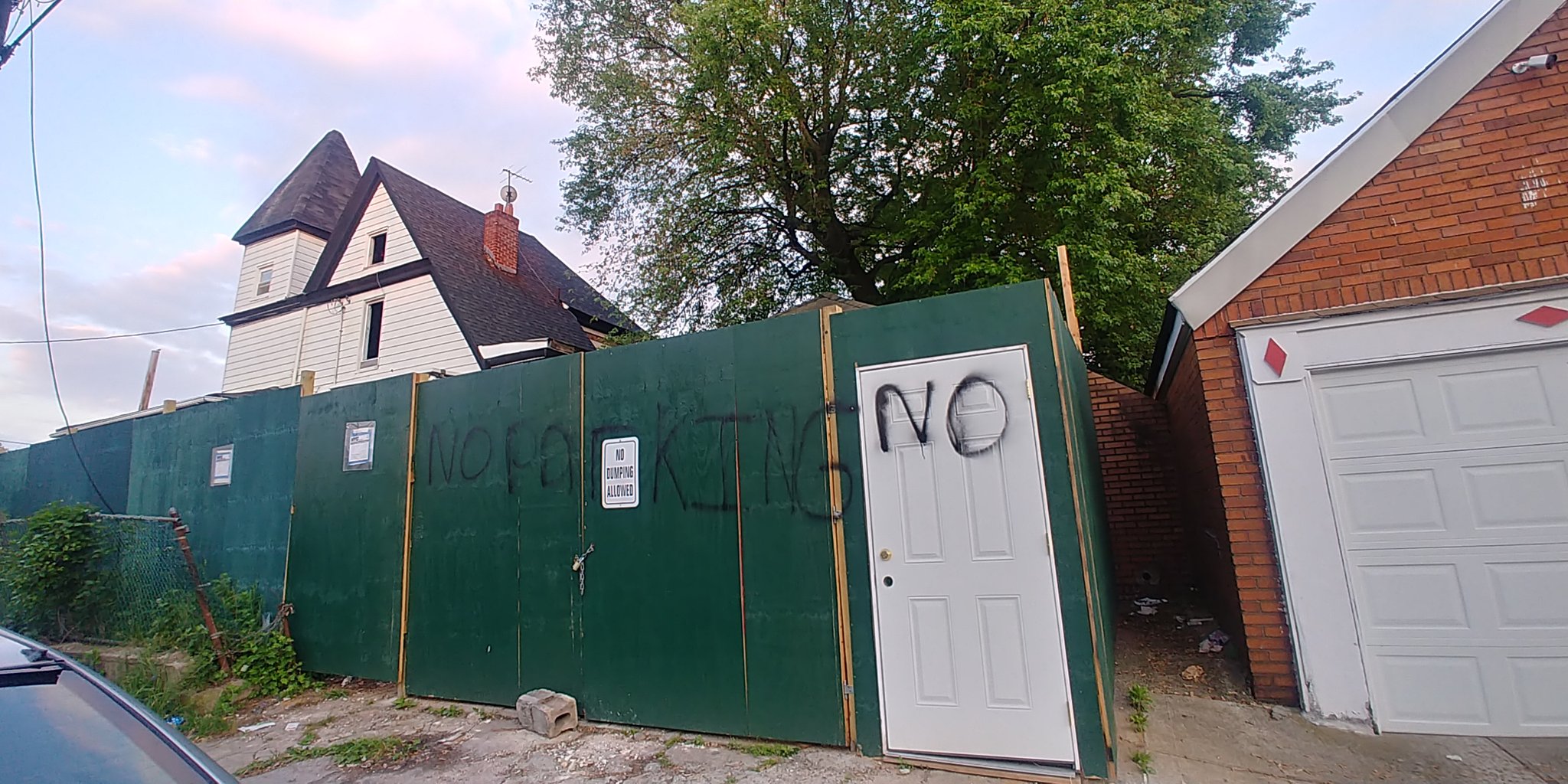
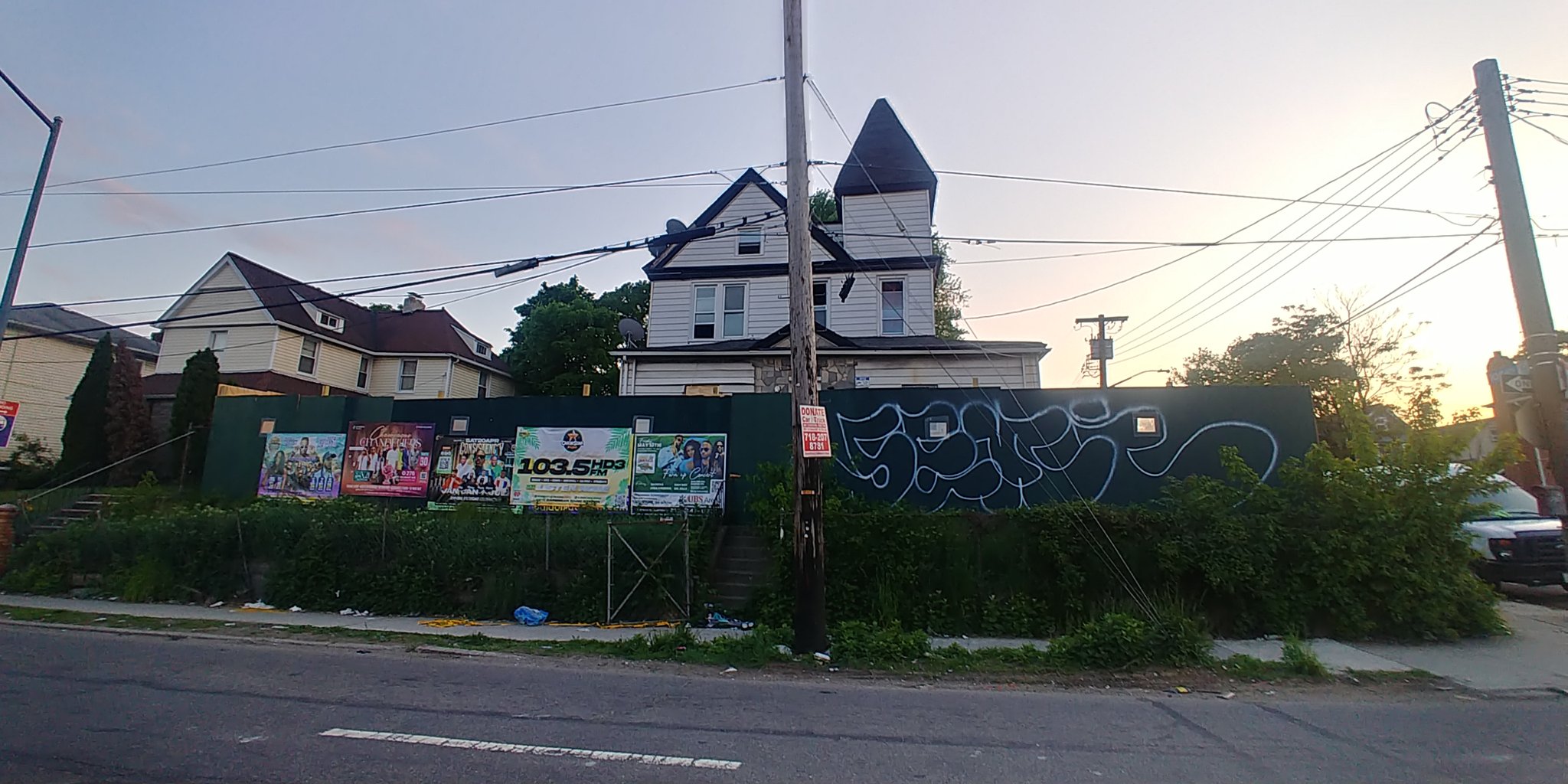
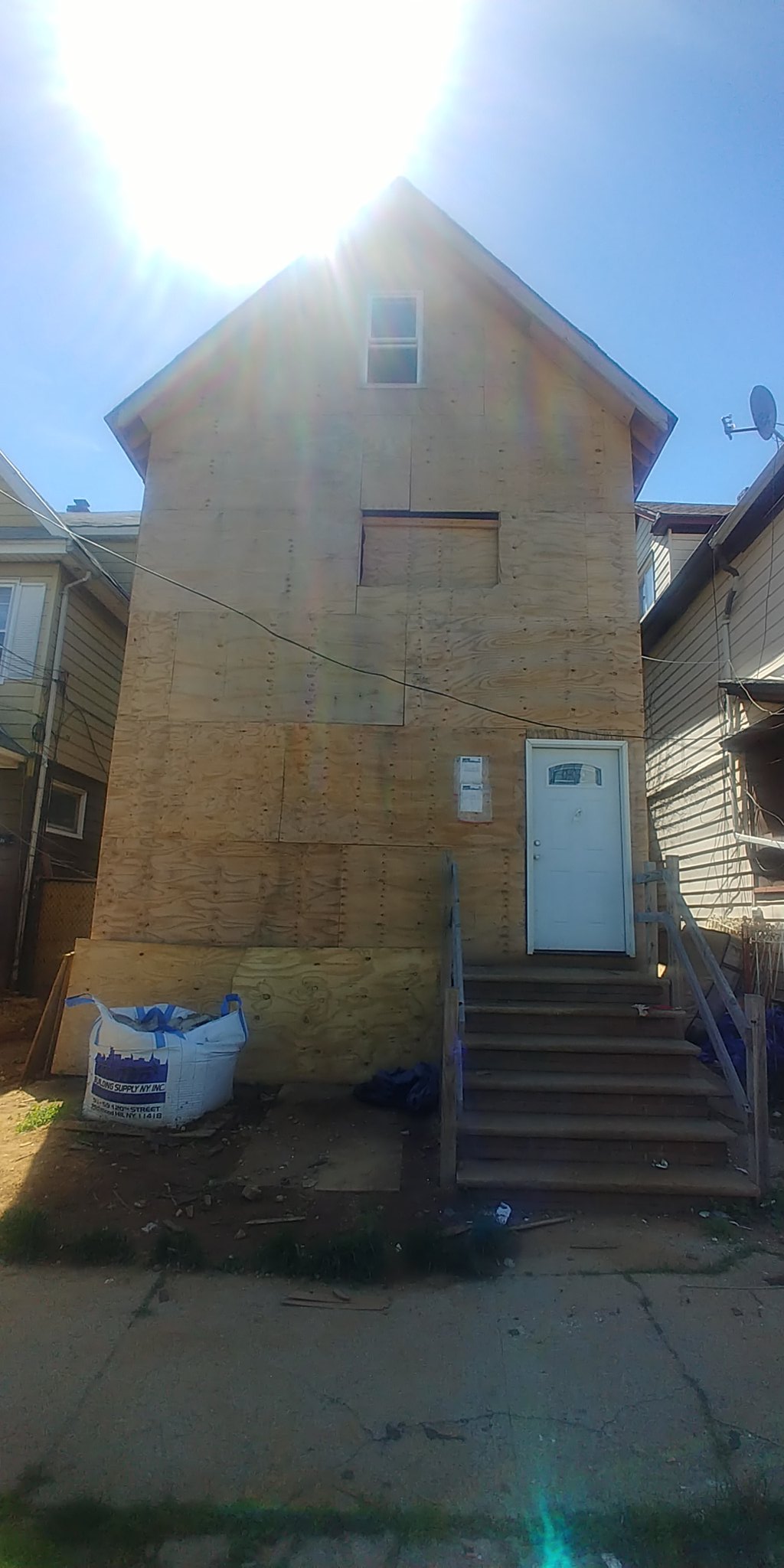
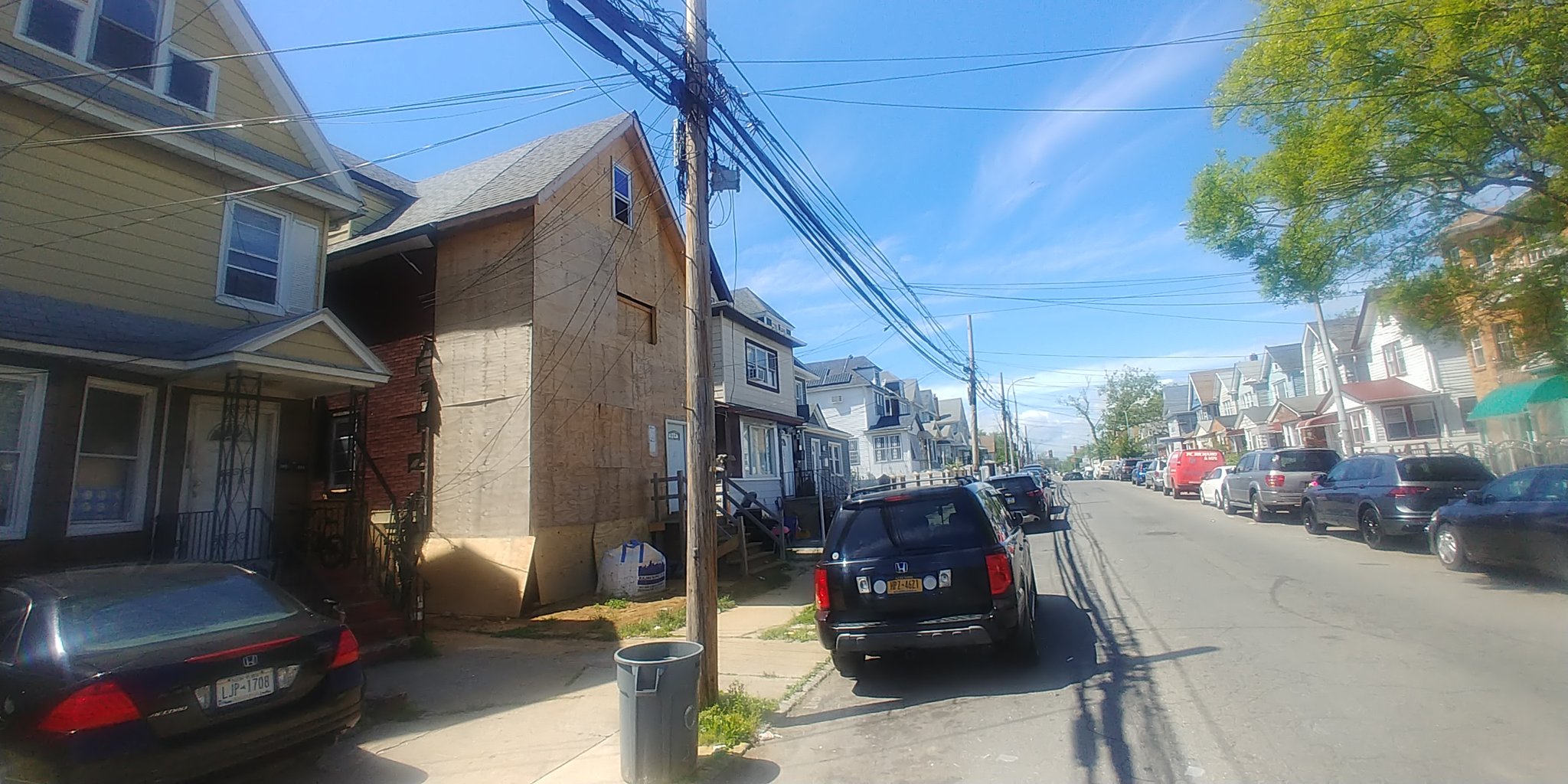
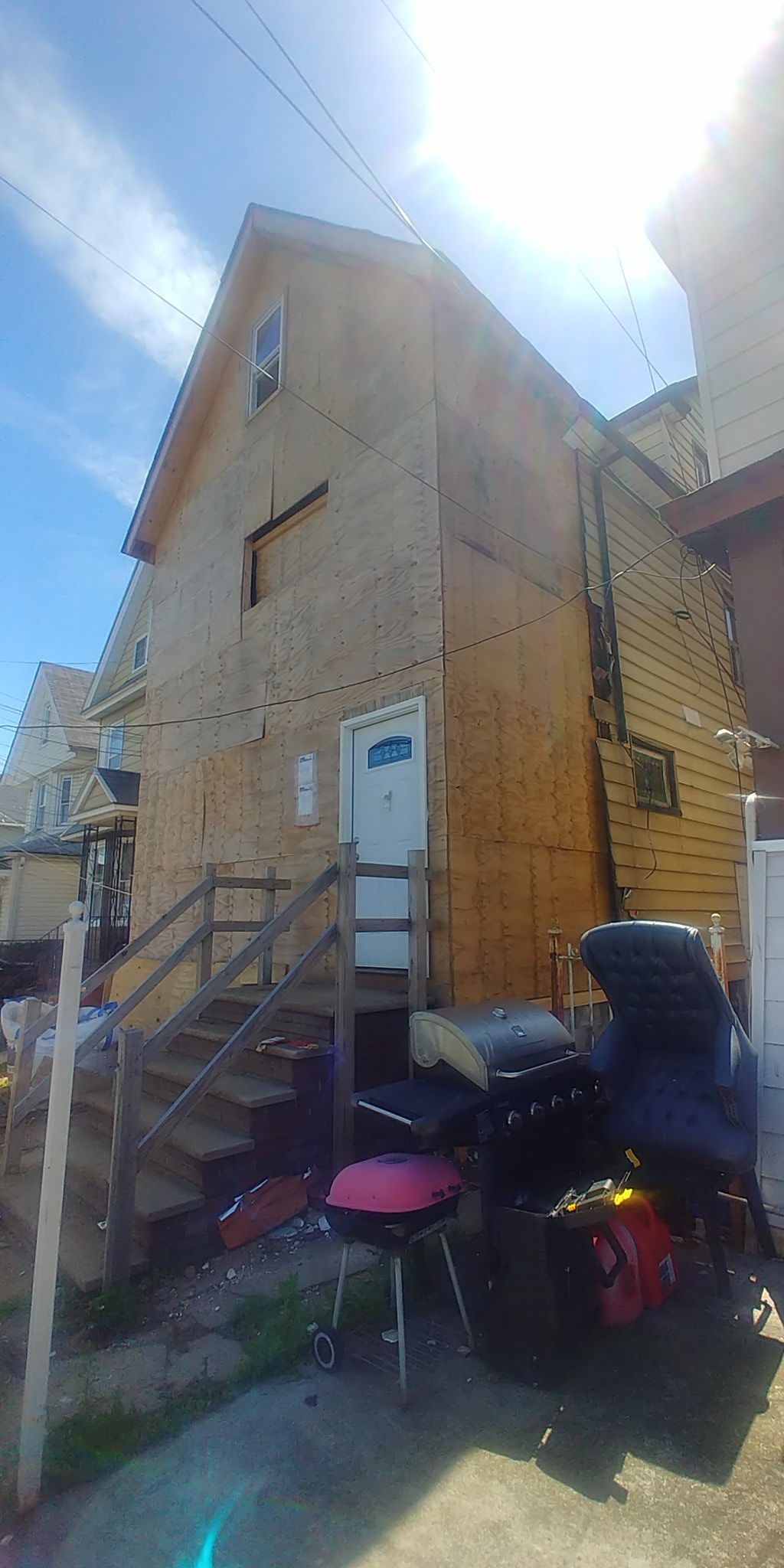
Riding along the Van Wyck Expressway while it's still under construction, I did a double take and saw this huge house on the corner of 105th ave.
Parking is forbidden by the entrance but it hasn't discourage this ricer car owner. Although it looks like this house had a steady occupation by squatters for some time.
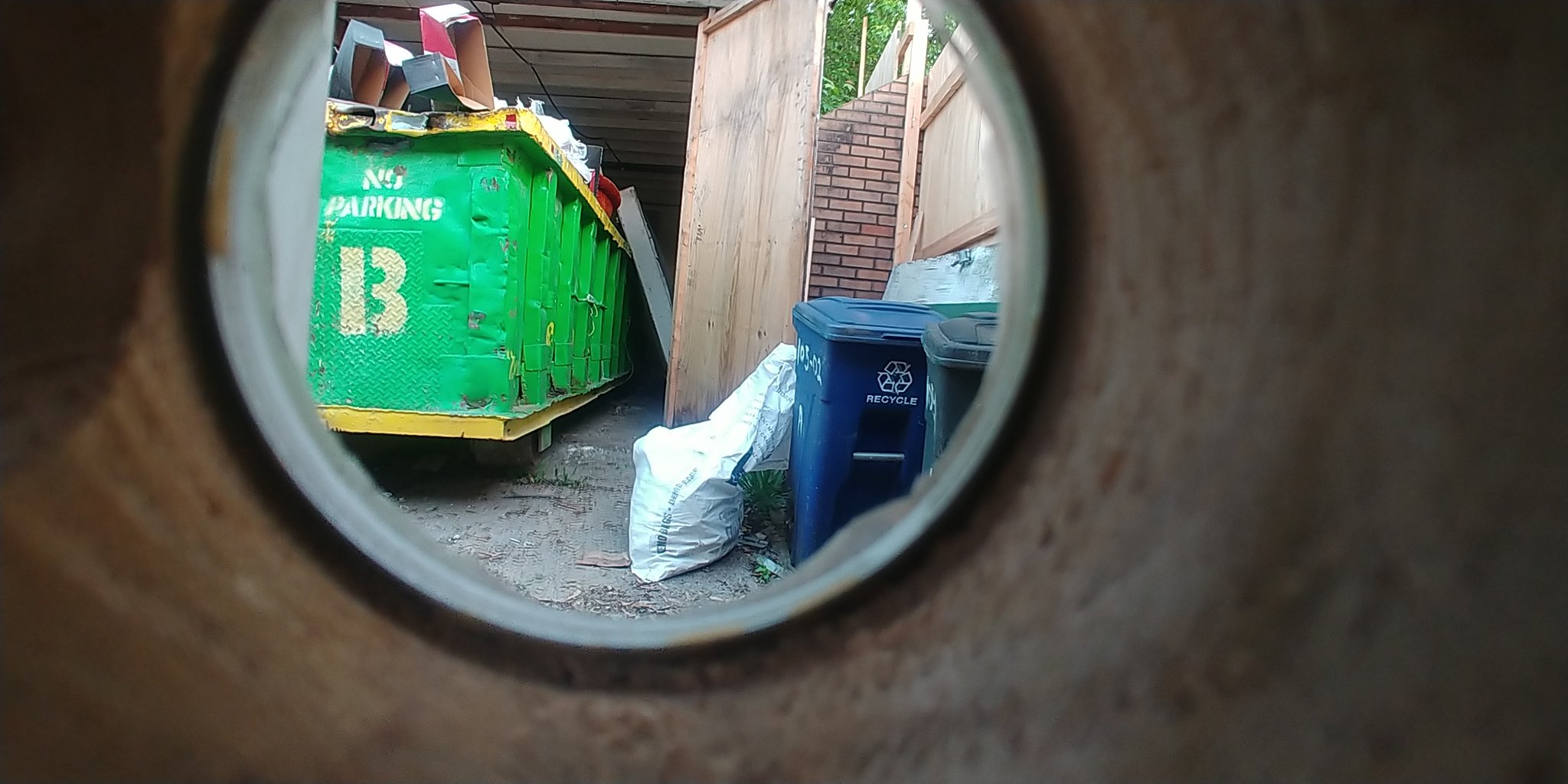
A full dumpster indicates gut renovations.
Like every other abandoned house or vacant lot, the plywood fence is covered with numerous posters of festivals coming to town.
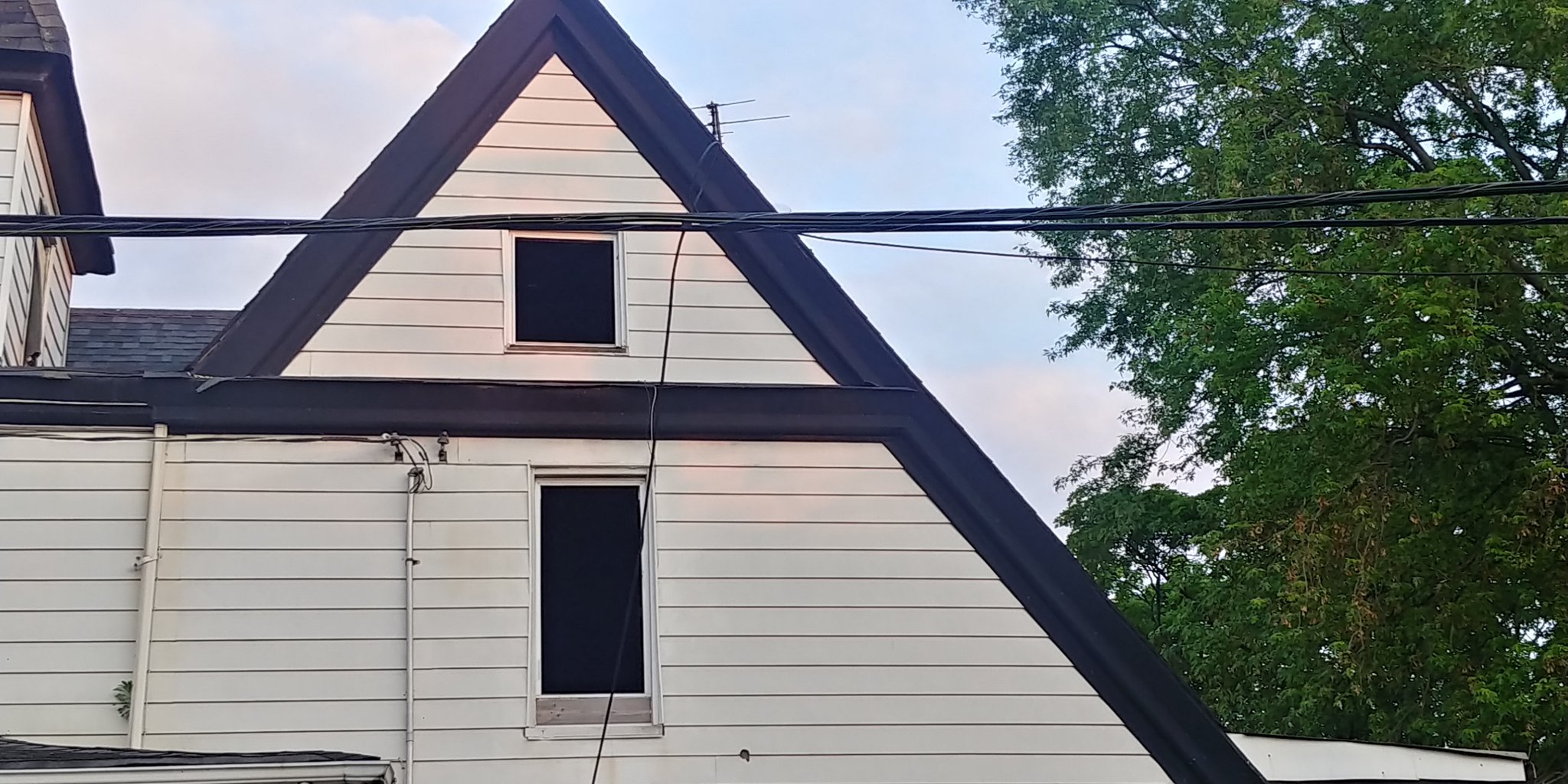
It kinda looks like the Bates Motel.
Mother?
Looked up the address on the Buildings Dept. website and there isn't much information about who is renovating this house. But it did have a record of multiple families living in this quasi-mansion from 30 years ago, which surely still continued considering the number of satellite dishes. But with the City Of Yes coming, the owner of this house can get away with building a little more housing for another 10 families and a dozen single men delivering food on motorcycles.
New York City officials signed off on an 8.5% water bill hike for property owners on Thursday — the largest increase since 2011.
The
city Water Board begrudgingly approved the new rates during a meeting
where the group also passed a resolution saying they were forced to
approve such a steep hike due to a budget maneuver by Mayor Eric Adams.
The
members said Adams imposed new fees on the Water Board, an independent
agency that oversees the city’s water supply. The resolution said the
increase will make it more difficult to justify water bill hikes in the
future, which could limit board's ability to fund infrastructure to
handle increasing rainfall and rising sea levels caused by climate
change.
“It undermines the board's ability to consider rates in
the future for critical water infrastructure, like storm water
resilience and coastal resilience,” board member Dan Zarrilli said in an
interview after the vote.
The increase will add $93 to the
average city property owner's water bill, from $1,088 to $1,181. The new
rates go into effect July 1.
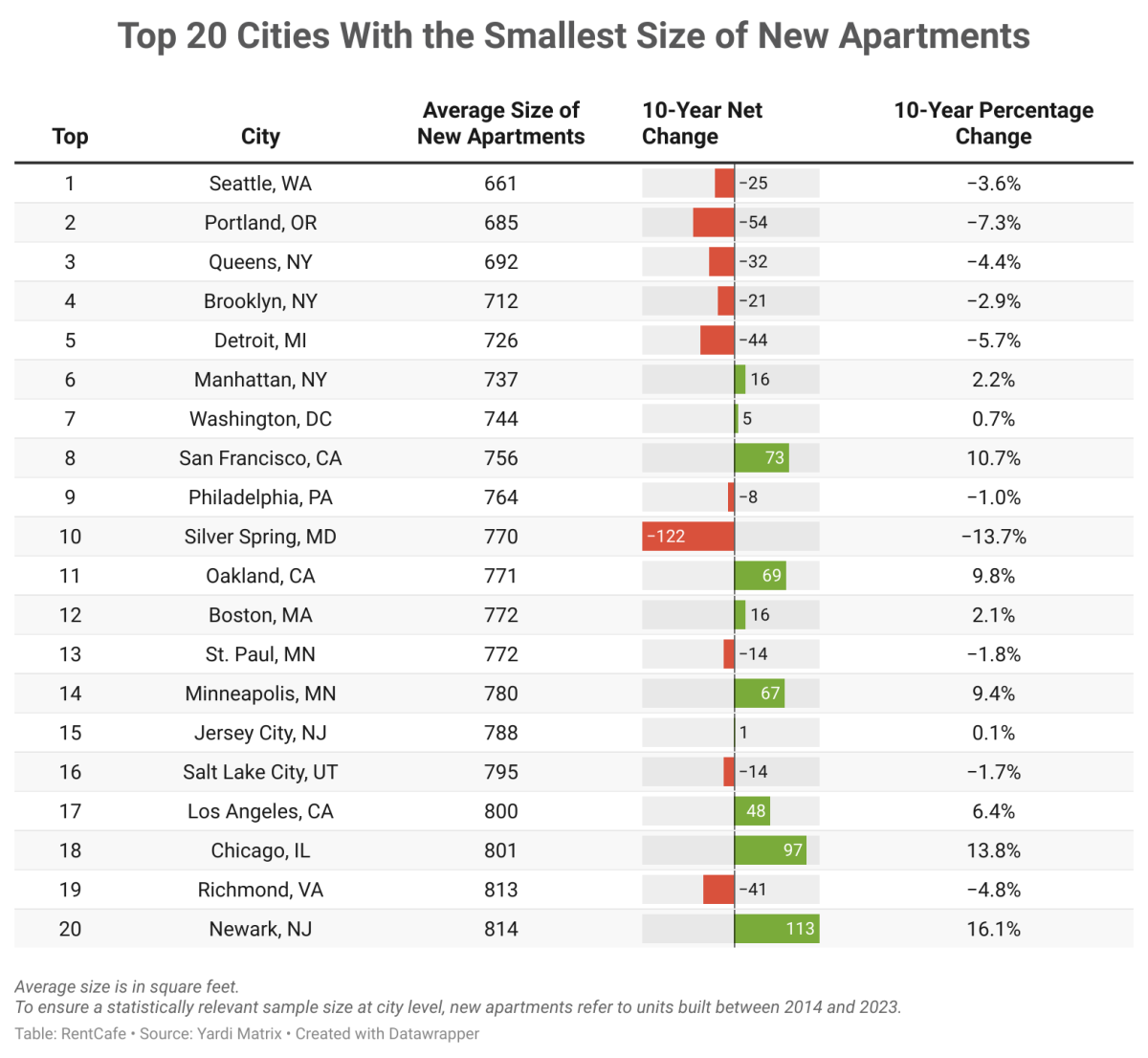
The average size of apartments in Queens was the smallest among all
New York City boroughs in 2023, as well as the third-smallest among
cities in the United States, according to a report by the real estate firm RentCafe.
At 692 square feet, Queens boasts slightly smaller apartments on
average than Brooklyn’s 712 square feet. Among major U.S. cities, only
Seattle and Portland have smaller averages, at 661 and 685 square feet
respectively.
Compared to the historical average square footage of rentals in
Queens, the borough had a decrease of 32 square feet over the last ten
years, marking a 4.4% decline. Over the same period of time, Brooklyn
had a 21 square feet decrease for a 2.9% decline.
In addition to Queens and Brooklyn, which placed third and fourth
among the smallest average apartment sizes in the country, a third New
York City borough, Manhattan, was found within the top ten, placing
sixth at 737 square feet. However, unlike Queens and Brooklyn, Manhattan
actually increased in square footage over the last decade. Apartments
there grew 2.2% in the last ten years, adding 16 square feet to the
average size of apartments there.
Why wouldn't Natasha Williams and Dan Garodnick and all those urbanist plants from the NYC Planning office hold an in person town hall now that the weather is a lot warmer out. Maybe it's because everyone in Jamaica knows this is part of the notorious City Of Yes plan to rezone and upzone residential blocks and make driving and parking difficult for them.
Here's another thing, the toxic lobbyist Cerebrus who supported the failed congestion pricing scheme-transportation alternatives, open plans and Open New York have heavily influenced the Jamaica Plan from the very beginning.
This zoom town hall is going to be rigged with those lobbyist creeps and their cult supporters unless the people from Southeast Queens stops them.
A Forest Hills man was arrested by FBI agents on Thursday morning for participating in a multi-million dollar bank fraud scheme while he was a high-ranking official in the administration of former Mayor Bill de Blasio.
Tommy Lin, 41, was charged in a superseding indictment along with two co-defendants for defrauding financial institutions which resulted in the theft of over $10 million while serving as the Director of Constituent Services in the Community Affairs Unit.
Beginning in 2018, Lin participated in a scheme with his co-defendants Zhong Shi Gao and Fei Jiang, and others to steal millions of dollars by causing transfers of funds between accounts they controlled, then falsely and fraudulently reporting that the transfers were unauthorized, which induced the financial institutions to credit them the amount of the transfers, according to the indictment. The scheme was responsible for over $10 million in actual losses to nearly a dozen banks.
“Tommy Lin allegedly participated in a complex bank fraud scheme while also serving as a Director in the New York City Mayor’s Office and Senior Advisor to the NYPD’s Asian Advisory Council,” U.S. Attorney Damian Williams said. “Leveraging his connections to law enforcement, he allegedly leaked personal identifying information to members of the scheme, ran background checks for them and even arranged for federal immigration authorities to arrest an individual in exchange for $20,000 in cash.”
Lin allegedly accepted that $20,000 bribe in cash in exchange for arranging for a Deportation Officer with Immigration and Customs Enforcement (ICE) to arrest a disgruntled accountholder who had previously participated in the scheme, according to the indictment.
“To facilitate this conspiracy, Lin allegedly assisted members of the scheme in running background checks and accepted a significant cash bribe to arrange the arrest of a slighted account holder by immigration authorities,” FBI Assistant Director-in-Charge James Smith said. “Those in municipal offices are expected to conduct themselves with rectitude and obedience to the law, not engage in the purposeful manipulation of our economic infrastructure.”
Lin is charged with one count of bank fraud conspiracy, which carries a maximum sentence of 30 years in prison; one count of conspiracy to commit wire fraud affecting a financial institution, which carries a maximum sentence of 30 years in prison; and one count of aggravated identity theft which carries a mandatory sentence of two years in prison to be served consecutively to any other sentence imposed.
Bowing to political pressure and in the face of numerous lawsuits,
Governor Hochul on Wednesday declared that the Manhattan congestion
pricing plan is on an “indefinite pause.”
“After careful consideration I have come to the difficult decision
that implementing the planned congestion pricing system risks too many
unintended consequences,” Hochul said. “I have directed the M.T.A. to
indefinitely pause the program.”
The Metropolitan Transportation’s traffic-tolling plan was set to
start later this month on June 30. It would have walloped car drivers
with a $15 once-a-day fee for driving into Manhattan south of 60th
Street ($3.75 during off-peak hours) — and trucks with repeated fees of
$24 to $36 for each time they entered the zone.
However, the scheme faced eight lawsuits, with plaintiffs ranging
from New Jersey, to the teachers union to Chinatown merchants and Lower
East Side residents, all of whom said the plan’s financial impact would
be unfair and onerous. Among the top arguments was that a comprehensive
environmental impact statement, or E.I.S., for the sweeping,
first-in-the-nation plan was shockingly never done.
Retired judge and former Councilmember Kathryn Freed, who lives on the Lower East Side and is a plaintiff on a class-action lawsuit against congestion pricing, has become a sort of poster person for the opposition. Yet, she described her reaction to the plan’s shelving as “mixed.”
“I’m not one of the people who’s crazy pro-car or whatever,” she
said. “The whole thing is a mess. I don’t know what Hochul was waiting
for — it was massively unpopular.”
Indeed, according to a recent Siena College survey, 63 percent of New
Yorkers statewide and 64 percent of Big Apple residents oppose the
Manhattan congestion pricing plan, with opposition in the suburbs even
higher at 72 percent. Fourteen percent said they would not come to
Manhattan as often due to the toll.
At the urging of then-Governor Cuomo, the state Legislature passed
congestion pricing into law five years ago, with the target of raising a
total of $15 billion — at a clip of $1 billion per year — for the
constantly cash-poor transit agency.
Assemblywoman Emily Gallagher
(D-Brooklyn) — who has demonized drivers for years as she calls for
“safer streets” — has racked up at least 46 traffic tickets totaling
over $4,000 over the past two-and-a-half years, a review of public
records by The Post found.
The socialist pol’s
2014 White Buick Encore was caught on camera blowing through a red
light in the Bronx in November 2022, and ticketed for parking in front
of fire hydrants at least six times, according to city records.
Her utter disregard for the rules of the road extends beyond the Big
Apple: In March 2022, Albany traffic cops slapped the far-left lawmaker
with an expired-meter ticket that she has yet to pay, records show.
Gallagher has been upfront about her war on cars, and called driving a “very kind of aggressive activity” in a 2022 interview.
The scofflaw lawmaker backed a bill known as “Sammy’s Law,” which
allows the city to lower speed limits to as low as 10 mph on some
streets.
After more than a year of deliberation, state Sen. Jessica
Ramos (D-Jackson Heights) on Tuesday announced that she will not be
introducing the legislation necessary to make way for Mets owner Steve
Cohen to build a casino next to Citi Field.
Instead, she is introducing her own plan.
“We’re
not in a place to host a casino,” Ramos told New York magazine, which
first reported the decision Tuesday morning. “The people who are here,
they’re hoping to build generational wealth. And I just don’t see how a
casino helps us meet that goal. I mean, it’s literally the opposite.
It’s the extraction of the very little wealth we have.”
In
a statement, she elaborated, “Whether people rallied for or against
Metropolitan Park, I heard the same dreams for Corona. We want
investment and opportunity, we are desperate for green space, and
recreation for the whole family.
“We disagree on the
premise that we have to accept a casino in our backyard as the
trade-off. I resent the conditions and the generations of neglect that
have made many of us so desperate that we would be willing to settle.”
Since
the parking lot at the stadium is legally parkland, in order for
anything to be built at the site, the state Legislature must pass
parkland alienation legislation allowing the spot to be used for that
purpose, be it a casino or otherwise. While Assemblyman Jeff Aubry
(D-Corona) had introduced that legislation to back a casino as part of
Cohen’s Metropolitan Park plan — which would include a casino, a hotel,
25 acres of green space, a concert hall and a Queens food hall — Ramos
had not, and said Tuesday she will not do so. Aubry did not immediately
respond to the Chronicle’s request for comment on the matter.
The
senator’s alternative plan, parkland alienation legislation that she
introduced Tuesday, essentially includes Cohen’s entire proposal, minus
the casino. Instead of 25 acres of green space, she’s calling for 50
acres.
Ramos’ decision follows severaltown hallson the issue over the last year and a half, some of which she has hosted and others of which Cohen has. The senator alsoconducteda
poll on the project within her district, which found that 75 percent
were opposed to a casino; Cohen’s own poll, meanwhile, showed that 62
percent were in favor of one, with 75 percent backing the plan as a
whole.
Throughout the process, Cohen and
his chief of staff, Michael Sullivan, have been adamant that the project
cannot go forward without a casino, saying there would be no year-round
economic driver for the complex without it. But Ramos called that idea
into question while speaking with reporters via Zoom Tuesday afternoon.
“Cohen
is worth an estimated $18 billion-plus, to my estimation, and so math
would dictate that a casino would not be necessary to build out any part
of the remaining project,” the senator said. “My hope is that he sees
that people are counting on him to do the right thing here. He will
remain our neighbor as long as he is the owner of the Mets, and he can
gain trust and good public will by being responsive to our neighbors’
desires.”
When the Chronicle asked Aubry about Ramos’
desire for Cohen to foot the bill without a casino, the assemblyman cut
in, “Stop. Just stop.”
“She isn’t hoping that they
would — she’s only trying to cover up so that no one will blame her that
she has denied the kind of real benefits that the community would get
if the whole plan is going,” Aubry said. “You don’t take out the
money-generating portion of this plan, and then say, ‘Oh, well, do
everything else.’”
Meanwhile, Cohen’s camp still thinks
a casino is the only way to build anything financially feasible at the
site, which the team has under lease for another 81 years. Asked whether
Cohen and his team will consider Ramos’ proposal, Karl Rickett, a
spokesperson for the project, told the Chronicle, “Year-round
entertainment is core to any realistic vision for this area, and casino
gaming is that economic engine. So it’s an absolutely critical part of
this process.”
As such, per Rickett’s statement, Cohen
and his team “remain committed” to making Metropolitan Park a reality,
and to getting the parkland alienation and one of three downstate casino
licenses the state Gaming Commission will award in 2025.
It was already dark when Mayor Eric Adams and his security detail
pulled up to the curb of the Wyndham Garden, a drab hotel next to a
strip mall in Fresh Meadows, Queens.
At the time, his administration was paying for the hotel to shelter
more than 100 formerly incarcerated New Yorkers integrating back into
society after their release.
But the mayor wasn’t here to check
in on one of his criminal justice initiatives. On that November evening
nearly two years ago, Adams was visiting Winnie Greco, a top mayoral staffer, who had recently moved into one of the rooms at the Wyndham Garden.
Adams
got out of the car, walked through a side door and went up to Greco’s
specially arranged suite on the 11th floor, according to two sources
with knowledge of the visit.
The mayor had been to the hotel before. Its owner, Weihong Hu, had
thrown two campaign fundraisers with Adams present when he was running
for mayor in 2021. Now Hu, who was reaping millions of dollars in city
business through this very facility, was housing Greco in a room paid
for by taxpayers, business and government records obtained for this
story show.
Greco ended up staying at Hu’s hotel for more than eight months,
initially as she recovered from surgery, according to two sources with
knowledge of her stay.
The lodging arranged for the mayor’s advisor is just one facet of a mutually beneficial relationship between Adams, an aggressivecampaign fundraiser,
and Hu, an ambitious hotel operator who bundled tens of thousands of
dollars in campaign checks for his mayoral campaign and subsequently
scored behind-the-scenes benefits and millions in contract dollars from
his administration, an investigation by THE CITY, The Guardian US and
Documented reveals.
The details of how this relationship blossomed in the odd setting of a
hotel-turned-shelter offer a rare window into the way transactional
dealings have taken shape in the Adams era.
This report is based on a review of thousands of pages of city and
business records and interviews with more than 20 of Hu’s former
associates and current and former government officials. Nearly all
sources spoke on the condition of anonymity citing fears of retaliation
from Hu or the administration. Several provided reporters with photos,
text messages, emails and videos to back up their claims.
In Hu’s case, multimillion-dollar city-funded contracts to her
companies’ hotels continued to flow as she befriended a tightly knit
core of the mayor’s longtime associates, some the subject of law
enforcement investigations and ethical controversies who multiple
sources say pledged to go to bat for her with city agencies.
It
was at a 2021 fundraiser with Adams at her hotel that Hu became
acquainted with a longtime pal of the future mayor, John Sampson.
Formerly a state senator, Sampson had been released from federal custody
only a month earlier, after being sentenced to a five-year prison term for trying to obstruct a probe investigating allegations that he embezzled more than $400,000.
Hu named Sampson as CEO of one of her hotel companies in early 2023,
and, according to a former city official familiar with the situation, he
committed to helping her land a lucrative contract for a migrant
shelter at a hotel she operates in Long Island City, Queens. A month
later, the Department of Homeless Services approved a city-funded
migrant contract slated to disburse $7.5 million annually to the hotel.
Hu also enlisted the help of another trusted Adams advisor, Rev.
Alfred Cockfield II, whom she introduced to colleagues as a
“consultant,” according to one former associate who said he attended
business meetings with Hu and Cockfield. The former associate and
another source with direct knowledge of the matter said Hu enlisted
Cockfield to help her reverse city orders halting construction at two
major hotel developments in midtown Manhattan.
Cockfield is a politically wired pastor who, after Adams won the
mayoral primary, launched a political action committee, Striving for a
Better New York, which he told Politico was intended to uplift “moderate,” “pro-business” candidates in the Adams mold.
“The work I’m doing is God’s work,” he said.
Yet campaign finance records show the PAC paid Cockfield $144,000 in
wages and consulting fees — many times more than what it ever gave to an
individual candidate. It also gave $60,000 to a charter school
Cockfield leads. Last year, the school returned the entire sum after the
state’s Division of Election Law Enforcement sent inquiries to the PAC about some of its allocations.
The mayor’s son, Jordan Coleman, dressed in black and pushing a
roller suitcase, and an unidentified woman also stayed in a room in
November 2022 at the Fresh Meadows hotel where Greco was staying,
according to a former worker at the hotel. That room, too, was among the
148 paid for by taxpayers.
Coleman hung up on a reporter and didn’t respond to text messages
seeking comment. In a phone call, Hu’s attorney, Kevin Tung, denied that
the mayor’s son stayed at the hotel overnight, but said he may have
visited to discuss business with Greco, who has at times accompanied him
to events.
The administration’s largesse flowed back to Hu in a variety of ways,
the investigation’s findings show. After Adams came into office, his
administration authorized the renewal of Hu’s six-month shelter contract
at the Fresh Meadows hotel four times, reaping her business $6.2
million a year in income.
It also finalized a second contract sending $6.3 million a year to
Hu’s hotel in Long Island City, despite a history of elevator breakdowns
and minimal housekeeping detailed to reporters by former workers and
claimed in court documents.
Last year, the Department of Homeless Services twice approved a more
lucrative arrangement for the Long Island City hotel, bumping its annual
potential revenue to a total of $8.8 million, government records show.
The help a close Adams ally can offer was evident on two occasions in
which, according to sources, Hu tapped Cockfield for assistance with
city authorities.
After a building inspector halted construction
at one of her hotel developments, near Bryant Park on West 39th Street,
citing a serious safety issue, the minister made a late-night call to
top Department of Buildings officials and urged them to allow
construction to proceed, according to a source familiar with buildings
department operations.
Roughly an hour later, the agency reversed the stop work order, which department records show was lifted just after 11 p.m.
At the second hotel development, Hu retained Cockfield to help lift a
city Department of Buildings stop-work order issued after Hu’s team had
begun an illegal demolition of rent-stabilized apartment buildings on
West 35th Street in Manhattan, according to a source who said he
attended meetings with Hu and Cockfield about the situation. That source
said Cockfield and another individual he couldn’t identify promised to
call city agencies on the hotel owner’s behalf.
In late 2022, the Department of Buildings gave Hu permission to
resume construction on that site, approving a plan that ignored a
previous commitment to neighborhood leaders and the city’s housing
agency to preserve affordable apartments.
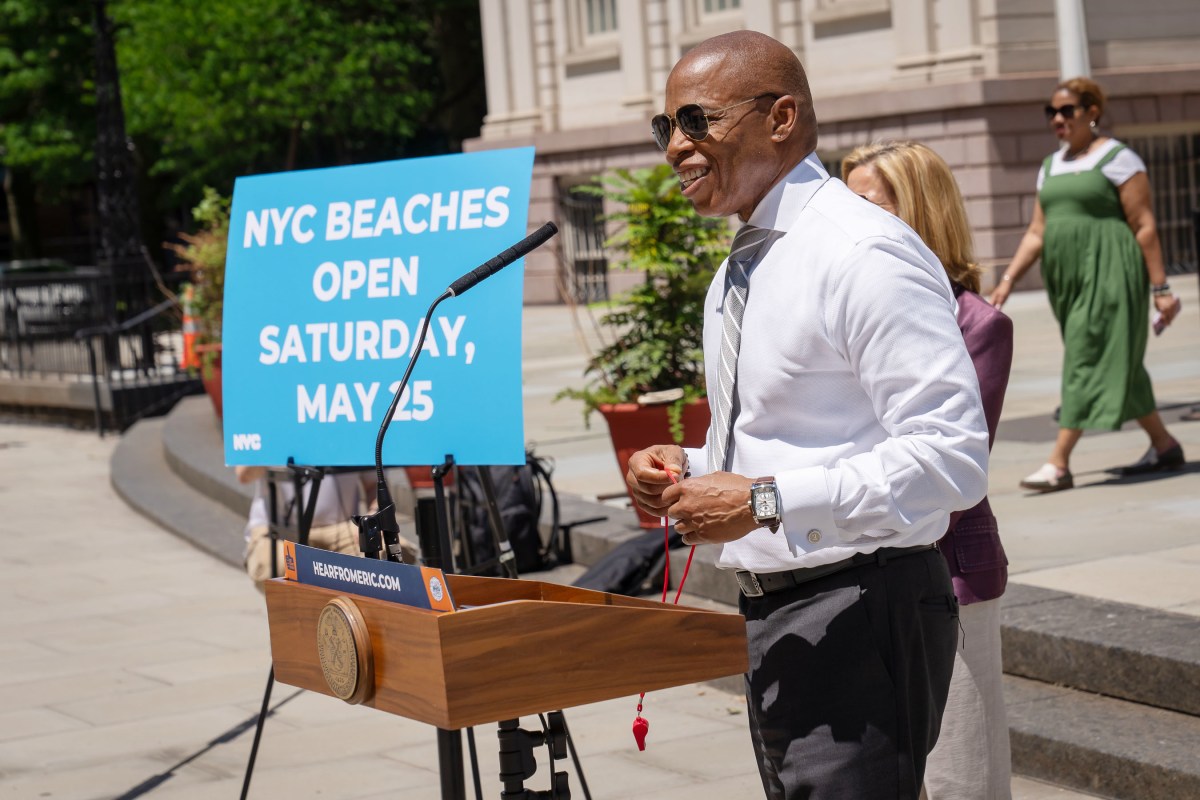
Rockaway Beach welcomed back tens of thousands of New Yorkers on
Saturday as the city reopened 14 miles of public beaches, one day after
Mayor Eric Adams announced a surprise deal between NYC Parks and DC37,
the union representing lifeguards, so more beaches could open during the
Memorial Day weekend.
During a hastily scheduled press conference
at City Hall on Friday, the Mayor and NYC Parks Commissioner Sue
Donoghue said an arbitration panel issued an award in the city’s ongoing
negotiations with the DC37 bargaining unit that will “functionally pave
the way” for the city to be able to hire more lifeguards, allow more
swimming capacity at beaches and pools, and improve operations of the
city lifeguard program.
“Today’s a big win for public safety at our pools and beaches means
we’ll be able to hire more lifeguards for this summer and get even more
in the pipeline for summers to come,” Adams said. “All our lifeguards
will still be trained in CPR, first aid, and rescue skills, and we’ll be
able to have our strongest swimmers focused on our beaches, where
conditions are rougher.” Like the beaches along the Rockaway peninsula
where rip tides can be particularly dangerous, posing a threat over the
last several years due to chronic lifeguard shortages.
“Since the pandemic, it’s been an enormous challenge throughout the
country, we know, to hire lifeguards and New York City has been no
exception,” Donoghue said. “At Parks, we have been working hard to
rebuild our lifeguard ranks and have implemented new policies to bring
as many lifeguards as we possibly can.”
Fully staffed beaches are crucial to the economy in the Rockaways,
but after multiple fatal drownings in recent years, Council Member Joann
Ariola has reservations about the lifeguard deal.
“We absolutely should not be slashing standards in such an important
area,” Ariola told QNS on Saturday. “Our lifeguards need to be supremely
qualified to ensure that, if a crisis happens, they are in the best
condition possible to save a life. The city should be devoting more
resources towards swimming education, so that young New Yorkers will
have the opportunity to develop the skills necessary to make them
excellent lifeguards. Cutting standards like this is dangerous, and I
can’t see anything good coming from it. It is a tragedy waiting to
happen.”
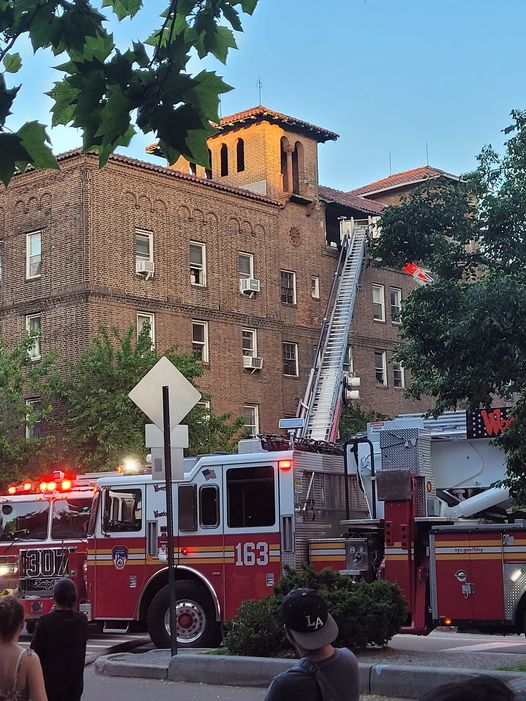
Several
people, including a mom and her baby, were rescued by firefighters
after a fire broke out at an apartment building in Queens Friday.
FDNY
officials say the fire broke out just after 7 p.m. on the second floor
of a four-story apartment building located at 34-09 83rd Street in Jackson Heights.
They
say the fire originated in the kitchen area. When firefighters arrived,
they encountered the fire coming from an open door leading to the public
hallway.
As first responders began searching the building, they found several people trying to escape from the flames.
One
of the tenants was located on the fire escape, while another tenant, a
woman with a baby, was located on the roof of the building.
Firefighters rescued those tenants and brought them to EMS.
Officials
say three civilians suffered minor injuries. It's not clear if those
are the same three people rescued by first responders.
No firefighters were injured.
The fire was placed under control just after 8 p.m.
FDNY
Deputy Chief Joseph Jardin said an e-bike or lithium-ion battery
scooter was discovered near the kitchen, but it's not clear if that was
what sparked the fire.
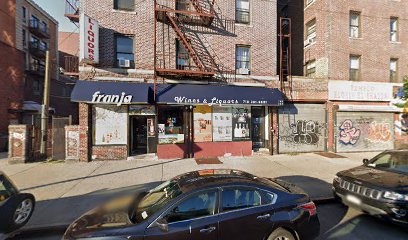
The owner of a Ridgewood liquor store was arrested and charged for shooting an alleged shoplifter from Brooklyn on Monday evening.
Francisco Valerio, 53, was taken into custody and booked at the 104th Precinct
in Ridgewood on a first-degree reckless endangerment charge after he
accidentally shot a 20-year-old who was assaulting him during a chaotic
struggle inside his Franja Wine and Liquors shop at 785 Wyckoff Ave.,
according to the NYPD.
Upon further investigation, Edwin Poaquiza and Kevin Pullutasi, 20,
both from Brooklyn, entered the shop just before 7:45 p.m. and began to
take bottles of liquor without paying. Valerio noticed the shoplifting
in progress and chased both men out of his store. Both men returned a
short while later and assaulted Valerio, who had a registered handgun.
As the struggle escalated, Valerio allegedly fired a shot that struck
Pullutasi in the abdomen. His accomplice Poaquiza ran from the store but
was arrested moments later around the block at Ridgewood Place and
Putnam Avenue.
EMS responded to the crime scene and rushed Pullutasi to Elmhurst
Hospital where he was listed in stable condition and placed under
arrest, police said
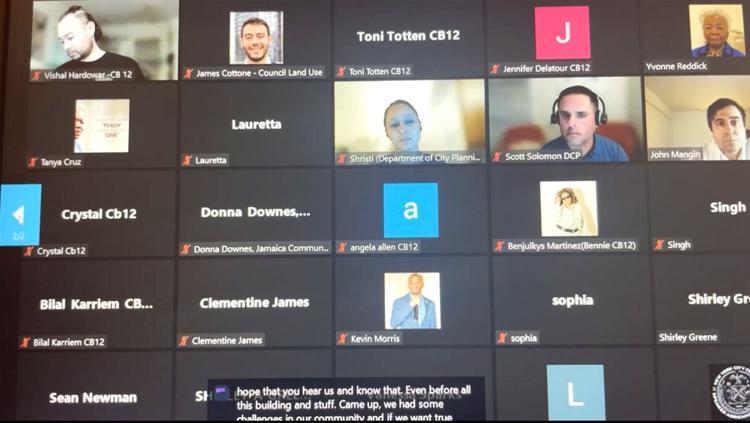
None of the members of Community Board 12’s Land Use Committee were
for Mayor Adams’ City of Yes housing plan after listening to a
presentation from the Department of City Planning on May 7.
In fact, many felt downright disrespected by the proposal, which they said was created without any community input.
The mayor’s plan calls for upzoning single-family areas to make way for denser multifamily buildings.
The
measure would allow low-density housing areas with three to five
stories to be eligible for higher density; more houses to be built by
subway stations; basement, attic and garage apartment legalization; and
religious institutions dedicating parcels of their land to housing. The
purpose of the plan is to build enough units to help bring down the
costs as the city goes through a housing crisis.
Rene Hill, a CB
12 member, said she does not consider herself a “not in my backyard”
person, but she along with others on the committee and the community
board bought their homes because of the area’s low density. She doesn’t
believe the housing plan will work as intended, and worse, it will drive
up prices in residential areas, pushing homeowners out.
“We are
trying to keep our homes,” Hill said. “We are middle-class people who
want to stay here. We do not want to move into Long Island.”
Hill
said developers are renting single bedrooms for upwards of $3,000 a unit
and if the administration wants to solve the housing crisis, probably
it should put a cap on rent instead of investing in high-rise hotels.
“It
should be $650 or $750,” Hill said about rent at apartment complexes.
“This is ridiculous, this is an insult, this is disrespectful to us and
you should tell the mayor stay away from us. He needs to because he will
not be elected again. You can let him know that ... We are going to
vote Republican if we have to.”
Michelle
Keller said instead of the DCP trying to defend the mayor’s housing
plan, it has sent different representatives to the board’s meetings
trying to “cajole us.”
“You need to listen to the taxpayers and
the constituents here,” Keller said. “You are trying to tell us here
that having these high-rise buildings or [accessory dwelling units] is
going to be minimal and is going to help us. The elephant in the room is
that you are helping these people who are coming from these other
countries and now you want us to be onboard with that. I’m not on board
with it.”
“Stop acting like you are for us,” Keller said to the
DCP representatives. “I do not even know where you live, but when that
happens most of us will be in a pickle and we will have to deal with the
taxes on our homes and the quality of life has already gone down the
drain.”
New York City Mayor Eric Adams on Tuesday called for migrants to be allowed to work as lifeguards as the city faces a shortage for the role -- arguing that many are "excellent swimmers."
Adams
was asked at a press conference about a lifeguard shortage in the city
as Memorial Day nears and with the summer months approaching.
He said the situation could be helped "If we had a
migrant and asylum seeker plan that states those jobs that we are…in
high demand we could expedite."
"How
do we have a large body of people that are in our city, and country,
that are excellent swimmers and, at the same time, we need lifeguards --
and the only obstacle is that we won’t give them the right to work to
become a lifeguard," he said.
"That just doesn’t make sense."
He listed off other occupations, including food service workers and nurses, where the Big Apple may face shortages.
"We
have all these eligible people waiting to work with the skills we need
to fill the jobs but we are unable to allow them to work because
bureaucracy is in the way," he said. "That just does not make sense."
The
city has been grappling with a migrant crisis that has enveloped the
city in recent years. Officials recently said that there have been more
than 1950,000 migrants who have entered the shelter system since 2022,
and more than 65,000 are still in the shelter system.
The MTA executive in charge of running New York City’s subways and
buses is slated to leave his job to become CEO of the Massachusetts Port
Authority, according to people with knowledge of the decision.
New
York City Transit President Richard Davey joined the agency in May 2022
and led it as transit ridership rebounded from the COVID-19 pandemic.
His departure is the latest example of turnover at the prominent post
that’s had four leaders in just over four years. Davey is responsible
for more than 5 million daily commuters.
His exit comes as the MTA prepares to launch congestion pricing, which aims to push drivers into mass transit.
Transport
Workers Union International President John Samuelsen, who represents
NYC Transit’s workforce, said he’d been told Davey is leaving New York.
"My
trade union counterparts in Boston confirmed to me that Davey is just
waiting on an approval vote from the Massport board,” said Samuelsen,
who holds a seat on the MTA board.
Davey neither confirmed nor denied his new job during a news conference on Tuesday.
"I do get calls from time to time because I got a great team that makes me look good," he said.
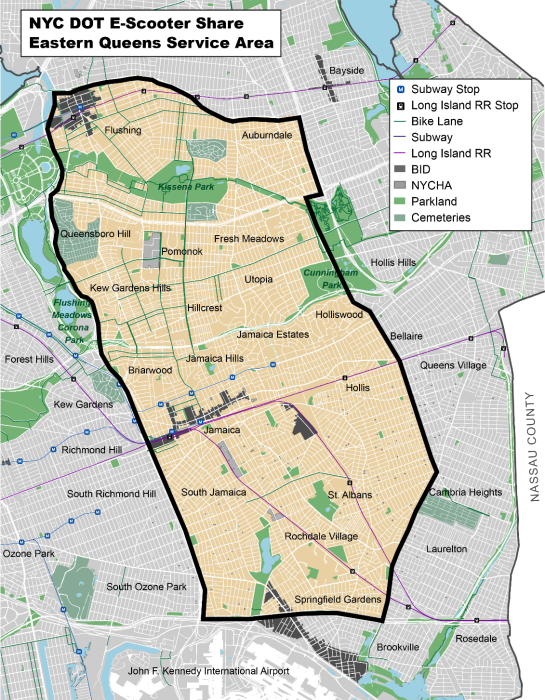
New York City is set to expand its e-scooter share pilot program to
several neighborhoods in eastern Queens this summer, three years after
launching the program in the Bronx with the aim of expanding
micro-mobility to new corners of the five boroughs.
The city’s Department of Transportation (DOT) exclusively told amNewYork Metro that the expansion of the pilot, announced last year,
will commence at the end of June across four community boards in
eastern Queens, all of which are in reaches of the city with relatively
limited access to the subway.
The pilot will extend from Flushing and Auburndale in the north, past
Kissena Park through Fresh Meadows and Hillcrest, passing through
Jamaica, Briarwood, and Hollis, and reaching down to St. Albans,
Rochdale Village, and Springfield Gardens just north of John F. Kennedy
Airport. The pilot area will cover about 20 square miles.
The expansion comes after three years of operation in the eastern Bronx,
where 3.8 million trips have been logged by 157,000 unique users, DOT
says. All three scooter companies participating in the Bronx pilot —
Lime, Veo, and Bird — will join the pilot’s expansion in Queens.
“We are very excited for this summer’s arrival of e-scooter sharing
in Eastern Queens following our successful East Bronx pilot, where
nearly 4 million rides have been taken since August 2021,” said DOT
Commissioner Ydanis Rodriguez. “This expansion is an equitable way to
bring a popular, safe, and environmentally sustainable mode of
transportation to underserved neighborhoods in Queens, and we look
forward to continuing our work with these communities as e-scooter share
expands.”
Here is where all these scooters are going towind upabandoned. These neighborhoods have plenty of modes for transportation, the only thing that's sustainable about them is to sustain the bankrupt Bird which is run by former Transporation Alternatives CEO Paul Steely White. Like Johnny Cash sang, guess things just happen that way.
Paul Graziano lives in Flushing, but he had a direct message Monday night for his neighbors in Forest Hills.
“We
are the target of City of Yes,” said Graziano, a planning and land use
expert, said to a room of more than 200 people at an emergency town hall
meeting of the Forest Hills Community and Civic Association. “The
intent of City of Yes is to eliminate owner-occupied housing and replace
it with rental units ... The aim, essentially, is to allow developers
to build whatever they want as of right.”
City of Yes is a
three-pronged initiative from the Adams administration which the Mayor’s
Office said will reduce carbon emissions, stimulate jobs and businesses
and increase the construction of housing.
The carbon portion was approved by the City Council in December.
The
reasons for Monday’s emergency meeting, according to civic President
Claudia Valentino, were the city’s presentation on the economic
development portion to Community Board 6 scheduled for last night, May
8; and a hearing before the City Council on the housing portion on June
4.
Even residents who are not members of the FHCCA turned out in
force at the parish hall of Our Lady Of Mercy Church on Kessel Street. A
good meeting, Valentino said, normally can draw about 50 people.
“They
support City of Yes,” Valentino said of Board 6 leadership. “They
rubber-stamped [the carbon emissions portion] without our approval.”
She told Monday’s crowd that they needed an equally strong turnout at Wednesday’s CB 6 meeting.
Valentino
dislikes numerous aspects of the economic development and housing
plans, pointing out they would allow businesses to open in residential
neighborhoods where they cannot now, and could allow massive apartment
buildings in single-family home neighborhoods.
“It’s
complicated,”she said of the proposals running more than 1,000 pages
apiece. “You’re not expected to dig through it ... That’s deliberate.”
She
had letters ready for signatures to Councilwoman Lynn Schulman
(D-Forest Hills) demanding that all present one- and two-family housing
zones must remain in place; that corner stores not be allowed in those
same neighborhoods among other things.
Graziano
pointed out that most of the community boards in the city, and all but
three in Queens, including CB 6, have voiced opposition to City of Yes
thus far.
“They never mention that,” he said of the
administration. He and Valentino counseled residents to not just accept
City of Yes as a fait accompli. Valentino said she heard the same thing
25 years ago when residents and the city told her she could not succeed
in downzoning large swaths of residential neighborhoods in Forest Hills.
“They forgot about me,” Valentino said of administration officials. “Unluckily for them, I didn’t die. I know what I’m doing.”
Hundreds of people were in attendance at a City of Yes housing presentation at Cambria Heights Library last Saturday.
Throughout
the forum Paul Graziano, an urban planner, said the city is actively
trying to destroy single-family zoning through upzoning, to make way for
dense multifamily buildings.
Graziano said approximately 50
percent of single-family housing throughout Queens, Staten Island,
Southern and Central Brooklyn and Northern and East Bronx would be
impacted by the city “eliminating” existing zoning.
According
to stats from Graziano, while the Big Apple is the largest big city by
population — more than 8.3 million — it has the smallest share of
single-family homes — 15 percent — across the country. In comparison,
LA, second in terms of population — over 3.8 million — is 75 percent
single-family homes. Washington, DC, has a population of 670,050 but
double the single-family homes in New York.
Graziano was thankful
to Assemblymembers Ed Braunstein (D-Bayside), Nily Rozic (D-Fresh
Meadows) and Alicia Hyndman (D-Springfield Gardens), along with state
Sen. Leroy Comrie (D-Jamaica), who prevented a state version of the
housing plan to get through in 2022. He now wants to raise awareness
about Mayor Adams’ housing plans, which he said also would push through
transit-oriented development, more mandatory inclusionary housing,
town-centered housing units, religious housing and legalized accessory
dwelling units.
“The electeds here were some of the hardest
fighters in shutting that down,” Graziano said. “They essentially walked
out of [budget] negotiations and [Hochul] dropped everything.”
Graziano
said Queens folks should leverage the 2025 election to get municipal
leaders to say no to City of Yes, Adams’ rezoning plan. Residents, who
fought since 2004 to stop overdevelopment in residential communities,
approved downzoning plans for the neighborhood and now the city is
pushing against the interest of the people.
“This administration
has stated publicly that lower-density neighborhoods are the cause of
the housing crisis,” said the urban planner. “We have a target on our
backs.”
Graziano also called out mainstream news outlets like the
Daily News, which said in an April 14 editorial that “those who want to
live in a suburb, we’ll remind you there are several in the vicinity of
the five boroughs. This is New York City.”
“If you take our
communities out of the mix, there is virtually no single-family zoning
in the City of New York,” said Graziano. “The transit zone is going to
allow apartment buildings all over the place that is cross-hatched [on a
map he showed]. This is Rosedale, Laurelton, Springfield Gardens,
Addisleigh Park and Queens Village, just a few blocks north of Murdock
[Avenue].”
Low-density
housing areas or commercial buildings with three to five-stories would
be eligible for higher density; more houses will be built by train and
subway stations; basement, attic and garage apartments would be
legalized; religious institutions would be allowed to dedicate parcels
of their land to housing complexes; and much of the proposed
developments would come with little to no parking and take up some green
spaces under Adams’ plan.
“That [plan] just went to the City
Council and they are going to vote on this at the end of the month,”
said Graziano, to the crowd, which also included people and civic
leaders from St. Albans, Rosedale, Queens Village and Bayside. “There is
no affordable housing. [ADUs and TOD would] replace older occupied
homes with market-rate rentals ... There is an affordability thing with
higher density buildings ... but its [virtually] nothing.”
The Adams administration has awarded a $3.9 billion contract to design and build the new Queens community jail.
The
city’s Department of Design and Construction has chosen the Leon D.
DeMatteis Construction Corp. of Elmont, LI, for the project. In a
related matter, the DDC awarded a $2.9 billion contract for the new
Bronx jail.
In an email, a DDC spokesman said construction on the Queens facility will start in August.
It will have a maximum height of 195 feet, and will total 764,350
square feet. Construction is scheduled to begin in August. It will be
built behind the Queens Criminal Courthouse, on Queens Boulevard in Kew
Gardens. Work on adjacent buildings and a nearby parking garage already
are well underway.
The DDC
email stressed while the contract with DeMatteis runs through 2031, that
does not mean construction will take that long; and that the city will
work with the firm to find some time savings.
The
city by law is required to shut down Rikers Island as a jail by 2027,
though Mayor Adams and numerous other public officials have expressed
concern over whether it will be accomplished on time. New jails in each
borough except Staten Island are slated to have space for just over
4,000 inmates. The present population of Rikers is about 6,000.
The
jail will have 1,040 beds. Queens is the only site for female detainees
and will have 590 beds for men and 450 for women. It will require
duplicate admission and transport areas, visiting areas, health
services, cafeteria and elevators. It also will have a nursing area for
women. All that, the DDC said, accounts for the higher cost.
Permits have been filed for a six-story residential building at 181 Beach 116th Street in Rockaway Park,
Queens. Located between Rockaway Beach Boulevard and Ocean Prom, the
lot is one block north of the Rockaway Park-Beach 116th Street subway
station, serviced by the A and S trains. Tom Lawlor under the 185 Beach
116th Street LLC is listed as the owner behind the applications.
The
proposed development will yield 31,108 square feet designated for
residential space. The building will have 35 residences, most likely
rentals based on the average unit scope of 888 square feet. The
steel-based structure will also have a 30-foot-long rear yard.
35 units, 888 square feet? That's putting the little in the "little more housing" slogan from the City of Yes.
U.S. Rep. Alexandria Ocasio-Cortez officially faces a challenger in the upcoming Democratic primary.
Marty Dolan,
66, has received notice from the NYC Board of Elections that he will be
on the ballot for the June primary against Ocasio-Cortez, who will face
a primary challenger for the first time since 2020.
Dolan, who is a retired Wall Street
insurance executive, needed 1,250 signatures from registered Democrats
who live in the district in order to get on the ballot — and he said he
got 7,300. The Bronx Times reached out to the Board of Elections for
confirmation of these numbers and is awaiting a response.
Dolan said he’s been hitting the
streets talking to prospective voters throughout District 14, which
covers neighborhoods in the east Bronx and northern Queens. Stopping at
grocery stores, churches and parks, he said he has seen a lot of
enthusiasm for his candidacy — and some even hugged him and said, “I
love you.”
“The feedback continues to be really positive,” he said.
Dolan, who was living outside the
district when he last spoke with the Bronx Times, said he has now found
a place to live in the Bronx at “the bottom of White Plains Road,” and
he’s also looking for a place in Queens — which he sees as a way of
meeting people where they are in a large, highly varied district.
Fundraising has picked up recently, he said. Records from the Federal Election Commission
showed that for the period ending March 31, the campaign had $20,893
cash on hand after expenditures, factoring in $17,075 in individual
contributions and Dolan’s loan of $225,000 to his own campaign.
He takes pride in running a simple,
relatively low-budget campaign. “What you need to do is be on the
ground, shaking hands with people, sitting outside the supermarket and
really making yourself available to the voters.”
As for his opponent, “She’s on the GQ [magazine] cover. She’s on the Late Show. She’s not in the supermarket,” he said.
Ocasio-Cortez’s office declined to comment for this story but is in the process of arranging an interview with the Bronx Times.
Dolan wants his campaign, and his
tenure in Congress should he win, to maintain a predictable,
easy-to-find presence that stays laser-focused on the district — not on
charged political and international issues such as the War in Gaza,
which he called “not a central issue for people in the district.”
In the heavily Democratic 14th
District, Dolan emphasized the importance of educating people about the
June 25 primary. More voters should have their say when more options are
on the table, he said.
“There’s a lot of anxiety about the current representative, and we’re offering a choice,” said Dolan.
He said a campaign van — “Rollin’
With Dolan” — is coming soon, which will help him cover more ground as
he campaigns as an unknown against one of the world’s most recognizable
political figures.
But Dolan said he has been
well-received in the district by those dissatisfied with the current
state of progressive politics. Some have “profound reactions” to him, he
said, and it’s often younger people with low to moderate incomes who
respond most positively.
“The younger voters with families and houses are thrilled to see us,” said Dolan.
While canvassing in the district,
Dolan said he has met many people who are “barely getting by” and
cannot focus much on broad issues. They are mostly concerned with how
those issues trickle down to their neighborhoods — for instance, how
immigration in the United States affects the local economy.
Many constituents view Ocasio-Cortez
as an “egomaniac,” Dolan said. “Her focus is on becoming a national
franchise,” and she has succeeded while ignoring the reality of what
constituents are concerned about, he argues.
If he wins — or as Dolan said, “when
we’re in Congress” — he plans to have a mobile office instead of a
brick-and-mortar one and travel around the district to make himself
accessible. And “we’re gonna spend 99% of our money in the district,” he
said.
Mayor Eric Adams plans to implement what critics claim is a “hidden
tax” that would make homeowners’ water bills soar 8.5% – despite boasting his new budget plan won’t include more taxes.
The city plans to charge its own Water Board at least $1.4 billion in rent over four years to lease water and sewer systems, The New York Times first reported.
In turn, the city’s Department of Environmental Protection wants the
Water Board to raise rates in July for homeowners and landlords by 8.5%,
according to a proposal released Friday by the board.
If approved, the rate increase would only cover some of the rent
charges, with the rest likely picked up by funds that usually cover
water and sewer system capital project upgrades.
Owners of single-family homes pay $1,088 on average for water each
year, and the proposal would add on nearly another $100 a year,
according to the city.
Councilman James Gennaro (D-Queens), who chairs the Committee on
Environmental Protection, said the city is bringing back a “hidden tax”
that was implemented in 1985 and used for decades until then-Mayor Bill
de Blasio discarded it seven years ago.
He added the old “budget trick” might be legal — but it doesn’t make it fair.
“It’s using water and sewer monies to pay for parts of city
government and services that have nothing to do with water and sewers,”
he told The Post Saturday.
Landlords usually pay for water but pass along the cost to tenants in
their monthly rents, making the plan nothing more than a regressive tax
that will ultimately hurt low-income households the most since, they
historically use more water than average New Yorkers, according to
critics
A State Supreme Court Justice required the operators of Forest Hills Stadium to reduce their noise pollution in compliance with the city’s noise code before the start of its outdoor concert season.
The stadium, which is being leased to TieBreaker Productions by the
historic West Side Tennis Club until 2034, must now obtain a permit from
the NYPD to use sound amplification tools during concerts. The April 10
order also required an independent organization to monitor noise levels
emitted from the stadium, which the court will need to approve of.
The order was based on a lawsuit filed against the club by the Forest
Hills Gardens Corporation, representing a large number of homeowners
living around the stadium. In affidavits submitted in the lawsuit
against West Side Tennis Club, residents explained how they believed
their quality of life decreased as concerts increased in regularity in
recent years.
In addition to the noise that residents say causes their apartments
to vibrate, local homeowners also explained that concertgoers
trespassing on their properties is a major inconvenience of living near
the stadium.
Last month, State Supreme Court Judge
Joseph J. Esposito sided with the residents and ordered measures to
reduce the volume emitted during concert nights. Prior
to the Judge’s order, an expert obtained by FHGC found that the overly
debilitating noise that residents complained of was 100 times the legal
limit for residential areas set by the city.
“There was no evidence of record that
playing of music louder than permitted by law was a significant and
necessary part of the stadium’s operation and income,” read Justice
Esposito’s order.
The expenses associated with noise
monitoring will fall on FHGC, not the stadium. However, the independent
agency will provide noise readings after each show for both parties.
While some nearby residents have said that they do not mind the concerts,
given that residents closest to the stadium receive free concert
tickets and other perks, those who led the lawsuit were content with the
judge’s decision.
“Our community was forced to sue the
West Side Tennis Club after the club and its for-profit concert
operator, Tiebreaker, brazenly refused to coordinate with us over the
use and closure of streets, noise levels, concert logistics and TRIPLING
the original number of events they promised when concerts returned to
the stadium ten years ago after a halt of over a decade,” said Forest
Hills Gardens Corporation Board of Directors President Anthony Oprisiu
in a statement.
Italicized passages and many of the photos come from other websites. The links to these websites are provided within the posts.
Why your neighborhood is full of Queens Crap
"The difference between dishonest and honest graft: for dishonest graft one worked solely for one's own interests, while for honest graft one pursued the interests of one's party, one's state, and one's personal interests all together." - George Washington Plunkitt
The above organizations are recognized by Queens Crap as being beneficial to the city as a whole, by fighting to preserve the history and character of our neighborhoods. They are not connected to this website and the opinions presented here do not necessarily represent the positions of these organizations.
The comments left by posters to this site do not necessarily represent the views of the blogger or webmaster.