Monday, March 13, 2023

Bad Don Juan

https://images.squarespace-cdn.com/content/v1/5b9ffe0f1137a680c2c08250/ef3bd2b8-030a-4ac0-9b6a-d23568aabac4/Ardila1.jpeg?format=750w 

Queens Eagle

Queens Assemblymember Juan Ardila has been accused by two women of sexual assault during a 2015 party shortly after he had graduated college.

The two women, who both attended Fordham University at Lincoln Center at the same time as Ardila, allege that at a party in October of 2015, the current assemblymember for Long Island City, Sunnyside, Maspeth and Ridgewood, but at the time a recent graduate of the school, sexually harassed one of them and attempted to pull her into a bathroom, then later in the night pulled another woman into the bathroom and assaulted her. 

The first victim, who reached out to the Eagle and also spoke to the Queens Chronicle on the condition of anonymity, alleges that while she was drunk, Ardila attempted to pull her into a bathroom before a friend intervened. 

The first victim was also sent a communication from the second victim in which the second victim claims Ardila pulled her into the bathroom and forcibly kissed her and removed his pants.

The first victim, who was 21-years-old at the time, said the night of the party she was heavily intoxicated. Ardila was allegedly also at the party and had previously had no interactions with the first victim. 

The first victim said she remembers sitting on the couch next to Ardila, and remembers him being “very close” to her and “touchy.”

“I was the most intoxicated person there,” she recalled.

“But I do remember being on the couch, in the living room kind of away from everyone else, with Juan and it was towards the very end of the night, so people were starting to leave and the party didn't feel as crowded,” she added. “I remember he and I were close to each other, and he started getting physical with me.” 

At that point, she said her memory cuts out. Her friend, who also wished to remain anonymous, says she saw Ardila pulling the first victim into the bathroom, and decided to intervene.  

“They crossed paths with me and I saw [the first victim] way beyond the ability to consent,” the friend told the Eagle. “So, I interceded and I just grabbed her arm and I said, like, ‘No, she's drunk,’ and that was the end of it.” 

The second victim declined to speak to the Eagle.

However, she shared an account of her experience via text message to the first victim after the first victim informed her that she’d be reaching out to the press. The text was shared with the Eagle. 

“It happened towards the end of the night,” the second victim’s message said. “As far as I can recall [Ardila and I] had exactly zero conversation. It’s possible we were introduced because we’d never formally met before but I don’t remember that.”

“We were standing in a group by the door when [Ardila] said come here, and pulled me into the bathroom,” the text continued. “What felt like 0.2 seconds later we were in the bathroom with the door closed and he was kissing me. When I realized what was happening I pulled away, looked down, and he’d already taken his penis out and was stroking himself.” 

She said she bolted out of the bathroom and immediately told her friends what had happened. 

According to the text, Ardila then left the party. 

Friday, March 10, 2023

Flushing illegal vendors making streets more unwalkable and less joyful

 https://qns.com/wp-content/uploads/2023/03/03082023_PF_CM_Ung_Street_Vendor_Presser_12-1200x800.jpg 

QNS

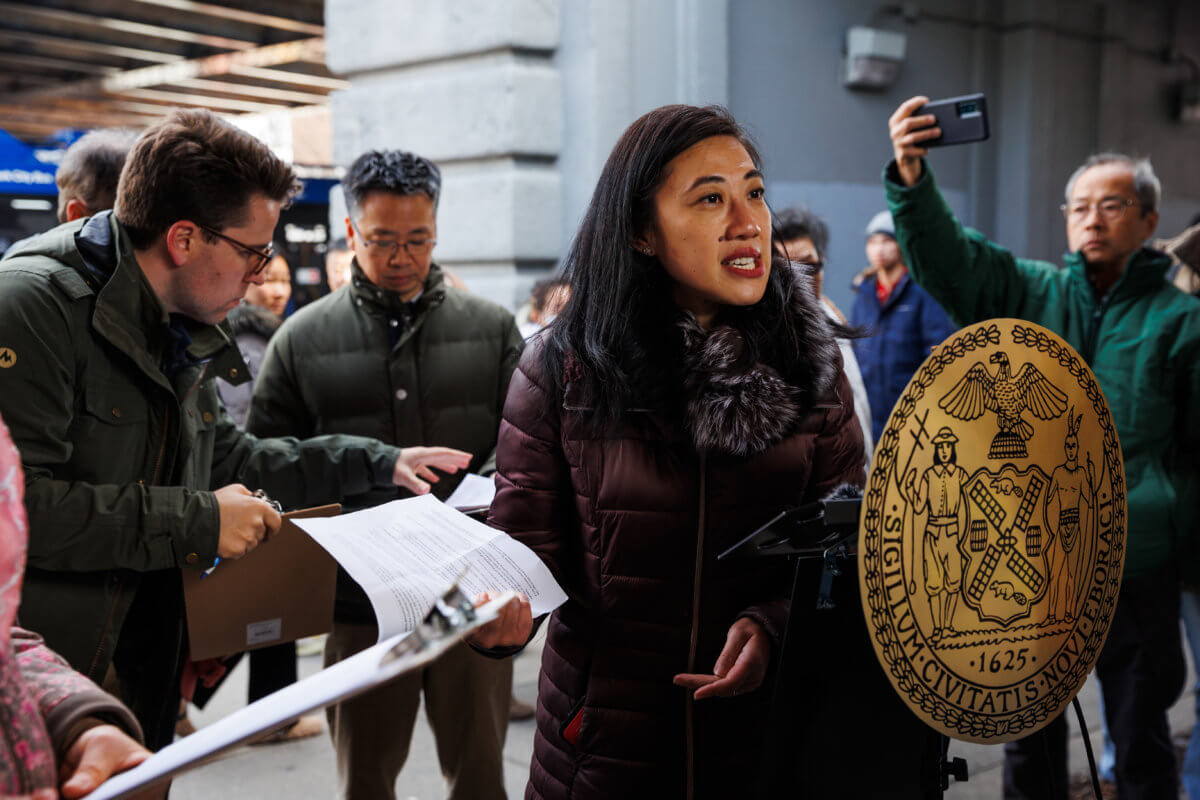
Councilwoman Sandra Ung on Wednesday, March 8, announced a petition calling on the city to enforce existing street vending regulations, including the no-vending zone that went into effect in 2018, to address the proliferation of unlicensed street vendors in downtown Flushing. 

The councilwoman was joined by Dian Yu, executive director of the Flushing Business Improvement District (BID), and concerned community members for a press conference near the Flushing LIRR Station on Main Street and Kissena Boulevard, where some vendors sell vegetables, fruits and clothing. 

“I am encouraging everyone who is frustrated like us to sign this petition and show the city that people who live, work and visit here, support enforcement of the no vending zone and want our sidewalks to return back to the pedestrians they’re intended for,” Ung said.

The current density of street vendors has created a risk to public safety. The petition drive comes ahead of an interagency meeting Ung will host next week to discuss the issue.

“It’s one of the busiest commercial corridors in the five boroughs and home to the third busiest intersection in the city,” Ung said. “And let me be clear, our goal is not to prevent people from making a living or providing for their families; however, in the absence of enforcement, the current situation in downtown Flushing has become untenable.”

Tuesday, March 7, 2023

Innovation QNS is getting a luxury public housing tower neighbor

Queens Post

The two developers behind a 354-unit residential building in Astoria have secured a loan to finish constructing the project.

The developers, Silverstein Properties and Cantor Fitzgerald, announced Wednesday, March 1, that the joint venture arranged a loan of $165 million from Banco Inbursa — a financial firm based in Mexico — to complete the project at 44-01 Northern Blvd.

The project, which broke ground last year, will bring a mix of one and two-bedroom units — 25 percent of which will be deemed as “affordable.”

The development will also include 25,000 square feet of retail space facing Northern Boulevard and 200 parking lots.

The building is scheduled to open in the spring of 2024, the developers said.

Chris Milner, the head of real estate investment management at Cantor Fitzgerald, said securing the loan was important, given the current economic climate.

“In an environment of cautious construction lending and inflation hikes increasing the cost of debt, making it more expensive to borrow money, we appreciate Banco Inbursa’s recognition of the strength of the Cantor Fitzgerald and Silverstein partnership and the quality of this asset,” Milner said. “We are thrilled to have completed this transaction and to move forward with the construction of 44-01 Northern Boulevard.”

Monday, March 6, 2023

Poverty pimping sister act

 https://nypost.com/wp-content/uploads/sites/2/2023/03/Valerie-C-Smith-square-web-1.jpg?resize=1024,1024&quality=75&strip=all 

NY Post

Providing shelter is a family affair at the city Department of Homeless Services.

The firm of Homeless Service Administrator Joslyn Carter’s sister has been awarded 17 contracts with the agency valued at a staggering $1.7 billion, according to data compiled by city Comptroller Brad Lander’s office.

Carter’s sister, Valerie Smith, is vice president of New York City Housing programs for Yonkers-based Westhab Inc., which runs homeless shelters in the city.

She has been a top administrator there since 2017.

Seventeen of the social services contracts were awarded by DHS, many in recent years with Smith working at the agency as the city grapples with a record homeless population fueled by a massive influx of migrants from the southern border.

Three others were awarded by the Department of Youth and Community Development and two by the Department of Education, totaling $4.7 million.

Councilman Robert Holden (D-Queens) demanded an investigation by the Department of Investigation and Conflicts of Interest Board after hearing of the unusual sibling relationship involving the city homeless services honcho and a top contractor awarded business with the agency.

Holden griped numerous times about problems at a shelter for 180 single men run by Westhab on Cooper Avenue in Glendale in his district — including complaints of drug use, violence, masturbating in public and menacing neighbors — some of which were exposed in a CBS report last September.

He suspected something was amiss when he said he failed to get an adequate response from Westhab or the city homeless officials.

“The whole thing stinks to high heaven. Why is Westhab getting all this money?,” Holden said Sunday. “It looks like they have someone on the inside. They’re protected.”

“They’re not doing a good job at the shelter on Cooper Avenue. It’s a mess over there.”

In a Feb. 8 letter to DOI and COIB, Holden said, “I recently learned from a credible source that the Department of Homeless Services Administrator Joslyn Carter is the sister of Westhab’s Vice President of New York City Shelter Programs, Valerie Smith. I am concerned that immediate family members can work on the same contract despite a potential conflict of interest.”

He told the investigative and ethics agencies that there have been 1,500 calls to 911 for the shelter and 156 resident arrests.

“As you know, corruption and criminal acts often occur in the social service industry.

Saturday, March 4, 2023

The LIRR's Ides Of March

NY Post

The MTA was warned a decade ago that the Long Island Rail Road’s Jamaica hub would be overwhelmed and face frequent commute meltdowns — like the ones commuters have been forced to endure all week, The Post has learned.

The dire prediction came in an analysis of the Jamaica, Queens station’s capacity, completed in 2012, that simulated service changes nearly identical to the one launched by the MTA this week to its new $11 billion terminal on the East Side of Manhattan and found it would overwhelm operations at the station.

“Evaluation of the new operation on the existing conditions indicates an inability of the current infrastructure to accommodate the higher volume of service during the morning peak period and evening westbound direction due to cascading delays,” the analysis determined.

The simulation showed trains arriving into Jamaica on-time 93% of the time under the then-current runs, even when encountering routine service disruptions, like a medical emergency on a platform or a mechanical problem with a train.

But the on-time percentage with the new service plummeted to just 72%, a 21% point drop, the analysis prepared by San Diego-based TranSystems Corporation determined.

The prophetic study found that the operational collapse occurred even if the MTA simplified the Jamaica operation by axing one-seat service from Long Island to Brooklyn and instead ran a shuttle to Atlantic Terminal — and even if officials axed timed transfers to boost station capacity by reducing the amount of time trains spend parked at the platforms.

A key fix, the analysis determined, was to replace the low-speed switches that run through Jamaica Station — which limit trains to just 15 mph — with more modern systems that allow trains to run at 30 mph or faster.

MTA officials approved spending $85 million to do just that in 2020 — some eight years after the engineering report was completed. That project is not expected to be completed until December 2027.

It does not appear that the MTA ever made the analysis public, but it was heavily excerpted in an academic article that the firm subsequently prepared, which was published in 2014.


Civics unite against Kathy Hochul's YIMBY housing doctrine

https://bloximages.chicago2.vip.townnews.com/qchron.com/content/tncms/assets/v3/editorial/e/83/e83e99ca-922a-56cc-9fb9-77b947d00659/6400bcdd55a84.image.jpg

Queens Chronicle

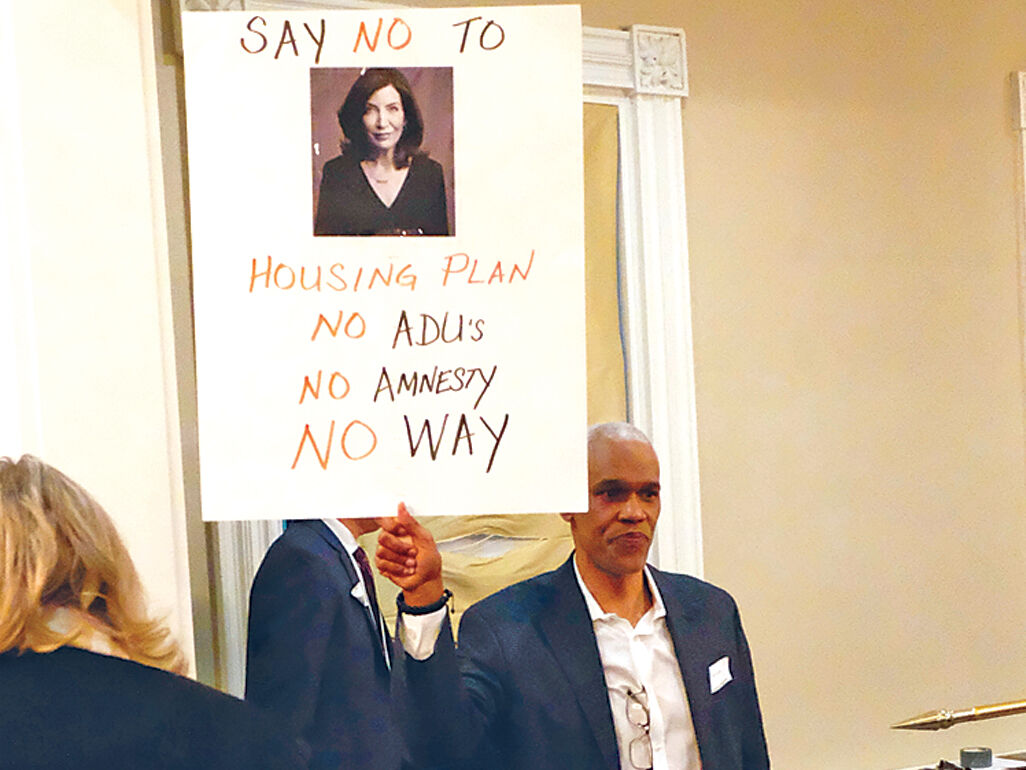
A pitched battle against Gov. Hochul’s sweeping new housing plan for New York is starting to pick up momentum in Eastern Queens.

More than 150 homeowners from widely disparate neighborhoods packed a meeting room in Douglaston last Friday for a forum that featured civic leaders vowing to stop her controversial proposal for building 800,000 new units in the state to fix the region’s chronic housing shortage.

Civic leaders from Cambria Heights, South Jamaica and Addisleigh Park spoke alongside community activists from Whitestone, Bayside and Broadway-Flushing against the plan that would allow Albany to upscale local zoning laws without local consent.

The meeting was an unusual display of unity between racially different neighborhoods in Northeast and Southeast Queens — and a warning to the governor that single-family homeowners in the city were ready to join forces with communities on Long Island and Westchester to oppose the sweeping plan.

“We moved to our communities because we wanted a certain quality of life for our families,” Bill Perkins of the Rosedale Civic Association told the forum.

“It’s not a race thing,” he said. “It’s not a where-you-live thing.”

Under the new proposal introduced last month in Albany, the state would, among other things, require every town and county in the state to build 3 percent more housing stock every three years or face fines and to rezone a half-mile radius around every MTA train and subway station in the region for greater density.

Those mandates would also include legalizing basement apartments and small, backyard houses (called accessory dwelling units or ADUs) where they are currently prohibited.

The goal of the plan is to create more affordable housing by requiring areas traditionally reserved for low-density, one-family homes to drop longtime restrictions against the construction of apartment houses and other multifamily dwellings.

“When I drive around Jamaica and think about it, I wonder, where are these apartment buildings going to go?” said the Rev. Carlene Thorbs, chair of Community Board 12 (who emphasized she was speaking on her own behalf and not for the board).

“We have a front yard, we have a backyard, we have a driveway,” she said. “This is how we want our communities to stay.”

The governor’s Housing Compact has been met with hostility from the nearby suburbs of New York City, as well. Civic leaders from Nassau and Yonkers attended the event to pick up support for resisting the plan one called “worse than what you think.”

“The conversation we always hear is that ... ‘Oh, it’s affordable housing,” said Thorbs. “No, it is not,” she said. “Not when a studio is $1,700.”

Baked Astoria

 https://bloximages.chicago2.vip.townnews.com/qchron.com/content/tncms/assets/v3/editorial/d/d4/dd41b84e-419d-5bc8-a327-893c9d780f67/6400bcd920098.image.jpg\

Queens Chronicle

The Astoria Pool is undergoing a major reconstruction project that will keep it closed all this upcoming season, while the Parks Department’s goal is to have the work done in time to reopen it for summer 2024.

The $19 milllion project will see the entire pool shell replaced, along with the gutter and deck; the installation of new systems for filtration and recirculation, backwash and chemical treatment; upgrades to the electrical and heating, ventilation and air-conditioning system; and work to address leaks in the filter room and tunnel.

“We never close amenities unless absolutely necessary,” a statement from the Parks Department said, “and unfortunately, Astoria Pool will be closed this summer for needed repairs to the pool tub and mechanical systems — at nearly 100 years old, many of the pool’s features have reached the end of their service life.

“Fortunately, the recently renovated spray showers adjacent to the pool will remain open during construction, so there will still be a great option for families to cool off on those hot summer days.

“We know this historic pool is a beloved neighborhood amenity, and these repairs will help to ensure that this 87 year old icon continues to serve future generations of New Yorkers.”

The Old Astoria Neighborhood Association supports the pool’s reconstruction, which will be topic No. 1 at its next online meeting, set for 6:30 p.m. March 8.

“The upcoming restoration of the Astoria Park Pool is an inconvenient, but necessary project,” OANA President Richard Khuzami said in an email. “Nothing is more essential than a renewed pool tub and mechanical systems to insure the long life of this essential community asset.

“We do call upon the Parks Department to make all efforts to limit the closure to one season. Two seasons would place an unacceptable burden on our community.”

The civic also wants the city to study either providing transportation for area residents to alternative sites, such as other city pools, or reimbursing them for fare payments to get there.

City Councilwoman Tiffany Cabán (D-Astoria) also had a request for the administration while the work goes on.

“The Astoria Pool is a vital community resource that contributes immeasurably to our neighborhood’s health and safety,” Cabán said in an email sent by her office. “Of course, we are delighted that the pool is being upgraded. Unfortunately, District 22 ranks second-to-last in percentage of residents who live within walking distance of a park (just 59.2%), so we’re requesting that the City work with us to expand programming, convert space, etc. while the pool is under construction.


Thursday, March 2, 2023

Ridgewood landlords capitalize on obscure city law to raise rents

https://thecity.brightspotcdn.com/dims4/default/38c2ef3/2147483647/strip/true/crop/1688x1125+0+197/resize/810x540!/format/webp/quality/90/?url=https%3A%2F%2Fcdn.vox-cdn.com%2Fthumbor%2FaHPMbFC4aQRN2xpbV_Hg2giR48w%3D%2F0x0%3A1688x1520%2F1688x1520%2Ffilters%3Afocal%28844x760%3A845x761%29%2Fcdn.vox-cdn.com%2Fuploads%2Fchorus_asset%2Ffile%2F24469405%2FScreen_Shot_2023_02_28_at_10.51.22_PM.png

THE CITY 

The number of rent-stabilized apartments registered in Ridgewood, Queens, has plummeted — and a loophole in New York’s rent regulations may help explain why.

An analysis by THE CITY shows that the number of rent-stabilized units registered in the increasingly trendy neighborhood plunged from 6,228 in 2019 to just 2,149 in 2021 — a decline of more than 65%, compared to a roughly 10% decline citywide.

The sharp drop happened even though a June 2019 law prohibited moving apartments out of the state’s rent regulation system, with few exceptions.

One of those exceptions is called “substantial rehabilitation,” and tenant advocates say they see signs that landlords are angling to use it to remove entire buildings in Ridgewood from regulation and sharply hike up rents — by claiming the buildings were dilapidated and then undertaking extensive reconstruction.

“Just by walking around Ridgewood, you’ll go from block to block, and on every block, there’s a…building that has a new façade and it’s totally renovated,” said Raquel Namuche, a volunteer tenant organizer with the Ridgewood Tenants Union.

A three-story, six-unit walk-up building at 1819 Grove St. is one area property that appears to have undergone a rehab inside and out, with a group of new tenants who moved in earlier this year. As recently as 2019, its owner reported six regulated apartments in the building. Now it reports none — and a refurbished apartment in the 93-year-old-building is now being offered on Streeteasy for $3,300 a month.

In Ridgewood, just north of Bushwick, the median sale price for residential real estate — which includes condos, co-ops and one- to three-family buildings —  has almost tripled in the last decade, going from $390,000 in 2012 to $1.09 million in 2022, according to Jonathan Miller, president and CEO of real estate appraisal and consulting firm Miller Samuel Inc. 

That’s benefitted property sellers and landlords, Miller said, as rents in Queens have hit an all-time high thanks in part to what he called “the global phenomenon of Brooklyn spillover into Queens.”

Restaurant shanties will only be a spring/summer thing

https://pbs.twimg.com/media/FGAfi-KWQAMAL0D?format=jpg&name=small

Crains New York

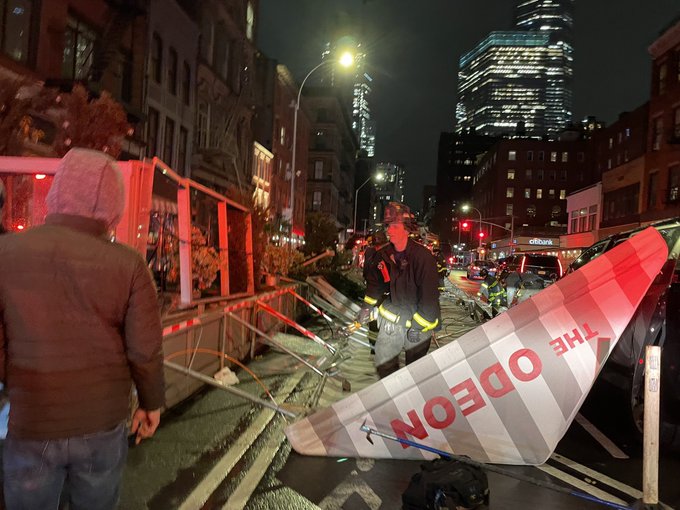
With spring rapidly approaching, talks are ongoing between the City Council, Mayor Eric Adams’ administration and the restaurant industry. It seems increasingly likely that the bill will create a seasonal program that would require owners to dismantle their curbside setups each fall, two council sources said Monday.

It could look much like the April-to-November program outlined last year in an initial council bill. The measure has stalled for months amid uncertainty over how new dining structures would be designed and which agency would supervise them.

It’s unclear how well a seasonal version will sit with restaurant owners, many of whom spent tens of thousands of dollars to build dining sheds and might not have the money or storage space to take them down each fall.

“Where are we supposed to store these things?” wondered Patrick Fromuth, an employee at Branded Saloon in Prospect Heights, Brooklyn. Fromuth helped construct the bar’s elaborate, colorful streetside dining structure, which Grub Street called a work of art.

“How are we supposed to fight back in the warmer months to get the cars out of the way, to redo it?” he said.

As Streetsblog reported Monday, the latest proposal could keep outdoor dining under the auspices of the Department of Transportation, which has led the program throughout the Covid-19 pandemic, rather than shift it to the smaller Department of Consumer and Worker Protection, as last year’s bill had called for.

Outdoor dining has remade the city’s streetscape and has served as a lifeline for thousands of restaurants during the pandemic, allowing them to expand seating onto the sidewalk and into the street during a time when many New Yorkers were reluctant to eat indoors.

But it also saddled some streets with unsightly plywood sheds that sat largely empty during the colder months, and it prompted lawsuits from residents who claimed the sheds fostered noise and sanitation issues.

The existing bill, introduced by Marjorie Velázquez of the Bronx, would allow so-called roadway cafés—tables and chairs in the curb lanes or parking lanes of city streets—to be up and running from April 1 through Oct. 31.

Sidewalk cafés, by contrast, could stay open year-round under Velázquez’s bill and would be similar to those that existed before the pandemic. Restaurateurs would need to get separate two-year licenses for each type of setup, paying $255 for a curbside café and between $225 and $510 for sidewalk seating.

Wednesday, March 1, 2023

Civic activist demands return to CB5 for being right about the COVID-19 lab leak

https://nypost.com/wp-content/uploads/sites/2/2023/02/NYPICHPDPICT000007359966.jpg?resize=1024,683&quality=75&strip=all

NY Post

A member of a New York City community board ousted for referring to COVID-19 as the “Wu-Flu” in a January meeting is demanding he be reinstated — saying he’s been “vindicated” by a classified US intelligence report that said the deadly virus most likely leaked from a lab in Wuhan, China.

Queens Borough President Donovan Richards removed longtime Glendale community activist and CB5 member Richard Huber after fielding complaints that the “Wu-Flu” comment was anti-Asian and racist and violated the code of conduct for board members.

“I was cancelled,” Huber told The Post Monday.

“But I have been vindicated. Just look at the front page of the NY Post.”

The Post’s front page story highlighted the US Energy Department claim, as the FBI had previously, that the COVID-19 pandemic that has killed more than 1 million Americans and 6.8 million people worldwide likely originated in a Wuhan lab.

He said friends texted him The Post cover with smiley faces.

Huber said his use of the shorthand for Wuhan was not anti-Asian — nor was it intended to be.

Oh, God!


 https://pbs.twimg.com/media/FqGwCXNWIAAOPaq?format=png&name=small

NY Daily News

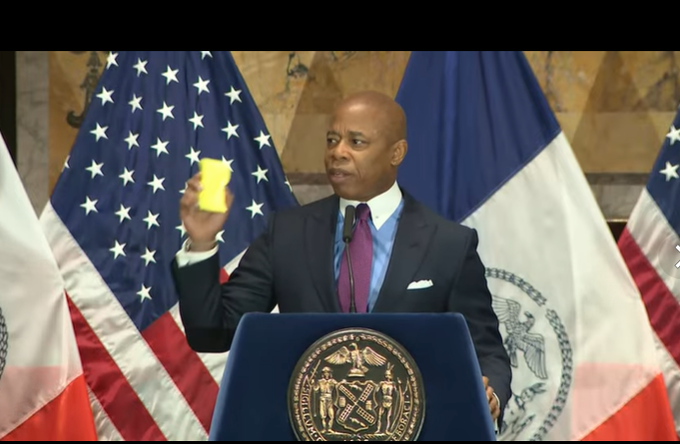
Mayor Adams on Tuesday dismissed the notion that there should be a separation between church and state in American society, drawing ire from fellow Democrats and civil rights advocates who contended his line of argument runs counter to deep-rooted U.S. values.

Adams, who’s Christian, has over the course of his political career spoken extensively about how important faith is in civic life and said as recently as last February that “God” told him to become mayor.

But his comments Tuesday morning, delivered at an interfaith breakfast at the New York Public Library’s central branch in Manhattan, took it a step further.

The tone was set by Ingrid Lewis-Martin, Adams’ chief adviser in City Hall, who introduced him at the event by declaring that the mayor’s administration “does not believe” it must “separate church from state.”

“Ingrid was so right,” Adams said once he took the stage. “Don’t tell me about no separation of church and state. State is the body, church is the heart. You take the heart out of the body, the body dies. I can’t separate my beliefs because I’m an elected official.”

He added: “When I walk, I walk with God, when I talk, I talk with God. When I put policies in place, I put them in with a God-like approach to them — that’s who I am.”

Adams’ comments appeared at odds with the establishment clause of the U.S. Constitution’s First Amendment.

The clause holds that the U.S. shall make no laws “respecting an establishment of religion,” a principle derived from the teachings of former President Thomas Jefferson, who wrote that there must be “a wall of separation between church and state” in society.

Later Tuesday, Adams spokesman Fabien Levy said the mayor isn’t pushing for upending any U.S. laws or principles. Levy also noted that Adams delivered the remarks in front of “hundreds of representatives from a multitude of religions.”

“While everyone in the room immediately understood what the mayor meant, it’s unfortunate that some have immediately attempted to hijack the narrative in an effort to misrepresent the mayor’s comments,” Levy said.


Tuesday, February 28, 2023

Bike zealot re-imagines "Fast Car"


Streetsblob 

 I headed over to Wegman's today on my $7,000 cargo bike to see if there were any Presidents Day sales on soy based meat. While browsing the aisles, Tracy Chapman's "Fast Car" started playing on the supermarket sound system. I got so upset I almost put down the case of LaCroix I had in my arms and left. This song needs to stop being played in public. Why? Well, the car culture is waaay too strong in this one.

Let's set aside the fact that the song is literally encouraging reckless driving. I mean, it's called FAST CAR. And let's also set aside that the song is about heartbreak and keeping hope alive in the face of despair.

Let's get down to the real nitty gritty.

First stanza

"I want a ticket to anywhere."

If she lived in a 15 minute city, she wouldn't be clinging to a cager driving a death machine to get out.

Second stanza

"Won't have to drive too far, Just 'cross the border and into the city."

Hey lady, if it's not that far, you should be taking public transportation and saving the environment.

Fifth stanza

"So I remember when we were driving, driving in your car, Speed so fast it felt like I was drunk, City lights lay out before us"

That's how fast your loser boyfriend was driving around and you didn't bail? City lights mean there was probably a bus you could have taken home at least.

Sixth stanza

"You got a fast car, We go cruising, entertain ourselves"

OH. MY. GOD. Driving for entertainment? Burning fossil fuels to get your jollies?

"We'll move out of the shelter, Buy a bigger house and live in the suburbs"

Now this is where it really goes off the rails. We amateur urbanists all know that poor people don't drive or own cars. And the writer has dreams of living in the suburbs, the worst possible place for anyone to live! You belong in an inner city housing project, honey.

I know Ms. Chapman is a respected folk singer and that it's black history month and we need to listen to black voices and all, but she gets my white transportation activist ire up. Tomorrow I am going to call the Master of Urban Planning Department at Hunter College and see if any of the students there would like to focus their thesis on how car culture in songs detroys cities.

YIMBY density housing siting in South Ozone Park

 https://pbs.twimg.com/media/FqDrLjgXwAAeeYr?format=jpg&name=large 

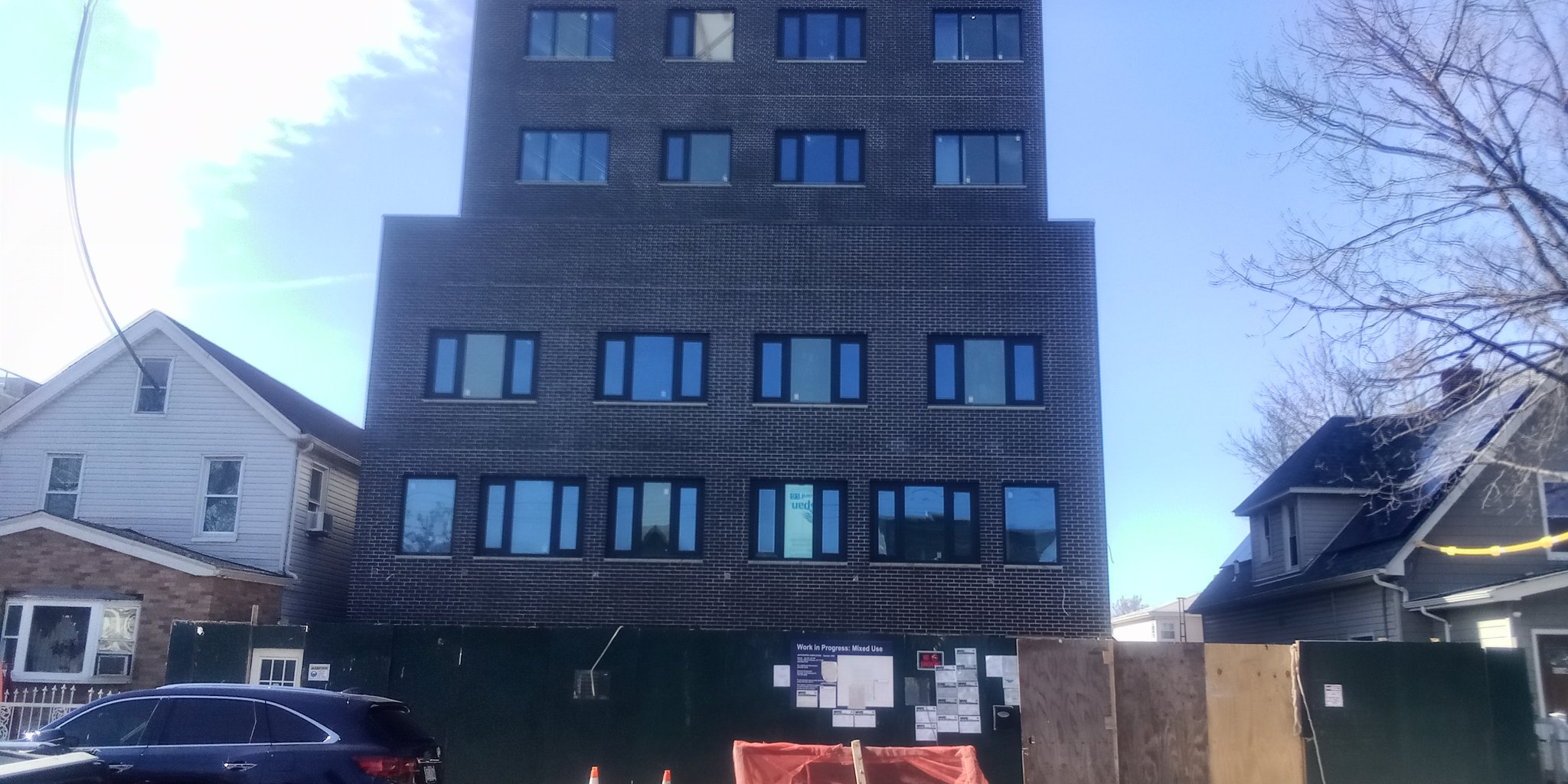
 Back in the day a McMansion would be built here but we have a housing crisis so we're going to be seeing a lot more of this. Not sure if this will be affordable though.

 https://pbs.twimg.com/media/FqDrMOaWIAEI6mk?format=jpg&name=large

 This is also a mixed use building so it's anybody's guess what will occupy it the commercial spaces. Hopefully a day care center but maybe also a ebike battery charging bike shop or weed store.

https://pbs.twimg.com/media/FqDrM0tWAAAnvdb?format=jpg&name=large 

 https://pbs.twimg.com/media/FqDrNbGWAAIhZ9R?format=jpg&name=large

It just might not be finished by the summer...

 https://pbs.twimg.com/media/FqDtXxMWIAEHIHr?format=png&name=small

Sunday, February 26, 2023

Forget it Jakie, it's the Department of Transportation Alternatives


 https://nypost.com/wp-content/uploads/sites/2/2023/02/jackie-robinson-parkway-botched-0001.jpg?resize=853,1024&quality=75&strip=all

NY Post

The city Department of Transportation struck out on this one.

Big Apple DOT officials botched a Queens road sign for the Jackie Robinson Parkway, misspelling the color-barrier-busting baseball Hall of Famer’s name.

The sign at Myrtle Avenue and Forest Park Drive features a likeness of the Brooklyn Dodgers’ great — atop the words “Jakie Robinson Parkway.”

“It’s embarrassing,” Glendale native Kira Incantalupo told The Post on Sunday. “Poor Jackie Robinson.

“That shouldn’t have happened,” said Incantalupo, 37. “I mean, nobody wants to have that. It’s a memorial for somebody. It should be corrected.”

Local resident Quana Martin, 32, found the typo disrespectful.

“I just feel it’s a little odd because how do you not know how to spell his name? He’s a well-known figure.”

Queens teen JP Ward had a harsher take.

“It’s f–king stupid,” the 17-year-old said. “I wouldn’t say it’s disrespectful, but it’s definitely stupid.”

Robinson became the first black ball player in Major League Baseball when he was called up by the Dodgers in 1947, breaking the sport’s decades-old color barrier.

He was inducted into the Baseball Hall of Fame in 1962, a decade before his death.

“This spelling mistake is absurd,” City Councilman Robert Holden added of the road-sign typo on Sunday. “You don’t have a few eyes looking at these signs? DOT is a mess.

Question: When did anyone call number 42 "JR"?

Mayor Adams showers city hospital systems with money and sole responsibility to handle the migrant crisis

https://pbs.twimg.com/media/Fp5UxV4XwAU4R4d?format=png&name=small

THE CITY 

Mayor Eric Adams has handed to the city’s public hospital system control of emergency relief operations for asylum seekers, an internal city memo reveals — bypassing standard oversight procedures for government contracts while spending nearly $100 million on hotel rooms.

An Oct. 13, 2022, memorandum of understanding between City Hall and the New York City Health + Hospitals Corporation — posted to the nyc.gov website in response to THE CITY’s inquiries — details procedures for what Adams calls Humanitarian Emergency Response and Relief Centers, or HERRCs.

“H+H shall be responsible for the management and operation of the HERRCs,” the memo states. For its part, City Hall committed to reimburse H+H for the costs of building and operating the centers, which also include the now-dismantled barracks-style shelter at Randall’s Island and a space at the Brooklyn Cruise Terminal in Red Hook.

It is signed on behalf of H+H by Dr. Ted Long, a senior vice president who heads the city’s COVID testing and treatment operation. Signing on behalf of the mayor was Deputy Mayor for Health and Human Services Anne Williams-Isom.

Health + Hospitals board meeting materials show that H+H President and CEO Mitchell Katz last fall authorized more than $92 million in spending on Manhattan hotels through spring 2023: $40 million for ROW nyc, $20 million for the Watson, $28 million for the Stewart and $5.8 million for the Wolcott.

H+H is also paying to use a Holiday Inn in Lower Manhattan, as revealed in the ongoing bankruptcy case of the hotel’s operator. That HERRC opened earlier this month.

Huron Consulting Services, LLC — a firm that was also involved in H+H’s COVID testing operations — is getting up to $18.5 million to help open the migrant housing sites. Rapid Reliable Testing, LLC, got approved for an $11.5 million contract for medical triage.

Saturday, February 25, 2023

Drug lord who ordered hit on Officer Byrne got decarcerated

 https://qns.com/wp-content/uploads/2023/02/C5kZMH1UwAQSEPp.jpg

QNS

When members of the NYPD and FDNY gather outside the 103rd Precinct in Jamaica in the early morning Saturday, Feb. 26, to mark the 35th anniversary of the assassination of Police Officer Eddie Byrne, the solemnity of the observance could be mixed with outrage.

On this weekend in 1988, the 22-year-old rookie was sitting in a squad car outside the South Jamaica home of a resident who complained about drug activity in the neighborhood when a gunman approached the vehicle and shot Byrne five times in the head.

On Feb. 17, Lorenzo “Fat Cat” Nichols, the drug kingpin who allegedly ordered the hit, but was never charged in the murder, won early release from federal prison three years early, where he was serving a 40-year sentence for ordering the 1992 murder of 34-year-old parole officer Brian Rooney.

Members of Nichol’s notorious drug gang drove up on Rooney as he sat in a car near Baisley Park and fired multiple shots, killing him and two other victims after Nichols had orchestrated their hits from prison while serving time on a separate conviction.

U.S. District District Judge Edward Korman granted Nichol’s motion to reduce his sentence, ruling that the federal Bureau of Prisons failed to credit the drug kingpin for the four years he served in federal custody before pleading guilty to ordering the revenge killings of Rooney, Issac Bolden and Myrtle Horsham, Nichol’s ex-girlfriend.

In his motion for compassionate release, Nichols argued he suffered from various health ailments, including his prostate, stress, and anxiety caused by the COVID-19 pandemic, rolling lockdowns, and harsh conditions during his 37 years of confinement. He also mentioned he suffered the loss of family members due to COVID-19 complications, including a niece and his newborn grandson, in June 2022.

Judge Korman, who sentenced Nichols to 40 years in prison in 1992, said he could reduce his prison term under the federal First Step Act signed into law by former President Donald Trump in 2018.

“In calculating his projected release date, the Bureau of Prisons (BOP) did not give him any credit for the four years spent in federal custody before his federal sentencing, between 1988 and 1992,” Judge Korman wrote in his ruling. “So in this case, if I were sentencing today, I could have overcome the manner in which BOP calculates his release date by sentencing him to 36 years instead of 40 years.”

Judge Korman noted that his ruling would not result in Nichol’s release from imprisonment because he was convicted in Florida of a separate offense in 2007 and was sentenced to 10 years to run “consecutive to his federal and New York state charges.”

“Fat Cat” Nichols remains in federal custody at the Metropolitan Detention Center in Brooklyn. He is awaiting his transfer to Martin County, Florida, where he was convicted for running a car theft and title fraud ring, according to the federal Bureau of Prisons.


Thursday, February 23, 2023

City council progressive caucus member tells constituents to never walk alone

 https://queenspost.com/wp-content/uploads/2023/02/Photo-Google-Maps-13.jpg

Queens Post

City Councilwoman Julie Won is calling for residents to walk in groups and to try to avoid walking alone at night following a spate of gunpoint robberies in her western Queens district over the last 10 days.

Won took to social media late Tuesday to ask residents to be more vigilant following two muggings occurring at gunpoint Tuesday morning, Feb. 21, with one incident occurring in Sunnyside and the other in Woodside.

The first incident took place on 44th Street at 11:15 a.m., where a 33-year-old man was set upon, while the second occurred around 15 minutes later on 49th Street in Woodside with the victim being a 59-year-old man, according to police. It is understood that the same two suspects carried out both robberies.

The muggings come after three similar incidents in the neighborhood last week.

“Our community’s safety is our top priority,” wrote Won, who represents the 26th Council district that covers Sunnyside, Woodside, Long Island City and a portion of Astoria.

“Please be vigilant — walk in groups when possible and avoid walking alone late at night unless absolutely necessary.”

The lawmaker said that in light of the crimes, the 108th Precinct has increased its patrol of the area with extra marked and unmarked vehicles, as well as boots on the ground.

Won is also calling for residents to report all emergencies to 911 and wrote that the 108th Precinct holds its monthly community meeting every fourth Tuesday at Sunnyside Community Services, located at 43-31 39th St.

Mario Cuomo's daughter's homeless shelter closes down

A large complex of buildings on Randall's Island in New York City.

Gothamist

A notorious homeless shelter on Wards Island with ties to former Gov. Andrew Cuomo's sister has quietly closed following years of complaints about conditions.

The 200-bed HELP-USA facility for men with mental illness — formerly run by Cuomo's sister, Maria Cuomo Cole — was shut down in December despite a record number of people staying in city homeless shelters. There were more than 70,000 people in the shelter system Wednesday night, according to official data.

A spokesperson for HELP-USA — which the former governor founded more than 30 years ago — confirmed the closure. Cuomo Cole serves on HELP’s board of directors and describes herself as chair emeritus. The nonprofit operates three other shelters on Wards Island.

“Unfortunately, due to concerns with the building infrastructure, we were forced to close the site at the end of 2022,” HELP spokesperson Stephen Mott said.

The organization’s five-year, $65 million contract with the city to operate the shelter was due to expire in June, according to city comptroller records.

Crumbling conditions at the 13-story Meyer building earned the shelter the distinction of being one of the worst in New York City.

Shelter inspection reports issued by the Coalition for the Homeless revealed frequent heat outages, The City reported in 2019.

In 2021, a resident was stuck in a broken elevator at the building for four nights.

The barracks-style shelter on an isolated island served by a single bus line was especially tough for people with mental illness, Legal Aid attorney Joshua Goldfein said.

“This place was barely fit for human habitation, in addition to being inaccessible and terribly located,” he said.

Goldfein described a litany of problems, including drafty windows that HELP-USA attempted to address by covering them with plexiglass. But the quick fix cut off ventilation in the shared dormitories, a problem reported by Curbed in 2021. Elevators in the “fortress-like” building were only accessible by stairs, limiting access for people in wheelchairs or with other mobility issues, Goldfein added.

Mott, HELP-USA’s chief strategy officer, said all of the sleeping areas and common spaces in the shelter had air conditioning units that operated well.

He said residents were moved to permanent housing and other shelters throughout the city. The Department of Homeless Services said the closure was planned, but did not provide specifics about where residents were placed. An spokesperson for the agency said it has no plans to reopen the facility as a shelter.

Andre D-Nyse, a former resident of the facility, told Gothamist that staff and fellow residents frequently brought weapons. Shelter staff, he said, also used pepper spray on people.

“People have weapons and be hurting people in their sleep,” D-Nyse said in a text message. “I can’t live like this no more… I’m moving to the street as soon as it gets warmer out.”


Tuesday, February 21, 2023

Governor Kathy Clown's security's stupid corruption

https://nypost.com/wp-content/uploads/sites/2/2023/02/NYPICHPDPICT000006995677.jpg?resize=2048,1489&quality=75&strip=all

NY Post 

State Police investigators are probing whether troopers in Gov. Kathy Hochul’s security detail have been cheating taxpayers by claiming they’re on the clock when they’re actually blowing off their shifts, The Post has learned.

The probe is focused on members of the governor’s detail stationed in New York City — and those troopers under scrutiny have already been removed from their post and could face disciplinary action if the allegations are confirmed, officials and law-enforcement sources told The Post on Monday.

The governor’s detail includes a rotating group of more than 40 troopers and supervisors, sources said.

The New York State Troopers’ Internal Affairs Bureau is probing claims that at least some of them had their records falsified so that they could still get paid even when they weren’t working, sources said.

Some of the troopers are specifically accused of having colleagues sign them in on timesheets and then simply not showing up for their shifts, sources said.

IAB investigators grilled several troopers in Hochul’s detail last week about the allegations, with more officers expected to be questioned later this week, according to sources.

The probers also are reviewing everyone’s timesheet, sources said.

In a statement Monday, state police spokesman William Duffy confirmed that the agency “has launched an administrative investigation into time and attendance issues involving members of the Protective Services Unit.

“Integrity is one of our core values and we thoroughly investigate any claims of wrongdoing,” Duffy said. “If our investigation determines that our policies were violated, the state police will take appropriate disciplinary action.”

Hochul, who was elected last year after taking office in 2021 to replace disgraced former Gov. Andrew Cuomo, is assigned three different security details to protect her: in Albany, New York City and when she is at her home in Buffalo. 

The sources said each of the Albany and New York City details consists of four troopers and one supervisor when they’re on duty, with the details drawn from the larger group.

Monday, February 20, 2023

Albany DA repressed from bringing data proving the bail reform laws have failed

  https://nypost.com/wp-content/uploads/sites/2/2023/02/NYPICHPDPICT000006771296.jpg?w=1024

NY Post

Thank you for having me here to testify about public safety in New York state. 

I’m going to open by saying something you’ve all heard before; the reforms passed in 2017 and 2019, although they were well intentioned and brought about important changes, have been extremely detrimental to public safety. 

What you may not have heard before is a hard truth: that these reforms have had their most devastating impact on black and brown communities. If you take an honest look at the data — the increases in crime, the victims of those crimes and the location of the most violent crimes — the connection is quite clear. 

I’ll set the stage by taking a look at our practices before the reforms. For statistical purposes I will highlight a large metropolitan county and a mid-sized upstate county. 

One area that commanded much attention pre-reforms was the percentage of people who were being held on bail post-arrest but pre-conviction. Let’s set the record straight: that was always low, even prior to bail reform. In Albany County, 40% of the beds at the correction facility were occupied by sentenced defendants and defendants awaiting trial on violent felonies. 

One 2019 study of the jail population in Queens County found that 95% of the defendants being held pretrial were being held on felonies, 41% on violent felonies. 

The perception that many people were being held on minor charges on low bail amounts was always absolutely false. In fact, the same Queens study showed that defendants being held solely because of their inability to post bail on misdemeanor charges had an average of more than five felony arrests, seven misdemeanor arrests, seven misdemeanor convictions and almost three failures to appear. 

At some point, repeated violations of the law and disrespect for the process has to be treated with the level of seriousness it deserves. 

When bail reform took effect just over three years ago, thousands of defendants were released from local jails. In fact, some judges actually started a “soft launch,” if you will, by releasing some defendants in November of 2019 in anticipation of the new laws, apparently to avoid the mass release of thousands of incarcerated individuals on one day — and perhaps the bad press that would garner. 

Among those individuals suddenly released were hundreds of accused drug dealers, car thieves, shoplifters, burglars, and robbers statewide. 

Members of law enforcement have often been told that the suspension of services during the overlapping coronavirus pandemic was the driving force behind the increases in crime in 2020. While that was undoubtedly a contributing factor, that is not a holistic explanation for the decline of public safety. 

We actually do have a short window of time to analyze that was post-reforms but pre-COVID. That would be the first 2 ¹/₂ months of 2020. Crime had already started rising — by a lot — by the time the coronavirus hit. 

In New York City alone, crime rose 20%, ending a 27-year stretch of yearly crime reductions. Crime was up across the board. Burglaries up 26.5%; robbery up 33.9%; grand larceny up 15.8%; car theft up 68%; petit larceny up 19%. 

What a coincidence that each of these crimes became a non-bail­able offense in 2020, meaning that all those previously held on bail on these charges were released by Jan. 1, 2020. If you deny that the release of hundreds of car thieves, burglars, drug dealers and petty thieves had an obvious impact on crime in New York, you’re denying common sense. 

You don’t need to be a weatherman to know which way the wind is blowing. 

Additionally, the new law created a new form of release: “non-monetary release.” This allows judges to release a defendant without bail but enables them to impose certain conditions, such as requiring the defendant to report to a pretrial agency, seek employment or wear an ankle bracelet. These conditions could only be imposed if the court found that the defendant was a flight risk. 

This release condition was designed to replace bail, while placing some restrictions on the defendant intended to be more impactful than release on recognizance. These were imposed, essentially, on the defendants who would have had bail set under the old law. If they had a prior conviction or pending case, it would be even more likely a judge would have set bail under the old law. 

If we use the Unified Court System’s pretrial data dashboard, and look at the defendants put into the non-monetary release program, we see the following: 

  •  Between Jan. 1, 2020 and June 30, 22, 39.6% of the defendants put into NMR got re-arrested while their case was pending. 
  • For those defendants put into NMR who had a prior conviction or pending case (79% of the total), the re-arrest rate was 44.6%. 
  • For those defendants put into NMR charged with commercial burglary, the re-arrest rate was 62%. For residential burglary, it was 47%. For grand larceny, it was 56%. For robbery third degree, it was 56%. For petit larceny, it was 67%.

However, even these numbers undercount the full scope of recidivism. They do not count re-arrests during the time between plea and sentence, which can run for weeks or months. They only count one re-arrest, so if a defendant gets re-arrested four times while out on bail, it only counts in Department of Criminal Justice Services stats as one arrest. The implicit assumption in all of this, that a career criminal is arrested every time they commit a crime, is naïve to say the least. 

In the mind of someone who is determined to break the law, the ability to repeat offenses over a short period of time with minimal repercussions serves only to incentivize such behavior. 

Speaking of incentivizing behavior with the removal of consequences, the impact of Raise the Age has been comparably detrimental to public safety. Since the implementation of Raise the Age, Albany County has seen approximately 312 Raise the Age cases, involving only 230 defendants. I only say “approximately” because these numbers can change on a day-to-day basis. 

Thirty-four percent of those defendants have been arrested more than once; 19% percent of those re-arrested were detained as minors. Of those re-arrested, 62% were re-arrested for a violent felony. 

But what do those numbers mean? Those numbers mean that transferring a case to family court often leads to the defendant being returned to the very community that led them down that path to begin with. Violent cases need to remain in the adolescent part to prevent further community harm. 

Back to the bail reform law, we should also look at the literal wording of the law, specifically, the words “least restrictive.” These two words from the Bail Elimination Act are specifically referenced by judges when making a determination on bail. That standard often leads to a demonstrably dangerous person being returned to the same environment and community in which they committed their crimes. This helps neither the community nor the offender. 

I’d like to conclude by saying, despite the wild misconceptions, generalizations and assertions of activists about the intentions of prosecutors, our aim isn’t to lock up as many people as possible, for as long as possible. 

The decade-and-a-half period between the Rockefeller Reforms and Pre Bail Reform in 2020 reflect the greatest gains in public safety in the history of New York state. Prosecutors engaging in intelligence-based investigations and prosecutions applied a tough-on-crime and smart-on-diversion approach that ushered in the age of prison closings throughout New York state. 

We understand the complicated nature of social determinants of crime and agree that those should also be prioritized. 

However, pretending that accountability and the immobilization of criminals isn’t a critical part of public safety is akin to pretending the Earth is flat. 

Just because your echo chamber repeats it, doesn’t make it true.

As a public service in my duty as being somewhat a journalist, here again is the full list of criminal offenses that legislators minimized for the bail reform law that has led to the near 30% rise in crime in New York City:

 2nd degree Burglary of a residence
2nd degree Burglary as a Hate Crime
3rd degree Burglary of a commercial building
3rd degree Burglary as a Hate Crime
2nd degree Robbery aided by another person
2nd degree Robbery as a Hate Crime
3rd degree Robbery
Criminal sale of a controlled substance (multiple counts)
Using a child to commit a controlled substance crime
Criminal possession of a controlled substance (multiple counts)
Criminal sale of a controlled substance in or near a school
Criminal injection of a controlled substance into another person
Criminal sale of a controlled substance to a child
Criminal sale of a prescription for a controlled substance by a pharmacist
Criminal possession or creation of Methamphetamines
3rd degree Assault
3rd degree Assault as a Hate Crime
Reckless Assault of a child by a day care provider
Reckless Assault of a child
Stalking (multiple counts)
Stalking as a Hate Crime (multiple counts)
Vehicular Assault (multiple counts)
Aggravated Vehicular Assault
Aggravated Assault on a child under 11 years-old
Aggravated Assault on a child under 11 years-old as a Hate Child
Menacing (multiple counts)
Menacing as a Hate Crime (multiple counts)
Reckless Endangerment (multiple counts)
Promoting a suicide attempt
1st degree Stalking while committing a sex offense
Criminal Obstruction of Breathing
Criminally Negligent Homicide
2nd degree Vehicular Manslaughter
Aggravated Vehicular Manslaughter
2nd degree Manslaughter
Unlawful Imprisonment (multiple counts)
Unlawful Imprisonment as a Hate Crime (multiple counts)
Aggravated Labor Trafficking
Custodial Interference (multiple counts)
Substitution of children
Coercion (multiple counts)
Coercion as a Hate Crime (multiple counts)
Criminal Trespass (multiple counts)
Criminal Trespass as a Hate Crime (multiple counts)
Possession of burglar’s tools
Unlawful possession of a police scanner
Criminal Mischief (multiple counts)
Criminal Mischief as a Hate Crime (multiple counts)
Criminal Tampering (multiple counts)
Cemetery Desecration (multiple counts)
Aggravated Cemetery Desecration (multiple counts)
Reckless Endangerment of property
Tampering with a consumer product (multiple counts)
Graffiti
Possession of Graffiti tools
3rd degree Arson
4th degree Arson
5th degree Arson
3rd degree Arson as a Hate Crime
4th degree Arson as a Hate Crime
5th degree Arson as a Hate Crime
Grand Larceny (multiple counts)
Grand Larceny at a Hate Crime (multiple counts)
Aggravated Grand Larceny of an ATM
Petit Larceny
Petit Larceny as a Hate Crime
Computer Tampering (multiple counts)
Computer Trespass
Unauthorized use of a computer
Unlawful duplication of computer materials (multiple counts)
Welfare Fraud (multiple counts)
Criminal use of a public benefits card (multiple counts)
Criminal possession of a public benefits card (multiple counts)
Unauthorized use of a vehicle (multiple counts)
Auto stripping (multiple counts)
Theft of services
Unauthorized use of a credit card
Jostling
Fraudulent Accosting
Criminal Possession of Stolen Property (multiple counts)
Forgery (multiple counts)
Criminal possession of a forged instrument (multiple counts)
Criminal possession of forgery devices
Criminal possession of a Vehicle ID Number
Forgery of a Vehicle ID Number
Falsifying business records (multiple counts)
Tampering with public records (multiple counts)
Offering a false instrument for filing (multiple counts)
Insurance Fraud (multiple counts)
Health insurance fraud (multiple counts)
Criminal diversion of prescription medications (multiple counts)
Commercial bribery (multiple counts)
Rent Gouging (multiple counts)
Residential mortgage fraud (multiple counts)
Aggravated identity theft (multiple counts)
Bribery (multiple counts)
Perjury (multiple counts)
Bail jumping (multiple counts)
Obstructing governmental administration (multiple counts)
Obstructing governmental administration with a self-defense spray device
Killing a Police Dog or Police Horse
Obstructing emergency medical services
Obstructing governmental services with a bomb
Escape (multiple counts)
Promoting prison contraband (multiple counts)
Resisting arrest
Hindering prosecution (multiple counts)
Making a false sworn statement
Bribing a witness
Receiving a bribe as a witness
Bribing a juror
Receiving a bribe as a juror
Providing a juror with a gratuity
Tampering with a juror (multiple counts)
Tampering with physical evidence
Compounding a crime
1st degree Criminal Contempt – refusing to be sworn in as a witness
2nd degree Criminal Contempt
ALL Gambling offenses
ALL Prostitution offenses
Providing indecent material in minors (multiple counts)
Riot (multiple counts)
Criminal Anarchy
Harassment (multiple counts)
Harassment as a Hate Crime (multiple counts)
Aggravated Harassment (multiple counts)
Aggravated Harassment as a Hate Crime (multiple counts)
Aggravated Harassment of an employee by an inmate
Criminal nuisance (multiple counts)
Falsely reporting a crime
Pointing a laser at an aircraft (multiple counts)
Harming a service animal (multiple counts)
Public lewdness
Illegal eavesdropping
Dissemination of unlawful surveillance (multiple counts)
Non-support of a child (multiple counts)
Endangering the welfare of a child
Assisting in female genital mutilation
Endangering the welfare of an incompetent or physically disabled person
Endangering the welfare of a vulnerable elderly person
Endangering the welfare of a disabled person (multiple counts)
Promoting an obscene sexual performance by a child
Possession of an obscene sexual performance by a child
Promoting a sexual performance by a child
Possessing a sexual performance by a child
4th degree Criminal possession of a weapon
Criminal possession of a weapon on school grounds
Criminal possession of a firearm
3rd degree Criminal possession of a weapon
Criminal purchase or disposal of a weapon
Unlawfully wearing a body vest
Unlawfully fleeing a police officer in a vehicle (multiple counts)
Enterprise corruption
Money Laundering (multiple counts)
Money Laundering in support of terrorism (multiple counts)
Corrupting the government (multiple counts)
Criminal solicitation (multiple counts)
Conspiracy (multiple counts)
Conspiracy as a Hate Crime (multiple counts)
Criminal facilitation (multiple counts)




Sunday, February 19, 2023

Queens doesn't get the money

 https://i1.wp.com/nyc.streetsblog.org/wp-content/uploads/2016/02/cmrichardsheadshot.jpg?w=220&h=297

QNS

The Queens Borough Board voted overwhelmingly to approve the package of budget priorities Monday, Feb. 13, although several community board chairs expressed concern over issues caused by the city’s migrant crisis.

Chaired by Queens Borough President Donovan Richards, the budget priorities were developed largely from input received from two days of public hearings late last month on Mayor Eric Adam’s proposed $102 billion 2024 budget.

Pursuant to the City Charter, the Borough Board must submit its budget priorities each year to the mayor, the City Council and the city’s Office of Management and Budget.

Irak Cehonski, director of budget for the Queens Borough President’s Office, presented numbers on Monday that showed significant budget shortfalls for city agencies — except for the NYPD — and how much they’ll affect city services in Queens.

Most concerning among the budget cuts included a $295.3 million shortfall for the Department of Education and a $257 million shortfall for the Department of Health and Mental Hygiene.

“Especially coming out of the pandemic, I don’t know how we cut anything to do with health,” Richards said. “We weren’t prepared during the first wave of the pandemic — I know all of us remember those days and we don’t want to see it again — so we need to make sure we’re fighting those cuts as well.”

Richards also bristled at the Summer Youth Employment Program being slashed by $21.7 million; the Department of Sanitation facing more than $53 billion in reductions; a $61.6 million shortfall at the Department of Housing Preservation and Development; and a $12.2 million shortfall for Queens Public Library.

Cehonski said the Department of Homeless Services slashing nearly $70 million is a “huge concern” for Queens and moments later Community Board 3 Chairman Frank Taylor explained why.

“It is devastating to my community of which I serve, Community Board 3 in North Corona, East Elmhurst, and Jackson Heights,” Taylor said. “Everyone knows we’re a shelter town with 12 or 13 of them and the city wants to cut money and resources.”

He also railed against the lack of affordable housing, MTA bus reductions on Northern Boulevard, and the chronic shortage of hospital beds after a dozen hospitals shuttered in the last 15 years.

“This is not fair. This is deplorable,” Taylor said. “We pay some of the highest taxes in the city per capita and we’re not getting anything over here except more shelters.”

Rev. Carlene Thorbs, chairwoman of Community Board 12, which has coped with high shelter populations around JFK Airport for decades, called the influx of migrants “heartbreaking” and said that the city needs to be more transparent.

“We’re taking in a lot of the asylum seekers and we don’t know where they are because nobody wants to tell us because it’s a security situation but we’re supposed to be ready for them in our schools,” she said. “You’ve got to trust us to assist and to help because we can’t even get a list as to where they are unless something tragic happens and then it pops up on the news. It has to be fixed and it has to be fixed now because if our mayor doesn’t fix it, it will never get done.”

 But at least we'll get some open streets.

 https://queenspost.com/wp-content/uploads/2022/10/Photo-DOT-3.jpg

Saturday, February 18, 2023

Mayor Adams neglects hiring rat czar to make up a czar for open streets and restaurant shanties instead

https://www.amny.com/wp-content/uploads/2023/02/side-by-side-mayor-and-ya-ting-liu-1200x675.jpg

AMNY

Mayor Eric Adams has tapped Ya-Ting Liu to be the city’s new chief officer of the public realm, as he signed an executive order officially creating the new cabinet position that will oversee the creation of more “extraordinary public spaces” across the five boroughs to “drive” the city’s economic rebound from COVID, according to his office.

Adams first announced he would add the new role to the top ranks of City Hall during his State of the City address late last month, based on a recommendation from the New New York Panel convened last year, which issued a December report mapping out plans for the city to reinvent its economy post-pandemic.

“Our city’s public spaces are too important to fall through the cracks of bureaucracy, and now they won’t,” Adams said, in a statement. “New Yorkers need to know there is one person at City Hall whose number one goal is to improve their quality of life by creating incredible, new public spaces and ensuring the ones we have are clean, equitable, and safe. As someone who knows how to think big and ‘Get Stuff Done’ for New Yorkers, Ya-Ting Liu is the right person to serve as the city’s first-ever chief public realm officer.”

In her new role, Liu will work to implement the mayor’s $375 million plan to improve and create several public spaces across the city, according to City Hall. Those projects include: the “Broadway Vision Plan” to reimagine Broadway in Manhattan, a “full reconstruction” of Jamaica Avenue in Queens (!!!) and making certain open streets permanent in the Bronx and Staten Island.

She’ll also oversee the implementation of a permanent outdoor dining program in conjunction with the City Council.

“In New York City, the public realm is everyone’s living room. It’s where we eat, play, and gather. Having beautiful public spaces accessible to all people is one of our greatest assets — it is what makes New York City so special,” Liu said, in a statement.

“I am thrilled and honored to be the first-ever chief public realm officer for the City of New York, and I look forward to working with our businesses, community partners, and city agencies to build vibrant, attractive, and inclusive public spaces in all five boroughs,” she added.

Mayor Adams caves to remote work culture

Friday, February 17, 2023

State legislators fantasy MTA fix


Queens Post 

New York City lawmakers and public transport advocates held a rally in Albany on Tuesday, Feb. 14, calling on the state to pass a finance bill worth nearly $11 billion that they say would fully fund the MTA through 2026 and make it more efficient.

The legislation, known as Fix the MTA, would also keep current subway fares at $2.75 and prevent a proposed 25 cents hike to $3.

It would also make bus rides throughout the city free by 2027 and aims to make services more frequent and reliable — by ensuring subways and most buses arrive at least every six minutes, every day of the week.

The largest portion of the package, around $4.6 billion, would essentially bail out the agency by plugging its forecasted budget deficit for the next four years, while nearly $2 billion would go towards increasing bus services across the system by 20 percent.

Around $1.4 billion would be allocated to the agency to account for a 27% dip in ridership numbers compared to 2019 levels.

Fun fact: nothing is mentioned about congestion pricing. And it's mostly hedging on

State Senators Michael Gianaris, Jessica Ramos, John Liu and Kristen Gonzalez were among the Queens lawmakers who attended the rally, while Assembly members Zohran Mamdani, Alicia Hyndman Juan Ardila, and Jessica González-Rojas were also present. Assembly member Robert Carroll from Brooklyn and Assembly member Tony Simone from Manhattan also attended.

They were joined by transportation advocate groups such as Riders Alliance, the Permanent Citizens Advisory Committee to the MTA and Transportation Alternatives.

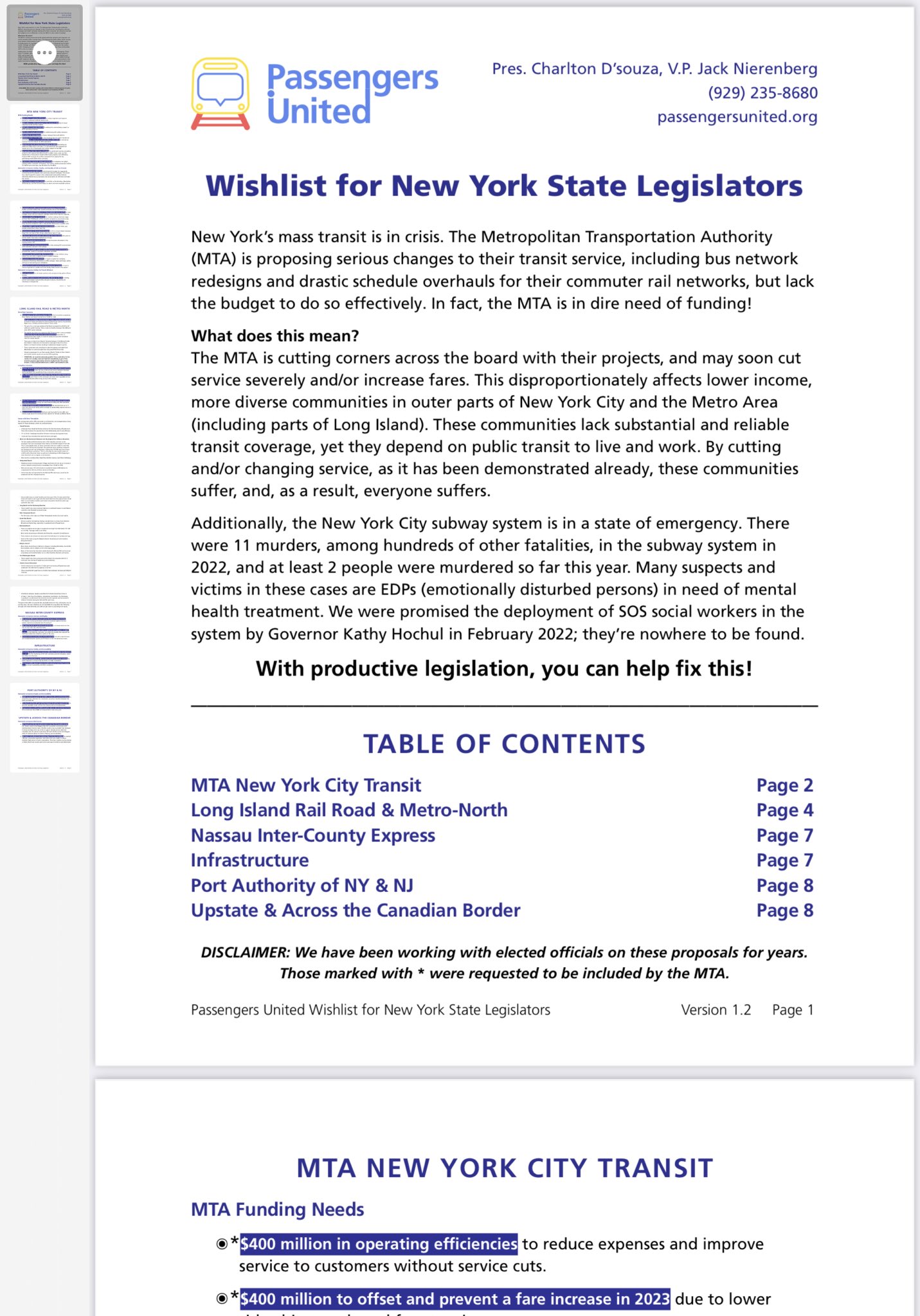
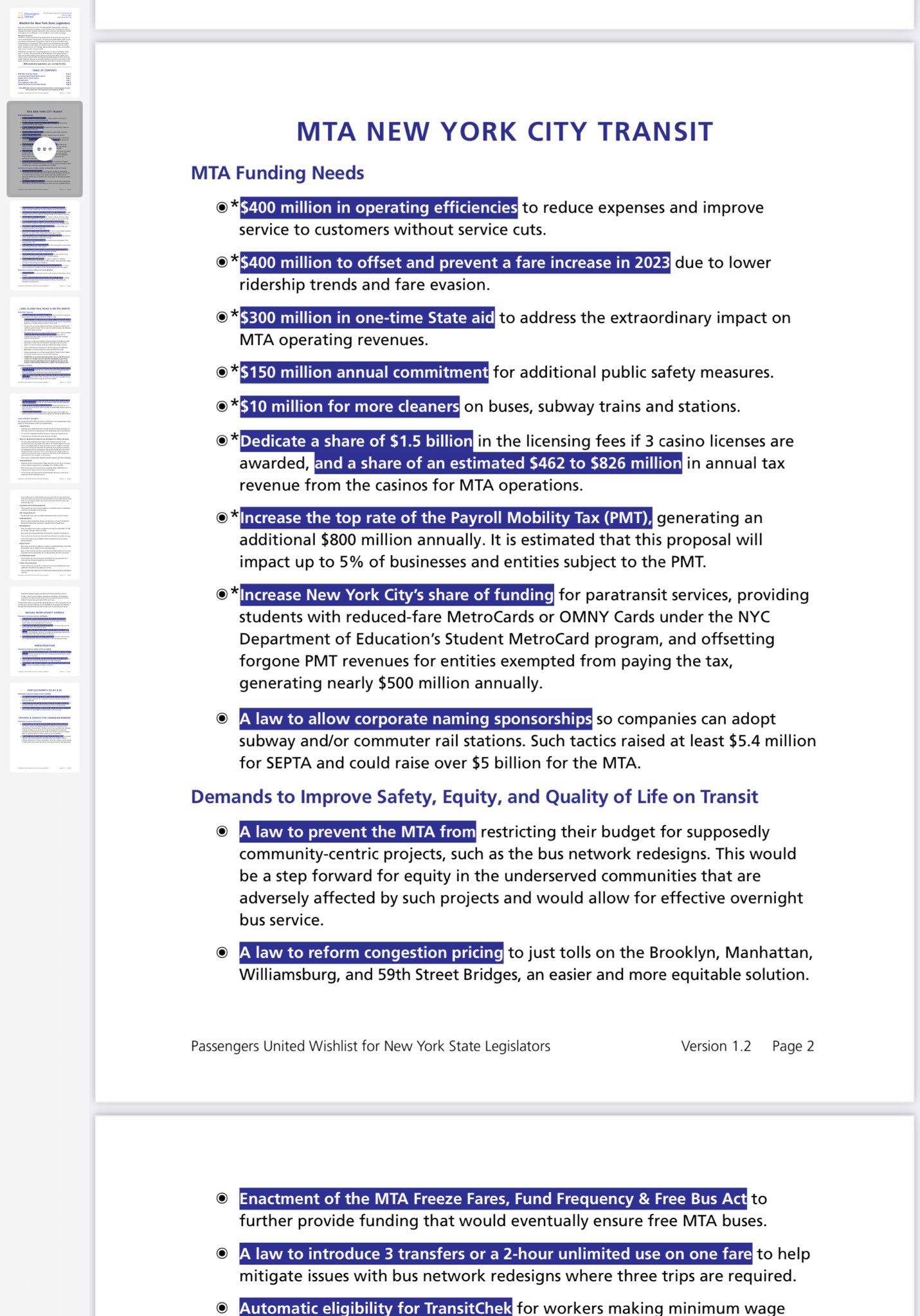
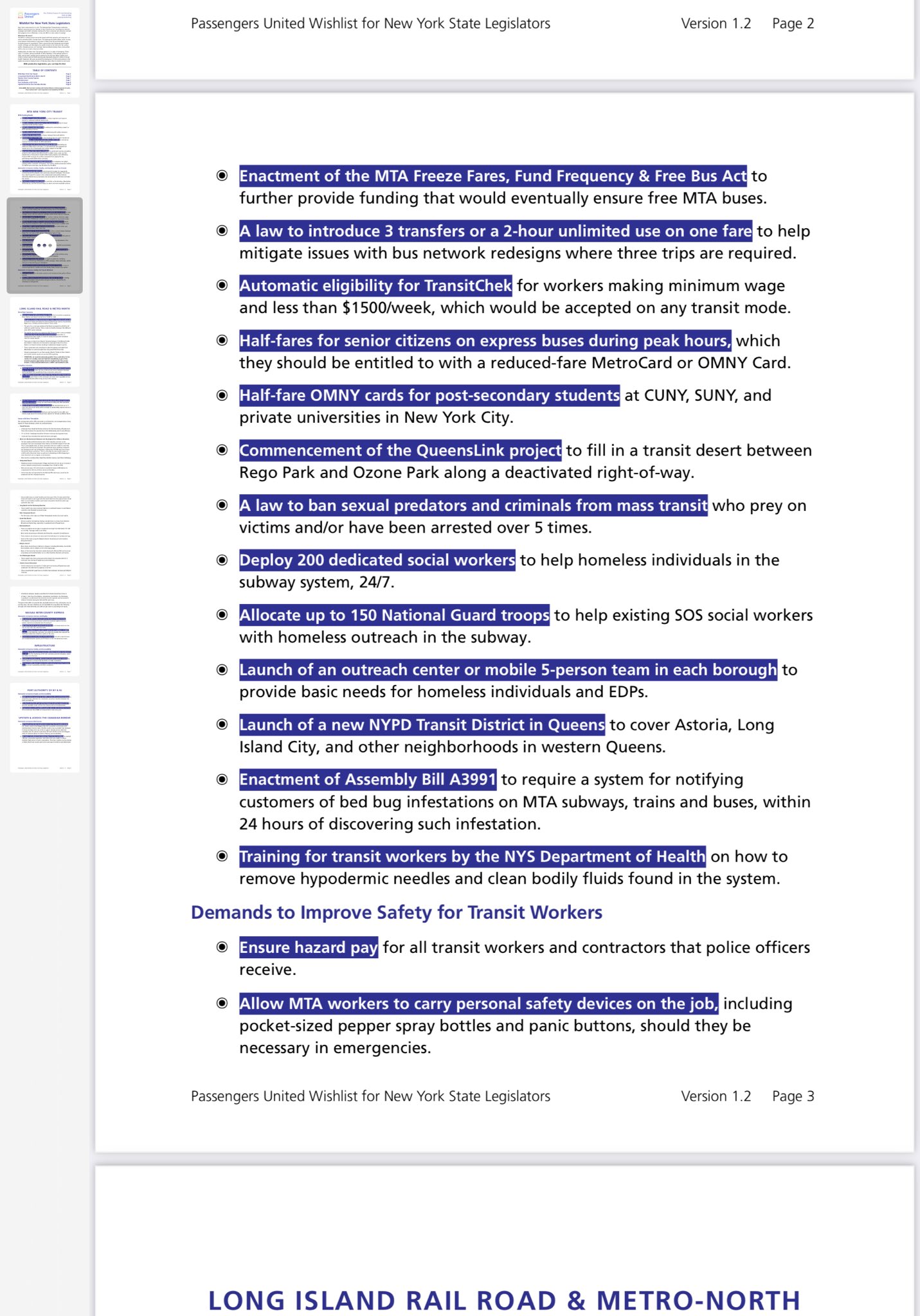
 Jesus Christ these cults are just never going to go away, as a public duty I present the counterpoint plan from Passengers United who actually ride the buses and the trains everyday with their proposal to "fix the MTA" which also includes public safety measures for transit workers, something the Albany fauxgressives and the moneyed transportation actorvates never bother to acknowledge.

 ImageImageImage


Rent stabilized apartments have been memory holed

 https://thecity.brightspotcdn.com/dims4/default/8ff76da/2147483647/strip/true/crop/2994x1996+0+0/resize/810x540!/format/webp/quality/90/?url=https%3A%2F%2Fcdn.vox-cdn.com%2Fthumbor%2F4ctgNvYMa_OdaR-cC8ZiSjmH9d0%3D%2F0x0%3A2994x1996%2F2994x1996%2Ffilters%3Afocal%281495x482%3A1496x483%29%2Fcdn.vox-cdn.com%2Fuploads%2Fchorus_asset%2Ffile%2F24429194%2F021023_20_ridgewood.jpg


THE CITY 

 In December, THE CITY highlighted a sizable decline in the number of registered rent-stabilized apartments across the city, even after a new state law prohibited removing units from the rent regulation rolls in most cases. Now a tenant advocacy group is using city property records to detail, down to the individual building, where landlords may be failing to report stabilized apartments to the state.

The nonprofit group JustFix shared with THE CITY records of 44,470 buildings that reported rent-stabilized units on their property tax bills in the last few years. The city Department of Finance says it gets that information directly from the state Division of Housing and Community Renewal (HCR), which requires property owners to annually certify the number of rent-regulated apartments in their properties.

Very few rent-regulated apartments should have had their registrations disappear after June 2019. That’s when former Gov. Andrew Cuomo signed the Housing Stability and Tenant Protection Act, which ended landlords’ ability to remove apartments from rent-stabilization except under rare circumstances.

Yet since then — even as affordable-housing programs have created thousands of new rent-stabilized apartments — the number of units registered with the state has declined sharply.

For tax year 2021, landlords registered 803,216 units as rent-stabilized. That’s down from 869,220 as of the same date in 2019. 

During that time, about 4,000 units left rent stabilization legally, after landlord tax breaks expired. Meanwhile another 10,000 units were added through these tax programs, annual reports from the city Rent Guidelines Board show. 

The reports also show that about 900 remaining rent-regulated units in buildings once converted to condominiums or cooperatives have legitimately left the rolls, as longtime tenants moved out or died. 

It’s also not uncommon for landlords to file their state registration paperwork late — meaning that some of the 10,400 buildings that show a drop to zero rent-regulated units in their 2021 tax bills will eventually get back on the rolls.

But another roughly 3,100 buildings reporting a decline in the number of rent-stabilized apartments since 2019 still have one or more stabilized units registered — meaning that late registrations don’t explain the drop. 

In one Brooklyn building recently profiled in THE CITY that dropped from 12 registered rent-regulated apartments in 2019, to six in 2020 and 2021, tenant rent histories provided by HCR show apartments appear to have exited from rent regulation even after the 2019 rent law should have prohibited their removal.

THE CITY created an interactive map that lets readers search by address and see every apartment unit that was registered with the state as rent-stabilized in 2019 but no longer is.

This data release comes days after a federal appeals court struck down a challenge, brought by landlord groups, seeking to have the entire rent-regulation system ruled unconstitutional — a decision that landlords are now hoping to bring before the Supreme Court.

Tuesday, February 14, 2023

The New York City Health Department's blacklist/censorship apparatus

https://blogbox.indianeagle.com/wp-content/uploads/2020/08/Dr-Dave-Chokshi-NYC-Health-Commissioner.jpg

 Reclaim The Net

Employees of the New York City Department of Education who refused to get vaccinated against COVID-19 had their fingerprints and files sent to the New York Criminal Justice Services and the FBI, a legal filing alleges.

New York City had a vaccine mandate for employees of the Department of Education that required them to be fully vaccinated by September 2, 2022. By mid-September, about 1,950 employees had been fired for refusing to get the vaccines.

Those who refused to get vaccinated also had a “problem code” added to their personnel file.

We obtained a copy of the affidavit for you here.

“And while she applied to over 60 jobs during that span, she received no offers because, as one interviewer told her, the DOE attached a problem code for her due to alleged ‘misconduct.’ While she waited for a decision, her home went into foreclosure, her son had to leave college, and she was forced to get vaccinated to feed her family,” read the affidavit of a principal from the Bronx who got suspended without pay for refusing to get vaccinated.

Teachers For Choice claimed that teachers’ “fingerprints are sent with that flag to the FBI and the New York Criminal Justice Services.”

The group further claimed that after personnel files got flagged, they were sent to the Department of Justice and the FBI.

“In addition, you’ve got these problem codes in the personnel files,” said John Bursch, an attorney at Alliance Defending Freedom, a legal group that is defending employees that were terminated by the city, to the court.

“When the city puts these problem codes on employees who have been terminated because of their unconstitutional policies, not only do they have this flag in their files, but their fingerprints are sent with that flag to the FBI and the New York Criminal Justice Services. So it impacts their ongoing ability to get employment.

“Even for those who are eligible for reinstatement, when they apply, they’ve all got so-called ‘problem codes’ in their personal file because they purportedly failed to fulfill a contractual condition, which was to get vaccinated.

“The city simply didn’t like that some people objected to the vaccine on religious grounds and they punished them for that.”

 Reclaim The Net

The New York City Department of Health and Mental Hygiene set up a “Misinformation Response Unit” to monitor what it would determine to be “dangerous misinformation” posted on social media, non-US sites, and non-English media in the US.

This “misinformation” mostly had to do with Covid vaccination – the Department was determined to drive vaccination rates up by spreading its word, and in this gathered over 100 partners whose job was to craft positive messaging around the controversial subject.

Among those the dedicated new unit is working with is Public Good Projects, otherwise known for receiving funding from a lobbying group representing two major Covid vaccine manufacturers, Pfizer and Moderna.

Their “good” work here also included sending , on a weekly basis, lists of posts slated for censorship.

In an article published by the NEJM Catalyst journal, those behind the effort are now assessing the Unit’s work as successful, what with it being able to “rapidly identify messages” deemed as containing inaccurate information about the virus, vaccines, treatment, etc.

And although admitting that “vaccine hesitancy” remains high around the world even two years after the vaccines were first introduced – and this is something attributed to “disinformation and misinformation” and continues to worry the World Health Organization (WHO) and the US Surgeon General, as well as “medical experts” – the New York City Health Department thinks that it did well in getting its own narrative out, particularly in traditional media.

However, it needed help on the internet and so, in 2021, the NYC Health Commissioner penned a letter to the largest social networks asking them to engage in “broader efforts to curtail deliberate disinformation, particularly from the most notorious spreaders of disinformation and from non-English language sources.”

We obtained a copy of the letter for you here.

This is also where the Public Good Projects came in, to enlist social media “microinfluencers” to spread pro-vaccine messages, and train others to come up with campaigns.

The email Dave A. Chokshi, New York City health commissioner, addressed to then Twitter CEO Jack Dorsey and CEO , with the subject line reading, “Vaccine Misinformation,” urges the pair to “take immediate action to stop the spread of fraudulent and inaccurate information about COVID-19 vaccines” on their platforms.

Chokshi wanted this action to be “effective and vigorous” and asserted that misinformation on these sites, as understood by the city’s Health Department, was “costing New Yorkers their lives.”

Twitter and Facebook were then urged to do the following: “Consistently and promptly remove all misinformation regarding COVID-19 vaccines from your platforms and ban any user that repeatedly posts misinformation, including the Dirty Dozen; redesign the algorithms used by your platforms to avoid amplifying misinformation, particularly among non-English languages; provide greater transparency to your data to allow health departments to better identify, track and understand the spread of misinformation, and amplify messaging from trusted public health experts and local partners.”

Thursday, February 9, 2023

Related's LIC deed-in-lieu toodle-ooo

https://external-content.duckduckgo.com/iu/?u=https%3A%2F%2Ftse1.mm.bing.net%2Fth%3Fid%3DOIP.8VTXt29aNdrCfCgecaqYMAHaFe%26pid%3DApi&f=1&ipt=7f0089d092e11f690e916ca14089356040872f922dd4c2f0e8f6b8039a5aa83c&ipo=images

The Real Deal 

Developer and partner BentallGreenOak negotiating deed-in-lieu of foreclosure

The mantra that millennials wanted to “work where they live” drew some of New York’s biggest developers across the East River in the late 2010s to build Instagrammable offices in hot Queens and Brooklyn neighborhoods.

Today many of those offices remain empty, and now some developers are conceding that the gold rush never materialized. 

Case in point: Related Companies’ fund management arm and its partner BentallGreenOak are ready to walk away from the Point LIC, a small campus of converted warehouses in Long Island City that sit mostly vacant after six years. 

The developers have defaulted on their mortgage for the pair of seven-story buildings in the neighborhood’s Hunter’s Point section, sources told The Real Deal. Their lender, mortgage REIT BrightSpire Capital, is looking to sell the non-performing loans, and sources said the borrowers have agreed to hand the keys to the Point over to whoever buys the debt through a deed-in-lieu of foreclosure.

Representatives for Related Fund Management and BentallGreenOak did not respond to requests for comment. A spokesperson for BrightSpire — known until 2021 as Colony Credit Real Estate — declined to comment.

The mortgages on the two buildings total around $150 million, and BrightSpire will look to recoup as much of that as possible.

It’s the latest sign of distress in the office market, as high interest rates and a continued transition to hybrid work expose struggling investments.

Related and BenatallGreenOak paid nearly $104 million in 2016 to buy the two properties: a 130,000-square-foot former oil storage warehouse at 2100 49th Avenue, dubbed the Paragon Building, and a 220,000-square-foot building across the Long Island Expressway at 2109 Borden Avenue called the Blanchard Building.

The new owners spent $45 million overhauling the properties, building new entrances and lobbies, upgrading building systems and installing amenities like cafes and outdoor spaces that were all the rage for offices designed to attract a millennial workforce.

Wednesday, February 8, 2023

Hochul shooting down Aqueduct Race Track

https://www.nyra.com/assets/components/phpthumbof/cache/Aqu18_Gen_JW_810x430.d591d5ecfb0ffc5c0917ba2843346bc4.jpg

Queens Chronicle 

The 128-year-old Aqueduct Race Track appears to be heading into the home stretch, according to Gov. Hochul's 2023-24 executive budget proposal.

Hochul’s proposal for the fiscal year beginning April 1 includes $455 million in capital spending for the redevelopment of Belmont Racetrack, located just the other side of the Cross Island Parkway in Nassau County.

A report on the website casino.org on Wednesday stated that the move could lead to the land being used for construction of a casino right next to the Resorts World New York City in Ozone Park.

“The [Belmont] project will result in the creation of new tracks and parking as well as the construction of a new clubhouse,” according to an entry on page 33 of Hochul’s briefing book. “This project will facilitate the move of Aqueduct racing to Belmont, allowing the State to repurpose the Aqueduct property.”

The document does not offer timelines. It goes on to say that the New York Racing Association will repay the state for the entire cost of the project.

The New York Racing Association, in a statement on its Twitter page on Wednesday, thanked Hochul for supporting the Belmont rebuild, but made no mention of Aqueduct.

Aqueduct first opened in September 1894.