Tuesday, September 20, 2022

Rockaway hipster hideaway gone away


This looks like a nice place for a family to rent in Rockaway Beach, but prospective tenants might want to have the entire place and backyard powerwashed before they move in. For this previously was one of the Rockaway Hideaway lodgings that were being rented out for a ludicrous fee of $600 per guest during the pandemic.

https://l.icdbcdn.com/oh/85189dc7-ac56-48de-bbe6-51f270128c60.jpg?w=1040
 
Wonder if the outhouse shower is still there too? Blech. 

I guess they had trouble getting suckers after all those shootings and killings on the peninsula this year. 

Update:

Looks like the outhouse shower is included. These people must have been raised in a barn.


Monday, September 19, 2022

Mayor's chief of staff and long time lawyer pal quits the team

https://www.nydailynews.com/resizer/SlNYIYpl3wuKUm6m_rA-JKFRaO8=/arc-anglerfish-arc2-prod-tronc/public/ZHBA3T3A7NDA3BVLHCRBK7VAJM.jpg

New York Times

One of Mayor Eric Adams’s closest advisers, who has helped formulate and work out some of the mayor’s thorniest policy challenges, has informed administration officials that he will resign at the end of the year.

The adviser, Frank Carone, a former power broker in the Brooklyn Democratic Party who helped fuel Mr. Adams’s rise in politics, had served as his chief of staff since January.

His exit is the first major departure of the Adams administration. Emma Wolfe, the last chief of staff for Mayor Bill de Blasio, stayed in that role for nearly all of his second term and worked in his administration for eight years.

Mr. Carone served as a gatekeeper and a negotiator for Mr. Adams, meeting with business leaders and working on projects like vetting casino operators vying for casino licenses in New York City and examining whether to use cruise ships to house migrants.

Mr. Carone said in an interview that he had always intended to stay in government for only one year and that he planned to serve as a chairman on Mr. Adams’s re-election campaign in 2025.

“I wanted to recruit the team, take a deep dive into agencies and build a culture for that team of no drama and getting things done,” Mr. Carone said.

Some of Mr. Carone’s past business dealings have drawn scrutiny, including his representation of landlords involved in an affordable housing deal and his involvement with a group of doctors accused of insurance fraud. Mr. Carone was also criticized for having a financial stake in a police tool that Mr. Adams promoted as Brooklyn borough president, and for failing to disclose his legal work for a homeless shelter provider.

As the mayor’s chief of staff, Mr. Carone has largely avoided controversy, helping Mr. Adams behind the scenes to respond to one crisis after another: the pandemic, the killing of two police officers in January, high crime rates, an influx of asylum seekers from Latin America, a staffing crisis in city government and concerns over the city’s economic recovery.

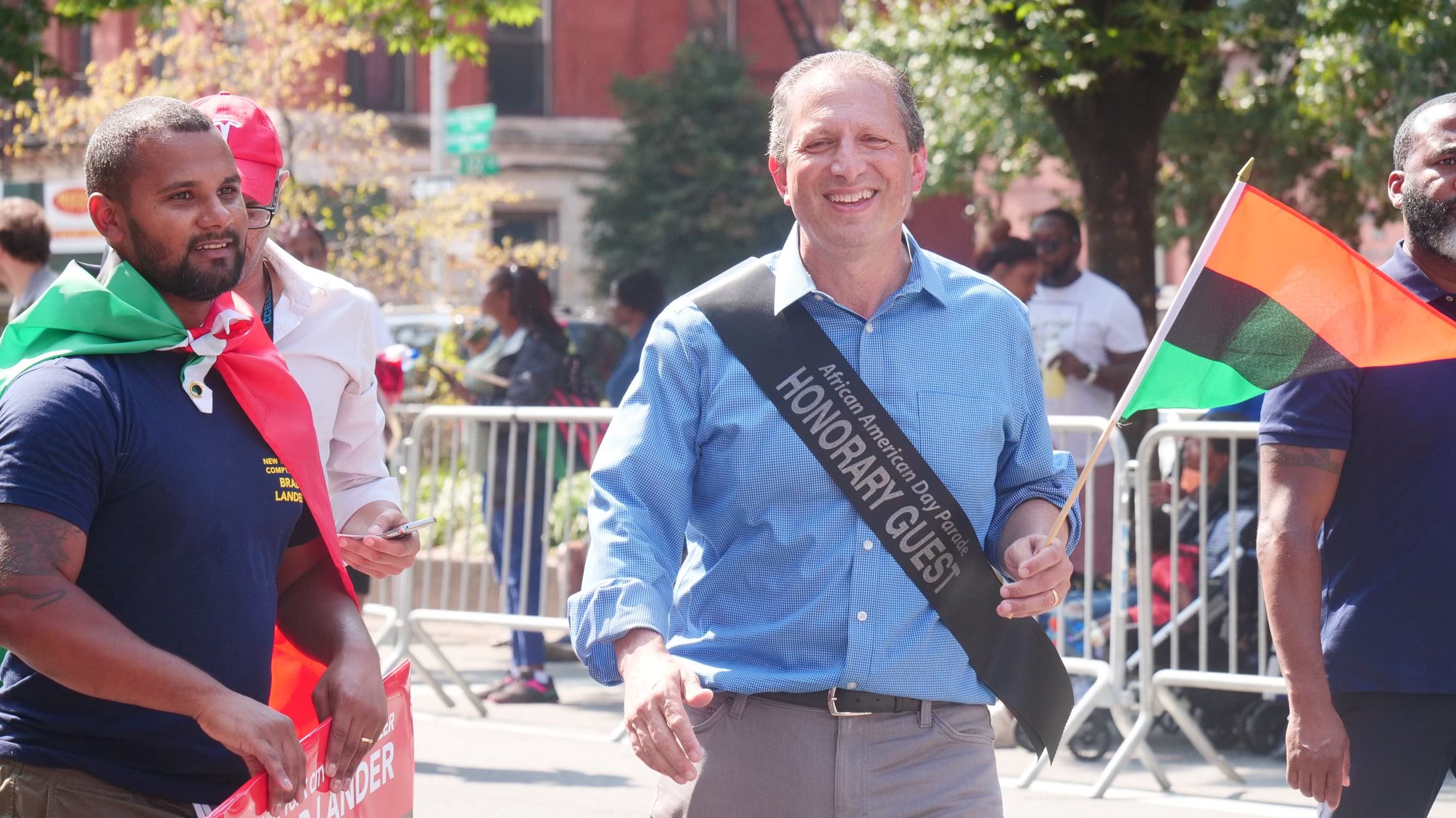
Caption honorary African American Brad Lander

https://pbs.twimg.com/media/Fc9ueoTXgAEe2ne?format=jpg&name=large


Sunday, September 18, 2022

The war on cars' war criminals

  https://nypost.com/wp-content/uploads/sites/2/2022/09/tow-truck-1.jpg?quality=75&strip=all

NY Post

The city turned a blind eye for years while a Queen’s tow company monopolized services on many Big Apple highways and ripped off thousands of drivers in the process, a bombshell new lawsuit alleges.

The class-action suit, filed Saturday in Manhattan Supreme Court, seeks more than $58 million in damages for the duped motorists from the NYPD, the city Department of Consumer and Worker Protection and Runway Towing Corp. It alleges city officials let the company run an illegal “racketeering enterprise” at the expense of unsuspecting motorists.

The suit also accuses the NYPD of repeatedly extending Runway’s contract since 2013 without competitive bidding and, in the process, ignoring many complaints the Department of Consumer and Worker Protection was getting about the company’s alleged lawbreaking, which included underpaying workers and illegally compensating them with cash off the books.

The two city agencies “conspired … to allow Runway to operate … even though at least six years ago motorists were telling them that Runway is overcharging consumers,” said lawyer Gary Rosen, who represents Runway customers and ex-staffers in the lawsuit.

The suit claims Runway has earned more than $200 million since 2010 off its NYPD contract to provide roadside assistance and towing services on the Brooklyn-Queens Expressway; Kosciusko Bridge; the Cross Island Parkway in Queens; sections of the Belt Parkway in Brooklyn and Queens; Brooklyn’s Gowanus Expressway and Prospect Expressway; and the Staten Island Expressway, West Shore Expressway, Korean War Veterans Parkway and Dr. Martin Luther King Jr. Expressway on Staten Island.

It also alleges the company relies on shady practices to drive up its profits, including instructing tow operators to bring vehicles they pick up to the company’s office in Ozone Park — no matter where they break down.

It’s a move that generates hundreds, and sometimes thousands, of extra dollars in unnecessary towing and storage costs for the public per vehicle, former Runway workers and customers told The Post.

Mary Olsen, 62, said she had no choice but to give away her 2000 Nissan Altima to Runway after it was rear-ended and totaled on the Staten Island Expressway two years back. She said a Runway tow truck brought the car to the Ozone Park storage facility more than 20 miles away without her consent — and without providing a cheaper option, such as towing it to a parking space off the nearest exit or a nearby auto body shop.


City emergency response times got longer


NY Post

New York City first responders are taking longer to get to fires, medical emergencies and crimes in progress.

Critics blamed the potential deadly surge in response times on serious staffing shortages in the NYPD and FDNY.

As the Police Department continues to deal with spikes in major crimes and a mass exodus of cops, response times to all “crimes in progress” during the past fiscal year ending June 30 increased from 11 minutes and 40 seconds to 12 minutes and 44 seconds – or 9.1%, according to Mayor Adams’ first management report.

In fiscal 2019, which predated the COVID-19 pandemic and the many new challenges it to brought citywide, the average response time was 9 minutes and 55 seconds.

The Fiscal 2022 Mayor’s Management Report released late Friday – which covers the highs and lows of all city agencies during the final six months of ex-Mayor Bill de Blasio’s administration and the first six of Adams’ – also highlighted a serious uptick specifically in response times to armed robberies, burglaries and other “critical crimes.”

Cops on average responded off 911 calls to these crimes in 8 minutes and 26 seconds, compared to 7 minutes and 52 seconds a year ago.  In fiscal 2019, they arrived on average in 6 minutes and 38 seconds after a 911 dispatcher fielded the call for help.  

Councilwoman Joann Ariola (R-Queens), who chairs the fire and emergency management committee, blamed de Blasio’s progressive policies for helping nudge many cops who felt “disrespected” into early retirement and leaving the NYPD short-staffed.

34th Avenue Open street lies dangerously come to life


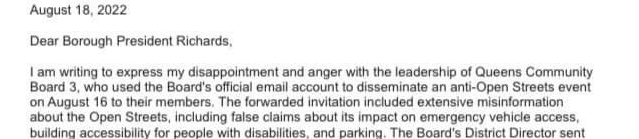
Once again from Jim Burke's letter to Donovan Richards about his scurrilous accusatory lies about homophobia directed towards him and his group. This may have been the biggest and most dangerous lie of all. Time to remove that crappy version of stonehenge on the road and abolish these open streets now.

Image

Saturday, September 17, 2022

LIRR Proposing to End Essential Link from Kew Gardens to Forest Hills


Over this past summer, the Long Island Railroad & the Metropolitan Transit Authority, announced that the LIRR East Coast Corridor, with service to the new Madison Station Platform at Grand Central Terminal, will commence by the end of this year - winter 2022.

Initially this was great news and that which LIRR commuters have been awaiting to hear for two decades. Unfortunately for us, with the release of the LIRR's proposed new train schedules for service, we now see that the LIRR-MTA is actually taking away vital service between Kew Gardens and Forest Hills.


Click here to view the draft LIRR schedule for Kew Gardens and Forest Hills, which eliminates all train stops between the two, in either direction! Thus one would no longer be able to take the train at Kew Gardens and get off at Forest Hills, and vice versa. However, this two-minute ride provides a CRITICAL LINK between our two communities which MUST BE MAINTAINED.

The MTA & LIRR want to hear from communities how they feel about the new schedule. This is our chance to tell them!

PLEASE CLICK HERE TO COMMENT AND LET THE LIRR-MTA KNOW THAT SERVICE BETWEEN KEW GARDENS & FOREST HILLS IS ESSENTIAL TO US AND MUST BE RETURNED TO THE SCHEDULE.

IN DETAIL HERE'S WHY:

1. This link between the two stations enables Kew Gardens residents, especially the elderly, young families and the differently abled, to reach quickly and easily healthcare facilities and businesses unavailable in Kew Gardens.

Forest Hills is the hub for many medical facilities, especially ones that are UNAVAILABLE in Kew Gardens, e.g, specialized medical offices, medical labs, radiology services, hospital, clinics etc. In addition, the Kew Gardens community both needs and supports the many Forest Hills small businesses which have no counterpart in Kew Gardens. 


2.  Given the new alternate Manhattan destinations, i.e., Penn Station and Grand Central, the destination link between Kew Gardens & Forest Hills helps to move traffic. For example, if you miss the KG train to the Eastside, you may be able to switch at Forest Hills for their next train to the East side, etc. and arrive in good time.      


3.  Such links between stations/communities continue to exist on many, if not all other LIRR lines - just not for Kew Gardens. Moreover, those using LIRR to access those local stations even have a special reduced fare, while Kew Gardens riders pay the full fare (as much as $6.50) to just Forest Hills, the same as if they were going to Manhattan or the Hamptons.  In just one example, the two-minute ride between Manhasset and Plandome LIRR stations, remains on the new schedule, costs seniors and the disabled $1.50, regular-fare payers also pay just a small percent of the final destination fare to and from Manhattan.


The link between Kew Gardens and Forest Hills is critical to our community, and now especially with the stifling of Queens Blvd for local motorist and public buses with under utilized bike lanes, the underground Subway stations in constant disarray - the massive jail structure and all the chaotic traffic it will bring, looming heavy - it is essential that the LIRR link between our two, interdependent neighborhood eco-systems, must be maintained.

Thank you.

Sylvia Hack

The Queensway has just been approved


NY1

Mayor Eric Adams on Friday unveiled an investment of $35 million to begin phase one of QueensWay, a new linear park planned for Queens.

The funding includes $2.5 million from the City Council, a press release said. 

“We are moving from a city of no to a city of yes and QueensWay is the way we are going to go throughout this entire city,” Adams said at news conference in Forest Hills. “And ensure that open space, green ways, good clean environments for children and families will continue to grow in this city.”   

The first phase of the project will help transform a section of an abandoned Long Island Rail Road line in Forest Hills, known as the Met Hub, into a five-acre park.

Once complete, the 47-acre QueensWay will provide the 2.4 million residents living in the borough with a new open space that will give them access to recreational amenities, outdoor educational programs and an alternative transportation to schools, businesses, and 10 bus lines, the release said. 

“QueensWay improves quality of life, improves the air quality and it promotes both physical and mental well-being and it gives more visibility to businesses along the route,” Adams said. “And so this is an economic stimulus as well.” 

But some residents were hoping get more transit options.

Last month, state, local and federal officials signed onto a letter calling for Adams and Gov. Hochul environmental impact study on the prospect of a subway line being extended into the area.

“QueensWay improves quality of life, improves the air quality and it promotes both physical and mental well-being and it gives more visibility to businesses along the route,” Adams said. “And so this is an economic stimulus as well.” 

 The gaslighting by every elected official at this announcement about the lack of park space and how it's a transit desert is mind blowing. Forest Park is by there and spans 4 neighborhoods. Numerous bus lines go around there. This also throws any plan to restore the rail transit line in the garbage.

And here's another thing. Why are two members from Transportation Alternatives there? That's Peter Beadle on the left who was at that hilarious parody protest against Jenifer Rajkumar by the rail line last year and fellow bike zealot and shameless anti-car fascist Juan Restrepo. Does that "non"-profit "public streets advocacy" organization have a government office we are not aware of? Their presence is also heinous because their Queens chairman Jim Burke recently defamed a community group led by a gay man as homophobes and racists with absolutely no evidence with the help of one of their fellow elected officials in City Council!


It's astounding how this plan just materialized from thin air after Adams made budget cuts to every municipality only a few days ago and city council found money to fund this fantastical project. This isn't the city of yes like Swagger Adams says, this is the twilight zone.

Friday, September 16, 2022

Mayor Adams demotes NYCHA commissioner following poisoned water results at Jacob Riis Houses


Politics NY 

A major shakeup is coming to the leadership structure of the city’s public housing authority.

Mayor Eric Adams’ office announced Thursday the New York City Housing Authority’s (NYCHA) current chair and CEO Greg Russ will step back as the authority’s chief executive, following an arsenic contamination scare at the Jacob Riis Houses on Manhattan’s Lower East Side.

Russ will stay on as chair, according to a release, as the roles of CEO and chair that have typically been held by one person are split into two separate jobs. The authority’s general counsel Lisa Bova-Hiatt will serve as interim chief executive until they find a permanent replacement.

“We cannot wait any longer to make transformational changes so NYCHA can provide safe, high-quality homes for New Yorkers,” Adams said. “I am determined to work with my partners in government to identify the right leaders and the right structure for NYCHA to deliver on our promises to public housing residents. I want to thank Lisa Bova-Hiatt for her dedicated service to our city and for stepping up at this critical time to put NYCHA on the right path.”

The news comes after a rough couple of weeks for the embattled public housing authority. Nearly two weeks ago, NYCHA and the mayor’s office told Jacob Riis residents their tap water had tested positive for arsenic and advised residents not to drink or cook with the water for nearly a week.

But late last week, the city reversed course, sharing that the lab who’s tests yielded the positive arsenic results – Environmental Monitoring and Technologies – retracted those results and released revised results that were negative for the toxic substance. A day later, Adams announced the water at Jacob Riis was safe to drink and cook with again, posting a video of himself and city Department of Health and Mental Hygiene (DOHMH) Commissioner Dr. Ashwin Vasan drinking cups of water from the development’s taps.

Adams’ office says it wasn’t notified about the positive arsenic test until several days after NYCHA was aware of the results. During an unrelated press conference Monday, Adams said the delay in notifying his office was “unacceptable” and hinted at the leadership change announced Thursday.

“We were notified on Friday, they were notified on Monday, it’s unacceptable,” Adams told reporters. “And so we know there’s new leadership that’s about to take place at NYCHA and we’re looking at exactly what happened here.”


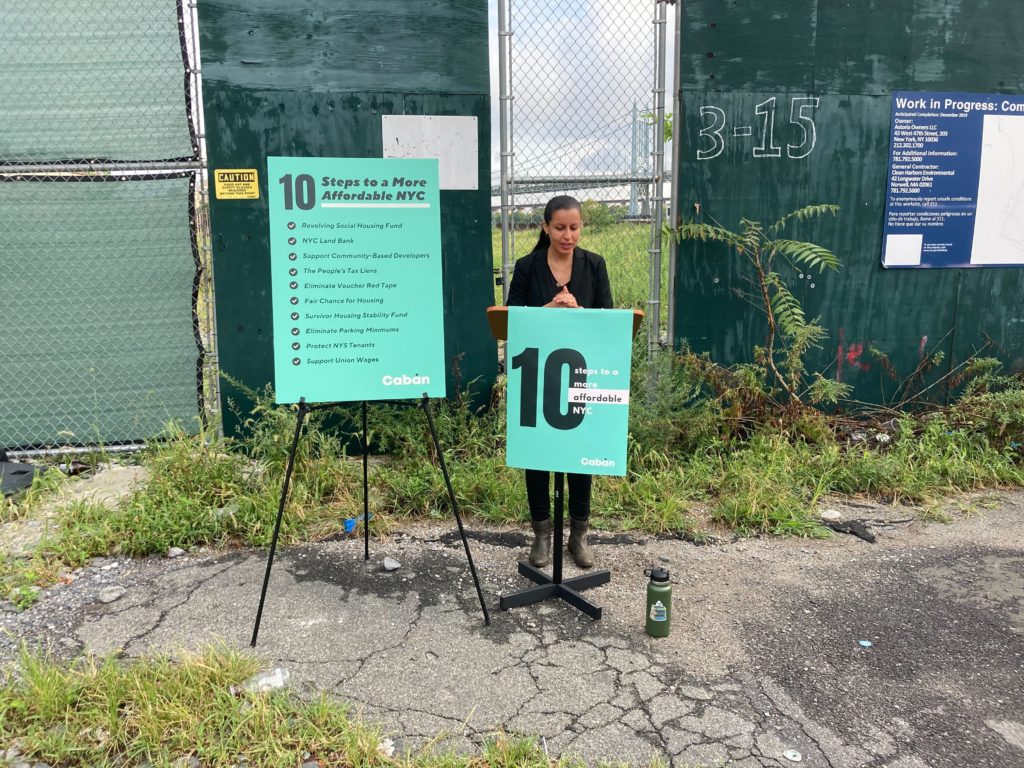
Socialist YIMBY Tiffany Caban approves luxury public housing towers in Astoria

Tiffany Cabán Approves Major Astoria Housing Development, Bucking Trend Among Progressives

New York Focus 

 New York City Councilmember Tiffany Cabán on Tuesday announced her support for a proposed rezoning that will allow a three-tower, 1300-unit housing development in Astoria known as Halletts North, in a shift from how other progressive lawmakers have approached recent land use decisions.

Cabán’s support for Halletts North likely ensures the full City Council’s approval of the project, since the council traditionally follows the lead of the local councilmember in deciding whether to give the go-ahead. 

One in four units in the development will be earmarked for affordable housing. Cabán and local community organizations negotiated with the developer to increase the number of two- and three-bedroom apartments in order to accommodate local families, she said.

The most deeply affordable units will be the 10 percent reserved for tenants making 30 percent or less of the New York City area median income, or $35,790 for a family of four. Overall, the development will nearly double the number of local units available to renters making less than 50 percent of the area median income, Cabán noted.

The developers have also invested $16 million in cleaning up the site from toxins left by its former industrial use, and agreed to contribute $1 million to the neighboring public housing development, build a community space that local nonprofits will be able to use rent-free, and incorporate a public waterfront green space into the development, Cabán said.

Cabán framed her choice to support Halletts North as “harm reduction.”

“The best we can hope for without rezoning this lot is a last mile [trucking] facility where some massive corporation like Amazon would pay our neighbors garbage wages for backbreaking work,” Cabán said. “A no vote today would be a vote for that.”

In recent years, New York has built less housing per capita than almost any other large city in the country. Cabán’s support for the project comes as various factions of New York’s left attempt to work out their approach to housing supply, and decide how to respond to developers seeking city approval to build largely market-rate housing on privately-owned land. 

“There’s currently no consensus on what a progressive land use approach should be,” said Samuel Stein, housing policy analyst at the anti-poverty nonprofit Community Service Society. “Because there’s a debate or diversity of approaches, that leaves individual council members with a bit of latitude in terms of defining their own position.”

Cabán’s decision to support the Halletts North rezoning sparked significant and heated debate among members of the New York City chapter of the Democratic Socialists of America (DSA), said DSA member and housing organizer Andrew Hiller. The Queens DSA housing working group tweeted that the decision “is an insult” to nearby public housing residents who likely won’t be able to afford the new units. Cabán is a DSA member and received the group’s coveted endorsement during her 2021 run for city council.

By supporting the Hallets North development, Cabán is taking a different approach from other progressive members of the City Council who in recent months have blocked, opposed, or threatened to block major developments in their districts.

Wednesday, September 14, 2022

Open Street organizer and creator falsely maligns community group run by a gay man as homophobes


 Jackson Heights Post

 A heated dispute has erupted between opposing sides of the 34th Avenue Open Street program in Jackson Heights — with the initiative’s co-founder saying he was the victim of homophobic slurs leveled at him by members of an opposition group.

Jim Burke, a well-known LGBT activist (and volunteer capo for Transportation Alternatives-JQ LLC) and co-founder of the 34th Avenue Open Streets Coalition, says a dispute surrounding the use of 34th Avenue led to him being verbally abused.

The 34th Avenue Open Street Coalition have been staunch advocates for the corridor to be made a permanent open street, while a rival group, the Jackson Heights Coop Alliance, opposes the concept, arguing that is unfair to drivers who need to park their cars and that it makes it tough for emergency vehicles to traverse.

Burke, in an interview with the Queens Post Tuesday, said he was called a “c**k-sucking f****t,” by an SUV driver who he believes is a member of the Jackson Heights Coop Alliance. However, Burke said that he wasn’t 100 percent sure that the driver is a member of the Alliance since he doesn’t know all the people that are part of the group.

Ricardo Pacheco, the leader of the Jackson Heights Coops Alliance, was critical of Burke for making the accusations and is demanding Burke provide further evidence. He said the accusations are slanderous and are just a means to undermine his group.

Pacheco also criticized local leaders, such as Councilmember Shekar Krishnan, who held a press conference Monday accusing the alliance of bigotry. He said Krishnan did not investigate the allegations and his actions were malicious.

Burke also said there have been various instances where passers-by on the street have uttered racist epithets at volunteers. He said that his partner Oscar Escobar, whose first language is Spanish and speaks English with an accent, was asked by two opponents to show his “papers.”

Burke, however, said he doesn’t know for sure if the racist comments were made by members of the Jackson Heights Coop Alliance, although he assumes so.

Burke said he has been targeted because of his role with the 34th Avenue Open Street program. His group advocates for making the 34th Avenue Open Street program – which runs 26 blocks from Junction Boulevard to 69th Street along 34th Avenue – a permanent fixture in the neighborhood.

The strip — which is currently closed off to traffic from 7 a.m. to 7 p.m. on Mondays through Sundays under the program — is being converted into a series of pedestrian plazas and traffic-restricted zones, in accordance with a plan released by the Department of Transportation in October.

Advocates for the open streets plan, known as Paseo Park, argue that the open streets initiative has been a huge success since it creates much-needed public space in the neighborhood.

Opponents of the plan, however, say the plan eliminates much-needed parking and makes it harder for emergency vehicles to access local residents.

Burke wrote that the e-mail led to unnecessary strife in the neighborhood by directing hate toward the volunteers of the 34th Avenue Open Streets Coalition.

“Purported members of this group have used homophobic, xenophobic, and racist slurs against our volunteers and program participants, sometimes in the presence of children and community members,” Burke wrote. The letter did not go into specifics about the alleged hate-filled incidents.

He called on Richards to investigate the Board’s leadership for sending out the email.

On Monday, the LGBT Network, a group advocating for LGBT people in Queens and Long Island, held a press conference along the 34th Avenue Open Street to bring attention to the alleged incidents against members of the Coalition and called for an end to hate in the neighborhood.

Burke attended the press conference and was joined by Councilmember Shekar Krishnan, former Councilmember Danny Dromm, and David Kilmnick, president and founder of the New York LGBT Network.

Krishnan stood with Burke and the activists to condemn the alleged bigotry.

“I am appalled at the homophobic harassment that 34th Avenue volunteers like Jim Burke and many others have had to experience by members of the so-called Jackson Heights Coops Alliance,” Krishnan said.

“No matter how their members may feel about 34th Avenue, there is no excuse to engage in hate. Jackson Heights Coops Alliance must condemn its members’ actions now.”

  The press conference sparked an almost immediate response from the Jackson Heights Coop Alliance, which released a statement late Monday condemning the media event.

“The malicious accusation directed at us by Councilmember Shekar Krishnan and the 34th Avenue volunteer Jim Burke without concrete evidence is disturbing, if not pure slander,” the statement, written by Pacheco reads.

“We demand any evidence that supports this claim.”

Furthermore, Pacheco, who is an LGBT activist, alleges that his group was not contacted about Burke’s claims before the press conference was held.

On Tuesday, Pacheco wrote an open letter to Krishnan, labeling the councilmember’s actions as “malicious and libelous.”

“Without a shred of evidence, nor even a preliminary investigation, you proceeded to make malicious, baseless, unfounded, unverified and hateful allegations against the Jackson Heights Coops Alliance,” the letter reads.

“This was nothing less than a precalculated attempt to embarrass, discredit and defame our name as a community organization and attempted to portray me as being a homophobic bigot.”

“As the president and a gay man myself who has a long history and proven track record of advocating for the civil rights of LGBTQ+ community, I would never tolerate such bigotry from our alliance or from anyone else.”

Pacheco also called on Krishnan to make a public apology for his actions.

Krishnan responded to Pacheco’s open letter on Wednesday with a brief statement to the Queens Post.

“We take every instance of hate speech brought to us very seriously,” Krishnan said.

“It’s shocking that when a victim comes forward, the response by some is to discredit and vilify rather than condemn the harassment.”

 Wow, Jimmy is the Jussie Smollett of open streets. For someone who claims that his open street brings people together its hysterical how he never bothered to communicate with his neighbors from the co-op alliance. But it's clear that he chose to feud with them instead and weaponized his connections with elected officials to close 25 blocks from residents, delivery people, and city emergency and sanitation services who need to drive on them. And he didn't even bother to find out the alliance leader was a gay man like him and tried to weaponize bigotry to his and his political allies advantage. 

All for a stupid fake park and anti-car agenda. 


Tuesday, September 13, 2022

Kathy Clown relinquishes her emergency autocrat powers

NY Post


Gov. Kathy Hochul announced Monday she will not extend the COVID-19 state of emergency amid falling caseloads and rising criticism of her use of the powers ahead of the Nov. 8 election that has seen Republican Rep. Lee Zeldin close the gap on her once-big lead.

The incumbent Democrat — who is seeking to be elected to the executive chamber for the first time since taking over after Andrew Cuomo stepped down last year — has renewed two executive orders each month since first issuing them as the Omicron variant of the coronavirus hit the state late last year.

While an order giving hospitals more leeway to hire health care staff has been relatively uncontroversial, the same cannot be said about Hochul suspending state contract rules that have led to accusations of pay-to-play politics involving the governor. 


City officials are betting on rain gardens to stop floods from the next hurricane


 Queens Chronicle

As the city marks the one-year anniversary of Hurricane Ida, the effects of which have some displaced families still living in hotels, Mayor Adams warns that climate change could lead to intermittent weather abnormalities becoming the norm.

“Thirteen New Yorkers died in their basement apartments due to flooding,” Adams said. “This traumatized our city. But climate change is bringing longer droughts, stronger storms and heavier rainfalls to places all over the globe.”

To help mitigate the effects of the next colossal rainfall event, Adams and other elected officials and department heads were in South Ozone Park last Thursday to announce the creation of an additional 2,300 rain gardens, the continued expansion of the city’s Bluebelt program and other green infrastructure initiatives aimed at relieving some of the burden on the city sewer system that was overwhelmed by last summer’s rainfall.

The city’s sewers were built to withstand rainfall at a rate of 1.75 inches per hour, according to Department of Environmental Protection Commissioner Rohit Aggarwala. Last summer alone, the city experienced two separate instances of rain falling at a faster rate: Hurrican Henri, when per hour totals reached 1.94 inches, and Ida, which dumped 3.75 inches per hour.

“Our path to resilience requires us to look to nature, to augment our sewer system, to build green infrastructure that will compliment our gray concrete infrastructure,” Aggarwala said. “Separately, neither would do the job, but the combination of well-maintained sewers and extensive green infrastructure can make New York City resilient in the face of the storms to come.”

While the city will continue to build out traditional “gray” infrastructure, including the installment of sewers in areas of Southeast Queens that had previously been overlooked, an Ida-level event cannot be contained by sewers alone. Aggarwala says the creation of green infrastructure initiatives eases the burden on the traditional drainage system by redirecting or storing excess rainwater until a storm passes.

Rain gardens — like the one at 135th Avenue and 127th Street where the officials spoke — are designed to absorb water into the ground and help keep the sewer system from being overwhelmed. Bluebelts, a program initiated on Staten Island that has expanded into Queens and the Bronx, involves the adaptation of naturally existing streams and wetlands into stormwater filters, bringing the water away from city streets and into larger bodies of water.

Also announced was a pilot of the city’s Cloudburst program, aimed at redirecting stormwater from city streets into specially targeted public places.

The program’s first run will take place at the New York City Housing Authority’s South Jamaica Houses. Construction is set to begin in 2023, with two grassy areas and a basketball court that will be rebuilt at a lower elevation targeted for water storage.

Similar projects are in planning stages in the St. Albans/Addisleigh Park neighborhood and in East Harlem.

Adams also announced an expansion of the city’s Floodnet sensors, designed to provide real-time flooding data to city agencies, residents, emergency response teams and researchers, along with “daylighting” plans to bring previously covered streams back to the surface in the Bronx.

“This is more than just infrastructure,” Adams said. “This is how we’re going to protect our city and people from rising sea levels and stronger storms. This is how we can create good jobs because it’s about also using one solution to address a multitude of problems.”

“We’re going to continue to be prepared for whatever challenges that we have to face. We will pivot and shift and adjust,” he added.

In a phone conversation with the Chronicle on Tuesday, state Sen. Jessica Ramos (D-Jackson Heights) offered a blunt assessment of the city’s current plan and its response, as well as the federal and state responses, to last summer’s storm.

“A lot of what was released in the current plan is kind of a recount of things that are already being worked on or projects that have been completed,” she said. “Rain gardens are great, bioswales are great, but, I mean, how many are we really going to build and is that going to be enough?”

“It just feels like everyone remembered hurricane season was rolling around again only lately,” she added. “Little has been done since Hurricane Ida last year.”

Get stuff done on the cheap

https://pbs.twimg.com/profile_banners/1392942973499936768/1662086551/1500x500

Gothamist

A mounting staffing crisis facing New York City, the country’s largest municipal employer, is raising questions about City Hall’s approach to hiring and whether the city is doing enough to compete for workers at a time when many critical agencies are being stretched thin.

Most city workers have blamed the city’s abnormally high attrition and difficulty in hiring on a lack of a remote working or hybrid option.

However, some current and former city agency officials and hiring managers say the challenge in hiring top job applicants also comes from a relatively recent practice of lowballing new hires. According to a source in city government, the policy stems from a union rule that was rarely enforced until the pandemic spurred belt-tightening measures from City Hall.

Six people familiar with the hiring process spanning across five different agencies, including the Department of Transportation and Department of Sanitation, told Gothamist they were directed to offer candidates with no prior experience working in New York City government the minimum salary of the range published on the job posting.

The individuals who spoke to Gothamist did not want to be named for fear of retribution from the City Hall and concerns over their job prospects.

All recall that the policy was verbally communicated, although one city worker shared several emails dating back to August 2021 from their human resources department that said employees in their first two years of city service should be paid at a “new hire rate.”

The practice, they said, prevents their agencies from hiring the most qualified candidates at a moment when the private sector has ramped up hiring following a pandemic-spurred lull, often with offers of higher pay and, in many cases, flexibility around remote work.

“They are shooting themselves in the foot,” one municipal employee said.

THE CITY 

City Hall is trying a novel approach to address a shortage of attorneys willing to work at the lower salaries offered by municipal government — by getting lawyers to work at no cost.

Documents show that Mayor Eric Adams tapped his chief counsel Brendan McGuire, a former partner at the global law firm WilmerHale, to lead an effort to recruit pro bono attorneys from private law firms. 

“The initiative seeks to encourage City service among junior attorneys at private law firms and to alleviate the City’s current attorney hiring challenges,” the documents say. “It proposes to accomplish this goal by enhancing pro bono engagements to expose junior attorneys to the full range of the City’s legal work.”

The Conflicts of Interest Board granted McGuire approval to oversee the initiative, which could include conducting business with his former law firm. In the approval letter, the board says the city is also developing a fellows program under which private law firms would lend junior attorneys to the city for a year.

The measure comes amid a City Council review — including at a public hearing this past Friday — of city government staffing shortages, which took hold during a 2020 COVID hiring freeze and have persisted into the ninth month of the administration of Mayor Eric Adams.

A Council report in connection with last week’s oversight hearing identified nearly 1,200 vacancies at the city’s Department of Health and Mental Hygiene — about 19% short of the agency’s budgeted headcount — and more than 2,200 open positions at the city’s Department of Social Services, roughly a 17% shortfall.

At the hearing, Saul Fishman, president of the Civil Service Bar Association, which represents attorneys working in 40 city agencies, said his union’s membership has fallen by 22% since the start of the pandemic because of departures from government  — from 1,057 to 831 people. 

City lawyers handle everything from police misconduct lawsuits to foster care cases.

The majority of the losses came after former Mayor Bill de Blasio’s full-time return-to-office mandate, which went into effect last September. Adams and his top staffers have doubled down on that mandate this year, and on Monday, the mayor reiterated his stance.

“I’m not just a chorus about returning to work — I wrote the song,” he said at a press conference. “It’s time to get back to work. You cannot hang out in the nightclub on Sunday but you’re afraid to come to work on Monday.”

Monday, September 12, 2022

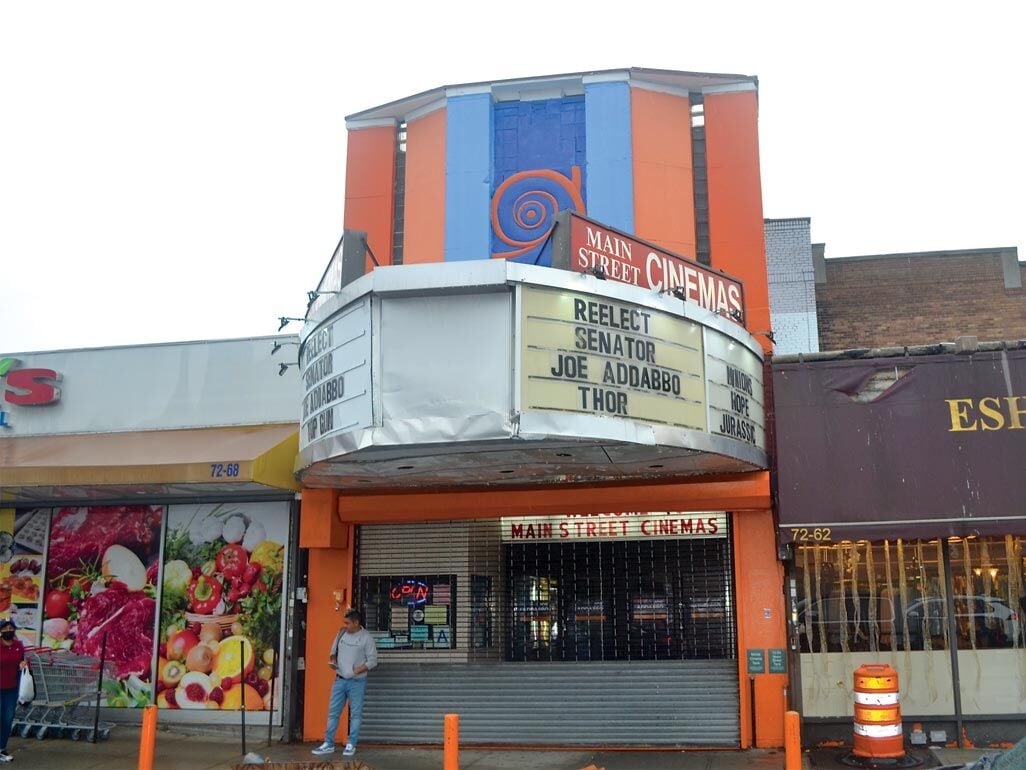
The last picture show on Main Street.

https://bloximages.chicago2.vip.townnews.com/qchron.com/content/tncms/assets/v3/editorial/6/1f/61fd09f5-44a0-55ed-8ace-d9ead1302e97/6319fed66efc0.image.jpg 

Queens Chronicle 

 When Kew Gardens Hills resident Richard Reif first attended Main Street Cinemas back in 1946, a day at the picture show cost only 25 cents.

“You could spend the whole afternoon there, which me and my friends did,” he remembered fondly. “You got two feature films, a cartoon, a newsreel and an episode of a serial — and you could bring your own food.”

So it’s not difficult to imagine his disappointment when, after seeing Idris Elba’s latest film, “The Beast,” last weekend, he found out that would be the last movie he ever saw at the theatre, which closed its doors earlier this week.

It is rumored that the theater is closing due to a rent increase; however, the Chronicle was unable to confirm that, as owner Rudy Toolasprashad did not respond to multiple queries. City property records show that the lot — which includes the movie theater and all the stores between it and the corner of 72nd Drive — was purchased by G & Y Main Street Plaza LLC in February of this year. It is not clear whether the purchase has any connection to Main Street Cinemas’ shuttering.

Like all theaters, Main Street Cinemas had previously closed during the earliest days of the pandemic. Though many other small film venues across the country never reopened, Main Street Cinemas welcomed movie-goers back in March 2021.

“I thought then it would close for good, but it didn’t,” Reif said. “This summer you know, I went to movies like ‘Top Gun: Maverick,’ and ‘Elvis’ and ‘Thor,’ and there were big turnouts — people of all ages, parents brought their kids for things like the Sonic Hedgehog movie. So that really surprised me that it’s closing.”

The institution has been a staple in the community since it opened in 1941, when it was called the The Main Street Playhouse. It played the starring role in the lives of many young people over the years.

 Queens Chronicle

“You could spend the whole afternoon there, which me and my friends did,” he remembered fondly. “You got two feature films, a cartoon, a newsreel and an episode of a serial — and you could bring your own food.”

So it’s not difficult to imagine his disappointment when, after seeing Idris Elba’s latest film, “The Beast,” last weekend, he found out that would be the last movie he ever saw at the theatre, which closed its doors earlier this week.

It is rumored that the theater is closing due to a rent increase; however, the Chronicle was unable to confirm that, as owner Rudy Toolasprashad did not respond to multiple queries. City property records show that the lot — which includes the movie theater and all the stores between it and the corner of 72nd Drive — was purchased by G & Y Main Street Plaza LLC in February of this year. It is not clear whether the purchase has any connection to Main Street Cinemas’ shuttering.

Like all theaters, Main Street Cinemas had previously closed during the earliest days of the pandemic. Though many other small film venues across the country never reopened, Main Street Cinemas welcomed movie-goers back in March 2021.

“I thought then it would close for good, but it didn’t,” Reif said. “This summer you know, I went to movies like ‘Top Gun: Maverick,’ and ‘Elvis’ and ‘Thor,’ and there were big turnouts — people of all ages, parents brought their kids for things like the Sonic Hedgehog movie. So that really surprised me that it’s closing.”

The institution has been a staple in the community since it opened in 1941, when it was called the The Main Street Playhouse. It played the starring role in the lives of many young people over the years.


Sunday, September 11, 2022

Saturday, September 10, 2022

Governor Kathy Clown let pandemic profiteering donor gouge taxpayers for COVID-19 tests

 https://nypost.com/wp-content/uploads/sites/2/2022/09/hochul-yesterday1.jpg?quality=75&strip=all 

Times Union

 Last December, Gov. Kathy Hochul’s administration received an offer to buy 26 million at-home coronavirus tests from a New Jersey-based distributor that happened to be a major campaign donor to the governor.

The price offered by Digital Gadgets founder and CEO Charlie Tebele was $13 per test, far steeper than what other companies were proposing for similar rapid antigen tests. Hochul’s administration had just approved a deal with another firm to buy 5 million tests for just $5 each.

Still, the Hochul administration quickly agreed to pay $338 million to Digital Gadgets at the higher per-test price. The state Division of Budget and Hochul’s office signed off on the deal on Dec. 20, the same day Tebele made the proposition.

Despite that tight timeline, Digital Gadgets contends the deal was "thoroughly negotiated."

The Times Union reported in July that Tebele and his family members have donated nearly $300,000 to Hochul’s campaign, including $70,000 before last winter. That's when Hochul's administration signed two purchase orders to buy $637 million in tests. Tebele subsequently hosted a campaign fundraiser for Hochul in April, records show.

While three other companies sold tests to the state Department of Health last winter for $7.80 each or less, Digital Gadgets charged an average of $12.25, according to records provided by the state comptroller's office.

Despite buying 52 million tests in bulk, the administration paid Digital Gadgets as much or more than consumers would pay in a retail store, according to Bill Hammond, senior fellow for health policy at the Empire Center for Public Policy.

Hammond reviewed the records obtained by the Times Union and was struck by the significantly higher price the administration paid Digital Gadgets, resulting in hundreds of millions in additional spending.

“The Hochul administration is saying it was not because they were a donor, but should answer the question of why they so eagerly got into business with this very high-priced vendor — and bought more than half their total amount from this one supplier — when they knew it was charging a much higher rate than they had been paying,” Hammond said.

Hochul has argued that Digital Gadgets was uniquely able to deliver a significant quantity of rapid tests before schools reopened in early January, a time when the highly contagious omicron variant was threatening to keep them closed. She's noted the state was getting "slammed" by the variant by mid-December. 

"I was not aware that this was a company that had been supportive of me," Hochul said during a July 20 press briefing, referring to the campaign donations. "I don't keep track of that. My team, they have no idea."

 "But the fact that there was someone who could meet that need at that time allowed us to deliver critically important test kits when nobody else — including the federal government — could get their hands on it," she said. "As a result, we got kids back in school in January, as opposed to sitting home another semester."

But as Hammond has written, the administration continued paying for significant quantities of Digital Gadgets tests after the omicron wave subsided. 

The $637 million in spending began on Dec. 30, and the Department of Health made 239 separate payments through March 25 to Tebele's company, paying for the tests as they were delivered. Sixty-two percent of the payments, or roughly $395 million, were made after COVID-19 hospitalization levels had returned to pre-spike levels in late February, according to Hammond. By that time, tests from other vendors were more available. 

According to Digital Gadgets, the bulk of the tests had been delivered by late February and the company was owed significantly more than $395 million at that point.

Though the state's purchase orders were signed in December and January, New York likely would have been able to stop making the purchases before spending the whole $637 million.

In March 2020, state Budget Director Robert Mujica issued a directive to all state agencies instructing them to include "into all COVID-19-related purchases" language reserving the right to terminate those orders with 30 days’ notice "for any reason." And for "medical equipment, personal protective equipment, or similar products and services," the state could terminate an order with only two days’ notice.

Agencies could seek an exemption, but there's no indication the health department sought one for the Digital Gadgets' orders.

The Department of Health declined to say whether it could have rescinded its deal with Digital Gadgets once the omicron variant waned, saying it does not comment on "legal hypotheticals."

Friday, September 9, 2022

Mask mandate on mass transit is over

https://pbs.twimg.com/media/FcNK9uzX0AE7kMO?format=png&name=small 

Queens Post

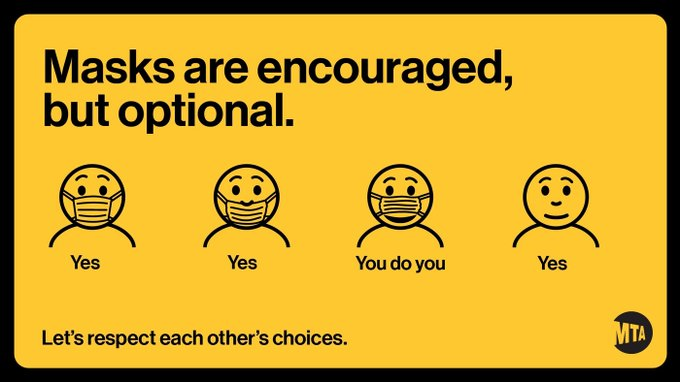
The state’s mask mandate for public transit has been lifted, Gov. Kathy Hochul announced Wednesday.

Hochul said the state will immediately end masking rules on subways, buses, Metro-North and the Long Island Rail Road. The new policy also applies to airports, for-hire vehicles, correctional facilities, detention centers and homeless shelters.

The governor said that while the masks are no longer required, their use should be encouraged. Signs will be posted on the subway and in transit areas that will promote mask use but make clear that they are optional.

There's the sign above. These are the people that want to induce congestion pricing on people. Confederacy of dunces 2022.

State and city shafts the poor immigrants left homeless after Ida


City Limits 

Vicente Guerrero, 40, finds it hard to believe that a year has already passed.

“It can’t be a year since the flooding,” Guerrero said by phone on Sept. 1, the one-year anniversary of the day the remnants of Hurricane Ida passed through New York, washing away everything in his three-bedroom basement apartment in Flushing, Queens.

After losing his belongings, Guerrero slept on the couch of a friend in Manhattan—a fellow food delivery worker like himself—for more than four months, until he finally found a room in a three-bedroom apartment in Queens that he could afford, and that was not in a basement.

Guerrero’s home was one of 11,000 damaged by floods from Hurricane Ida, according to Gov. Kathy Hochul’s office. As the one-year anniversary of the storm passed this week, many of those impacted continue on a slow recovery: homeowners who filed a negligence claim against the city are getting denied, and more than 100 displaced people who were placed in hotels are still in them.

And while 41,367 households across New York state were approved for $223.3 million in disaster assistance from the Federal Emergency Management Agency (FEMA), another Ida relief fund established by the city and state to help undocumented storm victims has been less impactful.

The Ida relief fund for “excluded” New Yorkers was set up by the city and state for people who suffered damages from the historic flooding but didn’t qualify for aid administered by FEMA because of their immigration status. But a year later, after extending the application period several times, just a fraction of the funding has been used. The program closed to new applicants definitively on April 29.

According to New York’s Department of State, out of 554 applicants, 373 were approved for aid and 330 have received a cash payout to cover what they lost. In total, just under $2 million—or $1,901,034—of the $27 million allocated for the program has been used and distributed to storm victims as of Sept. 1.

Advocates point to several reasons for the lackluster participation numbers. The relief fund was announced by city and state officials on Sept. 26, more than 20 days after the storm hit New York, when some victims would likely have already moved out of damaged residences without documenting the losses they’d suffered.

The six community-based organizations (CBOs) charged with reviewing applications and administering the funds have explained that there are multiple checks to go through before an applicant can access funding, and relies largely on a victim’s ability to gather evidence of damages.

That was one of the reasons Guerrero said he never applied for the fund: Along with a general distrust of government programs, he anticipated it would be difficult for him to substantiate what he spent related to his displacement since he was more focused on surviving in the immediate aftermath of the storm, rather than documenting every step of his loss, he said. 

Those who applied and were approved could receive a maximum of $72,000, including up to $36,000 in grants for housing-related assistance and up to $36,000 in assistance for other needs, like vehicle damage, moving expenses, and childcare. So far, 34 percent of the dispersed aid went to direct housing-related assistance, while the majority was for the “other needs assistance” category.

Since May, when the fund closed for good, 42 new applicants received a reimbursement. It’s unlikely that the 43 applicants still pending will receive the maximum aid amount, and even if that happens, there would still be several millions left unused from the $27 million allocated for the program.


Thursday, September 8, 2022

NYC Ferry has a sinking feeling


 THE CITY

New York City is again looking for a company to run its ferry service — and wants the winner of the next contract to contribute more revenue rather than receive millions of dollars in subsidies to keep the service afloat. 

The city’s Economic Development Corporation, which oversees NYC Ferry, posted a request for proposals on Wednesday looking for a potential replacement for current operator Hornblower Group, whose contract is up next September.

Applicants will have to include a “revenue generation plan” focused on offsetting costs and EDC is inviting “creative thinking from private sector respondents” on how to make it sustainable, according to the request posted in the City Record.

EDC will favor the proposals with revenue plans that funnel the most money back to the city, the agency wrote. 

The expiring contract includes revenue sharing on the boat’s concessions and interior media ads, as well as the fares based on total ridership and revenue numbers, noted a spokesperson for Hornblower, which plans to put in a new bid. 

“Today, no other operator is better prepared to build upon the system’s early success and implement the vision to create a more equitable and accessible NYC Ferry,” Kevin Rabbitt, the CEO of Hornblower Group, said in a statement to THE CITY on Wednesday.


The fair market rent is still too f%@*!#g high

This is just as logical as what the city calls an affordable apartment in their "affordable" housing program. And four bedroom apartments? I thought that was called a house.

Crime issues are her forte against AOC

https://pbs.twimg.com/media/Fa5CPpiXgAAp7x0.jpg:large

FOX News 

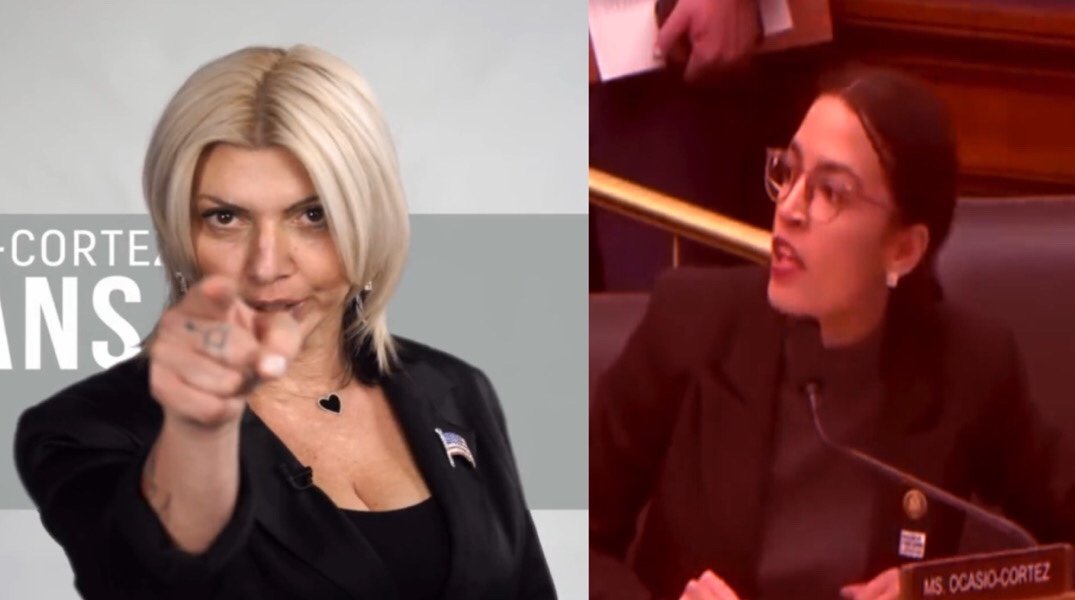
Winning the Republican primary with 67% of the votes, a challenger to "Squad" member Democratic New York Rep. Alexandria Ocasio-Cortez, D-N.Y., wants to take down the progressive firebrand because she's fed up with crime in New York City.

Congressional candidate of New York’s 14th district Tina Forte told Fox News Digital that people are afraid to be out at night because of the city’s rising crime.

She added that she spoke with constituents directly about crime by going to their homes, businesses, and even on the streets of New York.

"They don't come out at night anymore like they used to," Forte said.

New York's 14th congressional district candidate Tina Forte vows to unseat Rep. Alexandria Ocasio-Cortez. (Fox News)

Forte went on to say, "They tell me personal stories to be honest with you." 

"I grew up here, I own a business here, I raised my family here.  I see the difference. I see stores closing earlier than when they normally do. You have a grandma and grandpa who don’t come out for a cappuccino at night anymore.  They don't want to come out or if they are out, they head home because it's getting dark. People are afraid to be out at night. Those are the things I am getting back from people as I meet with them."

Although Big Apple murder rates were similar this year compared to last, other major crimes have surged. Police statistics and polls show that New Yorkers are fed up, Fox News Digital reported earlier this month.

Ocasio-Cortez has been one of the most vocal and high-profile lawmakers to demand the defunding of American police departments. In her own district, major crime has climbed steadily over the past two years.

Wednesday, September 7, 2022

Nabes not so high on weed shops

https://bloximages.chicago2.vip.townnews.com/qchron.com/content/tncms/assets/v3/editorial/2/63/263b3d69-0672-5d5c-9a44-af34ba0b9e3f/6310d60603f85.image.jpg


Queens Chronicle

Last Thursday, the Office of Cannabis Management announced that New York State had begun accepting applications for the first recreational cannabis dispensary licenses.

The first legal adult-use retail dispensaries will be run by those impacted by the prohibition of cannabis. Qualifying business applicants must have a conviction for a marijuana-related offense or have a parent, legal guardian, child, spouse or dependent with one in New York.

One Ozone Park man has already submitted one application and is working on a second, with hopes of eventually opening a dispensary in Queens.

“My business partner and I are both justice-involved and we both meet the criteria,” said Jeremy Rivera, a 38-year-old from Ozone Park.

“Kush Culture is me 51 percent, him 49 and then Gourmet Buds is him 51 percent me 49,” he told the Chronicle this week.

Rivera spent eight years in prison for nonviolent crimes, two of which were drug-related.

Now, he owns a construction-consulting company where he teaches OSHA and city buildings regulations and audits job sites for construction-safety compliance.

“I am and always have been ambitious. Even when I was in the streets and I was dealing drugs, I was very ambitious.”

His business experience helps him check off the box from the state that requires applicants have experience owning and operating a “qualifying” business that has been profitable for at least two years.

His business partner owns a deli in Lindenhurst, LI.

Although Rivera is a Queens guy through and through, he is not sure he will be able to open the dispensary here.

“I’m not getting really good responses from the communities in Queens,” he said.

“I’d love to open a dispensary here, but I don’t know. It seems like I’m getting a lot of conservative views on this.”

He specifically wanted to open up a shop in Ozone Park but was told by community leaders that it might not be “the right place.”

Queens grounds are parched


 Queens suffers from monthslong drought 1

 Queens Chronicle

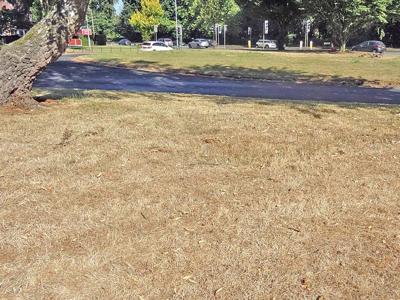
With the borough just recovering from the latest heat wave (and bracing itself for the next one), it may not be difficult to fathom that Queens is in a moderate drought — or at the very least, is approaching one.

The U.S. Drought Monitor says that Queens County is in a moderate drought, and, in parts of southern Queens, a severe one. College Point environmentalist and visiting scientist and faculty member at the Woods Hole Oceanographic Institution James Cervino characterized it as “the worst ever” in Queens.

That is barely an exaggeration — Matthew Wunsch, a spokesperson for the National Oceanic and Atmospheric Administration, told the Chronicle that between June 1 and Aug. 28, the area surrounding JFK Airport received 5.14 inches of rainfall. That’s the area’s second lowest level since 1949 for that period. The area surrounding LaGuardia Airport has gotten 8.09 inches of rainfall over those 12-odd weeks, the 14th lowest since 1940.

But the New York City Department of Environmental Protection has not gone so far as to declare an official drought.

“Things are certainly dry here in New York City. We have not had a lot of rain this summer — the ground is brittle and everything is pretty brown,” said Ted Timbers, the DEP’s communications director. “But New York City gets its water supply from protected reservoirs in the Catskill Mountains in the Hudson Valley.” Those, he said, have an “ample” amount of water in them, adding that the agency is monitoring the supply and the forecast closely.

But as the borough prepares for hurricane season, the first since Hurricane Ida took 11 lives in Queens and damaged countless homes a year ago to the day, the drought may be cause for concern, and may lend itself to flooding.

“You’d think that because the ground is dry, that it can actually absorb more water,” Wunsch said. “But dry ground, it actually becomes less porous, and more likely to have runoff, especially if a lot of heavy rain happens at once.”

Or, as Cervino put it: “Drought leads to cracks, desertification, floods and erosion.”


GSD MIA


THE CITY

The city Department of Health and Mental Hygiene had nearly 1,200 unfilled positions in June — making the agency on the pandemic’s frontline one of 46 in city government missing more than 10% of their budgeted employees, according to preliminary figures obtained by THE CITY.

The numbers reflect an ongoing challenge in hiring and retaining government workers, an issue that’s getting scrutiny at a hearing on Friday under City Councilmember Gale Brewer’s Oversight and Investigations Committee, which produced the preliminary numbers.

They show the citywide government jobs vacancy rate at 7.9% as of June. The agency with the most extreme shortfall was the Commission on Human Rights, which had 37 of its 136 budgeted positions unfilled — a rate of 27.2%.

Among larger agencies, vacancy rates were highest at the Department of Buildings, at 24.2% (489 vacancies), the Department of Health at 19.1% (1,189 vacancies) and the Department of Social Services at 17.3% (2,256 openings).

The numbers were slightly better at the city’s uniformed agencies.

The Department of Correction had a shortage of 862 workers in June, or 9.1%, although an extended trend of employees calling out sick has been compounding problems there.

And while the NYPD had a comparatively low vacancy rate of 2.9% in June, that equates to 1,448 unfilled positions, the preliminary numbers show.

“I don’t know where all these vacancies are, but I can tell you from personal experience, everything is slow in terms of getting sign-off,” said Brewer. “I’m just worried the expertise we’ve had over the years is going to disappear from the city.”