Queens Post
I am a healthy 24-year-old man who commutes to work on a bicycle, and I
love it. I think it’s a great alternative mode of transportation.
However, I understand that there is a huge community of people who
cannot or prefer not to bike around the city.
I have spoken with many local residents who feel ignored by the
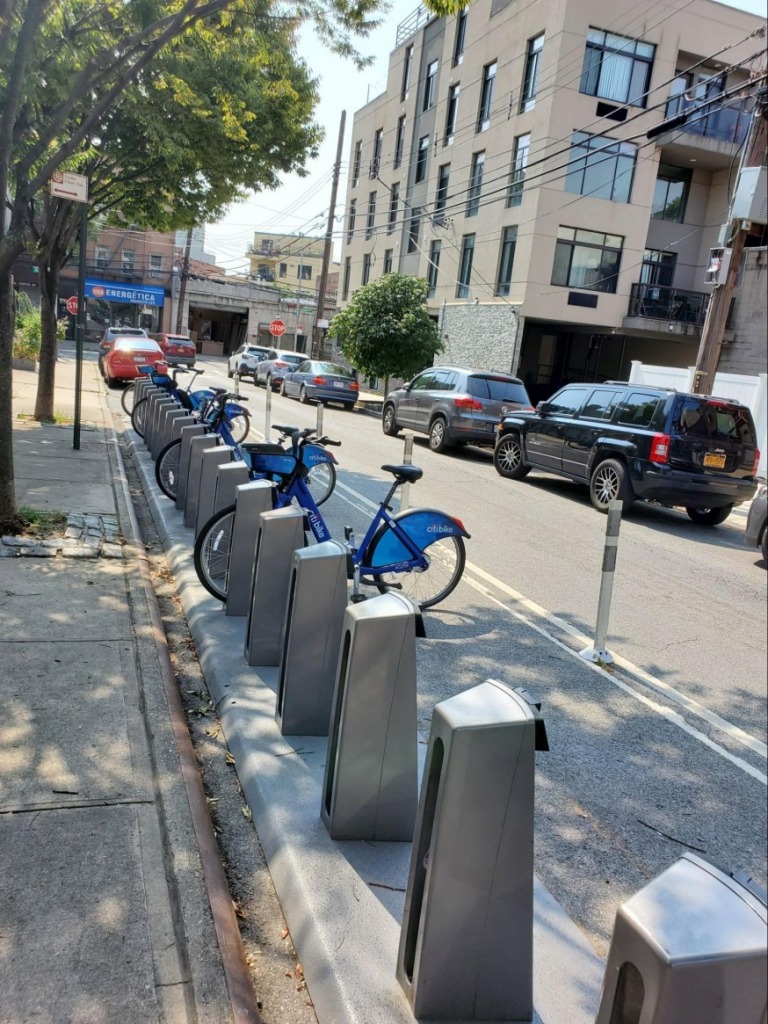
rollout of bike lanes and Lyft-owned Citi bike docking stations in
northwest Queens. The major rollout of docking stations throughout 2021
has been uncareful and unsafe. It does not align with the interests of
our community.
The 2-way bike lane on Crescent Street is dangerous because it runs
against oncoming traffic on a busy street near Mt. Sinai hospital. Last
Sunday marked 10 months since Alfredo Cabrera Licona was killed by a
reckless driver in this bike lane – a collision that could have been
avoided with proper bike lane placement.
Protecting bike lanes is necessary; however, the majority of
cycling-related accidents occur at intersections. A bike lane going the
opposite way never belonged on Crescent Street. There are better side
streets for DOT to allocate its resources within Astoria, Woodside,
Jackson Heights and East Elmhurst.
Many of us are in favor of making the streets safer. Recently, I was
almost hit by a car while I was trying to access Citi bike parking on
29th Street and 24th Avenue, near the Triboro Bridge. Not only is it
dangerous to dock a bike in the middle of a street, it is reckless of
large corporations like Lyft to normalize not wearing a helmet.
I recently met Aubrey Manfredi, a lifelong Astoria resident who is
disabled. She told me the following about living near the Crescent
Street lane: “It’s good for bike riders but not for people like me, who
are going to the store. It’s very hard. Trucks get stuck in the bike
lane because there is no room. Parking space is so limited. Cars are
waiting for a spot every morning.”
Manfredi’s family is now paying $225 each month to reserve a private
parking spot a few minutes away from her apartment. “It really has
affected my health. In the snow, I have to walk to the corner to get
into the car. I can’t get into the car in front of my house because of
the parking, and it’s painful for me to walk.”
A lack of parking space results in overcrowded streets, which makes
it difficult for ambulances to reach hospitals like Mount Sinai, and
difficult for delivery vans to serve our families in Astoria.
Ultimately, workers are forced to idle in the bike lane, causing further
danger and noise pollution.
Circling the block or idling to wait for a parking spot results in
higher emissions and defeats the green objective behind the ramping up
of bike lanes citywide. Furthermore, our city should have compassion for
the many families who lack the financial means to afford a driveway.
Street parking is a necessity during a deadly pandemic, especially
for immunocompromised folks who must avoid public transportation. We
need to be much smarter and more class conscious in determining the
location of bike lanes.
The development of new infrastructure must incorporate common sense.
In particular, we can move Citi bike docking away from alternate side
parking onto wider sidewalks, and add mini-stations near schools and bus
stops.
If we are going to reimagine the relationship between motorists and
cyclists, there must be some compromise involved. For example, instead
of creating rush hour congestion with a bike lane on the 59th Street
bridge, the city could significantly expand ferry service between Queens
and Manhattan for cyclists’ benefit.
This is not a battle between motorists and cyclists. This is a result
of corporate greed and corrupt politics which are failing us. We must
hold our leadership accountable for systemic issues due to a lack of
consideration for the most vulnerable. As a community, we ought to stand
in solidarity; we must make it clear to city leaders when new
transportation initiatives are hurting New Yorkers.
Unfortunately, both Democrat and Republican politicians care more
about re-election and their resume than doing the right thing. A selfish
City Council member would boast, “I placed X amount of bike lanes
during my tenure” without considering the impact on residential and
commercial streets. That is no way for a representative of the people to
think and behave.
We must push for a smarter rollout of bike lane placement which
preserves street parking, reduces congestion and maintains quality of
life for seniors, students, veterans and the disabled. Bike lanes should
be approved by the community and only implemented if appropriate safety
guidelines are met. Above all, we ought to design a system of decision
making that works for everyone in Astoria.