Showing posts with label Courts. Show all posts

Friday, September 3, 2021

Shabby D.A.'s


 NY Post

 District attorneys across the Big Apple last year declined to prosecute accused felons at nearly twice the rate of 2019 — letting more than 6,500 suspects off the hook, The Post has learned.

Prosecutors dropped all charges in 16.9 percent of the 38,635 felony cases that were closed in New York City during 2020, according to data compiled by the state Division of Criminal Justice Services.

The year before, that rate was just 8.7 percent and the average for 2016 to 2019 was an even lower 8 percent, the statistics show.

Even though far fewer cases were disposed of last year, the 6,522 defendants whose charges were dropped exceeded the 5,985 who weren’t prosecuted in 2019.

The total number of cases closed in 2020 plunged by a massive 44.1 percent last year amid court closures due to the COVID-19 pandemic — down from 69,119 the year before.

A law enforcement source said there were “a lot of layers to the problem,” including veteran prosecutors retiring or leaving for other jobs and “inexperienced [prosecutors] and cops making it harder to do trials,” as well as the political nature of DAs’ jobs.

 “The DAs are worried about getting re-elected,” the source said.

“Plus, you throw in a bucket of ‘woke’ and no one is getting prosecuted.”

The source also pointed to controversial, recently enacted laws governing the disclosure of evidence to the defense, known as “discovery.”

“Now, if someone takes a plea, you still have to provide the discovery information even though the case is closed,” the source said.

“Before, you didn’t have to. If you DP [decline to prosecute] a case, there is no discovery.”


Friday, July 16, 2021

City courthouses are pig stys and petri dishes

 https://images.squarespace-cdn.com/content/v1/5b9ffe0f1137a680c2c08250/1626134641614-EGMNGG3KPYGE2KQBXZ4W/court+conditions2.jpeg?format=500w 

Queens Eagle

As Queens, Staten Island and Bronx courthouses resumed in-person day arraignments Monday, public defenders across New York City called out the city for what they say are “deplorable” conditions.

The Association of Legal Aid Attorneys condemned the Office of Court Administration and the Department of Citywide Administrative Services for unsanitary and unhealthy conditions that they say are rife throughout city courthouses.

“As ALAA members returned to ‘in-person’ arraignments, they found that OCA and the City had not only failed to remediate the dangerous and unsanitary conditions, they had failed to take a single measure to clean or upgrade these areas from their pre-pandemic levels to meet even minimum standards of health and safety,” the union said in a statement.

The calls to clean up conditions come not only because COVID-19 remains a threat but because as proceedings resume, people who work in the buildings are seeing its conditions again with fresh eyes, attorneys say.

“We've always known it was bad but I think with COVID we just had the separation from that environment,” said Julie Sender, the Manhattan Criminal Defense Practice vice president of the Association of Legal Aid Attorneys. “We don't have to just accept that we're going to get sick and that we're going to maybe bring roaches home or bring bedbugs home because we were at work and it was not cleaned.”

Sender, who mainly works out of the Manhattan Criminal Courthouse building at 100 Centre St., said that nonpublic courthouse spaces, inlucing jail cells, pens and meeting rooms for defendants and their attorneys, are often unsanitary.

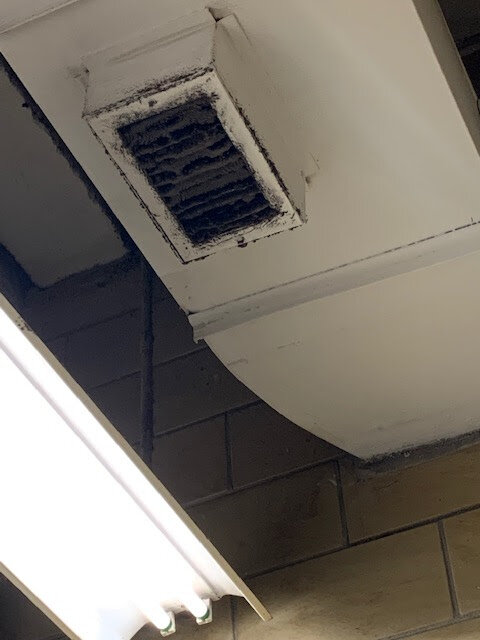
Surfaces are stained, ventilation systems are covered in dust and pests like insects and rodents are sometimes spotted, Sender said.

The conditions are present throughout criminal courthouses in the city, including in Queens, attorneys said.

Sunday, September 20, 2020

New York's bail reform law has led to a rise in Omerta

 https://assets.dnainfo.com/generated/photo/2015/07/bullets-1436469582.jpg/larger.jpg

NY Post

With shootings in the city up 87 percent this year and murder mushrooming by 34 percent, the NYPD needs cooperating witnesses more than ever.

But they are coming up against a wall of stony silence. And cops and prosecutors point to myriad reasons.

“The community helps solve lots of different types of crimes,” Giacalone said. “When the public doesn’t trust the police, the information stops flowing. And that information is vital.”

Police worry that COVID-19 changes like ubiquitous face masks will make it even more difficult to identify shooters.

Then there is the rising tidal wave of gang violence, where scores are settled on the streets and not a court of law. Gangbangers rarely talk.

“It’s a challenging time,” said NYPD spokesman Al Baker. “There’s an anti-snitch culture that’s taken root amid a level of violence that makes people reluctant to cooperate with our investigators. But we work every day with our partners in the city’s district attorneys’ offices to combat this culture and to solve crimes and help ensure public safety.”

Experts say recently enacted laws that endanger witnesses aren’t helping matters.

“The New York State Bail Reform Act has royally screwed up policing,” Sgt. Joseph Imperatrice, founder of Blue Lives Matter NYC, told The Post, saying the new discovery rules and judges letting criminals go have reversed “decades of progress.”

“Witnesses and confidential informants have little to no protection in regards to the new discovery rules,” he explained. (Reliable confidential informants, also known as CIs, are often paid).

“Old-school policing, where good officers would meet with people on the street to gain information, has dwindled,” he added. “Many witnesses know that their personal information will be available and possibly get out to the defense team.”

Under the new rules, prosecutors must give defense counsel the name and contact information of anyone with information relevant to a case within 15 days of arraignment — ­regardless of whether the person will testify at trial.

One seasoned Brooklyn detective said the new discovery rules have a lot to do with cops being stonewalled. “Witnesses ask if the shooter will get their name and they are told, ‘Probably yes,’ ” he said.

He said he used to have cooperating witnesses in about 75 percent of cases, but “now I would say we get witnesses in less than half of the cases.”

  Impunity City

 This bail reform law was designed to bring down inmate population in prisons, most notably Rikers Island, to make way for four tower prisons in four boroughs that no one wants. Sorry, no sane person wants. The list of crimes that are exempt from judge's decision to set bail are mostly based on the most violent and devastating acts you can commit on your fellow citizens and damage them for life mentally and financially. And a majority of them are burglaries and robberies, which are usually committed with the use of a gun. 


Friday, July 31, 2020

deBlasio and the NYPD lie about court's role in the rise in shootings, and continue to lie about it.


They’re starting to run out of excuses.

The mayor and police have repeatedly blamed a coronavirus-related court shutdown for the explosion of gun violence rocking the city — but firearms cases are making their way through the criminal justice system at the same rate as last year, a Post investigation shows.

The revelations come after The Post showed that the NYPD’s own data did not support those claims that bail reform and early prison releases over coronavirus were driving the spike.

“It’s a combination of things — bail reform, COVID releases from prison, court shutdown, which has Rikers [Island] at half of where they were,” Chief of Department Terence Monahan said in a July 6 press briefing, seeking to explain the 70-percent rise in shootings this year. Commissioner Dermot Shea and Mayor de Blasio have also blamed court closure for the uptick, with Shea calling the tie “indisputable” on Monday.

But the data tells another story.

In December 2019, as the city officials touted a record-breaking low in shootings, there were 2,285 open gun cases in Gotham with 13 percent of suspects awaiting trial, according to an analysis by The Post.

In July 2020, with shootings skyrocketing to 1990s-like levels, the courts had 2,181 open firearms cases and 10 percent in lockup — or 104 fewer pending gun cases, the data shows.

Additionally, of the 1,957 people facing gun charges out on the streets in July — which is 27 fewer than in December — only 2 percent, or 39 people, were busted again for a firearm, according to the data obtained by The Post.

There were also more gun and murder arraignments from April to June compared to October through December last year, with 819 over the three-month period this year compared to 642 last year, court data shows.

NY Post

The buck continues to stop everywhere but on Mayor Bill de Blasio’s desk.

Hizzoner once again attacked the messenger Thursday rather than address a new Post article that found firearms cases are going through the criminal justice system at the same rate as last year — refuting his claims that a coronavirus-related court shutdown is most responsible for this summer’s surge in shootings

“I have not seen The Post article and I don’t always get accuracy from that publication,” de Blasio sniffed during a virtual City Hall press briefing when asked about the damning piece by a Wall Street Journal reporter.

In December 2019, there were 2,285 open gun cases in Gotham with 13 percent of suspects awaiting trial, according to the Post analysis based on NYPD and court data. In July 2020, the courts had 2,181 open firearms cases and 10 percent in lockup — or 104 fewer pending gun cases, the data shows.

There were also more gun and murder arraignments from April to June compared to October through December last year, with 819 over the three-month period this year compared to 642 last year, court data shows.

De Blasio tried to discredit those numbers — before realizing they came from his own police department.

“Anyone can try and manipulate a statistic,” he said.

When the Journal reporter pointed out the data were NYPD statistics, de Blasio refused to back down.

“It’s a publication that historically has provided inaccurate information. It may be accurate statistics in this case, but I’m just not going to be gentle about the point that when there is a history of inaccuracy and an axe to grind it’s worth saying,” de Blasio fumed at The Post, rather than addressing the issue at hand.

“There is no one claiming the court system is functioning as normal. There’s just no one doing it,” de Blasio flailed.


Friday, November 8, 2019

Governor Cuomo gets stingy with criminal justice reform


https://www.miamiherald.com/latest-news/kemozn/picture226310540/alternates/FREE_1140/andrew-cuomo-fists-getty-640x480.jpg

NY Post


District attorneys across the state slammed Gov. Andrew Cuomo on Wednesday after he said law enforcement agencies don’t need more funding to implement new criminal justice reforms.

“I think they’ve gotten additional funding, and they’re getting additional funding, so no, I don’t think they need more funding,” Cuomo told reporters at an unrelated event in Albany.

“Everyone always says they want more funding. This year, funding is going to be very difficult.”
DAs have argued they don’t have enough funds to properly carry out the new discovery law — which goes into effect in Jan. 2020 and mandates a 15- to 30-day window for prosecutors and defense lawyers to exchange materials before an arraignment.

They’re seeking extra money for staff and technology upgrades.

“The governor’s unwillingness to appropriate funds for this unfunded mandate will only cause victims to be victimized again when prosecutors are unable to perform the basic functions of their offices,” seethed District Attorneys Association of New York President David Hoovler, a Republican.

“If the state refuses to fund ordinary costs related to the implementation of these new laws, the burden will then be on county budgets, who may be unable to pick up the slack.”

 Hoovler’s organization estimated the mandates could cost law enforcement agencies across the state upwards of $100 million.

Tuesday, June 11, 2019

The Kings County consiglieres

https://wallpaper-gallery.net/images/and-justice-for-all-wallpaper/and-justice-for-all-wallpaper-17.jpg


NY Daily News


Brooklyn lawyers who decide who can get the crucial Democratic ballot line to run for prized judicial seats are getting jobs as legal guardians and referees from the very judges they’re charged with reviewing — and their law firms are appearing before those same judges in active cases.


Of the 25 attorneys listed as serving on the Brooklyn Democratic Party’s judicial screening panel in 2019, at least five have been given jobs as court-appointed lawyers by the judges they’re tasked with reviewing, the Daily News has learned.


Judicial screening panel members Helene Blank, Mark Longo, Betty Lugo, Melissa Bonaldes and Steven Finkelstein all took work in the last year from judges they’ve reviewed or could review in the future, an analysis of state court records shows.

Alex Camarda, a senior policy analyst at the good-government group Reinvent Albany, described that dynamic as problematic.

 “That certainly creates the perception of a conflict of interest,” he said. “The public should have confidence that judges are being selected on the merits rather than their position on cases involving party officials.”

Since 2018, Finkelstein has received 20 court-appointed referee assignments from Brooklyn Supreme Court Judge Mark Partnow and six from Judge Lawrence Knipel, court records show.

From 2008 to the present, Finkelstein has raked in at least $271,000 from those and similar appointments, records show. He joined the panel in 2016.

Veteran lawyer Martin Edelman has served as the judicial panel’s chairman since 2004. He noted that several bar associations appoint its members and about one-third of the panel’s members are selected by Democratic Party district leaders.

Edelman, the former president of the New York State Trial Lawyers Association, said since state Supreme Court judges serve 14-year terms, members of the panel usually only review them once.

“The idea that we get to see the same judge year after year is simply not the case,” he said, arguing that if judges were trying to sway attorneys through doling out appointments, they would have to influence more than five lawyers to secure a majority of votes on the panel.

The panel’s judicial screenings take place the same year judges run for election or re-election. Partnow was re-elected to serve in Brooklyn Supreme Court in 2016, the same year Finkelstein joined the panel. Judge Noach Dear was elected in 2015, and Knipel was re-elected in 2012.

In the last two years, the three judges have directed 28 referee appointments to Lugo, 44 to Longo and 30 to Blank, records show. Blank and Longo have both served on the panel since around 2005, about 14 years, according to Edelman.

Lugo, who’s running for Queens district attorney, served on it in 2015 and 2017. She said she’s not serving on the panel this year, despite the fact that she’s listed on its roster. She said she’s “almost positive” she didn’t review Dear or Partnow as a member of the panel.

 Longo, an ethics lawyer and former president of the Brooklyn Bar Association, acknowledged he could see how observers might perceive the potential for a conflict, but said, “In this situation, it’s not the case.”