

Friday, March 8, 2024

Tuesday, March 5, 2024
Still need congestion pricing?
The MTA could potentially find another $600 million in savings in its bloated plans to extend the Second Avenue Subway, a Post investigation found — as the agency faces pressure to prove it’ll spend its upcoming congestion toll windfall wisely.
New York is potentially just about three months away from launching a controversial $15 daily charge on cars that drive below 60th Street in Manhattan, raising $1 billion a year for the Metropolitan Transportation Authority to spend on projects, such as its expansion of the Q line to East Harlem.
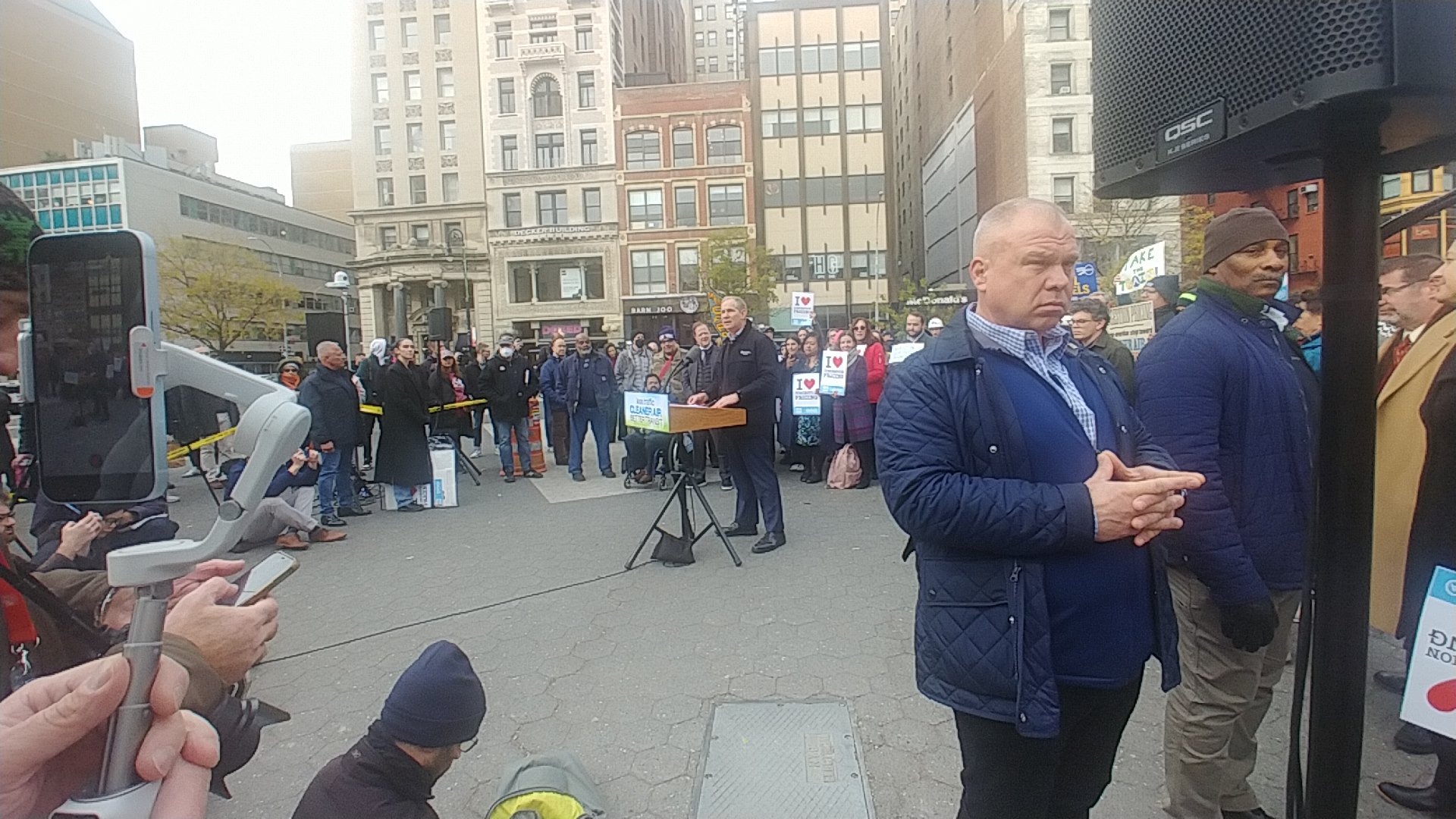
“MTA management is ineffective, and handing more money to unelected bureaucrats will not fix the MTA’s problems,” testified real estate agent Lucas Callejas, 38, of Inwood, during a public hearing about the congestion fee plan Monday.
“I absolutely don’t trust the MTA with my money … They spend like crazy,” added Dana Matarazzo, 40 an oncology nurse at Memorial Sloan Kettering from Staten Island, who spoke to The Post after testifying against the toll.
MTA officials announced last month they shaved $300 million off the $6.9 billion total estimate to extend the Q line from its terminus at 96th Street another 1.5 miles up Second Avenue and then westward along 125th Street to Lexington Avenue.
But The Post’s analysis found another $600 million in savings in the MTA’s station designs, when compared to what it would cost to build a similar project overseas.
While the tunneling costs are in line with those of other major cities, such as London and Rome, the station costs and designs remain in an entirely different league, The Post’s analysis revealed.
Before the recently-announced trims, the MTA’s budget for tunneling, trackwork, stations and power, computer and radio systems was estimated to be $4.1 billion.
The new, “more efficient” station designs have helped lower the figure to $3.8 billion — still more than the $3.2 billion would cost to build a similar project in London, the most expensive of the European cities examined by The Post, in a worst case scenario.
Experts and researchers zeroed in on two major factors that have pushed the MTA’s station costs to levels not seen elsewhere: The amount of area set aside of passengers to circulate on mezzanines before heading down to the platforms; and the amount of “back of house” areas sealed away from public view that provide space for storage closets, mechanical functions and break rooms.
The feds granted permission to rework the 125th Street station design in 2020 in an earlier second round of reviews for the East Harlem leg, but officials not reveal the full scope of the overhaul until stories ran in The Post highlighting the size of the original 2004 design. The first round of tweaks approved by regulators in 2018 allowed the MTA to put the 116th Station in an empty piece of existing tunnel.
The three rounds of reviews have shaved an estimated 17% off of what could have been a $7.6 billion total price tag, records show. Officials have said the third round of reviews remains ongoing.
The overall now-$6.6 billion budget for the East Harlem expansion also includes $245 million for land purchases and eminent domain, $559 million for outside engineering, design and management firms, plus a whopping $943 million for a budget reserve.
The project’s construction costs alone could have been as high as $4.4 billion had the MTA re-used the station designs from the Second Avenue Subway’s Upper East Side extension, a much-delayed project that shattered cost records.
“That’s the hard part, turning this ship around,” said Eric Goldwyn, who lead a team of researchers at New York University that revealed how oversized the MTA’s Upper East Side designs were compared to those used in Stockholm, Rome and Istanbul, dramatically inflating costs.
“When people asked them about our research, they said ‘we were a–holes,’ basically,” Goldwyn added. “I’ve been encouraged by what I’ve seen, but there are absolutely things to keep looking at.”
Sunday, March 3, 2024
Maspeth's newest neighbor....

Fly E-Bike — a manufacturer of electric bikes, scooters, moped and motorbikes — is establishing a presence in Maspeth, Queens.
The company signed a five-year, 52,000-square-foot lease to open a warehouse at The Davis Companies’ 58-30 Grand Avenue, Crain’s New York Business first reported.
The asking rent was unclear but Queens saw an average asking rent of $26.33 per square foot for industrial space in the fourth quarter of 2023, according to a Cushman & Wakefield report.
C&W’s Joseph Hentze, Joshua Kleinberg, Helen Paul, Rico Murtha, Gurpreet “Sonny” Singh and Amanda Gerhardt represented The Davis Companies in the deal while Pinnacle Realty handled negotiations on behalf of Fly E-Bike.
Names of the Pinnacle brokers were not disclosed, and spokespeople for C&W and Pinnacle did not immediately respond to requests for comment.
Constructed in 1930, the building has a total of 156,792 square feet and sits at the corner of Grand Avenue and Rust Street.
Fly E-Bike was established in 2018 and has picked up a lot of momentum as it has grown to at least 40 retail locations throughout the tri-state area as well as Maryland and Pennsylvania, including four in Queens.
While the components for its products are fabricated in China, Fly E-Bike’s vehicles, which cater to food delivery workers, are assembled in warehouses in the United States, according to the company’s website.
Saturday, March 2, 2024
Friday, March 1, 2024
Winnie Greco and the pay to play factory
https://t.co/EzARFtNz6O was right AGAIN!!!! @ViralNewsNYC @AlexJonesMW3 @SaltyCracker9 @TodayX22 @SGTreport @andweknow @nypost @AOC @DonaldTrump @PapiTrumpo @infowars @NYCMayor pic.twitter.com/uwkwO7M0f2
— jonathan David Rinaldi (@JDRforNYC) February 29, 2024
FBI agents raided two Bronx homes owned by a top aide to Mayor Eric Adams early Thursday morning, along with the offices of a Queens mall that hosted Adams campaign operations.
THE CITY previously uncovered strong evidence of potentially illegal straw donations tied to the mall.
The aide, Adams’ director of Asian affairs Winnie Greco, was deeply involved in eight separate fundraising events at the New World Mall that generated tens of thousands of dollars for Adams’ 2021 mayoral campaign.
She is on leave from her job, the Mayor’s press office announced Thursday. Greco is the third person associated with Adams whose home was raided by federal officials in the past four months. In November, the FBI raided the homes of Brianna Suggs, then Adams’ chief fundraiser, and Rana Abbasova, an aide in Adams’ international affairs office.
One New World Mall worker told THE CITY that she was asked by employers to make a $249 donation — and later reimbursed. That would make it a “straw” donation, a criminal violation that has already led to the prosecution of one set of Adams fundraisers by the Manhattan District Attorney, as well as a separate investigation by the U.S. Attorney’s office into another set of donors with links to the Turkish government.
Another New World Mall employee told THE CITY she never made out a check to the campaign and didn’t recognize the signature on the check. Nearly two dozen others who donated claimed that they made their contributions at the behest of or with encouragement from mall managers.
The Bronx raids began at around 6 a.m., when FBI agents, acting in conjunction with the Brooklyn U.S. Attorney’s office, swooped down on two homes owned by Greco on Gillespie Avenue, sealing off intersections. The FBI later confirmed to THE CITY the sprawling New World Mall in Flushing as the site of a third raid.
One neighbor, who declined to give his name, told THE CITY that more than a dozen FBI officials were on Gillespie Avenue ready to enter the home. “They had all the blocks closed off, every intersection,” he said. “It was frozen for a bit. Nobody was allowed to leave.”
An Adams spokesperson said Thursday in a statement about the raid: “Our administration will always follow the law, and we always expect all our employees to adhere to the strictest ethical guidelines. As we have repeatedly said, we don’t comment on matters that are under review, but will fully cooperate with any review underway. The mayor has not been accused of any wrongdoing.”
Greco, who is paid $100,000 a year for her City Hall job, is already being probed by the city’s Department of Investigation in the aftermath of another story by THE CITY detailing allegations of ethical improprieties against her. One business executive alleged to THE CITY that Greco solicited a $10,000 donation for a nonprofit she had founded as a condition for attending an event at Gracie Mansion with Adams honoring the Chinese community. A former Adams campaign volunteer who obtained a city government job with Greco’s help told THE CITY that Greco demanded he supervise renovations at one of her houses for no pay.
A longtime advisor to Adams dating back to his start as Brooklyn borough president a decade ago, Greco has helped raise hundreds of thousands of dollars for his prior and current mayoral campaigns. Adams’ chief confidant and top political advisor at City Hall, Ingrid Lewis-Martin, once called Greco her “baby sister.”
When asked by THE CITY about Greco in November, Adams said he had a “hands-off policy when things are being reviewed.” Greco still appeared with him at some public events, including in Times Square on New Year’s Eve for the ball drop and at a women’s focused event later in January.
However, Greco was conspicuously absent from or played a smaller than usual role in Adams’ recent Lunar New Year celebrations.
Subscribe to:
Posts (Atom)


