Showing posts with label luxury development. Show all posts

Tuesday, April 30, 2024

A little more unaffordable housing in Queens

 https://queenspost.com/wp-content/uploads/2024/04/87053509b64062778a23f2bc7cb95891-full.jpg?resize=700,365

 Queens Post

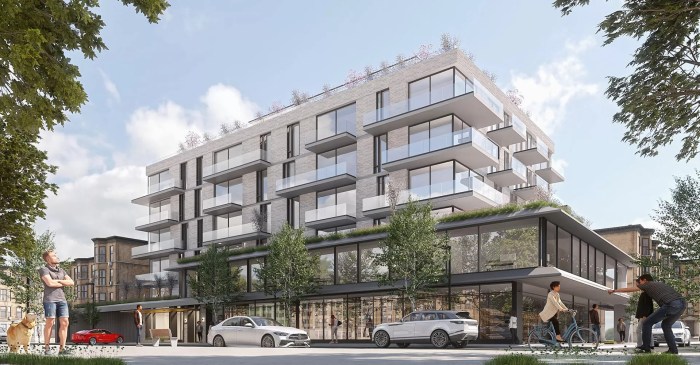
A total of 1,412 units across six upcoming luxury buildings are expected to transform the Queens Plaza area in Long Island City by creating much-needed housing in the area.

All six projects are expected to be completed as early as this year and no later than 2026. As each project nears completion, the housing units will be put on the market.

One of the projects anticipated to be completed this year is the Noble, at 27-09 40th Ave. This luxury condominium building will consist of 46 units across six floors. Among the amenities for homeowners are indoor parking, bike storage, a residents lounge, a fitness center, rooftop terraces and personal storage lockers. The building is also pet-friendly. This project was developed by Gus Vorillas and Tony Raouf, and the architect is HCN Architect.

The other project expected to be completed in 2024 is the Mason, at 40-46 24th St. Another luxury condominium building, the Mason, will consist of 42 units across six floors. Amenities for each unit include washers and dryers and Latch keyless entry doors. A majority of the homes there will have private outdoor spaces. Jasper Wu is the developer of this project and the architect is My Architect P.C..

You can feel the rent trickle down already.


Saturday, April 11, 2020

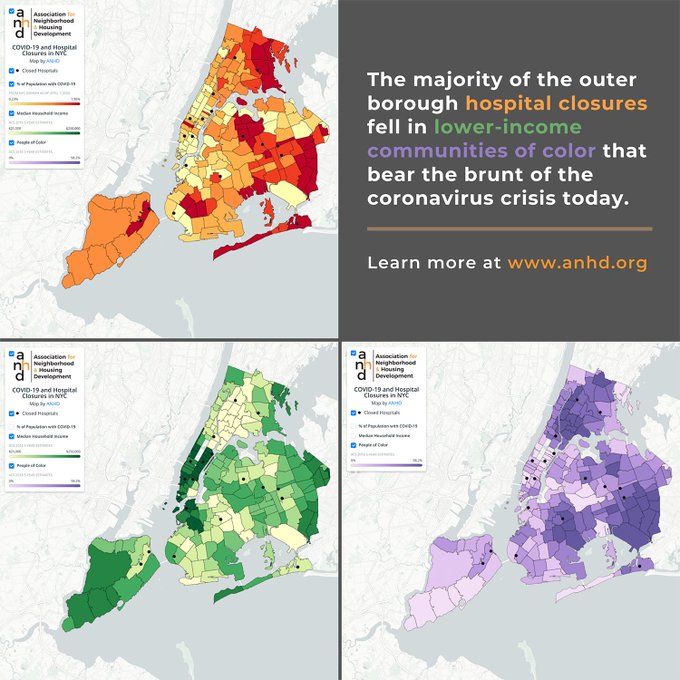
New York's decisions to prioritize upscale real estate development and speculation has led to death and malaise in the epicenter of the COVID-19 pandemic


https://pbs.twimg.com/media/EVP53FBUMAoJFSi?format=jpg&name=small

Association for Neighborhood & Housing and Development


New York City remains the epicenter of the global COVID-19 pandemic, but its effects are being felt differently across neighborhoods. As ANHD's  previous analysis  shows, this virus is hitting low-income communities of color the hardest. The neighborhoods with the highest range of positive COVID-19 cases in the city are home to communities of color whose residents are disproportionately employed in frontline service occupations and face among the highest rates of rent burden and overcrowding. These communities – the epicenters of the epicenter - are home to the largely invisible workforce that is keeping New York City running in this moment of crisis, and they are the ones who are bearing the brunt of its impacts. Recent data released by the City’s Department of Health shows that Black and Latinx New Yorkers are dying at twice the rate of whites - making clear that this pandemic is not only a public health crisis, but a crisis of racial and economic justice as well.   


Among the host of historic inequities behind the disparate impact of COVID-19, one is particularly striking: the string of hospital closures that took place in these communities over the past few decades. At least 18 hospitals have closed all of their inpatient services in New York City since 1998 - leading to the loss of thousands of hospital beds - with two-thirds of those closures occurring in the outer boroughs. A look at the data shows that the majority of these outer borough hospital closures fell in lower-income communities of color that bear the brunt of the coronavirus crisis today. These community hospitals catered to neighborhood residents, many of whom lack private insurance; the mass closure and downsizing to outpatient services means less access to necessary health services, especially in a time of crisis. Households without health insurance have few options if they get sick, other than visiting the remaining public hospitals, adding to the likelihood of exposure to coronavirus and the further straining of the healthcare system. 

 While community hospitals were being closed in low-income communities of color, hospitals in wealthier sections of the city were being converted into luxury residential buildings, further depleting the city's overall supply of hospital beds. Of the 18 hospitals that closed in the last two decades, over 40% have been replaced by residential developments, most of them with rents or sales prices that are astronomically out of reach for the average New Yorker. At the site of St. Vincent’s Hospital in Manhattan, where countless poor New Yorkers received care during the AIDS crisis, now stands Greenwich Lane, a luxury condo building. Long Island College Hospital in Brooklyn, a community medical facility known as America’s first teaching hospital, was replaced by 5 River Park where a studio apartment was recently sold for $1.15 million.

In Queens, the epicenter of the COVID-19 crisis, the closures of St. John's Hospital, Parkway 
 Hospital, and Mary Immaculate Hospital have led to massive overburdening of nearby medical facilities. Each of the neighborhoods where these hospitals were once located in have some of the highest rates of COVID cases in the city.

 029


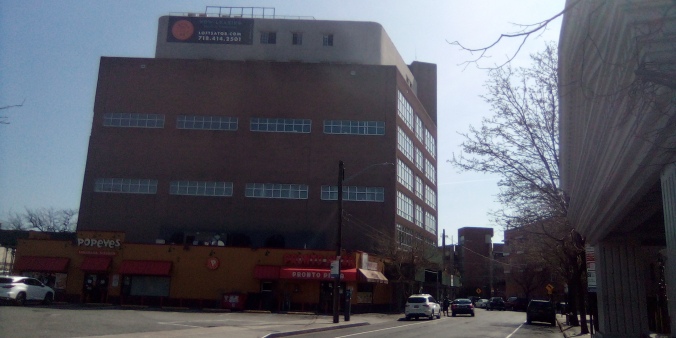
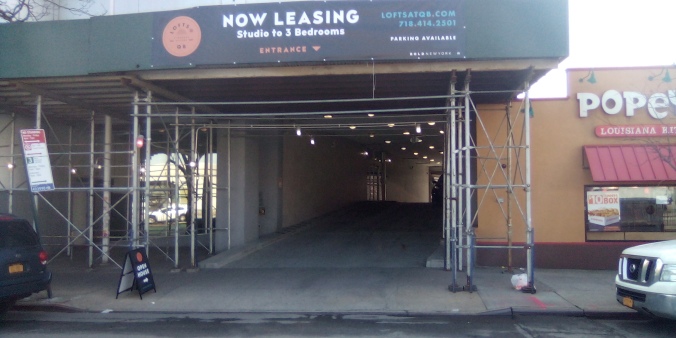
 The former site of St. John’s Hospital is located just blocks from Elmhurst Hospital - the same hospital that has seen among the most COVID-19-related deaths in the country. What stands in its place now is Queens Pointe, a market-rate apartment building. The former site of Mary Immaculate Hospital in Jamaica - another COVID-19 hotspot - was transformed into a residential development in 2009. Nearby Parkway Hospital, which once served low-income Queens residents, was also torn down to make room for a residential building in 2008.

 014

 019

020

 As these hospitals continued to serve poor and uninsured New Yorkers, financial restructuring and an inability to pay their bills contributed to a spate of closures in the late 2000s. The deprioritization of hospital infrastructure and subsequent development of residential - particularly luxury residential buildings - on these former hospital sites is the direct result of the City’s land use decisions. The Bloomberg era saw a pattern of high profile rezonings of both public and private land to facilitate luxury residential development, with few if any public benefits secured in exchange for the enormous value these conversions provided to private real estate developers. The prioritization of profit over community need has left a long-lasting legacy across New York, and communities of color have continued to face the brunt of it through displacement, housing instability, job loss, and health disparities. Communities and advocates have long said that these land use decisions have life and death consequences; we as a city are now forced to reckon with the consequences of those decisions in this moment.

Saturday, March 28, 2020

Steamrolling Flushing Creek hyper-development plan doesn't include a hospital

https://thenypost.files.wordpress.com/2020/03/flushing-gentrification2.jpg?quality=90&strip=all&w=777NY Post

A $2 billion development along toxic Flushing Creek will pollute the neighborhood with gentrification, critics say.

Affordable housing activists, unions and mom-and-pop shops have packed public hearings on the waterfront proposal, pushing back against more luxury apartments and designer stores.

And as livid as they are about the revitalization, they are just as angry about the government-approval process — claiming Community Board 7 and ex-Borough President Claire Shulman have steamrolled the project through. After wrapping up 15 years as beep, Shulman set up a nonprofit that makes private investments like the Flushing Creek venture possible.

Three developers — F&T Group, United Construction and Development Group, and Young Nian Group, in a partnership called FWRA LLC — want to transform 29 mostly unused acres into 3.4 million square feet of 1,725 apartments, a hotel, retail shops and offices that would generate a projected $28 million annually.

Their plan — the land is on the opposite side from the infamous junkyards near Citi Field — includes privately maintained roads and public access to the waterfront after an environmental cleanup of the area, polluted for decades by industrial waste.
“We believe this is the poster child for future waterfront development, and a legacy project for the owners who live and work in the community,” said their attorney, Ross Moskowitz, who pointed out supporters have turned out in big numbers at the public hearings — alongside the protesters.

“You can disagree with the project, but to say it has been steamrolled is just not right,” he said, adding the owners have followed the city’s statutory timeline for both land use and environmental reviews. “Already, he said, the owners have spent about 18 months on the reviews.

But opponents still think the process has been shady. As evidence of shenanigans, they point to Chuck Apelian, CB7’s first vice chair and land use committee chair, acting as a paid consultant to the developers and to Shulman, who received more time to speak during a Feb. 10 public hearing that turned so nasty cops were called. At times, demonstrators shouted “Shame” and “Let us speak.”