
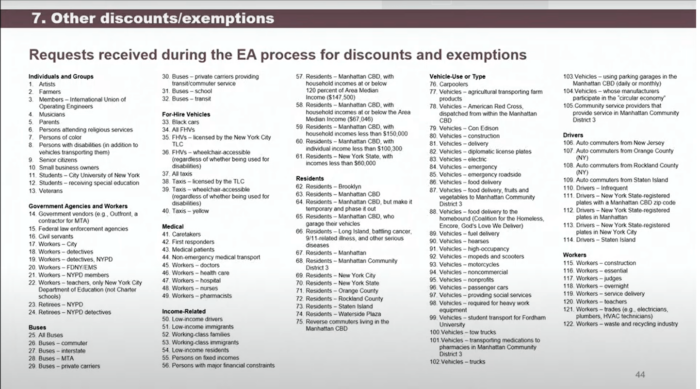
The MTA has received over 100 formal requests for exemptions from congestion pricing, and enacting all of them would carve out virtually everyone from the impending toll to enter Manhattan’s central business district.
That’s hardly an exaggeration. Some of the categories submitted for consideration are exceptionally broad, including residents of New York State, auto commuters from New Jersey, Manhattan residents making less than $147,500 in income, parents, and even “passenger cars.”
The list, which was previously reported by Streetsblog in May, was publicized Wednesday at the inaugural meeting of the Traffic Mobility Review Board, the internal MTA body tasked with devising toll rates, rules, and exemptions for New York’s congestion pricing program, which will levy a toll on motorists entering Manhattan south of 60th Street.
The program, approved by New York lawmakers in 2019, aims to incentivize riding mass transit into Manhattan instead of driving, in a bid to reduce punishing traffic in the central business district, drop carbon emissions and improve air quality, and raise money to improve the MTA’s infrastructure.
The plan has received full federal approval and is set to go into effect by the middle of next year. But before that happens, the complex array of rules governing the program must be codified by the six-member TMRB amid wide-scale lobbying for exemptions by interested parties, as well as looming litigation from New Jersey.
About 100 people packed the boardroom at the MTA’s lower Manhattan headquarters for the TMRB meeting, with many more locked out due to capacity constraints. The largest contingent present was yellow cab and for-hire vehicle drivers, who are seeking a full exemption to prevent what they say will be a third congestion tax on the financially-strained, mostly-immigrant workforce.
Others are hyperspecific and tailored, like Long Island residents battling cancer or 9/11-related illnesses, residents of the Waterside Plaza complex east of the FDR Drive in Midtown, and vehicles “whose manufacturers participate in the ‘circular economy.'”
Still others looking to get out of the toll include artists, musicians, farmers, judges, diplomats, retired cops, veterans, undertakers, senior citizens, persons of color, members of the International Union of Operating Engineers, small business owners, CUNY students, people who park their cars in garages, doctors, nurses, pharmacists, people attending religious services, and residents of most places in the tri-state area.


