A Western Queens community board voted Tuesday to reject a developer’s
plan to turn a five-block commercial stretch of southeast Astoria into a
new 3,000-unit mixed-use neighborhood, citing their concerns over
affordability and the impact on local infrastructure.
In a 24-8
vote, Queens Community Board 1 disapproved the plan to rezone a
commercial and manufacturing district bound by 37th Street to the west,
Northern Boulevard to the east, 35th Avenue to the north and 36th Avenue
to the south. Following a lengthy debate, the members agreed to include
recommendations on the number of affordable apartments, the impact on
local transit, the locations of greenspaces and the proposed heights of
the planned towers in a letter to the developers.
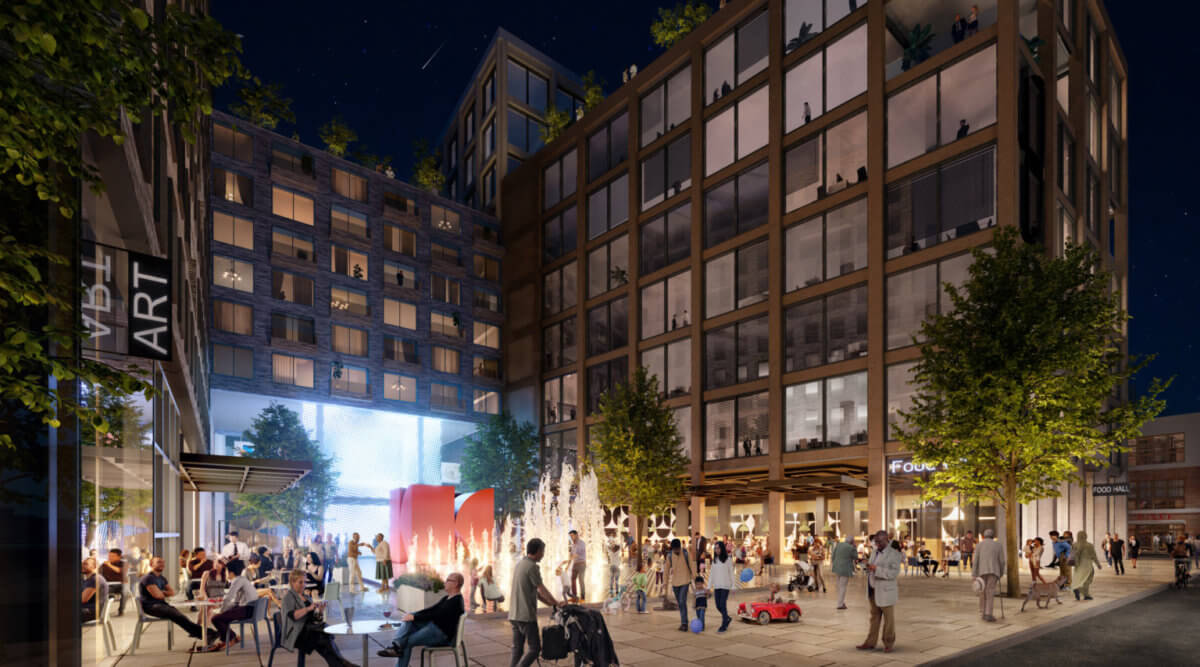
The vote marks the first major milestone in the city land use process for the proposed $2 billion project, known as “Innovation QNS,” put forth by Silverstein Properties, BedRock Real Estate Partners and Kaufman Astoria Studios.
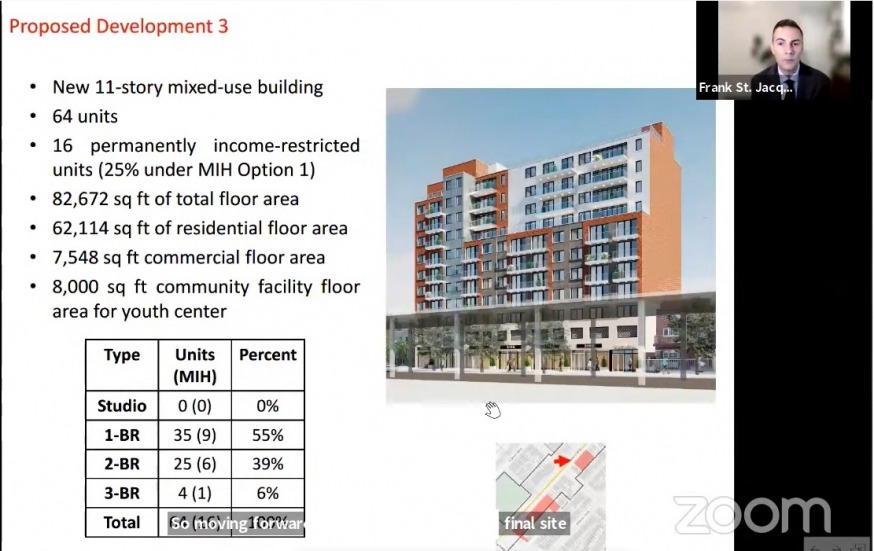
The trio of developers already own most of the land and aim to erect at least a dozen towers containing offices, retail space and 2,845 apartments, with about 700 deemed affordable for people earning a percentage of the area median income (AMI) under the city’s Mandatory Inclusionary Housing (MIH) program. The developers have chosen Option 1 of the MIH program, which mandates that they reserve 25 percent of the units for people earning an average of 60 percent of AMI—about $56,000 for an individual and $72,000 for a family of three. They say that 300 of the income-restricted units would be priced below $1,000 a month.
“We are living in an unprecedented housing crisis in our city. We need all types of housing if we’re going to flourish,” said the developers’ land use attorney Jesse Masyr during a presentation to the board.
The proposed rezoning area “is lovely, but it is not highly-producing property,” Masyr added.
CB1 member Huge Ma, a tech engineer who created the TurboVax vaccine scheduling account, agreed that the city’s affordable housing crisis is “unprecedented,” but said the current proposal would not do enough to address the need for more income-restricted apartments.
“While I do agree that dense, transit-adjacent housing is how we get out of this crisis, I struggle to vote for a development that provides us the bare minimum 25 percent affordability,” said Ma, who voted to reject the project.
Following a question and answer session with board members, several members of the public sounded off on the proposal, with most describing their opposition.
“Despite calls for more deeply affordable housing, these deep-pocketed developers have refused to commit any more than the bare minimum affordability required,” said Astoria resident Amy Kenyan. “Upzoning is a gift so let’s demand more from it.”
Others said the development team had not meaningfully engaged residents, especially non-English-speaking immigrants in the area. Organizer Farihah Akhtar from the Committee Against Anti-Asian Violence (CAAAV) said she and her colleagues had talked with hundreds of neighbors living within a mile of the project and found that few had heard of Innovation QNS.
A spokesperson for the developers, Sam Goldstein, said the three firms welcomed the latest feedback from the board members and the public.
“We’re glad to receive that input even as we continue to make the case that New York City—perhaps now more than ever—needs this $2 billion private investment that will create urgently needed mixed-income homes and 5,400 jobs, while generating hundreds of millions of dollars to support infrastructure, public safety, and education,” Goldstein said.