Unfortunately for the rent-burdened and homeless, those trickle down rents will have to wait for this one since it's in a state of suspension.
Everything about the City Of Yes is a lie that's been told before for the last decade.

Unfortunately for the rent-burdened and homeless, those trickle down rents will have to wait for this one since it's in a state of suspension.
Everything about the City Of Yes is a lie that's been told before for the last decade.


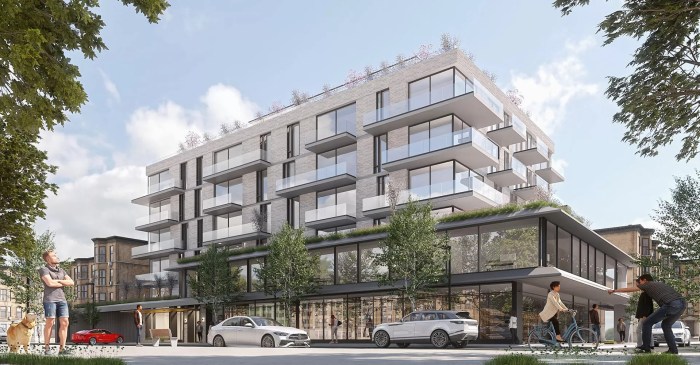
A total of 1,412 units across six upcoming luxury buildings are expected to transform the Queens Plaza area in Long Island City by creating much-needed housing in the area.
All six projects are expected to be completed as early as this year and no later than 2026. As each project nears completion, the housing units will be put on the market.
One of the projects anticipated to be completed this year is the Noble, at 27-09 40th Ave. This luxury condominium building will consist of 46 units across six floors. Among the amenities for homeowners are indoor parking, bike storage, a residents lounge, a fitness center, rooftop terraces and personal storage lockers. The building is also pet-friendly. This project was developed by Gus Vorillas and Tony Raouf, and the architect is HCN Architect.
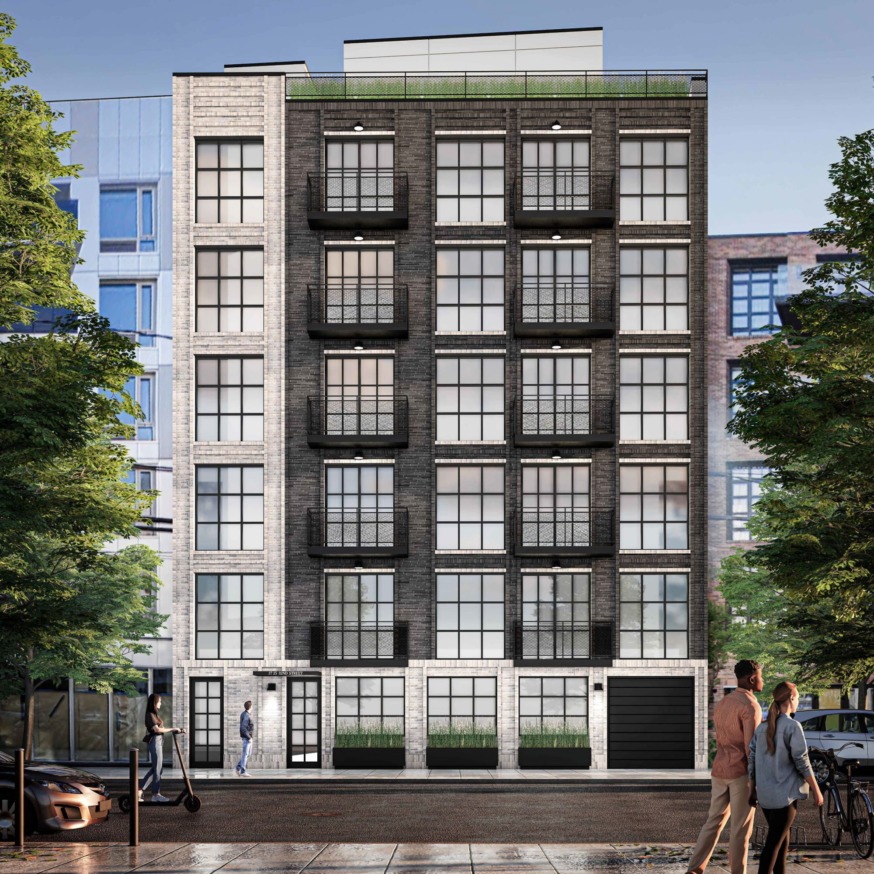
The other project expected to be completed in 2024 is the Mason, at 40-46 24th St. Another luxury condominium building, the Mason, will consist of 42 units across six floors. Amenities for each unit include washers and dryers and Latch keyless entry doors. A majority of the homes there will have private outdoor spaces. Jasper Wu is the developer of this project and the architect is My Architect P.C..
You can feel the rent trickle down already.

Seven affordable housing units—all 2-bedroom apartments—are up for grabs in a Long Island City development with monthly rents starting at $3,835.
The units, located at 37-25 32nd St., are part of a 6-story, 15-unit development. The city has recently opened a lottery for the affordable units.
The affordable units are for residents who earn up to 130% of the area median income (AMI), ranging from $131,486 to $198,250, depending on household size. Each affordable housing unit is meant for between two and five people.
Amenities include a shared laundry room, a dishwasher in each unit, air conditioning, high-speed internet, a rooftop terrace, a virtual doorman, an elevator, security cameras, a parking garage, an accessible entrance and more.
The Long Island City condo market in 2021 was its strongest on record—with sales volume reaching nearly $1 billion, about three times the previous record set in 2019, according to a new report.
There were 885 units sold in 2021, with a dollar value of $995 million. The number smashed the 2019 sales volume record of $385 million, when 336 condos were sold.
These findings are part of the 2021 Long Island City Condominium Report released by Patrick W. Smith, an independent real estate analyst and Long Island City-based agent affiliated with The Corcoran Group. (This is NOT independent!-JQ LLC) The report is based on closed condo sales within the confines of 37th Avenue to the north, Borden Avenue to the south, the East River to the west and Northern Boulevard to the east.The report is based on closed condo sales within the confines of 37th Avenue to the north, Borden Avenue to the south, the East River to the west and Northern Boulevard to the east. The area is represented in the shaded area
“The Long Island City market did extremely well in 2021 because sellers priced their units competitively and the demand for Long Island City continues to grow,” said Patrick W. Smith, the author of the report. “Long Island City also remains at a significant discount to Manhattan.”
Smith said that the market also benefited from low interest rates and a stock market that has surged over the past two years. He also said that the job market was particularly strong for many of the buyers who work in the tech, finance and legal industries.
He said that Long Island City’s popularity continues to increase as new stores and businesses come to the area—such as Trader Joe’s on Jackson Avenue—and its waterfront parks gain greater recognition.
The sales volume in both the new development and resale market was extremely strong in 2021, according to the report. There were 728 condos sold in the new development market, up from 270 in 2020. Meanwhile, 157 condos sold in the resale market—a record—significantly higher than the 65 sold in 2020, 85 in 2019 and 95 in 2018.
Prices across the Long Island City market were up. For instance, the average price paid for a condo in 2021 was $1,124,000, up from $1,074,000 in 2020. The average price for a one-bedroom last year was $912,000, up from $900,000 in 2020. Meanwhile, the average sales price for a two-bedroom condo was $1,382,000, up from $1,328,000.
The new development market across Long Island City outperformed, with the average sales price on the 728 units sold coming in at $1,134,000 in 2021, up from $1,048,000 in 2020 when 270 units changed hands.
The average increase can be attributed, in part, to the Skyline Tower development, a 67-story luxury condo building with 802 units at 3 Court Square. Closings in the building began in 2021—and 332 sales were recorded, accounting for $415 million in sales volume. The average price paid for a condo in the Skyline Tower—based on closed data– was $1,251,000 million, pushing up the numbers for the overall market.

Climate change was somewhat kind to New York City this year compared to the devastation that continues to happen in other states and nations with tropical storms, hurricanes and tornadoes and the apocalyptic hell fires that are happening frequently in California; although with the exception of the remnants of Hurricanes Henri and Ida causing record amounts of water vomiting from the sky which led to destruction and sad deaths of the city’s lower income citizens here. Mostly because of the record heat NYC has received this year, with the hottest July on record, this mild weather has also led to what will sure to be the warmest October in this city in 2021, which comes to mind the last time summer stuck around for another month in 2012 when the pleasant weather gave way to the kraken that was Hurricane Sandy a few days before Halloween.
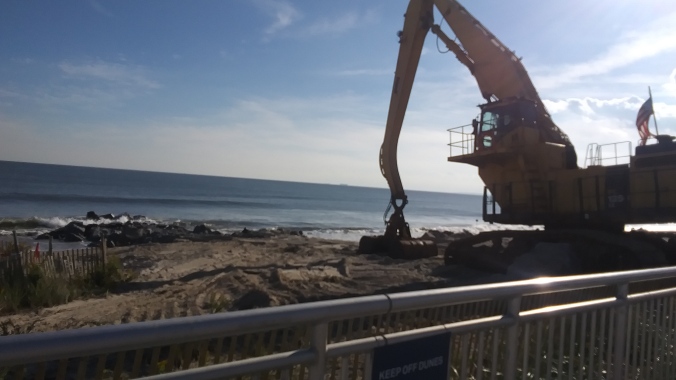
Sandy laid destruction and death of her own in a 24 hours across the coastal towns and areas and updated flood zones of the five boroughs, notably in Rockaway Beach where she destroyed the entire boardwalk 9 years ago. But with funding from FEMA, it took a few years to build another boardwalk, this time with rebar and concrete to replace all the wood that was reduced to kindle and also billions of pounds of sand for dunes. This led to longer treks to find some real estate to lay your towels and coolers down on the beach, but at least it provided protection from the hostile waters of the Atlantic that has been rising and eroding the shores of the peninsula for years before that bitch Sandy arrived.
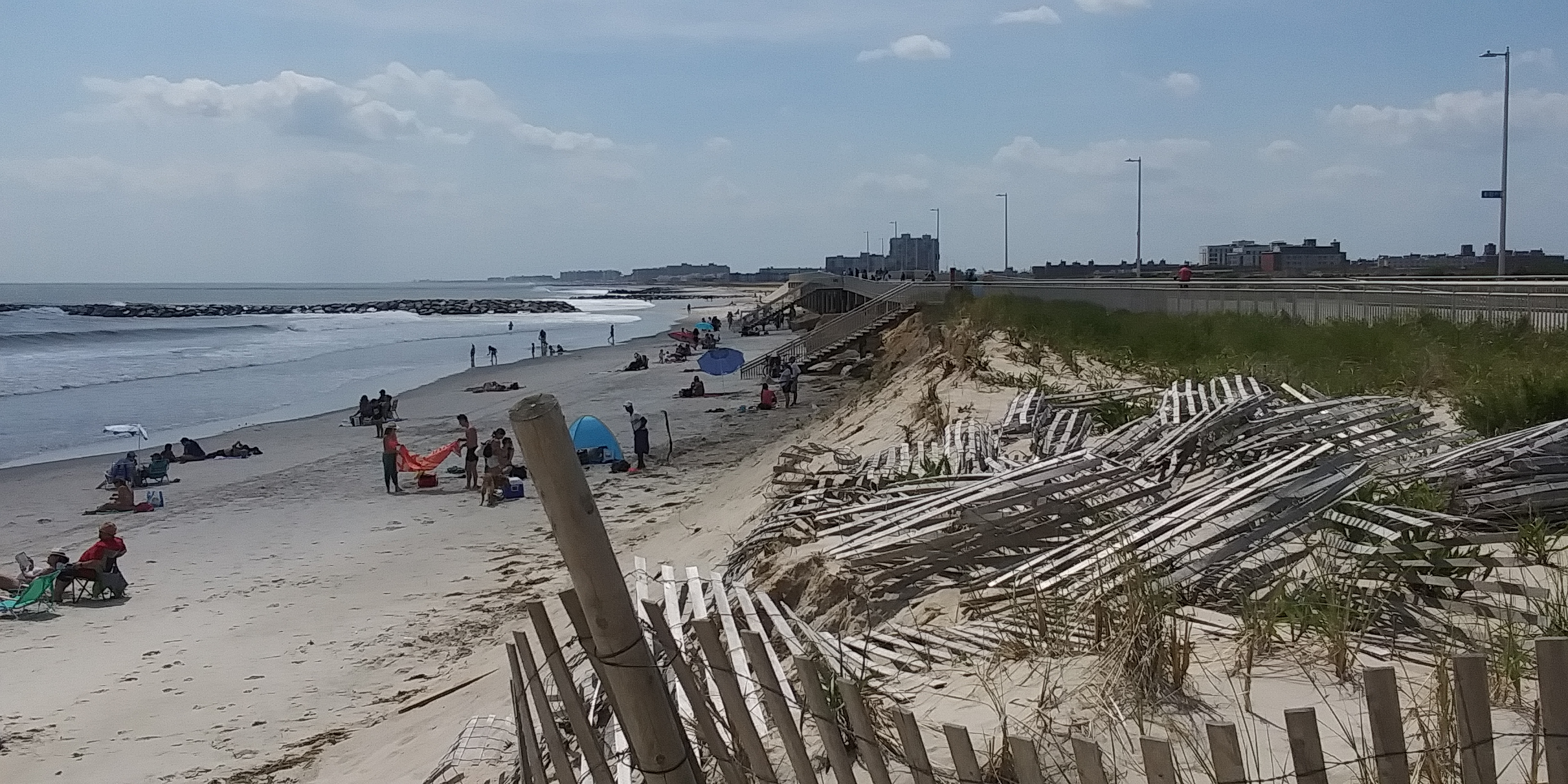
And nigh a decade later, Rockaway Beach’s shore is in dire straits again. Most evident on the most conveniently accessed and popular beach area at Beach 98 st., the boardwalk entrance ramp to the sand is more fit for kayaking than a path for sunbathing.
There's a #ClimateCrisis issue going on at Rockaway Beach, where a boardwalk entrance to the sands is daily submerged by the ocean
— This is JQ LLC (@ImpunityCity) July 26, 2021
And the dunes protecting the boardwalk and the streets have been totally destroyed
This isn't a beach, this is a pier pic.twitter.com/AioJqwuaxZ


After ten months of breathless panic over the state of Manhattan’s luxury real-estate market, the industry is sighing with relief as a surge in leases and rental prices suggests that the wealthy New Yorkers who left town at the onset of the pandemic are beginning to return. While Fran Lebowitz and other curmudgeons have cheered on the exodus of the rich, whether or not they return has big implications for the city’s budget and thus vital public services.
According to Douglas Elliman’s December rental report, rents for the biggest and most expensive apartments in Manhattan rose by double-digit percentages compared to the previous month. Rents on smaller apartments and in lower price tiers remained flat or declined slightly, remaining about 20 percent lower than a year ago. This pattern appears to be driven by demand, which is stronger at the high end and weaker below, with discounts of 20 percent compared to a year ago.
Manhattan’s vacancy rate dropped for the first time since the pandemic began, falling from 6.14 percent in November to 5.52 percent (it’s typically between 2 and 3 percent), which is as blunt a signal as you can get that people are returning to the city. The number of new December leases signed in Manhattan was up 36 percent compared to November and a whopping 93.6 percent from a year ago. The basic principles of supply and demand are at work here too; at some point, rents fall so much the deals are just too good to pass up, particularly in desirable Manhattan.
Taken together, these data offer a clear signal that the rich are coming back to New York. The idea that wealthy households would never return to the city was always a little suspect — mostly the fever dream of anti-urban conservatives who grabbed on to temporary post-pandemic migration trends in support of their biases against city life. But with the vaccine rollout underway, the rich are returning in time for what stands to be a memorably jubilant period: the reopening of New York City.
The affordable housing lottery is now open for 45-57 Davis Street, a nine-story mixed-use development in Long Island City, Queens. Designed by J Frankl/Charles Mallea and developed by Solomon Feder of Velocity Framers USA, the 145,000-square-foot will yield a total 158 units in a mix of studios and one-, two-, and three-bedroom units. Available on NYC Housing Connect are 48 apartments for residents at 130 percent of the area median income, ranging in eligible income from $73,920 to $183,300.
At 130 percent of the AMI, there are 12 affordable studios with a $2,156 monthly rent for incomes ranging from $73,920 to $118,300; 23 one-bedrooms with a $2,245 monthly rent for incomes ranging from $76,972 to $133,120; 12 two-bedrooms with a $2,710 monthly rent for incomes ranging from $92,915 to $159,640, and one three-bedrooms with a $3,122 monthly rent for income ranging from $107,040 to $183,300.
The YIMBY stenographer forgot to mention that the lucky gentrifier, I mean tenant is responsible for paying the electric bill to go along with the "affordable" rent.