
Bro, if your campaign is going to do shit like this, you send a volunteer out to do it. This way if they get caught, you issue a statement apologizing and saying they have been spoken to and it won't happen again.
This dude also has been sucking up to a TransAlt group that wants to take the B13 away from Glendale, so watch out, District 30!
Not a surprise then that Bob Holden endorsed Phil Wong.
Showing posts with label buses. Show all posts
Showing posts with label buses. Show all posts
Friday, June 13, 2025


Saturday, April 12, 2025
Dysfunction Junxion
For over two months (maybe longer) this massive and hideous bus that was being used as a sanctuary for artists for events and was once parked by a restaurant shanty, was illegally parked on Starr St. until it finally got removed by the NYPD which led to a hilariously fitting end.
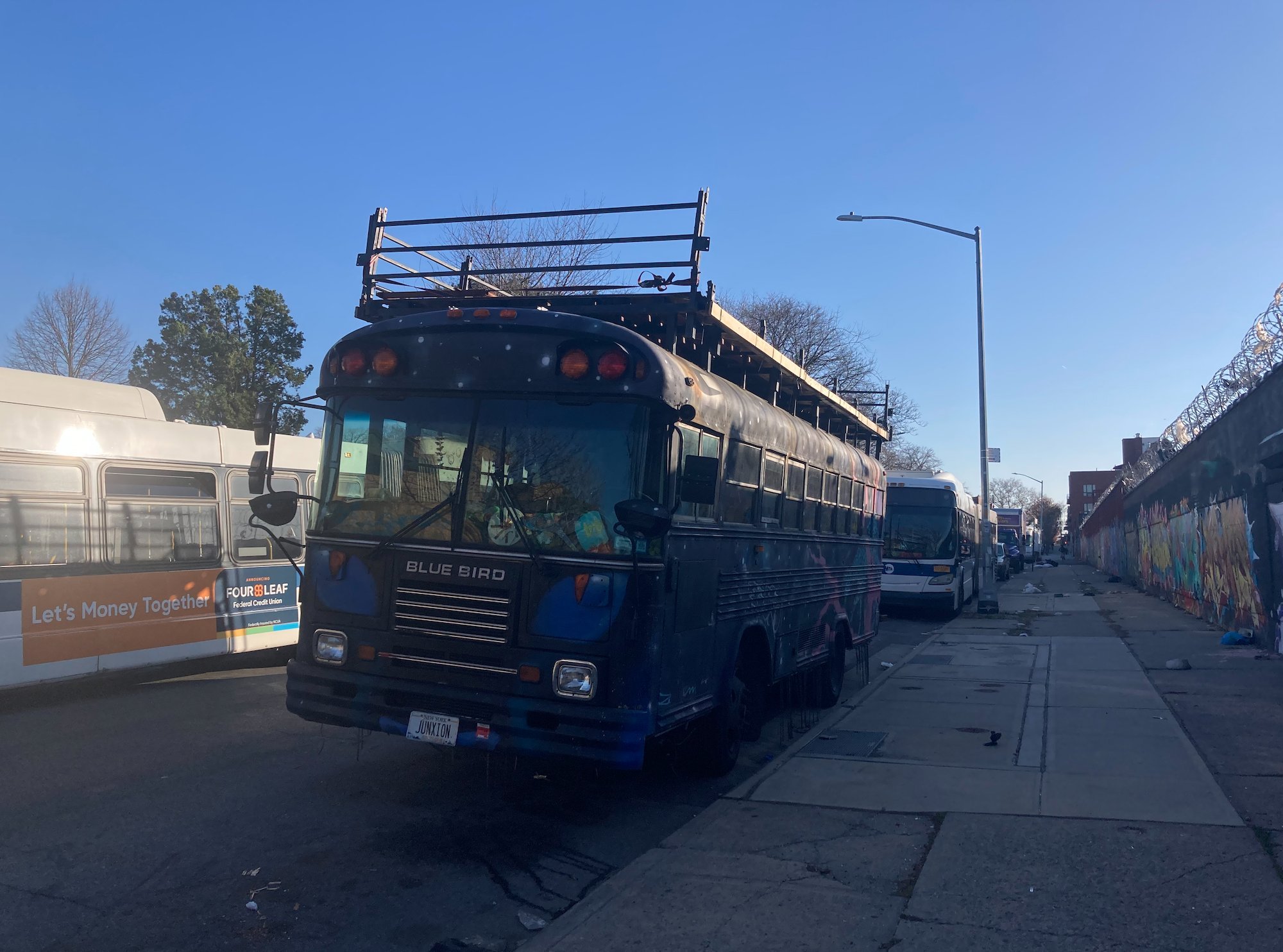
But now another bus is now illegally parked on Starr. While less massive but equally hideous, it also has a connection to the art scene as the last one. Meet Ridgewood's newest neighbors "the Junxion"
They think illegal parking and dumping is art and we should like it.
The platform on top of their bluebird bus illegally taking mundane and unused parking spaces is used for performances that can happen anytime according to their "mission"


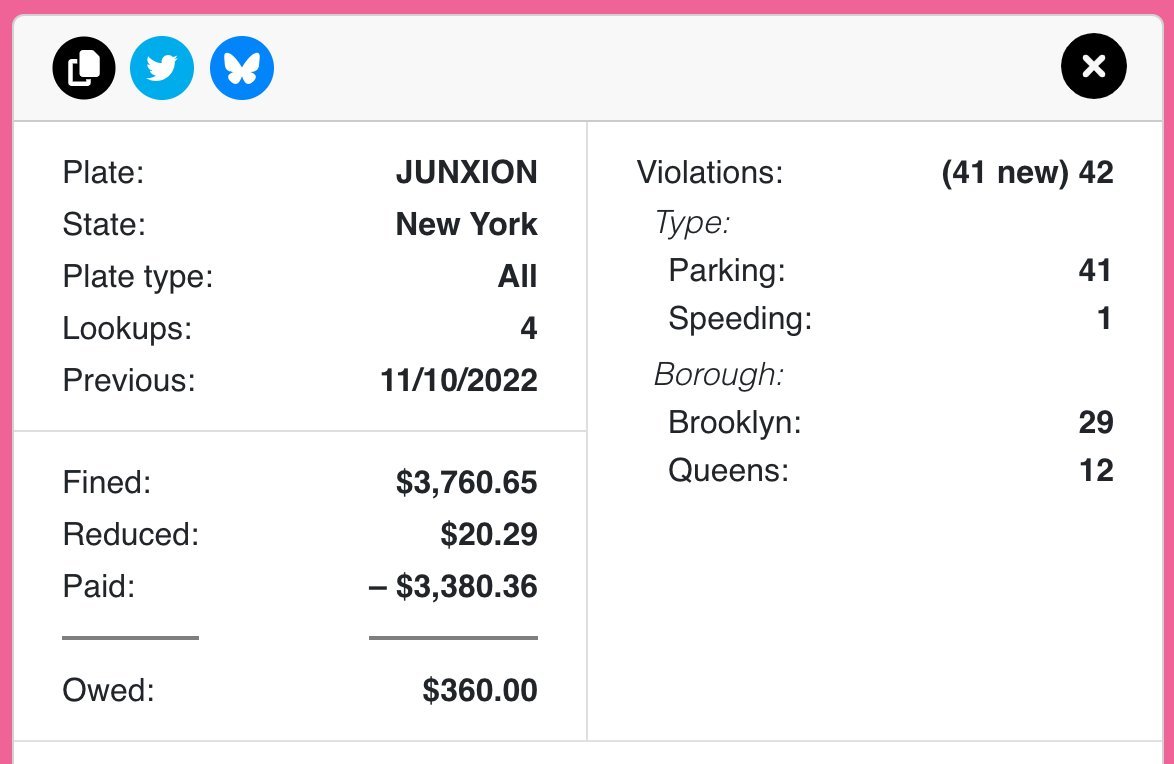
Which is why getting nearly 4 grand in parking violations is just a meager cost of doing business.
 T
T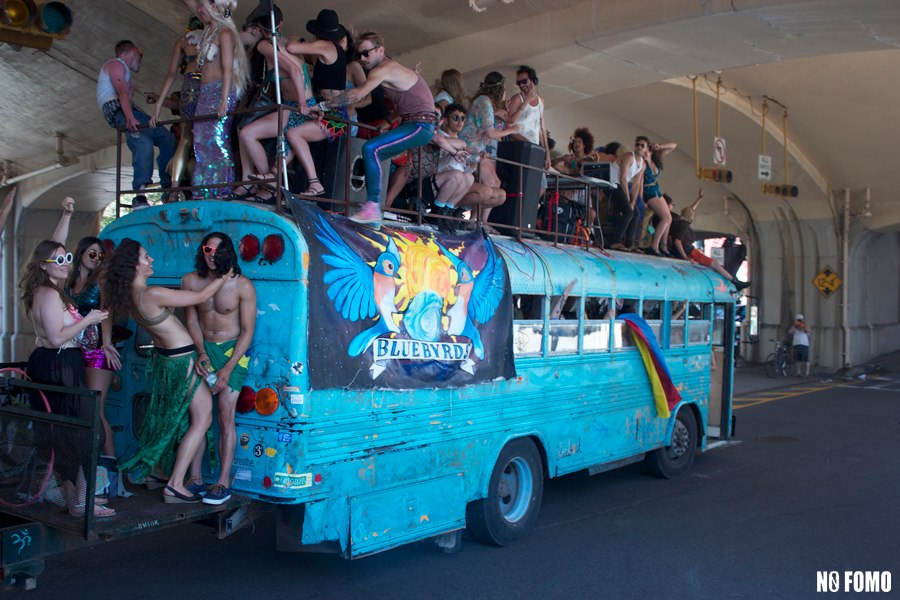 i
i This is what the bluebird bus looks like when it's being immersive.
This collective has 3 other "reimagined" buses in their fleet, so be on the lookout for the bluebyrd and the other trashy art buess when they try to "immerse" on your block. 207
Friday, January 31, 2025
MTA screws over bus commuters, approves Queens routes redesign
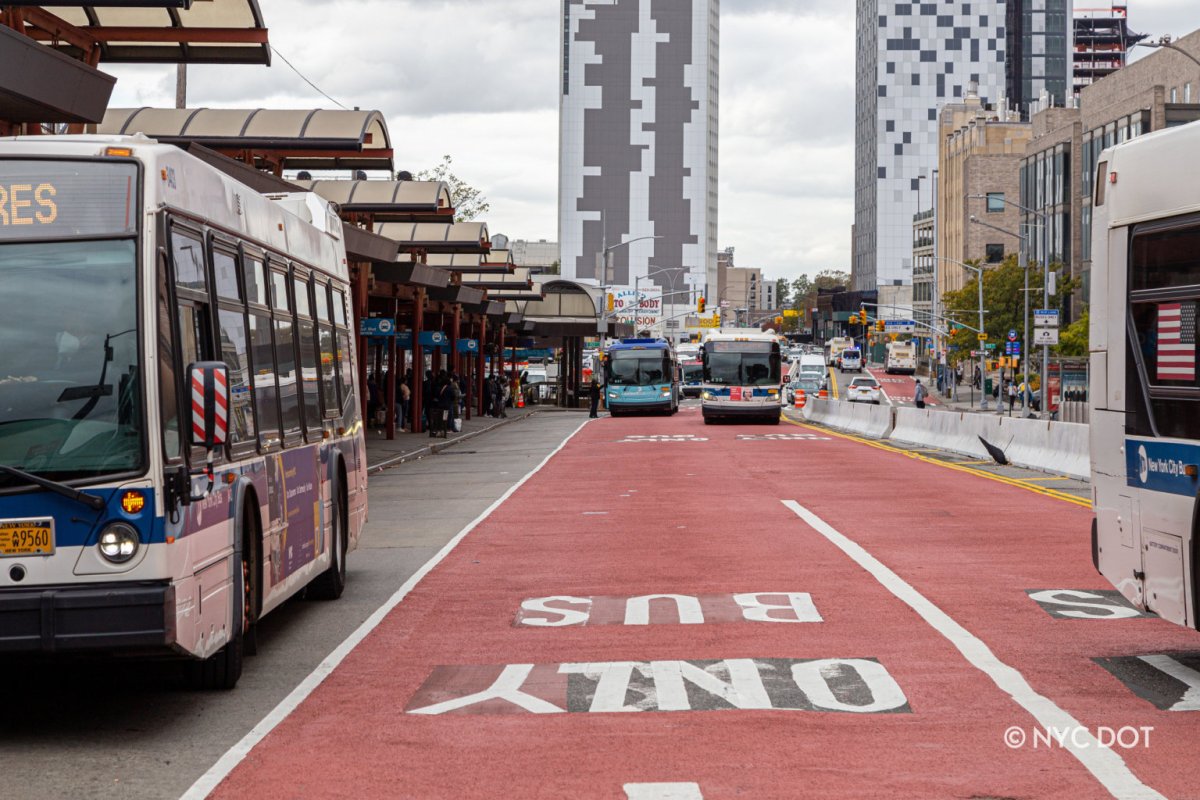
The MTA board approved a new Queens bus network redesign on Wednesday that aims to provide better service with faster commutes — but also fewer bus stops.
The $35 million network overhaul includes the addition of 11 more local routes, bringing the total number of bus routes in the borough to 124 (up from 113). Seventeen existing routes will also run with increased frequencies, while eight routes will get increased service spans.
Another major highlight is the addition of “rush routes.” These new lines would operate similarly to subway routes in which some trains run locally for a few miles before switching to express service toward major destinations.
The MTA will add 25 rush routes to the bus network as early as this summer, with full implementation by Labor Day. Details on how they will operate — including time of day and days of the week — are still being finalized. But MTA officials said the swift service would be a game changer for many Queens straphangers, especially those with two-step commutes.
The agency has been working on a bus redesign since 2019 to accommodate the borough’s changing population and ridership. More than 800,000 commuters ride the buses in Queens each day.
“It represents a generational opportunity to redesign the bus network in a borough that is nearly the size of Chicago,” said Chris Pangilinan, NYC Transit’s chief of operations planning. “We have not had the opportunity in many decades to redesign it, despite the growth that is happening in the borough and in the city.”
Pangilinan added that the increases in service, including weekend service, will support changing travel patterns in the borough.
“New types of routes, routing changing and increased frequencies, increased spans of service and more weekend service recognizing that people’s travel patterns have changed over the last many decades, especially over the last five years,” he said. “We need to be able to have a new bus network that serves people.
However, the redesign will eliminate some bus stops to speed up travel time, creating further distances between existing stops—a potential problem for New Yorkers with mobility issues.
The Q110, for example, which runs on Jamaica Avenue East, will be rerouted and experience “minor stop balancing”. That means there will be nearly 1,400 feet between stops compared to the previous 752 feet of space.
The bus will be rerouted and extended along Jamaica Av/Jericho Tpke to the existing Q36 terminal in Queens. Q110 service along Hempstead Av will be discontinued and replaced by the new Q82.
Many passenger and disability advocates expressed serious concern about this and other changes.
Jack Nierenberg, vice president of Passengers United, said eliminating bus stops will create “barriers to access” for many disabled New Yorkers and seniors who might have mobility issues.
“The MTA is just shifting bus routes around. Most concerning to us is the elimination of nearly 1,800 bus stops, which was increased from the 1,400 that were proposed in the 2023 plan. The MTA is touting that this will speed up the buses, but what it really does is create barriers to access for senior citizens, people with disabilities, and other mobility issues who can’t necessarily walk farther to get to the bus stops.”
Niernberg added that he and others in his organization studied the redesign documents and said the needs of vulnerable New Yorkers were not considered.
“The MTA needs to reconsider their bus stop eliminations,” he said.
Thursday, December 19, 2024
Commuter pricing will fix this
The MTA Board approved on Wednesday a budget plan for 2025 that includes public transportation fare hikes and toll increases slated to take effect next summer.
The board unanimously voted to pass the plan during its monthly meeting on Dec. 18. The exact amount of the increases has yet to be announced but could go into effect in August 2025.
In recent years, the MTA approved 4% increases in fares and tolls. Should that trend continue, a base fare for a subway or bus trip would cost $3, up a dime from $2.90, come next summer, according to an article from ABC 7.
Meanwhile, during Wednesday’s meeting, MTA Chair and CEO Janno Lieber boasted of “excellent service” and surging subway ridership.
“Last week, we set a new single-day record for subway ridership, 4.5 million customers,” he said. “Compare that to 2021, when this group began when the average weekday was less than half of that level.”
The most recent fare hike occurred in 2023, when the base NYC Transit fare was bumped up 15 cents, from $2.75 to $2.90. That marked the first such increase in eight years.
Despite the fare rise, Lieber remained optimistic and said the agency is coming out “on a high note” for 2024.
“I always look back at the goals we set at the beginning of the year, and when I took the chair a couple of years ago, priority one was recovering ridership to support the region’s comeback and also to help us achieve financial stability,” he said.
Lieber added that the MTA vowed to deliver “excellent” service to New Yorkers.
“And we also needed to keep the capital program on track to earn the public’s trust on how the MTA was going to spend money,” he said.
But New Yorkers whom amNewYork Metro talked to Wednesday after the budget vote did not hold back their opinions on the increase, some even calling it “straight-up greed.”
Others said they pay too much for too little service.
“This is absolutely outrageous. That last increase led to subpar service as it is,” said Roger Smith, an Upper West Side resident.
Carlos Rivera of Harlem questioned what the increases will actually support, as he is often stuck waiting for late trains and buses.
“I wish us New Yorkers could audit the MTA because this is absolutely ridiculous at this point,” he said. “Track maintenance and the trains and buses are never on time. Where is our money going?”
Saturday, August 3, 2024
Minimal Transparency Agency
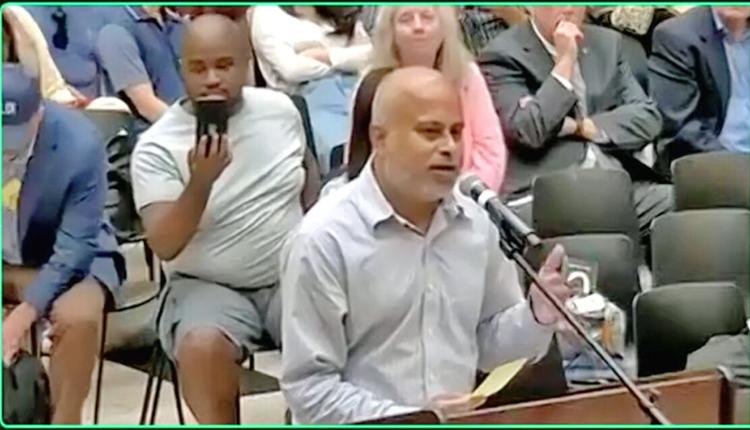
The group Passengers United has been making itself heard throughout the Queens bus redesign process, and the public hearing on July 24 was no exception.
Several members addressed officials of the Metropolitan Transportation Authority at the Borough Hall meeting, and they were clear about wanting plenty of changes to the amended proposal released last December [see separate story in some editions or at qchron.com].
The group also held a small protest at Borough Hall prior to the hearing, both calling on the MTA to reschedule the event and denouncing the bus plan as drawn up.
Queens Village resident Charlton D’souza, founder and president of the group, said during the hearing that there has been a lack of public input and transparency on the part of the MTA; and that the agency has reneged on promises to emphasize equity with necessary changes tailored to low-income communities and communities of color.
“The way this agency has treated us is disgraceful,” D’souza said. “If all of us right now, tomorrow, next week, we start protesting outside our elected officials’ offices saying we do not want the Queens bus redesign because equity was not even considered ...
“The whole plan, the way it’s been put out, you guys promised us a final plan before you implemented changes. But then you changed the game on us at the last minute and now you’re saying, ‘We’re going to release the plan after this public hearing.’ That is ridiculous. This is absurd.” He promised a civil suit.
As to the group’s preferences, a 21-page presentation of recommendations released on July 24 appeared to be a detailed extension of a letter Passengers United sent to Gov. Hochul dated July 9.
The report, online at passengersunited.org, calls for “serious revisions” to the bus plan.
Thursday, March 21, 2024
Vanishing New York bus service
 CBS New York
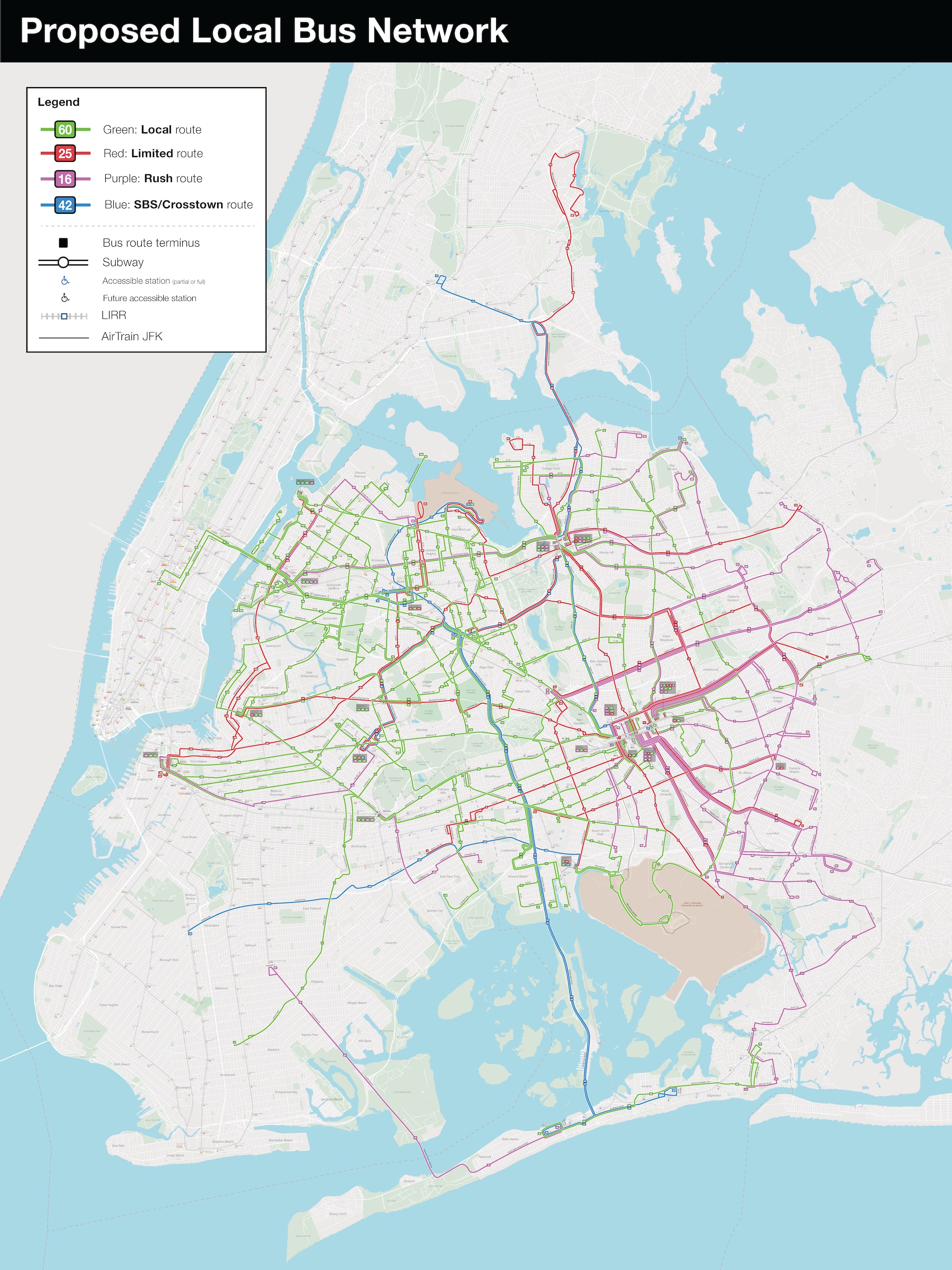
In December, the MTA unveiled its proposed final plan for the Queens Bus Network Redesign, part of a citywide effort to expedite bus service.
But some South Ozone Park residents say the elimination of key stops in their neighborhood is a problem, not a solution.
The Q10 bus serves as a link to JFK Airport and the subway. MTA's proposed plan would reroute riders, in some cases adding travel time.
"You're making people go from one bus to either two or three buses, for what reason? It doesn't make sense to me," South Ozone Park resident Nia Rollins said.
MTA's proposed plan would eliminate the 130th Street stop where she begins her daily commute to Midtown Manhattan, requiring her to pay double the fare for multiple bus transfers. She worries a consolidation of the Q9 and Q10 will intensify crowding on buses at rush hour.
Locals shared emotional testimony at the March monthly meeting of Community Board 10, objecting to proposed alternate routes they call unfamiliar, unsafe and unreliable.
In a statement, a spokesperson for the MTA told CBS New York: "The proposed reroute of the Q10 is designed for a faster and more reliable riding experience by improving speed and reliability on the Lefferts Blvd corridor. We encourage members of the public to continue to provide feedback on the Plan at upcoming outreach events."
"It feels like lip service," district leader Richard David said.
He says the neighborhood's trust in the MTA was lost last summer when a southbound bus stop at 130th Street and Sutter Avenue suddenly disappeared. Met with community outrage, the MTA vowed to reinstate the stop but has not yet done so.
David says a vague timeline for the potential bus route changes is keeping neighbors vigilant.
"To just keep an eye on the MTA and their process — and the potential that they might pull a fast one — is a full-time job," he said.
Here's how you can keep an eye of the regulatory captured MTA and let them know how devastating their reroutes and bus stop removals will be for commuters.
(Notice there are no pop-ups in Middle Village or Maspeth where buses are the only mass transit available. But you think they would do one by the M train on Metropolitan)
The Redesign team will be out in communities across Queens on the dates listed below from 4-7 p.m. In the case of extreme weather, events may be rescheduled so customers are advised to check the project webpage before heading out to an event.
Monday, March 25: 165 St Bus Terminal, underneath the canopy of the bus bays
Tuesday, March 26: Flushing-Main St , on the central mezzanine of the subway station
Wednesday, March 27: Queens Center Mall, the northwest corner of Queens Blvd and Woodhaven Blvd
Tuesday, April 2: Jamaica-179 St , on the central mezzanine
Wednesday, April 3: Myrtle-Wyckoff Pedestrian Plaza outside of subway station (between Gates Av and Palmetto St)
Wednesday, April 3: Rockaway Park-Beach 116 St (A) subway station main entrance
Monday, April 8: Diversity Plaza near Jackson Heights 74 St-Roosevelt Av (7) subway station (between Broadway & 74 St)
Tuesday, April 9: Woodhaven Blvd southbound bus median outside the Rockaway Blvd subway station (in front of PC Richard & Son)
Monday, April 15: Queens Village LIRR Station, at the corner of Springfield Blvd and Amboy Ln
Tuesday, April 16: Union Tpke and Utopia Pkwy, on the southeast corner
Wednesday, April 17: Lefferts Blvd AirTrain Station, near the Q3, Q10, and B15 bus stops
Wednesday, April 17: Queens Plaza South and 28 St, on the southwest corner of the intersection
In partnership with the MTA’s Mobile Sales team, the Queens Bus Network Redesign team will be on-site at five Mobile Sales locations this spring to meet with bus customers, talk about the Proposed Final Plan and routes proposed in their neighborhood, and receive feedback.
Monday, April 8 from 11 a.m.-2 p.m. in Astoria at Ditmars Blvd and 23 Av
Tuesday, April 16 from 10 a.m.-2 p.m. at the Rochdale Village Senior Center
Thursday, April 18 from 10 a.m.-12 p.m. in Jamaica at the Allen Community Senior Citizens Center
Friday, May 3 from 1 p.m.-3 p.m. at the Rego Park Mall outside Marshall’s
Monday, May 13 from 10 a.m.-12 p.m. at the Bay Terrace Shopping Center (Bell Blvd and 24 Av)
Saturday, February 3, 2024


Wednesday, December 13, 2023
MTA plan cuts bus service and calls it frosting
Highlights of Proposed Final Plan
Improved All-Day Frequent Network
- Queens’ bus improvement plan expands the already widespread existing all-day frequent network. All-day frequency allows riders the freedom to board the bus throughout the day without worrying about a schedule. There are 29 routes that provide 10 minutes or better service from 6 a.m. to 9 p.m. on weekdays.
- The project expands the reach of the all-day frequent network to 68.9% of the borough, or to an additional 200,000 Queens residents.
- There are 28 routes that have either increased frequency or expanded hours of operation. Key streets throughout the borough would see frequency increases, including Guy R. Brewer Boulevard, Merrick Boulevard, portions of Northern Boulevard, and Union Turnpike.
More Direct Routing, Faster Travel
- Rush Routes quickly connect riders between outer borough
neighborhoods and denser hub areas, including subway and rail stations
or bus terminals (e.g. 165 St Terminal). There are 27 Rush routes that
pick-up passengers locally on one end and then have greater stop spacing
to improve travel times to the other end of the line, stopping at major
transfer points and key destinations.
- Increased bus stop spacing speeds up buses and improves reliability for customers. Bus stops in the Proposed Final Plan respond to public feedback on the New Draft Plan. 83% of riders will continue to use the same stop that they do today.
Better Connections
- The redesign fills in gaps in the bus network and establishes new connections with other bus routes, subway lines, the Long Island Rail Road (LIRR), and improves accessibility throughout Queens by connecting to more Americans with Disabilities Act (ADA)-accessible subway stations.
- Improving connections maximizes the opportunity of taking advantage of discounted fare options like the LIRR’s CityTicket, which is a discounted ticket riders can use to travel within city limits for $5 during off-peak hours and $7 for peak hours.
- New and modified routes expand the reach of the bus network, making it easier for interborough travel. For example:
- The Q98 proposed route connects Myrtle-Wyckoff Ave (on the Brooklyn-Queens border) and downtown Flushing, Queens via Horace Harding Expressway. The new route complements the existing Q58, and provides connections to the 7LMR subway lines, 9 other bus lines and the LIRR Flushing-Main St station.
- The QM65 is a new express route connecting Southeast Queens from Laurelton and Rochdale to downtown Manhattan.
Simplified Service
- As introduced in the New Draft Plan, all Express routes are being standardized to use the “QM” route label, instead of some using “QM” while others use “X.”
- Route labels for the Local network have been simplified so that
customers better understand where their bus is traveling before they
board.
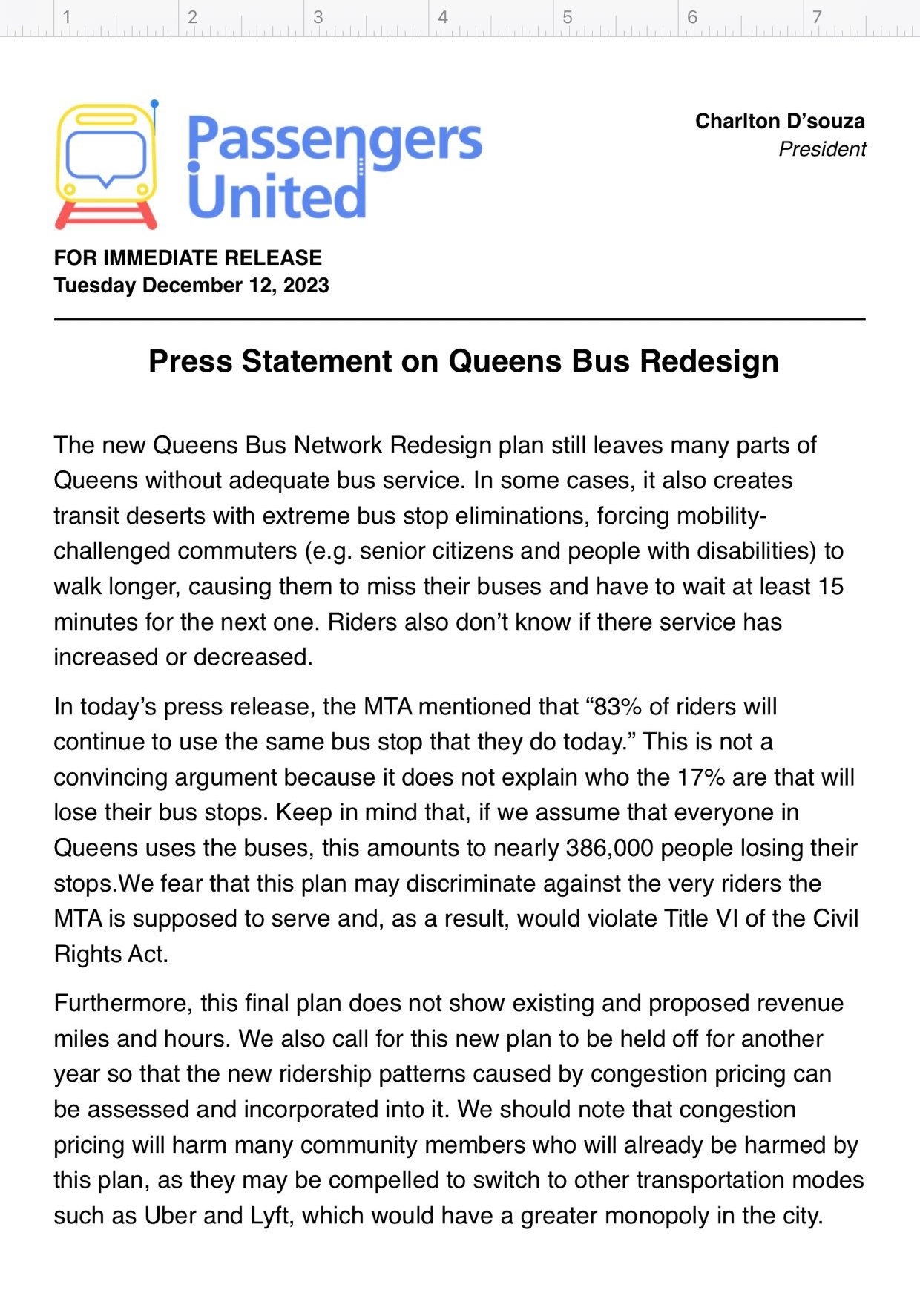
Counterpoint by Commuter Advocates Passengers Unite:
Friday, February 17, 2023
State legislators fantasy MTA fix
New York City lawmakers and public transport advocates held a rally in Albany on Tuesday, Feb. 14, calling on the state to pass a finance bill worth nearly $11 billion that they say would fully fund the MTA through 2026 and make it more efficient.
The legislation, known as Fix the MTA, would also keep current subway fares at $2.75 and prevent a proposed 25 cents hike to $3.
It would also make bus rides throughout the city free by 2027 and aims to make services more frequent and reliable — by ensuring subways and most buses arrive at least every six minutes, every day of the week.
The largest portion of the package, around $4.6 billion, would essentially bail out the agency by plugging its forecasted budget deficit for the next four years, while nearly $2 billion would go towards increasing bus services across the system by 20 percent.
Around $1.4 billion would be allocated to the agency to account for a 27% dip in ridership numbers compared to 2019 levels.
Fun fact: nothing is mentioned about congestion pricing. And it's mostly hedging on
State Senators Michael Gianaris, Jessica Ramos, John Liu and Kristen Gonzalez were among the Queens lawmakers who attended the rally, while Assembly members Zohran Mamdani, Alicia Hyndman Juan Ardila, and Jessica González-Rojas were also present. Assembly member Robert Carroll from Brooklyn and Assembly member Tony Simone from Manhattan also attended.
They were joined by transportation advocate groups such as Riders Alliance, the Permanent Citizens Advisory Committee to the MTA and Transportation Alternatives.
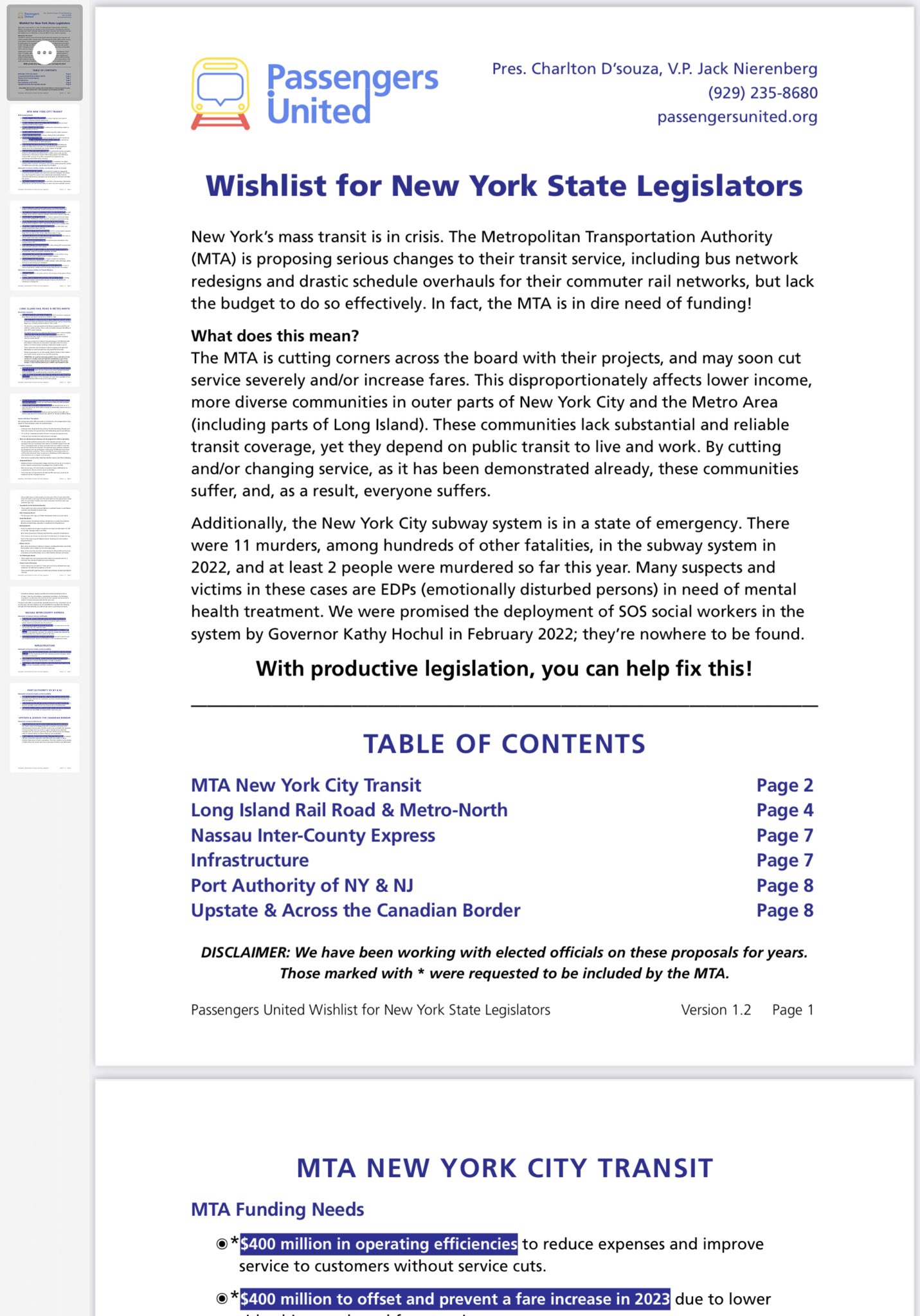
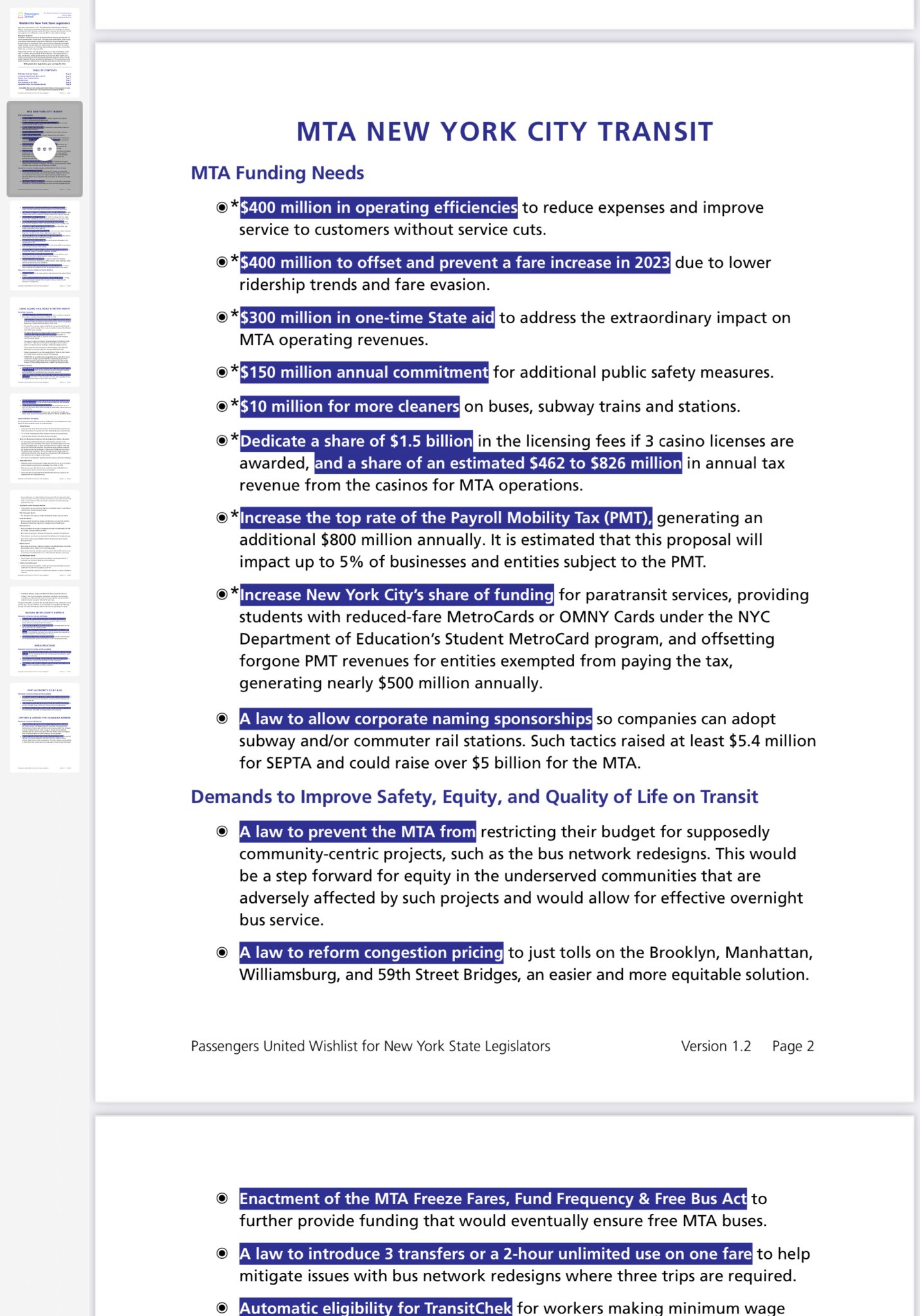
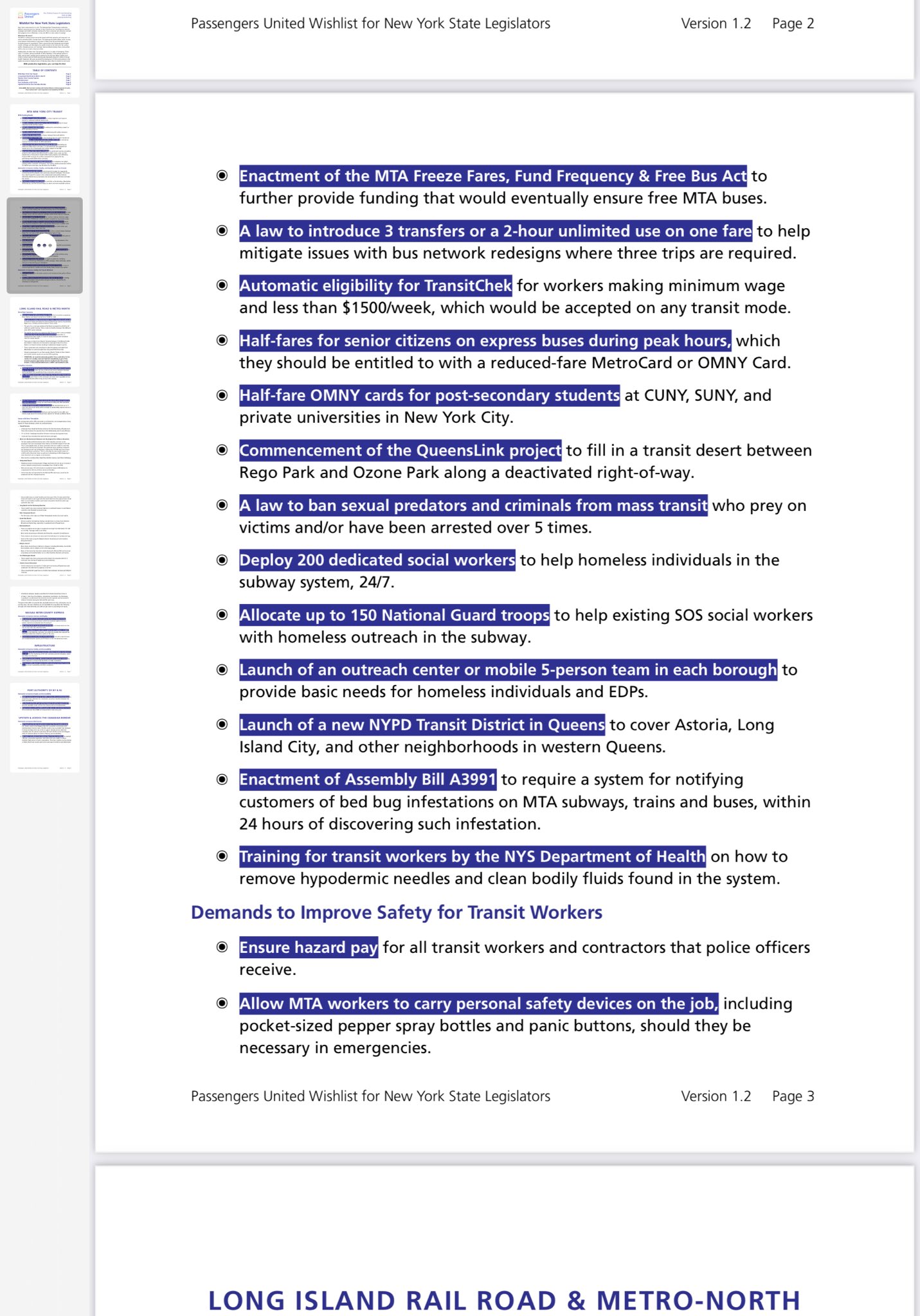
Jesus Christ these cults are just never going to go away, as a public duty I present the counterpoint plan from Passengers United who actually ride the buses and the trains everyday with their proposal to "fix the MTA" which also includes public safety measures for transit workers, something the Albany fauxgressives and the moneyed transportation actorvates never bother to acknowledge.
Friday, February 3, 2023
The Department of Transportation Alternatives gets excoriated for Ridgewood Reservoir bus route that eliminates more essential bus routes

Following the December 2022 release of the MTA Brooklyn Bus Network Redesign proposal, which would eliminate several stops in Ridgewood on the B38 and B13 lines, Queens Community Board 5 (CB5) is drafting a letter to the Department of Transportation (DOT) to voice their opposition to the changes. The bus redesign plan and letter were discussed at Wednesday’s CB 5 transportation and public transit meeting, held at 61-23 Myrtle Ave.
According to the MTA, their bus redesign proposal for the B38 would eliminate service to Stanhope Street, Woodward Avenue, Starr Street, Metropolitan Avenue and Grandview Avenue. Meanwhile, their proposal for the B13 would travel through the Ridgewood Reservoir and Cypress Avenue.
“A good number of people in that portion of Ridgewood along the 38 used that bus in that area, including students from Grover Cleveland High School,” said Gary Giordano, district manager of CB 5.
Along with Grover Cleveland High School, other important stops in Ridgewood will be cut off in the MTA bus redesign proposal.
“Well, with the B38, it serves a high school, a pretty large public park and two cemeteries, and the route goes up and down the hill, which a lot of people aren’t gonna be able to walk,” said Christina Wilkinson of the Juniper Park Civic Association.
Wilkerson also stated that eliminating service to Liberty Park along the B13 would be unfair to residents living in the area.
“Well, first of all, removing an entire bus line from Liberty Park, they’re also removing part of the Q39, which goes to Liberty Park so that that whole neighborhood won’t have any bus service, it seems like,” Wilkinson said. “I don’t think that’s fair. I think residents should have bus service in that area.”
She also said that adding a bus stop at the Ridgewood Reservoir would be difficult because of the speed bumps on the road.
“It’s going to be difficult to place a bus stop there, and it’s gonna be difficult to place a bus line along that route because it has speed bumps and the roads are restricted to passenger cars only,” Wilkinson said.
Monday, January 30, 2023
Monday, August 29, 2022
There is no sanctuary here

Overwhelmed city officials are struggling to provide a promised intake center and hotel rooms to migrants being shipped by the busload from Texas to the Big Apple, The Post has learned.
The Department of Homeless Services acknowledged to The Post that it has abandoned its initial plan to operate an intake and processing center dedicated to the recent arrivals alongside a 600-room shelter at the ROW NYC hotel on Eighth Avenue in Midtown.
Officials would only say Sunday that they have finally selected a finalist to operate the yet-to-open Manhattan facility but would not reveal the contractor’s name or its location.
Contracting documents obtained by The Post show that officials had hoped to have the Midtown shelter and intake up and running as soon as Aug. 15 — now 13 days ago.
DHS also admitted that it has yet to select and rent any of the 5,000 hotel rooms the agency said it is seeking to house migrants across the city.
Instead, officials are continuing to commingle migrants with New Yorkers in the city’s existing shelter system — which now includes 15 “emergency” hotel facilities to also help handle a summer population surge, according to the DSS on Friday.
City Hall has refused to say how much the city is spending on housing migrants in the homeless-system hotels, but a Post analysis found the cost could surpass $300 million.
Saturday, July 23, 2022
Busways fade away
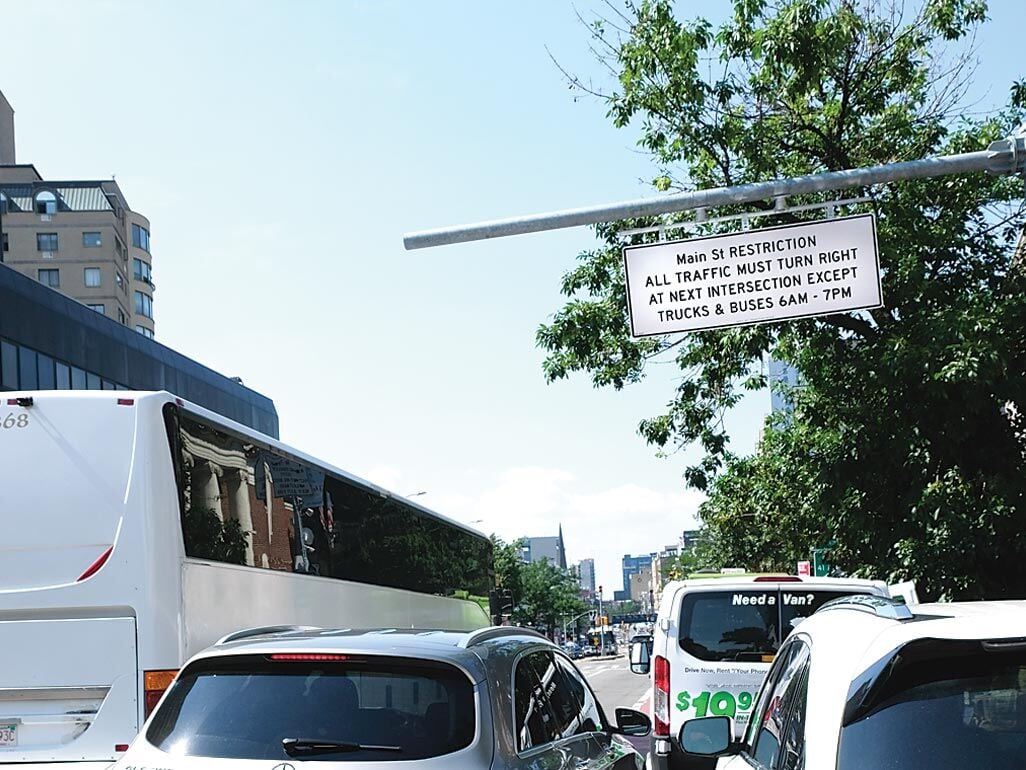
After a tumultuous couple of years, it appears that drivers in Downtown Flushing may be in for some relief.
As of last week, the Main Street busway will no longer operate 24/7, and will instead run from 6 a.m. to 7 p.m.
Since it was initially proposed over two years ago, the 0.6-mile stretch between Northern Boulevard and Sanford Avenue has been a source of controversy in Downtown Flushing, especially among business owners, who were concerned about the busway’s potential impact on foot traffic. In November 2020, some filed a lawsuit to halt the project. Ultimately, the group lost the suit, and the busway began as a one-year pilot program in January 2021, and has remained in place ever since.
Asked about the decision to reduce the hours of operation, Vin Barone, a spokesperson for the Department of Transportation, wrote in an email to the Chronicle, “The Main Street busway has made commutes faster and more reliable for 155,000 daily bus riders and DOT is committed to its continued success. DOT determined the hours could be adjusted to better balance with the requests made by the local business community.”
The change also comes after Councilmember Sandra Ung (D-Flushing) took a walking tour of Downtown Flushing with Ydanis Rodriguez, commissioner of the DOT, at the beginning of April. As the Chronicle previously reported, she had requested at the time that the busway’s hours be scaled back.
Ung also had pushed for the street to have additional, clearer signage marking the busway and its accompanying traffic patterns. Last week’s installation of those signs along Main Street — northbound at Sanford Avenue and southbound at 37th Avenue — and on Kissena Boulevard at Sanford Avenue northbound marked the official change in hours.
“I want to thank the Department of Transportation for listening to our community, who repeatedly raised concerns about the impact the busway would have if implemented, and agreeing to a compromise to reduce the hours of operation to begin to address the issues they raised,” Ung said in a statement. “This will give businesses some respite after 7 p.m. to welcome customers and arrange for deliveries. The new schedule will also provide tangible information on the impact on local businesses when the busway is in operation and when it is not, which can be used in the future to balance the city’s desire for faster and more reliable bus service while also meeting the needs of the local community. I look forward to an ongoing dialogue between the interested stakeholders and DOT to address any other concerns that might arise.”
Momentum seems to be moving toward adjusted rules for the busway along Jamaica Avenue. In the meantime, businesses in the area continue to suffer.
Last week, the Chronicle obtained a letter on the letterhead of Borough President Donovan Richards calling for an end to a Department of Transportation study on the effect of the lanes on business in the area. In the letter, Richards and other city and state officials, who co-signed at the bottom, made it clear that they support improved bus service, but that the rules regarding the busway on Jamaica Avenue were having “a signficant and damaging effect on the businesses along the corridor,” a sentiment he doubled down on this week.
“Adjusting the Jamaica Avenue busway has been a focus of the Downtown Jamaica Improvement Council, and we’ve heard from numerous area small business owners about the impact the busway has had on their businesses,” he said in a statement to the Chronicle.
“Conversations between area elected officials and other stakeholders are ongoing about how the Jamaica Avenue busway should be altered to best serve the community, allowing for efficient public transit through the corridor at peak hours and ensuring that local businesses have the opportunity to thrive,” he added.
As the rules currently stand, passenger vehicles are allowed on the busway corridor, located between Sutphin Boulevard and 168th Street, only for a block at a time. They are required to take the first right-hand turn off Jamaica Avenue.
Passenger vehicle parking is limited, with many curbside areas that had once been used as a bus lane during peak hours now designated truck loading and unloading zones, active from 7 a.m. to 7 p.m. every day but Sunday. Parking is allowed in those zones during all other hours.
“The vast majority of Jamaica Avenue shoppers take transit to the corridor and the majority of bus riders have noticed faster, more reliable service thanks to our busways,” DOT spokesperson Vin Barone told the Chronicle via email.
“We will continue to work with the business community on possible adjustments,” he added.
Several business owners along Jamaica Avenue expressed their concerns about the busway to the Chronicle last week. While some haven’t noticed a change, most were concerned about the long-term effects on business and the city’s neglect for the interests of small businesses in the area.
Kevin Jiang, owner of Jamaica Liquors between 149th and 150th streets, says he is busiest on Fridays and Saturdays. Before the busways, he typically made between $3,500 and $4,500 on weekends. Now, he says that number is closer to $2,500.
“My landlord, he doesn’t want to hear that I can’t make it because of the lanes,” he said. “So it’s hard to pay the rent right now.”
Friday, July 15, 2022
Jamaica bus lines study is FUBAR
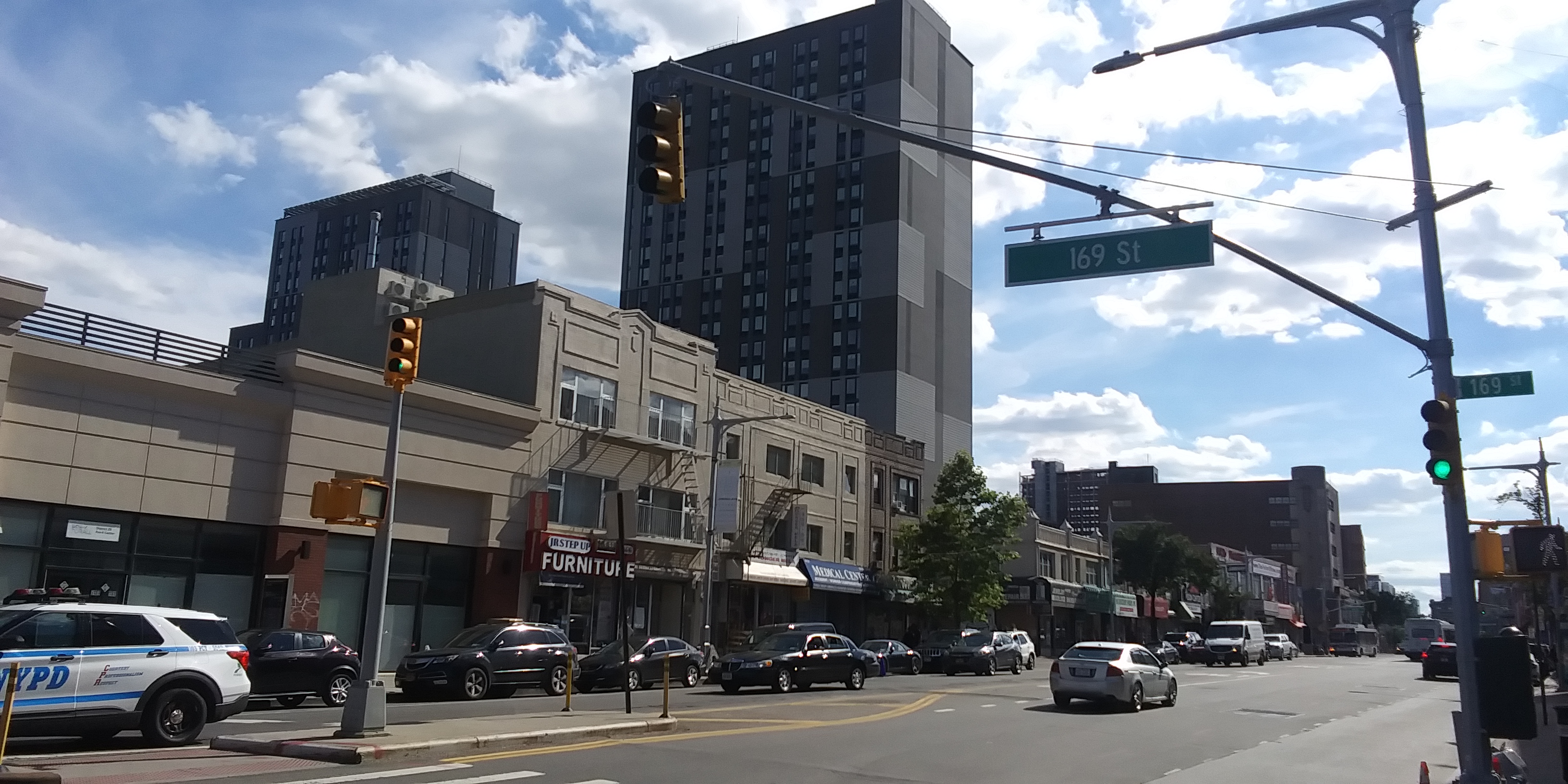
The Chronicle has obtained a letter in which eight elected officials who represent Jamaica or neighboring areas call on the city Department of Transportation to end its intended year-long study of how bus lanes are affecting Jamaica Avenue.
The letter to DOT Commissioner Ydanis Rodriguez and Queens Borough Commissioner Nicole Garcia, dated July 8, says businesses are being harmed and that residents are complaining about a lack of accessibility along the popular commercial and retail shopping corridor.
It was sent on the letterhead of Queens Borough President Donovan Richards, but also was signed by Council Speaker Adrienne Adams (D-Jamaica), Councilmembers Selvena Brooks-Powers (D-Laurelton) and Nantasha Williams (D-St. Albans); state Sens. Leroy Comrie (D-St. Albans) and James Sanders Jr. (D-South Ozone Park); and Assemblymembers Alicia Hyndman (D-Springfield Gardens) and Khaleel Anderson (South Ozone Park).
“The DOT has expressed to the community the need for a year-long study to best determine the impact of the bus lanes on Jamaica Avenue,” the letter states. “However, we believe a six-month study is enough to give the DOT sufficient ability to understand the impact these bus lanes have had on businesses and everyday residents in Jamaica.”
The elected officials want the study to be concluded and the results published by the end of summer.
Numerous businesses have complained to the Chronicle since the start of the year about how the bus lanes and lack of traffic have hammered their bottom lines.
The July 8 letter’s language on that topic was diplomatic but unmistakably clear.
“Downtown Jamaica has been subject to a major transportation shift as the community has continued to grow and revitalize,” it states. “While we understand the need for improved bus service, the Jamaica Avenue bus lanes have had a significant and damaging effect on businesses along the corridor. Our offices have also received several complaints from local residents about a lack of accessibility along Jamaica Avenue.”
The signatories also would like the DOT to install signs along Jamaica Avenue with more clear and concise language to help individuals better understand the rules for things like parking, loading areas and standing zones.
Thursday, June 30, 2022


Sunday, June 5, 2022
MTA plans to kill two bus routes in the name of transit equity

Two bus redesign Zoom meetings held last Thursday and Monday included proposals for changes to several lines throughout East and Southeast Queens. The meetings were among the last in a series held by the MTA and focused on Community Districts 12 and 13.
The Q1 bus had major proposed changes that were relayed by Tori Winters, the principal transportation planner for the MTA. The bus route currently starts in Queens Village on Springfield Boulevard and Jamaica Avenue and ends at the 165th Bus Terminal in Jamaica, though some buses leave the terminal and end at Bellerose at Braddock and Jamaica avenues, instead of returning back to Queens Village.
The proposed new route would start at Bellerose, eliminating the main starting point in Queens Village and all but one Springfield Boulevard stop (Springfield Boulevard and Hillside Avenue) and 12 stops on Hillside Avenue, but it would take over the Q6 route and extend to the JFK Cargo Plaza in South Ozone Park by skipping the terminal and going through Downtown Jamaica and then down Sutphin Boulevard. The route would keep the 179th Street and Hillside Avenue F-train stop and it would also pass by the E, J, Z train stop on Jamaica Avenue and the Jamaica Long Island Rail Road on Archer Avenue. The proposal would more than double the weekday peak service frequency of the bus from 10 minutes to 4 minutes, and nearly double the off-peak frequency from 15 to 8 minutes.
“We will be replacing the two routes with one higher-frequency route,” Winters said about the Q1 in a slideshow presentation. “Local service along Springfield Boulevard will be provided by the proposed Q78. The Rockaway Boulevard segment of the existing Q6 would now be served by the proposed Q7.”
The proposed Q45 would take over the Q36 route and the Hillside Avenue portions of the Q1 that would be axed and start at the Little Neck LIRR. The route would conclude in Jamaica on Archer Avenue and Sutphin Boulevard, expanding its train service connections to the E, J and Z lines, the Long Island Rail Road and AirTrain similar to the Q1.
The Q75 is a newly proposed route that would go from Jamaica to Queensborough Community College via 188th Street and Horace Harding Expressway, replacing the Union Turnpike to Jamaica Avenue stops along the Q17 and taking over the Q30’s primary role as a route to the Bayside school. The Q31 bus would pick up the Q30 line’s Utopia Parkway stops.
The suggested Q82 would replace the Q36 service along Hillside Avenue and combine with sections of the existing Q110 that goes along Hempstead Avenue to get to the UBS Arena in Elmont. Instead of servicing 212th Place in Queens Village, the route will serve Hollis Court Boulevard, and any existing Q36 stops east of 213th Street would be picked up by the Q57.
“The new Q82 route would mostly run nonstop alongside Hillside Ave.,” said Winters. “The service will no longer provide a route to Jamaica Ave., as the existing Q36 does.”
Buses with suggested minor changes include the Q44, which would maintain most of its route in Jamaica on Merrick Boulevard and Archer Avenue, but instead of concluding its route at the Bronx Zoo, it would go to Fordham Avenue Plaza at Fordham University; the Q43 in Jamaica, which would make less frequent stops as it extends farther out to Long Island Jewish Medical Center in Glen Oaks; and the Q2, which would maintain its route though shifts in where it would stop between the 165th Street Bus Terminal and Elmont were proposed.
Saturday, May 7, 2022
Consternation about city bus transportation
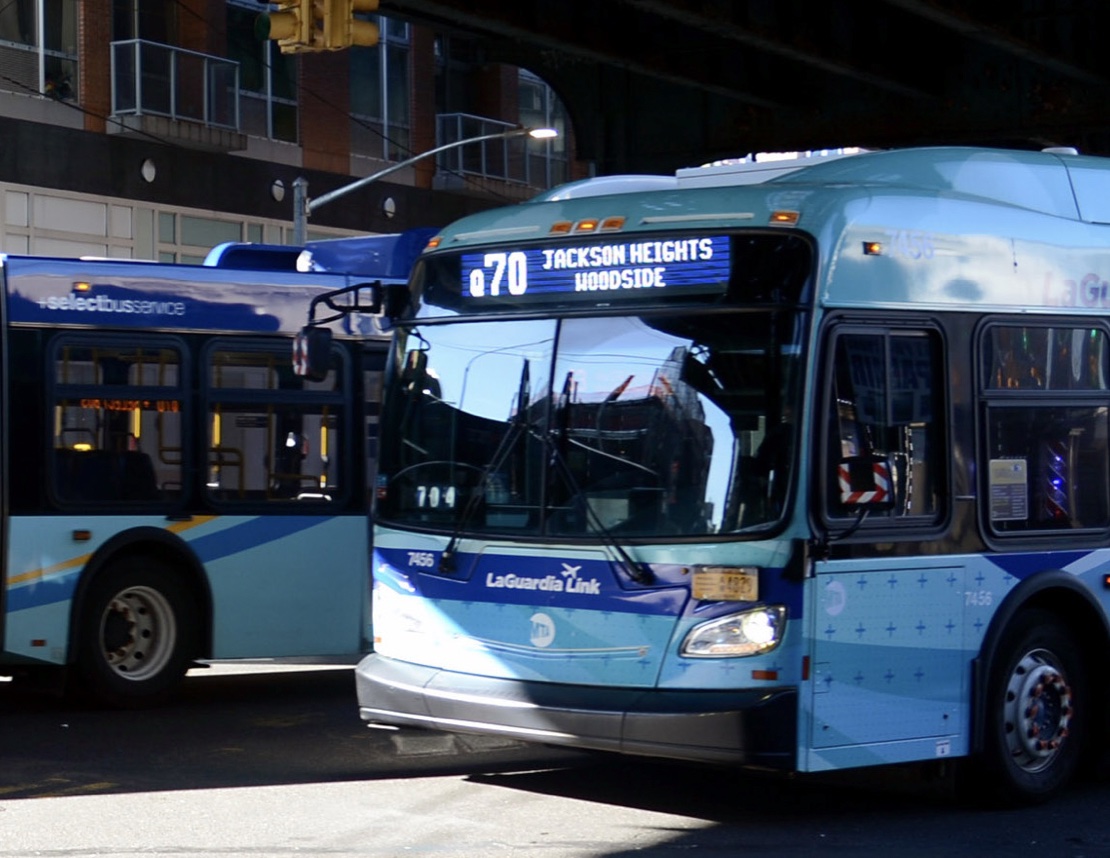
The May 4 workshop is part of the MTA’s three-month-long public feedback period before the agency finalizing the proposal.
The MTA released a new draft plan for the Queens bus network in March after halting the 2019 project at the start of the COVID-19 pandemic. The revision offers a total of 85 routes for the borough, with 20 new routes and other extensions, shortenings and consolidations to improve efficiency; there are currently 82 bus routes in Queens. The plan will take away a total of 1,685 stops.
In an effort to shorten the commuting time, the MTA wants to space stops further apart, from about 850 feet to 1,400 feet. This could save 20 seconds of travel per stop, according to officials.
The new bus route is focused on reliable service and faster travel, according to the MTA representatives presenting the plan during Wednesday night’s virtual workshop. However, some residents who live in the district — which covers Ridgewood, Glendale, Middle Village and Maspeth — argued that some of the adjustments will completely upend their commute.
One resident, Melissa Ferrara, mentioned that she chose to send her kids to McClancy Memorial High School in Elmhurst because the Q47 provides a simple commute with no transfers.
“Rerouting this will cause them to take two to three buses which will add tremendously to their commute,” Ferrara said.
The proposed Q47 routing would be realigned at its southern end to serve 69 Street in Maspeth instead of 80 Street. It would also terminate at Metropolitan Avenue and Fresh Pond Road, serving the M Train at the Middle Village Station.
MTA Representative Ryan Zatlin said that some proposed bus routes will deviate from typical routes and make “specialized school trips.”
“This proposal to realign the route to 69th Street was around our strategies of straightening routes and providing direct connections, in this case to the M Train and Metropolitan Avenue,” Zatlin said. “However, the proposal may not satisfy the needs of everyone, and that’s what we wanted to hear today.”
Wednesday, March 30, 2022
Here's your new bus map Queens
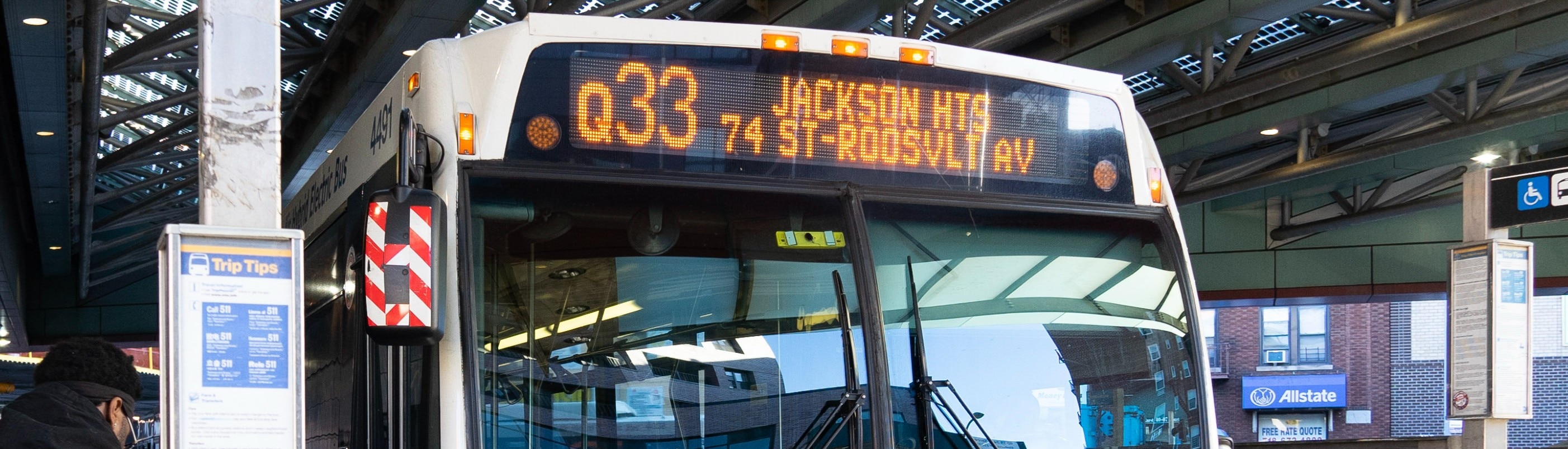
Here are what the MTA are calling the "remixed" express and the local lines
And Crappy pointed out that the transit agency made up a town called Fresh Pond in these maps.

Proposals in 2019 by the Metropolitan Transportation to rework the entire bus system in Queens were roundly hammered by the public and elected officials.
In the two years that Covid-19 put the project on the far, far back burner, the MTA, as promised, reviewed the feedback it collected.
The preliminary draft was unveiled Tuesday at a Jamaica press conference that included MTA CEO and Chairman Janno Lieber, Borough President Donovan Richards and city Transportation Commissioner Ydanis Rodriguez.
“The Queens New Draft Plan is the third to be released, but in some ways, may be the most important of the five because Queens has, historically, had less subway service relative to its size and population than the other boroughs,” Lieber said. “So many people depend on buses for access to jobs, education, culture and everything else New York has to offer.”
Lieber acknowledged that the 2019 proposal was not well-received by the public. He said the new plan is an effort to increase the speed and frequency of service, balanced with convenience. He said the new plan applies to local and express service and emphasized that it still is a draft “to address the evolving needs of Queens communities, with a focus on more reliable service, faster travel, better connections, and ease of use.”
“A bus is mass transit in many parts of Queens,” he added. “It is the only way [in some areas] to connect to the subway system and the commuter rail system, so we are really emphasizing this.”
Craig Cipriano, New York City Transit’s interim president, also emphasized the draft nature of the document.
“This is going to be one of the largest bus redesigns in the country, with over 100 routes serving over 800,000 customers a day,” Cipriano said. “We’re eager to hear what you have to say, and there’s lots of room to make changes.”
Richards said the selection of Jamaica for the unveiling was no accident.
“For the residents of Queens who get up every day and go to bus stops, today is a great day,” Richards said. “If you come from Southeast Queens, like I do, you know it can take an hour just to get to one of the train stations here on Jamaica. I often joke, and it’s really not a joke, that it is easier to get to Florida by plane than it is to get to Manhattan from here on some days.”
While Richards said buses are a lifeline to parts of Eastern, Southeast and Southwest Queens, they often are unreliable, overcrowded and slow.
“The routes are outdated, and the schedules haven’t changed with our neighborhoods,” the borough president said. “They not only went back to the drawing board, they’re coming to us with a better product.”
One of the major complaints heard throughout community meetings in 2019 is that while eliminating some existing bus stops speeds up each bus trip, those who use those stops regularly will be at least slightly, maybe greatly, inconvenienced.
Lieber and Cipriano said the idea is to focus on stops that are closer together, which cost riders time at the curb.
“The focus is on connecting people more quickly to the subways and commuter railroads,” Lieber said in a question-and-answer session. “It also tries to balance the needs to move buses more quickly with the elimination of some bus stops while maintaining local bus service, especially with seniors.”
He said that is essential for anyone who does not live in an area close to subway lines.
“Buses have to be faster than walking,” he said.
Among the things Lieber said the city can do to help are things like signal prioritization for buses at traffic lights, and especially bus lanes.
Saturday, March 26, 2022
Here we go again: MTA holds hearings for redesigning bus routes in Queens

Remember the last time they tried this a few years ago? Citizens yelled at Andy Byford and practically helped drive him out of town because of how screwed up they were. Engage by filing this form for the routes that affect you and here are the dates.
#1: W March 30 - Citywide /Boroughwide Groups
#5: Th April 7 - Southeast (CBs 12, 13, 14)
Tuesday, March 8, 2022
The Department of Transportation has legalized riding on the sidewalk
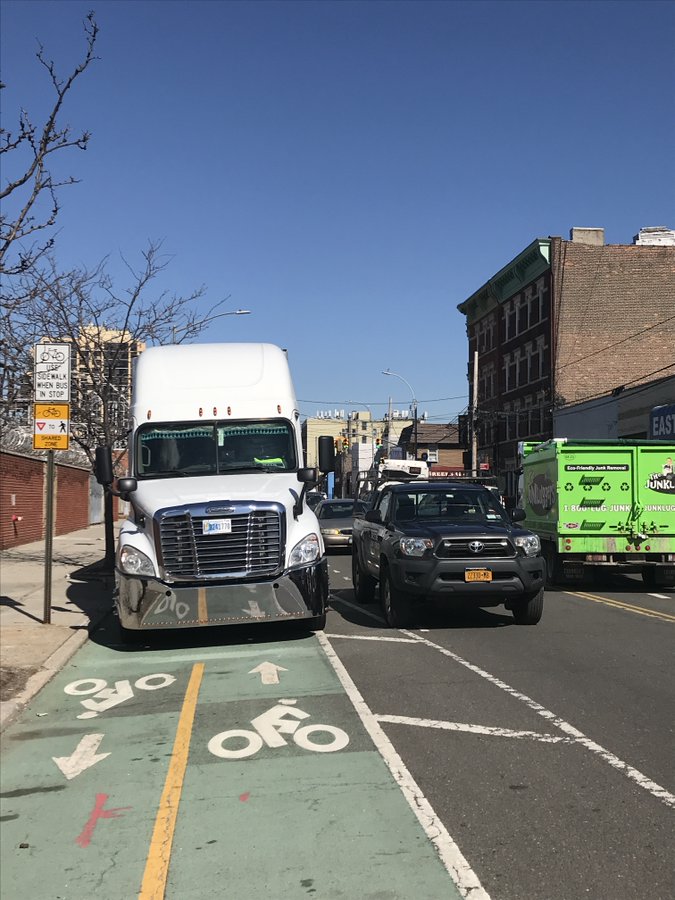
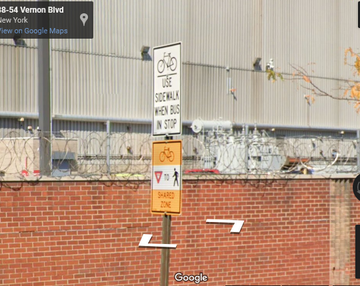
A bike zealot discovered this in Astoria when he went to complain to his fellow bike zealots on the twitter about this big rig parked in the two way bike lane. Apparently, Commissioner Ydanis decided it was good idea for cyclists, ebikers and even unlicensed moped riders to endanger bus commuters lives by giving them more convenience and ensuring their commutes don't get briefly disrupted, instead of putting a yield sign here so non-biking people can get on and off the bus safely (or maybe former dopey interim Commissioner Gutman or even that lady before her, who knows how long it's been there.)
Subscribe to:
Posts (Atom)


