

Showing posts with label lobbyists. Show all posts
Showing posts with label lobbyists. Show all posts
Tuesday, June 10, 2025

Thursday, April 3, 2025
Liu caves to Cohen's Casino fake park lobby

A coalition of community groups in Elmhurst, Flushing, Jackson Heights and Corona has criticized State Sen. John Liu for announcing his plans to introduce a parkland alienation bill in the State Senate that brings the $8 billion Metropolitan Park casino project closer to reality.
Liu announced Sunday that he will introduce Senate legislation to reclassify the 50 acres of asphalt parking lot adjacent to Citi Field from public parkland to commercial property—a necessary step for the Metropolitan Park project.
Liu outlined his intention to introduce the parkland alienation legislation after securing commitments from Mets owner Steve Cohen and Hard Rock International for Flushing Skypark, a pedestrian and cycling bridge that would span Flushing Creek and connect Downtown Flushing and Willets Point.
However, several community groups have criticized Liu for facilitating the Metropolitan Park development, describing the move as a “betrayal” of the local community.
The “FED-UP” coalition, which held a protest against the Metropolitan Park project two days before Liu’s announcement, opposes the development for several reasons. The coalition cites the need for “public parks, community spaces, and low-income housing.” The coalition also contends that the development will raise prices in the neighborhood, forcing long-term residents out of their homes.
The group accused Liu of aligning with lobby groups rather than representing his own constituents.
“Liu is aligning himself with Cohen’s 14 lobbying firms rather than with his constituents. Liu has invited in a billionaire to prey on his own constituents while displacing working people in Flushing and across Queens,” the group said in a release Monday.
The FED-UP coalition features various groups from Elmhurst, Jackson Heights, Corona, and Flushing, including Guardians of Flushing Bay, the Western Queens Community Land Trust, Queens Neighbors United, and Jackson Heights Indivisible.
Guardians of Flushing Bay, for example, is calling on all local residents to lobby their state representatives not to support parkland alienation bills that would facilitate the project.
Meanwhile, the coalition has also criticized Liu for introducing the senate legislation despite State Sen. Jessica Ramos, who represents the district covering the 50-acre parking lot, refusing to do so.
Ramos has regularly refused to introduce a parkland alienation bill in the State Senate and outlined her intention to vote against Liu’s legislation.
“My position has not changed. I cannot support a casino in Corona and am a definitive no on any alienation bill that goes against my neighbors’ wishes,” Ramos said in a statement Monday.
Representatives for Liu said the decision to introduce a parkland alienation bill was based on feedback provided by the local community. They stated that far more local residents supported the project than opposed it. Representatives further noted that all relevant community boards passed supporting resolutions of the project during the ULURP process.
Sunday, October 20, 2024
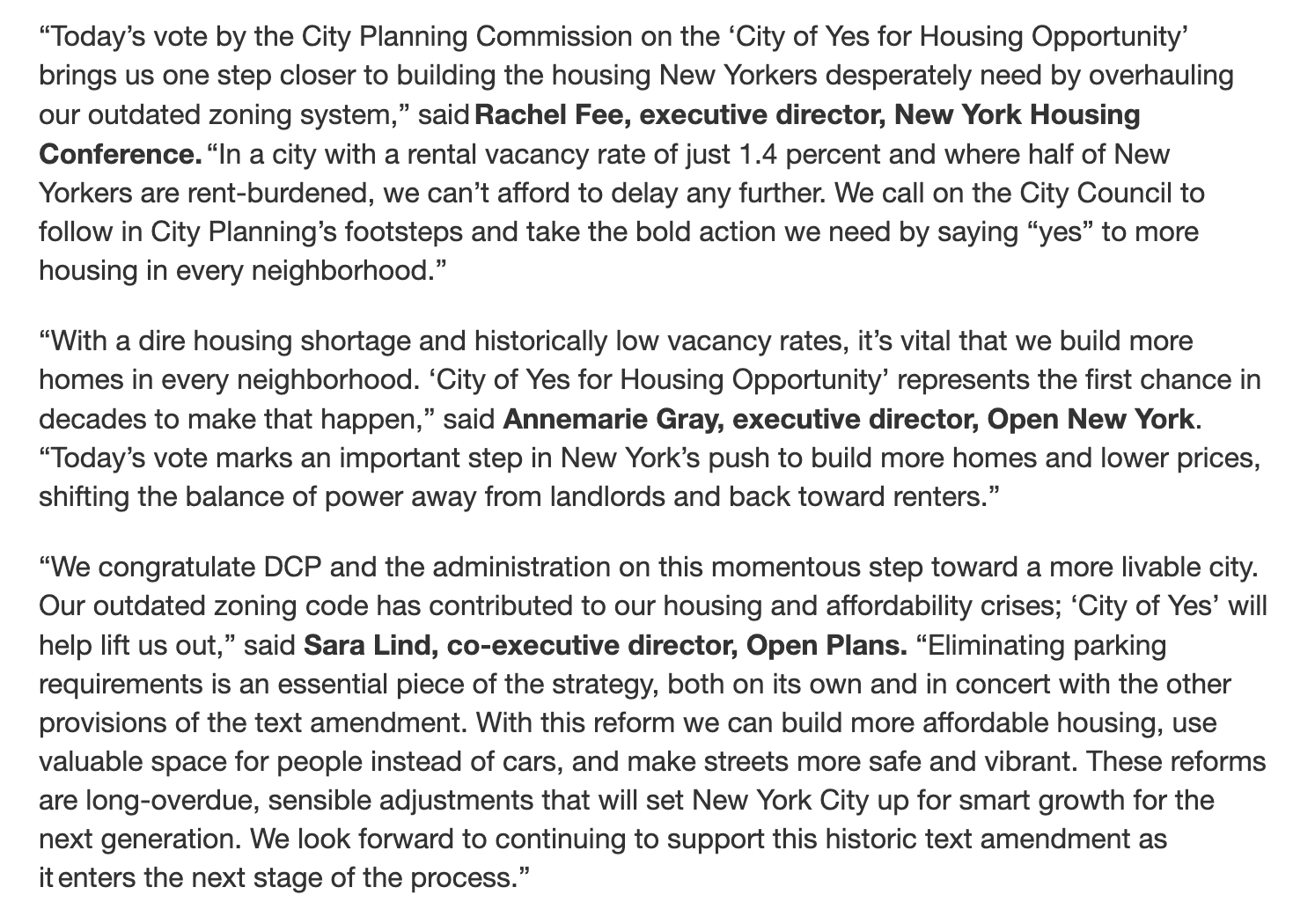
The people, the lies and the conspiracy of the City of Yes
With the City of Yes of Housing Opportunity about to get heard by City Council and New Yorkers the next two days, Intrepid City Planner Paul Graziano dropped a report on the sneaky tactics at the previous zoom hearing and sneaky people trying to get the worst housing plan in New York City history approved in spite of majority rejection by community boards and residents.
Here are the best parts on Paul's X account.
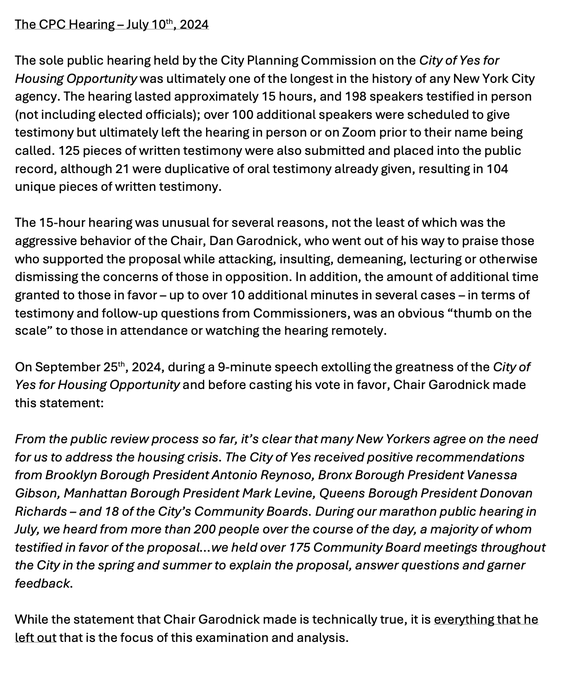
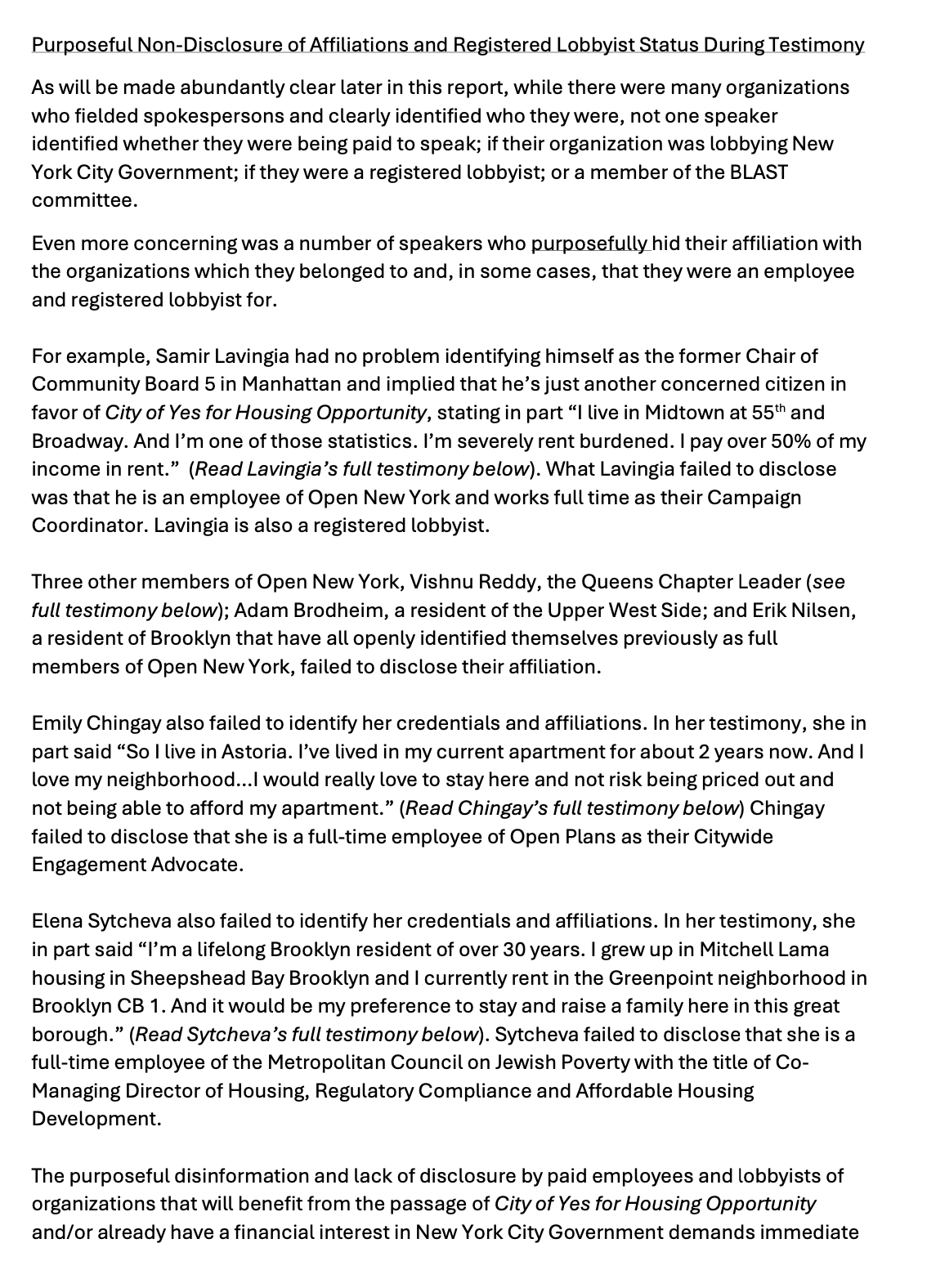

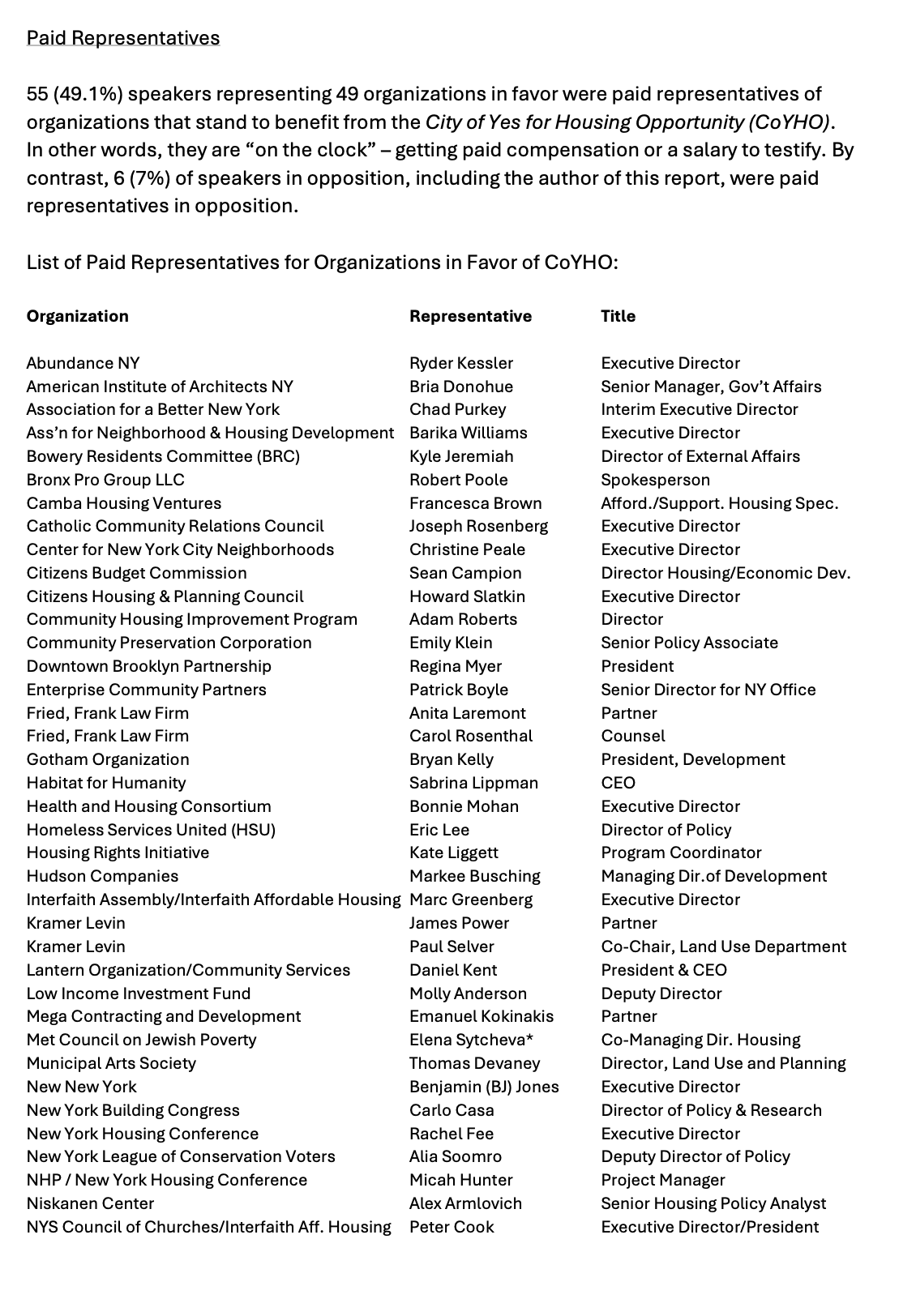
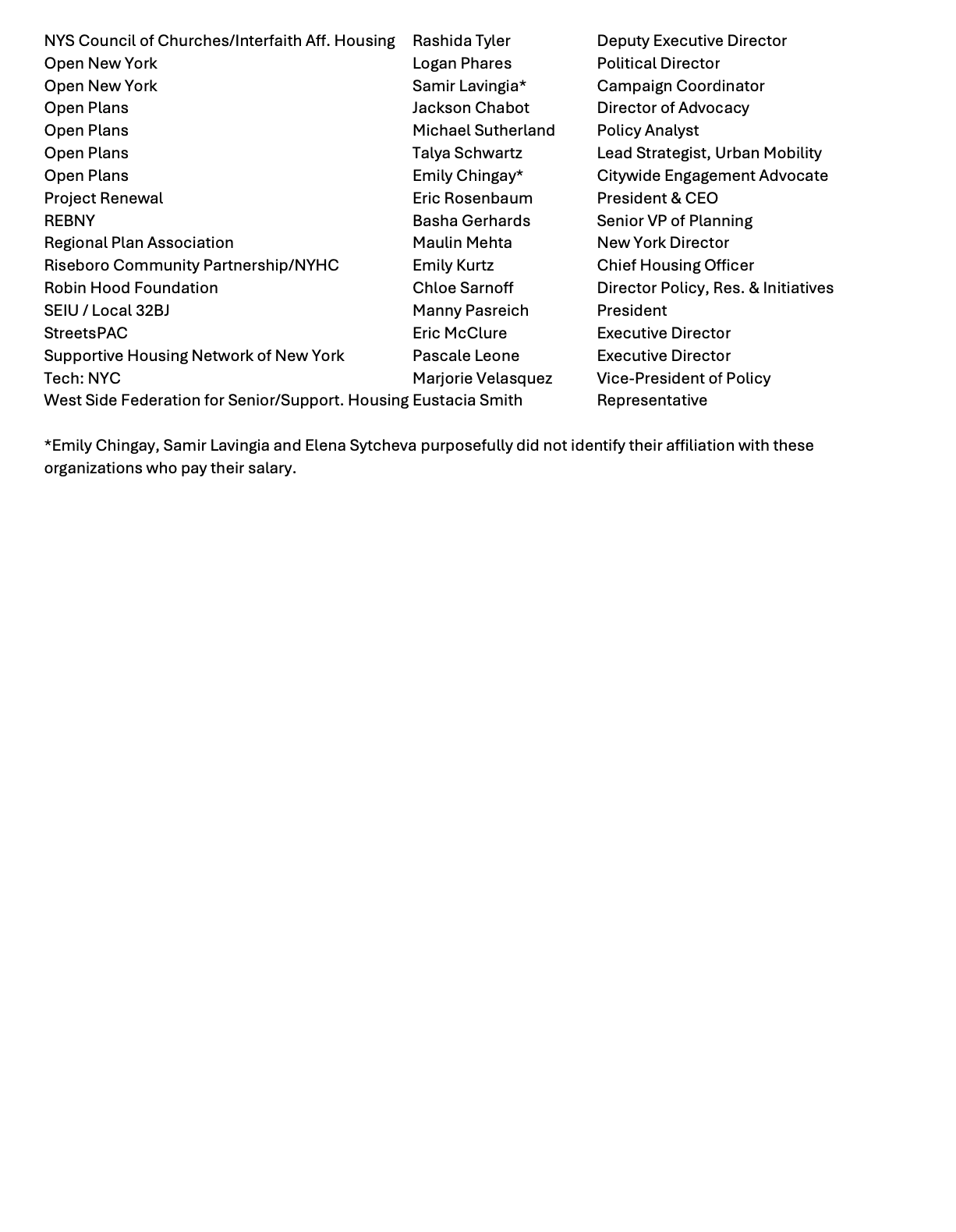
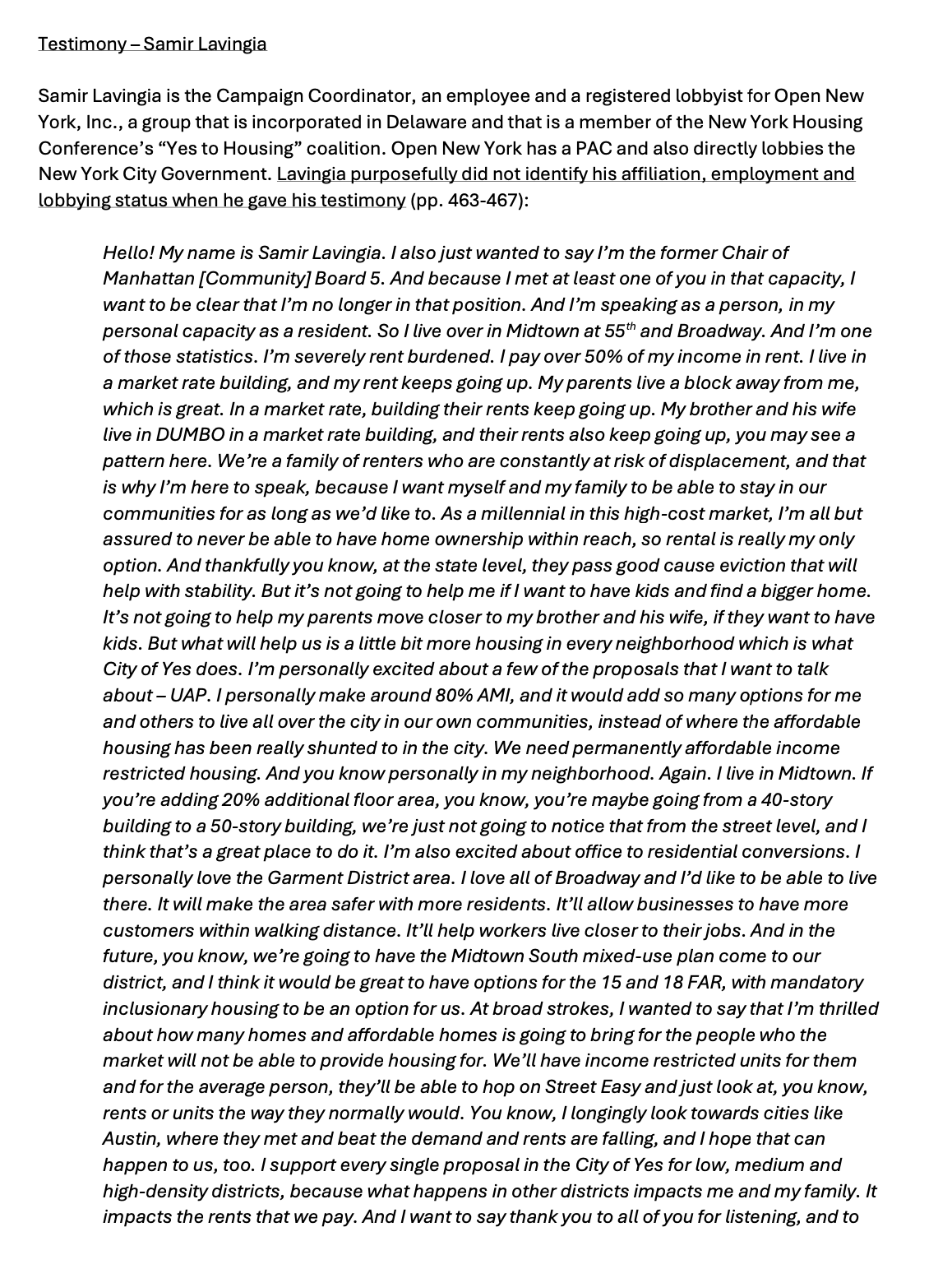
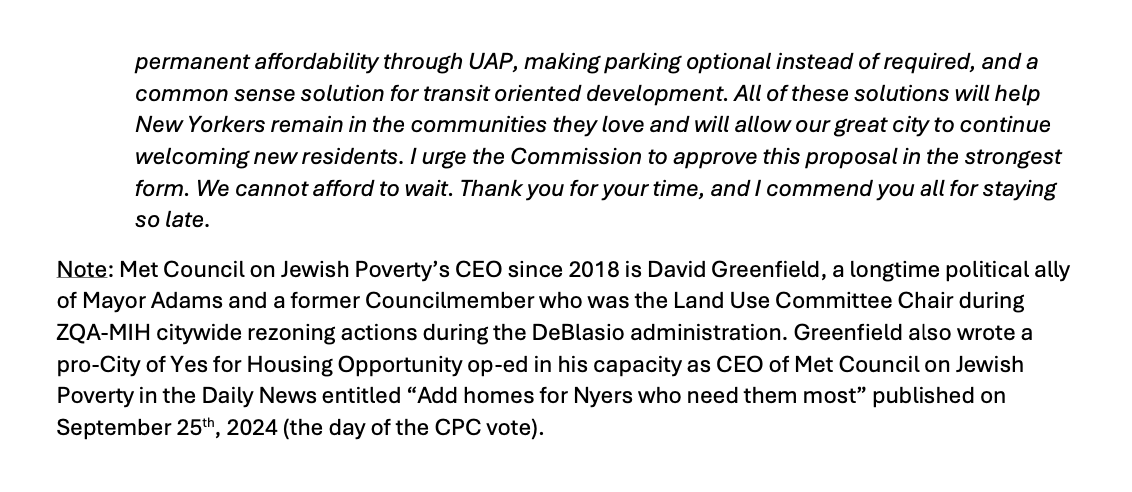
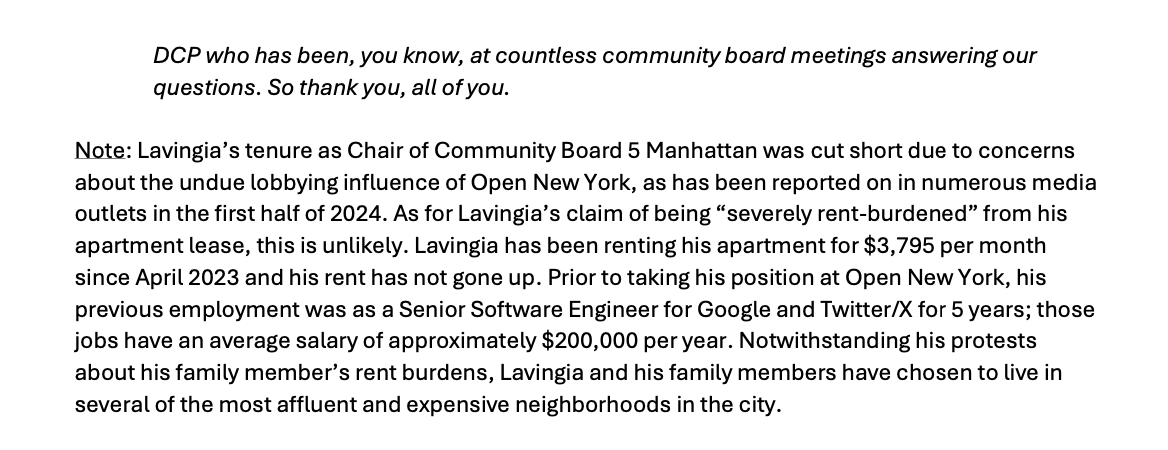
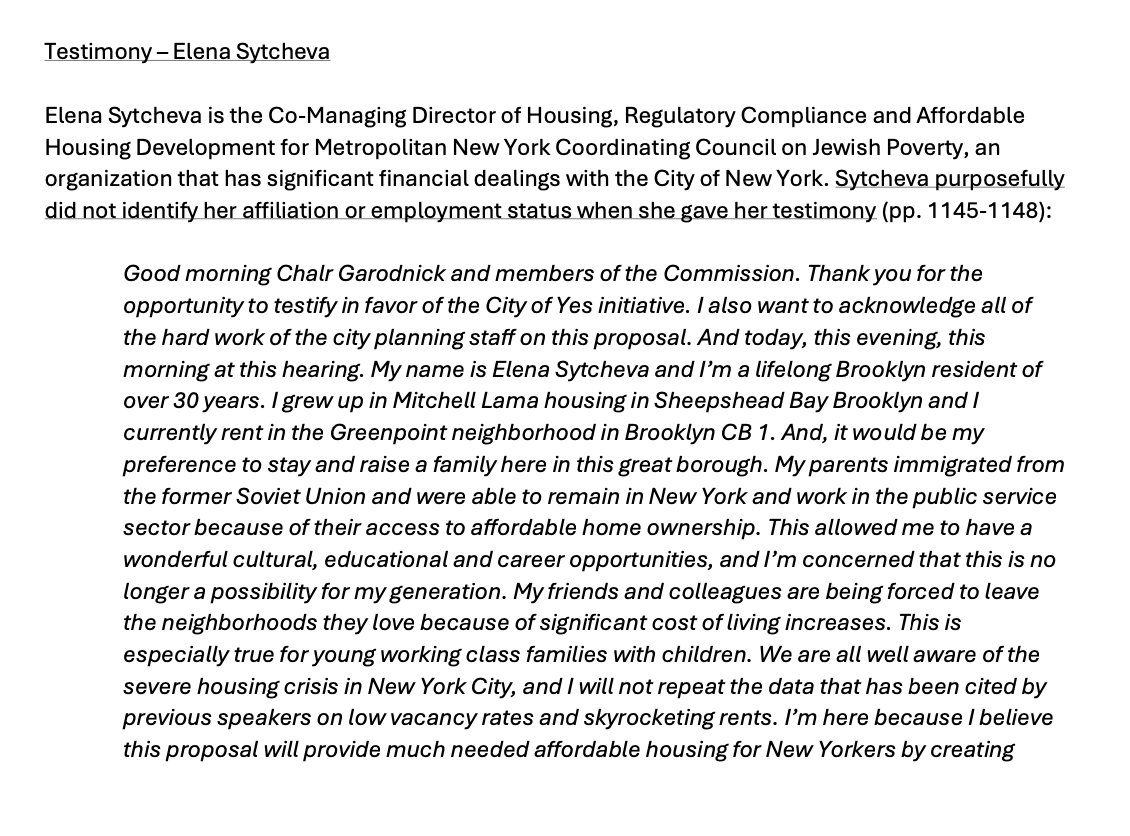
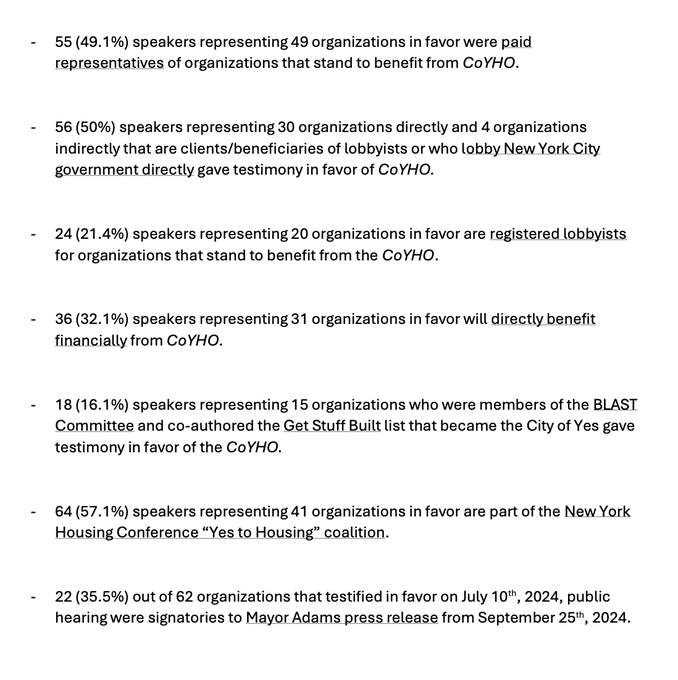
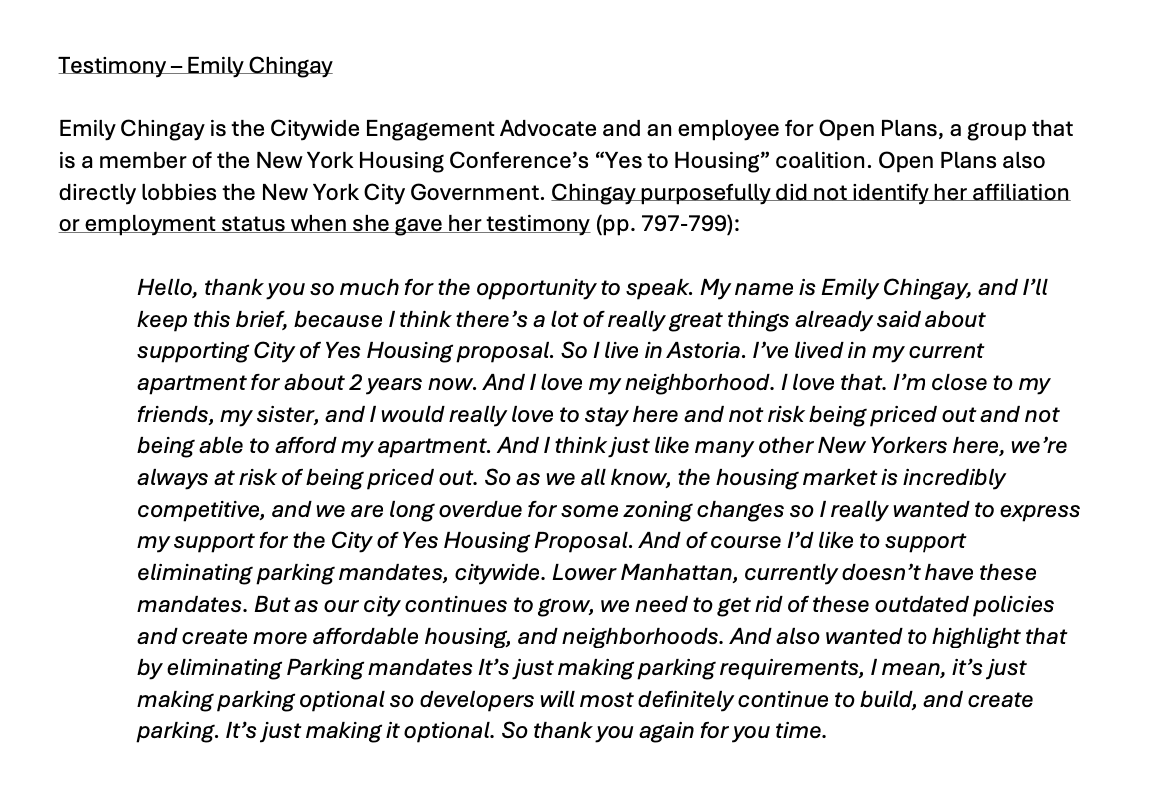
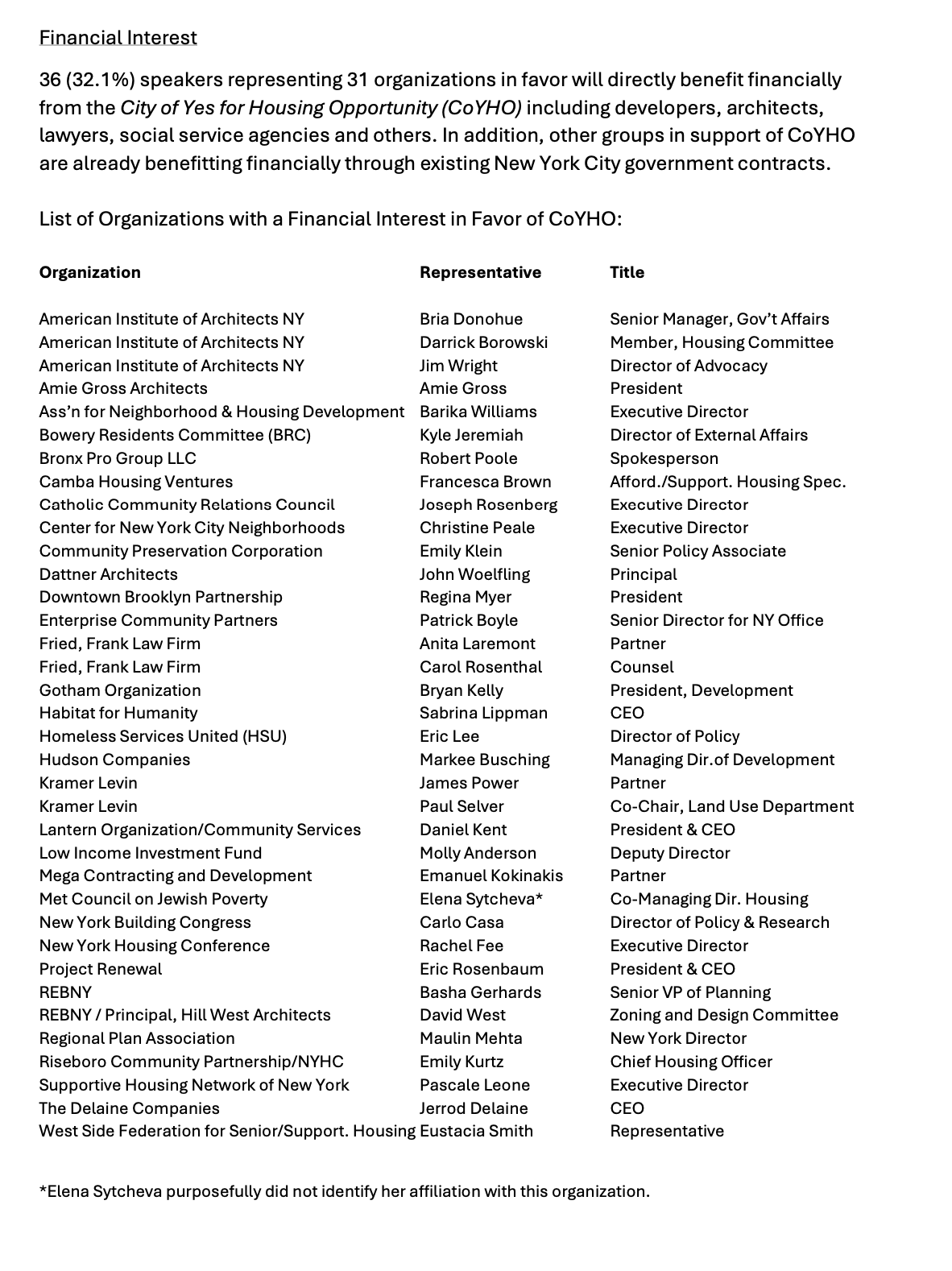
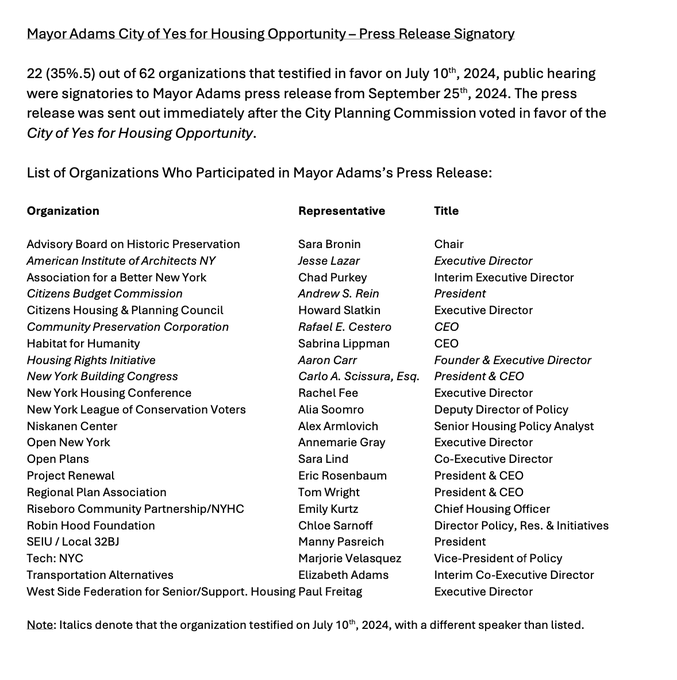
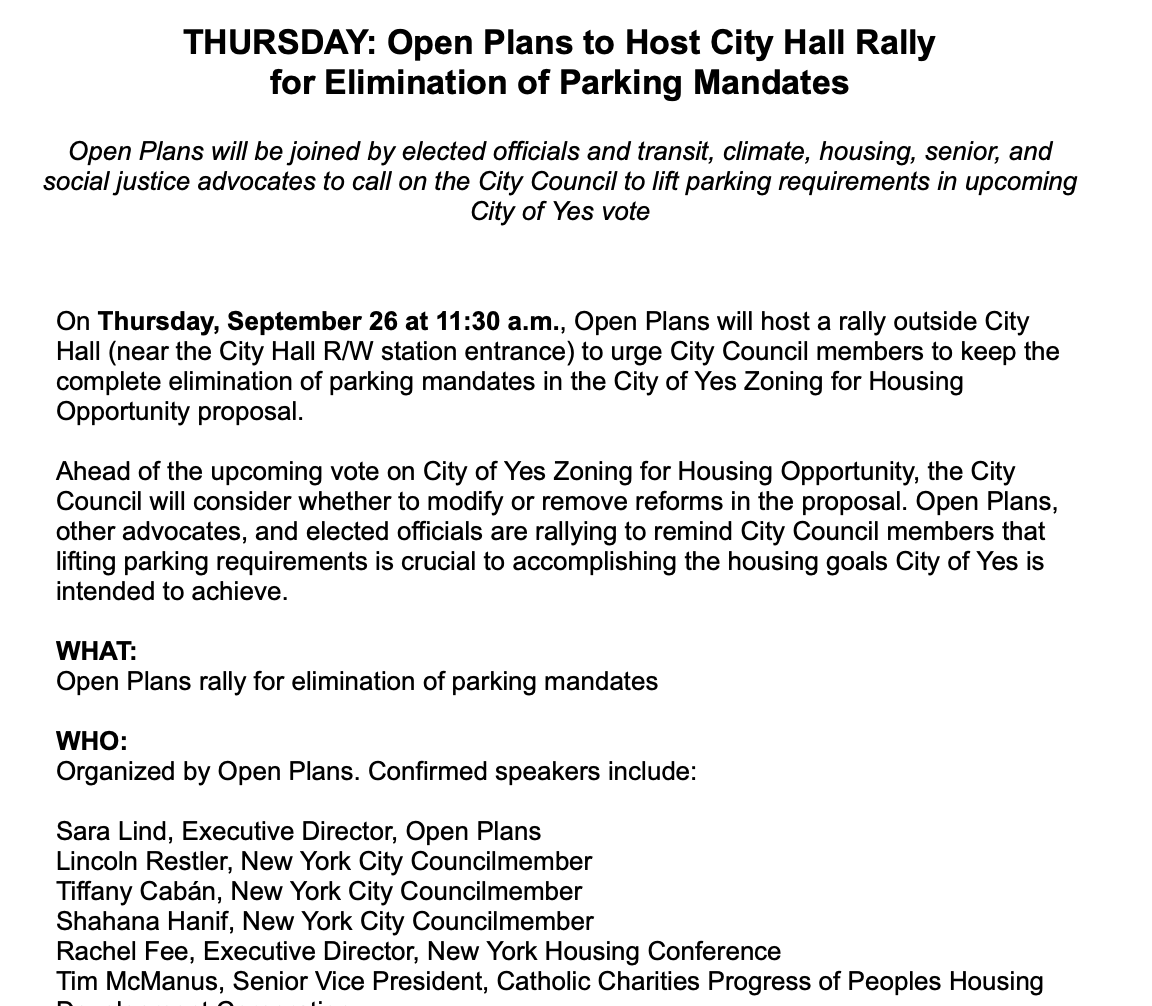
The video above happens to be from this farcical rally with everyone from Paul's COY list. They can't even answer housing related questions and defend their agendas without their YIMBY scripts and talking points. And they refuse to answer the most important question no one is asking these dopes, who is going to build this City of Yes?
Sunday, April 7, 2024
Wednesday, June 15, 2022
Try to follow the Riders Alliance money

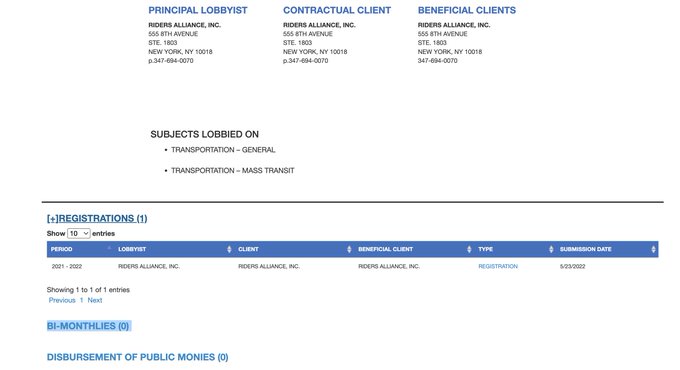
What's interesting about R.A. is how they became such a big influencer about all things transit (and now plan to expand that influence in housing and policing), especially when looking at their tax forms.
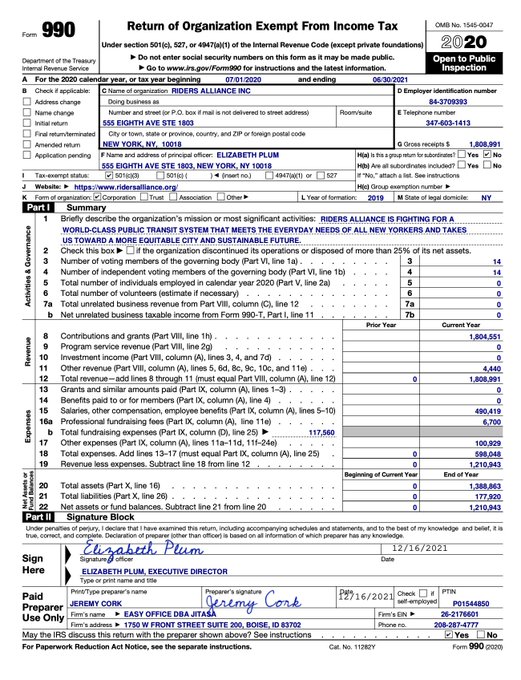
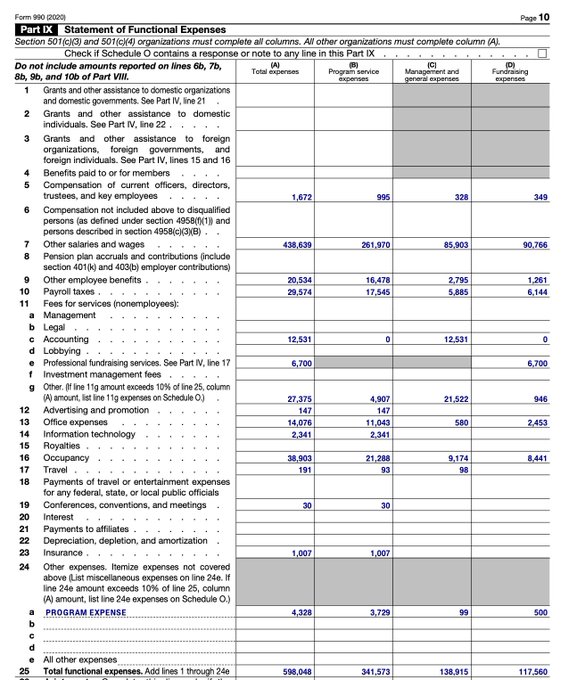
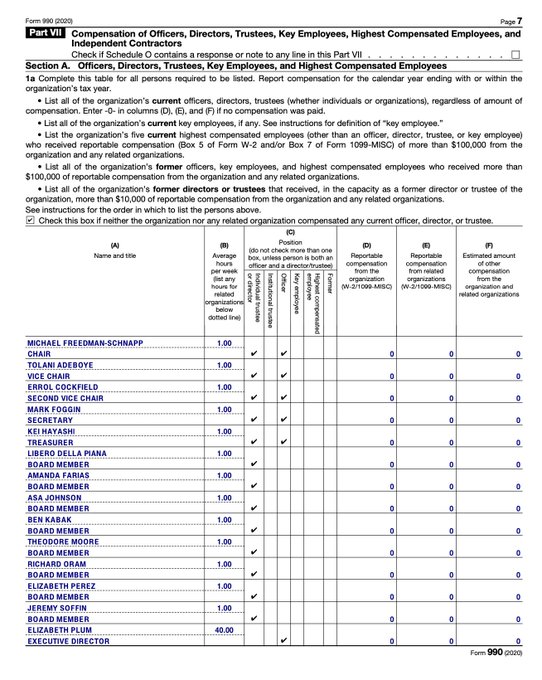
Riders Alliance sure pulled in a lot of moolah in such a short time span during a pandemic. But what's going on with Elizabeth Plum here? She's the only full time worker on this list and claims to have made no money as the boss?
Tuesday, March 15, 2022
The return of the agents of the city

Mayor Eric Adams has dispensed with a de Blasio-era policy to voluntarily disclose meetings top administration officials take with lobbyists — further obscuring an already-opaque system of outside influence over government actions.
Two City Hall attorneys alerted administration employees of the change in a March 1 memo laying out rules governing communication with lobbyists, a lucrative line of work that brought firms $104 million last year, according to a recent report from the city’s lobbying bureau. The top firm, Kasirer LLC, took in north of $15 million — nearly double the earnings of the second-place company, James F. Capalino & Associates, Inc.
The two-page memo, a copy of which was obtained by POLITICO, defines lobbying as “the attempt to influence certain government actions” and advises the staffers that they may be subject to this type of outreach.
The city lawyers go on to explain common motivations for lobbying — land use changes that impact multi-billion-dollar real estate deals, competitions to win city contracts, an effort to shape pending legislation.
“Mayor’s Office employees are not required to maintain or file any reports or documents in connection with their meetings with lobbyists,” the attorneys wrote, effectively undoing a discretionary policy former Mayor Bill de Blasio instituted to mandate routine disclosure of lobbying meetings. The former mayor, who had his own ethics problems during his tenure, demanded his deputy mayors and agency heads report their interactions with lobbyists and the information was made public through a city-run portal.
“It is nonetheless important to preserve communications with lobbyists,” the lawyers added. “You should not delete emails, texts, calendar entries, or voicemails related to lobbyist communications or meetings. As you engage in email and text communications with lobbyists, please remember that these communications may be disclosed in response to a FOIL request or a civil or criminal subpoena.”
Adams spokesperson Jonah Allon did not explain the reason for the change, instead providing a statement highlighting the new mayor’s commitment to ethics. Allon also declined to provide a list of lobbyists who have met with the mayor so far.
“Even before he took office, Mayor Adams made clear that everyone in his administration would be held to the highest ethical standards, and that is exactly the kind of administration he has run since day one,” Allon said.
Literally de Blasio 2.0
Wednesday, October 13, 2021
The million dollar deadbeat

As he hints at running for governor, lame duck mayor Bill de Blasio has racked up nearly $1 million in debts to lawyers, campaign consultants and taxpayers that records indicate he currently can’t pay.
The mayor owes one of the city’s biggest lobbyist law firms upwards of $435,000. On Thursday, the city’s Department of Investigation commissioner informed him he must reimburse taxpayers nearly $320,000 for his use of an NYPD securing detail during his failed 2019 cross-country presidential campaign.
Meanwhile, the latest filings for his various campaign and political action committees reveal he’s got more than $182,500 in outstanding campaign debts — and only about $11,800 cash on hand.
Between all of this, he owes upwards of $929,000, THE CITY found.
Danielle Filson, a spokesperson for de Blasio, declined to respond to nearly all of THE CITY’s questions, stating only that he was awaiting his appeal on NYPD reimbursement.
“Once that decision is made, the mayor will of course proceed accordingly,” she wrote.
But Filson would not discuss his modest cash reserve or any of his debts, including his biggest unpaid bill: the $435,000 he owes Kramer Levin & Naftalis — a firm that regularly lobbies City Hall on behalf of real estate developers seeking favors from the mayor’s administration such as zoning changes and city permits.
Between 2015 and 2017, the firm represented de Blasio personally during multiple investigations of his fundraising tactics. As of Tuesday, he had yet to pay a dime of his long-outstanding bill. And at least for the moment, the firm — which has sued other clients for non-payment — has given the mayor a pass.
De Blasio hired Kramer Levin in 2015 after he began getting inquiries from law enforcement and ethics entities regarding his fundraising tactics. The firm then represented him for two years. By the time its services were no longer needed in 2017, Kramer Levin had billed him for some $300,000.
But he likely owes even more due to interest on the initial bill accumulating over the last four years.
According to court papers the firm has filed accusing other clients of non-payment, Kramer Levin starts charging interest after 30 days of missed payment. The papers state that their protocol is to charge a per annum rate of 9%, which would bring de Blasio’s unpaid bill up to $435,000.
In the last year, Kramer Levin has filed lawsuits against a Diamond District dealer for $1.2 million in allegedly unpaid bills, and two hotel developers for $4.7 million. Both suits are pending.
As of last week, the law firm had taken no such action against de Blasio, even though the bills he owes are now overdue by four years.
Monday, March 1, 2021
NYC lobbyists profited from the pandemic and got even more access to city hall

The Big Apple’s lobbying industry proved to be nearly pandemic-proof last year despite the COVID-19 outbreak that ravaged New York City, new records show.
For months in 2020, most of the city was in lock down, with Mayor Bill de Blasio’s administration and the City Council holding virtual meetings and hearings during the pandemic instead.
But well-connected, high powered lobbyists still found a way to rake in bundles of cash from wooing City Hall and the Council for their clients.
The lobbyists raked in $106.34 million in 2020 — just slightly less than $113.2 million in compensation during the 2019 pre-pandemic year, according to a new report from the City Clerk’s Office.
Leading the pack for the fourth consecutive year was Suri Kasirer’s lobbying firm — taking in $14.164 million, nearly matching the $14.3 million earned in pre-pandemic 2019.
One government watchdog wasn’t surprised.
“The seasoned, hot-wired lobbyists still get their phone calls returned. From a client’s perspective lobbyists are more important than ever,” said Blair Horner of the New York Public Interest Research Group.
“The top, connected lobbyists can still wield their influence and charge clients the big bucks,” added Horner.
Suri Kasirer’s 32-member firm pressed the mayor and council to provide COVID-19 relief to the hard-hit restaurant and hotel industries. Her clients included ROAR — Relief for the Restaurant Industry — and the Hotel Association of NYC, which has been trying to get the city to defer property taxes and interest fees on hotels that are closed and not generating revenue.
Kasirer’s well-heeled client list also includes Northwell Health, Columbia Presbyterian and Mt Sinai hospital systems. Northwell had been pushing a controversial proposal to expand its Lenox Hill hospital on the Upper East Side, which is facing fierce neighborhood opposition.
The firm’s table of clients last year also included the Target Corporation, T-Mobile USA, IF Cornerstone, which owns part of the vacant Long Island City waterfront property where the aborted Amazon headquarters project was supposed to be located; Charter Communications, Comcast Cable, South Street Seaport, Sotheby’s, Columbia University, the Disney Company, and real estate powerhouses Two Trees Management the Related Company, SL Green Realty and Silverstein Properties; the Archdiocese of NY, Google, the anti-horse carriage group NY-CLASS, etc.
“We are pleased to continue to be the leading advocate in New York City, and are proud to support our clients as they work to reinvest in and rebuild New York as we emerge from the pandemic,” Kasirer said.
“This was a very tough year. This was a year from hell. My clients were struggling to deal with COVID.”
Lobbyist James Capalino’s firm was the second highest compensated firm with $9.9 million — down from $11.9 million in 2019, followed by Bolton-St. Johns, with $6.7 million.
The top ten lobbying firms also included Constantinople & Vallone (includes former Council Speaker Peter Vallone) $5,669,402.00; Pitta Bishop & Del Giorno $4,826,526.51; Greenberg Traurig, $4,571,504.20; Davidoff Hutcher & Citron, $3,240,421; Fried, Frank, Harris, Shriver $3,198,924.84; Geto & de Milly Inc., $3,120,500; and CMW Strategies ( Connelly McLaughlin & Woloz), $3,104,899.92.
Wednesday, May 27, 2020
Fire through dry grass; Governor Cuomo's directive sent 4,500 coronavirus patients to nursing homes and gave immunity to them stemming from the industriy's donations to his last re-election campaign

More than 4,500 recovering coronavirus patients were sent to New York’s already vulnerable nursing homes under a controversial state directive that was ultimately scrapped amid criticisms it was accelerating the nation’s deadliest outbreaks, according to a count by The Associated Press.
AP
compiled its own tally to find out how many COVID-19 patients were
discharged from hospitals to nursing homes under the March 25 directive
after New York’s Health Department declined to release its internal
survey conducted two weeks ago. It says it is still verifying data that
was incomplete.
Whatever
the full number, nursing home administrators, residents’ advocates and
relatives say it has added up to a big and indefensible problem for
facilities that even Gov. Andrew Cuomo — the main proponent of the
policy — called “the optimum feeding ground for this virus.”
“It
was the single dumbest decision anyone could make if they wanted to
kill people,” Daniel Arbeeny said of the directive, which prompted him
to pull his 88-year-old father out of a Brooklyn nursing home where more
than 50 people have died. His father later died of COVID-19 at home.
“This
isn’t rocket science,” Arbeeny said. “We knew the most vulnerable --
the elderly and compromised -- are in nursing homes and rehab centers.”
Told
of the AP’s tally, the Health Department said late Thursday it “can’t
comment on data we haven’t had a chance to review, particularly while
we’re still validating our own comprehensive survey of nursing homes
admission and re-admission data in the middle of responding to this
global pandemic.”
Cuomo,
a Democrat, on May 10 reversed the directive, which had been intended
to help free up hospital beds for the sickest patients as cases surged.
But he continued to defend it this week, saying he didn’t believe it
contributed to the more than 5,800 nursing and adult care facility
deaths in New York — more than in any other state — and that homes
should have spoken up if it was a problem.
“Any
nursing home could just say, ‘I can’t handle a COVID person in my
facility,’” he said, although the March 25 order didn’t specify how
homes could refuse, saying that ”no resident shall be denied
re-admission or admission to the (nursing home) solely based” on
confirmed or suspected COVID-19.
Over
a month later, on April 29, the Health Department clarified that homes
should not take any new residents if they were unable to meet their
needs, including a checklist of standards for coronavirus care and
prevention.
Remember, Andrew Cuomo named this directive after his mother.
A directive influenced by a profit-driven health and hospice care industrial consortium that gave Cuomo millions to his last re-election campaign:
TMI
As Governor Andrew Cuomo faced a spirited challenge in his bid to win New York’s 2018 Democratic primary, his political apparatus got a last-minute boost: a powerful health care industry group suddenly poured more than $1 million into a Democratic committee backing his campaign.
Less than two years after that flood of cash from the Greater New York Hospital Association (GNYHA), Cuomo signed legislation last month quietly shielding hospital and nursing-home executives from the threat of lawsuits stemming from the coronavirus outbreak. The provision, inserted into an annual budget bill by Cuomo’s aides, created one of the nation’s most explicit immunity protections for health care industry officials, according to legal experts.
Critics say Cuomo removed a key deterrent against nursing home and hospital corporations cutting corners in ways that jeopardize lives. As those critics now try to repeal the provision during this final week of Albany’s legislative session, they assert that data prove such immunity is correlating to higher nursing-home death rates during the pandemic — both in New York and in other states enacting similar immunity policies.
New York has become one of the globe’s major pandemic hot spots — and the epicenter of the state’s outbreak has been nursing homes, where more than five thousand New Yorkers have died, according to Associated Press data.
Those deaths have occurred as Cuomo’s critics say he has taken a hands-off approach to regulating the health care industry interests that helped bankroll his election campaign. In March, Cuomo’s administration issued an order that allowed nursing homes to readmit sick patients without testing them for COVID-19. Amid allegations of undercounted casualties, the governor also pushed back against pressure to have state regulators more stringently record and report death rates in nursing homes.
And then came Cuomo’s annual budget — which included a little-noticed passage shielding corporate officials who run New York hospitals, nursing homes, and other health care facilities from liability for COVID-related deaths and injuries.
GNYHA — a lobbying group for hospital systems, including some that own nursing homes — said it “drafted and aggressively advocated for” the immunity provision. The new law declares that top officials at hospital and nursing-home companies “shall have immunity from any liability, civil or criminal, for any harm or damages alleged to have been sustained as a result of an act or omission in the course of arranging for or providing health care services” to address the COVID outbreak.
Prior to the budget language, Cuomo had already temporarily granted limited legal immunity to doctors and nurses serving on the medical front lines. But the carefully sculpted passage buried in the state’s annual spending bill expanded that by offering extensive immunity to any “health care facility administrator, executive, supervisor, board member, trustee or other person responsible for directing, supervising or managing a health care facility and its personnel or other individual in a comparable role.”
New York is now one of just two states to shield those corporate officials from both civil lawsuits and some forms of criminal prosecution by the government, according to an analysis by Syracuse University law professor Nina Kohn and the University of Houston’s Jessica L. Roberts.
“New York is an outlier and has the most explicit and sweeping immunity language,” Kohn said.
Wednesday, February 20, 2019
Virginia Joe Crowley vacates Queens Democrat chairman position

NY Daily News
Joe Crowley is leaving another elected office behind.
The former New York congressman — who lost his longtime House seat to Alexandria Ocasio-Cortez in last year’s midterms — stepped down Tuesday evening as the chairman of the Queens Democratic Party, telling the Daily News, “It’s time to move on.”
“It’s the right choice for my life,” Crowley said in a phone interview. “I’m very proud of the work
I’ve done. I got a great career and I enjoyed it very, very much.”
The former Democratic boss — who served as a representative for the Queens-Bronx-spanning 14th District for 20 years and was considered a possible candidate for House speaker before his midterm defeat — said he’s resigning to dedicate himself wholeheartedly to his new job as a lobbyist for Washington, D.C., powerhouse Squire Patton Boggs.
“That’s certainly part of it,” Crowley said, adding he will split his time between the capital and New York.
So that election hearing for the chair at the Georgia Diner was a colossal waste of time. Except to boost up Crowley's ego and fragile sense of self-worth and entitlement
Saturday, February 16, 2019
Joe Crowley hooks up with Republican to form lobby firm while being courted by video game industry
Bipartisanship is tough to come by inside Congress, but two formerly powerful House members are finding it on the outside.
Former congressmen Bill Shuster of Pennsylvania and Joe Crowley of New York, who have known each other for about 20 years, plan to work together in lobbying and government-relations.
- Shuster, 58, who was chairman of the House Transportation Committee, retired.
- Crowley, 56, once seen as a possible successor to Speaker Nancy Pelosi, lost his primary to now-Rep. Alexandria Ocasio-Cortez.
The former congressmen are open to joining a firm, or starting their own.
Joe Crowley, the longtime New York congressperson who was unseated in a primary by Alexandria Ocasio-Cortez, remains extraordinarily popular among both Democrats and Republicans in the House, making him K Street’s biggest whale for 2019. Among the closest to landing him, according to sources familiar with Crowley’s post-congressional employment journey, is the video game industry’s lobby group, known as the Entertainment Software Association.
Nintendo, Microsoft, Sony Interactive Entertainment, and Ubisoft are only some of the members of the ESA. Politico first reported on Monday that Big Console is among the potential landing spots for Crowley. The former New York congressperson has also had early discussions with two other groups, Akin Gump Strauss Hauer & Feld and Hogan Lovells, according to the report.
A spokesperson for the ESA said that Big Console is “not commenting on the search process.
However, we will make an announcement when the time is appropriate.” The video game industry’s top legislative concerns involve rules around data privacy — they collect an awful lot of data — as well as intellectual property, patent law, and net neutrality regulations.
Monday, August 20, 2018
Why were these emails kept under wraps for so long?

...in nearly 350 pages of emails obtained by The New York Times as part of a Freedom of Information request, it was clear that Mr. Howe had entree to the top levels of Mr. Cuomo’s administration — a period that included the years and months leading up to the news of the federal investigation.
The Cuomo administration had fought against releasing the emails for two years, spending more than $200,000 to hire outside counsel — Greenberg Traurig, a loyal Cuomo campaign donor — after The Times went to court seeking the documents. A state judge last year ruled against the administration, and ordered that the documents be released; the state appealed the ruling, but subsequently agreed to a settlement that allowed for the emails’ release.
The emails showed how Mr. Howe used his access to gain help for clients.
Wednesday, July 4, 2018
It's all so convenient

Mayor Bill de Blasio’s $300,000 debt to his outside law firm is starting to cast a huge shadow over his staff’s decisions.
As The Post reports Tuesday, opponents of plans to expand the Frick Museum have gone to court, claiming in part that the Frick’s use of the firm — Kramer Levin Naftalis & Frankel — to represent it before the city creates a conflict of interest.
They’re right: Frick hired Kramer Levin to push its plans before the Board of Standards and Appeals and the Landmarks Preservation Commission. But the mayor chooses their members, and they’re all surely aware that he owes the firm 300 grand.
The BSA will also decide Tuesday whether to OK a 64-story East Side apartment tower. Who’s repping its developer, Jonathan Kalikow? Yep: Kramer Levin.
The firm reportedly lobbied two key mayoral aides, Deputy Mayor Alicia Glen and City Planning Commissioner Marisa Lago, to let the building reach its planned 64-story height — and the planning commission obliged.
The City Council later nixed that decision, but the BSA will now decide whether enough of the tower was built by then to shield it from the council’s action.
Even if de Blasio hasn’t tried to pay off his debt with political favors, his debt creates an appearance that the firm will be treated well by the city. What company lets a client not pay a bill (or even work out a payment plan, as de Blasio has yet to do) unless it’s getting something in return?
Monday, June 25, 2018
Tweeding at its finest!

THE RISE OF Congressman Joe Crowley, D-N.Y., has coincided with lucrative lobbying contracts for his younger brother, John Crowley, an attorney who goes by the first name Sean, and previously specialized in wills and estate law.
Sean Crowley serves as a partner at Davidoff Hutcher & Citron LLP, a powerhouse law firm with offices in Albany, New York City, and Washington, D.C., that advertises its ability to connect clients with congressional leadership.
Over the last decade, clients with interests before Congress have retained Sean Crowley through his lobbying firm, paying more than $4.5 million to influence and monitor government policies, according to a review of contracts by The Intercept.
Clients in recent years have included Oracle, AbbVie, NBCUniversal, Juniper Systems, New York Community Bancorp, Abbott Labs, and Elections Systems & Software.
In many cases, the interests of Sean Crowley’s clients have overlapped with his elder brother’s legislative and political work.
Wow, you don't say? Now why did the Queens Courier choose to print this 900+ word ass licking piece instead of delving into this shady business?
P.S. The primary is tomorrow.
Friday, June 22, 2018
Does Joe Crowley really believe his own bullshit? (part 3)

HOUSE DEMOCRATIC CAUCUS Chair Rep. Joe Crowley, D-N.Y., is raising last-minute campaign cash from a corporate lobbying firm famous for its ties to the Republican Party.
Faced with a surprisingly strong challenge from progressive first-time candidate Alexandria Ocasio-Cortez in New York’s Democratic primary, Crowley, the fourth-ranking House Democrat, is slated to appear at the the offices of BGR Group on 13th Street in Washington, D.C., on Wednesday afternoon for a fundraising reception, according to a copy of an invitation obtained by The Intercept.
The fundraiser is at an odd venue for a Democrat who claims to be an avowed opponent of the GOP.
The invitation lists Crowley’s position in leadership of the Democratic Party and as a member of the powerful Ways & Means Committee, which oversees tax policy. The fundraiser, which asks for $500 minimum to attend as an individual and $1,000 to attend for political action committees, is at an odd venue for a Democrat who claims to be an avowed opponent of the GOP.
BGR is named for its founding partners, all of whom are Republican: Haley Barbour, the former Republican National Committee chair; Ed Rogers, a former aide to President Ronald Reagan; and Lanny Griffith, a former education official in President George H.W. Bush’s administration.
What fantastic "progressive" values! Champion of the Democratic Party! Our next House Speaker! Hip, hip, hooray!
Wednesday, April 11, 2018
He must have thought that no one would find out

De Blasio wanted donation from NYCLASS as group sought horse carriage ban - Daily News
De Blasio Defends Ethics As Critics Question Why Donors Paid Investigation Settlement Fines - CBS 2
Mayor de Blasio claims he can’t remember secret 2015 meeting with major lobbyist that led to $100G in donations - Daily News
Monday, January 22, 2018
REBNY wants to eliminate building height limits

This year the Real Estate Board of New York plans on pushing Albany to lift a cap that has long limited the size of new apartment buildings in New York City, the trade group’s president said Thursday.
Current state rules restrict the square footage of a residential building to 12 times its lot size. While this has resulted in plenty of tall Manhattan apartment towers, developers have the capability to go much higher. Commercial office buildings are routinely built to twice this density, and some of them have later been converted to apartments.
Unlocking greater density in transit-rich areas could help chip away at the city’s housing crunch and provide affordable housing, said REBNY President John Banks, who represents many of the landlords and developers who would construct the buildings.
Banks envisions allowing buildings to exceed the cap if they are rezoned, which would require going through the public-review process and including affordable housing. It is a concept that both REBNY and others have embraced in the past. Mayor Bill de Blasio suggested nixing the density cap in his 2014 housing plan. And the Regional Plan Association included the idea in its Fourth Regional Plan. In the coming months, RPA is separately planning to release a study and start a push of its own to get rid of the limit.
Sunday, November 5, 2017
Mom & Pops Have No Friends at City Hall, says Korean-American Business Leader

The outspoken Kim charges “When New Yorkers vote shortly, they will be unaware they are really voting for which lobby or union will be empowered to make policy at City Hall, which will impact their lives, economy, jobs, taxes, and their democratic rights.”
In a statement from NYC’s Small Business Congress, an independent small business organization, Kim states, “When it concerns economic policy and jobs, REBNY controls the positions and platforms of all incumbents Democratic candidates through:
• REBNY’s influence with media
• huge campaign funding
• threats of supporting opponents
• rewards with government jobs
• promises of future business for political consultants
• sway with party bosses in the selection of a new Council Speaker
• control of the biggest high salary jobs’ revolving door with bureaucrats
• and most importantly, being viewed as the only pathway for Democratic career politicians to higher offices.”
Kim believes that the above “permits REBNY to dictate the issues and debates of our economy and jobs in the city’s elections. REBNY is the 800-pound gorilla you don’t see or hear of in the election. REBNY’s influence with lawmakers and the Democratic Party has made the topic of our city’s economy and jobs a non-issue in the past two elections.”
He further explains, “In 2009, REBNY created a bogus legal roadblock to stop a vote on the Small Business Jobs Survival Act, a bill to stop our small businesses from disappearing by giving rights to commercial tenants. The bill had seemed certain to pass, with all members of Small Business Committee and 32 Council sponsors.”
“But REBNY then apparently managed to get the leading outspoken champions of a populist bill, which gave rights to commercial tenants and regulated landlords, to ‘flip.’ And once flipped, to persuade them to either join in rigging the system to stop any future vote on legislation giving rights to business owners and remain silent on the rigging against mom & pop owners facing a struggle to survive, yet still referring to them as “the backbone of the economy.”
“While powerful lobbies in Washington have the influence to hand pick committee chairs and exert influence within government agencies on regulations and policy, no modern day lobby in the city has the power like REBNY to control the city’s economic policy and hand pick entire committees to assure no challenges to that policy.”
“A walk down any NYC main street shows the outcome of REBNY’s stranglehold on City Hall, with empty storefronts, sometimes for years, where once long established vibrant businesses were. Some landlords demand “cash under the table” from immigrant owners. Tenants are turned into virtual indentured servitude when given only short term leases, sometimes a year or month to month, receiving a notice from their landlord to “vacate in 30 days.”
“The single biggest cause of long established businesses closing are the exorbitant rent increases being demanded in a manipulated, speculative market. The NYC Courts evict on average 500 commercial businesses each month. Over 1,200 businesses close each month and over 8000 jobs every month lost since Mayor DeBlasio and Speaker Mark-Viverito came into office.”
“Once, both were outspoken champions of the Small Business Jobs Survival Act, but upon election both abandoned their progressive SBJSA stance in favor of REBNY’s money and political influence. Both, along with other “progressive” lawmakers who apparently sold out to REBNY for their own political careers, “flipped” and joined the rigging to keep the status quo favoring only big real estate.”
SBJSA advocate Kim says there are three things voters can do to “challenge REBNY’s power and influence over our city’s government:
1. Elect candidates running for public office especially against an incumbent who refuse campaign funding from REBNY.
2. Ask for a call for an honest public hearing to find a real solution to end the crisis destroying our small businesses.
3. Hold elected leaders responsible for all the businesses that have been forced to close and jobs lost.
Know that if re-elected these lawmakers who have done nothing to save a single business or job will continue to work to keep the status quo favoring only their campaign contributors, REBNY.
All the incumbents are telling the voters they are proud of their progressive record as landlords are robbing the city’s struggling small business owners of their American Dream. Our Democratic lawmakers have betrayed the principles of Democracy, respect for our city’s entrepreneurs, art community, immigrant families who own the majority of small businesses, all workers, the hard to employ, seniors on fixed incomes, and New Yorkers who love their neighborhoods."
About Sung Soo Kim:
Mr. Kim consulted in the original and all subsequent versions of the SBJSA. He founded the Korean American Small Business Service Center 32 years ago, refusing city funding support. He is creator of the Small Business Bill of Rights, rejecting a Business Improvement District. He has negotiated more than 50,000 commercial leases. Kim served without salary as Chairman of the Small Business Advisory Board, appointed by Mayors Dinkins and Giuliani. Reach him at Small Business Congress, at savenycjobs@gmail.com
Monday, September 11, 2017
BDB claims he was not aware of hidden cash

Maybe Mayor de Blasio was too busy campaigning to read how a loophole in the city's Campaign Finance Board has allowed a powerful lobbying firm to stay under the radar as one of his fund-raisers.
Constantinople & Vallone steered $60,900 in campaign cash to de Blasio, but was not required to be listed as a fundraiser with the city's finance board, the Daily News reported Sunday.
The mayor said he hadn’t read it.
"I haven't seen that story specifically," he told Rita Cosby on 77 WABC when asked about the News’ story.
Under the city's campaign-finance law, city candidates must detail the names of their fund-raisers and how much they raised to the city's Campaign Finance Board.
But Constantinople & Vallone is not listed online as a de Blasio fund-raiser because the firm was on host committees for campaign-sponsored events. Hosts are not deemed intermediaries or fund-raisers if the campaign covers the event.
The money raised was listed on obscure filings with the City Clerk's Lobbying Bureau.
Monday, August 21, 2017
Lobbyists basically run City Hall

As Mayor Bill de Blasio’s staff first learned to navigate the city’s vast bureaucracy, they sought regular help from an eager lobbying firm that had much to gain in return.
Commissioners and employees across city agencies solicited the advice of the firm Capalino + Company to shape policy, raise funds for events and answer technical questions on myriad aspects of municipal government, according to thousands of pages of emails reviewed by POLITICO New York.
The emails, obtained through a records request, show Capalino's stable of lobbyists was so entrenched in the minutiae of de Blasio's first term, they formed an unofficial, additional layer of government — sometimes instructing staffers how to do their jobs — all while advancing the interests of their paying clients.
Subscribe to:
Posts (Atom)


