Showing posts with label tolls. Show all posts

Friday, December 15, 2023

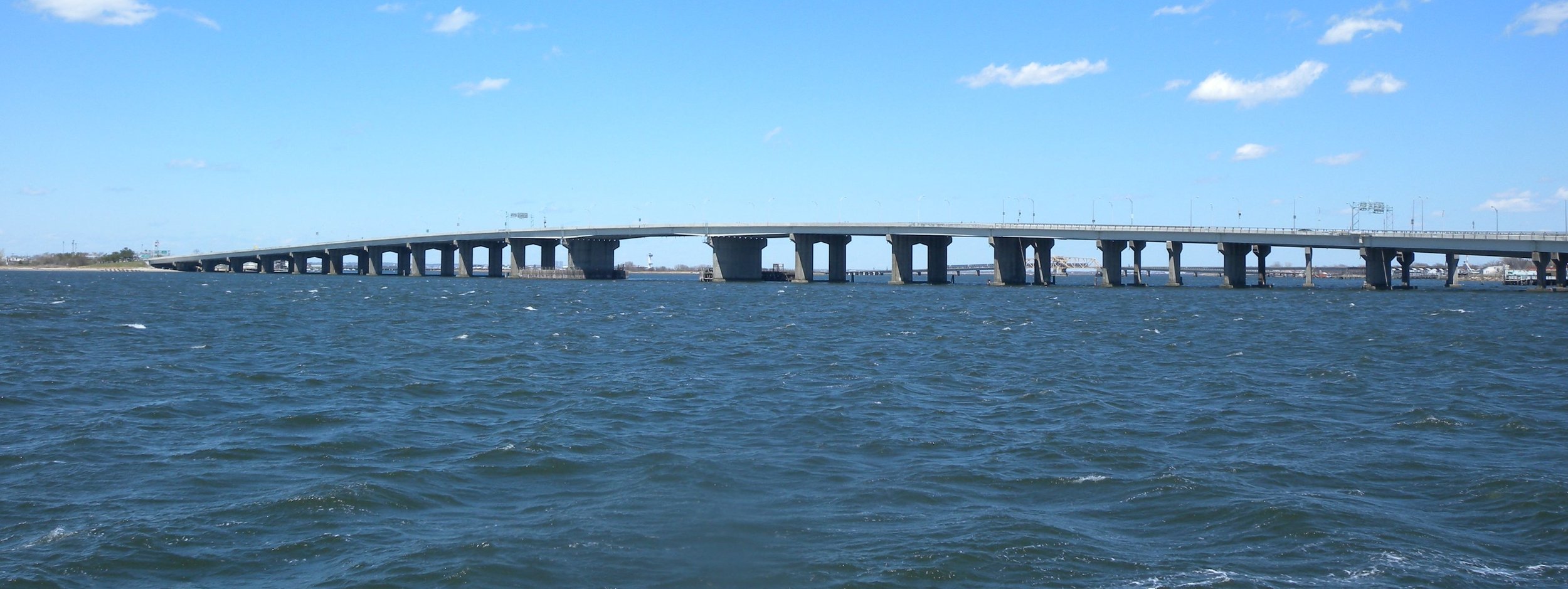
Cross Bay Bridge is free at last

 https://images.squarespace-cdn.com/content/v1/5b9ffe0f1137a680c2c08250/8ccd843d-4535-4669-bf74-f2767fb44ece/Cross_Bay_Br_wide_jeh.jpeg?format=2500w

 Queens Eagle

Queens residents will no longer need to pay the toll on the Cross Bay Veterans Memorial Bridge in Southeast Queens, a major win for locals in the area who often use the bridge to commute and have long complained about the toll’s cost.

Beginning in 2024, residents of Queens who use E-Zpass will get a 100 percent rebate when crossing the bridge, which connects the Rockaway peninsula to Broad Channel and mainland Queens.

The funding comes through a 2018 program called the Outer Borough Transportation Account – which provided additional resources for outer borough transportation improvements – and was heavily pushed by local officials.

“Promises made, promises kept,” said Assemblymember Stacey Pheffer Amato, who has been trying to get the toll changed for locals since she was elected. “After years of hard work and perseverance, my constituents from Lindenwood, Howard Beach, Hamilton Beach and Ozone Park will no longer be penalized. Through the legislation I passed with Senator Addabbo, Queens residents who utilize the New York E-Zpass program and register for the program will get full access to their entire borough, especially the Rockaway Peninsula.”

Crossing the bridge, which gets drivers and pedestrians across Jamaica Bay, is a necessity for some Rockaway locals who need it to get to work in other parts of Queens, Long Island or other parts of the city via the Belt Parkway.

“Finally, the MTA and the governor have listened and are implementing the removal of a barrier to secure economic opportunities for everyone in Queens,” Pheffer Amato said.

Pheffer Amato says that there is a long history of fighting against the toll, one she is happy to bring across the finish line.

“This was always an issue in the community, this unjustified toll,” she said over the phone to the Eagle. “Someone who works at a public school paid an extra over $25 a week to get to their jobs in Queens, through Queens, less than five miles from their home. That to me was the most inequitable part of the toll bridge.”

She said that it took work to figure out the budgeting and the economics, which ultimately led to the usage of the Outer Borough Transportation Account to pick up the tab.

Pheffer Amato’s legislative colleague State Senator Joseph Addabbo called the toll “unfair.”

“This reversal is a monumental victory and an effort that elected officials and residents have been striving to accomplish for decades,” he said. “This achievement will rebate residents for the only intra-borough toll in the city, assist the economic growth and enjoyment of the Rockaway peninsula.”


Sunday, October 10, 2021

56,000,000

https://nypost.com/wp-content/uploads/sites/2/2021/10/highway-tolls.jpg?quality=90&strip=all

NY Post 

It’s highway robbery — and the MTA doesn’t even know the culprit.

The authority is down at least $56 million thanks to “unbillable” tolls for which officials cannot find an address to mail the bill, State Comptroller Tom DiNapoli said Thursday.

MTA Bridges and Tunnels was unable to send bills for six million crossings through from September 2019 to June 2021 — leaving millions of dollars uncollected, the comptroller’s office said in a letter to the MTA following up on three-year-old audit into its cashless tolling.

A huge chunk of the lost revenue — $33.9 million — stemmed from the MTA and its vendors not having agreements with other states’ DMVs to access vehicle registration information, particularly for temporary plates.

Another $21.8 million went uncollected because license plates were either too dark, too bright, missing a state name — or just missing altogether. Thousands of transactions worth another $2.9 million went unbilled due to bad image quality.

Ex-Gov. Andrew Cuomo announced plans to remove tollbooths at the MTA’s seven bridges and two tunnels in late 2016. The program got underway a few months later.

The system’s flaws have come into sharp focus in recent months. In September, the MTA Inspector General flagged a transit employee who bragged to co-workers about eluding tolls with an obscured license plate and owed $100,000 in tolls and fines.

Friday, February 19, 2021

MTA trolls raise bridge and tunnel tolls


NY Post 

Tolls on the MTA’s seven bridges and two tunnels are set to go up April 1, with the agency’s board unanimously approving an increase on Thursday.

Current toll rates will increase an average of 7.08 percent, the MTA said.

Tolls will increase from $6.12 to $6.55 for E-ZPass users on six crossings: the Bronx-Whitestone, Triboro, Throgs Necks and Verrazzano bridges and the Brooklyn-Battery and Queens-Midtown tunnels. Drivers without E-ZPass will be charged $10.17, up from $9.50 today.

On Upper Manhattan’s Henry Hudson Bridge, tolls will increase by 20 cents for E-ZPass users and 50 cents for everyone else. The Cross Bay and Marine Parkway bridges in Queens, meanwhile, will see tolls spiked from $2.29 for E-ZPass and $4.75 for everyone else to $2.45 and $5.09, respectively.

MTA officials opted to retain a discount for Queens residents for those two bridges, as well as the Verrazzano Bridge’s Staten Island rebate — which will now apply to all borough residents regardless of how many trips per month they take across the bridge.

At the same time, the MTA has created a middle-tier for toll collection: E-ZPass users whose devices are not affixed properly will be charged a “special rate” in between the regular and E-ZPass rates.

The MTA has hiked fares and tolls every two years since 2010. But transit officials delayed scheduled transit fare hikes last month, citing widespread financial hardship and low transit ridership.

Thursday, December 7, 2017

Thruway tolling system also screwing drivers


From Eyewitness News:

A local lawmaker is demanding an overhaul of the way tolls are collected along the New York State Thruway.

State Senator David Carlucci hosted a forum Wednesday in Nanuet where drivers told how they unknowingly racked up thousands of dollars in fines.

Most of the complaints stem from the cashless toll system implemented at the Tappan Zee Bridge. Under the system, drivers without EZ Pass are supposed to be billed by mail. But many motorists say they never received the bills but did get letters only after steep fines were imposed for unpaid tolls.

Drivers who do not pay can have their registration suspended.

Tuesday, August 15, 2017

Cuomo ok with congestion pricing (after the election)

From Curbed:

To carry out immediate repairs on NYC’s faltering subway system, $800 million in funds are needed. The state has contributed $400 million so far, and expects the city to provide the rest. While not committing to providing these funds, Mayor Bill de Blasio did propose a millionaires tax to help fund half-priced MetroCards for low-income New Yorkers.

Now Governor Andrew Cuomo is trying to pump more funds into the subway, albeit with a type of proposal that previously failed: congestion pricing. Reporters were speculating about this on Twitter last week, and Cuomo subsequently confirmed to the New York Times that he was looking to develop a congestion pricing proposal, but declined to provide details.

A previous plan on congestion pricing introduced by Mayor Michael Bloomberg got derailed in the state legislature, particularly on concerns that it unfairly favored Manhattan residents. Cuomo told the Times that his plan is inspired by that proposal, but will move in a different direction. This quote from the Times basically sums it up:

“Congestion pricing is an idea whose time has come,” Mr. Cuomo said. He declined to provide specifics about how the plan would work and what it would charge, but said that he had been meeting with “interested parties” for months and that the plan would probably be substantially different from Mr. Bloomberg’s proposal.

The Times piece also revealed that Cuomo had introduced a pilot program a few months ago to reduce the amount of trucks in Manhattan during rush hour: trucks that worked overnight got reduced tolls.

Friday, February 17, 2017

Troopers giving tickets out left and right

From NY1:

We've obtained the numbers, and they are astounding. State troopers write an average of 50 tickets a year in the city. But already this year, they've written more than 3,000 tickets.

Police who work for the Triborough Bridge and Tunnel Authority — part of the MTA — a state agency, have written another 2,200 tickets since January 1.

Many of the tickets are for toll evasion, but drivers complain they are also being cited for violations like broken tail lights.

The ticket blitz follows Governor Cuomo's said state troopers would be posted at TBTA bridges and tunnels to help with the transition to cashless tolls, and to help the city with counterterrorism efforts.

Friday, December 23, 2016

Removal of toll booths is in the works

From the Office of the Governor:

Open road tolling will be completed at all MTA bridges and tunnels by the end of 2017. The schedule is as follows:

Hugh L. Carey Tunnel – January 2017
Queens Midtown Tunnel – January 2017
Rockaway Bridges – Spring 2017
RFK Bridge – Summer 2017
Verrazano-Narrows Bridge – Summer 2017
Throgs Neck Bridge – Fall 2017
Bronx-Whitestone Bridge – Fall 2017

With the implementation of open road tolling, state-of-the-art sensors and cameras will be suspended over the highway on structures called "gantries" that read E-ZPass tags and take license plate images, so vehicles no longer have to stop to pay the toll. Vehicles with E-ZPass tags are automatically charged. Non-E-ZPass vehicles have their license plates recorded and a bill is mailed to the registered owner of each vehicle every 30 days.

Thursday, December 8, 2016

No more cash at the QMT


From DNA Info:

Drivers heading from Manhattan to Queens or vice versa through the Queens Midtown Tunnel won't be able to pay cash for the toll in early 2017, according to a spokeswoman for the Metropolitan Transportation Authority.

All toll plazas of the tunnel will go cashless in January, a change that the MTA says will result in a smoother tunnel experience for all, according to Joyce Mulvaney, the agency’s director of community affairs.

The new policy will not affect drivers who already use E-ZPass.

But those who don't will have their license plate photographed by cameras installed at the toll plazas and get a bill in the mail within 30 days.

The MTA has agreements with out-of-state DMVs to send the bill to non-New York drivers, according to MTA spokesman Christopher McKniff.

The toll for E-ZPass drivers is $5.54. For everyone else, it's $8. Vehicles are tolled in both directions.

Drivers who fail to pay the toll on time will receive a $100 violation. Ongoing failure to pay will mean having the bill referred to a collections agency, with the possibility of civil lawsuits, McKniff said.

Friday, June 24, 2016

QB bridge toll lowered in latest Move NY bill

From Sunnyside Post:

A version of the controversial “Move NY” transportation plan, which would redistribute tolls among the City’s bridges and crossings, was introduced in the State Senate earlier this month with a slightly lower Queensboro Bridge fare than has been previously proposed.

“Move NY” has been a subject of debate since it was formally proposed by a coalition of transportation advocates in February 2015; it was introduced as a bill in the State Assembly by Member Robert Rodriguez of Manhattan this past March.

Rodriguez’s bill would add a toll to East River bridges, including the Queensboro, of $5.54 with E-ZPass or $8 without. These numbers are matched with the tolls at the Queens-Midtown Tunnel and Hugh L. Carey (Brooklyn-Battery) Tunnel. In contrast the Senate legislation, introduced by State Sen. Andrew Lanza of Staten Island, proposes a $5 Queensboro toll with E-ZPass.

The plan also involves discounting other major bridges that are currently tolled, including the Triborough/RFK, by up to 48 percent.

Advocates of the Move NY plan believe that this “toll swap” would be more fair for drivers on the Triborough/RFK and other tolled bridges, who have fewer transportation alternatives. Meanwhile, they charge that it would de-incentivize the Queensboro Bridge, therefore reducing congestion and pollution around Queens Plaza.

The primary promised benefit of the overall plan is that millions of new dollars in revenue would be created, which would then go towards improving New York City’s public transit and transportation infrastructure.

Friday, April 29, 2016

Life in the fast lane


From CBS 2:

A proposed plan could add fast lanes to some bridges and tunnels around New York City that would let drivers bypass traffic for a price.

During a transportation panel discussion in Albany, Queens Assemblyman David Weprin said he would like to add express lanes on bridges and tunnels for drivers willing to cough up the dough for the quick convenience.

The plan would charge motorists for faster travel on bridges and highways that are already tolled, CBS2’s Hazel Sanchez reported.

“Say right now they’re $7.50 to go through the Midtown tunnel. Maybe we could reduce that to $5 or $6 and have the express lane for maybe $10 where people can pay more to have that fast service,” he said.

Monday, December 7, 2015

Pols oppose move NY plan

From AM-NY:

Queens lawmakers sought Sunday to head off a bill expected in Albany next session to add a toll on the now-free East River bridges while slashing prices to cross bridges linking only the outer boroughs.

Assemb. David Weprin criticized the Move NY plan as a “renewed congestion pricing initiative.” The plan — pitched by former city traffic commissioner Sam Schwartz, transport workers unions and environmental justice groups as a means of more fairly spreading expenses — is intended to reduce traffic congestion and raise funds for the MTA.

Opponents gathered at the foot of the Ed Koch Queensboro Bridge in Long Island City said Move NY burdens middle-class residents in the outer boroughs as well as small businesses.

Tuesday, October 27, 2015

Van Bramer backs congestion pricing

From the Daily News:

A congestion pricing plan that would toll the free East River bridges got key support from Councilman Jimmy Van Bramer, the Democratic majority leader from Queens.

Van Bramer told the Daily News on Monday he’s fed up with the traffic-choked roads around the Queensboro Bridge and the cramped No. 7 train in his Long Island City district.

The estimated $1.5 billion that could be raised under the MoveNY plan from traffic guru “Gridlock” Sam Schwartz would cut down on traffic and fasttrack much needed repairs to stations on the No. 7 line, some of the worst in the system, Van Bramer said.

“We’ve seen massive congestion problems both on the subway cars and platforms themselves, and then in addition to that, in the run up to the (Queensboro Bridge),” Van Bramer said. “That’s why I am saying now we need to focus on this investment into our mass transit. The MoveNY plan is the best and most responsible way to get us there.”

Thursday, October 8, 2015

Guess who pays 1/3 of all U.S. tolls?

From the Daily News:

Drivers in New York and New Jersey pay the heftiest price for their commutes — accounting for almost one-third of all tolls collected across the U.S., a new report says.

The report, which was released by the International Bridges, Tunnels and Turnpike Association, indicated that drivers in the two states forked over an astounding $4 billion of the $13 billion in tolls accrued across the country.

“The primary reason (for New York and New Jersey drivers paying the highest tolls) would be the concentration in the region of bridges and tunnels connecting the greater New York metro area,” said Neil Gray, director of government affairs at IBTTA.

“The facilities have been in place for a long time, they were very expensive to build, they are expensive to maintain and they are tremendously expensive to replace.”

Gray added that the greater New York metro area has a very high concentration of commuters, which is likely to account for the costliness.

Tuesday, October 6, 2015

Congestion pricing DOA in Albany

From Capital New York:

Shortly after Councilman Ydanis Rodriguez called on the City Council to pass a resolution supportive of congestion pricing, Mayor Bill de Blasio said that while he's open to the idea, Albany isn't.

"I’ve said it’s something that is worth looking at, but as you’ve heard right now in Albany there’s no appetite for it," he said, following an unrelated press conference.

The MTA is facing a multi-billion-dollar hole in its $30 billion plan to fix up the region's subway and mass transit system.

Governor Andrew Cuomo and the mayor are engaged in an ugly battle over who should fill the gap.

One proposal that's been around, in various iterations, for years now, would put tolls on the East River bridges and along 60th Street and reduce them on inter-borough crossings, like the Verrazano Bridge.

Transportation experts like the idea. De Blasio has declared himself open to it. Rodriguez, who chairs the Council's transportation committee, supports it.

But the idea also appears to be dead on arrival in Albany.

Sunday, March 15, 2015

If previous MTA funding schemes didn't work, why will this one?


From CBS New York:

Ardent protests erupted Friday against the latest attempt to put tolls on the free East River bridges as part of a congestion pricing plan.

As CBS2 Political Reporter Marcia Kramer reported, outer borough business and community leaders said they have been taxed enough.

The protest was billed as a wake-up call for New York City drivers who might be asleep at the wheel.

The protesters were targeting the latest incarnation of Mayor Michael Bloomberg’s failed congestion pricing plan, which seeks to raise money for the Metropolitan Transportation Authority by putting tolls on four free East River bridges – the Brooklyn, Manhattan and Williamsburg bridges between Manhattan and Brooklyn, and the Ed Koch Queensboro Bridge between Manhattan and Queens.

Some believe the plan is a good idea because in exchange, it seeks to lower tolls on other spans such as the Henry Hudson between Manhattan and the Bronx, the Whitestone and Throgs Neck between the Bronx and Queens.

But elected officials and others at the protest listed all the tolls and taxes that have been enacted to help the MTA, which are still in effect today.

After the $15 auto use tax in New York City, officials enacted a $30 car registration surcharge in the entire MTA region, followed by a sales tax surcharge, a mobility tax on small businesses, and a 50-cent surcharge on taxi rides.

Wednesday, February 18, 2015

New congestion tax proposed

From the Daily News:

The “Move NY” plan would put $8 tolls — or $5.54 with E-ZPass — on the four East River bridges, and charge drivers the same amount to cross 60th St. in Manhattan in either direction.

But unlike the congestion pricing plan that failed under former Mayor Michael Bloomberg, it would also cut outer borough drivers a break by cutting tolls by $2.50 on the Verrazano, Triborough, Whitestone and Throgs Neck bridges, and $1 on the Henry Hudson, Cross Bay and Marine Parkway bridges.

Backers say the plan will generate $1.5 billion a year in new cash.

Tuesday, October 21, 2014

Big men dream big

From the Observer:

Appearing with Vice President Joseph Biden Jr. today, Gov. Andrew Cuomo vowed to dramatically reshape the city’s two aging airports and turn two other little-known airports in major economic hubs.

The vice president and governor touted the value of infrastructure investment, with Mr. Biden providing the sweeping rhetoric and Mr. Cuomo the nuts-and-bolts of what could come to the airports: a Long Island Rail Road and ferry link to LaGuardia Airport, tax free zones at small airports in the city’s suburbs and a speedier transit option for John F. Kennedy Airport on the southern tip of Queens.

Mr. Cuomo was vague on details. Tax free zones, a favorite tool of Mr. Cuomo’s, would be established at Stewart and Republic Airports to encourage business investment and take on some of the traffic that LaGuardia and JFK now absorb. He touted the idea of a rail link, with no apparent means of funding it, to LaGuardia, along with a ferry. He would also increase the speed and efficiency of transportation to JFK, now served by a rail link from an LIRR hub in Jamaica, Queens, and add food and retail options to the airport.

He did not tell reporters how the cash-strapped state, Port Authority or Metropolitan Transportation Authority would pay for these upgrades, but told reporters all options “were on the table,” including new tolls on bridges.

Friday, March 21, 2014

Toll cheats may soon be out of luck

From the NY Post:

Drivers around the state who have cumulatively run up more than $156 million in ­unpaid tolls may soon by walking to their destinations.

Gov. Cuomo is planning to make it easier for the state to yank the vehicle registrations of motorists who zip through toll lanes without paying and ignore collection efforts.

It is against state law to drive an unregistered vehicle.

According to state rec­ords, toll cheats owe $156,686,769 in unpaid tolls, interest and penalties dating back to 2008.

The vast majority — 87 percent — shorted the Port Authority, which operates some of the most expensive bridge and tunnel crossings in the region.

Saturday, December 14, 2013

Saying no to East River bridge tolls


(QUEENS, NY) Senator Tony Avella was joined yesterday by Assemblyman David Weprin, the Queens Civic Congress, and the Queens Chamber of Commerce at a press conference announcing legislation Avella will be introducing in the State Senate that would prohibit the installation of tolls on any bridges controlled and operated by the City of New York, which include the East River bridges.

The imposition of tolls on the East River bridges, including the Willis Avenue, Third Avenue, Queensborough, Williamsburg, Manhattan, and Brooklyn Bridges is not a revenue generating option that the residents of this city should be forced to endure. Such tolls would place an unfair burden upon Queens, Brooklyn, Bronx, and Manhattan residents who would be forced to pay to travel between the Boroughs. Given the always increasing cost of living in the City and with constant bus and subways fare hikes, city residents are in no position to again face another huge increase in their daily living expenses.

Avella stated, “Despite the ever present need for additional revenue, the imposition of tolls on the East River Bridges is not an acceptable revenue generating option. Adding tolls to any of these bridges would have a devastating effect on working and middle class families and small businesses. Everyone agrees that we need to address traffic congestion problems throughout the city, but the first step has to be improving mass transit. That is why I will be introducing legislation to prohibit putting tolls on these bridges.”

Assemblyman David I. Weprin, (D-Fresh Meadows) stated. "I am proud to join my colleagues and the community to support Senator Avella's legislation which would ban tolls on the East River Bridges. The addition of tolls on the East River Bridges would take away much needed income from working families and local businesses. There are other ways we can raise revenue without financially burdening workers who have to commute to work to support their households."

“Any plan to impose tolls on the East River Bridges is merely another revenue generating plan, not a traffic-reducing plan. It should be the responsibility of the leaders of the city to find ways of increasing revenues without placing the fiscal burden upon those who can least afford it,” concluded Avella.

Thursday, November 28, 2013

Congestion pricing redux

From the NY Times:

There could be no more talk, transit advocates reasoned, of “congestion pricing,” a phrase Mayor Michael R. Bloomberg often used before his sweeping plan to overhaul New York City’s bridge tolling system was vanquished in 2008, and treated as political arsenic ever since.

Then, with a clean slate, supporters could move on to the hard part: sculpting a proposal that might succeed where the mayor failed.

And so, more than five years after Mr. Bloomberg’s plan died in Albany, a cadre of the city’s transit minds has primed a successor, fine-tuning a pricing model that might be more palatable to residents outside Manhattan, meeting quietly with former opponents and preparing to take its case early next year to a public that has grown accustomed to free, if traffic-choked, rides over the East River.

Political obstacles abound, including securing the support of the State Legislature. But in what the plan’s supporters have billed as the most significant change of heart so far, Councilman Mark Weprin, an outspoken critic of the old proposal, said in an interview last week that he was receptive to this reimagined version.

“I’d like to have a chance to talk to them again,” he said of his constituents, “and say this makes a lot more sense.” (Mr. Weprin, a Queens Democrat, is running for City Council speaker.)

Proponents said the arrangement, devised by Samuel I. Schwartz, a former city traffic commissioner, would increase tolls in areas with high congestion and ample public transportation, and lower or eliminate them in transit-poor pockets, suggesting that Manhattanites would be asked to contribute more than they had under past proposals.

The plan championed by Mr. Bloomberg would have “raised revenue to do a lot of good things,” Mr. Schwartz said. “To be fair was not the fundamental premise.”

Move NY, the group behind the campaign, has billed the new plan as “fair tolling and transportation reinvestment,” adding that its details would not be made final until after a series of public forums next year. It can be distinguished from Mr. Bloomberg’s vision, the group said, in part because its revenues would be used not only to fund the capital program of the Metropolitan Transportation Authority but also to upgrade roads and bridges — a nod to drivers who might be expected to oppose any congestion-based pricing.

While the toll amounts could change, an example on Mr. Schwartz’s website included $5.33 E-ZPass tolls on the Ed Koch Queensboro Bridge and the Brooklyn, Manhattan and Williamsburg Bridges — all of which are now free. The one-way rate to cross the Verrazano-Narrows Bridge would decline to $5.66, from $10.66, and tolls on the Robert F. Kennedy, Throgs Neck and Bronx-Whitestone Bridges would be $2.83.

Traffic should be eased, Mr. Schwartz has said, because the adjusted rates would discourage “toll-shopping,” which can currently lead commercial vehicles and private drivers to take circuitous but inexpensive routes through some of the city’s busiest neighborhoods.

Rates could also be adjusted depending on the city’s economic fortunes, Mr. Schwartz said, potentially falling during lean periods.

Move NY estimated that the plan would create 35,000 jobs.