Showing posts with label Queens. Show all posts

Thursday, December 19, 2024

A little more housing, a lot more higher rents

https://queenspost.com/wp-content/uploads/2024/12/AURA-LIC.jpg

QNS 

The average rental price in Queens for studio, one-bedroom and two-bedroom units maintained an upward trend from the previous year in November 2024, according to a report by the real estate firm M.N.S. Real Estate.

Year-over-year, Queens experienced a 4.44% increase in its average rental price, from $2,763 in November 2023 to $2,885 in November 2024. Studios, one-bedroom and two-bedroom units each experienced jumps in their respective rental prices over this period of time.

Studios in Queens had a 3.74% boost in the average cost of rent, from $2,239 in November 2023 to $2,322 in November 2024. Despite the year-over-year increase, this cost actually presents a slight drop from the $2,337 rent in October 2024. Among the 11 Queens neighborhoods included in the study, studios in Woodside/Maspeth had the most annual growth, from $2,369 last year to $2,691 this year.

One-bedroom units experienced a 3.92% rise in the average rental price, from $2,673 in November 2023 to $2,778 in November 2024. As was the case with studios, the one-bedroom units actually had a slight dip in rental price from the previous month’s $2,782 average cost. The Rego Park neighborhood had the biggest spike in average rental price, from $2,602 last year to $2,965 this year.

Two-bedroom units had the most significant boost in the average cost of rent among the unit types, rising 5.3%, from $3,375 in November 2023 to $3,554 in November 2024. However, this new cost is the lowest seen for a month since $3,551 in July 2024. Sunnyside had by far the highest jump among the Queens neighborhoods from last year, going up from $2,754 in 2023 to $3,454 in 2024.

 QNS

The median rent in Northwest Queens rose year-over-year in November 2024, marking the second consecutive month to experience such an increase, while the number of lease signings and available inventory continued to climb, according to a report by the real estate firm Douglas Elliman Real Estate.

Northwest Queens encompasses the neighborhoods of Astoria, Long Island City, Sunnyside, Woodside.

Over this period, the median rental price increased 8.9%, from $3,175 in November 2023 to $3,458 in November 2024. Units ranging from studios to three-bedrooms each experienced jumps in the respective median rent. One-bedroom units had the most significant increase, going up 14.1% from $2,998 last year to $3,422 this year.

One big contributing factor to the maintained rise in the median rent is bidding wars becoming more common for the many new listings in this area, allowing for many rentals to end up with higher prices than what was originally listed.

For the 14th consecutive month, new leases signed were up year-over-year in northwest Queens. There was a 64.9% increase in new leases being signed, from 416 in November 2023 to 686 in November 2024. Similar to the median rent, new leases went up across the board among each type of housing unit, with one-bedroom units spiking the most. New leases among one-bedroom units rose 87.4%, from 183 last year to 343 this year.

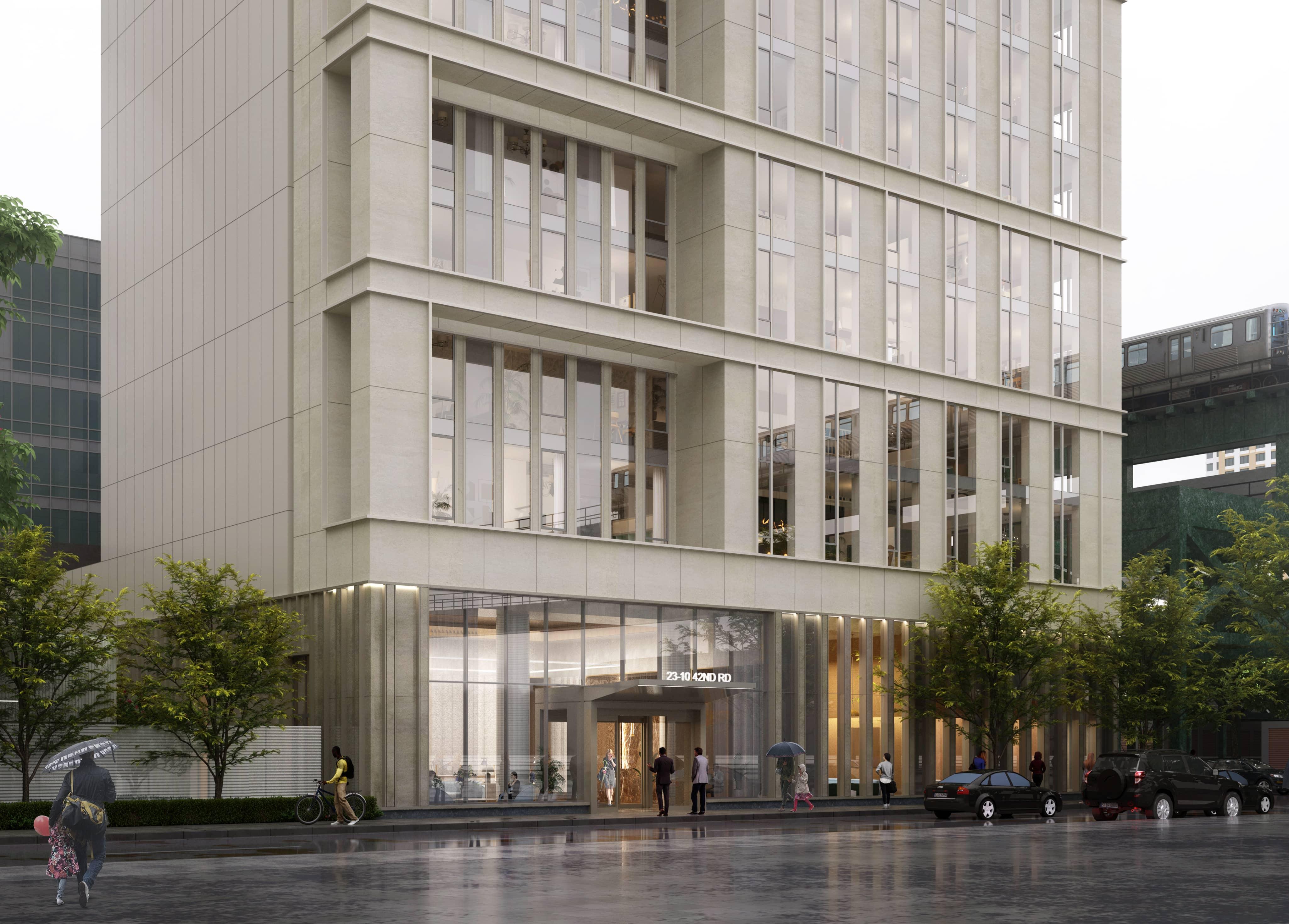
Oh, the story about the picture.That is actually the root cause for the rent being too damn high and getting higher and higher and will continue to do so for the City Of Mess. The word affordable has become doublespeak by the NYC Housing Department. 

Queens Post

New York City has launched a housing lottery for 72 units at AURA, a 37-story mixed-use building in Long Island City.

 Located at 23-10 42nd Rd., AURA features 240 residential units, with 168 offered at market rate. The 72 remaining units have all been designated for individuals who earn 130% of the area median income, with an asset cap of $201,890.

Studios account for 25 of the units set aside, 17 of which have a monthly rent of $3,423 and are meant for residents earning an annual income ranging from $117,360-$161,590. The other eight units cost $3,434 a month in rent and are meant for those earning $117,738-$161,590 annually. No more than two people can reside in each of these units.

Another 34 units are one-bedroom and are intended for up to three residents. Five of these units have a monthly rent of $3,674 and are intended for households earning $125,966-$181,740 in annual income. The other 29 one-bedroom units have a monthly rent of $3,661 and each household must combine to earn $125,520-$181,740 annually.

The last 13 units are two-bedroom. These units have a monthly rent of $4,376. Households of up to five people can reside there, as long as they have a combined annual income ranging from $150,035-$218,010.


Wednesday, November 6, 2024

Queens Man is President Again

Historic Trump mugshot released after arrest in Atlanta, Georgia - BBC News 

Impunity City

Remember, remember the fifth of November

 They tried assassination. And tried and tried again.

They tried lawfare for over a year.

They tried virtue signaling, platitudes, and propping up a diversity, equity and inclusion candidate.

And Donald J. Trump still won.

This is the end of a decade and a half of fauxgressive rule and values and hopefully an end to horrendous domestic and immigration policies (U.S. foreign policy is still going to be an issue beyond Trump) fomented by Joe Biden and Kamala Harris and the worst administration in American History. It’s still amazing that Comma-la Harris had the audacity to think she would be running the country after nearly four years of cackling and vomiting word salads.

After all the fear mongering about Trump the first time around, and it was understandable given his inexperience in elected office, he never turned out to be a dictator and he only grew more popular with Black, Latinos and now Asians and Muslims and even White liberals that helped put him over the top and it’s a certainty that America will still be a free country in his next four years.

NY Post  

Donald Trump was projected to become the 47th president early Wednesday, completing the most incredible political comeback in American history.

Trump, 78, was on course for an Electoral College landslide over Vice President Kamala Harris after he reversed his 2020 losses in the crucial states of Georgia, Pennsylvania, and Wisconsin — running up big margins among his white rural and working class base while making significant inroads among ethnic minorities.

“There’s never been anything like this in this country, and maybe beyond,” the Republican nominee told a rapturous victory celebration at the Palm Beach County Convention Center not far from his Mar-a-Lago resort.

“We’re going to help our country heal,” Trump added, “and it needs help very badly. We’re going to fix our borders … fix everything about our country.”

Sunday, September 22, 2024

Queens gets the play money

 NY Post

Pass go — and hop on the 7 train?

The classic board game Monopoly is rolling out a new “Queens Edition” with the borough’s iconic landmarks replacing standard Atlantic-city-inspired spaces such as “Boardwalk” and “Park Place.”

Players will be able to buy, sell, and trade famous businesses, non-profits and neighborhoods in the “World’s Borough” when the game hits the shelves Oct. 5, according to Top Trumps USA, which teamed up with Hasbro on the new iteration.

And just like real life, folks from the outer borough can be over-taxed and tossed in jail.

Earlier this year, the game-makers asked Queens residents to vote on which sites they want featured — but the firms haven’t said yet which ones made the cut.

Rockaway Beach, Queens Center Mall and the 7 train are expected to light up the board.

Thursday, June 13, 2024

More little housing

https://qns.com/wp-content/uploads/2024/06/top-20-cities-with-the-smallest-size-of-new-apartments-.png?resize=1200,1106

QNS 

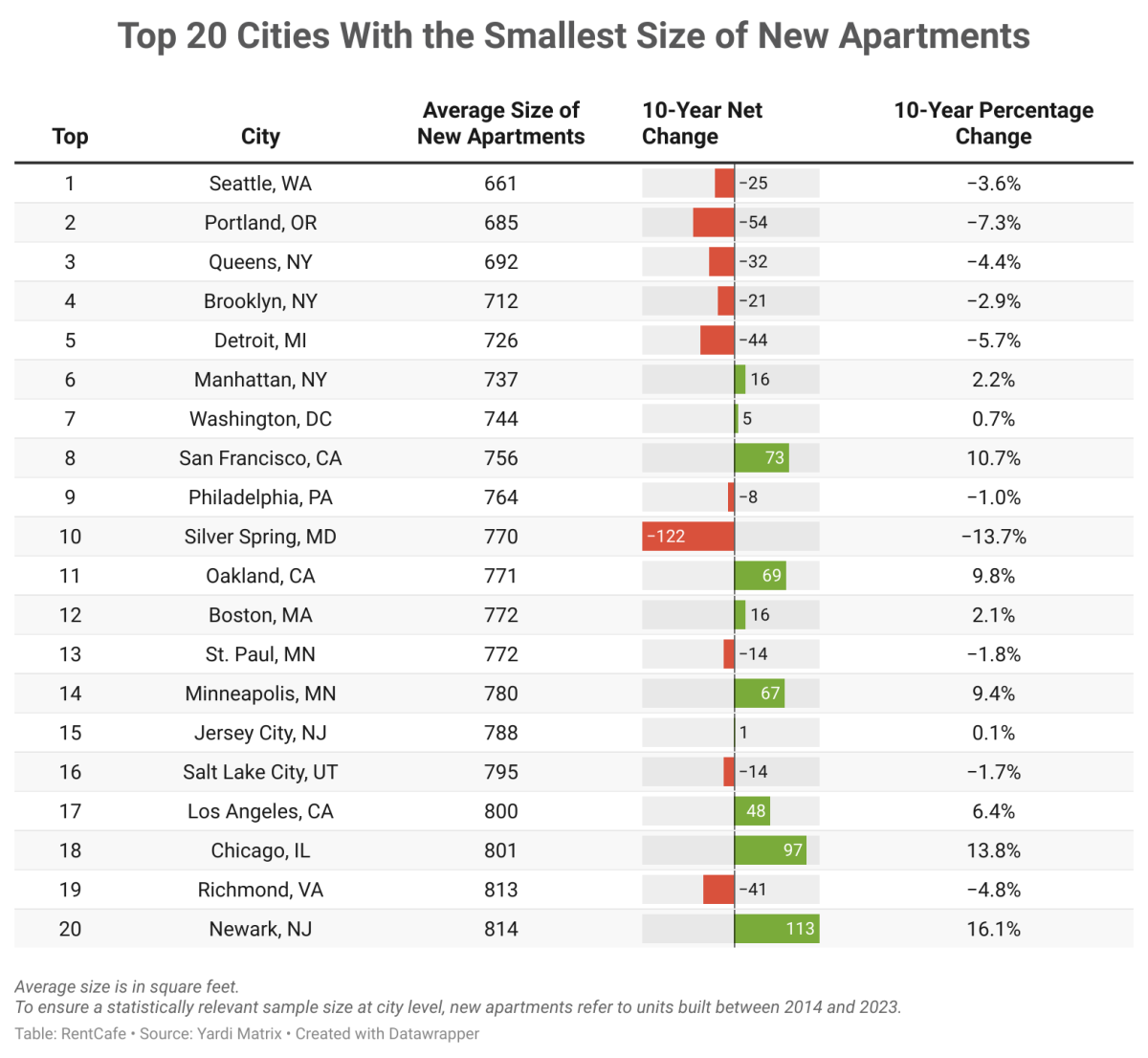
The average size of apartments in Queens was the smallest among all New York City boroughs in 2023, as well as the third-smallest among cities in the United States, according to a report by the real estate firm RentCafe.

At 692 square feet, Queens boasts slightly smaller apartments on average than Brooklyn’s 712 square feet. Among major U.S. cities, only Seattle and Portland have smaller averages, at 661 and 685 square feet respectively.

Compared to the historical average square footage of rentals in Queens, the borough had a decrease of 32 square feet over the last ten years, marking a 4.4% decline. Over the same period of time, Brooklyn had a 21 square feet decrease for a 2.9% decline.

In addition to Queens and Brooklyn, which placed third and fourth among the smallest average apartment sizes in the country, a third New York City borough, Manhattan, was found within the top ten, placing sixth at 737 square feet. However, unlike Queens and Brooklyn, Manhattan actually increased in square footage over the last decade. Apartments there grew 2.2% in the last ten years, adding 16 square feet to the average size of apartments there.


Wednesday, April 10, 2024

Squatters rejoice!

 https://qns.com/wp-content/uploads/2024/04/Q1-2024-Queens-Foreclosures.png


QNS 

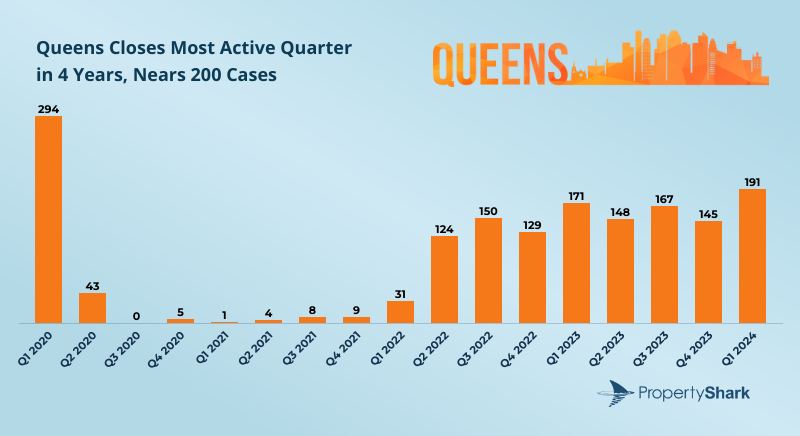
Queens accounted for the most foreclosures among the New York City boroughs in the first quarter of 2024, with 191, according to a report by the real estate agency PropertyShark.

These 191 foreclosures accounted for 45% of the 424 cases that occurred in New York City this quarter. Its volume was equivalent to the amount of first-time filings in Brooklyn, Manhattan and Staten Island combined. This amount of foreclosures also marked the most in Queens since there were 294 in the first quarter of 2020, when the COVID-19 pandemic began.

The 11377 zip code, which covers parts of Woodside, East Elmhurst, Jackson Heights, Sunnyside and South Astoria, earned the designation as the foreclosure epicenter of New York City. There were a total of 31 foreclosures that occurred within that zip code for the first quarter this year.


Wednesday, February 7, 2024

It was 60 years ago today...


https://external-content.duckduckgo.com/iu/?u=https%3A%2F%2Ftownsquare.media%2Fsite%2F171%2Ffiles%2F2014%2F02%2Fbeatles-arive.jpg%3Fw%3D1200%26h%3D0%26zc%3D1%26s%3D0%26a%3Dt%26q%3D89&f=1&nofb=1&ipt=0133c19195c004e0192873cb0d8fe9f44e492a4a3121305c0fd95c983c40ef95&ipo=images 

NY Daily News

  Even the Beatles didn’t quite comprehend what awaited them in New York on Feb. 7, 1964.

Six days after “I Want to Hold Your Hold” broke through as their first No. 1 hit in the U.S., Paul McCartney, John Lennon, Ringo Starr and George Harrison braced for a warm welcome as Pan Am Flight 101 out of London neared its destination in Queens.

 Never, however, did they expect the spectacle they found when they disembarked.

Some 3,000 fans, many of them smiling, shrieking, hysterical girls who skipped school on a Friday, ambushed JFK Airport, congregating along the rooftop and pushing past police barricades to catch a glimpse of the mop-topped British heartthrobs.

Delighted screams from overwhelmed teens served as the soundtrack as the grinning, waving Beatles stepped off of a Boeing 707 and onto American soil for the first time.

Those screams became a staple of McCartney, Lennon, Starr and Harrison’s two-week trip, during which they made history on “The Ed Sullivan Show,” played back-to-back concerts at Carnegie Hall and journeyed down to Washington, D.C., and Miami Beach.

“No one will understand the emotion of us landing in America,” Starr told the Daily News in 2019. “But it was New York, and all of the music we loved came from there. It was just far out.”

 Wednesday marks the 60-year anniversary of that epic airport arrival, which remains a watershed moment in pop culture that society is still trying to unravel.

February 1964 offered America its first taste of Beatlemania, but the singer-songwriters from Liverpool had already achieved superstardom in their native England behind two full albums, a trio of chart-topping songs and the distinction of being the first pop act to perform before the royal family.

However, Capitol Records, an American subsidiary of the British label EMI, doubted the Beatles could satisfy U.S. ears and repeatedly passed on initial singles such as “Please Please Me,” “From Me to You” and “Love Me Do.”

“I Want to Hold Your Hold” was different. There were no harmonicas, which Capitol decision-makers feared gave previous Beatles songs too much of a blues feel to connect locally.

 Convinced that Capitol couldn’t turn down the upbeat “I Want to Hold Your Hold,” Beatles manager Brian Epstein implored label president Alan Livingston to give the track a chance. Upon listening to the two-and-a-half-minute love song himself, Livingston finally agreed to get behind the Beatles.

 Capitol released “I Want to Hold Your Hand” on Dec. 26, 1963, and dumped money into a publicity campaign to generate excitement about their U.S. arrival six weeks later.

“It’s just a perfect song,” said Kenneth Womack, who teaches a Beatles course at New Jersey’s Monmouth University and has authored more than a dozen books about the band.

“It’s non-threatening. It’s innovative. It has variety to it. It goes to a lot of places for just a few minutes, and it was a perfect introduction to the Beatles’ sound. When the kids of 1964 began to get their hands on other Beatles music that had already been out in England for quite a bit of time at that point, they just kept finding more and more and more of this.”

Americans fell fast for the Fab Four. Often equipped with pins and signs declaring their favorite band member, admirers followed the Beatles’ every move. Hordes of fans surrounded New York’s prized Plaza Hotel, where the Beatles stayed. Some navigated cars as they ran through the neighboring streets. At one point, the crowds required the Beatles’ chauffeur to climb across his car to reach the driver’s seat.

“Beatles Here; 3,000 Kids And a Hotel Ain’t the Same,” read a Daily News headline on Feb. 8, 1964.

“Beatles Blast Off, Kids Go Into Orbit of Ecstacy,” declared another two days later.

Being in America delighted the Beatles, too. McCartney, Lennon, Starr and Harrison, all in their early 20s, adored American music, from girl groups such as the Ronettes to R&B acts including Little Richard.

Upon arriving stateside, the Beatles phoned radio stations and requested other artists’ records instead of their own.

 They wanted to hear more,” Womack said. “‘What are we missing?’ It was doing recon at a certain level. They wanted to hear and to meet the purveyors of this music that was so important to them. I think that’s kind of cool, that they weren’t coming over and just indulging in an easy ego trip. They meant business.”

The Beatles made the most of their visit. McCartney, Lennon and Starr posed for photos in Central Park as Harrison nursed an illness. The foursome later made their U.S. concert debut at Washington Coliseum on Feb. 11 during an overnight trip to the nation’s capital. They returned to New York the next day and played back-to-back concerts at Carnegie Hall, a venue reserved for artists who reached the pinnacle.

Nothing resonated more, though, than their performances on “The Ed Sullivan Show.”

At the time, Sullivan was known as the “Star Maker,” with his appointment-TV variety show offering the biggest platform for entertainers to introduce themselves to a national audience.

A popular narrative suggests Sullivan first learned of the Beatles during an October 1963 visit to London’s Heathrow Airport, where he observed rabid fans waiting for the band to arrive. That wasn’t the case, according to Sullivan’s granddaughter, Margo Precht Speciale, who says a London-based talent scout, Peter Prichard, put the Beatles on her grandfather’s radar.

Epstein had contacted Prichard about getting the Beatles on the “Sullivan Show.” Prichard pitched the band to Sullivan, and shortly thereafter, Epstein met with Sullivan and his son, show producer Robert H. Precht, at New York’s Delmonico Hotel. They hammered out a $10,000 contract for the Beatles to play three “Sullivan Show” sets, marking the program’s first-ever three-performance commitment.

“My grandfather was always trying to get the biggest scoop,” Precht Speciale told The News. “He was a reporter [at the Daily News] for many, many years, and he worked on that show like he was a reporter. He always wanted to get the big scoop. The Beatles, at the time, were that.”

Capitol released “I Want to Hold Your Hand” on Dec. 26, 1963, and dumped money into a publicity campaign to generate excitement about their U.S. arrival six weeks later.

“It’s just a perfect song,” said Kenneth Womack, who teaches a Beatles course at New Jersey’s Monmouth University and has authored more than a dozen books about the band.

“It’s non-threatening. It’s innovative. It has variety to it. It goes to a lot of places for just a few minutes, and it was a perfect introduction to the Beatles’ sound. When the kids of 1964 began to get their hands on other Beatles music that had already been out in England for quite a bit of time at that point, they just kept finding more and more and more of this.”

Americans fell fast for the Fab Four. Often equipped with pins and signs declaring their favorite band member, admirers followed the Beatles’ every move. Hordes of fans surrounded New York’s prized Plaza Hotel, where the Beatles stayed. Some navigated cars as they ran through the neighboring streets. At one point, the crowds required the Beatles’ chauffeur to climb across his car to reach the driver’s seat.

“Beatles Here; 3,000 Kids And a Hotel Ain’t the Same,” read a Daily News headline on Feb. 8, 1964.

“Beatles Blast Off, Kids Go Into Orbit of Ecstacy,” declared another two days later.

Saturday, December 23, 2023

Happy Festivus from Queens Crap

 
Tis the season for airing your grievances. 


Friday, August 25, 2023

Friday, March 31, 2023

Queens winning in losing residents

Image 

NY Post

New York City is becoming the shriveled Apple.

Three of Gotham’s five boroughs saw some of the largest population declines in America last fiscal year, with only Manhattan bucking the post-COVID trend, according to US Census data released Thursday.

The population of Queens County plummeted by 50,112 residents in the 12 months ending July 1, 2022 — the third largest raw drop of any county in the US, behind only Los Angeles County (90,704) and Chicago’s Cook County (68,314).

Right behind Queens on the list of declines was Kings County (Brooklyn), which lost 46,970 residents over the same period, and Bronx County, where the population dropped by 41,143 residents.

Richmond County — also known as Staten Island — saw its population drop by just 2,351 residents over the same one-year period.

By contrast, Manhattan — which lost nearly 100,000 residents in 2021 — was the only borough that reversed its decline, with the population increasing by 17,472 residents in fiscal year 2022.

The increase is largely down to foreign and domestic migration.


Sunday, February 19, 2023

Queens doesn't get the money

 https://i1.wp.com/nyc.streetsblog.org/wp-content/uploads/2016/02/cmrichardsheadshot.jpg?w=220&h=297

QNS

The Queens Borough Board voted overwhelmingly to approve the package of budget priorities Monday, Feb. 13, although several community board chairs expressed concern over issues caused by the city’s migrant crisis.

Chaired by Queens Borough President Donovan Richards, the budget priorities were developed largely from input received from two days of public hearings late last month on Mayor Eric Adam’s proposed $102 billion 2024 budget.

Pursuant to the City Charter, the Borough Board must submit its budget priorities each year to the mayor, the City Council and the city’s Office of Management and Budget.

Irak Cehonski, director of budget for the Queens Borough President’s Office, presented numbers on Monday that showed significant budget shortfalls for city agencies — except for the NYPD — and how much they’ll affect city services in Queens.

Most concerning among the budget cuts included a $295.3 million shortfall for the Department of Education and a $257 million shortfall for the Department of Health and Mental Hygiene.

“Especially coming out of the pandemic, I don’t know how we cut anything to do with health,” Richards said. “We weren’t prepared during the first wave of the pandemic — I know all of us remember those days and we don’t want to see it again — so we need to make sure we’re fighting those cuts as well.”

Richards also bristled at the Summer Youth Employment Program being slashed by $21.7 million; the Department of Sanitation facing more than $53 billion in reductions; a $61.6 million shortfall at the Department of Housing Preservation and Development; and a $12.2 million shortfall for Queens Public Library.

Cehonski said the Department of Homeless Services slashing nearly $70 million is a “huge concern” for Queens and moments later Community Board 3 Chairman Frank Taylor explained why.

“It is devastating to my community of which I serve, Community Board 3 in North Corona, East Elmhurst, and Jackson Heights,” Taylor said. “Everyone knows we’re a shelter town with 12 or 13 of them and the city wants to cut money and resources.”

He also railed against the lack of affordable housing, MTA bus reductions on Northern Boulevard, and the chronic shortage of hospital beds after a dozen hospitals shuttered in the last 15 years.

“This is not fair. This is deplorable,” Taylor said. “We pay some of the highest taxes in the city per capita and we’re not getting anything over here except more shelters.”

Rev. Carlene Thorbs, chairwoman of Community Board 12, which has coped with high shelter populations around JFK Airport for decades, called the influx of migrants “heartbreaking” and said that the city needs to be more transparent.

“We’re taking in a lot of the asylum seekers and we don’t know where they are because nobody wants to tell us because it’s a security situation but we’re supposed to be ready for them in our schools,” she said. “You’ve got to trust us to assist and to help because we can’t even get a list as to where they are unless something tragic happens and then it pops up on the news. It has to be fixed and it has to be fixed now because if our mayor doesn’t fix it, it will never get done.”

 But at least we'll get some open streets.

 https://queenspost.com/wp-content/uploads/2022/10/Photo-DOT-3.jpg

Friday, January 6, 2023

Donovan Richards wants you

Richards Launches 2023 Community Board Application Process

South Queens Forum 

Queens Borough President Donovan Richards Jr. announced on Tuesday that he is again accepting applications from qualified and civic-minded individuals interested in serving on their local community board.

As with the Borough President’s prior two iterations, the 2023 community board application can be filled out online, ensuring prospective applicants can complete the process quickly and easily, allowing for a more diverse applicant pool. The application requires neither notarization nor in-person delivery to the Queens Borough President’s Office.

The application is available online at queensbp.org/communityboards, and the deadline to submit the form is Thursday, Feb. 16. This deadline applies to both new applicants and existing community board members seeking an additional term. For the upcoming round of appointments, the two-year term of service will begin on Saturday, April 1, 2023.

Over the course of his administration, Borough President Richards has worked diligently to grow interest in community board membership and address numerous demographic inequities around age, gender, background and more that have existed for years across Queens’ 14 community boards.

Combining the 2021 and 2022 community board processes, the Queens Borough President’s Office received 1,825 applications to serve on a community board, with both years shattering the pre-Richards single-year record for applications. The larger and more diverse applicant pools led to community board classes that were younger, more female and had greater percentages of members who identified as Latinx/Hispanic, African American, immigrant, South Asian, East Asian/Pacific Islander and LGBTQIA+, among other characteristics.

“Queens has never been closer to community board representation that is truly reflective of our borough’s vast diversity than it is today,” Richards said back in April 2021.

There are 59 community boards citywide, including 14 in Queens, and each hold monthly full membership meetings. The boards play an important advisory role in considering land use and zoning matters in their respective districts under the City’s Uniformed Land Use Review Procedure, in addition to holding hearings and issuing recommendations about the City budget, municipal service delivery and numerous other matters that impact their communities.

All Queens community board members are appointed by the Queens Borough President, pursuant to the City Charter, with half of the appointments nominated by the City Councilmembers representing their respective Community Districts. Each board has up to 50 unsalaried members, with each member serving a two-year term.

Wednesday, June 1, 2022

The Department of Transportation Alternatives petition for a bus route to the Ridgewood Reservoir is based on bald faced lies

(From the Department of TransAlt website.)

Ridgewood Reservoir Needs A Bus Stop

The historic Ridgewood Reservoir is a 50-acre natural oasis that serves diverse communities on the border of Brooklyn and Queens. Despite its beauty, ecological importance, and open access, the Ridgewood Reservoir, which is proximate to some of the poorest areas in New York City, is impossible to reach by public transportation.

The Ridgewood Reservoir needs a direct bus stop for New Yorkers to enjoy its benefits. 

The reservoir is ill-served by current public transportation options. The closest subway station is the J train at Norwood Avenue, a mile away. The closest bus stop is the Q56 at Jamaica and Shepherd Avenues, a half-mile from the reservoir. Our greenspace currently serves as a cultural and ecological treasure solely for New Yorkers who can drive to it.

With more transportation options, our reservoir will be accessible to all New Yorkers to enjoy its many health benefits. This includes a multi-use path for walking, biking and running, bird watching and flowers, as a quiet respite from the city, and more!

So the Department of TransAlt wants to screw around with a Queens bus line so it could make a stop by here. I'll let Crappy explain why this is full of gaslighting bullshit and will do more harm than good (the good being that will mostly benefit the bike and public space scientology cult):

"Why lie? The B13 is maybe 300 feet from the north entrance. Maybe work on making that area by the Jackie safer instead of ruining someone’s commute by taking a bus out of the way. I’ve never heard of a bus line being routed to serve a park feature rather than the park itself.

 It’s more that there is a heavily used parking lot where they want a bus stop and all the Caribbean and Dominicans using it destroy the narrative that only white people use cars.

 When Bloomberg announced it was going to be a destination park the gentrifiers started sniffing around. Then he dropped it and so did they. Except for these turds, who are trying to monetize the park for their benefit.

 The community board there was circulating a letter from MTA which showed that it would take the bus well off the route and lengthen commutes considerably, and if they used it as an end of line type of thing it was impossible to turn the bus around.

 On top of that, the two buses that run there are Brooklyn routes and these dopes are sending out instructions to testify about the Queens bus redesign."


What's really funny is that there are routes where you can easily get there by bike from the Queens side, isn't that what this damn think tank bike lobby exists for, so why annoy everyone?


Friday, April 8, 2022

A more equitable and rational Citibike expansion proposal for Queens


Juniper Park Civic 


The Citibike expansion to Queens got a good do over by Juniper Park Civic. Taking DOT's original proposals which would've usurped street curb spaces from residential and commercial parking (spitefully in my opinion) onto ample sidewalk spaces nearby them instead.
 
Let's see how Transportation Alternatives responds... 


Saturday, March 5, 2022

1990 crime time revisited

 Queens Post

Armed robberies, vicious assaults and hate crimes have become all too common in New York City in recent months and the borough of Queens is no exception.

There have been brutal attacks at subway stations, shootings at NYCHA complexes, to a rash of anti-Asian hate crimes.

For the year-to-date through Feb. 27, there has been a 58 percent increase in crime across the borough, compared to the same period a year ago. There has been a big spike in both violent crimes as well as property theft, such as grand larcenies and auto theft.

There have been 11 murders in Queens this year through Feb. 27, compared to nine for the same period a year ago. Meanwhile, there were 65 rapes reported through Feb. 27 compared to 48 for the same period in 2021. Additionally, there were 460 robberies reported this year through Feb. 27 vs. 311 last year, and 683 felony assaults compared to 567 the previous year.

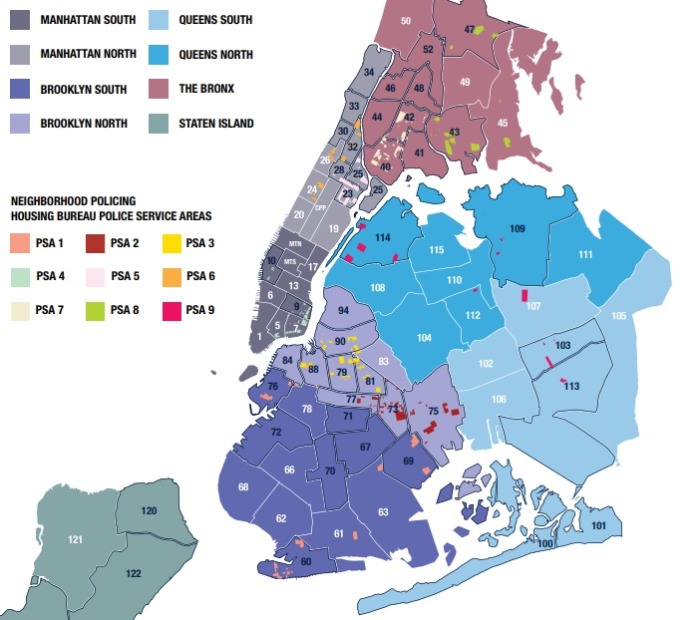
No area in the borough has been spared, with all 16 precincts in Queens experiencing an increase in crime. The eight precincts in Queens North were up a collective 66 percent through Feb. 27, with significant increases in the 110 precinct, which covers Corona and Elmhurst, up a whopping 133 percent, and the 109 precinct, which covers Flushing, up 89 percent.

Meanwhile the eight precincts in Queens South were collectively up 48 percent for the year through Feb. 27, with notable increases in the 107 precinct, which covers Fresh Meadows, up 105 percent, and the 106 precinct in Ozone Park up 78 percent.

Thursday, February 10, 2022

Queens has reached a level of grand larcenies not seen in 30 years


NY Post 

Queens is being hit hard by a dramatic surge in thefts this year — almost topping levels not seen since the NYPD started compiling statistics decades ago — and business owners are calling on cops to step up.

As of last Sunday, the borough had recorded 1,236 grand larcenies in 2022, which is only a few dozen shy of the tally logged during the same period in 1993, the earliest for which records are available, when 1,326 major thefts occurred, a Post analysis of police data shows.

A store manager of JMart on Main Street in Flushing told The Post his store loses up to $2,000 on any given day.

“I’ve never seen it like this before,” the manager, Lee said. “Maybe it’s the pandemic. It’s bad. Before you’d have one or two [ shoplifters] per week but now it’s like almost every day.”

This year’s tally is more than double what it was in the same time period last year and more than 40 percent over what it was two years ago. It’s also 75 percent more than 12 years ago. 

While grand larcenies have been up citywide, with police data showing a more than 60 percent uptick from last year and a 6 percent increase from pre-pandemic times, businesses owners in just a few Queens neighborhoods have been disproportionately hit harder.

Nearly half of the major thefts in the borough have been recorded in only three of the county’s 16 patrol areas.

Sunday, January 16, 2022

The world's borough has the nation's most jobless

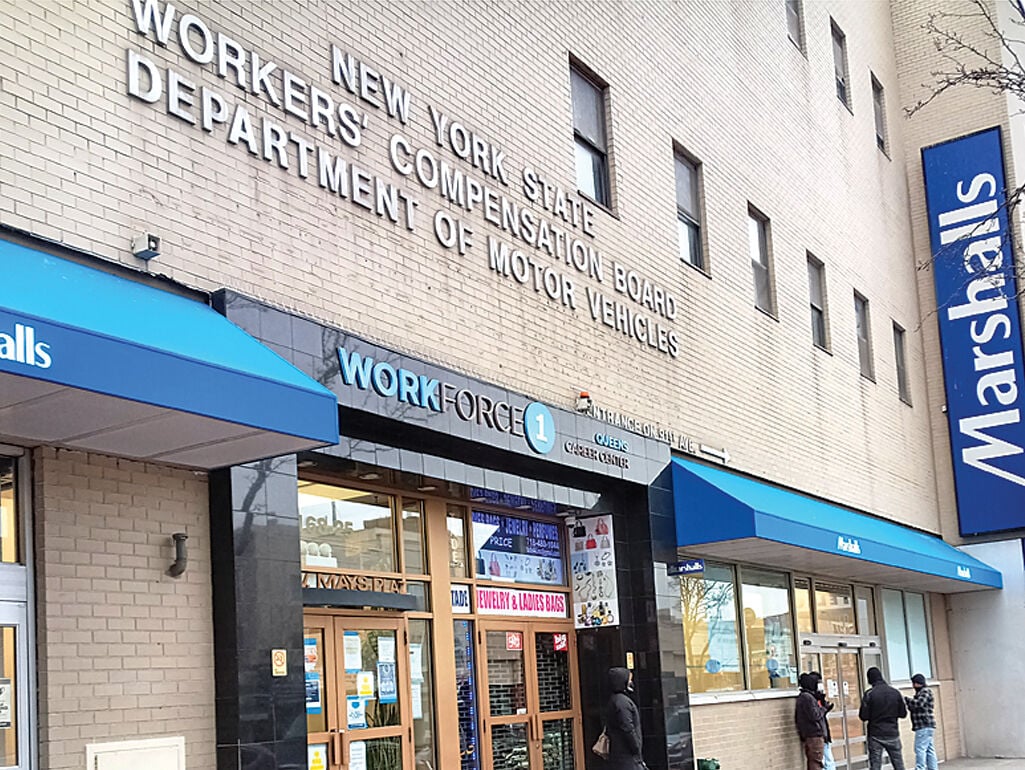
  Unemployment in Queens still high 1

Queens Chronicle

 In its Dec. 21 update, the New York State Department of Labor reported that, in New York City, the nonseasonally adjusted unemployment rate has continued its decline, dropping from 8.4 percent in October to 8 percent in November. In Queens specifically, the same rate dropped from 8.1 percent in October to 7.7 percent in November. In November of 2020, Queens’ unemployment had been 11.5 percent.

While improved, both the Queens and citywide unemployment rates are still considerably higher than those of New York State and of the nation, which decreased from 5.9 percent in October to 5.5 percent in November and 4.3 percent to 3.9 percent, respectively.

So, why is the unemployment rate so much higher in New York City and Queens than it is state and nationwide?

St. John’s University Professor of Economics Dr. Charles Clark said that one answer to point to might be the so-called “Great Resignation”: During the past year of the pandemic, people across the nation have been quitting their jobs en masse in search of something better.

Forest Hills Chamber of Commerce President Leslie Brown noted such trends in her area. “As we know many people did not return to the workforce after the unemployment Covid-19 benefits ended,” she told the Chronicle. “There were numerous reasons for this such as low minimum wage, lack of child care, health concerns [and] lifestyle changes.”

But according to Clark, the Great Resignation is not new.

“In terms of the number of people voluntarily leaving jobs, that has been steadily growing for a very long time,” he told the Chronicle.

More specifically, he told the Chronicle, in January 2011, approximately 1.8 million Americans in nonfarm industries quit their jobs. As per the trend, that number had risen to more than 3.3 million by January 2021, as graphed below.

None of that, however, explains why unemployment is higher across Queens than it is state- or nationwide. Clark speculated that boroughs like Queens and the Bronx might see higher rates because of their higher immigrant populations.

Queens Chamber of Commerce President Thomas Grech pointed to the large hit that the hospitality industry has taken during the pandemic.

“I think a lot of people that work in that industry have decided to find another career choice,” he told the Chronicle. “At the Queen’s Chamber of Commerce, we want to double down on workforce development, to make sure that those businesses — hotels and hospitality — have a regular supply chain, so to speak, of trained people to go into those jobs as things continue to get better.”

Myrtle Avenue Business Improvement District Executive Director Ted Renz also identified restaurant and retail as two sectors that have struggled to maintain staff; accordingly, individual businesses have changed their schedules.

“I’ve noticed that a number of retailers are closed, or some are closed different days, or they’re not open at all. Some are opening later,” he told the Chronicle.

According to the state Department of Labor’s preliminary numbers, prior to Omicron, restaurant employment increased in New York City from 1.894 million jobs to 1.907 million between October and November, a 0.69 percent increase.


Sunday, January 9, 2022

This is deBlastopia


 Impunity City

 The Blaz era is finally and mercifully over but his contribution to the New Bad Days will go down in history as the greatest regression of New York City in 50 years and will surely continue to plague this town for years to come.


Thursday, January 6, 2022

Trans Borough Express

 https://pbs.twimg.com/media/FIXeGa_WYAUeb61?format=jpg&name=small 

NY Post


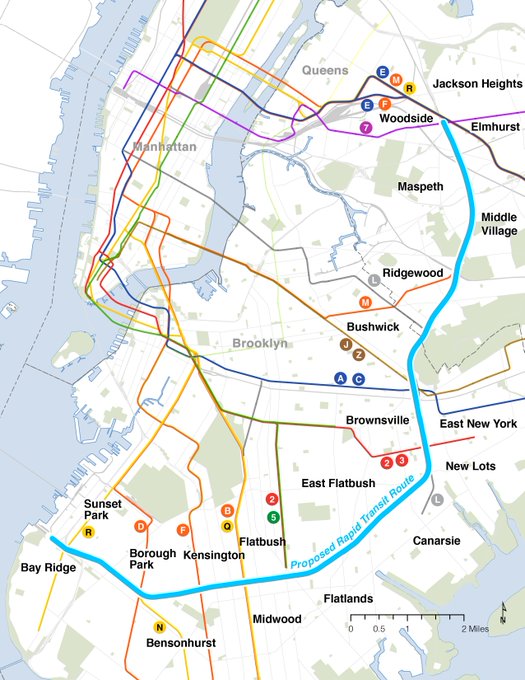
An underutilized 14-mile freight line would be converted into a new commuter “Interborough Express” service connecting neighborhoods in Brooklyn and Queens under a plan championed by Gov. Kathy Hochul on Wednesday.

The new transit service would run from Bay Ridge in Brooklyn to Jackson Heights Heights in Queens.

During her first state of the state address, Hochul ordered the Metropolitan Transportation Authority to conduct an environmental review and identify the best transit option for the corridor — heavy rail, light rail or bus rapid transit.

“This historic project would improve transit service and job access for underserved communities in Brooklyn and Queens, serving a corridor that is currently home to 900,000 residents and 260,000 jobs, with expected growth of at least 41,000 people and 15,000 jobs in the next 25 years,” Hochul said.

“Stronger rapid transit in Brooklyn and Queens is long overdue.”

Tuesday, November 16, 2021

AOC is MIA from her district offices

 This is the office of Assembly woman Karines Reyes,

 and is also the office or shared space of Congresswoman Alexandria Ocasio Cortez.

NY Post

Guess this self-proclaimed woman of the people thinks they are best served from afar.

Rep. Alexandria Ocasio-Cortez’s New York City district offices are still only open for in-person constituent services on Mondays and Wednesdays — even as municipal workers and school kids have been back at their desks full time for months.

The other three weekdays, AOC’s district office appointments are held virtually.

It’s a sharp contrast to the 14 New York congressional members out of 29 whose offices are open Monday through Friday — and comes after Hurricane Ida wreaked havoc on her constituents.

“Her staff should be here more often, especially for people affected by Ida. There’s no excuse,” said retired school social worker Martha Grubman.

The storm flooded the basement of the 66-year-old retiree’s co-op and knocked out the elevators. Grubman, who’s disabled, was stuck in her home for days. 

“I would like to see them here three days at least, to hear what her constituents want and need,” Grubman said of Ocasio-Cortez’s local staff.

“I don’t know what other commitments they have. Maybe they’re helping her get ready to run for Senate, helping her get on the covers of more magazines,” Grubman conjectured.

Tuesday, November 2, 2021

President Biden abdicates his immigration crisis fiasco onto New York City and Long Island schools


NY Post 

America’s crisis at the border is now a crisis in New York public schools.

The Biden Administration is flooding New York City and Long Island communities with thousands of unaccompanied immigrant minors captured crossing the Mexico-US border, often arriving here, as The Post recently reported, via clandestine flights in the middle of the night.

Data from the US Department of Health of and Human Services confirms that the New York area is a hotspot for shipping children rounded up illegally crossing the border without guardians.

Four counties alone, Suffolk, Queens, Nassau and Brooklyn, took in nearly 5,000 unaccompanied children in just 11 months, from Oct. 1, 2020 to Aug. 31, 2021, according to HHS.

With public education in the area costing about $28,000 per child, per year, that’s a $139 million hit on New York taxpayers to educate children arriving unexpectedly just in those four counties.

The arrival of these children, mostly teenage boys, in local schools is creating a classroom crisis that is strapping educational resources, costing taxpayers millions in un-budgeted dollars, and aiding gang-recruiting efforts, argue parents, teachers and immigration experts.

“We’re at maxed capacity for kids with special needs, but they’ll keep sending them,” lamented one high school teacher in Queens, among the communities hardest hit by the illegal-immigrant student dump.

Fifteen counties nationwide have received more than 1,000 unaccompanied children caught at the border over the past year, reported HHS. The top five counties on the list are all in Texas, California and south Florida.

But four of those 15 counties are right here in New York: Suffolk (1,528), Queens (1,314), Nassau (1,064) and Brooklyn (1,046). The Bronx nearly made the list, with 461 unaccompanied students. New York is the only state in America with four counties receiving more than 1,000 unaccompanied minors, despite its 1,700-mile distance from the southern border.