Showing posts with label traffic. Show all posts

Thursday, June 9, 2022

Congestion tax remains in limbo


THE CITY

A day after Gov. Kathy Hochul said “now is not the right time” for congestion pricing, she reaffirmed her support for implementing the long-delayed plan to toll vehicles entering Manhattan — eventually.

Hochul scrambled to emphasize Wednesday that she stands behind a program designed to fund mass transit upgrades and reduce traffic after saying at a Democratic gubernatorial debate the night before that it is “not going to happen over the next year under any circumstances.”

MTA officials, who previously acknowledged a potential two-year delay until 2023 and last month blamed federal nitpicking for a slowdown, said they are “fully committed” to congestion and are “aggressively working” through the process.

“While extensive questions from the federal government are causing delays, the governor directed her team to work closely with the federal government to provide responses as quickly as possible and keep the process moving forward,” Hazel Crampton-Hays, a spokesperson for Hochul, said Wednesday.

The state legislature approved congestion pricing in 2019 — after a 2008 push by then-Mayor Michael Bloomberg failed in Albany — but the rollout has been slowed repeatedly, with Hochul and her predecessor, Andrew Cuomo, pinning the problems on Washington.

The vehicle-tolling plan is being counted on by the MTA to help fund a significant chunk of the agency’s ambitious 2020-2024 Capital Program to maintain and expand the sprawling transit system.

But the delays are “unacceptable,” said Hayley Richardson of TransitCenter, a research and advocacy organization.

“It’s become increasingly clear to us that the delay has to do with Governor Hochul’s concerns about being elected,” Richardson said. “There’s a lot of sentiments out there that this is policial suicide, and that is incorrect. 

“Congestion pricing is unpopular when you look at it before implementation,” she added. “When it is implemented, things turn dramatically around.”

Friday, April 15, 2022

Pedestrians fears about intersection gets pedestrian response by the D.O.T.

https://qns.com/wp-content/uploads/2022/04/IMG_20220414_082742712-1200x900.jpg 

QNS

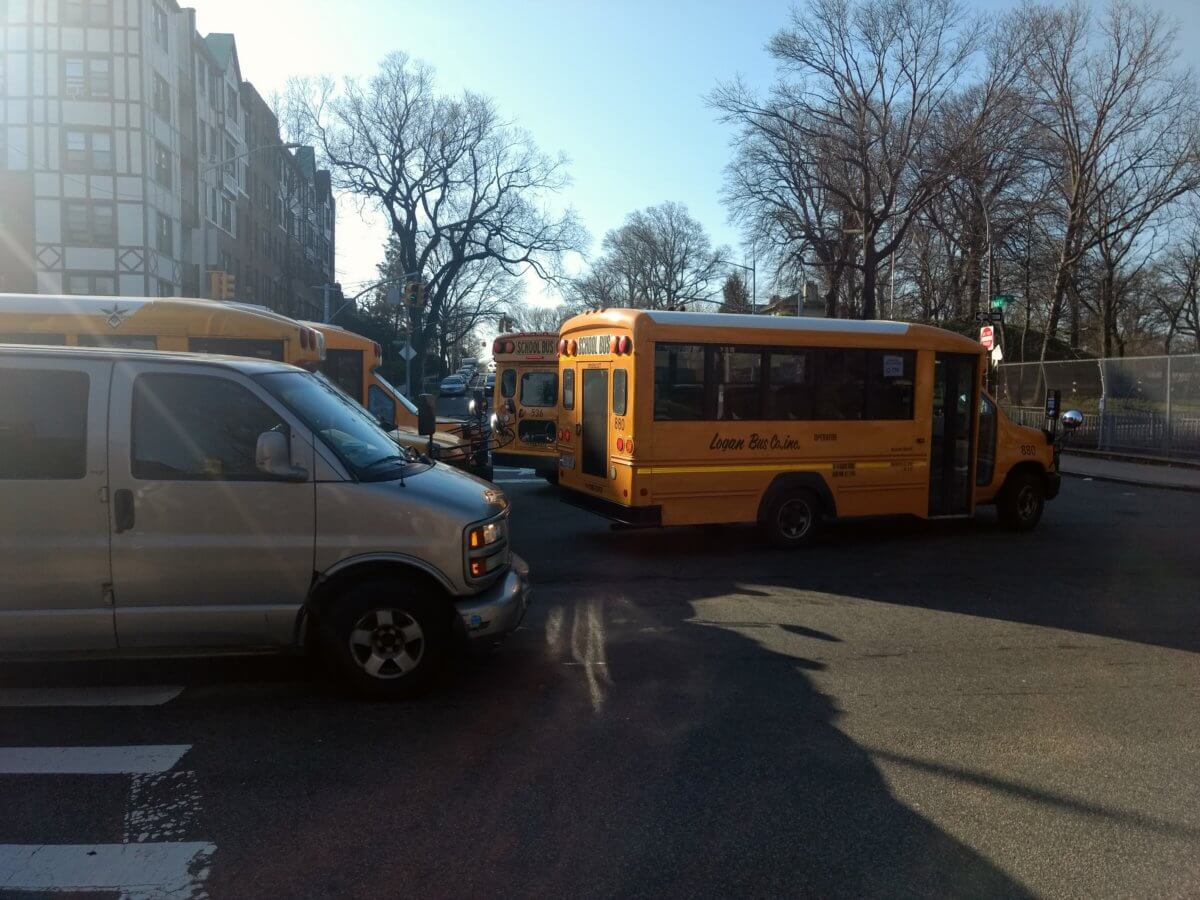
Several residents of the Kew Gardens and Forest Hills communities joined Community Board 9 members on April 14 at Park Lane and Union Turnpike to demand that the Department of Transportation (DOT) make the intersection safer for pedestrians to cross.

According to Community Board 9 District Manager James McClelland, the community submitted a request to the DOT last November asking for either the timing of the traffic lights to be changed or for the installation of a leading pedestrian interval. The latter would give the green light to pedestrians to cross several seconds before parallel traffic, allowing for extra time to make those who are crossing appear more visible to turning drivers. However, the request was struck down by the DOT last March.

McClelland said the DOT denied the request out of fear that it would’ve further backed up traffic. However, several residents doubted that excuse, citing a lack of traffic buildup on Union Turnpike.


Wednesday, February 23, 2022

D.O.T. commissioner plans to solve accidents on Cooper Ave with bike lanes after double hit and run

 https://qns.com/wp-content/uploads/2022/02/IMG_2303-1200x900.jpeg 

QNS

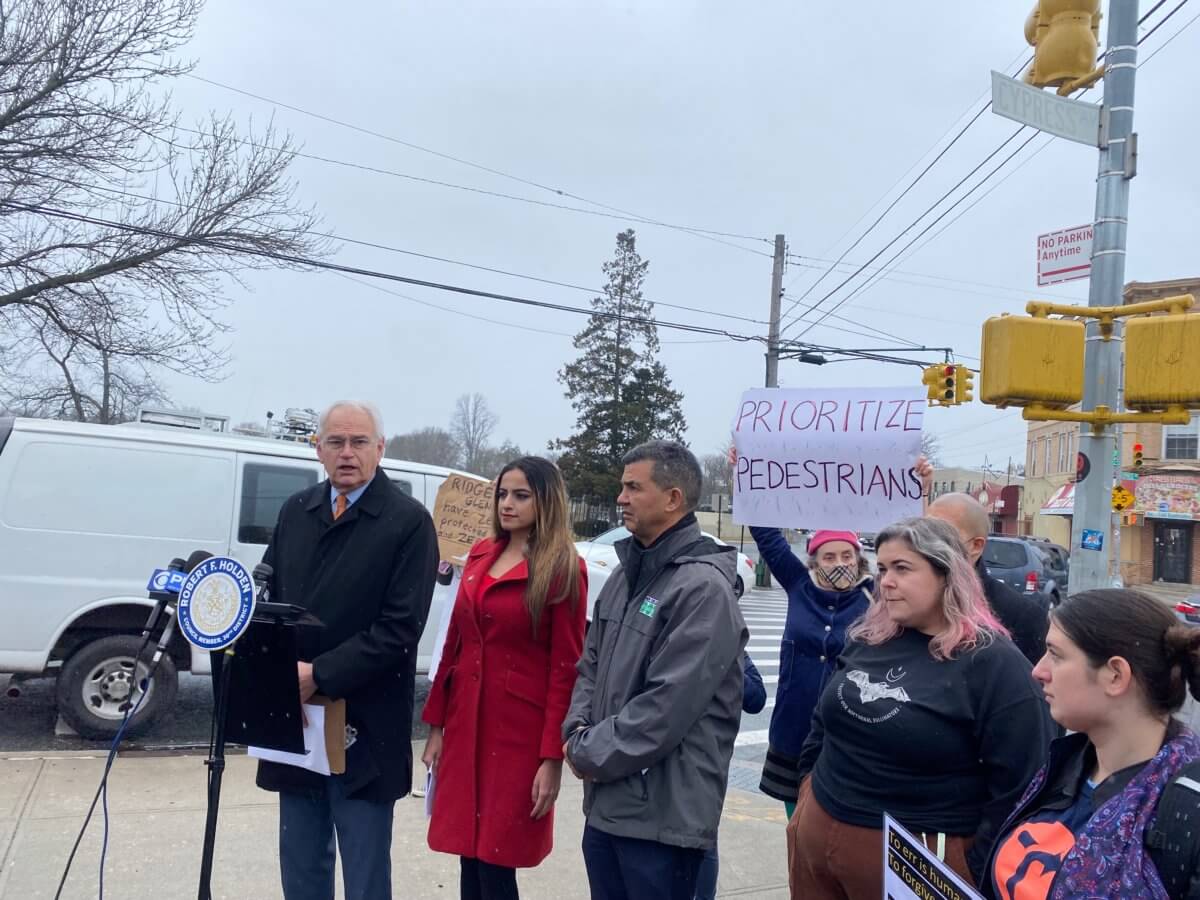
After a gruesome video showed a pedestrian being struck and run over by two cars, local elected officials and community activists gathered at that street corner in Glendale to call for better safety measures on Tuesday, Feb. 22.

On the corner of Cypress Avenue and Cooper Avenue Saturday, Feb. 12, at around 6:30 p.m., disturbing footage captured a 57-year-old man being struck by one car and falling to the ground as another car slowly runs him over. Last Monday, the video was uploaded to Twitter and has already gotten over 625,000 views. 

The man was found in the street in a pool of blood when he was transported to Jamaica Hospital; he is alive. According to police, a 40-year-old male initially struck the pedestrian while making a left turn from Cooper Avenue. The only action taken thus far has been a failure to yield issued to the driver of the first vehicle. 

Council member Robert Holden, who called the press conference Tuesday, said that the most dangerous aspect of his community is crosswalks. 

“That’s the most danger to life and limb in this precinct,” Holden said. “This is an area that needs attention. You don’t have to be here that long to realize this is a problem corner. There’s lawlessness that we need to correct, coupled with NYPD enforcement. It’s so important to get the necessary safety improvements right here and the rest of New York.”

Thursday, December 2, 2021

Wildin' Islanders


CBS New York 

  People living near the new UBS Arena in Nassau County say parking mayhem is driving them crazy.

They say fans going to Islanders games and concerts are taking their cars to the neighborhood streets of Elmont, CBS2’s Jennifer McLogan reported Tuesday.

UBS Arena opened amid much fanfare, yet locals say they have been saddled with something they didn’t expect.

“I cannot even get over the sidewalk, over the lawn, to get in because I’m completely boxed in with cars,” homeowner Patricia Romeo said.

Romeo said she has been trying to go to home from the hospital, where she’s a nursing supervisor. She shared videos she has taken of game night or concert night. She claims on Elmont streets there has been chaos and pandemonium, and out-of-control drivers.

She said people have been parking anywhere they want, urinating and cursing.

“They didn’t build a system,” homeowner Sheikh Islam said.

Islam and his family live across from the new arena.

“It’s the 21st century. They can have an app. They know how many people are coming, and they didn’t open the parking lot. They are just like, ‘Oh, I want to make my money,'” Islam said.

Thursday, September 16, 2021

Redeploy the police to calm traffic


Manhattan Institute 

In the race to reform policing, a few advocates and politicians have recommended that New York City police be removed from traffic enforcement. State Attorney General Letitia James, for example, concluded that the NYPD should cease conducting noncriminal traffic enforcement in her review of the department’s handling of the George Floyd protests. Brad Lander, a member of the city council and erstwhile safe-streets advocate, proposed “removing NYPD officers from routine traffic stops” for infractions such as speeding. He suggested that they “only enforce driving behavior that visibly and immediately endangers public safety (e.g., drag-racing, visibly erratic, aggressive, intoxicated, or road-rage driving).” Others have recommended assigning the traffic-enforcement function to a new, unarmed enforcement agency, or have suggested increasing the use of automated enforcement tools like speed cameras to replace police.

These ideas are ill-considered and dangerous. Police traffic enforcement saves lives, reduces street disorder, and plays an important role in criminal investigations. The events of 2020, which disrupted the NYPD’s traffic enforcement, laid these facts bare.


The primary purpose of the NYPD in enforcing the traffic laws is to reduce crash-related injuries and fatalities. Before the pandemic, the department held regular “TrafficStat” meetings to ensure that its 77 precincts focused on this goal. These meetings, modeled after the department’s CompStat management accountability system, required precinct executives to meet with department leaders at police headquarters and explain their precincts’ responses to traffic safety problems. At these meetings, department bureau heads asked pointed questions to precinct executives about their enforcement at collision-prone locations, drunk-driving arrests, and approach to safety education and outreach. This forum ensured that officers enforce the right violations in the right places while focusing on the overarching goal of the department’s traffic strategy: injury reduction on the roads.

This process has been effective in focusing enforcement on violations that endanger road safety. In 2019, the department wrote 747,343 tickets for moving violations. Of those, 90.4% were for “hazardous violations”—offenses such as speeding, texting, and failing to yield to pedestrians. These are the violations that elevate the risk of crashes and injuries, according to department data. Equipment violations, which reformers often argue function as pretexts for police harassment, [5] accounted for just 3.1% of the tickets issued. These violations include minor infractions such as nonfunctioning lights. Given limited time and resources for traffic enforcement, it’s a department priority to concentrate its efforts on offenses that will reduce injuries.

This focus matters. There is considerable evidence that police traffic enforcement reduces crash injuries and fatalities. When the City of Fresno Police Department increased the staffing of its traffic division from 20 to 84 officers in 2003, officers wrote 229% more traffic citations between 2002 and 2004. Injuries from collisions dropped 9.3%, and fatal collisions fell 42%. In the surrounding county, enforcement dropped 6%, while rates of injury collisions and fatal collisions did not change. Research published in The Lancet showed that traffic convictions reduce drivers’ relative risk of a crash in the period following their conviction. Another study showed that after 35% of the Oregon State Police were laid off in 2003, the subsequent drop in enforcement led to 11% and 17% increases in injury and fatality crashes, respectively.

This is consistent with recent experience in New York City. In March 2020, the department shifted resources after the onset of the pandemic. A substantial percentage of officers also fell ill to Covid-19. Traffic enforcement plummeted. In April, officers wrote 14,290 tickets for moving violations, 85.2% fewer tickets than the 96,559 tickets they wrote in April 2019. In May, the department redeployed officers as a result of the protests following the murder of George Floyd. The agency did not return to regular levels of enforcement for the rest of the year.

From March 12 to December 31, 2020, the NYPD wrote 52.9% fewer tickets than it did during the same period in 2019. During that same period, fatal crashes spiked 16%, resulting in 31 more traffic deaths, compared with the previous year. In the first quarter of 2021, traffic enforcement was down 37.2%, when compared with the same period the previous year—and fatal crashes were up 9.7%, compared with the first quarter of the previous year. The change in traffic dynamics, however, confounds any analysis of this correlation. Mode share (travel by public transportation, automobiles, bicycles, and ferries) changed, vehicle miles traveled fell, and motor vehicle speeds increased. The increase in fatal crashes argues for more enforcement of dangerous driving behavior, not less.

The contemporaneous increase in street disorder in NYC reinforces this point. There have been several anecdotal reports of increased reckless driving and other road incivilities. Complaints of drag racing, in particular, increased during this period. After March 12, 2020, 911 and 311 complaints involving drag racing spiked 226%, with 8,450 total complaints for the rest of the year, versus 2,587 during the same period in 2019. All these behaviors demand police traffic enforcement.

Thursday, March 11, 2021

NYC is back on top in traffic congestion

NY Post

New York City had the worst traffic congestion in the US in 2020, a jump from the No. 4 rank the previous year, according to a new report.

Big Apple drivers lost 100 hours of time to traffic congestion last year, according to transportation analytics firm INRIX — which is actually a 28 percent drop from 2019.

But other cities saw much larger increases in speed amid the pandemic: In Boston, drivers lost 68 percent fewer hours in 2020 than 2019. In San Francisco congestion dropped 51 percent.

Philadelphia and Chicago came in second and third place in terms of hours lost to congestion, at 94 and 86 respectively. Each saw traffic drop between six and 12 percent more than New York.

INRIX transportation analyst Bob Pishue said New York’s rise to the top of the list surprised him — and was tough to explain.

“Downtown speeds [in New York] only went from 11 mph to 12 mph — not that big a jump, 9 percent or so. We saw in other cities jumps of 40 percent or more,” Pishue said.

“New York is its own thing. Everything in New York is unique. Trying to pin this on one factor is really difficult.”

New York City roads also accounted for the second, third and fourth most congested in the country, according to INRIX’s analysis — with the Brooklyn Queens Expressway from I-145 to Tillary Street, the Cross Bronx Expressway west of the Bronx River Parkway, and the BQE between 38th Street and Downtown Brooklyn taking the dubious honors.

Looks like the city's bike lobby-influenced studies about the decline of driving has been highly exaggerated.

Wednesday, January 27, 2021

Mack the jackknife

Wednesday, December 25, 2019

Crappy wishes Happy Holidays to everyone

 Impunity City

... and good tidings of comfort and joy. Which you won't get visiting Rockefeller Center.

Thursday, June 6, 2019

Department of Education decides to put a Pre-K school under a fitness club on a busy boulevard


https://static1.squarespace.com/static/5b9ffe0f1137a680c2c08250/t/5c1ac2fa758d46bdba2ec817/1545257739358/

Queens Chronicle

 
Construction on the street-level space beneath Planet Fitness began several weeks ago and stirred intense interest — and not a few rumors — in Howard Beach.

The city’s Department of Education last week confirmed that the store-front is being converted into three classrooms for pre-K students, ages 4 and 5, under a contract with the building’s new owners, Manhattan-based Gindi Capital.


The new school will accommodate 45 children starting next September, a DOE spokeswoman said.
The opening of the new school raises questions about how it will be able to guarantee the safety of kids on busy Cross Bay Boulevard during drop-off and pickup times.

As well, how will the kids fare with the noise from a busy gym directly overhead?

“I’m not convinced this was the right place,” said Joann Ariola, head of the Howard Beach Lindenwood Civic Association. “I’m worried about parents triple parked on Cross Bay and meanwhile cars are all stacked up behind them.”

Wednesday, April 24, 2019

Two busy exits on the Van Wyck expressway will be eliminated in Gov. Cuomo's redesign.

Van Wyck rebuild kills on-off ramps 2

Queens Chronicle

 
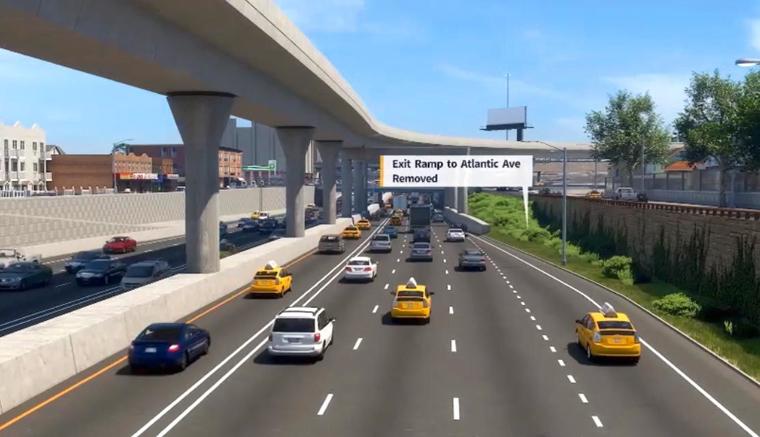
Buried in a preliminary report on Gov. Cuomo’s plan to rebuild the Van Wyck Expressway is news that two on-off ramps on the chronically congested highway will be permanently closed.

The northbound off ramp at Atlantic Avenue and the southbound entrance ramp at Liberty Avenue have been eliminated in the redesign, according to the state’s latest presentation.


The state Department of Transportation is in the process of finalizing its $1.2 billion plan to add two new high-occupancy vehicle lanes to the Van Wyck to speed up traffic to and from JFK International Airport, which is also undergoing a major renovation.

The new lanes will be constructed down the center of the existing expressway. They will be open only to vehicles with three or more passengers, taxis and buses.

The new lanes will essentially be limited-access express lanes with only limited chances to get off the highway before arriving at the airport going south or the Kew Gardens Interchange heading north.
In a video posted on YouTube about the changes in store for the Van Wyck, the DOT revealed that the two ramps on the Van Wyck will be closed permanently along the notoriously overloaded stretch between Jamaica Avenue and Linden Boulevard.

JFK-bound vehicles may not feel the change, but it promises to be one of the more disconcerting pieces of the project for local drivers.

Under the new design, drivers who get on the highway at Liberty Avenue will have to use the on-ramps at either 101st Avenue or Linden Boulevard instead.

Drivers who get off at Atlantic Avenue will have to exit at Liberty Avenue or Jamaica

Sunday, September 2, 2018

Let's hear it for the bros

From the NY Post:

Cyclists in New York City aren’t as legion as they might seem. Despite a “boom” touted by City Hall and The New York Times, the number of citizens who bike to work remains a minute fraction of all commuters. According to the US Census, 3,599,786 New Yorkers get to work by means other than cycling, while the DOT reports that just 45,800 commute by bike.

Yet, to mollycoddle this racially and gender-distinct elite, the city expanded bike lanes from 513 miles in 2006 to 1,133 today. This, of course, comes at the expense of the polyglot masses. It means 1,133 fewer miles for cars to maneuver. It means less room for delivery vehicles and emergency vehicles to park. It means turning lanes that baffle pedestrians, motorists and cyclists alike.

Yet, after warping the entire pattern and fabric of movement to funnel motorized conveyances through ever narrow spaces, City Hall has the chutzpah to growl about “congestion.”

Hilariously, the Dale Earnhardts of the handlebars turn into colicky babies over every minor impediment to their progress. They tweet their rage whenever a bike lane is blocked by any of the inevitable nuisances — like utility digs, construction and fire trucks. You know, the things most New Yorkers deal with every single day while taking it in their stride.

Fury’s in their blood, as was true of the guys who wished me death by dump truck over my last bike lane-bashing column. Bring it on, boys! But spare the women and children.

Tuesday, July 10, 2018

Dopey DOT program is hurting small businesses


From the Times Ledger:

A city pilot program to ban curbside deliveries in Queens has small business owners warning that they may have to close their doors because customers unable to find parking have fled.

City Councilmen Francisco Moya (D-Corona) and Mark Gjonaj (D-Pelham Bay) along with the DOT Commissioner Polly Trottenberg and the NYPD toured the bustling thoroughfare of Roosevelt Avenue last Friday to speak with residents and small business owners affected by the mayor’s Clear Curbs Initiative.

Under Mayor Bill de Blasio’s Congestion Action Plan -- a series of steps designed to ease congestion in busy thoroughfares across the five boroughs -- the Clear Curbs Initiative six-month pilot program was implemented in March banning curbside loading along the Roosevelt Avenue corridor in Jackson Heights from Broadway to 180th Street in Corona during peak hours from 7 a.m. to 10 a.m. and from 4 p.m. to 7 p.m.

The rules allow for expeditious pick-up and drop-off of passengers and delivery trucks to off-street loading docks. NYPD staff were assigned to pilot locations to enforce the new restrictions of keeping curbs clear.

The tour was at the halfway mark of the six-month pilot program, which has crippled businesses, created perilous traffic conditions, and led to steeper ticketing for residents and delivery drivers along Roosevelt Avenue, according to Moya.

Tuesday, May 8, 2018

Is the Clear Curbs initiative helping or hurting?


From NBC:

A program designed to curb congestion by banning delivery trucks and cars from parking on certain streets during rush hour is making the problem worse, some say. Lori Bordonaro reports.

Tuesday, March 20, 2018

City hoping to curb congestion by banning rush hour deliveries


From PIX11:

A ban on commercial curbside deliveries during rush hour went into effect Monday.

The ban is part of a congestion reduction pilot program by the city that will regulate when and where commercial trucks can stop and unload goods on some of the busiest streets in NYC. The ban will not effect personal deliveries.

Starting Monday, there will be no curbside deliveries along Flatbush Avenue in Brooklyn and Roosevelt Avenue in Queens from 7 a.m. to 10 a.m. and 4 p.m. to 7 p.m.

In April, the truck ban will expand to 11 cross streets in Midtown, Manhattan, including 54th Street between Eighth and Third avenues and 47th Street between Ninth and Third avenues.

While it will ease traffic on some of the busiest streets in NYC, business owners say bringing in goods later in the day will hurt them. They say the ban will force employees to stay at work later and residents will have to hear trucks being unloaded late at night.

Saturday, March 10, 2018

Is Center Blvd a danger zone?


From PIX11:

Parents in Long Island City, Queens called for increased pedestrian safety measures along Center Boulevard Friday afternoon.

"We've had many high rises go up in the past couple of years and a lot more families moving in. And we need our city to help us keep our community safe," Heidi Braunstein told PIX11.

Families were joined by City Councilman Jimmy Van Bramer in a press conference. He explained why extra measures are need along Center Boulevard.

"There are three schools. There is a massive park on the waterfront that everyone wants to go to," he said.

Monday, December 11, 2017

Soccer or hockey stadium may be headed to Belmont


From CBS 2:

What does the future hold for the vacant lots at Belmont Park?

More than 200 of its neighbors went to Elmont High School on Sunday to find out what two New York sports teams have in mind. As CBS2’s Hazel Sanchez reported, most locals weren’t very happy about what they heard.

“Like it or not, the residents of this area are getting a stadium, and the congestion is going to be mind boggling,” one man said.

“It’s going to be nightmare,” another person added.

The New York City Football Club, partly owned by the New York Yankees, hopes to transform part of the property north of Hempstead Turnpike into a 26,000 seat open-air stadium for its professional soccer team.

Meanwhile, the New York Islanders want to turn that property into a world class sports and entertainment facility, including an 18,000 seat arena for the professional hockey team.

Friday, November 24, 2017

Never-ending traffic nightmare created on Queens Blvd

Take a good look at the above photo, credited to Thomas Phillips on the Chronicle's website, and understand that this is the reality that has seemed to escape the DOT. Trucks double park to make deliveries, forcing regular traffic to enter the bike lanes to pass. And now the articles.

From the Queens Chronicle:

With the advent of food-based television networks and social media, the 72-year-old deli has become something of a tourist attraction, with guests coming from all across the globe to munch on the authentic kosher cuisine.

So why at 6 p.m. on a recent, rain-free Friday night was the eatery almost entirely empty, save for one couple?

According to Parker, the answer is painted green just a few feet outside.

“The bike lanes aren’t hurting us, they’re murdering us,” Parker told the Chronicle. “This is our busy season. If things don’t turn around, you could expect layoffs in January or February. I can promise you that.”


From the Queens Chronicle:

At the famous Ben’s Best Deli, business is down 17 percent, and in the middle of dinner time last Friday, there were two people in the place when it’s usually packed. Up the street at Topix Bar and Lounge, business is down 10 percent. At Domino’s Pizza, seven of 22 drivers have quit since August. Many other stores are suffering too.

They all have the misfortune of being located on the 1.3-mile stretch of Queens Boulevard where the city eliminated 198 parking spaces so it could install bike lanes. And the result is that they’re being crushed.

The situation is reflected on a stretch of Cross Bay Boulevard where new curbside bus lanes have eliminated parking at key times of the day. A manager at the C-Town Supermarket there says business is down 20 percent.

All this damage to our society so that a vocal minority of residents can ride bikes safely on the one hand — and there’s no arguing against safety, but it didn’t require this — and bus riders can shave a few minutes off their trip on the other.

Thursday, November 16, 2017

Holden's ballot lead stands

From NY1:

City Councilman Elizabeth Crowley acknowledged Wednesday night that her opponent's margin of victory held during a tally of absentee ballots Wednesday in a very close Queens city council race.

The Board of Elections said it will not certify the result until it certifies all the races, as it does every election.

Sources from Crowley's opponent, Republican Robert Holden, have told NY1 that he has won the race for the 30th city council district.

Holden declared victory on Election Day, even though he was ahead by only 133 votes.

It appears his lead has grown by four votes, although the total has not been confirmed.


Well this is getting very interesting. And check these quotes from Holden in the Times Ledger:
“This mayor wants a one party socialist Marxist regime and anyone who thinks differently than him is the enemy,” Holden said. “He judges people based on labels and that is something he should be against. Instead he bad mouths the Republican Party as no good and that’s the type of approach that put this country in such a divisive mess. Did I run on the Republican line? Yeah. Am I a registered Democrat? Yeah, but the bottom line is I’m apolitical. I’m a civic leader and I’m going to work with anyone that can help my community and my constituen­ts.”

Holden added the mayor was wrong to launch the 14.7 mile Select Bus Service route on Woodhaven and Cross Bay boulevards Monday.

“It’s such a disaster. People are sitting in traffic jams for hours. It’s just another bad policy from this administration, and one of the reasons I got so many votes,” Holden said. “He wants to take away our cars, he doesn’t understand Queens at all. The traffic is crippling all over the borough and all we get is more bike lanes and more SBS lanes. The administration is taking away one of our basic rights — the freedom of movement — you can’t just get in your car and go anymore.”

Wednesday, November 15, 2017

Woodhaven Blvd at a standstill due to new bus lane


From CBS:

A new bus lane on Woodhaven Boulevard is causing a traffic nightmare.

Drivers said their rush hour commutes have nearly doubled since the change.

Cars were backed up for miles on Woodhaven Boulevard on Tuesday night, and drivers say it’s being caused by the select new bus service.

One lane of traffic is now for buses only — no cars allowed.

Trottenberg said the DOT redesigned the pinch points and corridors in the hope of creating three lanes of traffic that move. The problem is in rush hour it doesn’t.

There are people who say it has added an hour to their commute.