Showing posts with label antonio reynoso. Show all posts

Thursday, October 24, 2024

Driving malfeasance

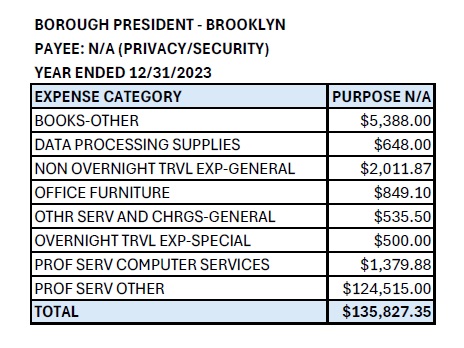
 Brooklyn Borough President Expense Payee NA Privacy Security 2023

 White Collar Fraud

Welcome to New York City’s most impressive disappearing act yet. Following our previous exposés of fiscal acrobatics and car service extravaganzas, we present something remarkable: $4.2 billion of taxpayer money that’s simply vanished from public view.

In what could be called innovative municipal recordkeeping, New York City has classified an astounding $4,201,873,479.51 under the vendor code “N/A (Privacy/Security)” in 2023. Of this impressive sum, $4,131,414,624.59 lists its purpose as “blank” – presumably because even “N/A” felt too specific. The remaining $70,458,854.92 gets the slightly more descriptive purpose of “N/A,” for those times when someone felt compelled to write something.

A sum of $4.2 billion is almost too massive to comprehend, let alone cover in a single post. So, let’s start small – with our borough presidents, whose modest contributions to this trend are particularly telling. After all, if routine expenses like office supplies and travel can be deemed too sensitive for public disclosure, what hope do we have of understanding the billions classified elsewhere? These smaller examples reveal a culture of opacity that has trickled down from the highest levels of city government to the most mundane of expenses.

 Borough President Antonio Reynoso leads with $135,827.35 in classified spending. His office’s signature move? Converting $124,515 into “Professional Services Other” – a category that explains nothing while saying something. They’ve also managed to make $5,388 worth of books disappear from public scrutiny.

 Vanessa Gibson’s office presents $30,680.41 in mysterious expenditures, including $13,618 in travel expenses to undisclosed locations. The destinations remain as mysterious as the purposes.

Under Donovan Richards Jr.’s watch, Queens contributes $13,345.20 in classified spending, featuring $9,100 in “Temporary Services.” The nature of these temporary services remains, appropriately, temporary.

 Mark Levine keeps it modest with $6,358.10 in classified expenses, including an intriguing -$3.50 credit. Even refunds, it seems, can be confidential.

These are the hypocrites who want to abolish parking mandates.


But these borough-level activities are merely a prelude to the city’s larger production. Consider $4.2 billion – enough to fund significant public works – simply marked as confidential. More impressively, they’ve managed to make the purposes disappear as well.

When the purpose of $4.1 billion of spending is classified as “blank,” it raises questions about the very nature of public disclosure. The remaining $70 million marked “N/A” almost seems quaint in comparison.


Tuesday, March 1, 2022

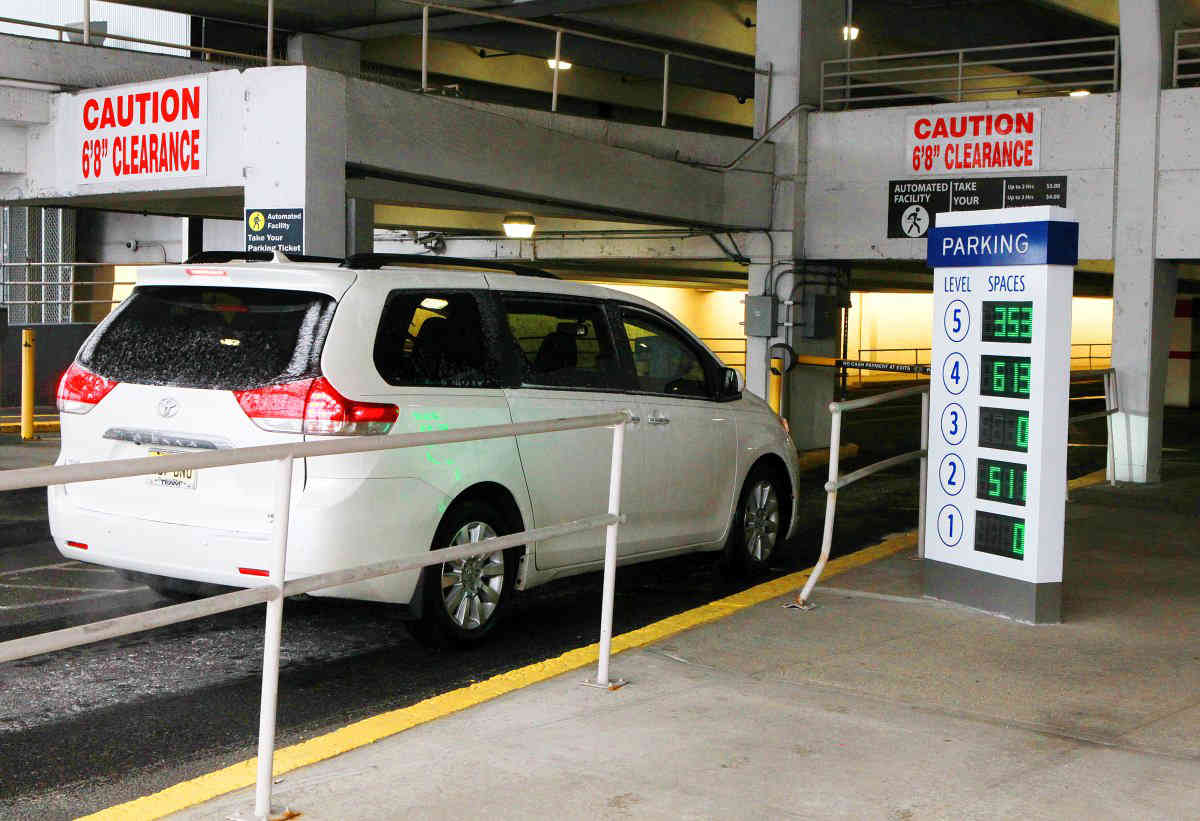
Brooklyn BP and Council Crony Restler want to disqualify residents who drive cars from living in affordable housing.

https://www.brooklynpaper.com/wp-content/uploads/2019/02/mm-parking-charges-increase-kings-plaza-2019-02-15-bk01_z.jpg


Brooklyn Paper 

Borough President Antonio Reynoso and northern Brooklyn Councilmember Lincoln Restler are demanding an end to minimum parking requirements for new construction in transit-rich areas. 

When a developer seeks a rezoning to build taller developments, they’re often forced to build off-street parking — which is designed to reduce the impact that new construction has on parking in the neighborhood. 

But now, the group of electeds signed a petition letter calling on the Department of City Planning (DCP) to fully waive parking constraints for all residential developers of any rezoning projects in public transit-rich areas.

The representatives aim to disincentivize people living in areas with access to subways and buses from using and buying cars, with the intention to reduce carbon emissions and improve the “borough’s urban fabric” — all while providing developers with the option to redirect space toward construction of more affordable housing, said Restler in an exclusive to the Brooklyn paper.

“The accessory parking in buildings on key mixed-use corridors like Fourth Avenue, Flatbush Avenue, and Fulton Street disrupt our borough’s urban fabric, making our City less affordable, less walkable, and incentivizes car ownership,” read the electeds’ letter to the DCP. “The last place we need developers to build accessory parking is in areas with substantial access to public transportation. We need to reduce car ownership in our city, and requiring new parking within close proximity to public transit has the opposite effect.”

Restler pointed to one 28-unit rising project just outside the Bedford subway station, which includes 14 required parking spots on the ground level — saying that, in addition to other problems, such requirements often make the construction “drab, dark, and lifeless.” 

“Because below-grade parking is so expensive to construct, many developments across the city do so on the ground-floor, leading to drab, dark, lifeless streets rather than dynamic ground floor retail and community facility spaces that generate jobs and fulfill critical neighborhood’s needs,” said a statement from Restler on Monday.

Even though there are many businesses around the crossroad of Bedford Ave. and North Seventh Street, it is not confirmed that the new building will have commercial spaces.

Within slightly over 2 square miles, Williamsburg residents have access to the four bus lines and seven subway stations.

“This is an example of an area that doesn’t need more parking, doesn’t need more cars, for sure,” said Reynoso. “So it’s a model development for us to use as a first shot at showing people that parking requirements should not be used here. Also, I think the most important thing is that the parking requirements being removed, allows for more housing to be built. It makes the projects less expensive. It also makes it so that instead of taking down, you can build up, so we got more housing out of this proposal.”

Wednesday, November 24, 2021

NYC Council plans to give voting rights to immigrants residing in the city and country for 30 days

https://politicsny.com/wp-content/uploads/2021/11/NYIC-Our-City-Our-Vote-005-Photo-credit-New-York-Immigration-Coalition-1200x900.jpeg

Politics NY 

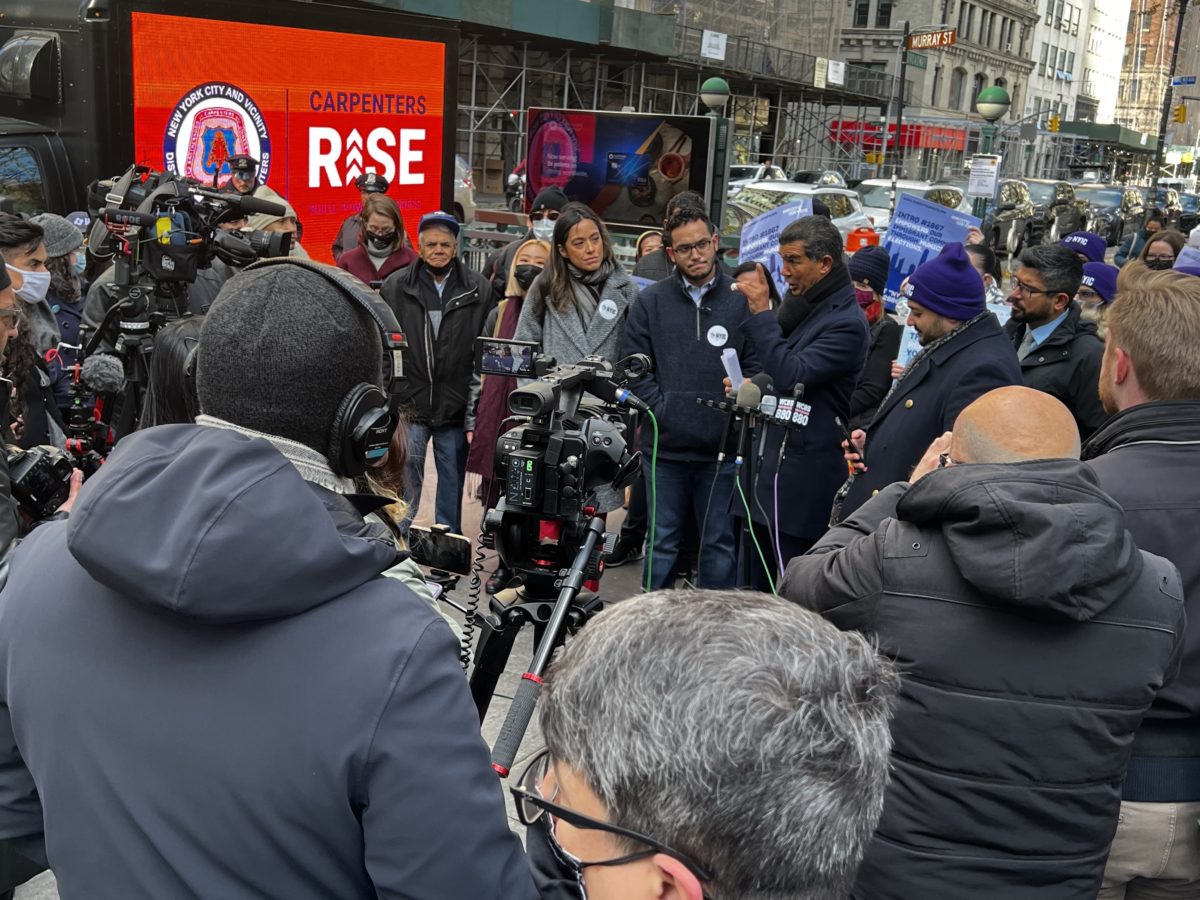
City Councilmember Ydanis Rodriguez (D-Manhattan) led other elected officials and several dozen advocate organizations in a City Hall Park rally Tuesday celebrating a measure that will allow roughly 800,000 non-citizens living in New York City for at least 30 days to vote in all city elections.

The measure dubbed “Our City, Our Vote ” now has a veto-proof supermajority 34 out of 51 City Council supporting the legislation guaranteeing passage at the council’s stated meeting on Dec. 9. It comes as nearly half of New York City households have a member with green card status or other undocumented status. 

It also comes as a number of city lawmakers – once part of those immigrant households themselves – are leading the movement to pass the bill.

“My mom had all of her kids in a public hospital,” said City Councilmember and Brooklyn Borough President-elect Antonio Reynoso, who attended the rally. “My mom couldn’t vote for a representative that could ensure a quality education for her kids.”

Reynoso’s family came from the Dominican Republic and raised him in Williamsburg, which he now represents in the council. 

“It’s about time that we finally get an opportunity where we show these representatives what we want, what we need and what we deserve at the voting booth, where it most matters,” Reynoso said. 

He thanked Rodriguez and the work of the New York Immigrant Coalition, who have been organizing the rallies and the letters as part of the campaign to get the bill passed. 

While Mayor Bill de Blasio has said he has “mixed feelings” about the bill because he feared that allowing noncitizens to vote might remove the incentive for people to become full citizens, Mayor-elect Eric Adams has voiced support for it.

Under the proposed legislation the New York City Board of Elections (BOE) would issue a separate voter registration form for green cardholders and other noncitizens who have the right to work. Those voters would then fill out a ballot with only New York City offices on it at the polls. 

The bill also calls for training poll workers and community education campaigns to ensure every voter receives the correct ballot.

Friday, July 30, 2021

Daneek Miller and Speaker Cojo wants Southeast Queens to continue breathing garbage air

https://cdn.vox-cdn.com/thumbor/IA-Bf7oaFnvEfDGXlHTp7cHkvAU=/0x0:3000x2000/920x0/filters:focal(0x0:3000x2000):format(webp):no_upscale()/cdn.vox-cdn.com/uploads/chorus_asset/file/22747074/jamaica_waste_transfer.jpg

THE CITY 

 Three years after the City Council passed a Waste Equity Law sharply reducing trash trucked to waste transfer stations in environmentally hard-hit neighborhoods, one lawmaker is pressing to roll back the change in his own district.

Councilmember I. Daneek Miller (D-Queens) is the sole sponsor of a bill that would lift the restrictions for transfer stations that deliver plans to ship out trash by rail — including in Queens Community District 12. The measure is scheduled for a pair of votes Thursday, while a key committee chair is out of the country.

While the existing law already exempts facilities that rely on rail as an alternative to long-haul trucks, Miller’s bill would fast-track the exception, lifting the restrictions for facilities that intend to begin using garbage trains soon, giving them four years to follow through.

“We want to make sure that there’s provisions in place where companies want to do the right thing,” Miller told THE CITY. 

 Among the trash station operators in the area, along the Long Island Rail Road tracks, are Royal Waste Services, Regal Recycling Company and American Recycling Co.

Not so fast, say Miller constituents who advocated for the Waste Equity Law’s passage.

 They say that living alongside the waste stations in southeast Queens is a daily experience of environmental racism, with garbage trucks constantly rumbling down the streets and exhaust leaving them gasping for air.

Air reeks near the stations, they say, forcing them inside their homes and away from Liberty Park. A group of community leaders has even begun legal proceedings against two waste stations on Liberty Avenue in Jamaica.

“Clean air is something that we have to ask for on top of everything else,” said Oster Bryan, 41, chair of the St. Albans Civic Association, who held a sign with the slogan “We literally can’t breathe” at a Tuesday rally outside Miller’s office.

“We shouldn’t have to ask for that.”

City records show that waste stations based in Southeast Queens have lobbied Miller and other elected officials for years over legislation.

Most recently, Royal Waste Services paid a lobbyist to target Miller and Reynoso to amend the Waste Equity Bill. American Recycling spent more than $19,000 in total this year to lobby Miller and Reynoso, along with Councilmembers James Gennaro in Queens and Justin Brannan in Brooklyn.

Four years for stations to export by rail means four more years of keeping the windows closed and never entering the park, said Caroll Forbes, 74, who lives across the street from the stations on Liberty Avenue. She said she doesn’t recall the last time she set foot in Liberty Park.

“I can’t open my windows,” Forbes said, adding that her nine grandchildren were asthmatic when they lived in the neighborhood.

NY Post 

 City Council Speaker Corey Johnson shelved legislation Thursday that would lift the trash truck caps as questions mounted over the bill, which environmentalists said would benefit a politically connected southeast Queens carting company.

The term-limited Johnson pulled the measure just an hour before sources said a vote was scheduled to take place.

It was a dramatic about-face after he fast-tracked the bill, despite it having just one sponsor, the area’s equally termed-out local Councilman, I. Daneek Miller (D-Queens).

Johnson also made his now-reversed decision to move the bill even though Sanitation Committee chairman, Councilman Antonio Reynoso (D-Brooklyn), is out of the country.

This confirms Reynoso will continue Adams record of unaccountability in the borough president's office. Hope you gentrifiers are glad who you voted for.

Anyway...

Council insiders pointed to Miller’s endorsement of Johnson’s failed Comptroller bid as a likely explanation for the decision to move the bill despite significant initial pushback.

Johnson strongly disputed the charges Thursday when he was pressed repeatedly by The Post about the timeline of events.

“What you are saying, there is no truth, there is no merit. Zero,” he said.

His remarks came after a slew of statements by activists and Council insiders to the Post laying out their concerns.

“That’s the obvious connection — that Daneek endorsed Corey,” said Jen Guiterrez, the Democratic nominee to succeed Reynoso on the Council. “There’s just no other logic – there’s so many bills being waited on to be heard, and this is the bill? This is the one you want to prioritize?”

Thursday, April 8, 2021

Reynoso's aide tries to silence fellow Democrat Socialist

Saturday, February 27, 2021

Reynoso doth protest too much

Council Member Antonio Reynoso laced into City Planning Chair Marisa Lago for not supporting the Planning Together legislation but conveniently dismisses his past decisions with regard to land use.

Case in point: He seems to want to expand affordable housing stock, yet famously settled for 8 meager units of affordable housing for an 88-unit project in Ridgewood and then said nothing when the developer pulled a fast one on the affordability.

Furthermore, the land use process starts and ends with the City Council. The council member is lobbied before rezonings ever see the light of day, then they have the final say on whether or not a plan passes into law. So asking the chair of city planning why this horrible process hasn't changed is blue chip deflecting.

This man's chameleon-like behavior and disrespectful demeanor make him unfit to be Brooklyn borough president, which is what his grandstanding is about.

Friday, February 12, 2021

Holden's opponent campaigns in the wrong district

This article was published in QNS and I couldn't help but chuckle at it. For example, here is a passage about the pictured business owner who was visited:
Lagos made some time, and spoke about the hardships of maintaining his business for what is nearly a year of the COVID-19 pandemic. Lagos, who noted Tasty’s has been in Ridgewood for 40 years, said not having indoor dining and getting “a bunch” of violations from the Department of Transportation for his outdoor setup are some of his biggest issues.
The response from the candidate during the listening tour?
When asked for his response to [incumbent Robert] Holden’s calls to open indoor dining to 50 percent capacity, Ardila said it’s “irresponsible.” Holden wants the governor to allow for the city’s restaurants to open indoor dining at the same capacity of Long Island, where there is a higher positivity rate of COVID-19 compared to the city, before more go out of business.
Sorry, Mr. Lagos, but Juan thinks you should just suck it up, because COVID spreads more in Queens restaurants than it does in Nassau County ones, or something like that.

Also interesting is the fact that the Tasty Diner is not in Council District 30. In reality, only about 3 blocks of the Ridgewood section of Myrtle Avenue are, and only on one side of the street. This diner is in Antonio Reynoso's district but he's too busy running for Brooklyn Borough President to care.
But do you know whose State Senate district this actually is? Not Jessica Ramos' but Michael Gianaris' who also endorsed this guy. Unfortunately, Mike sadly can't find anyplace outside of Astoria even if he uses Google Maps.

Keep voting for people who don't give a flying fig about you, because that's worked out well so far.

Saturday, July 11, 2020

W.W.R.D.? (What will Reynoso do?)

Hi folks,

One of the advantages of having a blog with longevity is that you get to follow the tweeding stories as they unfold. Then you get to call out the tweeders on their BS. Let's take a little trip down memory lane...

It was 2014, and a lot in Ridgewood close to the Bushwick border was being rezoned to allow a filthy eyesore truck lot to be transformed into a gleaming new residential project. Hopes were high that the developers would include affordable housing in their plans. The electeds got to work:

From the Times Ledger:

Some argued the rents described by developers — with studios going for about $1,000 and two-bedroom apartments renting for up to $1,800 a month — would not be affordable to most in Ridgewood and invite an influx of young, wealthier inhabitants...

Katz’s nod of approval came with two suggestions. She requested an unspecified number of apartments be reserved for those making 60 percent of the area’s median income and urged a different commercial overlay be used to recruit a wider array of businesses.

An applicant representative said the landlord would be willing to use the zoning suggested by Katz during the June 11 Planning Commission hearing, application documents show.

The spokesman also agreed to permanently offer eight units in the larger development as affordable housing. When prompted by the commission, he committed to increasing this to 20 percent of the building’s apartments provided the city permits a bulkier development than currently authorized by its Inclusionary Housing program.


From DNA Info:

The proposal for the 88-unit building originally had no affordable housing, but developers committed to 50 percent affordable units, along with the affordable community space after discussions with Reynoso's office and community members, the councilman's office said.

"Any project that runs through a ULURP process will need to meet demands of real affordability, and I’m pleased that we were able to achieve that here," Reynoso said.

The affordable units, of which 20 percent will be permanently affordable, will be distributed to people earning between $23,000 to $105,000 per year.


50% of 88 units is 44. 20% of 44 is 8. Eight units will be "permanently" affordable.


Now, let's take a look at what the community actually got, courtesy of Ridgewood Post:

Forty apartments in a newly constructed building in Ridgewood are up for grabs through the city’s affordable housing lottery — but only for those who make at least $61,000 a year.

The building, called the “The Strand,” is located at 18-81 Starr St. It has a mix of studio, one-bedroom, two-bedroom and three-bedroom units, which cost upwards of $1,797 a month through the lottery.

Residents must make 130 percent of the area median income to be eligible for the lottery.


Ok, so now we're at 40 affordable units instead of 44? Rent for a studio was supposed to be $1000, now it's starting at $1800? Instead of 60% of the median income, the applicants have to make 130%? Minimum income of $23,000 has now become $61,600?

So, Antonio Reynoso, what are you going to do about this developer pulling a fast one? Or is being complicit with this part of the overall plan?

JQ Update:

Another tidbit from that old DNA article mentions that the developer behind this was the Slate Property Management Group LLC.

You remember those guys right? They were the ones who bought Rivington House for a song from the city and then tried to flip the building to some "mysterious buyer" for luxury condo development for 10 times for what it's worth as de Blasio was busy with his pay to play Campaign for one New York fundraising shenanigans and meetings with his "agents of the city" in city hall.

And speaking of Ridgewood and longevity (you're welcome), the creative geniuses behind Slate joined forces with craft swill makers Rockaway Brewery and attempted to open a pop up beach when this fraudulent affordable housing building was a toxic dirt yard about 4 years ago, which I called out for weeks in my role as a muckraking commenter back in the day.

Wednesday, September 18, 2019

Councilman Reynoso bill proposal raises fines on home illegal conversions and loft studios


Crains New York

Councilman Antonio Reynoso isn't interested in preaching to the converted. 

The Brooklyn lawmaker will introduce a bill next week that will jack up penalties on landlords who allow their buildings to be used for purposes contrary to their approved occupancy and zoning—a proposal aimed at illegal renovation of manufacturing buildings to loft residences and houses to multifamily residences. The legislation comes just months after the state Legislature voted to allow factory and warehouse buildings in swaths of Lower Manhattan, North Brooklyn and Western 
Queens inhabited continuously through 2015 and 2016 to become lawful dwellings under the 37-year-old Loft Law.

Critics complain that Albany's repeated expansions of the 1982 statute have tacitly encouraged people to illegally convert industrial spaces to residences, by signaling to them that the state will intervene to protect their homes. Reynoso himself raised fears that this has also contributed to the erosion of blue-collar jobs and businesses.
 
"Landlords are currently exploiting the weak protections in place for manufacturing spaces and see the low penalties for converting them to residential as the cost of doing business," the councilman said in a statement sent to Crain's. "We must ensure that protections are in place to preserve our manufacturing spaces and the workers who depend on them."

At present, the city fine for "immediately hazardous violations" is set at $1,000 to $25,000. Reynoso's bill would establish a new minimum penalty of $10,000.

Monday, September 16, 2019

The borough tower jails approval is nigh and all it took was to knock off a few stories

https://images.squarespace-cdn.com/content/v1/5b9ffe0f1137a680c2c08250/1568220442895-V4BWSHBKOIFHJHO2GYYH/ke17ZwdGBToddI8pDm48kK9_XZoCxizq05UBZgeRbjQUqsxRUqqbr1mOJYKfIPR7LoDQ9mXPOjoJoqy81S2I8N_N4V1vUb5AoIIIbLZhVYxCRW4BPu10St3TBAUQYVKcOW38ADiuh5qlkpDtokdQxrX2TDt-OUvO5HyNn144i9rptjB-LxeKeuNqSdVQkXTz/queens+jail+rendering.png?format=1000w

Queens Eagle

 Negotiations around the city’s initiative to build new jails in four boroughs have determined that all of the facilities will be smaller than currently proposed, though talks continue around the specific heights, sources close to the deal-making told the Eagle.

The plan to close Rikers Island by replacing the isolated jail complex with four new borough-based detention towers is heading toward a City Council vote next month — and it’s on its way to passing the 26-vote threshold necessary to set the plan in motion, according to City Hall and City Council sources.

A critical issue in rallying support for the plan is reducing the jails’ heights, which vary borough to borough. The Mayor’s Office has already conceded reductions, resulting in more council support, according to a source with knowledge of the negotiations. 

“Council leadership, members and the administration have invested many hours working on a plan that the majority of the council could get behind,” a City Hall source told the Eagle. “Talks absolutely continue, but the fruitful efforts up to this point are leaving those involved feeling very good about the project.”

With just weeks left until the full-council vote on the unprecedented four-site land-use measure, the Brooklyn Eagle reached out to all 51 councilmembers to get their preliminary stances on Mayor Bill de Blasio’s plan.

Already, 18 councilmembers have told the Eagle that they plan on voting yes, or that they are leaning toward voting yes. Nine councilmembers said they are leaning toward or have decided on a “no” vote, while 16 said they remain undecided. The remaining 11 members of the council did not respond to repeated requests for comment.

Three former councilmembers told the Eagle that the jail plan will likely pass, though it may take some back-room deal-making. The former councilmembers requested anonymity so as to not alienate former colleagues. 

“It’s going to happen. They’re going to posture and do things and maybe some will vote no,” said one. “It doesn’t get this far and not go through.”

“It will get done, but there will be a lot of tweaks,” said political consultant George Arzt. He believes a compromise between City Hall and the council on the height of the proposed facilities will enable councilmembers to save face with constituents opposed to the plan. 

“The administration has enough of an opening with the reduced jail population to cut the height of the buildings, and I think that is the most significant factor in getting this done,” Arzt said. “That allows councilmembers to say, ‘They wanted X, but we did Y, and we got this done for our constituents.’”

Council Speaker Corey Johnson has not explicitly stated how he will vote on the final proposal, but he lent his support to the plan when it was announced last summer by the de Blasio administration. He also co-wrote an op-ed in April with former Chief Judge of the New York State Court of Appeals Jonathan Lippman outlining why he believes the borough-based jails land-use proposal — called ULURP — is essential to closing Rikers. In the op-ed, Johnson and Lippman list changes they would like to see, “such as finding non-jail, hospital-based alternatives for people with serious mental health diagnoses,” as well as investment in communities “hit hard by the inequities of the criminal justice system.”

The speaker’s support of the plan is pivotal when it comes to a full-council vote.

Queens Eagle


Yesterday, the Queens Daily Eagle generated some conversations in City Hall after contacting all 51 city councilmembers — in conjunction with sibling publication, the Brooklyn Eagle —  to find out where the legislators stand on the controversial land use application for building four new jails, one in each borough except Staten Island.

The Queens jail, part of a stated proposal for closing the detention centers on Rikers Island, would rise 270-feet and house a maximum of 1,150 detainees behind the Queens Criminal Courthouse in Kew Gardens. Queens’ 15 councilmembers differ on the proposal.

Three Queens councilmembers flat-out say they will vote against the plan. Democrat Paul Vallone, nominal Democrat Robert Holden (he won his seat on the GOP line) and Republican Eric Ulrich all told the Eagle they will vote no on the plan to create four “borough-based” jails. 

Councilmember Jimmy Van Bramer leans toward opposing the jail for different reasons than his conservative colleagues. Van Bramer has aligned himself with the progressive wing of the party and the No New Jails coalition, which calls on the city to divest from jails and invest in social services, housing and education for low-income people of color disproportionately affected by the criminal justice system.

Of the 11 remaining Queens councilmembers (including Antonio Reynoso, whose district is mostly in Brooklyn), six say they are firm yes votes. The six supporters are Councilmembers Karen Koslowitz, Daniel Dromm, Rory Lancman, Francisco Moya, Adrienne Adams and Reynoso.
Meanwhile, Councilmembers Donovan Richards and Costa Constantinides say they are leaning yes, but have not decided yet. 

Councilmembers Barry Grodenchik and I. Daneek Miller say they are undecided. Councilmember 
 Peter Koo has not responded to multiple requests for comment.

Each of the supporters premised their vote on changes ultimately being made to the height and scope of the project.

Koslowitz, for example, said she supports the plan — so long as the city reduces the height. Several councilmembers signalled that they would vote in lockstep with Koslowitz, who is taking a stand in favor of a politically unpopular project.

 Councilmember Daniel Dromm told the Eagle he is “definitely supporting [Koslowitz’s] principled, moral stance" to support the Kew Gardens jail, despite "NIMBY pushback in her district.”

"I really admire her” for standing up, even though the plan is unpopular among her constituents, he added.

To cap this shitshow off, a few words from Speaker Cojo the dancing clown:


  The plan that the mayor has put forward is an essential step in the path to close the Rikers jail complex. Conversations with communities have already led to initial reductions in the height and density of the planned facilities and more thoughtful plans regarding the treatment of incarcerated women. Moving forward, we expect to see more work from the administration to improve the plan—such as finding non-jail, hospital-based alternatives for people with serious mental health diagnoses—and to address neighborhood concerns.

"Non-jail hospital based alternatives" In other words, a hospital.


Wednesday, August 21, 2019

Developer plans to flip the bird to Ridgewood's low and middle income residents if their tower doesn't get the rezoning they want

https://images.squarespace-cdn.com/content/v1/5b9ffe0f1137a680c2c08250/1566328971834-1MSW0L0QL6N5E6RZX2GW/ke17ZwdGBToddI8pDm48kKKYaPPp_pz-UIITGJVi4GpZw-zPPgdn4jUwVcJE1ZvWQUxwkmyExglNqGp0IvTJZamWLI2zvYWH8K3-s_4yszcp2ryTI0HqTOaaUohrI8PI6Vpy4PRGULtDNrkpLIOxg33gS9iVUojNEV9to8x1psw/image-asset.png?format=1000w
Queens Eagle

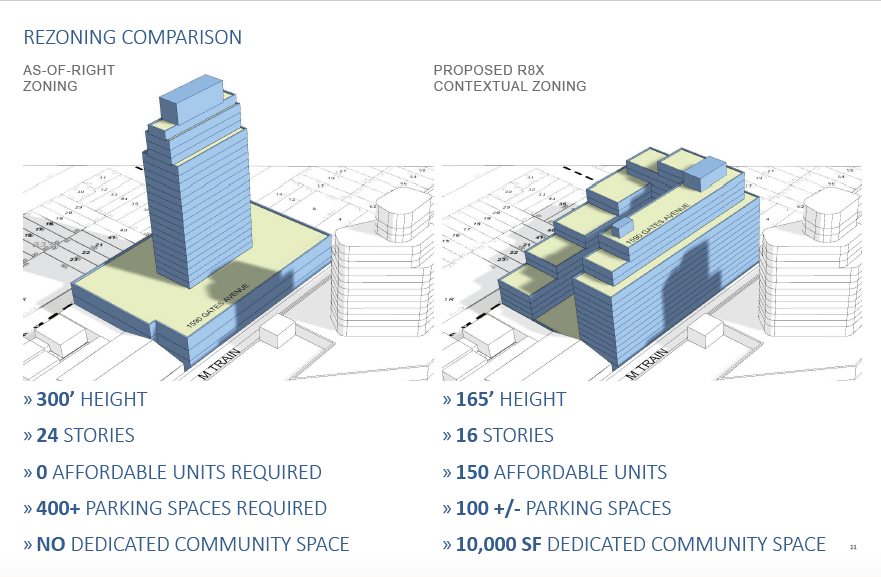
A proposal for a high-rise luxury apartment complex in Ridgewood has put longtime residents and the local councilmember in a bind, with the project’s developer suggesting it will build a 300-foot-tall tower without any affordable units unless the city consents to a rezoning. 

Under the area’s current zoning, developer Avery Hall Investments could construct a 24-story, 200-apartment tower on the site of a Food Bazaar at 1590 Gates Ave. A contextual rezoning would enable Avery Hall to construct a shorter, but much bulkier complex that features 375 market-rate apartments and 150 affordable units, according to plans published by Avery Hall. That’s the plan the developer seems to favor.

"Some people might see it as a threat, but I don’t take it that way,” Councilmember Antonio Reynoso told the Eagle of Avery Hall’s two plans. “I want to believe people are innately good.” 

Reynoso says there’s a third option for the development. He thinks the city can still entice Avery Hall to build a 100 percent affordable complex in the rapidly gentrifying neighborhood, where home and rental prices have surged in the past five years.

“Avery Hall is not objecting to 100 percent affordable housing if they felt the subsidies are there,” he said.

The developer has said it supports the rezoning plan, which would enable the company to build 175 additional units of market-rate housing. Avery Hall did not respond to requests for comment from the Eagle as of press time. 

Under federal guidelines, units priced at 165 percent of Area Median Income — currently $96,100 for a family of three — would count as “affordable housing.”

“I want to believe people are innately good.Don't stop believin' that about the developer overlords of this city, Reynoso. Idiot.

Saturday, February 25, 2017

A new approach to big development?

From Crains:

Neighborhood groups would get an earlier jump on city development plans under a proposal being advanced by Councilman Antonio Reynoso, who organized a Friday convening of about 100 planners, housing group leaders, community board members and others.

The Bushwick councilman and Manhattan Borough President Gale Brewer want to build in a community engagement process before the city's formal land-use review process to give the public a stronger hand in determining the details of local real estate projects. Such a change would require a modification of the City Charter, Reynoso said.

This would give neighborhoods a chance to account for new infrastructure needs, according to the borough president.

"The old model, wherein there's no pre-discussion, ends with community stakeholders just chipping away at the impacts of a project or worse, accepting concessions that have little to do with the project's impact. That's why we need to be smart and start early," she said.

Meeting attendees decried what they consider superficial community engagement processes and the city's project-by-project approach to development.

Wednesday, November 23, 2016

Reynoso suggests changes to rezoning process

From Crains:

An elected official is proposing major changes to the city's land-use process after community opposition led the City Council to reject two projects earlier this year.

The developments would have included about 375 affordable apartments, and more could soon be lost: Protesters recently shut down a meeting about a Williamsburg proposal that planned for 1,146 apartments, according to the developer, perhaps a third of them affordable.

Councilman Antonio Reynoso released a white paper Tuesday arguing for more community engagement whenever projects proposed by private developers need approval from the city. The idea is for developers to address local concerns early, thus tempering the sort of opposition that led lawmakers to denounce a 209-unit affordable development proposed for Sunnyside and a 355-unit building proposed for Inwood that would have been half affordable. The developer of the Sunnyside building withdrew its application before it could go to a vote, while the Inwood proposal was rejected by the City Council, which votes as a body on land-use matters but typically defers to the wishes of the local representative.

"Under my process, [the community's] concerns hopefully would have been known and addressed earlier," Reynoso said.

The white paper, which Reynoso characterized as a starting point for potentially broader reforms, outlines eight changes he believes would make the city's public review procedure less contentious. The biggest switch would be to publicize plans from private developers well before it is too late to change them.


Proposal from Council Member Antonio Reynoso by crainsnewyork on Scribd

Wednesday, November 25, 2015

Reynoso proposes relaxed rules for cyclists

From the Daily News:

Big Apple bicyclists would be allowed to cruise through red lights and stop signs after merely slowing down and looking both ways, under a proposed bill by a city councilman.

The measure, introduced by Antonio Reynoso — who represents bike-crazy Williamsburg — would lift the requirement that cyclists follow the same traffic-light rules as motor-vehicle drivers.

The proposal comes as Mayor de Blasio struggles with his Vision Zero plan to lower pedestrian fatalities and cops are trying to crack down on rogue drivers, cyclists and jaywalkers.

City records show 4,463 cyclists were injured in crashes last year.

But Reynoso defended the proposal, noting how stopping is difficult for cyclists at full speed.

“Riding a bike is not like driving a vehicle. A bike’s motor is the human body, and there is the issue of losing momentum,” said Reynoso, who loves biking so much, he sold his car to raise money for his 2013 campaign.

“It is not sensible to have to stop and go at every stop sign.”

Reynoso, who admits he sometimes blows stop signs and red lights “when appropriate,” believes his plan could improve traffic safety in general by speeding up the time it takes everyone to get through an intersection.

Friday, September 11, 2015

Your "duh" for the day

From DNA Info:

"I feel like things move a lot quicker in Manhattan than in Ridgewood, Queens, and Williamsburg, Brooklyn," said City Councilman Antonio Reynoso, whose district encompasses both of those neighborhoods. He has spent eight years working to get landmarks protections for parts of his district, he said.

"Is one to assume that there is less history in south Brooklyn?" said Councilman Mark Treyger, who was frustrated by the process of protecting parts of his turf.

And Harlem historian Michael Henry Adams railed against "all those affluent white neighborhoods that are protected while ours are not."

Wednesday, August 5, 2015

That's a real lulu

From the Daily News:

Eleven of the 51 members refuse the [lulu] money on the principle that all lawmakers should be paid the same, as is the case in Congress for everyone from the least to the most senior.

Here are the local heroes: Jimmy Van Bramer of Queens, who turns back $20,000 yearly; Brad Lander from Brooklyn and Dan Garodnick of Manhattan, who say no to $15,000 each; and Rory Lancman of Queens, Alan Maisel, Carlos Menchaca and Mark Treyger of Brooklyn, Andy Cohen of the Bronx, Ben Kallos, Mark Levine and Helen Rosenthal of Manhattan, all of whom relinquish $8,000.

Despite having told this Editorial Board or the good-government group Citizens Union that lulus should be limited only to the top leadership, six members pocket the money: Corey Johnson and Ydanis Rodriguez of Manhattan, Daneek Miller, Danny Dromm and Paul Vallone of Queens and Vinny Gentile of Brooklyn.

Seventeen supposed reformers take the money and claim without proof to donate it to charity: From Brooklyn, Robert Cornegy, David Greenfield, Antonio Reynoso, Darlene Mealy, Mathieu Eugene, Rafael Espinal, Chaim Deutsch and Inez Barron. From Queens, Costa Constantinides, Julissa Ferreras, Peter Koo, Karen Koslowitz and Eric Ulrich. From the Bronx, Fernando Cabrera and Ritchie Torres. From Staten Island, Debi Rose. From Manhattan, Inez Dickens.

The rest of the Council makes no bones about grabbing the cash even as they cheapen their offices.

Wednesday, April 8, 2015

When the sh*t hits the basement

From the Queens Courier:

Homeowners gathered around on Seneca Avenue near Norman Street in Ridgewood on Thursday afternoon to get answers from the Department of Environmental Protection (DEP) regarding sewage problems they have been experiencing since earlier this year.

Homeowner Angela Georgescu said she started seeing sewage flood her basement as far back as eight years ago after National Grid excavated the road in front of her house.

The problem was sporadic until sometime in early 2015, when she learned that seven other houses on her block were also having trouble doing their laundry and were spending more time in their basements cleaning up.

Mark Chen Oi Ming, one of her neighbors, claimed he saw utility workers damage the sewage line eight years ago. At the time, the employees told him they would come back to make repairs but Ming did not see them again.

The Department of Health has visited the site at least twice because the sewage has overflowed into the sidewalk, neighbors claimed.

Georgescu and other homeowners have tried calling 311 and contacting local Assembly and Council members but have received no response or have been told that action cannot be taken since the sewage line is private. A representative for Assemblyman Mike Miller told the homeowners to individually call plumbers to identify the problem.

Georgescu and other homeowners hired plumbers to check their sewage lines and have all received the same answer – their individual sewage lines are clean and damage free.

DEP officials visited the site on April 2 to provide information about the sewage infrastructure and next steps the homeowners need to take to repair this problem. According to DEP officials, these homes were built more than 100 years ago, which means the sewage pipes were constructed before the city sewer was put into place.

In this case, the DEP claimed, the sewage lines are considered private property and the responsibility of the homeowner. The sewage from these seven homes collects into a private drain that then connects to the city sewer and travels to a sewage treatment plant.

Monday, February 16, 2015

Council members take paid trip to Israel

From Capital New York:

City Council Speaker Melissa Mark-Viverito and a delegation of 14 council members will travel to Israel on Sunday evening for an eight-day visit to the Jewish State.

The trip will be paid for by the Jewish Community Relations Council and the UJA Federation of New York.

Aides to Mark-Viverito said the delegation will meet with political leaders including the president of Israel, Jerusalem city council members and the deputy minister for foreign affairs, as well as mayors of various cities.

Other members of the delegation traveling to Israel are Mark Treyger, Brad Lander, Antonio Reynoso, David Greenfield, Rafael Espinal and Darlene Mealy of Brooklyn; Mark Levine, Helen Rosenthal and Corey Johnson of Manhattan; Ritchie Torres and Andy Cohen of the Bronx; and Donovan Richards, Eric Ulrich and Jimmy Van Bramer of Queens.