Sunday, April 3, 2022

Endangered Spaces

Snow geese share the landscape with the A train in Broad Channel. The mix of wild natural features and city infrastructure  makes the area distinctive.

New York Times 

Don Riepe pointed to the line on the wall five and a half feet above his kitchen floor. That was where floodwaters reached during Hurricane Sandy in 2012.

His home, a humble two-story wooden structure, is decorated with nautical maps, horseshoe crabs and assorted maritime paraphernalia. It sits right on Jamaica Bay, with a small dock at the water’s edge, where he moors his 22-foot boat. He has a spectacular view of the east end of the bay with the spires of Manhattan in the distance.

Mr. Riepe, a former manager of the Jamaica Bay Wildlife Refuge, considers himself blessed to be surrounded by nature and still have all the perks of a big city a subway ride away. But he knows his neighbors’ time there may be coming to an end. During his four decades living in the area, Hurricane Sandy was the worst Mr. Riepe has seen; the flooring and all the electrical appliances on the first floor of his house were destroyed. Since then, during lesser storms and even high tides, he moves his computer and furniture upstairs, where he sleeps — and he hopes for the best.

Mr. Riepe is just one of tens of thousands of residents who live on the wild fringes of Queens, in communities like Hamilton Beach, Edgemere and Howard Beach, where the ocean threatens to encroach as sea level rises and coastal storms intensify owing to climate change. It is also the focal point of a major environmental restoration project that aims to protect the area — and in fact the whole city — by returning salt marshes and sand dunes to their natural states. How this will affect the community of Broad Channel (the only inhabited island in Jamaica Bay) remains to be seen.

Already, Mr. Riepe’s neighbors are scrambling to adjust to their new climate-changed reality — moving their cars to higher ground on high-tide days, and in some cases converting their ground floors into garages and shifting their living quarters upstairs and out of harm’s way. One thing that they are not yet prepared to do, however, is move out.


Crains New York 

Flushing Meadows–Corona Park, one of the most frequently flooded green spaces in the city, is getting a comprehensive plan on how best to adapt Queens’ largest park to climate change.

This month a congressional spending bill green-lit a $530,322 grant for the Waterfront Alliance to lead a climate resilience plan for the 897-acre park. Those federal dollars, which Queens Rep. Grace Meng requested from Congress last year, will enable the alliance to develop a road map of infrastructure projects and priorities to stymie prolific park flooding, which is only expected to worsen with increasingly heavy rains and sea level rise.

After heavy rainfall, it’s common for huge puddles to transform park basketball courts and fields into ponds for days. Overflow from both Meadow and Willow lakes frequently engulfs trails, making the park a challenge to navigate. Hurricane Ida laid those challenges bare with torrential rains that flooded the park and overflowed onto the Van Wyck Expressway and Grand Central Parkway, which spurred emergency rescues for drivers trapped on the roads.

That’s nothing compared to what’s on the horizon. Without upgrades, much of the green space, which is a former tidal wetland, could be permanently inundated by 2080, the New York Panel on Climate Change said.

Karen Imas, vice president of programs at the Waterfront Alliance, said the city must ensure the park is “prepared for our climate future.” The best way to do that, she said, is by developing a plan with those who know the park best.

“This is really an opportunity to work hand in hand with the community in and around the park and with city agencies to identify what are the greatest hazards and vulnerabilities, and how they can be addressed,” Imas said. That will likely be through a mix of projects, including wetland restoration, bioswales and revamped sewage infrastructure, she added.


Friday, April 1, 2022

Hold the lines

 https://www.mikegianaris.com/wp-content/uploads/2022/03/State-Sen.-Mike-Gianaris-on-new-legislative-session-in-Albany_JAN.jpg

Queens Chronicle

A New York State judge struck down the recently agreed upon legislative maps Thursday afternoon, sending state lawmakers back to the drawing board. They have until April 11 to agree upon new maps, the ruling says; the previously approved maps are not to be used in the upcoming election cycle. 

This comes hours after legislators left Albany for the weekend, doing so without the state budget — which expires at midnight — approved. 

The maps just nixed by Acting Supreme Court Justice Patrick McAllister of Steuban County were the culmination of a drawn-out redistricting process following the 2020 Census. For the first time in its history, the state had given an Independent Redistricting Committee the task of drawing the lines; when the committee failed to reach an agreement, at the end of January, the Democrat-controlled Legislature took up the mantle as it had in years past.

The ruling includes the proposed maps for New York’s congressional, state Senate and Assembly districts.

Soon after that, Republicans filed a lawsuit challenging the lines, as many anticipated. Asked about a possible challenge at the time, state Sen. Mike Gianaris (D-Astoria), who has been on the front lines of the redistricting fight, told WNYC’s Brian Lehrer, “When the time comes, we’re confident we’ll make our case to the court and be successful.”

Wednesday, March 30, 2022

Here's your new bus map Queens

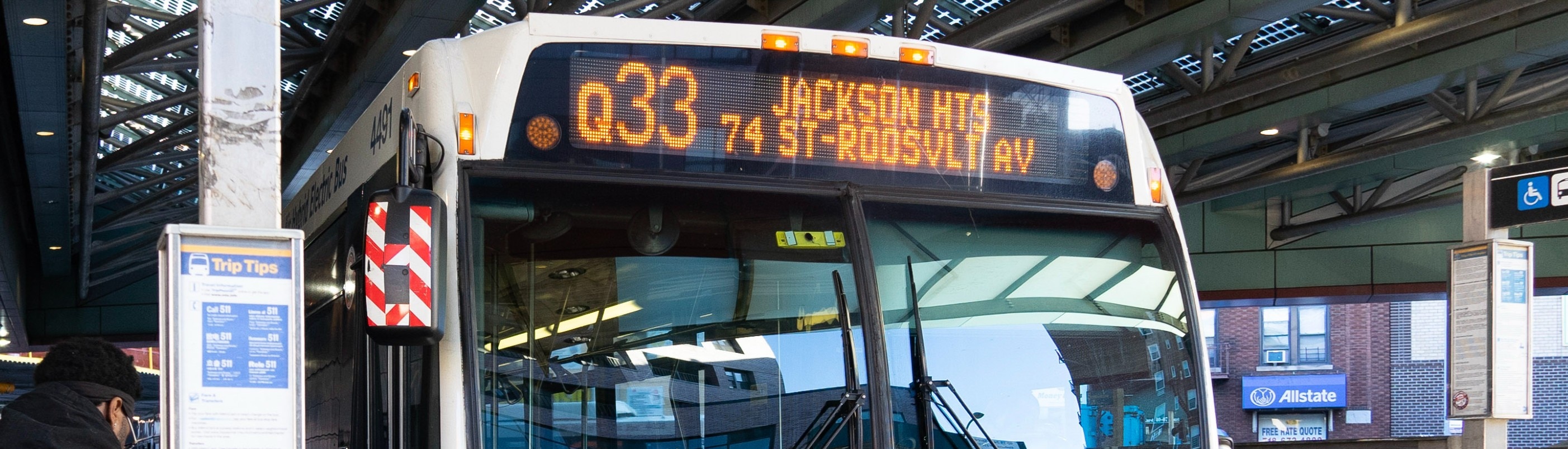
A bus with an electric screen at the top that reads Q53

MTA 

Here are what the MTA are calling the "remixed" express and the local lines

And Crappy pointed out that the transit agency made up a town called Fresh Pond in these maps. 


Queens Chronicle 

Proposals in 2019 by the Metropolitan Transportation to rework the entire bus system in Queens were roundly hammered by the public and elected officials.

In the two years that Covid-19 put the project on the far, far back burner, the MTA, as promised, reviewed the feedback it collected.

The preliminary draft was unveiled Tuesday at a Jamaica press conference that included MTA CEO and Chairman Janno Lieber, Borough President Donovan Richards and city Transportation Commissioner Ydanis Rodriguez.

“The Queens New Draft Plan is the third to be released, but in some ways, may be the most important of the five because Queens has, historically, had less subway service relative to its size and population than the other boroughs,” Lieber said. “So many people depend on buses for access to jobs, education, culture and everything else New York has to offer.”

Lieber acknowledged that the 2019 proposal was not well-received by the public. He said the new plan is an effort to increase the speed and frequency of service, balanced with convenience. He said the new plan applies to local and express service and emphasized that it still is a draft “to address the evolving needs of Queens communities, with a focus on more reliable service, faster travel, better connections, and ease of use.”

“A bus is mass transit in many parts of Queens,” he added. “It is the only way [in some areas] to connect to the subway system and the commuter rail system, so we are really emphasizing this.”

Craig Cipriano, New York City Transit’s interim president, also emphasized the draft nature of the document.

“This is going to be one of the largest bus redesigns in the country, with over 100 routes serving over 800,000 customers a day,” Cipriano said. “We’re eager to hear what you have to say, and there’s lots of room to make changes.”

Richards said the selection of Jamaica for the unveiling was no accident.

“For the residents of Queens who get up every day and go to bus stops, today is a great day,” Richards said. “If you come from Southeast Queens, like I do, you know it can take an hour just to get to one of the train stations here on Jamaica. I often joke, and it’s really not a joke, that it is easier to get to Florida by plane than it is to get to Manhattan from here on some days.”

While Richards said buses are a lifeline to parts of Eastern, Southeast and Southwest Queens, they often are unreliable, overcrowded and slow.

“The routes are outdated, and the schedules haven’t changed with our neighborhoods,” the borough president said. “They not only went back to the drawing board, they’re coming to us with a better product.”

One of the major complaints heard throughout community meetings in 2019 is that while eliminating some existing bus stops speeds up each bus trip, those who use those stops regularly will be at least slightly, maybe greatly, inconvenienced.

Lieber and Cipriano said the idea is to focus on stops that are closer together, which cost riders time at the curb.

“The focus is on connecting people more quickly to the subways and commuter railroads,” Lieber said in a question-and-answer session. “It also tries to balance the needs to move buses more quickly with the elimination of some bus stops while maintaining local bus service, especially with seniors.”

He said that is essential for anyone who does not live in an area close to subway lines.

“Buses have to be faster than walking,” he said.

Among the things Lieber said the city can do to help are things like signal prioritization for buses at traffic lights, and especially bus lanes.

Ex-TransAlt CEO presents scooters for the handicapped


Bronx Times

It’s electric!

On Thursday, e-scooter company Bird launched a program that can make wheelchairs electric.

People who use wheelchairs and live in the east Bronx neighborhoods included in the city’s e-scooter pilot can now receive a free attachment for the duration of the City Council-mandated program, which began in August 2021 and will run up to two years.

The three companies participating in the pilot: Bird, Lime and Veo are all offering options for people with disabilities, as required by the city as part of the pilot. But Bird’s newly launched program is unique because it offers free devices that users can hold on to for the rest of the pilot period.

Bird has been offering four-wheeled electric power chairs that can be rented through the company’s app for 1-14 day intervals at $10 per day and can be picked up or delivered for a fee depending on the location.

Lime has been offering a similarly structured program, but for free, with a $5 refundable deposit. The company’s three-wheeled seated scooters can be reserved in advance online or through the app 24 hours to 7 days in advance, and be used for 24-hour periods, with free delivery.

Veo offers free adaptive wheelchair attachments — like the ones Bird is now offering — by reservation for up to a week with free delivery, and customers arrange everything through Veo customer service.

Bird’s new program will offer 350-watt motor lightweight removable li-ion battery-powered attachments that are compatible with most wheelchair models, according to the company.

Residents in the phase one e-scooter pilot area — which includes the northeast Bronx, spanning from Woodlawn to Eastchester down to Van Nest and Pelham Bay — can utilize the program. When the second phase begins this summer, residents in the phase two area, which spans from Parkchester to Country Club down to Clason Point and Throggs Neck

The motors can make wheelchairs go up to 12 mph, according to a Bird spokesperson.

 People who use wheelchairs will be able to navigate hills, inclines and long distance trips throughout the city, according to Bird.

12 mph is about the average speed a bike rider can go. This attachment kind of turns a wheel chair into a makeshift ATV. Can't wait to see gangs on these things rolling on the streets like the motorcross and ATV gangs do.

Tuesday, March 29, 2022

Pizza avengers

https://nypost.com/wp-content/uploads/sites/2/2022/03/queens-pizza-84.jpg?quality=75&strip=all

NY Post 

A heroic pizzeria owner and his father are fighting for their lives after being stabbed multiple times when they jumped in to stop a 61-year-old woman from being robbed outside their Queens restaurant, relatives and police told The Post on Tuesday.

Louie Suljovic, a 38-year-old military veteran, was working behind the counter of his Elmhurst pizzeria, Louie’s, when he and his father, Cazim Suljovic, saw the elderly woman being robbed by two men Saturday night.

Without hesitation, Suljovic and his 68-year-old father jumped in to help — but ended up being stabbed and struck with an unidentified object, cops said.

Both father and son suffered punctured lungs in the attack, a relative told The Post.

“Cazim is in a serious situation … Louie is improving, he’s hanging in there and I believe he’s going to be okay,” said Cazim’s cousin, Remzija.  

Robert Whack, 30, and 18-year-old Supreme Gooding were taken into custody over the attack. Both were charged with robbery, assault and criminal possession of a weapon.  

Whack was also found with a large amount of what cops believe was heroin and was hit with a criminal possession of a controlled substance charge, police said.

The father and son are being treated at Elmhurst Hospital — the same facility where the pizzeria donated meals to staff and first responders during the COVID-19 pandemic.