Showing posts with label ulurp. Show all posts

Wednesday, November 5, 2025

Another four years of Queens Crap and beyond

Image

PIX News 

 New York City voters approved ballot proposals 2, 3, and 4, which are aimed at fast-tracking affordable housing developments, according to the Associated Press.

Over 50% of New York City renters and around 45% of homeowners pay more than 30% of their yearly salary toward housing, according to the Yes on Affordable Housing Coalition.

Proposition 2 creates two alternatives to the Uniform Land Use Review Procedure (ULURP), the seven-month process for determining how land is used. Not all land in the city goes through ULURP, but zoning changes like affordable housing “must go through public review and approval,” according to the Department of City Planning.

The proposition, which would fast-track affordable housing applications at the City Planning Commission (CPC) or Board of Standards and Appeals (BSA), effectively removes the City Council from the review process.

 Publicly financed affordable housing projects will now be subject to a 90-day review by the BSA, rather than the seven-month process. The CPC will review applications from the 12 communities with the lowest affordable housing rates in New York City within 30 to 45 days.

 Proposition 3 is meant to simplify the approval for smaller infrastructure projects by also keeping the City Council out of the review process. It would create an Expedited Land Use Review Procedure (ELURP), which would involve a 90-day review from the local community board, borough president, and CPC.


Proposition 4 establishes the Affordable Housing Appeals Board. Currently, the City Council has the final say in affordable housing projects, with only the mayor able to veto. The new board will have the power to veto the City Council. The borough presidents, City Council speaker, and mayor will all be on the board.

Advocates argue that removing the City Council from the process will help create more affordable, smaller housing quickly, especially in neighborhoods that lack it. Councilmembers, however, say that removing them from the process will give developers too much power and take away theirs.


Thursday, March 6, 2025

NYC Planning ULURP dog and pony show tonight in Jamaica

Let your voice be heard in Jamaica 1 

Queens Chronicle


Ahead of a Uniform Land Use Review Procedure anticipated for the spring, Councilwoman Nantasha Williams (D-St. Albans) is encouraging people to participate in a “once-in-a-generation” opportunity to shape the future of Downtown Jamaica.

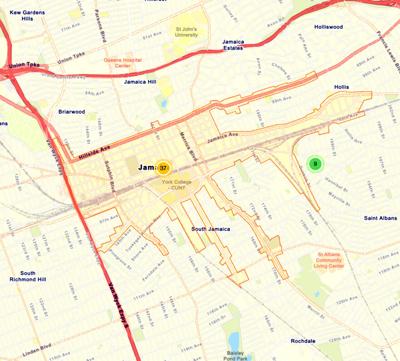
There will be two community meetings about the Jamaica Neighborhood Plan, a proposal to rezone 300 blocks downtown and in adjacent areas around several major corridors.

At a parks meeting held earlier this year, Borough President Donovan Richards said the proposal could create 12,000 housing units in the downtown area.

A virtual Zoom meeting will be held on Wednesday, Feb. 26, starting at 7 p.m. To register, go to shorturl.at/isDVJ. An in-person forum will be held at York College, located at 94-20 Guy R. Brewer Blvd. in Jamaica, on Thursday, March 6, from 6 to 9 p.m. To sign up, go to shorturl.at/UNCAk. To learn more about the plan, visit jamaicaplan.nyc.

“These meetings are a chance for residents, business owners and stakeholders to provide input on how we can create a more vibrant, inclusive and sustainable Jamaica,” Williams said via email.

Corridors such as Jamaica Avenue, Merrick Boulevard, Hillside Avenue and Liberty Avenue, institutions including York College, Rufus King Park and the Jamaica Rail Hub, which provides transit access to the rest of New York City and east to Long Island via the subway, Long Island Rail Road and AirTrain, are all in the targeted area.

The purpose of the plan, other than creating more housing, is to improve the quality of life for current and future residents, maintain the cultural diversity in Jamaica, achieve equitable health and safety outcomes in the area, bolster Jamaica’s rich history and create a climate-resilient and environmentally friendly place, according to the Jamaica Plan website.

To achieve that, there would be a push to increase awareness of and access to local and citywide mental health resources; pathways to foster partnerships with local institutions; exhibits for local artists; support for diverse businesses to open up; promotion of Jamaica’s green spaces and festivals; strategies and enforcement to improve sanitation; management of flooding, air quality and climate change; and more.

Having a zoom hearing over a week before the actual neighborhood town hall for something as life changing as rezoning is quite sneaky and unethical and really shows the YIMBY lobbyist infiltrated NYC Planning office has already decided what they want to do with Jamaica. And it should be no surprise since past neighborhood plan "workshops" included children designing areas and fabricating residents to make it look like more community input was involved. 

Oh, and don't call it a City Of Yes, they really hate that.

Thursday, July 29, 2021

30 Days Over Vacant Lots


 Commercial Observer

 A New York City Council member is trying to give the city a heads-up on vacant building sales.

Councilman Ben Kallos plans to introduce legislation on Thursday that would require real estate brokers, realtors and listing agents to notify the city 30 days before a vacant property — including empty lots and unoccupied buildings — of 20,000 square feet or more goes up for sale, Commercial Observer has learned.

Kallos said the bill will bring the city in the loop on transactions, giving it the first right of refusal on vacant properties to allow it to build more schools, firehouses and other municipal buildings. 

“In my district, which is the Upper East Side, we have three gigantic vacant spaces,” Kallos told CO. “I’m trying to build more pre-K sites, and more schools [and] firehouses … It’s clear to me that it is a bad thing that real estate isn’t getting into the hands of the government [and] public-private partnerships aren’t happening frequently.”

The city would be required, under the new legislation, to express interest in acquiring the property or say why it’s not interested within a 30-day timetable. If an owner rejects the city’s offer, the city would also be required to disclose why it didn’t use eminent domain — when a government takes private property for public use and compensates the owner — or the Uniform Land Use Review Procedure to acquire the property, according to the a copy of the bill shared with CO.


Thursday, May 20, 2021

The Blaz gives the go ahead for Soho/Noho luxury public housing developments


Stencil on building wall by Crosby St..Soho (JQ)

The Village Sun

 The City Planning Commission on Tuesday announced the start of the public review for the Soho/Noho rezoning. The plan was officially certified, kicking off the city’s land-use review process, known as ULURP.

Village Preservation, the largest neighborhood preservation organization in New York City and largest membership organization in Greenwich Village, the East Village and Noho, promptly issued a defiant statement in response. Its director, Andrew Berman, blasted the rezoning as “a massive giveaway” to developers salivating to strike it rich in their coveted holy grail — the world-renowned, cachet-laden Downtown enclaves of Soho and Noho.

According to the city, the scheme, which it calls the Soho/Noho Neighborhood Plan, would allow as many as 3,500 new homes to be created, 900 of which would be permanently affordable under the city’s Mandatory Inclusionary Housing (MIH) program.

Outside of the Soho and Noho historic districts and along Canal St. and the Bowery, the plan calls for “Opportunity Areas” that would allow increased density and a maximum height of 275 feet, “which is appropriate to the existing context,” according to City Planning.

The proposed changes would cover an area generally bounded by Canal St. to the south, Houston St. and Astor Place to the north, Lafayette St. and the Bowery to the east, and Sixth Ave. and West Broadway to the west. The area’s unique zoning dates to the early 1970s, when vacant manufacturing buildings were repurposed by artists. About 85 percent of the proposed rezoning area is landmarked due to being included in historic districts.

“Every New Yorker should have the opportunity to live in transit-rich, amenity-filled neighborhoods like Soho and Noho,” said Marisa Lago, the chairperson of the City Planning Commission. “Built on years of community engagement, this proposal was crafted with a lens focused on fair housing, an equitable recovery from the COVID-19 pandemic, reinforcing Soho/Noho as a regional hub for jobs and commerce, and preserving and augmenting the arts. Through permanently affordable housing requirements and support for the arts, this plan is a giant step forward toward a more equitable and even livelier New York City.”

Under ULURP, Community Board 2 now has 60 days to review the proposal, after which it will go to Borough President Gale Brewer for her consideration, then back to the City Planning Commission and ultimately to the City Council for a binding vote. The process typically can take around seven months, which would just barely get under the wire before de Blasio is forced out of City Hall due to term limits.

But despite the city’s lofty rhetoric, preservationist Berman said the Soho/Noho rezoning is, at heart, a transparent payback for the mayor’s deep-pocketed developer pals.

“In the dying days of the de Blasio administration, the mayor is indulging in an orgy of payback to the special interests who donated generously to his campaign and his legally suspect, ethically tarred, now-defunct Campaign for One New York,” Berman said. “High up on that list is a massive giveaway of real estate development rights in Soho, Noho and Chinatown to his generous donors, like Edison Properties, which will enable them to build enormous office buildings, big-box chain retail stores, and super-luxury condos where current rules prohibit them from doing so.

“Wrapped in a false veneer of affordable housing and social-justice equity,” Berman said, “de Blasio’s Soho/Noho proposal is a fire-sale giveaway of enormously valuable real estate that will destroy hundreds of units of existing affordable housing and create few if any new ones; displace hundreds of lower-income residents and residents of color; make these neighborhoods richer, more expensive and less diverse than they are now; and destroy locally and nationally recognized historic neighborhoods while pushing out the remaining independent small businesses with a flood of big-box chain retail. It’s a classic de Blasio bait and switch, and one has to wonder, after seven-and-a-half years of seeing this mayor in action, who is naive or desperate enough to not see it for what it is?”

Village Preservation recently released a study that analyzed the de Blasio plan and found that, in every case where the city predicted affordable housing would be included in new development, the plan actually makes it more lucrative to build without the affordable housing, and to utilize the many loopholes in the plan for avoiding affordable housing requirements. Specifically, commercial, retail and community-facility space, as well as market-rate residential space of no more than 25,000 square feet per zoning lot are all exempted from affordable housing requirements. Thus, according to Village Preservation, the chances of any affordable housing being generated by the plan are exceedingly small.

The group’s study also found that the Soho/Noho plan only accounts for about 37 percent of the 10.3 million square feet of new development potential it would create (nearly four Empire State Buildings’ worth), thus “hiding millions of square feet of additional development likely to take place that will almost undoubtedly take the form of luxury condos, big-box chain retail, and high-end commercial office space with no affordable housing.”

Earlier this month, the Soho Alliance, Broadway Residents Coalition and individual plaintiffs filed a lawsuit to block the rezoning plan’s certification, but the city, at the last minute, delayed the certification. As a result, state Supreme Court Justice Arthur Engoron ruled that he could not issue an injunction yet. He set a return court date of June 3, likely figuring the city would have certified the plan before then.

Last Friday and this Monday, the plaintiffs returned to court to try to block the certification once again and the judge denied them again. But that does not mean, as has been incorrectly reported by some media outlets, that the lawsuit was tossed out of court, noted Sean Sweeney, the director of the Soho Alliance. Sweeney paraphrased their attorney, who related Engoron’s latest response:

“The judge said, ‘Look, I’ll give a T.R.O. [temporary restraining order] if the bulldozers are coming in to destroy a building. But I’m not going to give an emergency T.R.O. for a process [ULURP] that will last seventh months.”

Engoron, however, said that the issue of an emergency T.R.O. would be discussed during the return court date of June 3.

The lawsuit argues that public in-person meetings, not Zoom virtual meetings, are required under ULURP and also that the city did not make sufficient information about the plan available to Community Board 2 the required 30 days before the certification.

According to Sweeney, C.B. 2 was only sent a couple of sentences notifying the board that the certification was planned. That’s insufficient under a referendum to the City Charter that voters approved in 2019, he noted. Meanwhile, the Soho/Noho rezoning plan is a massive document.

“One appendix [for the rezoning] has 13,000 pages, so how can the community board, let alone the public, review a long, long attachment?” the Soho activist asked, incredulously.


Sunday, April 25, 2021

Judge rules Kew Gardens tower jail can proceed and the other three borough jails as well


Queens Eagle

 A New York judge on Thursday tossed a lawsuit filed by a pair of Queens civic groups attempting to block the construction of a new jail in Kew Gardens.

Manhattan Supreme Court Justice Eileen Rakower said the city met environmental review standards, public comment rules and land use laws as it sought approval to build the 195-foot detention tower behind the Queens Criminal Courthouse as part of its four-borough jail plan.

The council approved the city’s land use application for the jails — the first proposal to roll non-contiguous sites in multiple boroughs into a single package — in October 2019. Rakower said the city’s Universal Law Use Review Procedure allowed for such an application. 

“A single ULURP review of the four borough-based jail sites was lawful and rational,” Rakower wrote in her decision to dismiss the lawsuit. The city, she added. “reasonably deemed that the multi-borough review should be consolidated.”

Two civic groups, Queens Residents United and the Community Preservation Coalition, had filed the Article 78 lawsuit in September 2020 in a last-ditch effort to block the new jail, set to rise on the site of the soon-to-be demolished Queens House of Detention at 126-02 82nd Ave. Neither group responded to requests for comment Thursday. They can appeal the decision.

A spokesperson for the New York City Law Department praised the judge’s decision.

“We are pleased that the Court rejected the challenge to the Queens Borough-based jail, just as courts have thrown out challenges to jails in the Bronx and Manhattan,” the spokesperson said. “This decision will help the City to finally close Rikers Island and make our jail system smaller, safer, and fairer.”

“Closing the dysfunctional, shameful jails on Rikers Island is an urgent moral imperative, today more than ever,” said former Chief Judge Jonathan Lippman, who chaired a commission that recommended closing Rikers Island jails. 

“As the courts consider technical land use issues on appeal, the city should press forward on policies that rely on jail only as a last resort, continue planning for a smaller borough jail system, and begin preparing for a green future for Rikers.”


Sunday, March 21, 2021

de Blasio's real estate overlord donors are ready to get their affordable luxury public housing towers approved

 https://www.brooklynpaper.com/wp-content/uploads/2021/03/River-Ring_AERIAL-2-2-min.jpg 

6 SQ FT

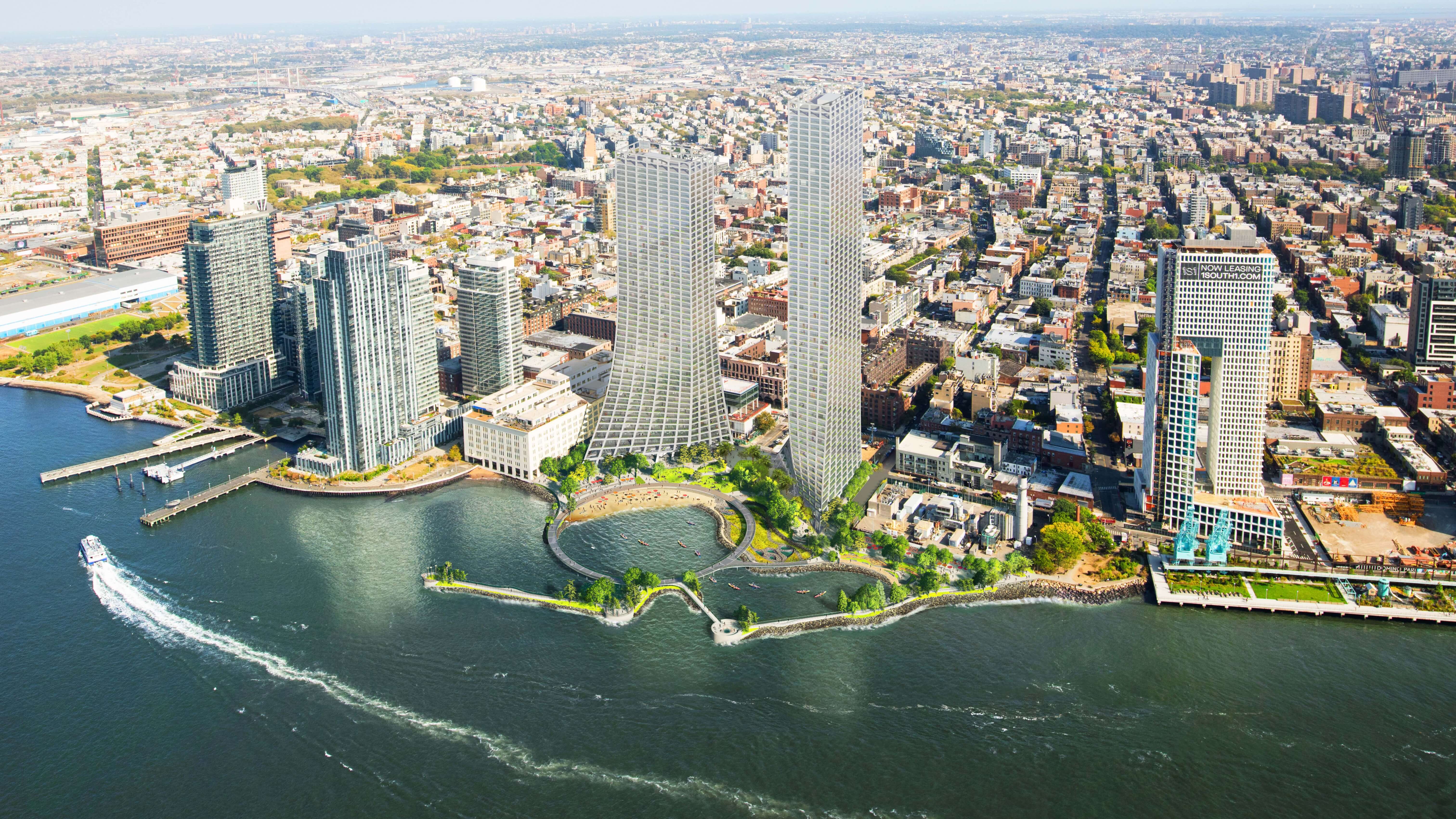
  First unveiled by Two Trees in late 2019, the project originally called for two towers, one at 650 feet and the other at 600, with 1,000 units of housing. The revised plan calls for a taller 710-foot tower on the southern side and a slightly shorter tower north tower at 560 feet. The proposed number of apartments increased to 1,050 units.

According to a newly launched website for the project, the affordable housing proposed for the project includes 263 permanently affordable rentals designated for those earning 60 percent of the area median income (AMI) and 27 units for those earning 40 percent of the AMI, which would mean $1,366/month and $854/month two-bedroom apartments for those households, respectively.

Two Trees, which created Domino Park as part of its redevelopment of the former Domino Sugar Factory, acquired the three vacant sites for a total of $150 million. The site had been home to Con Edison since 1984, with the steel fuel tanks removed from the site in 2011.

Because a zoning change is required, the so-called River Ring Waterfront Master Plan must go through ULURP, in addition to securing a permit from the Department of Environment Conservation and the U.S. Army Corps of Engineers. Two Trees previously told reporters that the land use review process could take at least two years to complete, with the construction of the entire project lasting at least five years. The park would be completed alongside the first building, Two Trees principal Jed Walentas had said.

The developers held meetings with the community at the beginning of last year, but the coronavirus pandemic put those sessions on hold. Following an environmental impact review, the developer aims to complete the ULURP by the end of 2021, as a spokesperson for Two Trees told Brooklyn Paper.

Literally a sandbox for hipsters. 

 https://www.brooklynpaper.com/wp-content/uploads/2021/03/River-Ring_BEACH.jpg


Thursday, March 11, 2021

Murder suspect escapes from Rikers Island as City Council finds the time to make it a public space


AMNY

City officials began taking steps Monday for Rikers Island to become a public space by 2026 — synchronizing with the Mayor’s borough based jail plan that would leave the island vacant in the same year.

A uniform land use review procedure was filed on Dec. 2 that would reclassify the Bronx island as a public space, rather than a jail facility, according to a statement from City Hall.

The ULURP at hand will “officially prohibit the incarceration of individuals there after Dec. 31, 2026,” though it doesn’t address what the future holds for Rikers Island.

“The proposed mapping action does not lead to any new development or construction on its own,” that statement noted, adding that any future plans – such as housing development, green energy facilities or the prospect of expanding LaGuardia Airport —will require a new planning and public review process, including a separate approval for and environmental review.

The announcement came after the city began the procedure of closing facilities on Rikers Island along with the Brooklyn Detention Center in preparation for the new and upcoming jail plan.

“We are moving away from the failed policies of mass incarceration and showing the world that Rikers days are numbered,” said Council Speaker Corey Johnson, adding that the remapping of Rikers  “shows our deep commitment to closing” all of the jails there.

De Blasio reiterated Johnson’s sentiment: “We’re charting a new course forward for the island and the people of New York City.”

Eyewitness News  

 Police are searching for a suspected murderer who was mistakenly released from Rikers Island because of a paperwork error.

Christopher Buggs, 26, was awaiting trial in a 2018 murder when he was released on an unrelated case.

In the unrelated case, he was sentenced to 30 days of time served for criminal contempt.

He's accused of killing 55-year-old Ernest Brownlee outside a bodega in Bedford-Stuyvesant.

Brownlee was apparently a career criminal who killed two men in the 1980s.

The Correction Department says it is conducting a full investigation into how Buggs was released.

"We are aware of this incident and a full investigation into how this happened is underway. Right now we are working with our law enforcement partners to return this individual to custody," Deputy Commissioner of Public Information Peter Thorne said.

"This is being fully investigated right now. We are going to put additional safeguards in place to make sure this never happens again. it's very frustrating. It was based on a court order, but it was apparently one case that this inmate had connected to him, but there were other charges obviously as well that should have meant he remained incarcerated. So we are going to get a full review of this immediately, make whatever changes we have to. In the meantime, we have a high level of confidence that he will be re-apprehended shortly," Mayor Bill de Blasio said.

Impunity City

 The Blaz has such a talent with words. 

 You might say he has the best words.


Friday, February 19, 2021

Corey Johnson is fooling absolutely no one

Add CB7 to the list of community boards rejecting "Planning Together"... (love the racism angle)

CB7 response to Planning Together by queenscrapper on Scribd

So, let me remind you that the hearing is Tuesday, February 23rd at 10am. You can sign up to testify in person or submit written testimony here. Choose the following from the dropdown menu:

Thursday, February 11, 2021

Team CoJo scrambling to pass his bad development plan

You may recall the post here where Paul Graziano analyzed NYC Council Speaker Corey Johnson's "Planning Together" legislation to change the NYC Charter to favor developers and remove community input. This past Monday, Graziano went head to head with Annie Levers, Assistant Deputy Director, New York City Council Office of Strategic Initiatives, at Community Board 8's Land Use Committee. You can watch the debate yourself. It's worth the time invested so you can clearly see what is going on:

The legislation was then voted on and unanimously rejected. Last night, the full board met and it was again unanimously rejected.

Earlier in the day, a rather long-winded and inappropriate email was sent out to Council Members to refute the information presented, which will no doubt result in a deluge of Community Board rejections. (Click to enlarge each segment)


The final insult came when Council Members - but not Community Boards - received word of an official public hearing on the legislation that was hastily scheduled for February 23rd.


So folks, you better get off your keysters and sign the petition in the sidebar and provide testimony at this "public" hearing (that they don't want you to know about), and make it clear to your City Council representatives that they are to vote no on this bill.

Tuesday, January 5, 2021

Kathryn Garcia wants to upzone us into oblivion

"Former NYC Sanitation Commissioner Kathryn Garcia is running for NYC Mayor this year. Below is a portion of her plan to address the affordable housing and homelessness issues. I received this today via email. She was soliciting for campaign contributions.

These two issues are important to work on, however, some of her proposals are rather shocking and reflect the increasing attacks on our contextual rezonings and our fight against dangerous illegal conversions. Again, this is a portion of Ms. Garcia's Policy Statement.

Is this what we can expect to hear from other candidates for Mayor this year?" - anonymous

Housing supply has not kept up with demand. We added 500k New Yorkers over the last decade, but only 100k units of new housing.

Public dollars cannot fund all affordable housing, but we can make it easier and faster for private partners to build.

That means comprehensive upzoning to ensure all neighborhoods - particularly those rich in transit, jobs, and great schools - have their fair share of affordable housing.

We need to get creative: end apartment bans and legalize basement apartments, accessory dwelling units, and single-room occupancy apartments (SROs).

Accelerate approvals for new housing construction by streamlining the ULURP and environmental review process, especially for affordable housing projects.
Here she comes to save the day!

Sunday, July 19, 2020

Developers are champing at the bit for ULURP approval

THE CITY

Facing growing pressure from the real estate industry, Mayor Bill de Blasio announced Wednesday that he would restart the city’s land use process in August and intensify the work in September.

The city is launching a new portal called NYC Engage to foster public participation and for community boards to use as they review proposals remotely.

The announcement comes just days after THE CITY reported on the growing frustration over the wait for the city’s Uniform Land Use Review Procedure, which has been frozen since mid-March due to the pandemic, to resume.

The City Planning Commission will begin meeting online in August to vote on projects already midway through the usually six-month ULURP process. In mid-September, the Department of City Planning will begin certifying new proposals to begin the six-month review.

“It is time to re-engage the city planning process and move the city forward,” the mayor said at his daily briefing.

Saturday, July 11, 2020

W.W.R.D.? (What will Reynoso do?)

Hi folks,

One of the advantages of having a blog with longevity is that you get to follow the tweeding stories as they unfold. Then you get to call out the tweeders on their BS. Let's take a little trip down memory lane...

It was 2014, and a lot in Ridgewood close to the Bushwick border was being rezoned to allow a filthy eyesore truck lot to be transformed into a gleaming new residential project. Hopes were high that the developers would include affordable housing in their plans. The electeds got to work:

From the Times Ledger:

Some argued the rents described by developers — with studios going for about $1,000 and two-bedroom apartments renting for up to $1,800 a month — would not be affordable to most in Ridgewood and invite an influx of young, wealthier inhabitants...

Katz’s nod of approval came with two suggestions. She requested an unspecified number of apartments be reserved for those making 60 percent of the area’s median income and urged a different commercial overlay be used to recruit a wider array of businesses.

An applicant representative said the landlord would be willing to use the zoning suggested by Katz during the June 11 Planning Commission hearing, application documents show.

The spokesman also agreed to permanently offer eight units in the larger development as affordable housing. When prompted by the commission, he committed to increasing this to 20 percent of the building’s apartments provided the city permits a bulkier development than currently authorized by its Inclusionary Housing program.


From DNA Info:

The proposal for the 88-unit building originally had no affordable housing, but developers committed to 50 percent affordable units, along with the affordable community space after discussions with Reynoso's office and community members, the councilman's office said.

"Any project that runs through a ULURP process will need to meet demands of real affordability, and I’m pleased that we were able to achieve that here," Reynoso said.

The affordable units, of which 20 percent will be permanently affordable, will be distributed to people earning between $23,000 to $105,000 per year.


50% of 88 units is 44. 20% of 44 is 8. Eight units will be "permanently" affordable.


Now, let's take a look at what the community actually got, courtesy of Ridgewood Post:

Forty apartments in a newly constructed building in Ridgewood are up for grabs through the city’s affordable housing lottery — but only for those who make at least $61,000 a year.

The building, called the “The Strand,” is located at 18-81 Starr St. It has a mix of studio, one-bedroom, two-bedroom and three-bedroom units, which cost upwards of $1,797 a month through the lottery.

Residents must make 130 percent of the area median income to be eligible for the lottery.


Ok, so now we're at 40 affordable units instead of 44? Rent for a studio was supposed to be $1000, now it's starting at $1800? Instead of 60% of the median income, the applicants have to make 130%? Minimum income of $23,000 has now become $61,600?

So, Antonio Reynoso, what are you going to do about this developer pulling a fast one? Or is being complicit with this part of the overall plan?

JQ Update:

Another tidbit from that old DNA article mentions that the developer behind this was the Slate Property Management Group LLC.

You remember those guys right? They were the ones who bought Rivington House for a song from the city and then tried to flip the building to some "mysterious buyer" for luxury condo development for 10 times for what it's worth as de Blasio was busy with his pay to play Campaign for one New York fundraising shenanigans and meetings with his "agents of the city" in city hall.

And speaking of Ridgewood and longevity (you're welcome), the creative geniuses behind Slate joined forces with craft swill makers Rockaway Brewery and attempted to open a pop up beach when this fraudulent affordable housing building was a toxic dirt yard about 4 years ago, which I called out for weeks in my role as a muckraking commenter back in the day.

Tuesday, March 17, 2020

It takes a global pandemic to stop hyperdevelopment


https://imgs.6sqft.com/wp-content/uploads/2020/03/17142123/construction.jpg

6 SQ FT

 All city land use and rezoning processes have been temporarily suspended as a result of the coronavirus outbreak, Mayor Bill de Blasio announced on Monday. In an executive order, the mayor directed procedures “applicable to the city planning and land use processes” to freeze for the duration of New York’s state of emergency.

The city’s official public review process, or the Uniform Land Use Review Procedure (ULURP), involves months of evaluation of a proposed project from the community board, borough president, the City Planning Commission, the City Council, and the Mayor.

“To avoid the need to hold public gatherings and minimize the potential spread of COVID-19, Mayor Bill de Blasio has temporarily suspended New York City’s land use decision making processes,” Marisa Lago, the director of the Department of City Planning, said in a statement.

“The suspension of the City’s official public review process, the Uniform Land Use Review Procedure (ULURP), was made via Executive Order. As of the issuance of this Executive Order, all City Planning Commission meetings, including public hearings and votes required as part of land use review processes, are suspended and the time periods for hearings and votes will not run.”

The Real Deal

Build, baby, build — but not in a pandemic.

Brooklyn City Council member Carlos Menchaca is calling for a moratorium on construction work citywide, in what would be one of the most significant industry-related disruptions since the beginning of the coronavirus outbreak.

“I’m calling on the moratorium of all construction site work in NYC,” tweeted Menchaca, who represents District 38 including neighborhoods such as Sunset Park and Red Hook. “Again, we are putting workers in danger.”

His calls for suspension of all construction were echoed by Council member Brad Lander, who represents District 39 and is the Council’s deputy leader for policy.

“It is essential right now to build new hospital capacity,” Lander tweeted. “It is NOT essential right now to build new condos.”
 
New York’s Department of Buildings notified active construction sites this weekend to follow the latest guidance from the city’s Department of Health and Mental Hygiene on the coronavirus, but as of Monday afternoon had not shut down the industry.

“We will continue to closely monitor the situation,” agency spokesperson Andrew Rudansky said in a statement, “and will issue further guidance to the industry as needed.”

Tuesday, February 11, 2020

Council member Brennan looking to curb e-commerce warehouse development


The Real Deal
Politicians’ fight against Amazon is not over.
The e-commerce giant’s bid to build a Queens campus died a year ago, but warehouse projects have proliferated as e-commerce companies seek infrastructure to speed deliveries. And one Brooklyn official has had enough.
City Council member Justin Brannan is calling for a special permit requirement for large warehouse projects. That would give the Council power to stop the developments, which Brannan says are hurting the quality of life, especially in the outer boroughs.
Brannan wrote an op-ed in Crain’s last week saying they have led to “clogged streets, pedestrian hazards, increased asthma, low-wage jobs and the death of brick-and-mortar neighborhood retail.”
He is asking the Department of City Planning to “institute a special-permit requirement for all warehouse development over 250,000 square feet” to give communities and local officials input into when and how such projects come to their neighborhoods.
The move would force large warehouse projects subject to navigate a process similar to the city’s seven-month Uniform Land Use Review Procedure.
“A special permit means a community won’t be bulldozed — literally and figuratively — in the development process,” Brannan wrote. “Local leaders and elected officials will be able to consider the potential collateral damage to long-term plans for neighborhood development, and potentially be able to reach outcomes that benefit local residents, landlords, retailers, and even consumers.”
Other projects have triggered such proposals, some of which have been enacted. In the past two years the city has required special permits for hotel and self-storage projects in certain light-manufacturing zones, and Mayor Bill de Blasio’s administration said earlier this year that it supported such a requirement for hotel construction citywide. The move would enhance the New York City Hotel Trades Council’s opportunity to unionize new hotels.

Saturday, November 9, 2019

Recent charter vote on ULURP approval is giving some developers agita


The Real Deal

Much of the excitement around New York’s election Tuesday centered on the approval of ranked choice voting, but passage of a down-ballot question affecting projects has drawn the ire of some developers.
 
The measure requires the Department of City Planning to give the relevant borough president, borough board and community board a detailed summary of projects subject to the Uniform Land Use Review Procedure at least 30 days before the ULURP application is certified for public review. It also added 15 or 30 days to the time that community boards have to review such applications during the summer.
 
Some developers criticized it for adding more time and red tape to an already lengthy process but others said it will not have a big impact on their projects.
 
“Extra time is not the end of the world,” said Eli Weiss of Joy Construction, which is currently working on projects in neighborhoods including the South Bronx and Inwood. “Especially if it’s 15 days.”
 
“It’s a minimal change,” Weiss continued. “Certainly, I don’t view it as damage, and I think that community board members are not [real estate] professionals, so an extra 30 days, it’s understandable. These are volunteers.”
 
G&M Realty founder Jerry Wolkoff was more upset about the measure. He stressed that developers usually already need multiple attempts to get through the ULURP process, and these added steps will make that process even longer.
 
“It doesn’t happen on the first go around,” Wolkoff said of getting ULURP approval from a community board. “They have other questions. The five months will turn into a year, so there’s nothing new for New York.”
 
Another developer, who asked not to be named, echoed these comments, arguing that the changes will make real estate investors more inclined to build outside of New York City.

Sunday, July 21, 2019

City Council will vote on all four borough jails in one ULURP hearing


Brooklyn Eagle

 The community boards have voted and the borough presidents have weighed in. The city’s plan to close Rikers Island jails by 2026 — by building four new borough-based facilities via an unprecedented land-use measure — now moves to a fall vote in front of the City Council.
 
The city’s plan calls for building a new 1,150-bed jail in every borough except Staten Island. In order to do this, the proposal must go through a process called the Uniform Land Use Review Procedure (or ULURP), which determines the size and use of property beyond what’s permitted by existing regulations.
 
This is far from a traditional land-use situation. For the first time, the city has packaged four different sites into a single ULURP application, rather than expose each plan to individual review. 

Local community boards and borough presidents are the first to weigh in, though their votes are purely advisory. Now that they have, the decision moves to the City Council, whose vote is legally binding.
 
The stances of the four City Council members who represent the neighborhoods in question are particularly important, because the council traditionally votes in lockstep with the local representatives on ULURP applications.

Kew Gardens, Queens

Capacity: 1,150 beds
Height: 270 feet tall
Total space: 1.258 million square feet, including a 676-space municipal parking lot
Of note: The Queens jail would house all women detained in New York City, as well as several hundred men.
Councilmember: Councilmember Karen Koslowitz supports the city’s plan, but her spokesperson said she is working with the Mayor’s Office to reduce the overall size.
Borough president: Queens Borough President Melinda Katz formally recommended disapproval in June. “A 1,500 person jail anywhere in Queens is unacceptable,” Katz said. She wants more community engagement and thinks the city can reduce its total jail population to 3,000 by 2026, enabling the city to construct a smaller community jail. (The city currently estimates a jail population of 4,000 by 2026).
Community board: Queens Community Board 9 unanimously voted in favor of a resolution rejecting the plan.

 Anyone would like to wager that "affordable housing" will be included in that building?

Monday, May 20, 2019

No shit, Sherlocks at City Council; the city planning department doesn't evaluate the effects of overdevelopment?

LIC Post


City Planning’s predictions as to the outcome of neighborhood rezonings will be put under the microscope if a number of bills sponsored by Council Member Francisco Moya become law.
 
The bills would require city agencies to review past neighborhood rezonings to see how accurate City Planning’s projections were with what took place on the ground in following years.
 
The bills come at a time when there have been a number of neighborhood rezonings—where existing residents have voiced concern about being displaced due to gentrification– and instances where City Planning’s projections have been found to be way off.
 
For instance, City Planning’s projections were proven wrong when it rezoned a 37-block area in 2001 in the Court Square/Queens Plaza area. The city anticipated, according to its Environmental Impact Statement in 2001, that no more than 300 residential units would be built in the rezoned area by 2010, according to a report released by The Municipal Art Society of New York last year. In 2010, there were 800 residential units and by 2018 almost 10,000 units—with more coming.
 
With each neighborhood rezoning, the city goes through an environment review process, called the City Environmental Quality Review (CEQR), to identify the likely outcome.
 
Based on the CEQR manual, the city must evaluate the impact of a rezoning on land use, traffic, air quality, open space, schools, socioeconomics, among other items. City Planning studies these impacts and makes projections that go into an Environmental Impact Statement, which the public relies on when it undergoes the ULURP public review process.
 
City Planning works with other city agencies, such as the School Construction Authority, Department of Transportation and the Department of Housing Preservation and Development, to produce an Environmental Impact Statement. The agencies provide guidance based on City Planning’s calculations.
 
However, the city is not held accountable for its predictions and legislators want that to change. There is no mandate requiring officials to re-examine their projections.

Here's more unaccountability:

Hunters Point developers for parcel C given the green light to build their towers higher and higher

Developers have released new designs for Parcel C of the ongoing Hunters Point South development, a shift that will result in the two planned towers to rise significantly higher than expected along the 

Long Island City waterfront in order to accommodate the complex infrastructure running below the ground along with a recently planned school for the site.
 
The two residential towers, referred to as “north” and “south” will rise to 55 stories, or 550 feet, and 44 stories, or 440 feet, respectively. The north tower’s new design is 14 stories higher than previously planned, and the south tower will see an additional nine stories, up from 35 stories in the previous plan.
 
The developer, TF Cornerstone, aims to break ground in June 2018.
 
The two towers will be flush against the perimeters of the parcel, as will the newly incorporated elementary school, resulting in cleared-out space in the middle of the site, where no built structures will rise, save for a food pavilion with outdoor seating amidst greenery and public art installations.

 The changes were revealed during Community Board 2’s Land Use meeting Wednesday night. Jaclyn Sachs, a senior planner at the Department of Housing Preservation and Development, and John 

McMillan, director of Planning for TF Cornerstone, said that they had to redesign the two towers so they wouldn’t disturb  power lines, an Amtrak tunnel, and other infrastructure running below the site. 

Furthermore, easement holders such as the New York Power Authority and Amtrak, wanted unobstructed access to the site.
 
Sachs added that while the New York Power Authority and Amtrak and other easement holders were part of initial conversations about the development, it wasn’t until a specific proposal for the parcel was put out by TF Cornerstone that easement holders preferences for an undisturbed center became clear.
 
TF Cornerstone also had to incorporate an elementary school on the parcel, which was not part of the original plan, after the city pushed for its addition during the developer’s redesign. The school will be 34,000 square-feet, with 572 seats, and have a ground level playground directed toward the center of the site.

 “This was not an easy thing to do,” Sachs said, adding that parcel C is the largest and most complex of the parcels on the 30-acre Hunters Point South development.

This obviously got permitted because it contains, ahem, "affordable housing", which as we have been told ad nauseum that it can only be achieved if market rate and luxury housing get built also. Like the nearby "zipper building":

The Zipper Building, a new luxury condominium development in Hunters Point, has officially placed all 41 of its units on the market.
 
The available condos, located inside the converted and expanded zipper factory at 5-33 48th Ave., range from studios to four-bedrooms. The units begin at $650,000 and go up to $2.5 million.

“The Zipper Building will complement the budding Hunters Point neighborhood, which is in the midst of a real estate boom,” said Eric Benaim, CEO of listing brokerage Modern Spaces.

And the behemoth at Court Square,

The first units have hit the market in the 67-story, 802-unit building that is going up in Court Square.
Twenty-units are now available in the condo, which will be the tallest building in Queens when it is complete. The listing prices for those units now on the market range from $660,400 for a studio to $2,325,610 for a three-bedroom.
 
The development, called the Skyline Tower and located at 23-15 44th Drive, is across the street from One Court Square and is being marketed as offering spectacular views and more than 20,000 square feet of luxury amenities.
 
The condos offer floor-to-ceiling windows, modern appliances, and marble-adorned bathrooms.
 
The initial listings are in floors four through 36. The developer anticipates that buyers in the bottom 36 floors will be able to move in by the end of 2020, around the same time that the Dept. of Buildings is expected to issue a Temporary Certificate of Occupancy.
 
Residents will be able to move into the higher floors by the end of 2021, when the TCO is expected to be issued. The upper floors will tower over the Citigroup building.
 
Eric Benaim, the CEO of Modern Spaces, anticipates that it will take four years to sell all of the units. Modern Spaces is the exclusive marketing and sales firm for the project.

Apparently, the city and the real estate industry that truly runs it is building for speculative, well, hypothetical residents to supply instead of and for the present demand of hundreds of thousands of New Yorkers who are having difficulty finding affordable housing right now.


Thursday, May 16, 2019

More "affordable housing" promised by developer for Peninsula Hospital site and Councilman Richards


https://assets.dnainfo.com/photo/2016/7/1469024842-266381/extralarge.jpgThe 


The clock officially starts now,” Councilman Donovan Richards said before a packed house at the RISE Center, where many gathered for an information session on the plan for the future of the old Peninsula Hospital site.

The ULURP (Uniform Land Use Review Procedure) for the redevelopment plan has officially begun and principals, Alex Arker and Dan Moritz, from the developer, Arker Companies, were on hand on the evening of Tuesday, May 7, to present the latest details of their plan. As a Councilman, Richards explained that he and City Council will have the final say on the plan, so it is important to gather input directly from the community now. “We want to make sure we give the community a lot of say on the things they’d like to see in a specific project and we want the developers to understand the needs of the community. I want to make sure that towards the end of this process, when it comes before City Council, that I feel comfortable with your input in the plan,” Richards said.

Arker first revealed their mixed-use development plan for the site in early 2018, after purchasing the property in 2016. The presentation of the latest plan showed that some changes have been made since the original plan was presented, but at Tuesday’s meeting, many pointed out that the plan still needs to be revised, including Councilman Richards. “I’m currently not in support of the plan that has been proposed. We have a long way to go with negotiations,” Richards said.

 A major concern for a few community members is the density of the project, with the development of 2,200 units. Some expressed concern that this would bring in at least 6,000 new people to the neighborhood in a place that lacks certain resources, transportation and adequate infrastructure. Councilman Richards said that at least 50 percent of the units, and likely more, would be reserved, with first priority given to people that already live in the neighborhood. The developers also explained the reasoning behind such a high density, saying it was necessary to allow for the building to be affordable, and to support some of the community benefits that the project will bring, such as the supermarket. Richards added that it was likely that the number of units will eventually be scaled back to some degree.

 Some also questioned what “affordable housing” means and urged that the development should accommodate a mix of incomes. “You say you’re building affordable housing, but the idea is to give people an opportunity for an economically diversified neighborhood. I don’t think the plan you’re putting forward does that,” Arverne resident Glenn DiResto said. “A majoriy is for those at 80% AMI or lower. It doesn’t balance out incomes. I understand the need for affordable housing, but only 13% is going to be for people with 80% AMI or higher, so if a wife makes $35,000 and a husband makes $35,000, they do not qualify. You very much need to look at a balance of income here.” Richards and the developers said they agree that a mix of incomes is necessary.


Wednesday, March 13, 2019

Kew Gardens Community Board rejects de Blasio's tower jail


https://i2.wp.com/correctionalnews.com/wp-content/uploads/2018/08/Feature-Rikers.jpg?resize=800%2C445


The Kew Gardens community board voted unanimously against the plan for a new local jail advancing to the next stage. Queens Community Board 9 voted unanimously Tuesday night to urge the City Planning Commission not to green light the plan for a new jail in Kew Gardens, which would allow the plan to advance to the city's land use review process.

The planning commission must decide by March 25 whether to certify the jail plan as complete and send the plan through the city's land use review process, known as ULURP. The vote Tuesday is largely symbolic, but city rules say the planning commission must explain any decision that goes against community board recommendations.

 
"The City Planning Commission does irreparable harm by starting the ULURP clock," the community board's resolution states. "This proposal, designed without any communication with the affected communities, will quite simply overwhelm and destroy the small historic residential neighborhood of Kew Gardens, and also adversely affect the adjacent community of Briarwood."
A spokesperson for City Council Member Karen Koslowitz, who represents Kew Gardens, declined to comment on the vote.
 Queens BP Melinda Katz finally chimed in:

Queens Borough President Melinda Katz and Bronx Borough President Ruben Diaz Jr. sharply rebuked the mayor's office last week for what they said was a failure to collaborate with the local communities that would house the new jails.

"We are deeply disturbed by the lack of meaningful local engagement on the borough-based jails project to date," Katz and Diaz Jr. wrote in a letter dated March 8. "The process of developing the borough-based jails system must start anew."

"The irony ... of unveiling a citywide plan for 'modern community-based jails' in the absence of community input is not lost on the boroughs," Katz and Diaz Jr. wrote.

 Admin note: The woman who wrote these articles (and the one on Meeks) is Mara Kaufman, the one who got repressed from reporting on this crucial meeting by the mayor's arbitrarily opaque rules

Saturday, February 24, 2018

Private Sunnyside park to become public

From Sunnyside Post:

The city is at last starting up the acquisition process for the former Phipps playground, part of the Sunnyside Gardens Historic District.

The Department of Parks and Recreation is putting forth an application with the city to ultimately turn 50-02 39th Ave., the corner lot at 39th Avenue and 50th Street, into a community park. The site, measuring 10,000 square feet, is currently owned by DBH Associates, a private developer.

The application to the Department of City Planning will be jointly filed with the Department of Citywide Administrative Services for the site selection and acquisition of the parcel of land, a NYC Parks representative said at last night’s CB2 Land Use meeting.

The project must go through public review by way of the Uniform Land Use Review Procedure, where it will be reviewed by the community board, the Queens Borough president, and make its way to the city council, which could take until next year.