Showing posts with label Community Boards. Show all posts

Sunday, February 19, 2023

Queens doesn't get the money

 https://i1.wp.com/nyc.streetsblog.org/wp-content/uploads/2016/02/cmrichardsheadshot.jpg?w=220&h=297

QNS

The Queens Borough Board voted overwhelmingly to approve the package of budget priorities Monday, Feb. 13, although several community board chairs expressed concern over issues caused by the city’s migrant crisis.

Chaired by Queens Borough President Donovan Richards, the budget priorities were developed largely from input received from two days of public hearings late last month on Mayor Eric Adam’s proposed $102 billion 2024 budget.

Pursuant to the City Charter, the Borough Board must submit its budget priorities each year to the mayor, the City Council and the city’s Office of Management and Budget.

Irak Cehonski, director of budget for the Queens Borough President’s Office, presented numbers on Monday that showed significant budget shortfalls for city agencies — except for the NYPD — and how much they’ll affect city services in Queens.

Most concerning among the budget cuts included a $295.3 million shortfall for the Department of Education and a $257 million shortfall for the Department of Health and Mental Hygiene.

“Especially coming out of the pandemic, I don’t know how we cut anything to do with health,” Richards said. “We weren’t prepared during the first wave of the pandemic — I know all of us remember those days and we don’t want to see it again — so we need to make sure we’re fighting those cuts as well.”

Richards also bristled at the Summer Youth Employment Program being slashed by $21.7 million; the Department of Sanitation facing more than $53 billion in reductions; a $61.6 million shortfall at the Department of Housing Preservation and Development; and a $12.2 million shortfall for Queens Public Library.

Cehonski said the Department of Homeless Services slashing nearly $70 million is a “huge concern” for Queens and moments later Community Board 3 Chairman Frank Taylor explained why.

“It is devastating to my community of which I serve, Community Board 3 in North Corona, East Elmhurst, and Jackson Heights,” Taylor said. “Everyone knows we’re a shelter town with 12 or 13 of them and the city wants to cut money and resources.”

He also railed against the lack of affordable housing, MTA bus reductions on Northern Boulevard, and the chronic shortage of hospital beds after a dozen hospitals shuttered in the last 15 years.

“This is not fair. This is deplorable,” Taylor said. “We pay some of the highest taxes in the city per capita and we’re not getting anything over here except more shelters.”

Rev. Carlene Thorbs, chairwoman of Community Board 12, which has coped with high shelter populations around JFK Airport for decades, called the influx of migrants “heartbreaking” and said that the city needs to be more transparent.

“We’re taking in a lot of the asylum seekers and we don’t know where they are because nobody wants to tell us because it’s a security situation but we’re supposed to be ready for them in our schools,” she said. “You’ve got to trust us to assist and to help because we can’t even get a list as to where they are unless something tragic happens and then it pops up on the news. It has to be fixed and it has to be fixed now because if our mayor doesn’t fix it, it will never get done.”

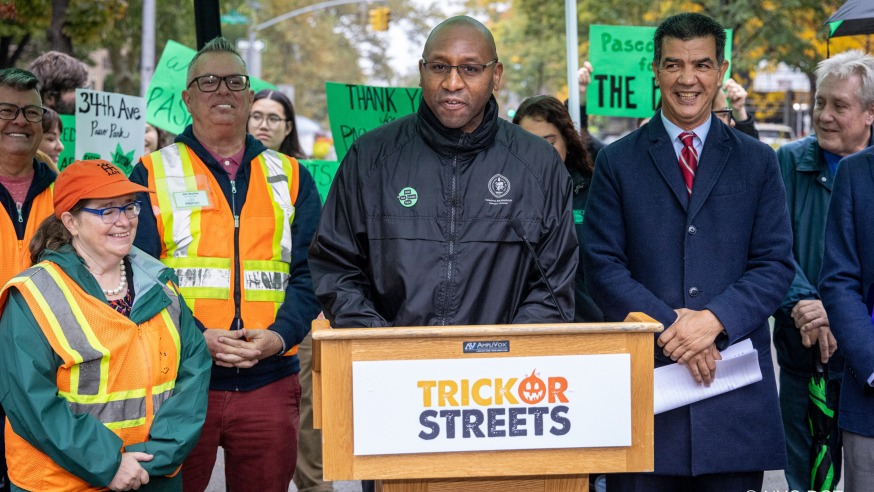
 But at least we'll get some open streets.
 https://queenspost.com/wp-content/uploads/2022/10/Photo-DOT-3.jpg

Thursday, January 13, 2022

Get on board


The Bronx’s Community Board 10 on East Tremont Avenue.

THE CITY 

Community boards in New York City weigh in on liquor licenses, budget items and local development rules. Chances are, they’ve hosted a heated debate in your neighborhood over future housing, or roadway changes.

But what is a community board, really? And how do its members get a say in all those hyperlocal issues, from street cleaning to rezonings?

Now’s the time to learn — because boards across the boroughs are choosing new members very soon.

For those curious about what boards do and how to get involved, listen up: Most of the five borough presidents are taking applications between January and March.

Here’s what to know about the process, and what to expect if you’re chosen to join:

How do you join a community board?

First step is: apply!

Applications have opened already for some of the boroughs, and we’ll update this list as more applications are published. Here are the links and deadlines:

  • Brooklyn — Deadline is Feb. 18.
  • Queens — Deadline is Feb. 16.
  • Manhattan — Deadline is March 1.
  • Staten Island — Applications are accepted year-round.
  • The Bronx — No applications are available yet.

There are 59 boards total, each corresponding with a community district, groupings of neighborhoods that can include up to 250,000 people.

Each board has up to 50 members, all volunteers, and have no minimum number of members. Board members serve via staggered two-year terms, which means half must be reappointed or replaced every year.

All of those people are appointed by their own borough president. City Council members can recommend new applicants, but the final call rests with the BP.

Wednesday, October 6, 2021

Queens doesn't want no stinkin' restaurant sheds


Queens Eagle 

The Queens Borough Board voted Monday night against the city’s plan to permanently expand outdoor dining throughout the five boroughs.

With 13 voting against and 6 voting in favor, the City Councilmembers and Community Board chairpersons on the borough’s advisory board overwhelmingly said the city’s plan to permanently allow sidewalk cafes wasn’t fleshed out enough to get their OK.

The board, which issues advisory opinions, said that it wasn’t keen on voting to allow the Department of City Planning and the Department of Transportation to implement the program before the details of the program have been codified.

“We appreciate what the text amendment is trying to do, pretty much we could agree with it, our issue really revolves around the fact that the text amendment is coming fist, before we have a fleshed out program from DOT,” said Betty Bratton, the chair of Community Board 10. We’re opening the door to do something before we have an understanding of what we're going to do.”

“We don’t need to give permission for something to happen, before we know what the permission is going to allow,” Bratton added. “Otherwise...we’re buying a pig in a poke.”

The city has been shopping around its text amendment to community boards for several months.

Citywide, 20 boards voted in favor of the text amendment, 23 against, one had no objections and one board, Queens Community Board 14, waived their right to vote.

The amendment would essentially remove geographic restrictions on sidewalk cafes. Currently, sidewalk cafes are only allowed in a few parts of the city.

The expansion would apply to most commercial corridors in Queens and throughout New York City, but how the program would work – barring the fact that DOT would enforce it – has yet to be written.

Community Board 13 voted in favor of the amendment but at Monday’s Borough Board meeting, board chair Bryan Block said his members still have worries.

“We had serious concerns..about enforcement by DOT,” Block said. “We don’t want to stop restaurants...we want to support our restaurants but enforcement is key.”

Block said that his district already doesn’t have all of its quality of life issues addressed in a timely or efficient way, especially when it comes to late night parties.

According to DOT representative Albert Silvestri, the NYPD and Department of Environmental Protection would continue to enforce noise complaints coming from restaurants participating in the new program. However, if a restaurant continues to be the subject of complaints, it would “impact their standing within the program.”

And now a final word, actually another prepared statement full of Transportation Totalitarians talking points from Commissioner Hank Gutman:

 "Open Restaurants not only helped save New York’s world-renowned restaurant industry, it also showed how we can dynamically reimagine our streetscape,” DOT Commissioner Hank Gutman said in a statement. “Developing design guidelines will ensure that this emergency program can be transformed into a permanent part of our city, anchoring restaurants in our communities so that this program continues to flourish.”

 Restaurants are already anchored in communities you dotard. GTFOH 

Sunday, August 22, 2021

Community Boards want to keep hearings virtual during pandemic resurgence

 https://cdn.vox-cdn.com/thumbor/0lQt7mGYoo5tKhut4M9brEOnUZU=/0x0:1965x1310/1200x0/filters:focal(0x0:1965x1310):no_upscale()/cdn.vox-cdn.com/uploads/chorus_asset/file/20023476/community_board_7.0.jpg

Patch

Community board chairs are pushing back on a requirement that their meetings resume in person next month — with some saying they plan to defy state law if necessary to keep their sessions COVID-safe.

And as interpreted by New York's official watchdog for public access to government, the state's open meetings law means that every community board member who Zooms into a meeting now technically must advertise in advance the address they are dialing in from — even if that is their home — and open their doors to all who wish to join.

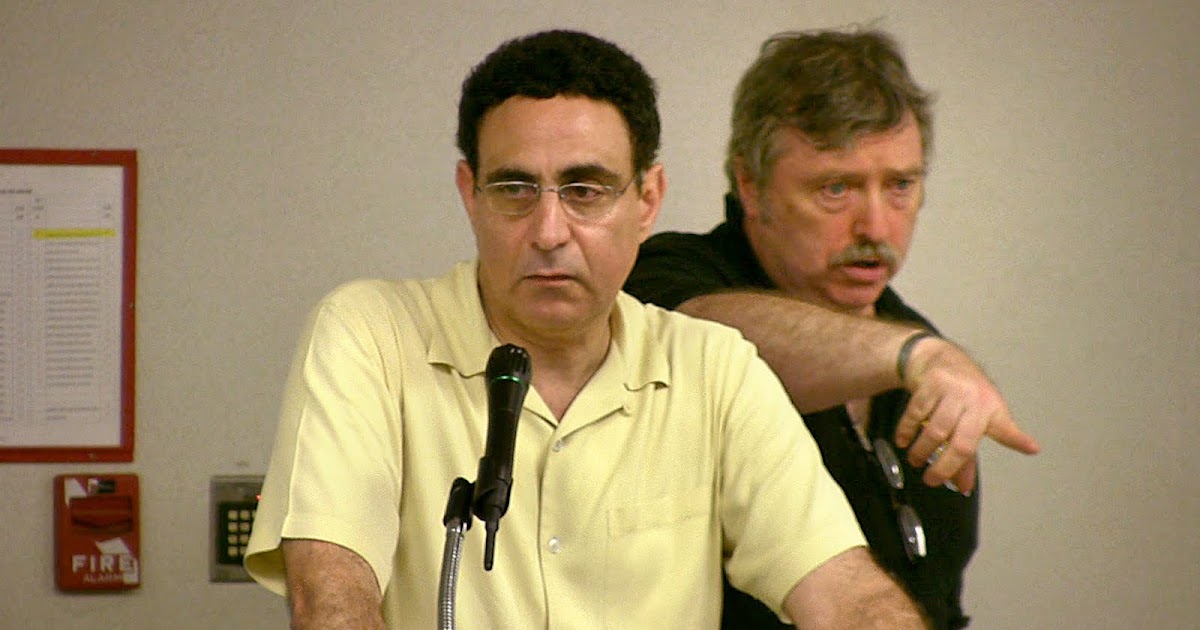
"Opening up people's homes? That's insanity. That's ridiculous," scoffed Frank Morano, chair of Staten Island's Community Board 3.

After Gov. Andrew Cuomo suspended in-person government meetings last year in declaring a state of emergency at the dawn of the pandemic, the city's 59 community boards migrated to online video platforms such as Webex and Zoom.

Civic engagement soared as members of the public, the boards and government agency reps easily participated from the comfort of their homes via the internet, mastering the mute button and other video conferencing features.

But once vaccinations made gathering safer, the state lifted the emergency order on June 24. Community boards were once again subject to the state's open meetings law — requiring public access to the physical premises of an official gathering.

With the return of board meetings following a summer break coming up in September while virus risks remain, volunteer board members and boards' government-employed managers are sounding the alarm on the risks of in-person gatherings, pleading with city and state officials to allow them to continue meeting remotely.

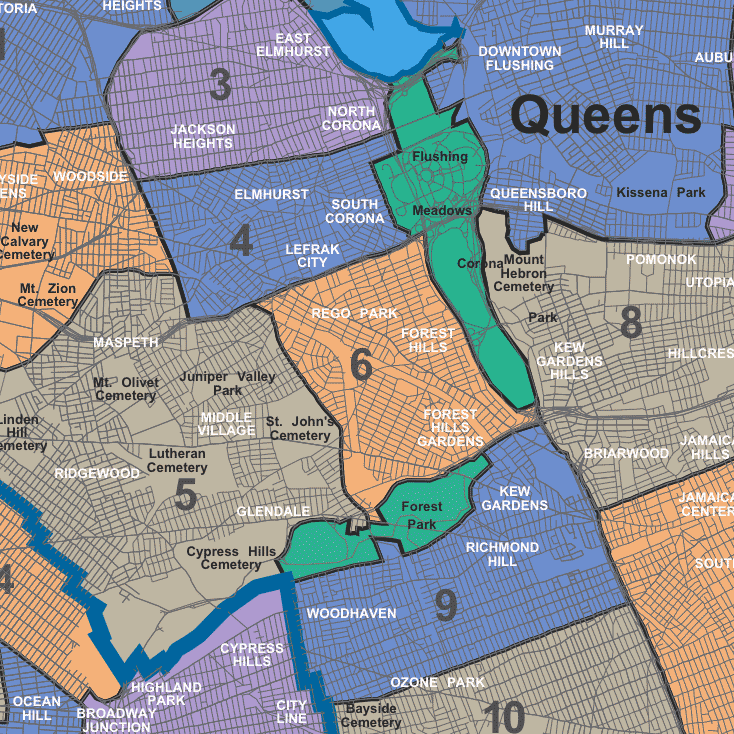
"Not only are we still in the midst of this ongoing health crisis, but we're on a trajectory with cases going up," said Alexa Weitzman, chair of Queens Community Board 6, which represents Forest Hills and Rego Park. "This is not a time to reconvene in person."

Because board members are not employed by the government, the vaccine and testing mandates covering city workers do not apply. Nor can boards screen members of the public in the way that restaurants, gyms and theaters now must.

All in the room must wear masks, according to a City Hall memo, which also directed community boards to keep six feet of distance between participants.

Morano and Weitzman told THE CITY that they plan to keep holding virtual-only meetings, either because of virus concerns or because of a lack of space to socially distance.

Wednesday, March 3, 2021

Community members rip the City Council a new one

We've come to the end of our coverage of the disastrous Planning Together hearing from 2/23. Now, the public has a chance to speak. Reps of Community Boards, neighborhood organizations and a planning expert weigh in, and they don't hold back. There are allegations of chicanery and racism and it's oh, so enjoyable. A lot of people out there are paying attention, and that's a good thing.

Tuesday, March 2, 2021

How to Talk Out Both Sides of Your Mouth, by Adrienne Adams

If you made it to the end of the video posted yesterday, you witnessed Adrienne Adams do a song and dance over how great Planning Together is and how much more input community boards will supposedly get in the land use process should the bill be passed into law. The video above is bookmarked to where she adamantly asserts this. Then at the end of the hearing, after community board representatives and constituents trashed the bill, her demeanor did a 180.

"Somebody said you didn't hear from your elected officials. We wanted the narrative to go around. So that was very intentional."
That is simply the biggest bunch of malarkey EVER. Elected officials don't withhold information from their constituents in order to further the conversation, they do it to squelch opposition. You were given marching orders to keep mum.

"We wanted to make sure that this legislation was scrutinized from A to Z."
You wanted to slip this bill past the goalie so you didn't bother to notify the public or community boards that it was taking place and they had to find out from a leaked email to council members.

"If we don't have the voice of the people behind this as you all noticed, if you look at who is sponsoring this legislation and I believe it's only one person from Queens on this bill, there's a reason for that as well."
Well, finally a bit of truth!

Adrienne Adams wants to be the next Speaker of the City Council, so she is trying to be a good foot soldier for county and for REBNY. But her constituents are not stupid, so she has to try to play both sides. And guess what? With Ruben Wills back in the picture, she now has to raise money for re-election, nevermind worry about the speaker's race. Calling Marisa Lago "duplicitous" while talking out both sides of your mouth? Hey pot, the kettle's calling.

Friday, February 19, 2021

Corey Johnson is fooling absolutely no one

Add CB7 to the list of community boards rejecting "Planning Together"... (love the racism angle)

CB7 response to Planning Together by queenscrapper on Scribd

So, let me remind you that the hearing is Tuesday, February 23rd at 10am. You can sign up to testify in person or submit written testimony here. Choose the following from the dropdown menu:

Thursday, February 18, 2021

Community Boards overwhelmingly against "Planning Together"

From the Queens Chronicle:

Land use advocate Paul Graziano continued his Queens lobbying crusade against the City Council speaker’s proposed comprehensive planning bill in Community Board 9 on Tuesday night.

Graziano, a zoning specialist and staunch opponent of the ambitious land use legislation created by Council Speaker Corey Johnson (D-Manhattan), presented at a special meeting of the board’s Executive and Land Use committees.

Graziano has been making the rounds of community boards arguing against the plan. So far boards 8, 11 and 13 have all voted against the proposal. On Tuesday, CB 9 nearly unanimously joined the group of boards opposing the bill.


Hey folks, because Corey Johnson cares so much about the voices of People of Color, he scheduled his hearing on this bill the same day as the Special Election for Council District 31! What a guy! Here's the letter of oppositiont that CB8 sent to the Speaker. It's a doozy!

Planning Together - Letter From CB8Q by queenscrapper on Scribd

Thursday, February 11, 2021

Team CoJo scrambling to pass his bad development plan

You may recall the post here where Paul Graziano analyzed NYC Council Speaker Corey Johnson's "Planning Together" legislation to change the NYC Charter to favor developers and remove community input. This past Monday, Graziano went head to head with Annie Levers, Assistant Deputy Director, New York City Council Office of Strategic Initiatives, at Community Board 8's Land Use Committee. You can watch the debate yourself. It's worth the time invested so you can clearly see what is going on:

The legislation was then voted on and unanimously rejected. Last night, the full board met and it was again unanimously rejected.

Earlier in the day, a rather long-winded and inappropriate email was sent out to Council Members to refute the information presented, which will no doubt result in a deluge of Community Board rejections. (Click to enlarge each segment)


The final insult came when Council Members - but not Community Boards - received word of an official public hearing on the legislation that was hastily scheduled for February 23rd.


So folks, you better get off your keysters and sign the petition in the sidebar and provide testimony at this "public" hearing (that they don't want you to know about), and make it clear to your City Council representatives that they are to vote no on this bill.

Tuesday, January 14, 2020

Interim Queens BP Sharon Lee recruiting community board members


QNS

 Acting Queens Borough President Sharon Lee is accepting applications from qualified and civic-minded individuals interested in serving on one of the borough’s 14 community boards, which play an important advisory role in considering land use and zoning matters in their respective districts.


The deadline for prospective and current community board members to submit completed, signed and notarized applications to the Borough President’s office is Friday, Jan. 31. For the upcoming round of appointments, the two-year term of service will begin on Monday, April 1.


“Civic engagement is a hallmark of our borough and city governance is only strengthened by the residents across Queens who make their voices heard and represent their neighborhoods and communities,” Lee said. “Government is more effective and accountable when it works in close partnership with active, dedicated residents and relies on them for their insights and broad expertise.”


The community boards each hold monthly full membership meetings that are open to the public. They also hold hearings and recommendations regarding the city budget, municipal service delivery and numerous other matters that impact their communities. All Queens community board members are appointed by the borough president, pursuant to the City Charter, with half of the appointments nominated by the City Council members representing their Community Districts.


Each board has up to 50 unsalaried members. All community board members who wish to continue serving are required to re-apply at the conclusion of their two year term and are subject to review and reconsideration.


Queens Borough President Melinda Katz announced on Nov. 13 the appointment of Sharon Lee as deputy borough president, effective Nov. 17. Lee, the former senior advisor and press secretary for John Liu when he was the city comptroller and a key figure in his failed 2013 mayoral campaign, will replace Melva Miller and become the first Asian deputy borough president in New York.


“Sharon has been a trusted member of my senior leadership team for years and I could not think of a more prepared or knowledgeable person to serve as deputy borough president,” Katz said. “Her vast experience in New York City government, her deep relationships across the full spectrum of Queens communities and her passion for inclusion, equal opportunity, fairness and justice will prove invaluable for the future and direction of our great borough.”

Thursday, August 30, 2018

Meet the new community boards! (Same as the old community boards!)

The NYC Charter Revision Commission has issued some recommendations that should be on the ballot this November. If adopted, they will impose the following on community boards:

Term limits

 Provide a limit of four consecutive full two-year terms for community board members, provided, however, that for purposes of staggered implementation, certain initial appointments may include a limit of five two-year terms;

 Establish that the four-term limit would become effective for appointments or reappointments beginning on or after April 1, 2019; and

 Establish that community board members who had previously served for four consecutive terms are not barred from re-appointment after one full term out of office


So in summary, the dinosaurs that have been on the board for 30 years will likely get another 10. There's also a whole lot of gobbledygook about a Civic Engagement Commission which just sounds like an unnecessary government expansion.

All hail democracy!

Tuesday, July 24, 2018

Charter changes up for discussion

This is to let you know that the city's Charter Review Commission is having a series of meetings in the boroughs next week, Queens' turn is Thursday evening, July 26 at Queens Borough Hall. The Charter is basically New York City's "constitution" that lays out the broad parameters for administration and operation of the city. Please see the attached flyer for additional information. - Jessica Douglas, Queens Borough Director of the Mayor's Community Affairs office

Community Boards:
1) Whether to place term limits for Community Board members as a method to encourage diversity.
2) How to Standardize and enhance the existing appointment process
3) Provide additional support in resources; particularly as it relates to urban planning
4) Things to adopt methods to ensure Community Boards are representative of the community they serve.

Campaign Finance:
1) The Reduction of spending limits (no amounts provided).
2) Increasing the public match ( no ratio provided).
3) Look into the timeline for implementation given that candidates are raising money under the current system.

Elections
1) Language accessibility ( providing interpreters, translation of ballots and materials, and community advisory groups)
2) Instant Runoff Voting - Look to implement within local primary elections and for citywide elections (where runoffs is provided) or to extend to all offices (Borough Presidents and City Council offices)

A Citywide Civic Engagement Program
1) how such an entity or office could support, supplement, or coordinate the City’s existing efforts in this area, including the recently announced DemocracyNYC initiative.
2) how such an entity or office could facilitate the expansion of participatory budgeting while working within legal and operational constraints
3) where such an entity or office should be situated;.
4) whether such an entity or office should be independent and non-partisan.

Redistricting for City Council Seats
1) In light of the lack of DOJ oversight, solicit testimony from experts and affected communities about the effects of districting process on racial and ethnic minorities and their voting power.
2) Look at altering the Districting Commission to promote independence, including the appointment process.
3) Studying whether there are ways to counteract effects of an undercount in the next census.

Sunday, June 3, 2018

Queens Blvd bike lanes to be extended through Forest Hills/Kew Gardens

Courtesy Forest Hills Post
From the Queens Chronicle:

The Department of Transportation has unveiled Phase 4 of its extensive Queens Boulevard redesign plan, but the project has lost one of its biggest original supporters.

Speaking before Community Board 6’s Transportation Committee last week, DOT officials detailed the agency’s proposal for the 1-mile section of Queens Boulevard from Yellowstone Boulevard in Forest Hills to Union Turnpike in Kew Gardens.

This phase of the project is similar to the past three, as it includes bike lanes along the median separating the service road from the main drag.

The stretch of roadway in question will also see the creation of a new crosswalk at 78th Avenue, redesigned slip lanes between the main and service roads, an improved pedestrian island on the north side of the boulevard at 75th Avenue, extended median tips, 200-foot-long left-turn bays at Queens Boulevard and Ascan Avenue and 10 new unloading zones for trucks.

To install the bike lane, the DOT will remove the service road’s parking lane along the median, which contains 220 spaces along the one mile stretch of road.

Originally a supporter of the plan, Koslowitz began to waffle last year, once her office started receiving complaints about the lack of parking and drops in business experienced by entrepreneurs that were blamed on the bike lanes.

The lawmaker said she did not know what kind of compromise could be had between cycling enthusiasts who vehemently defend the bike lanes and area residents who oppose them.

But what she did know, the lawmaker said, is that the boulevard project is both “saving lives” and “killing business.”

“They have to redesign it to where the stores have parking and people have their bike lanes,” she said. “How many people do you see riding bikes down Queens Boulevard? Hardly any. I drive all the way into Sunnyside and I can count the cyclists on one hand.”

Tuesday, December 19, 2017

CB7 had something to talk about last night

Public comment from Paul Graziano RE: Waterpointe / Bayrock / Former Grace Property at Community Board 7 Meeting, Monday, December 18th, 2017

Over a decade ago, a carefully crafted agreement was made between the previous owner, government and the community pertaining to the property formerly known as Bayrock/Waterpointe on the Whitestone waterfront.

This agreement, which was negotiated with former Councilmember now-State Senator Tony Avella; Community Board 7; and local residents and civic associations called for 52 single-family detached houses and a waterfront park on what was then a lightly contaminated site. I was personally involved in reviewing the initial proposal, subsequent changes and final submission as an urban planning consultant to then Councilmember Avella.

The site was initially cleaned up correctly. It was then sold and purposefully contaminated with heavily polluted debris, creating the need for a DEC consent order demanding the correct clean-up of the site to proceed with development.

While this was happening, the current owners started to pitch that they wanted/needed to build a much denser development than what was agreed to. There is no question that this is a non-starter with the community, the Community Board and Senator Avella.

However, with the site having been purposely contaminated *again* the idea that the developers are seeking anything less than a full clean up of their property is difficult to believe. It is even more unbelievable that the NY State DEC and other regulatory agencies are considering going against their own regulations which do not allow a Level IV cleanup to occur when the development plans are for single-family detached homes under multiple ownership.

This project must not be allowed to proceed without the full Level I cleanup that is necessary for public safety, not to mention future homeowners who may purchase houses on this site. Anything less than this is clearly irresponsible and should be immediately challenged by the public.

Paul Graziano, Principal
Associated Cultural Resource Consultants

Tuesday, December 5, 2017

CB7 takes lengthy holiday vacation

It’s December, and all Queens community boards will hold regular meetings/hearings – all of them, that is, except for Community Board 7. CB7 is skipping the required December meeting & hearing, for at least the third consecutive year.

CB7’s November 2017 meeting agenda states: “The next Community Board Regular Meeting & Public Hearing is scheduled for Monday, Jan. 8, 2018.”

New York City Charter § 2800(h) specifies the regular meetings that all community boards are required to hold:
“Except during the months of July and August, each community board shall meet at least once each month within the community district and conduct at least one public hearing each month. Notwithstanding the foregoing, a community board shall be required to meet for purposes of reviewing the scope or design of a capital project located within such community board's district when such scope or design is presented to the community board. Such review shall be completed within thirty days after receipt of such scope or design. Each board shall give adequate public notice of its meetings and hearings and shall make such meetings and hearings available for broadcasting and cablecasting. At each public meeting, the board shall set aside time to hear from the public. The borough president shall provide each board with a meeting place if requested by the board.”
A monthly meeting/hearing is required each month “except during the months of July and August” – and this requirement holds, even if a particular community board has no rezoning or other application to evaluate during December, because among the purposes of meeting are to “set aside time to hear from the public.”

Online information posted by Queens community boards, and telephone calls to boards that haven’t posted online information, confirm that every Queens community board – other than CB7 – will hold meetings/hearings during December 2017, fulfilling their legal obligations under the City Charter:

CB1: December 20
CB2: December 7
CB3: December 21
CB4: December 19
CB5: December 13
CB6: December 13
CB7: NO DECEMBER MEETING
CB8: December 13
CB9: December 12
CB10: December 7
CB11: December 4
CB12: December 13
CB13: December 11
CB14: December 12

And this has apparently gone on for multiple years, not just this year. Online collections of CB7 meeting agendas and minutes contain none for December 2015 or December 2016, indicating that CB7 held no December meetings/hearings during those years, in addition to 2017. Each community board receives a budget of City taxpayer funds, and in exchange for those funds, each must perform certain services – including meeting during December with time set aside to hear from the public. The City Charter specifies a minimum of 10 regular meetings/hearings annually. By failing to meet each December, CB7 is holding only 9 out of the 10 required meetings/hearings – 90 percent of what the City Charter requires. The City Comptroller should be concerned about a lone community board that accepts its entire share of City taxpayer funds (and even requests more), but purposefully skips December meetings and thus routinely delivers only 90 percent of what the City Charter requires.

How has this been allowed and who authorized it?

Melinda?

Saturday, May 27, 2017

Board of Standards and Appeals Reform Legislation Passes New York City Council

City Hall – Yesterday, the New York City Council passed a package of legislation aimed at reforming the New York City Board of Standards and Appeals (BSA). In the past developers have been able to circumvent city zoning laws restricting building forms, use, height, density, through the BSA even though local Community Boards and elected officials objected to their decisions. This legislation aims to reform applications, decisions, notifications, staffing and transparency around the BSA to be more accountable to the public. The BSA is a five-member body tasked with reviewing requests for variances and special permits related to affordable housing and city planning in the zoning law. The package includes nine bills and featured bipartisan support from sponsors including Governmental Operations Chair Ben Kallos, Majority Leader Jimmy Van Bramer, Minority Leader Steven Matteo and Council Members Karen Koslowitz (D-29) and Donovan Richards (D-31).

Application Reform:

Introduction 1392-A, by Kallos – Sets minimum application requirements for developers to show why zoning laws should not apply to them including key financial disclosures with analysis by real estate professionals, neighborhood studies showing unique conditions, and affirmations under penalties of perjury with fines for knowing violations of up to $15,000.

Decision Reforms:

Introduction 418-A, by Koslowitz – The BSA will be required to write decisions with responses to recommendations from Community Boards and Borough Boards.
Introduction 282-A, by Van Bramer - The BSA will be required to write decisions that respond to any relevant evidence and arguments submitted by the City Planning Commission, Community Boards, Borough Boards, lessees and tenants as well as owners.

Notification Reforms:

Introduction 1200-A, by Richards –Proof of service will be required for applications and materials mailed to Council Members, Borough Presidents, Community Boards and other city agencies, with verification of receipt to be posted online.
Introduction 514-A, by Matteo - Notifies property owners when variances are expiring and penalties will be incurred in the coming six months.

City Staffing Reforms:

Introduction 1390-A, by Kallos -The Department of City Planning will appoint a BSA coordinator to appear before the BSA to submit testimony in defense of the zoning resolution, and such testimony would be available online.
Introduction 1391-A, by Kallos - A state certified real estate appraiser with no less than 5 years’ experience will be available to work for or consult with the BSA to review and analyze real estate financials provided by developers.

Transparency Reforms:

Introduction 1393-A, by Kallos - The number of pre-application meeting requests, number of applications, number approved or denied, and an average length of time until a decision would be reported biannually.
Introduction 1394-A, by Kallos – The location of all variances and special permit applications acted upon by the Board since 1998 would be available as a list and a layer on an interactive map of the city.

“We are taking away the rubber stamp from a government agency that used it far too often over the objections of residents. Developers will have, to be honest in applications that include the truth, the whole truth, and nothing but the truth. The Board of Standards and Appeals will have to consider community objections and write decisions outlining why they disagree. The City Planning Commission will have to watch over our zoning laws,” said Council Member Ben Kallos, Chair of the Committee on Governmental Operations, which has oversight of the Board of Standards and Appeals. “Thank you to the Municipal Art Society and Citizens Union for their reports and guidance, Borough President Brewer, as well as Council Members Koslowitz, Matteo, Richards, and Majority Leader Van Bramer for their long-standing leadership on this issue, and our Community Boards who fight the Board of Standards and Appeals on behalf of all New Yorkers every day.”

Wednesday, March 29, 2017

Fixing the ULURP process

From an Op-Ed by Council Member Geenfield and Borough President Gale Brewer published in Crains:

The current Uniform Land Use Review Procedure requires the Department of City Planning to make development applications public when the Planning Commission certifies them, roughly seven months before the City Council would vote to approve them. But applicants often submit paperwork describing their projects much earlier. Their plans can go through months or even years of pre-certification work. These pre-application forms matter because once an application is certified, it is difficult or impossible to make major changes.

One of us, Borough President Brewer, has made a practice of submitting Freedom of Information Law requests for those forms so her office can get a head start. The other, Land Use Chairman Greenfield, formally requested that they be turned over voluntarily. We both think it’s time to take that approach citywide.

If community boards, borough presidents and council members can review these forms at roughly the same time the Department of City Planning can, then they’ll know what’s coming. They’ll be better equipped to think through projects’ merits and demerits, seek out input from affected stakeholders earlier, and flag community concerns before it’s too late to address them.

So today, as the Committee on Land Use holds an oversight hearing on the mayor’s preliminary budget for the Department of City Planning, the council is requesting—as a “term and condition” of adopting the department’s budget—that pre-application forms be shared automatically with the relevant community board, borough president and council member. A range of data on the pre-application forms will also have to be included in the annual Mayor’s Management Report.

Bringing more transparency to the zoning process will make it less of a high-stakes, zero-sum game. When that happens, we’ll be better able to use zoning to deliver the results—whether it is affordable housing, commercial and manufacturing space, infrastructure, or open space—that our neighborhoods need.

Sunday, March 12, 2017

Barnwell has novel idea for shelter approval

From the Queens Chronicle:

An outspoken opponent of using Maspeth’s Holiday Inn Express as a shelter, freshman Assemblyman Brian Barnwell (D-Maspeth), has drafted and plans to introduce a mulifaceted bill that would empower community boards to veto planned shelter sites.

Given the experience with their communities that board members have, the lawmaker said, their votes would be based on more information than City Hall’s.

“At the end of the day when you leave all the decision-making power in the hands of the mayor, the fact of the matter is you leave the authority to the person who is in my opinion causing problems,” Barnwell said. “Notification is great but you need something to actually have the power to stop bad decisions.”

The assemblyman does not think that granting the shelter-placement rejection power would result in NIMBYism preventing hotels from ever being used as shelters, though it would block sites like the Holiday Inn Express from housing the homeless. Different sites could be suggested by the board, he said; and no government body is ever compelled to approve anything.

“What forces the Senate to approve a nomination for the Supreme Court?” he said. “The community board is not gonna turn down every site.”

Community boards are advisory bodies. Because Barnwell’s legislation would designate the hotel shelter location veto authority, the assemblyman said that a “home rule message” — legislative approval by New York City — might be required.

The Law Department declined to comment about whether the bill would require a home-rule message; City Hall and the office of Council Speaker Melissa Mark-Viverito (D-Manhattan, Bronx) did not immediately return requests for comment.

Wednesday, December 14, 2016

Council seeks to limit authority of the BSA

From Crains:

The City Council is set to discuss a package of bills Wednesday that would make it harder for property owners to bend the city's zoning laws, as they typically request in order to building bigger projects than would normally be allowed.

The 10 bills target the Board of Standards and Appeals, an obscure city body where owners argue that it is impossible to make a reasonable return developing a property without surpassing limits on things like the size and shape of buildings. A property might be oddly shaped, for example, preventing projects that conform to the zoning and are big enough to justify the investment. In order to make the economics pencil out, an owner might ask the board to relax height restrictions so more revenue-generating apartments could fit on the site.

According to the Manhattan councilman sponsoring five of the bills—which are to be heard Wednesday by the Committee on Governmental Operations—the board is persuaded too frequently. In 2011, it approved 97% of applications, many of which were opposed by local community boards.

Sunday, August 14, 2016

Dissecting the numbers: DHS' phony homeless crisis

The story from the DHS has changed from "243 residents of Maspeth" are in shelters, to "243 residents of Community Board 5" are in shelters. Why the city feels the need to require shelter placement based on made-up political boundaries is a good question. Regardless, the DHS' numbers still don't add up. They say that CB5 doesn't have a shelter and needs to do its fair share, however, another 110-room shelter in CB5 is not necessary at all. Why?

Most of the homeless from CB5 are members of families with children. Each family needs one room. CB5 produced 54 homeless families in 2014. Crunching the numbers it appears that 1 existing location could just about house every homeless family produced by not one, but FOUR community boards in western Queens.

CB1:
Astoria: 41 families

CB2:
Long Island City: 29 families
Sunnyside: 1 family
Woodside: 22 families

CB4:
Corona: 38 families
Elmhurst: 15 families

CB5:
Maspeth: 7 families
Middle Village: 3 families
Ridgewood/Glendale: 44 families

Total: 201 families
The Pan Am shelter alone holds 200 families

So if all of the homeless families of western Queens could fit in the Pan Am, why do we also need the Metro Motel, the Westway, the Quality Inn, etc? It seems we have too many beds for the homeless families we are told we need to be responsible for.

Moving on to couples:

Once again, the 1 couple from Maspeth and 3 couples from Ridgewood could fit into a 4-family house. The city owns one on Flushing Avenue that it wishes to keep in dilapidated condition instead of putting to productive use.  Using the criteria above, the homeless couples without children produced by CB1, CB2, CB4 & CB5 amounts to 30.  The city is proposing a 110-room shelter for couples at the Maspeth Holiday Inn which is way more rooms than western Queens needs to house the homeless couples we crank out.

And finally, singles:

34 singles from CB5 doubled up in rooms means that in actuality, only 17 rooms are required in the district. Spread them out across the neighborhoods and that doesn't seem to be a big deal. I suggest using AirBnB to accomplish this (tee hee).

Please do not believe the DHS' dazzling lines of bullshit. They want hardworking taxpayers of Queens to pay for freeloaders from out of town. Let them do what every other municipality seems to be doing - put them on a bus to somewhere else, preferably where they came from in the first place. The burden of sheltering the entire country should not fall on NYC taxpayers because fauxgressives want to perpetuate the dependency culture that keeps them elected for life.