Showing posts with label transit. Show all posts

Wednesday, December 13, 2023

MTA plan cuts bus service and calls it frosting


MTA

Highlights of Proposed Final Plan

Improved All-Day Frequent Network

  • Queens’ bus improvement plan expands the already widespread existing all-day frequent network. All-day frequency allows riders the freedom to board the bus throughout the day without worrying about a schedule. There are 29 routes that provide 10 minutes or better service from 6 a.m. to 9 p.m. on weekdays.
  • The project expands the reach of the all-day frequent network to 68.9% of the borough, or to an additional 200,000 Queens residents.
  • There are 28 routes that have either increased frequency or expanded hours of operation. Key streets throughout the borough would see frequency increases, including Guy R. Brewer Boulevard, Merrick Boulevard, portions of Northern Boulevard, and Union Turnpike.

More Direct Routing, Faster Travel

  • Rush Routes quickly connect riders between outer borough neighborhoods and denser hub areas, including subway and rail stations or bus terminals (e.g. 165 St Terminal). There are 27 Rush routes that pick-up passengers locally on one end and then have greater stop spacing to improve travel times to the other end of the line, stopping at major transfer points and key destinations.
     
  • Increased bus stop spacing speeds up buses and improves reliability for customers. Bus stops in the Proposed Final Plan respond to public feedback on the New Draft Plan. 83% of riders will continue to use the same stop that they do today.

Better Connections

  • The redesign fills in gaps in the bus network and establishes new connections with other bus routes, subway lines, the Long Island Rail Road (LIRR), and improves accessibility throughout Queens by connecting to more Americans with Disabilities Act (ADA)-accessible subway stations.
  • Improving connections maximizes the opportunity of taking advantage of discounted fare options like the LIRR’s CityTicket, which is a discounted ticket riders can use to travel within city limits for $5 during off-peak hours and $7 for peak hours.
  • New and modified routes expand the reach of the bus network, making it easier for interborough travel. For example:
    • The Q98 proposed route connects Myrtle-Wyckoff Ave (on the Brooklyn-Queens border) and downtown Flushing, Queens via Horace Harding Expressway. The new route complements the existing Q58, and provides connections to the 7LMR subway lines, 9 other bus lines and the LIRR Flushing-Main St station.
    • The QM65 is a new express route connecting Southeast Queens from Laurelton and Rochdale to downtown Manhattan.

Simplified Service

  • As introduced in the New Draft Plan, all Express routes are being standardized to use the “QM” route label, instead of some using “QM” while others use “X.”
  • Route labels for the Local network have been simplified so that customers better understand where their bus is traveling before they board.

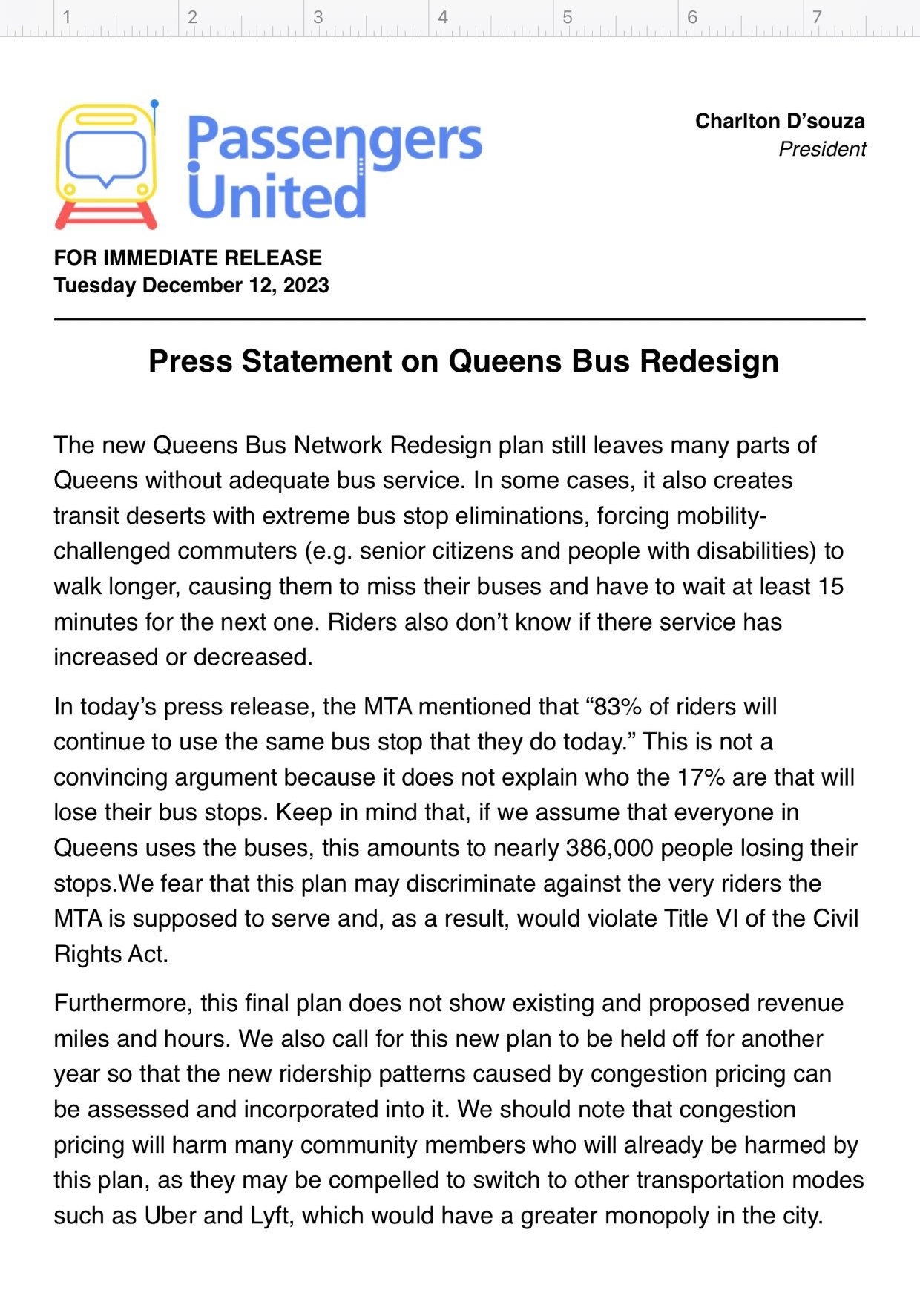
 Counterpoint by Commuter Advocates Passengers Unite:
 Image


Monday, May 2, 2022

One less friend at the QNS

 https://qns.com/wp-content/uploads/2020/01/MG_6563-1024x683.jpg

 Queens Ledger

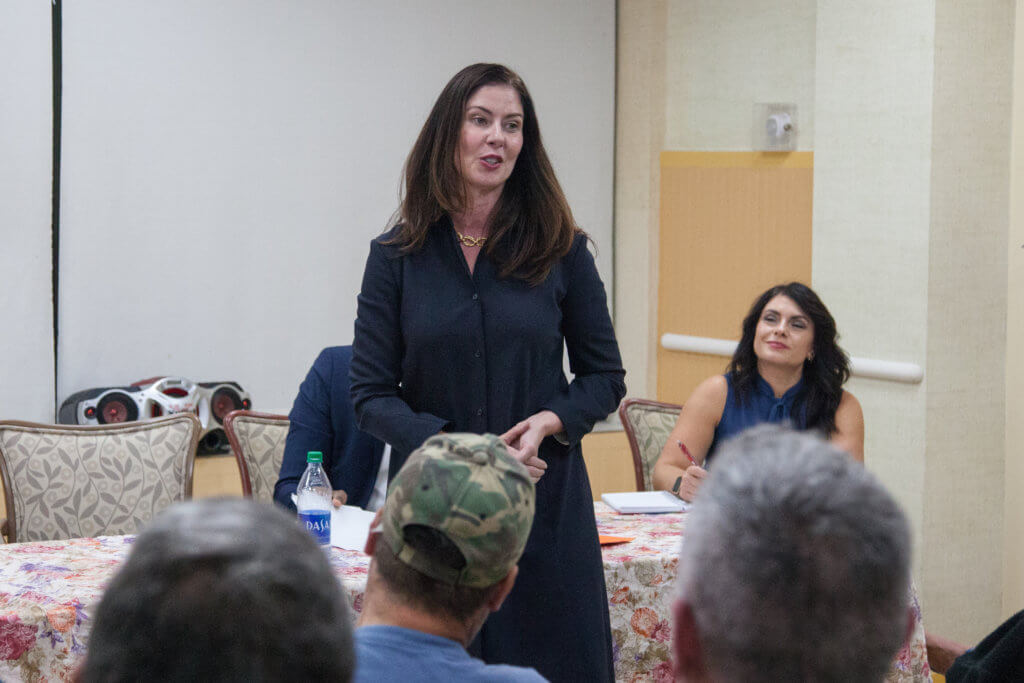
Former New York City Councilwoman Elizabeth Crowley has stepped down from her position as chairperson of the board of Friends of the QNS, a nonprofit organization that she founded to advocate for expanded commuter rail-based transit across the borough.

Crowley said her decision to step down was made in order to focus fully on her candidacy for New York State Senate District 17.

“It has been an honor to serve as the chair of Friends of the QNS,” Crowley said.

The “QNS” proposal was introduced by Crowley to improve transit within her former Council district. Specifically, the plan sought to revive the former Lower Montauk rail line, which stretches nine miles from Hunters Point in Long Island City, through central Queens neighborhoods including Middle Village, Glendale, and Ridgewood, to the Jamaica hub.

This portion of central Queens is commonly referred to as one of the City’s “transit deserts,” since no passenger rail currently serves many of these neighborhoods.

In a 2018 report from the Department of Transportation, it was confirmed that the defunct rail line could be converted to include passenger service at a fraction of the cost of other major expansion projects like Manhattan’s 2nd Avenue Subway.

The New York State Senate district seat that Crowley is currently running for would include a vast majority of the former Lower Montauk Line within its boundaries. It was recently created by state lawmakers following the 2020 Census and will include Glendale, Maspeth, Richmond Hill, Ridgewood, Woodhaven, Long Island City, Sunnyside, Woodside, Ozone Park, and Greenpoint in Brooklyn within its boundaries.

But while Crowley is stepping down from her position as the board’s chair, she said she vows to continue to advocate not only for the QNS rail but for a greenway along the QNS line, if elected.

“Queens has been growing at a tremendous pace, especially Long Island City,” Crowley said. “For this borough to keep up with its growth, we need to provide better transit to our residents. It’s not ambitious, it’s common sense.”

This proposal to restore the former commuter rail is similar to Gov. Kathy Hochul’s 14-mile IBX plan, which seeks to add a train line from Bay Ridge in Brooklyn to Woodside, Queens.

Both use existing, underused train rights-of-way, converting them to passenger service from strictly freight service.

Crowley also indicated that she would work to include a dedicated bike lane running parallel to QNS, because “an intolerable” number of bicycle accidents and fatalities have been occurring in recent years.

“If we want people to use alternative transportation, we want them to feel safe as they do so. A slightly revised QNS ‘rail and trail’ plan would help that goal,” Crowley said.

Tuesday, June 1, 2021

Rockaway rail line transit/park space debate continues


Queens Chronicle

The past month has reignited a debate about the future of a defunct rail in Queens.

Assemblywoman Stacey Pheffer Amato (D-Rockaway Park) shed some attention on the efforts to transform the abandoned Rockaway Beach Rail Line running through Central and South Queens when she asked for federal infrastructure to create a new rail line along the tracks.

But for years, The Trust for Public Land, a conservation group, has been lobbying to convert a 3.5-mile path along the abandoned rail into the QueensWay, a park similar to Manhattan’s High Line, stretching from Rego Park to Ozone Park.

Unlike the plan to create a rail line that would require federal support, the fate of the QueensWay project will ultimately rely on the city’s capital budget. While the estimated cost to create a train line ranges from $6.7 billion to reactivate the rail spur for the LIRR to $8.1 billion to create a subway connector, a 2014 study for the QueensWay pegged it at an estimated $120 million, a cost that would come out of the mayor’s capital budget, said Karen Imas, a volunteer advocate for the project.

The QueensWay recently got some new publicity after mayoral hopeful Andrew Yang mentioned it as a key part of his plan to invest in park space. Nine mayoral candidates have endorsed the New Yorkers for Parks Five Point Plan for Parks Equity that mentions building new parks like the QueensWay as a priority. On Wednesday former Sanitation Department Commissioner Kathryn Garcia held a press conference in which she joined Yang in explicit support of the QueensWay.

Yang’s campaign website said that while he’s aware of the need to improve transportation in South Queens, he doesn’t believe a subway to be feasible and he’s committed to seeing the trail through to fruition. The platform adds that the QueensWay would add to the area’s transportation through offering multimodal transportation, such as safe walking and bike paths that build access to the neighboring bus stops and subway lines.

Imas said that the pandemic has awakened an appetite for more green space “and needs around parks, the needs for more safe cycling in areas that don’t have a lot of bike paths or safe cycling areas.”

Within the span of Woodhaven, Richmond Hill and Ozone Park that the park would cut through, there are five contiguous ZIP codes that contain no bike lanes or cycling infrastructure whatsoever.

Imas added that though the estimated cost of the project is over $100 million, the construction of the path would take a phased approach, and the request for its first phase would cost somewhere between $20 and $25 million.

On the other hand, Pheffer Amato said that part of her intention in writing the letter asking for federal funding for the rail was to make sure “the conversation about this railroad stays active.”

“The MTA knows two things about our district: We want the toll removed on the Cross Bay Bridge, and we need better transportation options in Southern Queens and that the RBRL is a solution to that problem,” said Pheffer Amato in a stateme

Thursday, November 19, 2020

Here come the transit service cuts and fare hikes


THE CITY 

During the peak of the pandemic last spring, MTA buses became the workhorse of the transit system, shuttling more daily riders than the subway for the first time in decades.

Even after fare collection resumed in late August, the ridership decline on buses never fell nearly as steep as subway use.

But when the MTA unveiled its proposed “Doomsday” cuts Wednesday — potentially slashing service by 40% by next May and eliminating more than 9,000 jobs — bus workers were set to absorb close to two-thirds of the positions lost.

Riders who rely on buses, meanwhile, were left wondering how they’d get around a city still slowed by COVID-19.

“Believe me, it’s going to be ugly,” said Michelle Singleton, 55, a nurse from Harlem who, prior to the pandemic, commuted on the M11. “That’s why I won’t be riding the bus any more.”

At the agency’s monthly board meeting, MTA officials presented worst-case scenarios should the agency be unable to secure $12 billion in emergency federal funding to help close the enormous deficits created by the pandemic.

Without a bailout, the MTA faces a slew of unappetizing prospects — including higher-than-projected fare and toll increases, the elimination of seven-day and 30-day unlimited MetroCards and significant cuts to subway, bus and commuter rail frequency.

“We know that any reduction in service will hurt the city and the region, including customers who need us most,” Patrick Foye, the MTA chairperson said at the meeting. “But without the certainty of substantial federal dollars, there is no recourse.”

For buses, that could mean the elimination of entire lines, a slowdown on long-planned route redesigns in each borough, even the loss of a next-bus texting service and on-board WiFi.


NY Daily News

Transit fares in New York will go up next spring — and the MTA is considering eliminating unlimited ride MetroCards as a part of the hike.

The Metropolitan Transportation Authority board on Wednesday voted to seek fare hikes that boost passenger revenue by 4%. Over the next two months, transit officials will review a slate of proposals to meet that target.

One idea is to keep the base subway and bus fare at $2.75 while eliminating the seven- and 30-day unlimited ride passes.

Another is to raise the base fare to $2.85. More options on the table include increasing the surcharge for new MetroCards from $1 to $3 and no longer allowing coin payments on buses.

Tuesday, March 31, 2020

The MTA was unprepared for a pandemic despite an early plan to defend against it


THE CITY

Preparations for a pandemic have been taking shape for years at New York City Transit, with the agency outlining plans to protect workers and riders while stockpiling supplies.

But as the coronavirus crisis escalates — with seven MTA employees among those to die from COVID-19 — transit union leaders say workers are deeply concerned over a shortage of protective equipment.

“It looks good on paper, but in a lot of cases, it’s not happening — I have no wipes, I can’t get N95 masks and it’s crazy,” said JP Patafio, a vice president for TWU Local 100. “What good is a plan if you’re not going to take stuff off the shelf when you need it?”
THE CITY obtained a 2012 copy of New York City Transit’s pandemic plan to “prevent or minimize illness among employees,” to limit service disruptions and maintain “an environment that is safe for both our employees and our customers.”

But a former MTA chief safety officer said the plan — similar to ones transit agencies across the country put in place after the 2009 swine flu pandemic — assumed a “rapid national response.”

“These plans don’t contemplate, nor were they required to contemplate, a sustained nationwide response with the associated shortages of supplies that we are currently seeing,” said David Mayer, the MTA’s chief safety officer from December 2014 to June 2018. “I don’t think these plans expected the level of service cuts, nor the duration of response that we are experiencing.”

The “Pandemic Plan Policy Instruction” maps out the need for subway and bus service reductions due to rising absenteeism, instructs transit workers to limit face-to-face contact with the public and not shake hands.

 The 2012 plan includes keeping a six-week supply of protective equipment. MTA officials say they maintained the stockpiles, but workers have complained they can’t get protective equipment.


 The MTA confirmed Monday that five more employees have died due to complications from COVID-19. 

"This is a devastating day," NYCT Interim President Sarah Feinberg told WCBS 880.

The employees were identified as Scott Elijah, a 15-year track worker with the Combined Action/Emergency Response Unit based in Long Island City; Caridad Santiago,a cleaner for 13 years assigned to the Stations Department in the Bronx; Ernesto Hernandez, a bus operator for 15 years most recently working out of the Jackie Gleason Bus Depot; Victor Zapana, a supervisor in the Stations Department who worked from various locations throughout the subway system for almost 30 years; and Warren Tucker, a bus mechanic for almost five years at the MTA Bus Company, assigned this year to the Central Maintenance Facility in East New York.

“We are heartbroken at the passing of five heroic members of the New York City Transit family. Scott, Caridad, Ernesto, Victor and Warren were all inspiring and valued colleagues, well-loved and well-respected by their co-workers," Feinberg and Acting MTA Bus Company President Craig Cipriano said in a joint statement. "They dedicated their lives to serving the public and keeping New Yorkers moving. This is a tragic loss for the city. Their families and friends are in our prayers during this incredibly difficult and painful time.”

Last week, two transit workers passed away due to coronavirus and a third died trying to evacuate a train that was on fire in Harlem.


Friday, January 24, 2020

Andy Byford quit his job with the MTA


https://s7d2.scene7.com/is/image/TWCNews/010719_nyc_andy_byfordpng

Business Insider


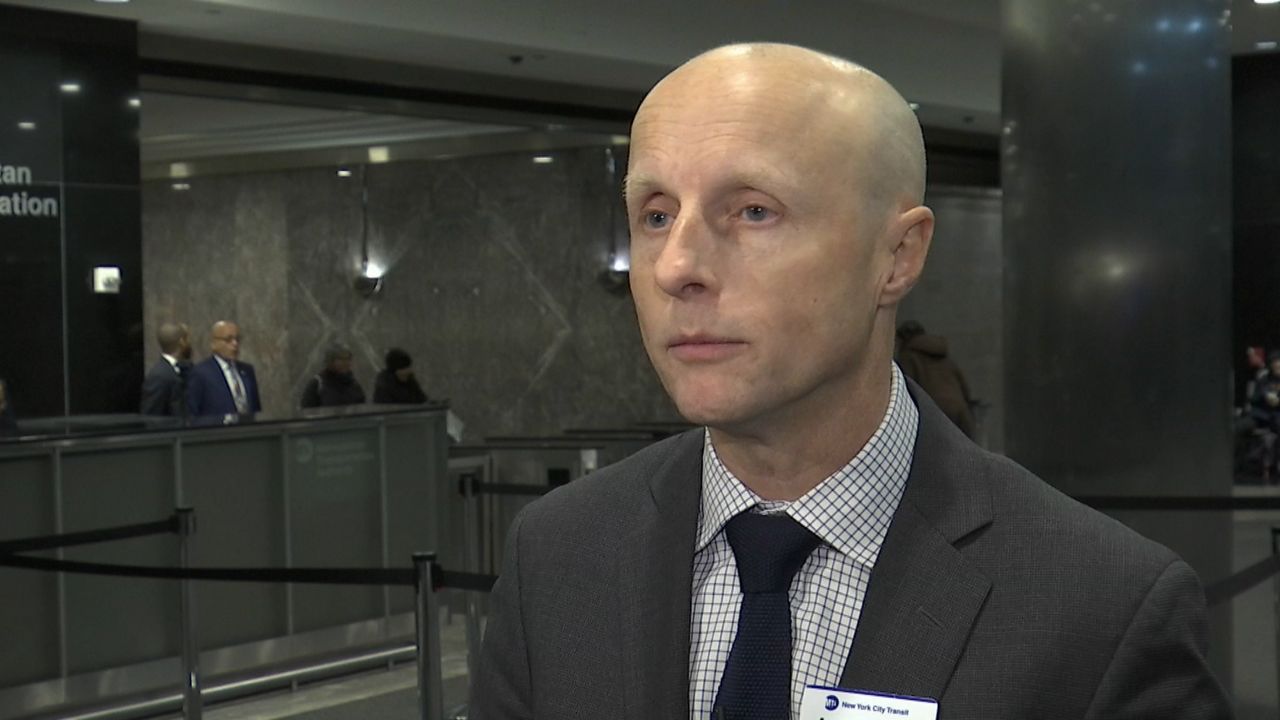
Andy Byford, a globally renowned transit expert hired in 2017 to help reinvigorate New York CIty's aging subway system, has resigned.

The Metropolitan Transportation Authority, a state agency responsible for city subways, buses, and commuter rails, confirmed his departure in a statement. 

"Andy Byford will be departing New York City Transit after a successful two years of service and we thank him for his work," Pat Foye MTA chairman and CEO, said in a statement. "Andy was instrumental in moving the system forward, enacting the successful Subway Action Plan and securing record capital funding with the Governor and the Legislature, and we wish him well in his next chapter."

Before New York, Byford previously worked in London, Toronto, and Australia. His arrival in New York largely signaled a seismic shift for the aging subway system following decades of underinvestment.

During his tenure as transit chief, New Yorkers were treated to improvements in subway communication as well as several high-profile projects designed to speed up commutes and replace aging parts of track, signals, and more.

Byford also became a popular figure among New York transit aficionados, earning the nickname 
"Train Daddy" after an anonymous resident began posting stickers of Byford's face superimposed on a subway car with the text "Train Daddy loves you very much." A photo of the sticker quickly spread on Twitter, and the moniker became widely used across social media. The MTA seemingly embraced the term for its subway chief, with Byford himself joking about the title.

 I don't have time to write about what I saw coming two years ago, so enjoy my prophecy from Impunity City for now.

 Andy Byford may have just realized he is in way over his head and out of his league in his well-paid state service leadership position (yeah it’s redundant, I’m writing about the MTA again so fuck off).
 
President Byford is trying really hard though. He did come up with that budget study assessing that it would take $37 billion dollars to overhaul the mega-shitshow mass transit system, despite having no current idea or plan how to pay for it. I mean, he is not a bad bloke, he kind of resembles a mixture of Moby and Thom Yorke and he is a big fan of legendary new wave band The Smiths, so big that he thought it was prudent to mention and discuss fave tracks by them during a live social media style town hall with frustrated commuters complaining about consistent shitty service a while back (my personal fave by the way, is the WLIR extended remix of “This Charming Man”), but at least he has been apparently honest and straightforward.

It didn't take long for Mr. Byford to realize that the worst fucking transit system in the universe couldn't be fixed with that moron tyrant Governor Cuomo up his ass.

Just walk away, Train Daddy

Sunday, April 14, 2019

Borough President candidate Crowley proposes resuscitation of LIRR passenger train line


A little-used stretch of train tracks in Queens could be the key to filling transit deserts in the borough, community leaders say.

The Long Island Railroad’s Lower Montauk branch, which runs 8.5 miles between Long Island City and Jamaica, could be used to bring new passenger rail service to communities like Maspeth and Glendale, which do not have subway stops.

The LIRR ran commuter trains along the line until 1998, when the Metropolitan Transportation Authority closed its stops due in part to low ridership. Now, the tracks service freight trains and are used as an extra storage space for Sunnyside Yard.

The chief advocate of the project, dubbed the QNS, is former Councilwoman Elizabeth Crowley (D-Queens). She commissioned an independent feasibility study in 2017, which was completed shortly after she left office in early 2018.

Crowley has recently renewed her push for the line — she hosted an event Friday to begin assembling a non-profit to stump for the project.

 Her proposal would bring nine stops to the stretch, and would cost an estimated $2.2 billion to pull off. The 2018 study projects that it would serve roughly 21,000 weekday riders.


Community leaders and advocates of the project disagree with that assessment, noting that the areas it will serve expect to boom in the coming years.

“Look at the growth in Long Island City and the growth in the Jamaica downtown area and at JFK Airport,” said longtime transportation consultant Philippa Karteron, an advocate of the project. “If we could put something like this together, the corridor could be an economic development corridor, bringing in businesses, bringing in jobs.”

Unlike the BQX, another Queens-oriented transit project, Crowley’s idea isn’t supported by real estate developers — she says she’s working to form a grassroots campaign that has community boards involved from the get-go.

This actually isn't a bad idea considering the severe and desperate need for transit in this overcrowded and overburdened city but that rendering of Hillside Ave. in Richmond Hill is a hysterically inaccurate depiction of the citizenry in that area. And very racist in it's prescience of what the designers think it will look like if the station is built there.

Wednesday, May 2, 2018

$20B transit signal upgrade is needed

From Metro:

In the coming days it has been reported that New York City Transit Chief Andy Byford will unveil a new project to revamp the subway’s outdated signal system.

The subway signal system project could cost up to $20 billion to revamp as it is has not seen updates since the 1930s. Byford plans to install the signal system at all 472 stations.

The decision to update the system comes after New York Governor Andrew Cuomo declared a state of emergency last year after a slew of delays and train derailments that caused injuries to dozens of commuters.

Wednesday, November 22, 2017

Why the MTA is so bad

From the NY Times:

...the problems plaguing the subway did not suddenly sweep over the city like a tornado or a flood. They were years in the making, and they might have been avoided if decision makers had put the interests of train riders and daily operations ahead of flashy projects and financial gimmicks.

An examination by The New York Times reveals in stark terms how the needs of the aging, overburdened system have grown while city and state politicians have consistently steered money away from addressing them.

Century-old tunnels and track routes are crumbling, but The Times found that the Metropolitan Transportation Authority’s budget for subway maintenance has barely changed, when adjusted for inflation, from what it was 25 years ago.

Signal problems and car equipment failures occur twice as frequently as a decade ago, but hundreds of mechanic positions have been cut because there is not enough money to pay them — even though the average total compensation for subway managers has grown to nearly $300,000 a year.

Daily ridership has nearly doubled in the past two decades to 5.7 million, but New York is the only major city in the world with fewer miles of track than it had during World War II. Efforts to add new lines have been hampered by generous agreements with labor unions and private contractors that have inflated construction costs to five times the international average.

New York’s subway now has the worst on-time performance of any major rapid transit system in the world, according to data collected from the 20 biggest. Just 65 percent of weekday trains reach their destinations on time, the lowest rate since the transit crisis of the 1970s, when graffiti-covered cars regularly broke down.


Only one post today, please take the time to read the entire article. It breaks down the issue perfectly.

Wednesday, July 12, 2017

Queens commutes suck

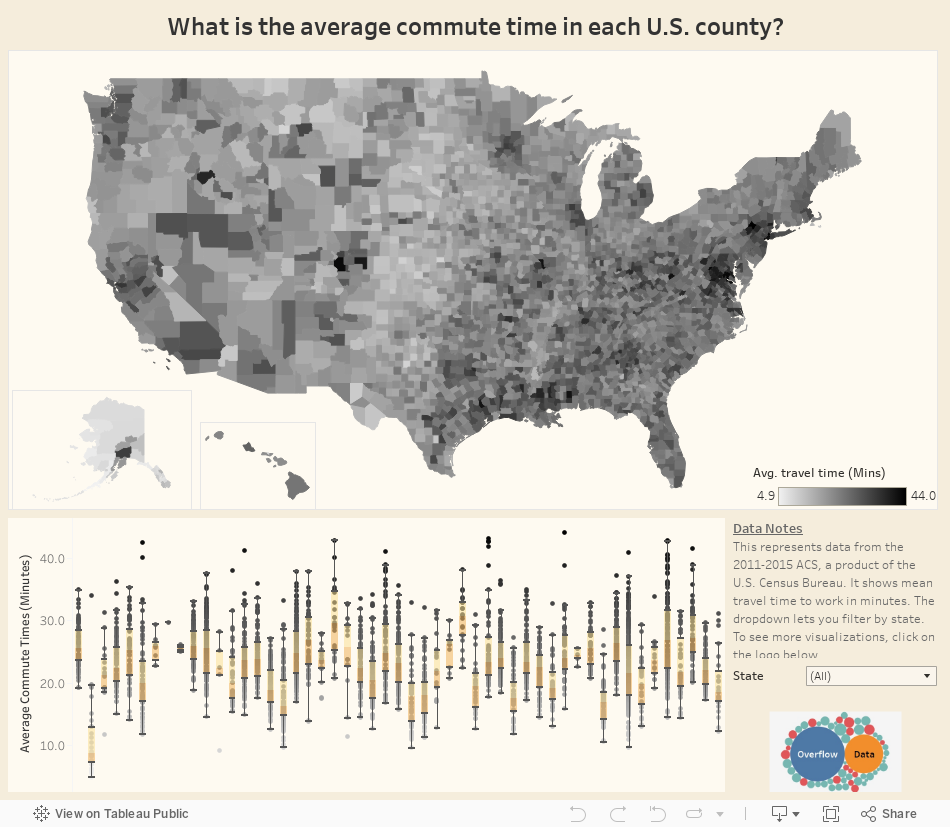
From Brick Underground: Residents of four different regions of NYC face commutes that rank among the nation’s top 10 longest ones, according to a study conducted by statistician Chase Sawyer and originally reported on by CityLab. Unsurprisingly, outer borough residents have the toughest slogs in the city: Queens residents have an average commute time of 42.6 minutes, Brooklynites have a 41.7-minute commute on average, Bronx residents 43 minutes and Staten Island residents 42.6 minutes on average. By comparison, Manhattanites' average commute time is about 31 minutes, according to the map. Interestingly, both Westchester County and Nassau County residents had shorter commutes than outer-borough residents — 32.9 and 34.9 minutes respectively, though we'd imagine the aforementioned "summer of hell," and recent LIRR woes may skew these numbers a bit the next time around.

Saturday, January 9, 2016

Legislators say MTA should make fares equal across the board

From the Forum:

The City Council’s Queens delegation this week announced its unanimous support for the Commuter Rail Fare Equalization Proposal.

All 15 members of the Queens contingent have endorsed Resolution 670, calling on the Metropolitan Transportation Authority to equalize commuter rail fares for riders traveling within city limits to that of New York City Transit subways and buses, and provide a free transfer between all three modes of transportation.

At six hours and 18 minutes per week, city residents currently suffer the longest work commute of any large city in the nation, according to City Councilman I. Daneek Miller (D-St. Albans), who introduced Res. 670 in April. But for those in so-called “transportation deserts” – such as Bayside, Southeast Queens or the Rockaways – commutes can exceed 15 hours per week.

The U.S. Census Bureau classifies this as an “extreme commute,” Miller has said.

Commuter rail fare equalization, according to Miller, will increase access to over 40 Metro North and Long Island Rail Road stations within the five boroughs, and serve to shorten commute times. The former transit union official said he believes that improved access to commuter rail transit will also spur development in communities serviced by the railroads.

Sunday, December 20, 2015

Mass transit commuters to save more $

From Crains:

Tucked into the massive federal spending and tax-cut agreement reached by congressional leaders this week is a measure that will save New York mass-transit commuters hundreds of dollars apiece each year. Employers will save as well.

The provision nearly doubles the maximum amount of pre-tax income they can use to pay transit fares. Currently $130 a month, the limit will be raised to match the amount that people who drive to work can spend in untaxed earnings on parking fees—$255 per month in 2016.

Moreover, just like the parking benefit, the transit break will be permanent and will rise annually with the cost of living if Congress passes the mammoth bill as expected.

The biggest beneficiaries will be high earners who regularly take the Long Island Rail Road or Metro-North and spend at least $255 a month on fares. By participating in a commuter-benefit program such as TransitChek offered by their employers, they will be able to spend $3,060 annually in untaxed income on fares, up from $1,560—yielding a tax savings of about $1,200 instead of $625 for someone in the highest income-tax bracket.

The reduction in taxable income lessens employers’ payroll taxes, such as Social Security and Medicare. It adds up to 7.65% of what their workers spend in pre-tax money. It is nearly always greater than the $5 to $7.50 per employee per month that businesses pay a third party, such as WageWorks, to administer the program. But businesses with low participation rates among employees could end up paying more than they save.

Monday, August 17, 2015

Short-term Rockaway transit solution?

From Rockaway Post:

It’s not cheap, and you have to get to the Howard Beach station first. But it is a fast connection, and the easiest way into Manhattan when the A train is out of service.

This could be an interim solution, to be used in emergency situations: extend the Rockaway Park shuttle to Howard Beach, and allow riders to connect to the AirTrain for a reduced fare. Making this happen requires very little other than the cooperation of the MTA and the Port Authority. What do you say, Governor Cuomo?

Monday, June 29, 2015

Transit infrastructure can't keep up with population


From the Daily News:

New projections show the New York region’s population should reach 20.5 million people by 2020, further taxing the region’s already overcrowded and cash-strapped subway, bus and train systems.

The projections — calculated by the mapping service ESRI for The Associated Press — estimate the region is growing at a clip of almost 100,000 people annually. Long Island, Westchester County and much of northern New Jersey are included in the metro area.

The importance of these systems can’t be overstated: 31% of metro area commuters use transit to get to work, the U.S. Census estimates.

As the region’s population booms, the strains on mass transit are increasingly evident.

Overcrowding was the single biggest cause of delays on the New York subway system during the last year, MTA stats show. Ridership has also grown on NJ Transit and the PATH trains.

Yet politicians display little appetite for funding transit, while fare hikes have riders digging deeper.

Friday, February 21, 2014

Homeless to be removed from E train

From DNA Info:

The NYPD and the MTA plan to clear homeless men and women out of the subway system after a skyrocketing number of people have sought shelter there from the brutally cold winter, police officials said.

The plan, which is set to begin before dawn on Monday, comes amid an upswing in homeless people in the subway system during the exceptionally cold winter. There were more than 1,800 people living on the subways in 2013, up from 1,000 in 2009, according to the city's annual HopeNYC street survey.

Starting Monday at 3 a.m., teams of transit workers, NYPD officers and emergency medical technicians will go to the E train stations at Jamaica Center and at the World Trade Center, officials said.

Each time a train pulls into one of the two stations, teams will check each car, and take all the homeless people inside to either a shelter or hospitals, officials said.

The trains will then be cleaned for the morning rush hour.

Saturday, November 16, 2013

Schumer wants extension of transit tax break

From Crain's:

A mass transit tax break that saves over hundreds of thousands of New Yorkers $1,000-a-year each in commuting costs is set to expire at the end of the year.

Sen. Chuck Schumer, standing beneath the famous timepiece in Grand Central Terminal Monday, called on Congress to extend the benefit before Jan. 1, vowing to withhold his support for a host of additional tax extenders if the program for mass transit failed to pass.

"New York commuters need every break they can get," Mr. Schumer said.

The current benefit allows commuters to spend up to $245 per month of their pre-tax earnings on mass transit and commuter costs like parking. Over the last year, approximately 700,000 New York residents saved over $330 million through this benefit. More than 2.7 million commuters use the tax break nationwide.

"$330 million is a lot of money, any way you slice it," Mr. Schumer said.

Until 2009, drivers received a greater tax break than those who took mass transit. That year, Mr. Schumer almost doubled the benefit to $230 per month. Without the extension, the benefit will drop back to the previous level of $125 per month.

Thursday, August 15, 2013

New Yorkers' commuting time sucks (but we already knew that)

From NY Magazine:

It will come as no surprise that people who work in New York spend longer commuting, on average, than anyone else in the country, according to a report by the Partnership for New York City. The 48-minute average one-way transit trip is the longest by thirteen minutes.