Showing posts with label mental health. Show all posts

Wednesday, November 30, 2022

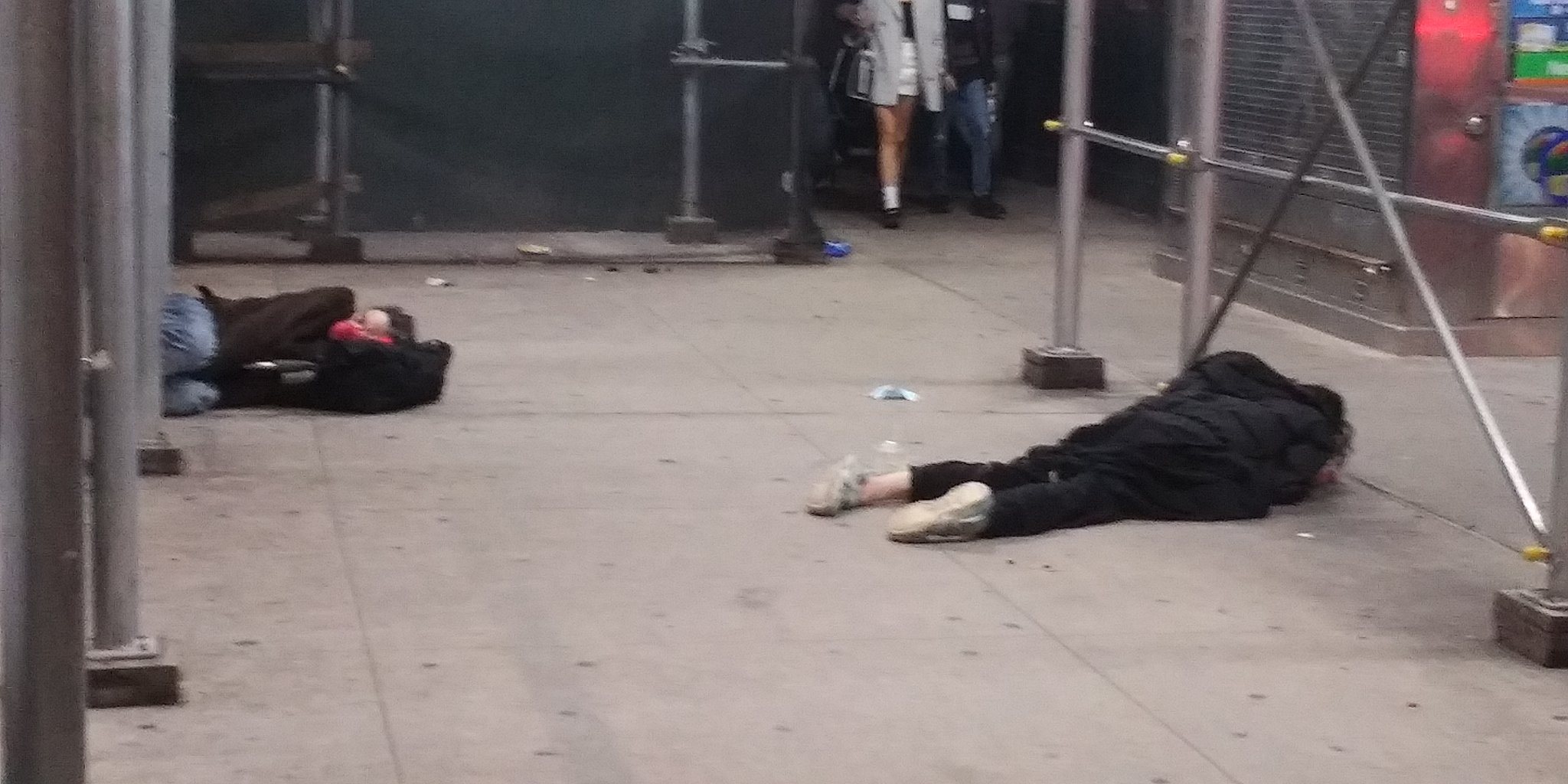
Mayor Adams orders involuntary removal of mentally disturbed people from public places and the subway

 https://pbs.twimg.com/media/FiCjbswXEAEA_6R?format=jpg&name=large

New York Times

Acting to address “a crisis we see all around us” toward the end of a year that has seen a string of high-profile crimes involving homeless people, Mayor Eric Adams announced a major push on Tuesday to remove people with severe, untreated mental illness from the city’s streets and subways.

Mr. Adams, who has made clearing homeless encampments a priority since taking office in January, said the effort would require involuntarily hospitalizing people who were a danger to themselves, even if they posed no risk of harm to others, arguing the city had a “moral obligation” to help them.

“The common misunderstanding persists that we cannot provide involuntary assistance unless the person is violent,” Mr. Adams said in an address at City Hall. “Going forward, we will make every effort to assist those who are suffering from mental illness.”

The mayor’s announcement comes at a heated moment in the national debate about rising crime and the role of the police, especially in dealing with people who are already in fragile mental health. Republicans, as well as tough-on-crime Democrats like Mr. Adams, a former police captain, have argued that growing disorder calls for more aggressive measures. Left-leaning advocates and officials who dominate New York politics say that deploying the police as auxiliary social workers may do more harm than good.

Other large cities have struggled with how to help homeless people, in particular those dealing with mental illness. In California, Gov. Gavin Newsom recently signed a law that could force some homeless people with disorders like schizophrenia into treatment. Many states have laws that allow for involuntary outpatient treatment, and Washington State allows people to be committed to hospitals if a judge finds that they pose a threat to themselves or others.

Officials in New York said the city would roll out training immediately to police officers, Emergency Medical Services staff and other medical personnel to “ensure compassionate care.” But the city’s new directive on the policy acknowledges that “case law does not provide extensive guidance regarding removals for mental health evaluations based on short interactions in the field.”

The policy immediately raised questions about who, exactly, would be swept up in it, and some advocates for people with mental illness warned it could face legal challenges.

Existing state laws allow both the police and medical workers to authorize involuntary hospitalization of people whose behavior poses a threat of “serious harm” to themselves or others. Brendan McGuire, chief counsel to the mayor, said on Tuesday that workers would assess people in public spaces “case by case” to see whether they were able to provide basic needs such as food, shelter and health care for themselves.

The city directive states that “unawareness or delusional misapprehension of surroundings” or “delusional misapprehension of physical condition or health” could be grounds for hospitalization.


 

Tuesday, November 8, 2022

"The job doesn't care"


NY Post

When Jason decided to join the NYPD in the early 2000s, he did it because he wanted to chase down bad guys, seek justice for vulnerable crime victims and above all, help the people who needed it the most. 

But these days, the longtime cop has become disillusioned with the job, and he’s counting down the days until he can hang up his badge and retire. 

“I hate it, I can’t speak enough terrible things about it,” Jason told The Post during a recent interview.

“I want to actually be free, free of this mental abuse that I’ve been through. I don’t wish this profession upon anyone.” 

The Post spoke with 14 current members of the NYPD, including patrol cops, detectives, sergeants and lieutenants spanning a wide range of ethnicities and time on the force, who painted a picture of a department in crisis. 

While anti-police sentiment, criminal justice reforms and progressive politicians are frequent explanations for the crisis given by police unions and NYPD brass, the officers interviewed for this story say their primary issues with the job come from within.

Those problems stem from mismanagement and nepotism throughout the department, being held to unrealistic expectations, answering to a revolving door of out-of-touch chiefs and working among a force that’s turned its back on itself. 

“You’re abused by your own brothers and sisters in blue and harassed to the point of having thoughts of suicide, then have to deal with the hate from the community while still dealing with everyday life stresses,” said Mark, an NYPD cop. 

“I hate this job.” 

Since 2020, a staggering 9,180 officers have left the job – 36% of whom quit before they were eligible for their full pension – and the NYPD is on pace to see more than 4,000 cops retire or resign this year.

As of Sept. 30, 1,628 officers have retired and another 1,426 quit, the most resignations seen since the post-Sept. 11 exodus in 2002 — and more than 2019 and 2020 combined. 

The NYPD is so desperate to stem the bleeding, community affairs officers have been knocking on the doors of people who passed the exam but never moved forward with the hiring process to encourage them to join the academy. 

“It’s one thing to have a recruitment problem, and it’s one thing to have a retention problem,” said John, who works in a busy Big Apple precinct. 

“When you have both, it’s just a perfect storm for f–king disaster.”

Sunday, October 17, 2021

Getting man to come down from the tree exposed a massive waste of NYPD resources


Queens Chronicle

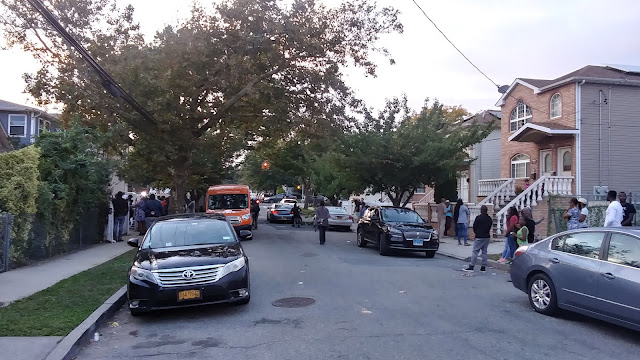
For the residents of Brookville, it was a tumultuous three days last week, as a neighbor went through what appeared to be an emotional episode and later climbed a tree, which he stayed in for approximately 52 hours.

Roody Thomas, 44, allegedly got into an altercation with his mother, Irlande Defailly, 65, on Oct. 6 and said, “I am going to kill you,” according to reports and the police.

A week prior to the altercation, Thomas had an alleged argument with a 50-year-old girlfriend in a BMW on Sept. 30, which led to a warrant being issued for his arrest for assault, according to a New York Times report.

Defailly called police on Oct. 6 and filed a complaint the following day.

“There is a complaint report on file for incidents that occurred between August 31, 2021 through October 7, 2021,” said a police spokeswoman via email. “A 65-year-old female complainant reported that she got into a verbal dispute with a 44-year-old male who threatened her with serious physical harm on October 7, 2021.”

The report also stated that on Aug. 31, 2021 the male intentionally broke her door by forcefully hitting it with his fists, according to the NYPD spokeswoman.

But following last week’s incident, Thomas has not been arrested.

Police came to the scene at 145th Avenue and 225th Street Oct. 6, and Thomas, scared to go back to Riker’s Island, which he even filed a lawsuit about, alleging mistreatment at the jail in 2008, went up the roof of his mother’s house and climbed a nearby tree, according to Brookville resident Dr. Reba Perry.

“I’m a neighbor,” Perry, who said police turned the neighborhood upside down for three days, told the Chronicle Monday. “There was noise, banging and floodlights ... if they would have called the crisis prevention program, it would never have led up to this.”

Thomas was traumatized from his time on Rikers, according to Perry. Instead of a crisis management team, nearly 50 officers were on the scene and tried to get Thomas out of the tree by bribing him with food, using bright floodlights, flying drones and banging on some drums.

“There was noise and banging and floodlights and that was never the goal,” said Perry, who has known Thomas for six years. “The goal was to get him treatment ... and that could have been resolved instead of all that manpower.”

Perry, who also happens to be an NYPD chaplain, suggested to police on Oct. 6, that they should reach out to a mental health crisis prevention team, but she said her recommendation was ignored.

“If they had called them from the beginning it would never had led up to this and now he is publicly humiliated and our neighborhood is now a target for a man that was in a tree,” said Perry. “People are still coming here to take pictures and it’s embarrassing.”

Perry, who also has a background as an emergency room nurse and has a sibling with schizophrenia, does not excuse any of Thomas’ behavior when it comes to an alleged assault, but as someone who is a caregiver for her brother and has been trained to recognize a variety of mental health issues, she believes the tactics used by the police were not helpful and prolonged an already bad situation.

“This was obviously a fairly unique and complicated situation that unfolded over days,” said the police spokeswoman via email. “The first consideration was not to do anything that would further endanger Mr. Thomas or the officers working to get him down safely.”

What do you expect when the city's high cost mental health service that's ruled by Chirlane Wilhelm deBlasio is basically a shell company.


Monday, May 10, 2021

NYC Thrive continues sending city money and services into the void

https://cdn.vox-cdn.com/thumbor/UE5FZpkRJSoABpqdDzXDHS1FIaY=/0x0:4576x3045/920x0/filters:focal(0x0:4576x3045):format(webp):no_upscale()/cdn.vox-cdn.com/uploads/chorus_asset/file/22491831/ThriveNYC_6.jpg 

THE CITY

In the fall of 2017, the city Department of Health and Mental Hygiene signed a contract to spend millions of taxpayer dollars to rehab a 14,000-square-foot former IRS office inside an anonymous beige Bronx building covered with graffiti.

The project was part of a key criminal justice reform Mayor Bill de Blasio adopted in 2014. The idea: to create state-of-the-art “diversion centers” staffed by mental health experts where police could drop off people experiencing mental health crises instead of escorting them to hospital ERs or jail — institutions ill-equipped to deal with their needs.

The city committed $52 million to fix up and run the Bronx facility for a decade. But nearly four years later, the place sits empty.

Meanwhile, the city dedicated $51 million to a similar operation in East Harlem that opened this past November. The number of people brought in for help so far: 45, or $1.1 million per visit.

Diversion centers eventually became part of the Mayor’s Office of ThriveNYC, a broader program run by de Blasio’s wife, Chirlane McCray, to improve the lives of New Yorkers struggling with mental health issues.

ThriveNYC has come under fire for costs upwards of $1 billion and for the administration’s inability to provide evidence the program is working. Last week, de Blasio rebranded ThriveNYC — changing its name to the Mayor’s Office of Community Mental Health.

The purpose behind diversion centers was to stop cycling people with mental illness through the criminal justice system instead of getting them treatment and other services.

Meanwhile, deadly encounters between NYPD officers and people in emotional distress have led to 18 fatalities in the last five years — driving demands to remove cops from the equation.

Even as the diversion centers sit empty or underused, de Blasio made the surprise announcement April 29 that another $112 million would be spent on a new program to pair EMT teams with social workers to handle 911 calls citywide about people having a breakdown, without sending police.

EMTs, though, aren’t signing up in big numbers.

You can say the only diversion center that actually functions in this city is de Blasio and McCray's joint mayoralty budget money laundering apparatus in City Hall.

Friday, May 7, 2021

The Blaz adds Thrive to permanent government


NY Post

In trouble? Try a rebranding.

Mayor Bill de Blasio has quietly moved to rename and make permanent first lady Chirlane McCray’s embattled billion-dollar ThriveNYC mental health initiative, shifting the program into City Hall and creating the Office of Community Mental Health to house it.

De Blasio signed the executive orders inking the changes without fanfare on Wednesday, a few days after the initial announcement was buried by the news of sexual harassment allegations leveled against city Comptroller Scott Stringer.

The transition was swift.

The next day, City Hall sent a press release that identified ThriveNYC’s top honcho, Susan Herman, as the “director” of the new Mayor’s Office of Community Mental Health.

ThriveNYC went entirely unmentioned in the Thursday statement, though the email address for inquiries from the press still used the ‘thrive.nyc.gov’ domain. 

 Meanwhile, the website for McCray’s controversy-scarred initiative quietly added a banner to the top that reads: “We’re becoming the Mayor’s Office of Community Mental Health. Learn Why.”

It’s a far different picture than the one painted by Hizzoner and McCray as they rolled out the new office during his daily press briefing on April 29.

“And third, we want this work to deepen and we want to make sure it’s community focused. So, [we’re] establishing a permanent Mayor’s Office of Community Mental Health,” said de Blasio during that morning press briefing.

“In the end, the way to reach people with mental health challenges is early and often – it’s schools, it’s at community-based organizations, it’s in shelters, it’s in so places where people need help, but, historically, have not had a place to turn,” he continued. “This vision and this office will ensure that mental health services are available at the grassroots all over the city.” 

You know what this means right? This means Chirlie is not leaving. Tweed-le Dumb.

Monday, November 2, 2020

The First Lady Co-Mayor doesn't care about mentally ill people

 https://images.radio.com/aiu-media/sipa25237651-7e6e0863-f84d-4d63-9c3c-58046c98103c.jpg?width=800


 NY Post

 A Brooklyn nurse says he repeatedly tried to warn city First Lady Chirlane McCray about the devastating effect of reassigning psych wards to be used for COVID-19 patients — only to be ignored by her billion-dollar mental-health initiative.

Irving Campbell, a psychiatric nurse at NewYork-Presbyterian Brooklyn Methodist, told The Post he watched his 50-bed ward close in March to treat people with COVID-19 — leaving at least some of the hospital’s former mental patients on the street, rooting around in the trash nearby.

“My intention of reaching out was to get the support of the mayor and first lady in keeping these inpatient psychiatric beds available to the community,’’ Campbell wrote in an e-mail to a counselor with McCray’s embattled $1.25 billion mental-health group ThriveNYC in late July.

The counselor blew him off.

“I am unable to provide you with a way that you can speak directly with the Mayor or Ms. McCray,” the counselor wrote — although she suggested Campbell “continue to speak out about a need you see in your community,” according to a copy of their exchange.

Campbell then tried to reach ThriveNYC on social media and sent a letter to the mayor but got no response.

New York has lost 400 psych beds to coronavirus patients in private hospitals statewide since the pandemic broke out.

About 100 of those beds were in New York City. They included the 50 spaces at Campbell’s hospital, as well as 34 at Presbyterian’s Allen Pavilion in Upper Manhattan and 20 at Northwell Health’s Syosset Hospital on Long Island.

Campbell, who is active with the New York State Nurses Association, said that while state hospitalizations for the virus have plummeted, his unit has yet to reopen — and his union suspects this is because the hospital’s mental-health patients were largely poor, and other health-care issues generate as much as 70 times their related payments.


Friday, December 6, 2019

Chirlane McCray's ThriveNYC program shuns the homeless

https://thenypost.files.wordpress.com/2019/12/thrive-77.jpg?quality=90&strip=all&w=618&h=410&crop=1

NY Post


The head of first lady Chirlane McCray’s embattled mental health program, ThriveNYC, claimed that it doesn’t have an abnormally high staff turnover rate — even though the plan’s own data says it’s 40 percent.
“I don’t think our attrition rate or turnover rate is higher than most city agencies,” Thrive director Susan Herman said at a Bronx press conference Thursday announcing the program’s expansion into 13 city libraries.
The city tracks its employees using a “separation rate” that includes retirement as well as firings and departures. From 2008 through 2017, the average separation rate for NYC government staff hovered around 7 percent.
The Administration for Children’s Services, which struggles to keep employees in jobs handling cases of abused children, had a 10 percent turnover rate between 2014 and 2017.
The Post reported last week that the average time a staffer at the $1 billion ThriveNYC program stayed in their position since the program started in 2015 is just 10.5 months, despite generous average pay of $104,000, according to program data obtained through a Freedom of Information Law request.
A ThriveNYC spokeswoman pointed out that if new staff who were added when the program opened a dedicated office in January are not taken into account, the average tenure jumps to 18 months. That’s still nearly half as long as the average 36 months ACS workers stay in their jobs.
McCray and Herman were at the Bronx Library Center announcing a new initiative called “Spaces to Thrive” that will provide mental health workshops in libraries, a dedicated bookshelf on the subject, and a public information campaign.
But the $45,000-a-year Spaces to Thrive initiative won’t include any outreach to the homeless who often seek shelter in public libraries.

 Yeah, I know this story is about Chirlie's overpaid aides doing narrative control about the scandalous Thrive program but the last line here deserves more attention.

Thursday, May 9, 2019

Chirlane McCray's mental health program is a billion dollar flop

Related image

NY Post


The $560 million in taxpayer money spent on First Lady Chirlane McCray’s ThriveNYC program hasn’t adequately addressed the need for mental-health services in the city — which actually “worsened” over the past year, The Post has learned.

The bombshell finding by the city Health Department was revealed in a draft report that was reviewed last week during a meeting of the department’s advisory Community Service Board.

“We are seeing consistently high demand for high needs services including rates of suicide,” the report says.

“We need to engage in a process with state partners to expand our portfolio of services and better address the needs of New Yorkers.”

Despite McCray’s claims of transparency regarding her embattled mental-health program, City Hall refused to release a copy of the Health Department report.

But a source provided The Post with details, including the report’s conclusion that during the past year, “Mental health service needs have worsened, as have substance use disorder needs, and developmentally disabled needs.”

The report blames the situation for a long-term increase in emergency room visits by mentally ill people who face “barriers to appropriate and relevant community care.”

ThriveNYC has spent $2 million on a program called NYC Safe, which is supposed to pair cops with health-care workers to help steer homeless and mentally ill people into treatment so they don’t wind up in the hospital.

But the program has only aided 1,000 people over the past 2¹/₂ years, according to figures released in March.

Friday, March 1, 2019

Chirlane McCray's crazy, ineffective mental health program has cost the city close to a billion dollars and projected to cost another billion more


De Blasio uses gun violence forum to showcase his wife — again


NY Post

Chirlane McCray’s mental health initiative is on track to spend $1 billion over five years — but city officials can’t provide a detailed breakdown or prove it’s making a positive difference, it was disclosed Wednesday.

The revelations came at a City Council hearing where legislators panned the first lady’s “Thrive” initiative for its slow response time and failure to treat the city’s mentally ill homeless.

I like the fact that money is going toward mental health, but when they say we’re seeing a benefit in all areas, I take exception to that, because I don’t see it everywhere,” Queens Councilman Robert Holden told The Post. “I’m not sure anybody does.”

Under pressure from Holden and fellow members of the council’s mental health committee, Thrive director Susan Herman admitted that the program — budgeted for a total $850 million between fiscal years 2016 and 2019 — will now cost $1 billion every four years.

She said Thrive would receive $250 million a year going forward, including $2 million to cover its 21 office staffers.

Politico

Since its inception in 2015, ThriveNYC — the city's sprawling $850 million initiative to address a variety of mental health issues — has operated without much scrutiny or accountability.

With few public metrics by which to measure its success so far, and the broad strokes used by city officials to describe its operations, the city has offered little insight into how it has assessed Thrive's efficacy since it began.


And because Thrive encompasses a variety of initiatives — some new, some already in existence — across more than a dozen agencies, it is difficult to establish a central, line-item budget delineating how the city is spending taxpayer dollars on the program. 

 Representatives from four advocacy and service organizations said that Thrive does not fund greater access to inpatient treatment or intensive outpatient services for those with serious mental illnesses, further burdening the social safety net.

“Thrive NYC is really best understood as a ‘tale of two cities’ initiative,” said Stephen Eide, a senior fellow at the conservative Manhattan Institute and an expert on homelessness and urban policy. “It’s about trying to give people who are socioeconomically disadvantaged access to the same kind of mental health care that people in upper middle income or affluent communities have enjoyed as a matter of course for a very long time.”

But that kind of programming won’t address institutional problems like homelessness and serious mental illness, which are financial and safety burdens to the city, he said.
I
f we’re not addressing those two problems, then whatever we are doing is lacking,” Eide said.
McCray acknowledged in October 2018 that the city does not often discuss Thrive’s programming for violent individuals due to stigma.

“It promotes that misconception that too many people have, that people who have mental illness or people suffering from substance use disorders are violent, which is not true,” she said at a health care conference. 

The Post also has a biting editorial on Chirlie and Butthead and used my own description of her  anointed position in city hall to excoriate her profligate spending.