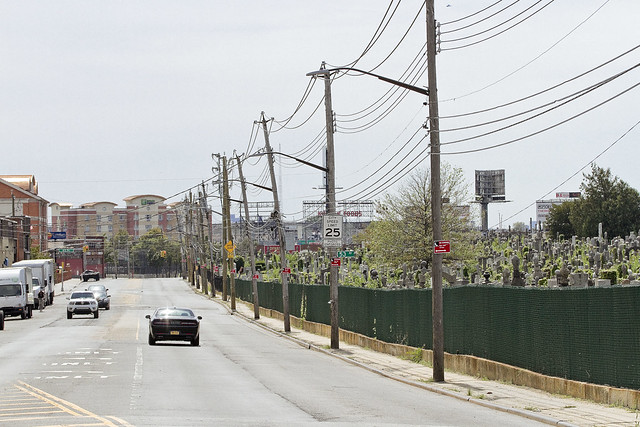
From the Commercial Observer:
The City Planning Commission earlier this week kicked off public review for a zoning change that would create a special permit to limit hotel development in industrial zones. While many in the real estate industry loathe the special permits, some hotel owners are surprisingly in favor of them.
The amendment would require hotel builders in M1-zoned areas to undergo a full public review process in order to get the special permit, which means sign-offs from community boards, borough presidents, the City Planning Commission and the City Council. Unless a developer secures the special permit, the New York City Department of Buildings won’t give the go-ahead to a new hotel project.
Well, this sounds good!
Developers will be allowed to build hotels in only three industrial neighborhoods as-of-right in New York City—East Elmhurst by LaGuardia Airport and Ozone Park and Springfield Gardens by John F. Kennedy International Airport (all in Queens). Special mixed-use districts like Long Island City will also be exempt from the special permits.
Ah, no, this is not what we want. As of right in 4 Queens neighborhoods only?
However, the zoning text amendment does include a potentially controversial carve-out for new hotels that will be used as homeless shelters. Hotels “operated for a public purpose” will not need to go through the special permit process, and hotel-to-shelter conversions will also be exempt from the permit requirement, according to zoning documents from the Department of City Planning.
And there we have it.
Showing posts with label manufacturing. Show all posts
Monday, April 30, 2018
Thursday, February 15, 2018
City gives tax credits for hotel building
From Crains:
Little recent attention has been paid to the tax breaks, which have helped developers build a wave of hotels in onetime industrial neighborhoods—a pattern that Mayor Bill de Blasio has decried for pushing out manufacturers.
The city’s Industrial and Commercial Abatement Program dates back to the 1970s. ICAP was intended to spur landlords to invest in their real estate when few were doing so, and to attract and strengthen manufacturers, like those that once thrived in Williamsburg.
The program nearly zeros out property taxes for as long as 15 years and discounts them for up to a decade beyond that. The William Vale, for instance, used ICAP to wipe out about $1.7 million of its roughly $1.8 million recent annual tax bill, according to the city’s Independent Budget Office. The Williamsburg Hotel sought the benefit but missed a deadline to apply; sources said the developer is still seeking to qualify for the program.
Ironically, the incentive has helped to elbow out some of the businesses it was created to preserve.
“It appears to have fostered hotel growth in areas like Gowanus, Sunset Park, Williamsburg and other neighborhoods that were once primarily industrial,” said Doug Turetsky, chief of staff at the IBO, which has studied ICAP and its predecessor, the Industrial Commercial Exemption Program.
Hotel development has spread rapidly into those areas as tourism in the city has set record highs year after year.
Because hotels such as the Wythe tend to be more lucrative than industrial and other commercial uses in many areas of the Bronx, Brooklyn and Queens, hotel developers can afford to pay more for land. Also, unlike retail and residential uses, hotels generally have not needed special permission from the city to be in areas zoned for manufacturing. The result has been that hotels have been supplanting manufacturing and industrial businesses that once populated Williamsburg, Long Island City and similar areas.
Real estate investment firm Madison Realty Capital has estimated that 10 million square feet of industrial space has been converted to hotels or other uses in the city during the past decade. The tax break has fueled that.
Little recent attention has been paid to the tax breaks, which have helped developers build a wave of hotels in onetime industrial neighborhoods—a pattern that Mayor Bill de Blasio has decried for pushing out manufacturers.
The city’s Industrial and Commercial Abatement Program dates back to the 1970s. ICAP was intended to spur landlords to invest in their real estate when few were doing so, and to attract and strengthen manufacturers, like those that once thrived in Williamsburg.
The program nearly zeros out property taxes for as long as 15 years and discounts them for up to a decade beyond that. The William Vale, for instance, used ICAP to wipe out about $1.7 million of its roughly $1.8 million recent annual tax bill, according to the city’s Independent Budget Office. The Williamsburg Hotel sought the benefit but missed a deadline to apply; sources said the developer is still seeking to qualify for the program.
Ironically, the incentive has helped to elbow out some of the businesses it was created to preserve.
“It appears to have fostered hotel growth in areas like Gowanus, Sunset Park, Williamsburg and other neighborhoods that were once primarily industrial,” said Doug Turetsky, chief of staff at the IBO, which has studied ICAP and its predecessor, the Industrial Commercial Exemption Program.
Hotel development has spread rapidly into those areas as tourism in the city has set record highs year after year.
Because hotels such as the Wythe tend to be more lucrative than industrial and other commercial uses in many areas of the Bronx, Brooklyn and Queens, hotel developers can afford to pay more for land. Also, unlike retail and residential uses, hotels generally have not needed special permission from the city to be in areas zoned for manufacturing. The result has been that hotels have been supplanting manufacturing and industrial businesses that once populated Williamsburg, Long Island City and similar areas.
Real estate investment firm Madison Realty Capital has estimated that 10 million square feet of industrial space has been converted to hotels or other uses in the city during the past decade. The tax break has fueled that.
Monday, October 16, 2017
City ordered to turn over Maspeth shelter's RFP documents
From the Queens Chronicle:
The city is not planning to appeal a court ruling ordering it to turn over documents related to last year’s highly controversial planned conversion of the Maspeth Holiday Inn Express into a homeless shelter.
The Sept. 27 ruling, made by Justice Allan Weiss of Queens Supreme Court, stems from an Article 78 case brought against the city earlier this year by the civic Citizens for a Better Maspeth.
Under court order, the Department of Homeless Services must provide CBM with the city’s original request for proposals and the response documents from applying companies as it related to the proposed operation the 59-40 55 Road hotel as a shelter.
“It is ordered and adjudged that the petition is granted solely to the extent that respondents are directed to provide petitioner with copies of the Request For Proposals that were received in connection with the proposal to convert the subject Holiday Inn Express to a homeless shelter,” Weiss’ ruling reads, “and any and all plans submitted along with the RFPs which demonstrate that the space would be a conforming use under the zoning resolution.”
Zoning law only permits hotel stays of 30 days or less in manufacturing zones — the Holiday Inn Express is located in an M1-1 zone — and CBM alleges that homeless men have been staying at Patel’s building for months at a time.
The city is not planning to appeal a court ruling ordering it to turn over documents related to last year’s highly controversial planned conversion of the Maspeth Holiday Inn Express into a homeless shelter.
The Sept. 27 ruling, made by Justice Allan Weiss of Queens Supreme Court, stems from an Article 78 case brought against the city earlier this year by the civic Citizens for a Better Maspeth.
Under court order, the Department of Homeless Services must provide CBM with the city’s original request for proposals and the response documents from applying companies as it related to the proposed operation the 59-40 55 Road hotel as a shelter.
“It is ordered and adjudged that the petition is granted solely to the extent that respondents are directed to provide petitioner with copies of the Request For Proposals that were received in connection with the proposal to convert the subject Holiday Inn Express to a homeless shelter,” Weiss’ ruling reads, “and any and all plans submitted along with the RFPs which demonstrate that the space would be a conforming use under the zoning resolution.”
Zoning law only permits hotel stays of 30 days or less in manufacturing zones — the Holiday Inn Express is located in an M1-1 zone — and CBM alleges that homeless men have been staying at Patel’s building for months at a time.
Thursday, March 9, 2017
Proposal to strengthen the industrial sector
From the Queens Ledger:
In an effort to build the city’s industrial sector, the Industrial Jobs Coalition has proposed a set of policies that would change manufacturing areas to foster growth.
According to the IJC, which was formed to implement the strategies, New York City has pioneered the use of nonprofit organizations to develop and manage affordable housing. Now the coalition wants those groups to do the same for manufacturing businesses and jobs.
For example, organizations like the Brooklyn Navy Yard, Greenpoint Manufacturing and Design Center (GMDC) and Evergreen Exchange collectively manage 4 million square feet of space and close to 10,000 jobs. But the coalition said the benefits of their efforts are limited to their individual communities.
The IJC now wants to extend this strategy throughout all five boroughs.
To achieve the large-scale expansion, the coalition suggested that the city give nonprofit organizations a priority in the disposition of city-owned industrial land.
It also proposed funding increases to the Economic Development Corporation (EDC)’s Industrial Development Fund and enhancing the role of Industrial Business Service Providers (IBSPs) as neighborhood partners.
The second strategy it recommends is re-conceptualizing Industrial Business Zones into “industrial campuses.” That would include physical and structural changes to industrial areas.
Advocates from the IJC proposed rerouting bike lanes off truck routes and adopting parking, loading and sidewalk regulations. They also suggested adopting signage about the area’s industrial use, expanding high-speed broadband access, reviewing street maintenance and planning for resiliency.
The last proposal to foster manufacturing growth is to reform city zoning to protect industrial spaces. To do this, the IJC wants to prohibit “incompatible uses” that accelerate speculation within IBZs, such as hotels, large-scale entertainment venues and mini-storage facilities.
The zoning changes would also reevaluate density in manufacturing zones and end a Community Facility bonus.
In an effort to build the city’s industrial sector, the Industrial Jobs Coalition has proposed a set of policies that would change manufacturing areas to foster growth.
According to the IJC, which was formed to implement the strategies, New York City has pioneered the use of nonprofit organizations to develop and manage affordable housing. Now the coalition wants those groups to do the same for manufacturing businesses and jobs.
For example, organizations like the Brooklyn Navy Yard, Greenpoint Manufacturing and Design Center (GMDC) and Evergreen Exchange collectively manage 4 million square feet of space and close to 10,000 jobs. But the coalition said the benefits of their efforts are limited to their individual communities.
The IJC now wants to extend this strategy throughout all five boroughs.
To achieve the large-scale expansion, the coalition suggested that the city give nonprofit organizations a priority in the disposition of city-owned industrial land.
It also proposed funding increases to the Economic Development Corporation (EDC)’s Industrial Development Fund and enhancing the role of Industrial Business Service Providers (IBSPs) as neighborhood partners.
The second strategy it recommends is re-conceptualizing Industrial Business Zones into “industrial campuses.” That would include physical and structural changes to industrial areas.
Advocates from the IJC proposed rerouting bike lanes off truck routes and adopting parking, loading and sidewalk regulations. They also suggested adopting signage about the area’s industrial use, expanding high-speed broadband access, reviewing street maintenance and planning for resiliency.
The last proposal to foster manufacturing growth is to reform city zoning to protect industrial spaces. To do this, the IJC wants to prohibit “incompatible uses” that accelerate speculation within IBZs, such as hotels, large-scale entertainment venues and mini-storage facilities.
The zoning changes would also reevaluate density in manufacturing zones and end a Community Facility bonus.
Monday, January 16, 2017
Self-storage resistant to de Blasio legislation
From Crains:
More than a year ago, Mayor Bill de Blasio announced a 10-point plan to spur the city's manufacturing sector. Point No. 2 was to limit the number of hotels and self-storage facilities in designated industrial business zones (IBZs).
The plan has made few headlines since, largely because the administration is still working on a bill that insiders expected months ago. But self-storage operators have been gearing up for a fight, and for good reason: City Hall is backed by manufacturers and advocates who frown on self-storage because, they say, it occupies large buildings on key sites, creates few jobs and pays low wages. Moreover, the industry is growing.
Owners of storage businesses argue that they have become scapegoats for a manufacturing exodus that will continue regardless.
The mayor's legislation is likely to require self-storage facilities to obtain special permits to open in IBZs, a costly and time-consuming obstacle intended to preserve sites for manufacturers.
More than a year ago, Mayor Bill de Blasio announced a 10-point plan to spur the city's manufacturing sector. Point No. 2 was to limit the number of hotels and self-storage facilities in designated industrial business zones (IBZs).
The plan has made few headlines since, largely because the administration is still working on a bill that insiders expected months ago. But self-storage operators have been gearing up for a fight, and for good reason: City Hall is backed by manufacturers and advocates who frown on self-storage because, they say, it occupies large buildings on key sites, creates few jobs and pays low wages. Moreover, the industry is growing.
Owners of storage businesses argue that they have become scapegoats for a manufacturing exodus that will continue regardless.
The mayor's legislation is likely to require self-storage facilities to obtain special permits to open in IBZs, a costly and time-consuming obstacle intended to preserve sites for manufacturers.
Labels:
Bill DeBlasio,
ibz,
legislation,
manufacturing,
self storage
Tuesday, September 20, 2016
Why Maurice Avenue is just about the worst place for a shelter
From the Newtown Pentacle:
The reason that this little travelogue is being presented today involves the plans recently presented by the De Blasio administration to convert a hotel in the area over to a homeless shelter. A subsequent post will detail the hotel and the area directly surrounding it, but this is the northern side of the zone which the “Big Little Mayor” has picked to warehouse those who are considered socially and economically undesirable. The community of Maspeth has responded with their characteristic flair, and pushed back on City Hall with considerable skill and energy. City Hall, as is its habit under the current Mayor reacted to the protests by implying that Maspeth’s indignation is fueled by racism. Several publications picked up this theme, and the Internet commentarium knee jerk followed the rhetoric offered by the administration of the “Dope from Park Slope.”
My personal views on the Maspeth shelter project were the subject of a debate recently with a former colleague whose views and perspectives I greatly respect, but the argument I make about the placement of people – people who exist at the lowest end of the socio-economic spectrum – in this area is that it’s a human rights violation.
Simply put, it ain’t exactly a bed of salubrious roses out around these parts even if you’ve got money in your pocket, let alone when you’re down and out. This wouldn’t be a shelter, this would be a penal colony.
On the subject of every neighborhood having to do “its fair share” – Maspeth already handles close to 20% of NYC’s garbage, it hosts the LIE and BQE, has several NYS and one Federal Superfund sites in it, and there are intersections where close to 3-400 heavy trucks an hour roll through on their way to Manhattan. The garbage train also transits through Maspeth a few times a day, which represents and comingles Brooklyn’s share of the garbage handling with Maspeth’s.
There are virtually no mass transit lines available from this location, police patrols are infrequent at best, and at night this is a virtually abandoned part of the city. Bus service is spotty, and it’s one of the places in Queens where you truly need a personal vehicle to get around.
There are streets with no sidewalks here in the half mile around the proposed shelter.
The shocking ignorance of City Hall regarding the existential realities of Western Queens never fails to amaze me. All they seem to know about our neighborhoods is what they see on maps rolled out on mahogany desktops that have pins stuck into them by paid cronies.
The reason that this little travelogue is being presented today involves the plans recently presented by the De Blasio administration to convert a hotel in the area over to a homeless shelter. A subsequent post will detail the hotel and the area directly surrounding it, but this is the northern side of the zone which the “Big Little Mayor” has picked to warehouse those who are considered socially and economically undesirable. The community of Maspeth has responded with their characteristic flair, and pushed back on City Hall with considerable skill and energy. City Hall, as is its habit under the current Mayor reacted to the protests by implying that Maspeth’s indignation is fueled by racism. Several publications picked up this theme, and the Internet commentarium knee jerk followed the rhetoric offered by the administration of the “Dope from Park Slope.”
My personal views on the Maspeth shelter project were the subject of a debate recently with a former colleague whose views and perspectives I greatly respect, but the argument I make about the placement of people – people who exist at the lowest end of the socio-economic spectrum – in this area is that it’s a human rights violation.
Simply put, it ain’t exactly a bed of salubrious roses out around these parts even if you’ve got money in your pocket, let alone when you’re down and out. This wouldn’t be a shelter, this would be a penal colony.
On the subject of every neighborhood having to do “its fair share” – Maspeth already handles close to 20% of NYC’s garbage, it hosts the LIE and BQE, has several NYS and one Federal Superfund sites in it, and there are intersections where close to 3-400 heavy trucks an hour roll through on their way to Manhattan. The garbage train also transits through Maspeth a few times a day, which represents and comingles Brooklyn’s share of the garbage handling with Maspeth’s.
There are virtually no mass transit lines available from this location, police patrols are infrequent at best, and at night this is a virtually abandoned part of the city. Bus service is spotty, and it’s one of the places in Queens where you truly need a personal vehicle to get around.
There are streets with no sidewalks here in the half mile around the proposed shelter.
The shocking ignorance of City Hall regarding the existential realities of Western Queens never fails to amaze me. All they seem to know about our neighborhoods is what they see on maps rolled out on mahogany desktops that have pins stuck into them by paid cronies.
Labels:
animal shelter,
Bill DeBlasio,
cemetery,
homeless,
manufacturing,
Maspeth,
warehouse
Wednesday, August 3, 2016
Queens loses another manufacturer
From DNA Info:
After nearly 100 years in business, the Elmhurst Dairy will close its milk processing plant in Jamaica, resulting in the loss of 273 jobs and the end of the city's famous brand, the company announced Tuesday.
The dairy, which according to its website, supplies milk to more than 8,300 grocers and 1,400 public schools, is the last of about 20 milk processing plants in the New York City and Long Island area which all closed within the past 25 years, the company said.
The dairy, currently located on a 15-acre lot at 155-25 Styler Road, was started by brothers Max and Arthur Schwartz at their father's farm on Caldwell Avenue in Elmhurst in 1919.
In the mid-1930s, the company moved to a small facility on South Road in Jamaica, and later expanded to nearby Styler Road.
In the late 1940s, Percy Krout, Max's brother-in-law, who ran another family dairy farm in Middle Village, joined the business.
After nearly 100 years in business, the Elmhurst Dairy will close its milk processing plant in Jamaica, resulting in the loss of 273 jobs and the end of the city's famous brand, the company announced Tuesday.
The dairy, which according to its website, supplies milk to more than 8,300 grocers and 1,400 public schools, is the last of about 20 milk processing plants in the New York City and Long Island area which all closed within the past 25 years, the company said.
The dairy, currently located on a 15-acre lot at 155-25 Styler Road, was started by brothers Max and Arthur Schwartz at their father's farm on Caldwell Avenue in Elmhurst in 1919.
In the mid-1930s, the company moved to a small facility on South Road in Jamaica, and later expanded to nearby Styler Road.
In the late 1940s, Percy Krout, Max's brother-in-law, who ran another family dairy farm in Middle Village, joined the business.
Monday, March 28, 2016
Fund to keep businesses here
From the Times Ledger:
The mayor’s office hopes to entice new industrial development to the city with a $150 million fund for nonprofit and for-profit developers in an attempt to stem the gradual loss of industrial real estate and jobs throughout New York.
Two representatives from the city Economic Development Corporation presented details of the newly established Industrial Developer Fund to the Queens Borough Board Tuesday night at Borough Hall. Borough President Melinda Katz, who heads the board, attended the meeting along with the heads of each community board.
The fund will be a combination of $60 million in taxpayer money with an additional $90 million from private financing. The city wants to encourage the development or renovation of 400,000 square feet of industrial real estate, and the EDC contends the developments will result in as many as 1,200 new industrial jobs by the close of the decade.
EDC Senior Vice President Jeffrey Lee said the fund would be a positive fit for developers who could ensure that opportunities for a living wage job with potential for advancement would be available to members of local communities, including those without a formal education.
How about not rezoning industrial areas for condos?
The mayor’s office hopes to entice new industrial development to the city with a $150 million fund for nonprofit and for-profit developers in an attempt to stem the gradual loss of industrial real estate and jobs throughout New York.
Two representatives from the city Economic Development Corporation presented details of the newly established Industrial Developer Fund to the Queens Borough Board Tuesday night at Borough Hall. Borough President Melinda Katz, who heads the board, attended the meeting along with the heads of each community board.
The fund will be a combination of $60 million in taxpayer money with an additional $90 million from private financing. The city wants to encourage the development or renovation of 400,000 square feet of industrial real estate, and the EDC contends the developments will result in as many as 1,200 new industrial jobs by the close of the decade.
EDC Senior Vice President Jeffrey Lee said the fund would be a positive fit for developers who could ensure that opportunities for a living wage job with potential for advancement would be available to members of local communities, including those without a formal education.
How about not rezoning industrial areas for condos?
Labels:
EDC,
funding,
living wage,
manufacturing,
Melinda Katz
Thursday, February 25, 2016
City wants huge LIC parcel developed
From Politico NY:
In an effort to spark development along the Queens waterfront, New York City is looking for a developers to build up to 1.2 million square feet of offices, manufacturing space and apartments in Long Island City.
On Thursday morning, the de Blasio administration’s economic development arm will put out to bid two city-owned sites across the inlet from Gantry Plaza State Park.
Right now, they are occupied by a restaurant whose lease expires in 2017 and may or may not be included in the developer's plans, what the request for proposals describes as a "parking lot abutting lands underwater and a dilapidated over-water platform" and a one-story Department of Transportation building that might have to be relocated as part of any project.
The land would also likely have to be rezoned for uses other than manufacturing.
Why do we need to "spark" development along the Queens waterfront? Have they taken a look at what's there now? Why not just put it on the open market?
In an effort to spark development along the Queens waterfront, New York City is looking for a developers to build up to 1.2 million square feet of offices, manufacturing space and apartments in Long Island City.
On Thursday morning, the de Blasio administration’s economic development arm will put out to bid two city-owned sites across the inlet from Gantry Plaza State Park.
Right now, they are occupied by a restaurant whose lease expires in 2017 and may or may not be included in the developer's plans, what the request for proposals describes as a "parking lot abutting lands underwater and a dilapidated over-water platform" and a one-story Department of Transportation building that might have to be relocated as part of any project.
The land would also likely have to be rezoned for uses other than manufacturing.
Why do we need to "spark" development along the Queens waterfront? Have they taken a look at what's there now? Why not just put it on the open market?
Labels:
EDC,
LIC,
manufacturing,
rezoning,
waterfront
Wednesday, November 4, 2015
DeBlasio & City Council will no longer support housing in IBZs
From Crains:
Rising rents and property values aren’t just squeezing out mom-and-pop stores and longtime New Yorkers. Manufacturers are also feeling the pinch, and on Tuesday Mayor Bill de Blasio unveiled a long-awaited plan to come to their aid.
The heart of the plan calls for protecting the city's 20 industrial business zones, or IBZs, from hotel and residential development while investing $442 million over 10 years in city-owned manufacturing havens such as the Brooklyn Navy Yard and Hunts Point in the Bronx. Protection for land zoned for light manufacturing/residential use will be proposed later, after an ongoing study is completed; the expectation is that a portion of projects in so-called Mx zones would have to be set aside for light-industrial use, which has recently been frozen out by the hot residential market.
The mayor's proposal was developed in cooperation with City Council leaders and with input from advocates for manufacturers, which should ease its passage.
One component of the plan is to end as-of-right construction of hotels and self-storage facilities in IBZs, which are zoned for heavy manufacturing. Hotels are seen as not just taking space that could go to manufacturers but as driving up land values around them, making it too expensive for industrial businesses from buying their space or expanding. Self-storage has been under fire because it provides few jobs and low wages. Hotel and self-storage projects would require a special permit, meaning they would require City Council approval.
The Association for Neighborhood and Housing Development, which had been lobbying the mayor to protect industrial businesses, described the changes as "the right step in reforming decades-old land use policy to include provisions that reflect the realities of the 21st century."
But the group did not get new restrictions on big-box stores, night clubs and other uses it considers incompatible with industry. Big-box stores currently require a special permit to open in manufacturing zones.
From Capital New York:
In an effort to bolster New York City's manufacturing sector, Mayor Bill de Blasio announced he will not allow homes to be built during his tenure in zones designated for industrial businesses.
Proposals for rezoning land require approval from the City Council and mayoral administrations, giving them the authority to essentially declare a blanket ban such as this.
Asked what specific mechanism would be used for this, the mayor said, "We're not accepting private applications any longer. It's a fundamentally different approach."
Alicia Glen, deputy mayor for housing and economic development, expanded on that.
"What we are saying is that we will no longer look with any favorable, any favor on a private developer coming in and saying, 'we would like to convert this site to residential use,'" she added. "And so, again, it's not a banning. It's a signal to the market that the policy of the City of New York is that these are precious resources and we have a very aggressive plan to appropriately densify neighborhoods where we think housing should be built."
Rising rents and property values aren’t just squeezing out mom-and-pop stores and longtime New Yorkers. Manufacturers are also feeling the pinch, and on Tuesday Mayor Bill de Blasio unveiled a long-awaited plan to come to their aid.
The heart of the plan calls for protecting the city's 20 industrial business zones, or IBZs, from hotel and residential development while investing $442 million over 10 years in city-owned manufacturing havens such as the Brooklyn Navy Yard and Hunts Point in the Bronx. Protection for land zoned for light manufacturing/residential use will be proposed later, after an ongoing study is completed; the expectation is that a portion of projects in so-called Mx zones would have to be set aside for light-industrial use, which has recently been frozen out by the hot residential market.
The mayor's proposal was developed in cooperation with City Council leaders and with input from advocates for manufacturers, which should ease its passage.
One component of the plan is to end as-of-right construction of hotels and self-storage facilities in IBZs, which are zoned for heavy manufacturing. Hotels are seen as not just taking space that could go to manufacturers but as driving up land values around them, making it too expensive for industrial businesses from buying their space or expanding. Self-storage has been under fire because it provides few jobs and low wages. Hotel and self-storage projects would require a special permit, meaning they would require City Council approval.
The Association for Neighborhood and Housing Development, which had been lobbying the mayor to protect industrial businesses, described the changes as "the right step in reforming decades-old land use policy to include provisions that reflect the realities of the 21st century."
But the group did not get new restrictions on big-box stores, night clubs and other uses it considers incompatible with industry. Big-box stores currently require a special permit to open in manufacturing zones.
From Capital New York:
In an effort to bolster New York City's manufacturing sector, Mayor Bill de Blasio announced he will not allow homes to be built during his tenure in zones designated for industrial businesses.
Proposals for rezoning land require approval from the City Council and mayoral administrations, giving them the authority to essentially declare a blanket ban such as this.
Asked what specific mechanism would be used for this, the mayor said, "We're not accepting private applications any longer. It's a fundamentally different approach."
Alicia Glen, deputy mayor for housing and economic development, expanded on that.
"What we are saying is that we will no longer look with any favorable, any favor on a private developer coming in and saying, 'we would like to convert this site to residential use,'" she added. "And so, again, it's not a banning. It's a signal to the market that the policy of the City of New York is that these are precious resources and we have a very aggressive plan to appropriately densify neighborhoods where we think housing should be built."
Labels:
big box store,
Bill DeBlasio,
City Council,
hotel,
ibz,
manufacturing,
self storage
Saturday, May 30, 2015
Bushwick: the next Dutch Kills?
From Curbed:
Developers think that Bushwick will be the city's next tourist destination, and after the neighborhood was named one of America's coolest by Vogue, they're probably right. Case in point: three hotels are rising in the neighborhood, the most recently announced of which is a 10-story, 144-room hotel at 232 Seigel Street between Bushwick Avenue and White Street.
Also coming to the 'hood is a seven-story, 112-room hotel at 71 White Street between McKibbin and Boerum streets that's being developed by All Year's Management. Riverside Developers, also behind Williamsburg's bonkers, cantilevering William Vale Hotel, want to bring a 140-key hotel to 27 Stewart Avenue between Flushing and Johnson avenues.
Developers think that Bushwick will be the city's next tourist destination, and after the neighborhood was named one of America's coolest by Vogue, they're probably right. Case in point: three hotels are rising in the neighborhood, the most recently announced of which is a 10-story, 144-room hotel at 232 Seigel Street between Bushwick Avenue and White Street.
Also coming to the 'hood is a seven-story, 112-room hotel at 71 White Street between McKibbin and Boerum streets that's being developed by All Year's Management. Riverside Developers, also behind Williamsburg's bonkers, cantilevering William Vale Hotel, want to bring a 140-key hotel to 27 Stewart Avenue between Flushing and Johnson avenues.
Tuesday, May 19, 2015
Maspeth wants to save its manufacturing
From the Times Ledger:
Manufacturing in New York City isn’t dead. It just needs some nurturing.
Industrial areas like the one in Maspeth provide 342,000 jobs in New York City, according to a 2014 study by the City Council. But advocates and Maspeth business leaders worry that if Mayor Bill de Blasio does not do more to protect industrial areas, many of these jobs could lose out to the more profitable housing market.
“There’s just a shortage of industrial property in New York City,” said Jean Tanler, president of Maspeth’s Industrial Business Zone “It’s detrimental to the economy as a whole.”
Researchers at the Pratt Center for Community Development are concerned that as de Blasio continues to push for new affordable housing development, many manufacturers will be pushed out to make room for housing, taking with them high paying jobs with an average salary of $50,000.
“We support the mayor’s goal for affordable housing,” said Adam Friedman, a co-author of the study “Making Room for Housing and Jobs.” “But we believe saving manufacturing jobs is essential for this goal.”
In the study, researchers argued that these industrial zones should be considered sanctuaries for jobs through a strict zoning code that would prevent real estate predators and hotels. Preventing the development of big-box retail and storage warehouses, which provide fewer jobs than industrial businesses, would strengthen these areas. These steps, they argue, would prevent industrial areas from eroding.
Manufacturing in New York City isn’t dead. It just needs some nurturing.
Industrial areas like the one in Maspeth provide 342,000 jobs in New York City, according to a 2014 study by the City Council. But advocates and Maspeth business leaders worry that if Mayor Bill de Blasio does not do more to protect industrial areas, many of these jobs could lose out to the more profitable housing market.
“There’s just a shortage of industrial property in New York City,” said Jean Tanler, president of Maspeth’s Industrial Business Zone “It’s detrimental to the economy as a whole.”
Researchers at the Pratt Center for Community Development are concerned that as de Blasio continues to push for new affordable housing development, many manufacturers will be pushed out to make room for housing, taking with them high paying jobs with an average salary of $50,000.
“We support the mayor’s goal for affordable housing,” said Adam Friedman, a co-author of the study “Making Room for Housing and Jobs.” “But we believe saving manufacturing jobs is essential for this goal.”
In the study, researchers argued that these industrial zones should be considered sanctuaries for jobs through a strict zoning code that would prevent real estate predators and hotels. Preventing the development of big-box retail and storage warehouses, which provide fewer jobs than industrial businesses, would strengthen these areas. These steps, they argue, would prevent industrial areas from eroding.
Saturday, May 9, 2015
De Blasio protecting manufacturing...someone tell Weisbrod
From Crains:
For more than a year, manufacturers have been waiting impatiently for Mayor Bill de Blasio to articulate how he plans to protect them from encroaching housing, hotel and other nonindustrial development. On Thursday, they will get their first clue.
In his fiscal 2016 executive budget, Mr. de Blasio will propose to nearly triple funding for the city's eight industrial business service providers to $1.5 million from this year's $570,000, which itself was an increase from zero in the mayor's first budget proposal (the council restored the funding, as it did when then-Mayor Michael Bloomberg moved to eliminate it a year earlier).
Not only is Mr. de Blasio proposing to increase the funding but to baseline it, meaning it will be the minimum amount provided by the administration each year going forward. The City Council could still negotiate to add more, as it did last year when it increased the pot by $830,000 for a total of $1.4 million.
The mayor's budget will also include $450,000 for new industrial and manufacturing training to give workers the skills that industrial employers seek. It will be similar to the technology talent pipeline announced by the mayor last year.
Also from Crains:
City Planning Commission Chairman Carl Weisbrod said there are no plans to rezone any of the city's 20 industrial business zones, though some tinkering around the edges may be warranted—a comment that baffled some business advocates.
"We are certainly not contemplating wholesale, area-wide rezonings within IBZs," Mr. Weisbrod testified at a City Council hearing Wednesday. Some IBZs have "inappropriate boundaries," he said, and acknowledged approving a handful of applications for spot rezonings at the "peripheries" of the zones.
These rezonings have been infrequent and minimal, he said. But reaction to his comments highlight the deep anxiety felt by many industrial business owners in the city.
Leah Archibald, executive director of Evergreen, an industrial business service provider in north Brooklyn, said questioning the borders of some zones made little sense.
"The IBZ boundaries were revised last year," she told Crain's. "Even in our rapidly changing neighborhood, little has changed so much that it would necessitate any boundary revision in the near future."
For more than a year, manufacturers have been waiting impatiently for Mayor Bill de Blasio to articulate how he plans to protect them from encroaching housing, hotel and other nonindustrial development. On Thursday, they will get their first clue.
In his fiscal 2016 executive budget, Mr. de Blasio will propose to nearly triple funding for the city's eight industrial business service providers to $1.5 million from this year's $570,000, which itself was an increase from zero in the mayor's first budget proposal (the council restored the funding, as it did when then-Mayor Michael Bloomberg moved to eliminate it a year earlier).
Not only is Mr. de Blasio proposing to increase the funding but to baseline it, meaning it will be the minimum amount provided by the administration each year going forward. The City Council could still negotiate to add more, as it did last year when it increased the pot by $830,000 for a total of $1.4 million.
The mayor's budget will also include $450,000 for new industrial and manufacturing training to give workers the skills that industrial employers seek. It will be similar to the technology talent pipeline announced by the mayor last year.
Also from Crains:
City Planning Commission Chairman Carl Weisbrod said there are no plans to rezone any of the city's 20 industrial business zones, though some tinkering around the edges may be warranted—a comment that baffled some business advocates.
"We are certainly not contemplating wholesale, area-wide rezonings within IBZs," Mr. Weisbrod testified at a City Council hearing Wednesday. Some IBZs have "inappropriate boundaries," he said, and acknowledged approving a handful of applications for spot rezonings at the "peripheries" of the zones.
These rezonings have been infrequent and minimal, he said. But reaction to his comments highlight the deep anxiety felt by many industrial business owners in the city.
Leah Archibald, executive director of Evergreen, an industrial business service provider in north Brooklyn, said questioning the borders of some zones made little sense.
"The IBZ boundaries were revised last year," she told Crain's. "Even in our rapidly changing neighborhood, little has changed so much that it would necessitate any boundary revision in the near future."
Monday, April 27, 2015
Flushing waterfront development: Ah, the smell of it!
From the Times Ledger:
A Flushing group and the Department of City Planning have teamed up to push forth a project that would redevelop the Flushing waterfront and bring more affordable housing to the area.
In 2011, the Flushing Willets Corona Local Development Corporation received a $1.5 million New York State Brownfield Opportunity Grant to fund its Flushing Riverfront Project, which would clean up and rezone 60 acres on the Flushing waterfront. The project would create a planned community with waterfront access and housing and commercial space.
City Planning decided to combine the corporation’s project into its study of Flushing West, which supports Mayor Bill de Blasio’s 10-year affordable housing plan.
The study area — whose lot area consists of 32 acres — covers Prince Street to Flushing Creek on the west, Roosevelt Avenue on the south and Northern Boulevard on the north.
“This was a great opportunity to join both efforts because the goals were aligned to create a new community and Flushing has a great need for affordable housing,” said Alex Rosa, a project consultant for the corporation.
The agency will put together a brownfield opportunity area report that will explain the challenges and opportunities for redeveloping the area and prepare rezoning recommendations.
“Flushing did have a lot of dynamics to it where it seemed to be growing towards the waterfront and we wanted to combine the idea of the downtown vibrancy, creating new jobs here and new housing and provide a market with a direction that would also include affordable housing,” said John Young, director of the City Planning’s Queens office.
In 2012, members of the Flushing Willets corporation found that the 60-acre area was mostly made up of industrial and unused lots, which could be used for numerous purposes.
Three-quarters of the study area is zoned C4-2, or a commercial and residential zone. The northern portion of the study has M1-1 zoning, which is light manufacturing. The northern portion along the waterfront is zoned M3-1, which is heavier manufacturing. The study will be introduced at a public town hall meeting May 21 at 6 p.m. at Flushing Town Hall.
So Claire Shulman's bogus lobbying group is pushing to to rezone more manufacturing areas for bullshit "affordable housing" that will do nothing but further enrich wealthy developers? Aren't we tired of this shtick already?
A Flushing group and the Department of City Planning have teamed up to push forth a project that would redevelop the Flushing waterfront and bring more affordable housing to the area.
In 2011, the Flushing Willets Corona Local Development Corporation received a $1.5 million New York State Brownfield Opportunity Grant to fund its Flushing Riverfront Project, which would clean up and rezone 60 acres on the Flushing waterfront. The project would create a planned community with waterfront access and housing and commercial space.
City Planning decided to combine the corporation’s project into its study of Flushing West, which supports Mayor Bill de Blasio’s 10-year affordable housing plan.
The study area — whose lot area consists of 32 acres — covers Prince Street to Flushing Creek on the west, Roosevelt Avenue on the south and Northern Boulevard on the north.
“This was a great opportunity to join both efforts because the goals were aligned to create a new community and Flushing has a great need for affordable housing,” said Alex Rosa, a project consultant for the corporation.
The agency will put together a brownfield opportunity area report that will explain the challenges and opportunities for redeveloping the area and prepare rezoning recommendations.
“Flushing did have a lot of dynamics to it where it seemed to be growing towards the waterfront and we wanted to combine the idea of the downtown vibrancy, creating new jobs here and new housing and provide a market with a direction that would also include affordable housing,” said John Young, director of the City Planning’s Queens office.
In 2012, members of the Flushing Willets corporation found that the 60-acre area was mostly made up of industrial and unused lots, which could be used for numerous purposes.
Three-quarters of the study area is zoned C4-2, or a commercial and residential zone. The northern portion of the study has M1-1 zoning, which is light manufacturing. The northern portion along the waterfront is zoned M3-1, which is heavier manufacturing. The study will be introduced at a public town hall meeting May 21 at 6 p.m. at Flushing Town Hall.
So Claire Shulman's bogus lobbying group is pushing to to rezone more manufacturing areas for bullshit "affordable housing" that will do nothing but further enrich wealthy developers? Aren't we tired of this shtick already?
Wednesday, March 25, 2015
Big Glendale property sold
From the Observer:
A 94,000-square-foot property in the Glendale section of Queens has sold for $9.18 million to two different buyers, according to Avison Young, the brokerage firm that represented the seller and one of the buyers.
The property at 79-40 Cooper Avenue includes eight lots, a 50,000-square-foot industrial building, two attached residential buildings, two parking lots and vacant land spread over two acres.
The seller of the property was Hansel ‘n Gretel Brand, a deli processor that had been in business for 140 years that has since closed. Hansel ‘n Gretel Brand occupied the industrial building until last year.
Carye & Sons Acquisitions, a family-owned real estate company, bought the majority of the property, including all of the holdings along Cooper Avenue, for around $7 million. This included four lots, a vacant piece of land and the industrial building. Carye & Sons plans to redevelop the industrial property on the site into an 80,000-square-foot self-storage and retail building.
The remaining piece of the property, including a parking lot and two residential dwellings, was sold to an adjacent landowner for $2.2 million. Right Time Realty’s Joe Ibrahim represented the buyer on this transaction. Mr. Ibrahim could not immediately be reached for comment.
A 94,000-square-foot property in the Glendale section of Queens has sold for $9.18 million to two different buyers, according to Avison Young, the brokerage firm that represented the seller and one of the buyers.
The property at 79-40 Cooper Avenue includes eight lots, a 50,000-square-foot industrial building, two attached residential buildings, two parking lots and vacant land spread over two acres.
The seller of the property was Hansel ‘n Gretel Brand, a deli processor that had been in business for 140 years that has since closed. Hansel ‘n Gretel Brand occupied the industrial building until last year.
Carye & Sons Acquisitions, a family-owned real estate company, bought the majority of the property, including all of the holdings along Cooper Avenue, for around $7 million. This included four lots, a vacant piece of land and the industrial building. Carye & Sons plans to redevelop the industrial property on the site into an 80,000-square-foot self-storage and retail building.
The remaining piece of the property, including a parking lot and two residential dwellings, was sold to an adjacent landowner for $2.2 million. Right Time Realty’s Joe Ibrahim represented the buyer on this transaction. Mr. Ibrahim could not immediately be reached for comment.
Labels:
Glendale,
manufacturing,
real estate,
self storage
Sunday, March 22, 2015
An end to hotels in IBZs?
From Crains:
As the city's manufacturing sector awaits Mayor Bill de Blasio's long-promised industrial policy, one private-sector insider predicts with professed certainty that it will call for an end to as-of-right hotel construction in light-manufacturing zones.
In other words, hotel developers would need some sort of political approval, either a special permit or a zoning exception from the Board of Standards and Appeals, or new zoning from the City Council and mayor. "I'm sure that's what it will be," the source said.
Moreover, the insider said there might be an outright ban on new hotels in industrial business zones, or IBZs, which are manufacturing districts singled out by the Bloomberg administration for extra protection from nonindustrial uses.
More than a few manufacturers would welcome such reforms. They say an influx of hotels in their districts has put upward pressure on land prices and rents, threatening the viability of longtime businesses that have expiring leases, and tempting those who own their buildings to sell to developers who want to construct hotels or apartments.
As the city's manufacturing sector awaits Mayor Bill de Blasio's long-promised industrial policy, one private-sector insider predicts with professed certainty that it will call for an end to as-of-right hotel construction in light-manufacturing zones.
In other words, hotel developers would need some sort of political approval, either a special permit or a zoning exception from the Board of Standards and Appeals, or new zoning from the City Council and mayor. "I'm sure that's what it will be," the source said.
Moreover, the insider said there might be an outright ban on new hotels in industrial business zones, or IBZs, which are manufacturing districts singled out by the Bloomberg administration for extra protection from nonindustrial uses.
More than a few manufacturers would welcome such reforms. They say an influx of hotels in their districts has put upward pressure on land prices and rents, threatening the viability of longtime businesses that have expiring leases, and tempting those who own their buildings to sell to developers who want to construct hotels or apartments.
Labels:
hotel,
ibz,
manufacturing,
variances,
zoning
Tuesday, March 10, 2015
Hotels pushing manufacturers out
From Crains:
As hotels gravitate to über-trendy areas like Williamsburg, Greenpoint and Long Island City, they're pushing out small businesses that have made those industrial neighborhoods their home for decades. Companies are facing outright displacement or tripled real estate prices, the unwelcome consequences of the ongoing hotel boom. Those businesses that have not been forced out yet fear a move to Long Island or New Jersey is inevitable.
Since 2007, at least 11 hotels have opened in industrial business zones, and another 16 are on the way, according to a recent Pratt Center for Community Development study funded in part by the New York Hotel and Motel Trade Council. IBZs were established by the Bloomberg administration to "protect existing manufacturing districts and encourage industrial growth citywide."
Similarly, in older M1 zones—areas for light manufacturing—at least 115 hotels are up and running, and 75 more are in the pipeline. There are 24 hotels in Long Island City alone. Whatever the zoning laws were once meant to accomplish, they've long since stopped being useful.
There are still 2,100 manufacturing firms in Long Island City, and many of them employ neighborhood residents. The area cannot afford to let them all go. "We need thoughtful development planning around how to make sure, for the sake of the long-term viability of the city, that we have spaces for these uses," said Elizabeth Lusskin, president of the Long Island City Partnership.
As hotels gravitate to über-trendy areas like Williamsburg, Greenpoint and Long Island City, they're pushing out small businesses that have made those industrial neighborhoods their home for decades. Companies are facing outright displacement or tripled real estate prices, the unwelcome consequences of the ongoing hotel boom. Those businesses that have not been forced out yet fear a move to Long Island or New Jersey is inevitable.
Since 2007, at least 11 hotels have opened in industrial business zones, and another 16 are on the way, according to a recent Pratt Center for Community Development study funded in part by the New York Hotel and Motel Trade Council. IBZs were established by the Bloomberg administration to "protect existing manufacturing districts and encourage industrial growth citywide."
Similarly, in older M1 zones—areas for light manufacturing—at least 115 hotels are up and running, and 75 more are in the pipeline. There are 24 hotels in Long Island City alone. Whatever the zoning laws were once meant to accomplish, they've long since stopped being useful.
There are still 2,100 manufacturing firms in Long Island City, and many of them employ neighborhood residents. The area cannot afford to let them all go. "We need thoughtful development planning around how to make sure, for the sake of the long-term viability of the city, that we have spaces for these uses," said Elizabeth Lusskin, president of the Long Island City Partnership.
Friday, March 6, 2015
There are way too many hotels in M zones
From Crains:
Not everyone is happy about the hotel boom: Industrial businesses say it has hit their neighborhoods with great force, making space scarcer and more expensive. A new study backs up that narrative, finding at least 115 hotels in M1-zoned areas, which are set aside for light manufacturing, and about 75 more on the way.
The report, by the Brooklyn-based Pratt Center for Community Development, also found that at least 11 hotels have been built since 2007 in industrial building zones, or IBZs, which were established in some manufacturing districts to further protect businesses there from residential development. Another 16 hotels are in the pipeline for IBZs.
Overall, the number of hotels in the city grew by 180, or 35%, between 2004 and 2013, according to the report.
Hotels can be built without any special approval in industrial areas, such as the garment district, Long Island City in Queens and the Gowanus and Williamsburg sections of Brooklyn. Tourism was at much lower levels when the zoning was written, and there was no expectation that guests would want to stay in gritty sections of the city with noisy machinery, trucks and few amenities—or anywhere outside of Manhattan, for that matter.
Not everyone is happy about the hotel boom: Industrial businesses say it has hit their neighborhoods with great force, making space scarcer and more expensive. A new study backs up that narrative, finding at least 115 hotels in M1-zoned areas, which are set aside for light manufacturing, and about 75 more on the way.
The report, by the Brooklyn-based Pratt Center for Community Development, also found that at least 11 hotels have been built since 2007 in industrial building zones, or IBZs, which were established in some manufacturing districts to further protect businesses there from residential development. Another 16 hotels are in the pipeline for IBZs.
Overall, the number of hotels in the city grew by 180, or 35%, between 2004 and 2013, according to the report.
Hotels can be built without any special approval in industrial areas, such as the garment district, Long Island City in Queens and the Gowanus and Williamsburg sections of Brooklyn. Tourism was at much lower levels when the zoning was written, and there was no expectation that guests would want to stay in gritty sections of the city with noisy machinery, trucks and few amenities—or anywhere outside of Manhattan, for that matter.
Wednesday, January 28, 2015
Chocolate maker gets big grant to stay in Rockaway
From the Rockaway Times:
After receiving a $13.2 million grant from the City, Madelaine Chocolate Company is here to stay.
The 66-year-old chocolate company, which has been operating in Rockaway for 48 years and serving as one of the peninsula’s largest employers, will stay in Rockaway due to a tremendous grant provided through the City’s Hurricane Sandy Business Loan and Grant Program. The large award was made possible after the Mayor de Blasio administration made changes to the HSBLGP over the summer.
Hurricane Sandy devastated the company, leaving it with $50 million in losses from damaged equipment, property and a $10 million loss in inventory alone. Madelaine Chocolate officially opened with limited capability in October 2013. In February 2014, it was announced that the building at 9603 Beach Channel Drive was up for sale and the company may be moving, since it didn’t have sufficient funds to recover.
The grant will allow Madelaine Chocolate to remain in Rockaway.
After receiving a $13.2 million grant from the City, Madelaine Chocolate Company is here to stay.
The 66-year-old chocolate company, which has been operating in Rockaway for 48 years and serving as one of the peninsula’s largest employers, will stay in Rockaway due to a tremendous grant provided through the City’s Hurricane Sandy Business Loan and Grant Program. The large award was made possible after the Mayor de Blasio administration made changes to the HSBLGP over the summer.
Hurricane Sandy devastated the company, leaving it with $50 million in losses from damaged equipment, property and a $10 million loss in inventory alone. Madelaine Chocolate officially opened with limited capability in October 2013. In February 2014, it was announced that the building at 9603 Beach Channel Drive was up for sale and the company may be moving, since it didn’t have sufficient funds to recover.
The grant will allow Madelaine Chocolate to remain in Rockaway.
Thursday, January 15, 2015
Lots of people kissing NY & NJ goodbye
From Forbes:
More people are moving out of New Jersey than are moving in. The same is true for New York and Illinois. Those three states top the “outbound” list compiled by United Van Lines, the big St. Louis-based moving company that has put together an annual survey of where Americans are moving for the last 38 years. The company analyzed a total of 128,000 moves across the 48 continental states and the District of Columbia in 2014 and came up with a picture of migration patterns across the US.
According to Michael Stoll, a professor of public policy at University of California, Los Angeles, and a consultant to United Van Lines who studies American migration, the moves reflect the increasing numbers of retiring baby boomers who are leaving colder, more expensive states in the Northeast and Midwest in favor of lower-cost locations with retirement infrastructures like Florida and Arizona. Long-term shifts in the US economy and the hit to employment in many states resulting from the slow recovery are also prompting many Americans to relocate.
New Jersey has been stuck at the top of the outbound list for four of the past five years. In 2014 nearly 65% more people moved out than moved in. According to Stoll, the Great Recession hit the state especially hard, accelerating a longtime shift in manufacturing to the southern states, away from the Northeast. Damage done by Hurricane Sandy in 2012 and the slow pace of rebuilding since has also driven people away. Plus New Jersey has a population that is older than other states’ and the cold climate is driving retirement-age people south. Further, housing costs tend to be high there, especially in northern New Jersey which is subject to demand from people who work in Manhattan.
New York comes in at second place for some of the same reasons. High housing prices, more retirees and a desire for a warmer climate are driving lots of people out of the state. Like New Jersey, Illinois, at No. 3 on the list, got hit disproportionately hard by the Great Recession, notes Stoll, especially in the manufacturing sector, and the state has had a slow recovery. Though job losses have slowed, the rate of job growth in Illinois is still below the national average and its older population has been relocating.
More people are moving out of New Jersey than are moving in. The same is true for New York and Illinois. Those three states top the “outbound” list compiled by United Van Lines, the big St. Louis-based moving company that has put together an annual survey of where Americans are moving for the last 38 years. The company analyzed a total of 128,000 moves across the 48 continental states and the District of Columbia in 2014 and came up with a picture of migration patterns across the US.
According to Michael Stoll, a professor of public policy at University of California, Los Angeles, and a consultant to United Van Lines who studies American migration, the moves reflect the increasing numbers of retiring baby boomers who are leaving colder, more expensive states in the Northeast and Midwest in favor of lower-cost locations with retirement infrastructures like Florida and Arizona. Long-term shifts in the US economy and the hit to employment in many states resulting from the slow recovery are also prompting many Americans to relocate.
New Jersey has been stuck at the top of the outbound list for four of the past five years. In 2014 nearly 65% more people moved out than moved in. According to Stoll, the Great Recession hit the state especially hard, accelerating a longtime shift in manufacturing to the southern states, away from the Northeast. Damage done by Hurricane Sandy in 2012 and the slow pace of rebuilding since has also driven people away. Plus New Jersey has a population that is older than other states’ and the cold climate is driving retirement-age people south. Further, housing costs tend to be high there, especially in northern New Jersey which is subject to demand from people who work in Manhattan.
New York comes in at second place for some of the same reasons. High housing prices, more retirees and a desire for a warmer climate are driving lots of people out of the state. Like New Jersey, Illinois, at No. 3 on the list, got hit disproportionately hard by the Great Recession, notes Stoll, especially in the manufacturing sector, and the state has had a slow recovery. Though job losses have slowed, the rate of job growth in Illinois is still below the national average and its older population has been relocating.
Labels:
baby boomers,
illinois,
jobs,
manufacturing,
moving,
New Jersey,
new york state,
retirement,
weather
Subscribe to:
Posts (Atom)