Showing posts with label insurance. Show all posts

Tuesday, May 3, 2022

City contractor insurance company stiffs homeowners following reckless infrastructure repairs

https://qns.com/wp-content/uploads/2022/05/20220427_143626-1200x675.jpg 

QNS

After a major construction project along 74th Street and Penelope Avenue in Middle Village damaged multiple people’s property, local residents are calling on the city to look into why some homeowners were compensated and others were not. 

Construction began in 2016 to improve stormwater drainage and upgrade the city’s infrastructure system. The $32 million project, contracted by CAC Industries Inc., consisted of replacing the water main, reconstructing sewers, installing catch basins, manholes, sidewalks, roadways and more.  

The liability insurer for CAC Industries, Travelers, settled 11 claims from homeowners concerned about property damage after construction ended in 2020. However, an additional 13 claims were denied, leaving homeowners with thousands of dollars in damages that many cannot afford. 

Councilman Robert Holden got involved and sent a letter to the Department of Design and Constriction (NYC DDC), which previously oversaw the construction, to ask them to audit the project.

“My constituents deserve more transparency and an understanding as to what evidence was used in denying or approving the claims of homeowners,” Holden said. “Auditing the 74th Street sewer project will not only be useful to the homeowners who suffered property damage but will also help ensure future projects are conducted more responsibly.”

A DDC spokesperson told QNS that they plan to respond to Holden’s letter after reviewing the project and subsequent claims. 

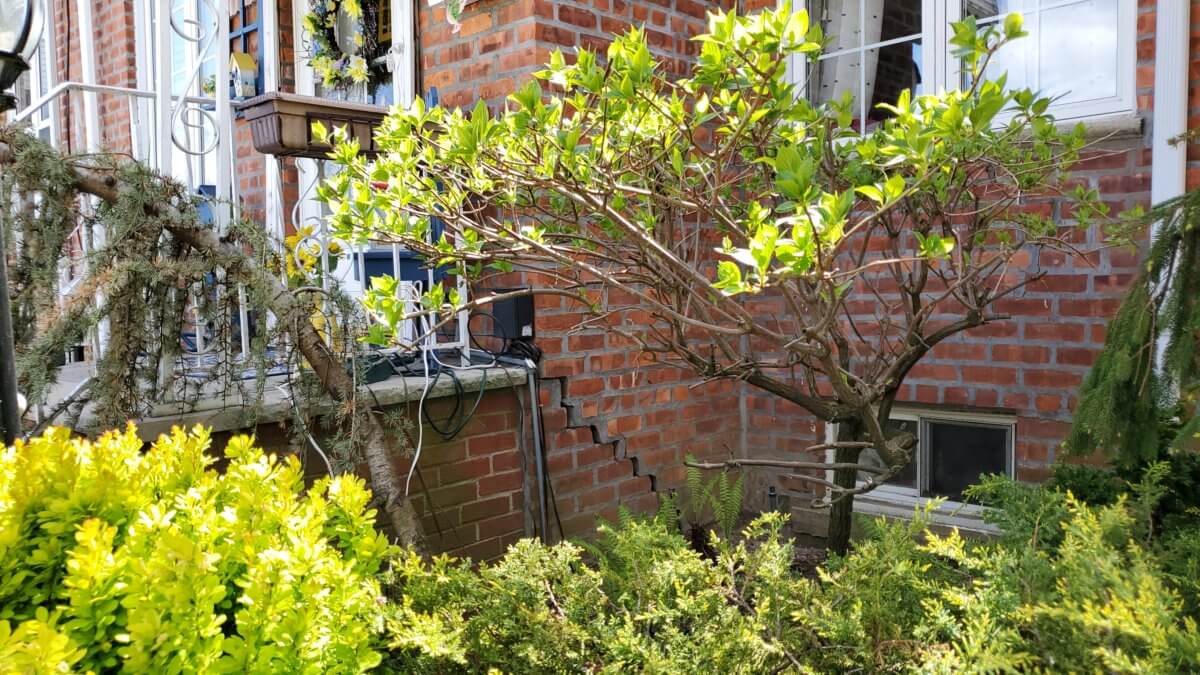
One resident, Danny O’Neill, was previously compensated for damage to his water heater but denied payment for cracks sustained to the front stoop and his home’s foundation.

“There was massive machinery here every day, pounding the ground over and over again. Our houses were rattling and shaking,” O’Neill said. 

After incessant pounding, O’Neills water heater burst. CAC Industries took responsibility and O’Neill was compensated $1,000 for a new water heater. However, O’Neill’s damaged front stoop, only a few feet away from the construction, was not covered.

Wednesday, July 26, 2017

If you want something fixed, call the media

From NY1:

Harnisher spent months trying to get the city to fix his property, but instead, he said he got the runaround. That all changed after the 78-year-old reached out to NY1 and we reported on the problem last week. City representatives and EIC have had several meetings since then. The city says repairs will begin next week.

"They have a plan that they are going to put things together with DDC from the city, and they are overseeing it, and they are going to put additional rocks, bring the levels up and address some of these issues," Harnisher said.

Harnisher allowed the city to use his property after they gave him a written promise to return it to its original condition. Initially, the city told us Harnisher would have to go through his insurance company to recover the thousands of dollars in pool repair costs. But since our report, he's reached a comprise with EIC.

"Thank God, speaking to you folks," Harnisher said. "I was frustrated since the middle of April."

Harnisher says he hasn't gotten a date yet as to when the actual construction will start, but he's happy things are finally moving along. He'll be even happier once the job is done.

Saturday, April 22, 2017

Organized crime group flooded NYC streets with fake PA license plates

HARRISBURG — Attorney General Josh Shapiro today announced criminal charges against a dozen people accused of taking part in a major organized crime ring that fraudulently obtained more than a thousand Pennsylvania license plates and used them to fuel a massive criminal enterprise involving automobiles in multiple states.

By illegally renting the license plates in New York City and other locations, this crime ring profited significantly and allowed those who used the fraudulent plates to avoid paying more than $1 million in parking fines and EZ Pass tolls across several states.

The organized crime ring was headed by Rafael Levi, 50, of Brooklyn, N.Y., Attorney General Shapiro said at a news conference today at the Office of Attorney General in Strawberry Square. Charges were also filed today against 14 Pennsylvania businesses involved in the crime ring. The charges followed an extensive investigation by the Attorney General’s Insurance Fraud Section and a statewide investigative grand jury.

“This organized criminal ring used legitimate business tactics – applying for licenses and insurance, car loans and purchases – for completely illegitimate purposes,” Attorney General Shapiro said at today’s news conference. “From fraudulently-obtained license plates to washed car titles to multiple other frauds, they gamed the system to rack up millions of dollars in illegal profits. It’s widespread criminal conduct and today we brought a halt to it.”

According to a grand jury presentment made public today, here are the major elements of the fraudulent schemes perpetrated by the Levi ring:

  • License plates fraudulently obtained : Levi and his associates provided fraudulent documents, to the PA Departments of Transportation and State. As a result, they illegally obtained more than a thousand Pennsylvania license plates. They rented the plates for $400 a month or more. The people who got these plates avoided paying parking fines and EZ Pass tolls totaling $1 million in New York, Pennsylvania and neighborhood states.
  • Fake insurance cards: The Levi ring provided cars and vehicles with fake insurance cards. When accidents would happen involving any of these cars, motorists filed claims with insurance companies – but there was no legitimate policy to pay on.
  • Washed car titles : The ring issued phony letters to PennDOT which enabled them to get clean titles on vehicles. The Levi ring scammed $500,000 owed to financial institutions through this part of the scheme.
  • Fraudulent odometer rollbacks: The ring rolled back odometer readings on 35 cars – enabled them to sell cars for more money than they otherwise would’ve sold for.
  • Drivers’ licenses: The ring obtained Pennsylvania drivers licenses at an address in Pennsylvania that they defendants never lived at – another part of the scheme.

“Rafael Levi and his co-defendants used all these criminal schemes to live in the lap of luxury,” Attorney General Shapiro said, citing a prime example: Luxury autos which the ring obtained through fraud, including a red Ferrari.

Through this fraud, the ring would get one of their interlocking dealerships to “buy” a vehicle in cash. The ring then proceeded to wash the car through another of the Levi organization’s many dealerships. The ring avoiding paying more than $100,000 in PA sales tax in this manner.

Attorney General Shapiro said the investigation was ongoing, and investigators have notified law enforcement in other states of possible criminal conduct involving the Levi ring in other states.

This investigation began after the Attorney General’s Insurance Fraud Section received information from the Pennsylvania State Police. Agents from the Attorney General’s office worked closely with State Police and investigators from the office of New York State Attorney General Eric T. Schneiderman.

Tuesday, February 7, 2017

Out of state car registrations cost NY $93M

From Crains:

Newcomers are required to register their cars with New York authorities within 30 days of moving to the state, but many don't bother. As a result, they cheat the state and city out of millions of dollars in revenue while making use of precious free parking spaces.

Neither the city nor the state could provide an exact number of improperly registered cars on the road, but a 2011 state Senate report found that nearly 25% of all accidents in the state involving cars with Pennsylvania license plates occurred in Brooklyn—a number that suggests many of those cars' owners were New York residents, not visitors.

The report also found that motorists who live in New York but drive cars registered out of state cost the city $73 million in unpaid parking tickets and deprive the state of $1 million annually in fees for license plates, titles and vehicle registrations.

But those unpaid tickets and uncollected fees still take a back seat to the loss of potential sales tax revenue. A New Yorker who pays the average price for a new car—$33,560, according to Kelley Blue Book—must fork over about $3,000 in sales tax. Approximately 125,000 new cars were added to state Department of Motor Vehicles registration rolls in 2015. If up to 25% of residents' vehicles were purchased out of state, as the Brooklyn accident number suggests, New York could have lost out on more than $93 million in tax revenue.

Wednesday, October 19, 2016

Feds amend flood maps

From Crains:

Federal officials have agreed to amend New York City's flood maps a year after the de Blasio administration filed an appeal on the grounds the charts were too pessimistic.

The new maps will likely shrink the boundaries that dictate who must purchase flood insurance, and may prescribe lower flood elevations, which would save some building owners money in flood-insurance premiums.

"Our city needs precise flood maps that reflect real risks, both today and years from now—and we have to do that fairly," Mayor Bill de Blasio said in a statement.

Flood insurance is required for any homeowner in a flood zone with a federally backed mortgage, but for decades the government subsidized premiums, which came back to haunt the National Flood Insurance Program after payouts from a series of catastrophic storms depleted its cash reserves.

Saturday, July 2, 2016

Discounts for dashcams

From NY1:

State Senator Jose Peralta and Assemblymember Alicia Hyndman introduced legislation Thursday that would give drivers of non-commercial vehicles insurance discounts if they install and operate a dashboard camera.

They say it is part of an effort to promote greater safety for drivers and pedestrians.

In a statement, Senator Peralta said that devices capturing road footage can provide visual evidence and protection for drivers and pedestrians in case of accidents.

“We must ensure that we use available technologies to promote safety,” Peralta said. “With a dashboard camera installed in your car, you can provide footage in case of hit-and-runs and accidents. You can also fight a ticket, and you can even capture footage of unrelated events as you drive.”

If the proposed bill becomes law, New York would be the first U.S. state to require car insurance premium reduction for vehicles that have an operating dashboard camera.

Tuesday, May 26, 2015

Regulating motorized scooters

From CBS New York:

Two New York lawmakers from Queens have introduced bills to regulate motorized bicycles used commercially with safety and insurance requirements.

Sen. Jose Peralta and Assembly member Aravella Simotas are pushing for the Department of Motor Vehicles to maintain a registry, establish safety regulations, and set minimum liability insurance coverage.

Under the bills, drivers would have to register them with the DMV and traffic infractions would be punishable by fines of $25 to $100.

The scooters, according to the lawmakers, have become part of the fabric of small businessesmaking deliveries throughout New York City. They said attempts to ban them haven’t worked, and accidents can create big liability issues.

Simotas said she’s heard from too many people about near misses and being hit by riders.

Peralta told 1010 WINS the City Council banned delivery scooters in 2004, but since then the number of scooters has actually increased.

Thursday, April 9, 2015

HHC deep in the hole

From the Daily News:

The city's cash-strapped public hospital system will have to bring in hundreds of thousands more patients to overcome its dire financial troubles, Health and Hospitals Corp. President Ram Raju said Tuesday.

In a speech to hundreds of hospital workers, Raju pledged to increase the number of patients using the system’s 11 hospitals and other facilities to 2 million annually by 2020 from the current 1.4 million. And he said the hospitals corporation would double the number of people enrolled in its MetroPlus health insurance plan to 1 million during the same period.

The hospital system has been bleeding cash for years, and faces a $753 million deficit next year, which will balloon to $1.5 billion by 2019.

And because of Obamacare, the agency faces deep cuts to federal aid traditionally funneled to hospitals that care for large numbers of uninsured patients. Under that law, the Health and Hospitals Corp. expects to lose $180 million in 2017, and a total of $3 billion by 2024.

At the same time, hospital officials expect they’ll still have to care for many people who can’t get insurance despite Obamacare, particularly undocumented immigrants.

Bringing in more patients who have insurance or can pay for care will help offset those cuts, Raju said.

Wednesday, November 5, 2014

Crocheron Ave littered with out-of-state junk cars

"Here in Auburndale, (on Crocheron Ave near 172 Street) what we have is a growing problem of cars with Illinois license plates. All five cars are owned by the same person, all of the plates have expired stickers. One of the cars is immobile, so is permanently attached to another with a tow bar.

Not only are these cars an eyesore, they have created a parking nightmare, and obviously are uninsured.

The attached pictures are of the two attached vehicles, others can be provided.

Here's a list of license plates as well.

S864356 VW Bug
H883574 Chevrolet Suburban
H950596 Toyota Corolla Wagon
17277X Ford F350 Truck
A425936 VW Bus

Local police have been contacted many times, as well as 311, no one has done anything. The cars rarely move, seemingly just for street sweeping, and are quickly parked back in place.

Any help is appreciated, I have been a reader of your website for a long time.

Thank You." - anonymous

Saturday, January 11, 2014

Better off without flood insurance?

From the Forum:

The fact that many homeowners in Queens are still rebuilding and recovering from Sandy, more than a year later, is little surprise given the storm’s historic levels of destruction.

But, what may be surprising is some homeowners’ conclusion that they may have fared better in the end without any flood insurance whatsoever.

Such is the case for Belle Harbor resident Irene Dougherty, who moved to the Rockaways with her husband in 2000.

Dougherty, who is still in the process of rebuilding certain parts of her home, estimated her total damages from the storm in the $50,000 to $60,000 range.

She said she received around $26,000 from her flood insurance – but the majority of that money was used to replace her three sons’ sports equipment and her husband’s tools, which had all been stored in basement. The Federal Emergency Management Agency did not cover any of the basement’s contents or other damages to the room.

Dougherty said that she and most homeowners who carried flood insurance received only about $3,500 from FEMA, mainly as temporary relocation expenses.

Overall, Dougherty said that they didn’t fare as well as other homeowners in the area who had no flood insurance. Many of those people, she said, were entitled to maximum amounts of aid, close to $35,000.

And, once people received the maximum from FEMA, that often helped paved the way for other programs from the state, which could add thousands more.

“For some people in the area Sandy was the best thing that ever happened to them,” Dougherty said, referring to the fact that they had no insurance and were given maximum amounts from FEMA and thus able to rebuild their homes even better than they were before the storm.

“In hindsight, I would have been much better off had I not had flood insurance,” Dougherty said.

“We thought we were doing the responsible thing and now I feel like we were penalized for it.”

Thursday, December 12, 2013

School construction budget to be gutted

From Crain's:

At the stroke of midnight on Dec. 31, nearly $140 million will effectively vanish from the budget of one of the city's biggest builders, the New York City School Construction Authority. In the following two years, at least another $260 million will disappear, bringing the total to $400 million—enough to build as many as 10 new schools, say SCA officials.

The losses stem not from budget cuts or cost overruns, but from an unprecedented escalation in the price of the construction insurance that the agency must have to cover the costs of potential injuries suffered by workers on the roughly $2 billion worth of schools the agency builds or rehabs annually.

By most accounts, the culprit is an arcane, century-old rule called Labor Law 240, which mandates that developers assume 100% of the liability for accidents on a building site regardless of fault. That law and a recent run-up in the size of court settlements in such cases have moved insurers to push premiums to record heights.

“As a result of Labor Law 240, which imposes strict and absolute liability on owners and general contractors for gravity-related accidents, the SCA's insurance costs are three to four times greater than they would be for the same construction program in New Jersey, which does not have a similar law,” an SCA spokeswoman said. “The impact of the law on the SCA effectively results in the construction of fewer schools because the additional funds that must be spent on insurance will be unavailable for SCA capital projects.”

After months of rising complaints from contractors and developers about their own escalating insurance costs failed to move Albany legislators to change the law, advocates are seizing on the SCA case as the one they hope will finally tip the balance.

Monday, October 28, 2013

Big increase for flood insurance

From CBS New York:

U.S. Reps. Carolyn Maloney and Nydia Velazquez (D-N.Y.) warned Sunday a dramatic increase that could soon be facing New Yorkers.

The lawmakers joined property and small business owners, co-op residents and other community members Sunday at 200 East End Ave., a co-op building on the Upper East Side that recouped $4 million in damage after Superstorm Sandy, but now reportedly could be hit with astronomical insurance premiums as a result of the Flood Insurance Reform Act of 2012.

Maloney said in a news release that the rising flood insurance premiums are not affordable, and could deter people from buying insurance at all. Maloney asked for a delay in the rate increases, which she said could raise New Yorkers’ premiums by $5,000 to $10,000.

Maloney said the National Flood Insurance Program is crucial, but it cannot be built on the backs of hardworking New Yorkers.

A recent City of New York study indicated that New Yorkers could see their rates jump by as much as $10,000, from current levels as low as $430, as a result of the Flood Insurance Reform Act and upcoming Federal Emergency Management Agency Maps, Maloney’s office said.

Her office said New Yorkers from the Upper East Side to Red Hook, Brooklyn and the Rockaways could be affected.

Wednesday, January 30, 2013

New flood maps a rude awakening


From the Daily News:

A whopping 35,000 city homeowners whose dwellings were lashed by Hurricane Sandy will now be forced to raise their houses by several feet or face skyrocketing flood insurance premiums.

The federal government Monday added the startling number of buildings to its flood danger zone maps for Brooklyn, Queens, Staten Island and Westchester County, exposing homeowners to new building codes, shrinking property values and other painful costs.

People whose homes are in the flood zone will have two years to elevate their buildings to protect them from surging seawater or begin to face huge spikes in their flood insurance premiums.

The increased premiums will be phased in over several years once the maps are adopted — likely in 2015.

Chunks of southern Brooklyn, the Rockaways and Staten Island not previously labeled at risk were added to flood zones on the new maps. Maps for Manhattan and the Bronx are due out next month.

Check them out here: region2coastal.com

Sunday, January 13, 2013

Water & sewer line protection program in place

From Bayside Patch:

The city has launched a water and sewer line protection program this week to prevent homeowners from paying to repair breaks in their connection to the city’s water main.

Carter Strickland, commissioner of the city’s Department of Environmental Protection, said it costs property owners anywhere between $3,000 and $5,000 to repair a water line break and between $10,000 and $15,000 to fix a sewer line break.

Now, homeowners can pay a monthly fee to cover potential service line issues.

State Sen. Tony Avella, D-Bayside, praised the DEP’s program. Recently, he held a press conference to discuss the financial burden incurred by homeowners who had been forced to repair breaks in their connection to the city’s water main.

In many cases, the connections had been broken under the city’s streets.

The DEP has selected American Water Resources as the provider for the program. Water customers would pay $3.99 per month for water line protection and $7.99 per month for sewer line protection.

Friday, December 21, 2012

Who knew you could do that?


From the Daily News:

Broad Channel homeowner Joan Delahunt, still reeling from the impact of Hurricane Irene, was working on a plan to raise the level of her flood-prone home when Superstorm Sandy struck.

“The [insurance] adjuster called me the week before Sandy hit,” said Delahunt, a musician and teacher, whose home was wrecked beyond repair from the October storm. “I had most of the paperwork I needed.”

Homeowners like Delahunt can get financial help to raise the level of their homes under a little-known provision in their flood insurance.

Local civic leaders are calling on the city to help streamline the process so more Broad Channel property owners can increase the elevation of homes and stave off future flood devastation.

“After Sandy, during the clean-ups, I ran into a lot of people who said they are going to raise their homes,” said Dan Mundy Jr., president of the Broad Channel Civic Association. “But it’s a stress on their resources. More people would do it if they knew about this program.”

Mundy said property owners who file Increased Cost of Compliance claims through the National Flood Insurance Program can receive up to $30,000 to help raise structures above the flood elevation level.

In order to qualify, homeowners must have sustained “substantial” damage. It’s a standard that, sadly, won’t be difficult for many homeowners to reach.

Sunday, December 2, 2012

End of the coastal lifestyle?


From the NY Times:

New York and New Jersey residents, just coming to grips with the enormous costs of repairing homes damaged or destroyed by Hurricane Sandy, will soon face another financial blow: soaring flood insurance rates and heightened standards for rebuilding that threaten to make seaside living, once and for all, a luxury only the wealthy can afford.

Homeowners in storm-damaged coastal areas who had flood insurance — and many more who did not, but will now be required to — will face premium increases of as much as 20 percent or 25 percent per year beginning in January, under legislation enacted in July to shore up the debt-ridden National Flood Insurance Program. The yearly increases will add hundreds, even thousands, of dollars to homeowners’ annual bills.

The higher premiums, coupled with expensive requirements for homes being rebuilt within newly mapped flood hazard zones, which will take into account the storm’s vast reach, pose a serious threat to middle-class and lower-income enclaves. In Queens, on Staten Island, on Long Island and at the Jersey Shore, many families have clung fast to a modest coastal lifestyle, often passing bungalows or small Victorian homes down through generations, even as development turned other places into playgrounds for the well-to-do.

While many homeowners are beginning to rebuild without any thought to future costs, the changes could propel a demographic shift along the Northeast Coast, even in places spared by the storm, according to federal officials, insurance industry executives and regional development experts. Ronald Schiffman, a former member of the New York City Planning Commission, said that barring intervention by Congress or the states, there would be “a massive displacement of low-income families from their historic communities.”

Thursday, November 29, 2012

Schools...good and bad news

From the Daily News:

The Bloomberg administration has abandoned a controversial plan to close 10 struggling city high schools.

Just seven of 17 troubled high schools that the city tried to close this spring ended up on the chopping block in 2012 after many posted gains on city progress reports.

The city had sought to close the schools this summer and immediately reopen them with new instructors, a turnaround plan the teachers union opposed in court.

A court battle that lasted six months, ending with a judge’s ruling in the union’s favor. Now it appears the city has reversed plans to close 10 of those schools.

Students and teachers were thrilled at schools that were spared the axe.

Newtown High School in Queens also jumped from a C to a B on its progress report this year and made it off of the city’s hit list.


From NY 1:

Eleven days after Hurricane Sandy, the Rockaway Beach neighborhood around Scholars' Academy was like no-man's land. Residents fled, leaving behind downed wires, waterlogged debris and sand soaked with heating oil.

But the doors to the school building were open, similar to what we saw at other damaged schools across the city. Contracted crews moved in and out, pumping, repairing and decontaminating, all to get students back as soon as possible.

Yet at some point, school officials say someone must have entered the building and exited with about $100,000 worth of stolen equipment.

"We discovered that approximately 90 iPads were stolen and six to 10 iMacs," said Brian O'Connell, the principal of Scholars' Academy.

It wasn't just pricey tablets and computers. Also reported missing were two automated external defibrillators, each estimated to be worth about $1,600.

This was not an isolated incident. The New York City Department of Education says 30 schools have reported looting so far. Among the items missing include cameras, calculators and a projector.

Officials say they don't yet know the overall value, but there is no insurance to cover it.

Tuesday, June 12, 2012

NYC vulnerable to storms


From the Huffington Post:

When people think of hurricane damage they usually think of Miami or New Orleans, but a new report suggests the greatest financial risk of all may be much farther north: the greater New York City area.

Data analysis firm CoreLogic said in a new report released on Thursday that the U.S. metropolitan area at greatest risk, both in the number of properties affected and the potential value of damage, was New York City. For the firm's purposes, the area also includes Long Island and northern New Jersey.

While most people associate hurricane damage with wind, the storm surge from rising waters caused by cyclones has just as much impact, if not more.

That was painfully evident to residents of the northeastern states in particular after last summer's Hurricane Irene. Although the insured impact of Irene on the New York City area was relatively limited, one of the insurance industry's nightmares has always been a major hurricane traveling up the Hudson River and striking the city and its environs.

By some estimates, such an event could cause $100 billion just in insured losses, with economic damage some order of magnitude greater than that.

CoreLogic estimated the property at risk in the New York City area was worth some $168 billion.

Saturday, March 10, 2012

Having health insurance and still going bankrupt

From the Daily News:

Big insurance companies and some greedy doctors are to blame for the growing number of New Yorkers whacked with ”surprise” medical bills, a state inquiry has found.

Department of Financial Services Superintendent Benjamin Lawsky Wednesday released the results of his probe into the unanticipated bills that are slamming consumers.

"Simply put, surprise medical bills are causing some consumers to go broke," the report states.

His agency reviewed 2,000 complaints from 2011 and surveyed the 11 big insurers and HMOs who cover 95% of the New Yorkers who have health insurance.

The review found that patients who went out of their way to make sure the non-emergency treatment they sought was covered by their plan still wound up with bills from specialists — such as assistant surgeons, anesthesiologists and radiologists — who were outside their plan.

That’s because insurers often don’t make clear who will be involved and how much it will cost, the report found.


Also from the Daily News:

The fix here is pretty simple.

One, the Legislature must cap an individual patient’s responsibility for the cost of emergency care. A heart attack or late-stage cancer discovery should not bankrupt a family.

Two, nonemergency patients must be given reasonable notice if an out-of-network practitioner is scheduled on their case.

Three, the “small but significant number” of out-of-network doctors who the state says are inflating bills for treatment must feel the wrath of state watchdogs.

And — this is absolutely critical — insurance companies must be required to clearly disclose, up front, precisely what they will pay for out-of-network services so consumers can accurately compare health plans.

Friday, April 1, 2011

Help for homeowners?

From the NY Post:

The government is looking to plug homeowners' biggest leaks.

The Department of Environmental Protection wants to know if plumbing companies would be willing to repair private water lines connected to city mains in exchange for low monthly insurance payments.

Last year, 3,508 unfortunate homeowners learned the hard way that they are responsible for fixing pipes hooked up to the city's system, even if the leak occurs in the middle of the street.

Those repairs now average a distressing $4,000 -- a big hit to most families' budgets.

But under an insurance system, which is currently in use in other cities, people would pay the plumbing company about $5 to $10 a month, and there would be no additional cost for a water-pipe fix.

The program would be completely voluntary. Right now, the city has only issued an RFEI -- request for expressions of interest -- to see if companies like the idea.

"Eighty percent of the leak calls we get, the homeowner ends up being responsible," noted DEP spokesman Farrell Sklerov.