
Tuesday, February 27, 2024


Friday, September 9, 2022
State and city shafts the poor immigrants left homeless after Ida

City Limits
Vicente Guerrero, 40, finds it hard to believe that a year has already passed.
“It can’t be a year since the flooding,” Guerrero said by phone on Sept. 1, the one-year anniversary of the day the remnants of Hurricane Ida passed through New York, washing away everything in his three-bedroom basement apartment in Flushing, Queens.
After losing his belongings, Guerrero slept on the couch of a friend in Manhattan—a fellow food delivery worker like himself—for
more than four months, until he finally found a room in a three-bedroom
apartment in Queens that he could afford, and that was not in a
basement.
Guerrero’s home was one of 11,000 damaged by floods from Hurricane Ida, according to Gov. Kathy Hochul’s office.
As the one-year anniversary of the storm passed this week, many of
those impacted continue on a slow recovery: homeowners who filed a
negligence claim against the city are getting denied, and more than 100 displaced people who were placed in hotels are still in them.
And while 41,367 households across New York state were approved for $223.3 million in disaster assistance from the Federal Emergency Management Agency (FEMA), another Ida relief fund established by the city and state to help undocumented storm victims has been less impactful.
The Ida relief fund for “excluded” New Yorkers
was set up by the city and state for people who suffered damages from
the historic flooding but didn’t qualify for aid administered by FEMA
because of their immigration status. But a year later, after extending the application period several times, just a fraction of the funding has been used. The program closed to new applicants definitively on April 29.
According
to New York’s Department of State, out of 554 applicants, 373 were
approved for aid and 330 have received a cash payout to cover what they
lost. In total, just under $2 million—or $1,901,034—of the $27 million
allocated for the program has been used and distributed to storm victims
as of Sept. 1.
Advocates point to several reasons for the lackluster participation numbers. The relief fund was announced by city and state officials on Sept. 26, more than 20 days after the storm hit New York, when some victims would likely have already moved out of damaged residences without documenting the losses they’d suffered.
The six community-based organizations (CBOs) charged with reviewing applications and administering the funds have explained
that there are multiple checks to go through before an applicant can
access funding, and relies largely on a victim’s ability to gather
evidence of damages.
That was one of the reasons Guerrero said he
never applied for the fund: Along with a general distrust of government
programs, he anticipated it would be difficult for him to substantiate
what he spent related to his displacement since he was more focused on
surviving in the immediate aftermath of the storm, rather than
documenting every step of his loss, he said.
Since May, when the fund closed for good, 42 new applicants received a reimbursement. It’s unlikely that the 43 applicants still pending will receive the maximum aid amount, and even if that happens, there would still be several millions left unused from the $27 million allocated for the program.
Thursday, August 11, 2022
Mayor Adams and the Department of Social Services covered up violations at shelters housing migrant families arrivals and fires official who tried to warn them
Several sources tell News 4 that staff at the Department of Social Services, including the agency's legal team, were angry after being instructed to hold off on telling City Hall, and not promptly notify the Legal Aid Society, as has been past protocol.
City officials acknowledge there was a delay in disclosing the
violations, but they say top officials at the Department of Social
Services including the Commissioner were unaware that they are legally
obligated not to house families overnight in their intake office. This,
despite the fact that a report is sent out each morning at 4am to notify
social services managers of any violations.
The chief spokesperson for New York City's Department of Homeless Services was fired Friday after pushing back against alleged lies and omissions by her boss regarding illegal conditions in the city's homeless shelter system, according to a source familiar with the situation.
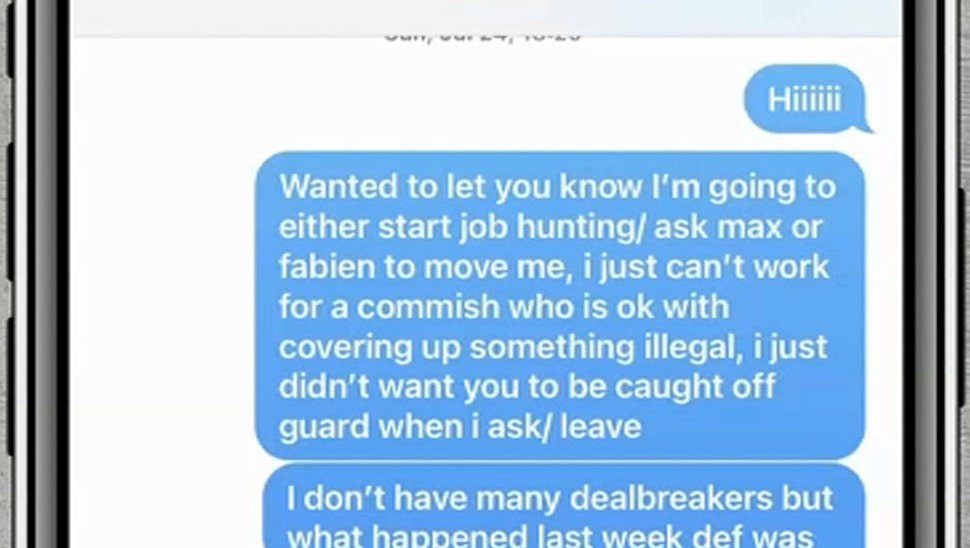
Email and text messages provided to the News 4 I-Team suggest that the Deputy Commissioner for Public Information Julia Savel had resisted efforts by Social Services Commissioner Gary Jenkins to conceal crowded conditions in the city's homeless shelter system from his superiors at City Hall, from the media and from the public.
In one text message dated July 20, Savel indicated to a City Hall spokeswoman that she was planning to inquire about moving to a different agency, saying "Just can't work for a commish who is ok with covering up something illegal."
Staff at the Department of Homeless Services say they learned on July 18 that families with children had been forced to stay overnight in the city's homeless intake office in the Bronx, known as PATH — a practice that is prohibited under a 2008 court settlement between the City and the Legal Aid Society, which represents people living in shelter.
The text messages imply that Savel gave City Hall a heads up the next day, on July 19. That same day, Mayor Adams announced NYC needed federal funding to help with a surge of 2,800 asylum seekers who had entered the shelter system in recent weeks. But the mayor did not specifically mention any legal violations or families sleeping in the intake office.
Later that week Adams said he did not learn the city had violated its "right to shelter mandate" until July 20.
Several sources tell News 4 that staff at the Department of Social Services, including the agency's legal team, were angry after being instructed to hold off on telling City Hall, and not promptly notify the Legal Aid Society, as has been past protocol.
City officials acknowledge there was a delay in disclosing the violations, but they say top officials at the Department of Social Services including the Commissioner were unaware that they are legally obligated not to house families overnight in their intake office. This, despite the fact that a report is sent out each morning at 4am to notify social services managers of any violations.
Suddenly, Stephen Banks doesn't look that bad now.
Sunday, January 16, 2022
The world's borough has the nation's most jobless
In its Dec. 21 update, the New York State Department of Labor reported that, in New York City, the nonseasonally adjusted unemployment rate has continued its decline, dropping from 8.4 percent in October to 8 percent in November. In Queens specifically, the same rate dropped from 8.1 percent in October to 7.7 percent in November. In November of 2020, Queens’ unemployment had been 11.5 percent.
While improved, both the Queens and citywide unemployment rates are still considerably higher than those of New York State and of the nation, which decreased from 5.9 percent in October to 5.5 percent in November and 4.3 percent to 3.9 percent, respectively.
So, why is the unemployment rate so much higher in New York City and Queens than it is state and nationwide?
St. John’s University Professor of Economics Dr. Charles Clark said that one answer to point to might be the so-called “Great Resignation”: During the past year of the pandemic, people across the nation have been quitting their jobs en masse in search of something better.
Forest Hills Chamber of Commerce President Leslie Brown noted such trends in her area. “As we know many people did not return to the workforce after the unemployment Covid-19 benefits ended,” she told the Chronicle. “There were numerous reasons for this such as low minimum wage, lack of child care, health concerns [and] lifestyle changes.”
But according to Clark, the Great Resignation is not new.
“In terms of the number of people voluntarily leaving jobs, that has been steadily growing for a very long time,” he told the Chronicle.
More specifically, he told the Chronicle, in January 2011, approximately 1.8 million Americans in nonfarm industries quit their jobs. As per the trend, that number had risen to more than 3.3 million by January 2021, as graphed below.
None of that, however, explains why unemployment is higher across Queens than it is state- or nationwide. Clark speculated that boroughs like Queens and the Bronx might see higher rates because of their higher immigrant populations.
Queens Chamber of Commerce President Thomas Grech pointed to the large hit that the hospitality industry has taken during the pandemic.
“I think a lot of people that work in that industry have decided to find another career choice,” he told the Chronicle. “At the Queen’s Chamber of Commerce, we want to double down on workforce development, to make sure that those businesses — hotels and hospitality — have a regular supply chain, so to speak, of trained people to go into those jobs as things continue to get better.”
Myrtle Avenue Business Improvement District Executive Director Ted Renz also identified restaurant and retail as two sectors that have struggled to maintain staff; accordingly, individual businesses have changed their schedules.
“I’ve noticed that a number of retailers are closed, or some are closed different days, or they’re not open at all. Some are opening later,” he told the Chronicle.
According to the state Department of Labor’s preliminary numbers, prior to Omicron, restaurant employment increased in New York City from 1.894 million jobs to 1.907 million between October and November, a 0.69 percent increase.
Wednesday, November 24, 2021
NYC Council plans to give voting rights to immigrants residing in the city and country for 30 days
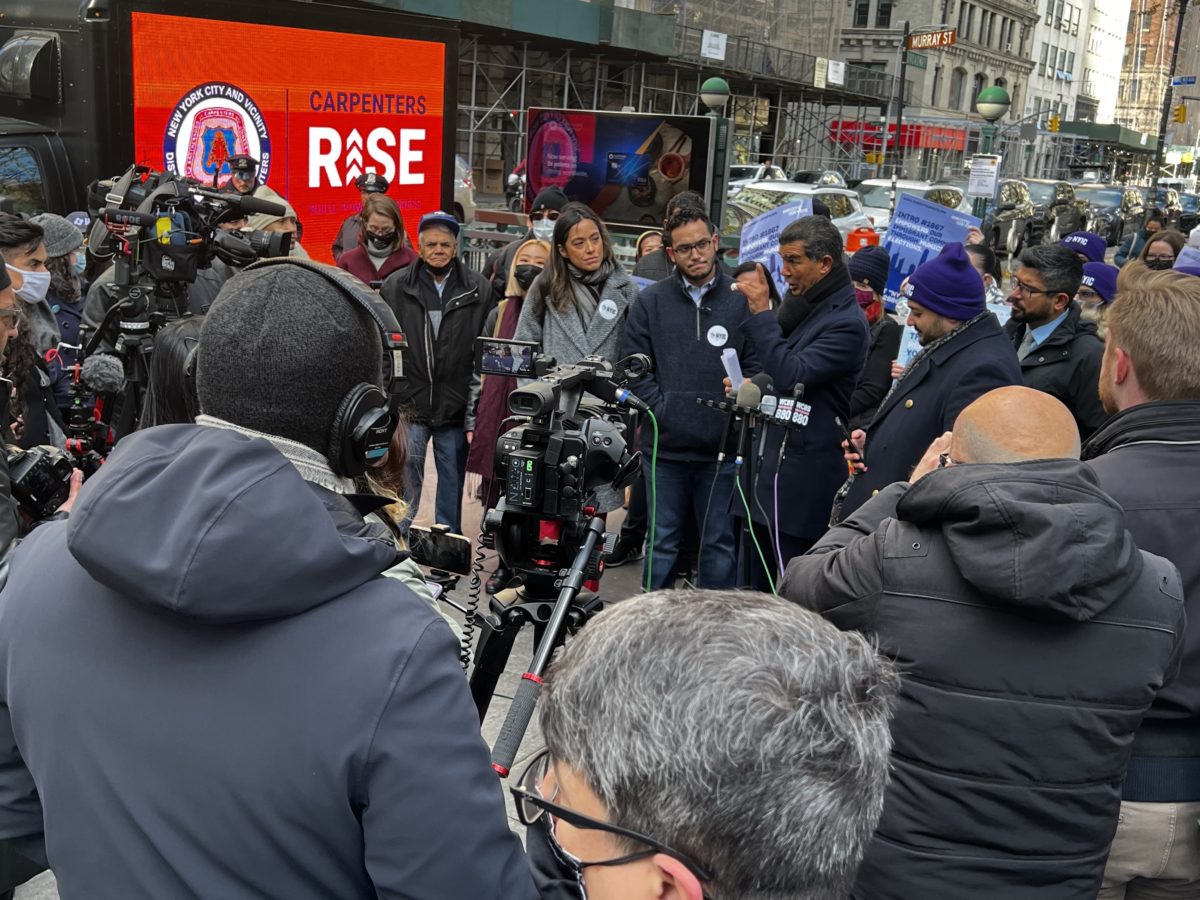
City Councilmember Ydanis Rodriguez (D-Manhattan) led other elected officials and several dozen advocate organizations in a City Hall Park rally Tuesday celebrating a measure that will allow roughly 800,000 non-citizens living in New York City for at least 30 days to vote in all city elections.
The measure dubbed “Our City, Our Vote ” now has a veto-proof supermajority 34 out of 51 City Council supporting the legislation guaranteeing passage at the council’s stated meeting on Dec. 9. It comes as nearly half of New York City households have a member with green card status or other undocumented status.
It also comes as a number of city lawmakers – once part of those immigrant households themselves – are leading the movement to pass the bill.
“My mom had all of her kids in a public hospital,” said City Councilmember and Brooklyn Borough President-elect Antonio Reynoso, who attended the rally. “My mom couldn’t vote for a representative that could ensure a quality education for her kids.”
Reynoso’s family came from the Dominican Republic and raised him in Williamsburg, which he now represents in the council.
“It’s about time that we finally get an opportunity where we show these representatives what we want, what we need and what we deserve at the voting booth, where it most matters,” Reynoso said.
He thanked Rodriguez and the work of the New York Immigrant Coalition, who have been organizing the rallies and the letters as part of the campaign to get the bill passed.
While Mayor Bill de Blasio has said he has “mixed feelings” about the bill because he feared that allowing noncitizens to vote might remove the incentive for people to become full citizens, Mayor-elect Eric Adams has voiced support for it.
Under the proposed legislation the New York City Board of Elections (BOE) would issue a separate voter registration form for green cardholders and other noncitizens who have the right to work. Those voters would then fill out a ballot with only New York City offices on it at the polls.
The bill also calls for training poll workers and community education campaigns to ensure every voter receives the correct ballot.
Tuesday, November 2, 2021
President Biden abdicates his immigration crisis fiasco onto New York City and Long Island schools
America’s crisis at the border is now a crisis in New York public schools.
The Biden Administration is flooding New York City and Long Island communities with thousands of unaccompanied immigrant minors captured crossing the Mexico-US border, often arriving here, as The Post recently reported, via clandestine flights in the middle of the night.
Data from the US Department of Health of and Human Services confirms that the New York area is a hotspot for shipping children rounded up illegally crossing the border without guardians.
Four counties alone, Suffolk, Queens, Nassau and Brooklyn, took in nearly 5,000 unaccompanied children in just 11 months, from Oct. 1, 2020 to Aug. 31, 2021, according to HHS.
With public education in the area costing about $28,000 per child, per year, that’s a $139 million hit on New York taxpayers to educate children arriving unexpectedly just in those four counties.
The arrival of these children, mostly teenage boys, in local schools is creating a classroom crisis that is strapping educational resources, costing taxpayers millions in un-budgeted dollars, and aiding gang-recruiting efforts, argue parents, teachers and immigration experts.
“We’re at maxed capacity for kids with special needs, but they’ll keep sending them,” lamented one high school teacher in Queens, among the communities hardest hit by the illegal-immigrant student dump.
Fifteen counties nationwide have received more than 1,000 unaccompanied children caught at the border over the past year, reported HHS. The top five counties on the list are all in Texas, California and south Florida.
But four of those 15 counties are right here in New York: Suffolk (1,528), Queens (1,314), Nassau (1,064) and Brooklyn (1,046). The Bronx nearly made the list, with 461 unaccompanied students. New York is the only state in America with four counties receiving more than 1,000 unaccompanied minors, despite its 1,700-mile distance from the southern border.
Sunday, August 23, 2020
The new depression manifests itself in Flushing
NY Post
The line stretched a quarter-mile before the sun was barely up Saturday, snaking around corners like bread lines in the 1930s. But the hungry in Queens are today’s New Yorkers, left jobless by the coronavirus.
Until the pandemic struck the city, La Jornada food pantry used to hand out groceries to roughly 1,000 families a week. Now, the number tops 10,000. And volunteers serve lunch every day to 1,000 — many of them kids with growling stomachs. Across the five boroughs, the hungry is in the hundreds of thousands, the Food Bank of New York estimates.
“It reminds me of the picture from the Great Depression where a man in a suit and tie is giving another man in a suit and tie an apple. That’s all he had,” La Jornada’s Pedro Rodriguez told The Post. “We give all we have, but that’s not enough.”
Seniors, moms and kids, singles — many immigrants from China and Mexico — wait for hours. They turn out in droves wherever, and whenever, the food pantry’s truck shows up.
“We feel like we are underwater, drowning in a tsunami of people,” Rodriguez, a volunteer who acts as the food pantry’s executive director, told The Post. “This isn’t like a little rain coming down. The numbers are unbelievable.”
Thursday, April 9, 2020
Hate to say that I told you so...*

Sunday, February 23, 2020
Immigrants have been very very good for NYC

NY Post
Immigrants love New York — they always have.
And they are having the greatest economic effect here, out of all the states, according to a new report.
The WalletHub study compared the economic impact of foreign-born populations on the 50 states and the District of Columbia. It used 23 indicators to determine which states benefit the most — and least — from immigration.
New York was No. 1 because “foreign-born population is almost 23 percent, second-highest in the country, and more than 12 percent of its households are made up of second-generation immigrants,” the report said, adding, “The percentage of income generated by immigrant households is over 25 percent, the highest in the nation.”
WalletHub analyst Jill Gonzalez attributed New York’s immigrant bounty to a number of factors.
“Some of the reasons immigrants have the highest economic impact in New York include the third-largest share of foreign-born workforce, over 27 percent, and the second-largest share of foreign-born business owners, over 25 percent,” she said. “The state also has the second-largest share of active physicians who are international medical graduates, 37 percent.”
In addition, New York has a large number of international students and enjoys the “brain gain” and innovation brought by immigrants.
Tuesday, June 18, 2019
Governor Cuomo ratifies State Senate bill for undocumented immigrants to get drivers licenses

THE CITY
Thursday, November 1, 2018
John Liu's awkward political ads
Just 20 Seconds on Unifying People pic.twitter.com/JfBVqccNkv
— John C. Liu (@LiuNewYork) October 29, 2018
From the NY Post:
Liu’s ad was in terrible taste, according to Republican Jewish activist Arthur Schwartz.
“‘Jews like pastrami so this will resonate with them.’ —Moronic New York democrat politician,” Schwartz tweeted Monday.
The campaign said they didn’t intend for the ad to create indigestion.
Just 20 Seconds on the Reproductive Health Act pic.twitter.com/shN9cO2aRQ
— John C. Liu (@LiuNewYork) October 29, 2018
"I'll fight for abortion rights as soon as I finish stuffing my face with lox!"
Just 20 Seconds on the NYS Liberty Act pic.twitter.com/aRbTF67i9F
— John C. Liu (@LiuNewYork) October 29, 2018
Not sure what he's eating here. An empanada? In fact I'm so distracted by trying to figure that out that I forgot the point he was trying to make.
This, on the other hand, is truly nightmare-inducing but it's doubtful that Trump cares.

Friday, December 22, 2017
NY is really good at making people leave

New York over the past year continued to lose more residents to other states than it gained — even as the overall population grew slightly thanks to a continued influx of immigrants, Census data shows.
During the 12-month period ending July 1, the state lost a net 190,508 residents to other states, according to the data. That pushed the net outmigration to over 1 million people since 2010 — the largest of any state, according to a review by the Empire Center, a fiscal watchdog group.
The net loss since 2010 is actually less than the net migration outflow of nearly 1.6 million during the comparable period of 2000-07, the Empire Center’s E.J. McMahon said in the review.
“The stories continue to be a lack of economic opportunity upstate ... and downstate it’s just cost,” McMahon said. “The city and downstate can’t hold people because there’s not enough affordable living.”
Wednesday, November 1, 2017
Strange terrorist incident kills 8, injures 11
From PIX11:
A man described as a "lone wolf" deliberately drove a rented truck into a West Side bike path in lower Manhattan, killing at least eight people and injuring 11 others in the first terror attack in New York City since 9/11, and just blocks from the World Trade Center.
A high-ranking police source tells PIX11 News the suspect has been identified as 29-year-old Sayfullo Saipov, a Tampa, Florida resident who arrived in the United States in 2010 from Uzbekistan, sources tell PIX11 News.
Saipov was brandishing two fake guns when he exited the truck after the multi-block rampage which left a trail of mangled bodies and twisted bikes. He yelled "Allah Akbar," which is Arabic for God is great.
"This was an act of terror — a cowardly act of terror aimed at innocent civilians going about their lives," Mayor Bill de Blasio said. "This action was intended to break our spirit. But New Yorkers are strong. New Yorkers are resilient and our spirit will never be moved by an act of violence.
No other suspects are being sought in the investigation.
Saturday, August 12, 2017
Getting to MS-13 through immigrants
From Fox News:
Critics of the sanctuary city crackdown say it will chill immigrants from helping ICE go after MS-13 gang members, but the feds say they have plenty of tools – including a change in visa status - to win cooperation from the immigrant community.
The options seem to be paying off, with investigators from ICE’s Homeland Security Investigations saying immigrant cooperation is making a big difference in the fight against the lethal and ruthless MS-13 gang.
In an atmosphere where cooperating with law enforcement is a death sentence imposed by the gang, most illegal immigrants appear to be more concerned about how to obtain legal resident status than financial reward, said one investigator who declined to be identified.
But at the same time, critics warn that the visa tool should be used only sparingly, since it could lead to fraudulent claims.
Thursday, June 8, 2017
BIG budget approved early

The City Council approved an early $85.2 billion budget for its 2018 fiscal year Tuesday, the last under term-limited Speaker Melissa Mark-Viverito.
The council added funding for summer jobs and a property tax exemption for veterans to Mayor Bill de Blasio's fiscal agenda but for the most part avoided the elaborate "budget dance" that involved the proposed removal and subsequent restoration of certain expenditures, a practice Blasio vowed to end. It was the earliest budget the council has delivered in 20 years, according to City Councilman Fernando Cabrera, D-Bronx.
But while the mayor and speaker declined a dance, they stepped into the ring on the issue of legal help for immigrants. The council added a provision ensuring universal representation regardless of criminal history; the mayor wants certain immigrants blocked from services.
Monday, June 5, 2017
Disagreement over immigrant defense fund

Mayor Bill de Blasio and Council Speaker Melissa Mark-Viverito failed to reach an agreement on whether the $26 million the city will set aside to provide free legal counsel to undocumented immigrants will cover those convicted of violent crimes—though the mayor emphasized that the contracting for the program will lie entirely in his hands.
The “budget handshake” at City Hall—touted as the earliest since 1992—was all smiles and self-congratulation until a reporter inquired whether the mayor and speaker, both liberal Democrats and longtime allies, had resolved their difference on the matter. New York’s “sanctuary city” statutes forbid the NYPD or Department of Corrections from honoring federal requests to detain foreign nationals lacking proper paperwork, unless those individuals have been convicted of one of roughly 170 violent offenses, such as rape, murder or terrorism.
De Blasio told the Observer at his proposed spending plan roll-out in April that, while he would meet Mark-Viverito’s request he make permanent a pilot program for attorneys for those fighting deportation, he would not allow city dollars to go toward the defense of someone found guilty of one of those 170 crimes—a stance he maintained today.
Thursday, December 22, 2016
NYS population went down this year

Fewer people are living in New York State, although it may not be that noticeable.
According to the latest census figures, New York saw its population drop by about 1,900 between July 2015 and July 2016.
While that's only a decrease of .01 percent, it's the first time the state's population has fallen since 2006.
More than 191,000 people in total left the state during the year ending on July 1.
That number was offset by the fact that New York led the country in foreign immigration and had more births than deaths.
New York has also lost nearly 850,000 people over the past six years, the most of any state.
Tuesday, August 30, 2016
Asians now are in favor of illegal conversion bill

An Asian advocacy group that criticized a bill to prevent so-called “illegal home conversions” as racist has reversed its position and is the first Asian group to publicly support the measure. In July, Members of the Asian Community United Society said the proposal to boost fines for dicing one- and two-family homes into multifamily apartments unfairly targeted the Chinese who live in such buildings. But now the group’s director says the bill will actually protect Asian immigrants from predatory landlords.
“Initially I was under the impression that Chinese homeowners were being targeted, and we were worried about their safety,” said Warren Chan, the executive director of the society. “We need to come together because these developers are taking advantage of our community.”
The bill, introduced in June, would impose greater fines on landlords who incorrectly subdivide homes and would also let the city put liens on properties when landlords fail to pay the penalties. In its early stages, the bill created a fund for residents displaced when the city vacates illegal buildings, but lawmakers scrapped the provision, because Council does not have the power to designate such a fund.
Chan and others previously argued that the legislation would put immigrant families on the street as the city empties dangerous homes. The city raided two such illegal conversions in Dyker Heights this month, leaving nearly 40 people without a home.
But Chan now says that property owners are the real bad guys, because unsanctioned construction work exposes residents to carbon monoxide poisoning, electrical fires, and building collapse. The city must adopt a two-pronged approach — pass the bill and increase the stock of affordable housing so new immigrants have options — he said.
Thursday, June 23, 2016
Illegal conversion bill introduced by Brooklyn City Council member

Brooklyn lawmakers introduced a long-awaited bill on June 21 to combat illegal home construction that activists say is tearing apart Bay Ridge and Dyker Heights, but critics say it could put immigrant families in a bind. A legal snag significantly delayed the legislation, so lawmakers dropped a sticky provision that created a relief fund for residents of diced-up homes who are displaced by city-issued vacate orders. But cracking down on illegal housing without a safety net will drive tenants — many of whom are immigrants — onto the streets or into overcrowded housing conditions, critics say.
“Given that the city has very little affordable housing options, where are they going to go?” said Aniqa Nawabi a spokeswoman for Chhaya Community Development Corporation, which advocates for Asian immigrants. “There can be overcrowding in other apartments, because people will go to live with family, 10 to an apartment.”
But legislators had to cut the provision, because it was holding up the works, according to the bill’s primary sponsor, who argued the plan would lead to few evictions, because the city only issues vacate orders on “immediately hazardous” buildings.
“It gives the commi ssioner the option if they find a fire is about to erupt or there’s smoke conditions or gas,” Councilman Vincent Gentile (D-Bay Ridge) said. “So not everyone will be displaced — the owner will get fined, the fine will go through, and they’ll financially suffer, but that doesn’t mean there will be a vacate order.”
The legislation, announced to great fanfare in March last year, would create a building violation called “aggravated illegal conversion” — denoting a flippant attempt to subdivide a house against code — that comes with a $15,000-per-unit fine for smaller homes with three or more illegal units. It would also let the Department of Buildings obtain warrants for suspected conversions and put liens on buildings whose owners do not pay up.
It does not affect buildings with fewer than three illegal units to protect otherwise compliant property owners who create basement apartments. Nawabi and Chhaya say the city should go a step further on that front and legalize basement apartments so it can better regulate them.
Tuesday, March 1, 2016
Overcrowding leads to bad outcomes

According to the latest Census Bureau data, about 9 percent of all households — or nearly 280,000 units — in New York City have more than one person per room, a common government measure of crowding. A decade ago, the rate was 8 percent. The change represents nearly a 13 percent increase. By comparison, the national crowding rate is 3.4 percent.
The crowding problem in New York worsens considerably in specific neighborhoods, particularly those with large working-class and immigrant populations where it is not unusual for two families to cram into apartments intended for one, and laborers to sleep two, three or more to a room.
While the Bronx and Brooklyn have the highest percentage of crowded units among the boroughs, according to Census Bureau data from 2014, the community district with the highest rate of crowding is in Queens and encompasses Elmhurst and southern Corona. There, a quarter of all residential units are considered crowded. A study published in February by StreetEasy.com found that five of the top 10 most crowded neighborhoods in the city were in central Queens.
The overcrowded dwelling typically finds its most severe expression in illegally converted basement and cellar apartments, most of them overcrowded and riddled with safety hazards such as shoddy construction, dangerous wiring and improper means of exit in the case of a fire.


