Showing posts with label honest graft. Show all posts

Sunday, October 20, 2024

The people, the lies and the conspiracy of the City of Yes


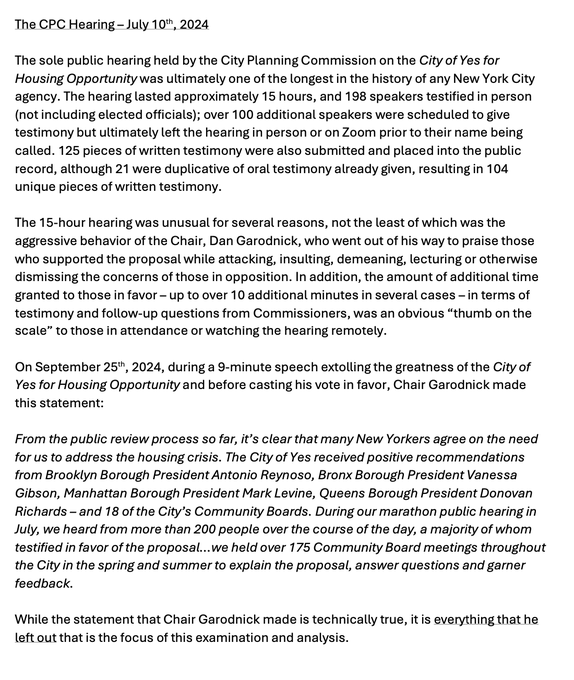
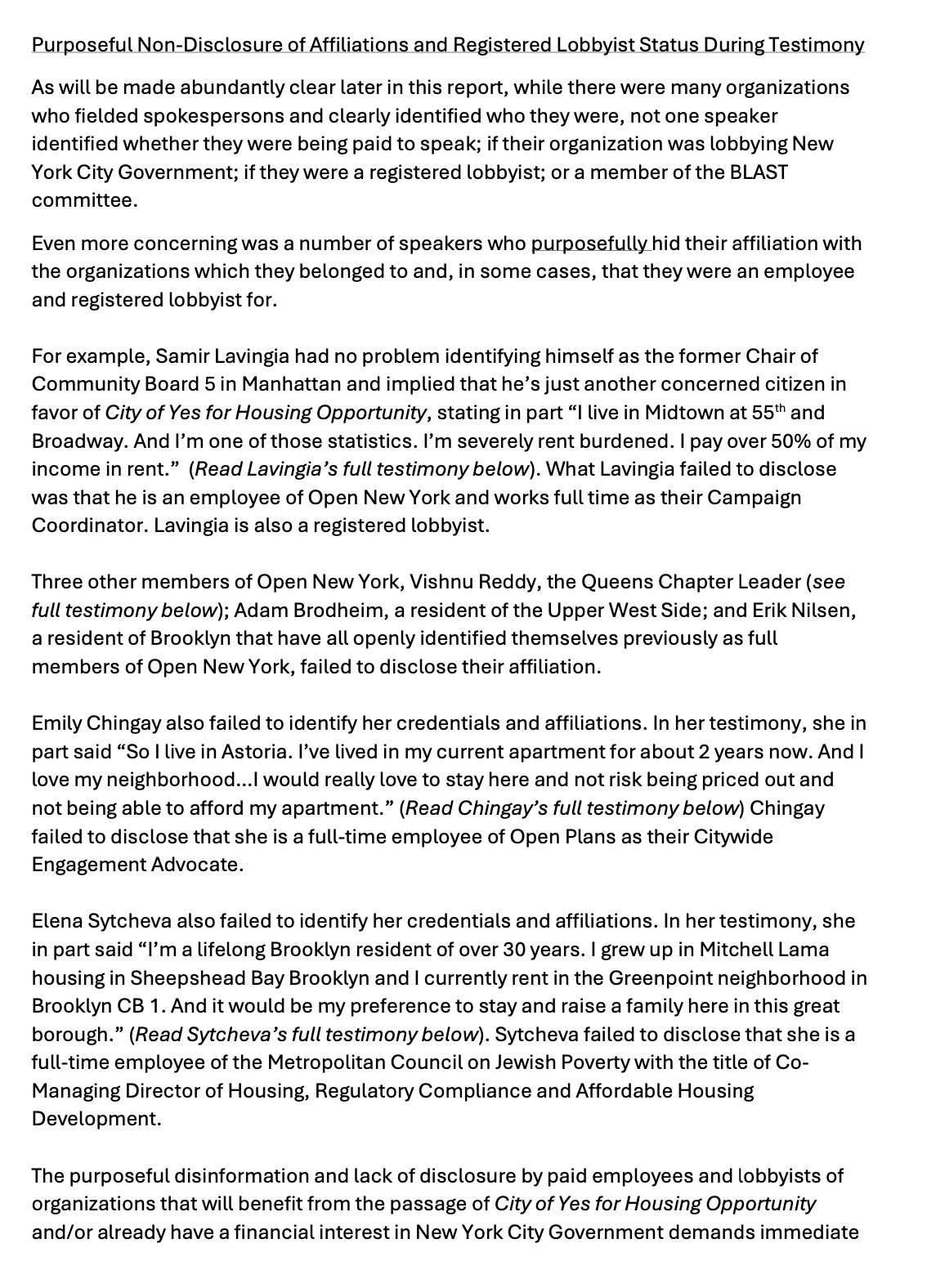
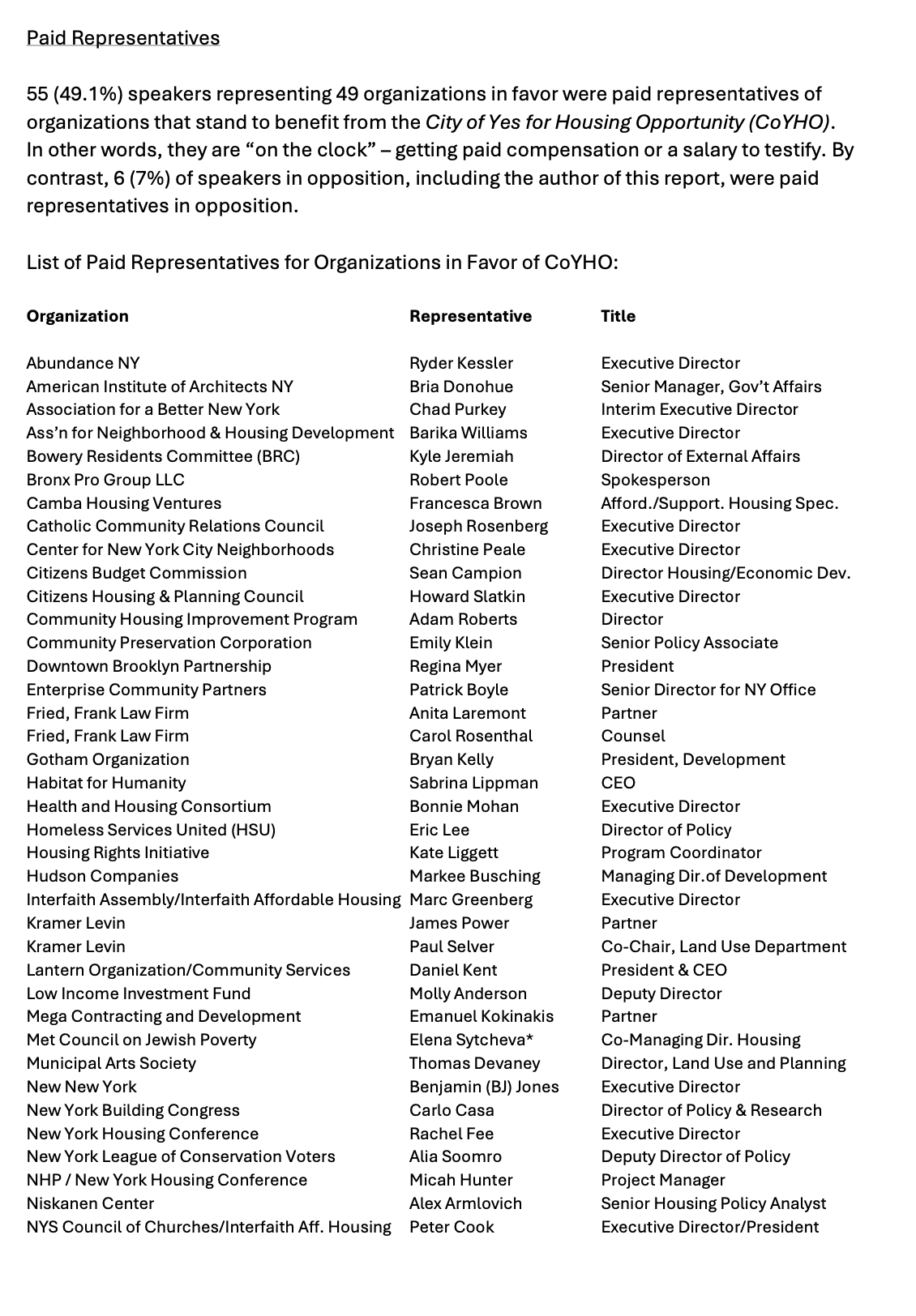
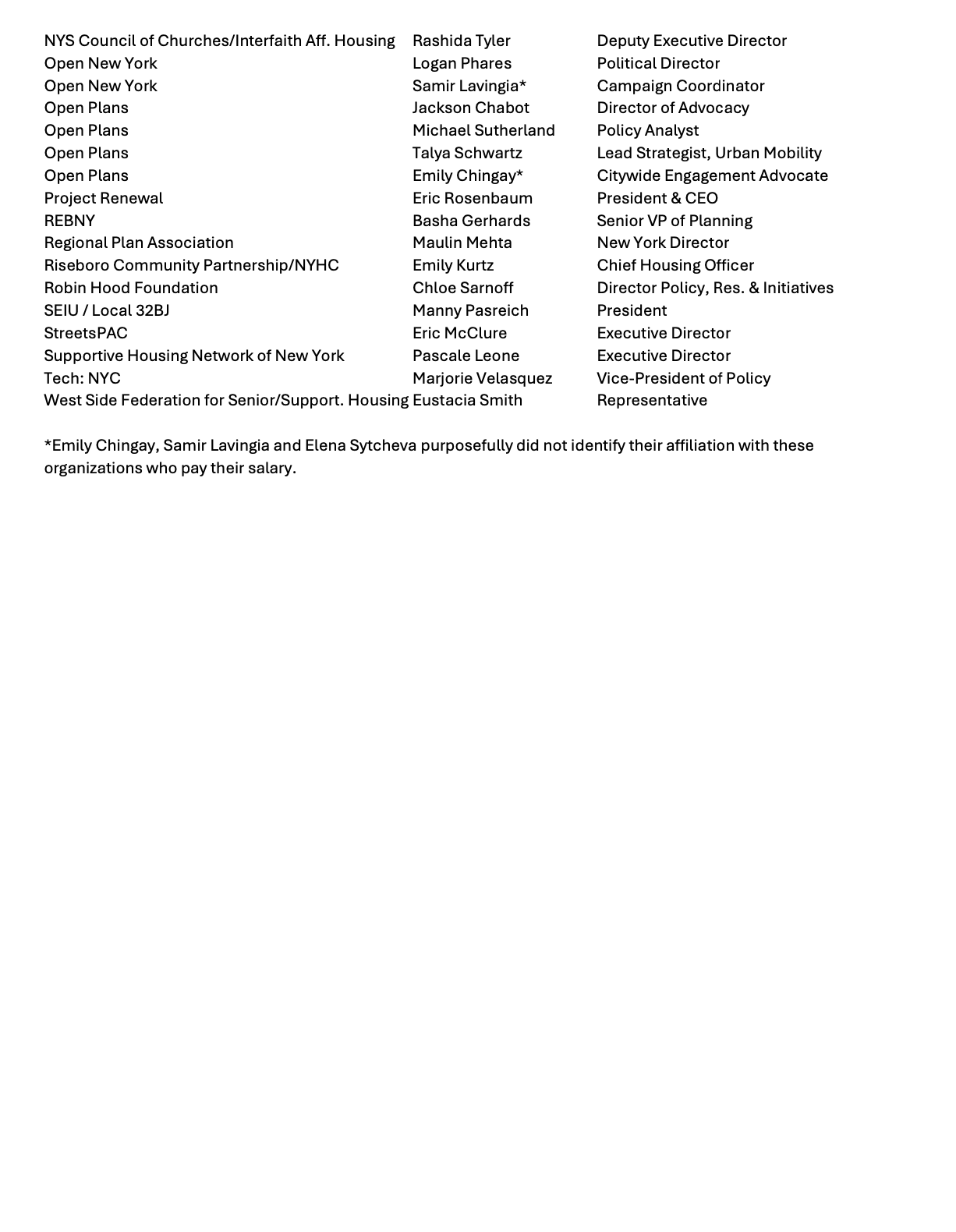
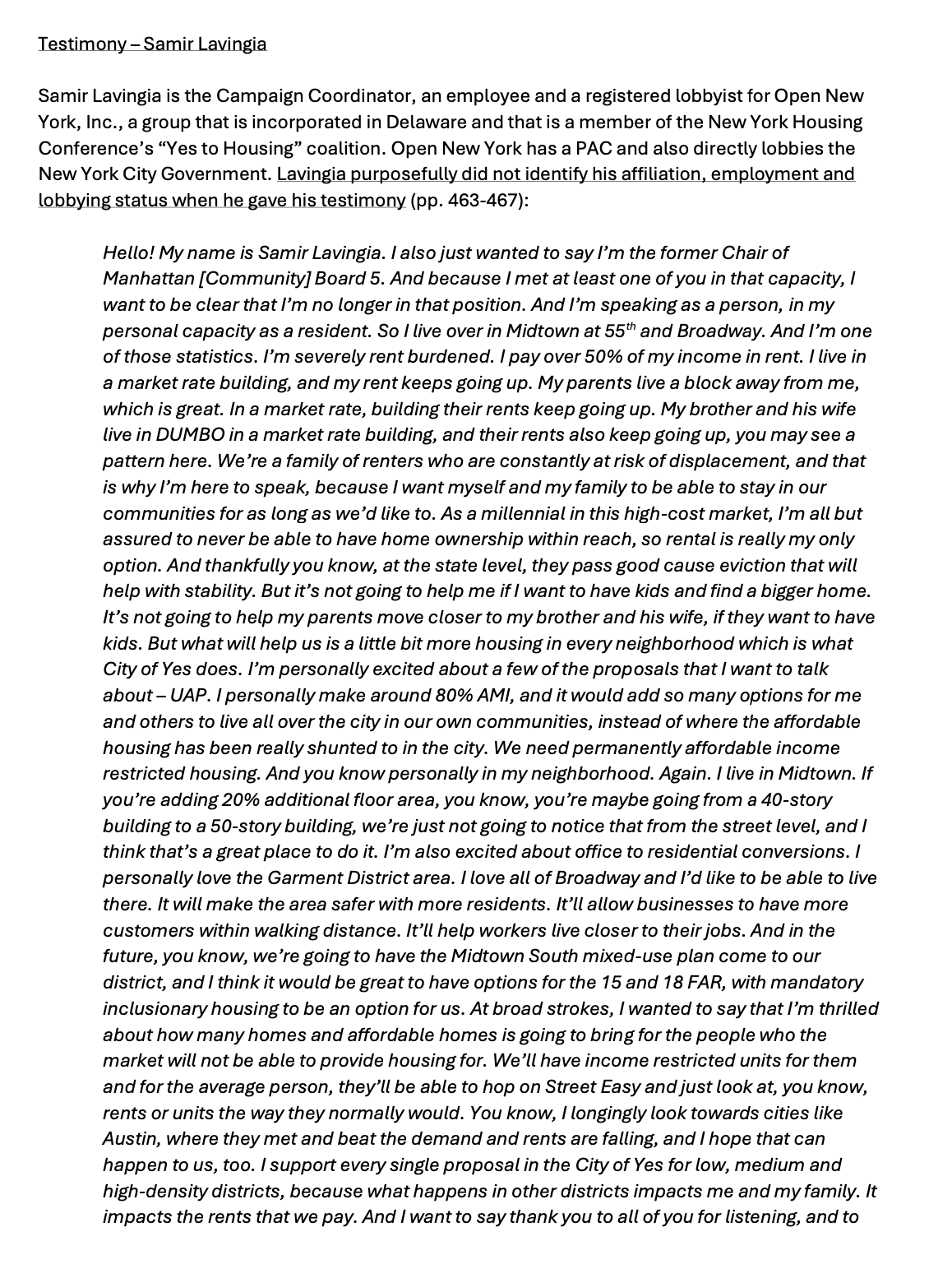
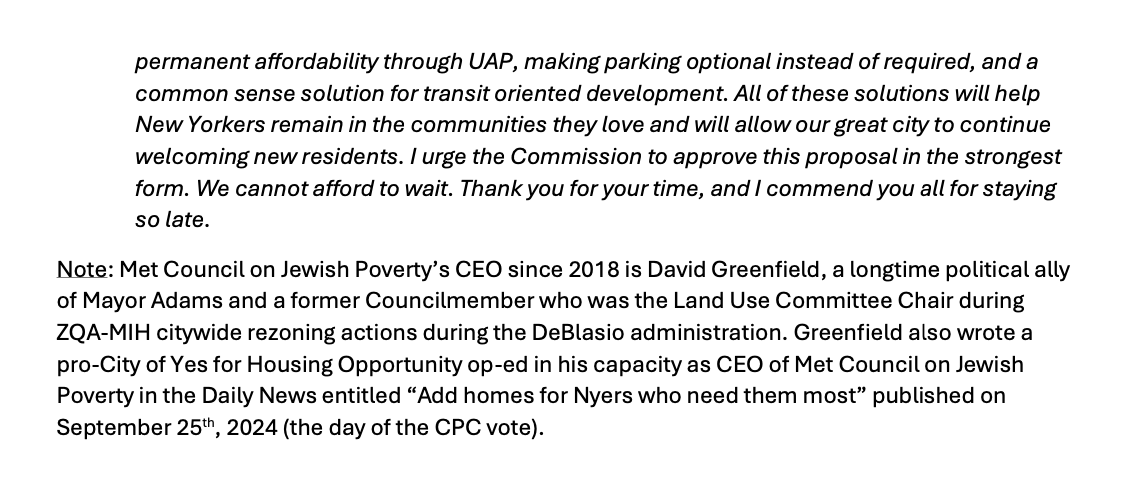
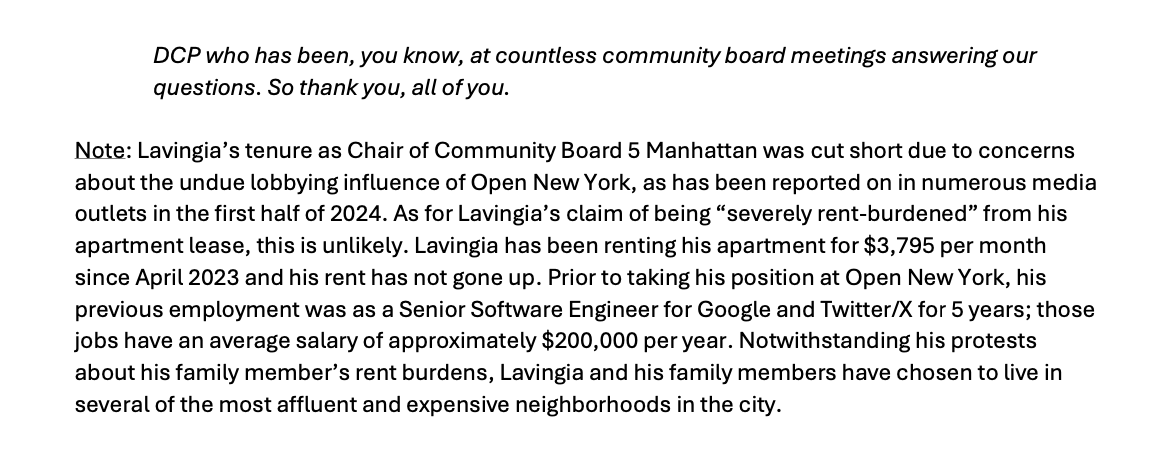
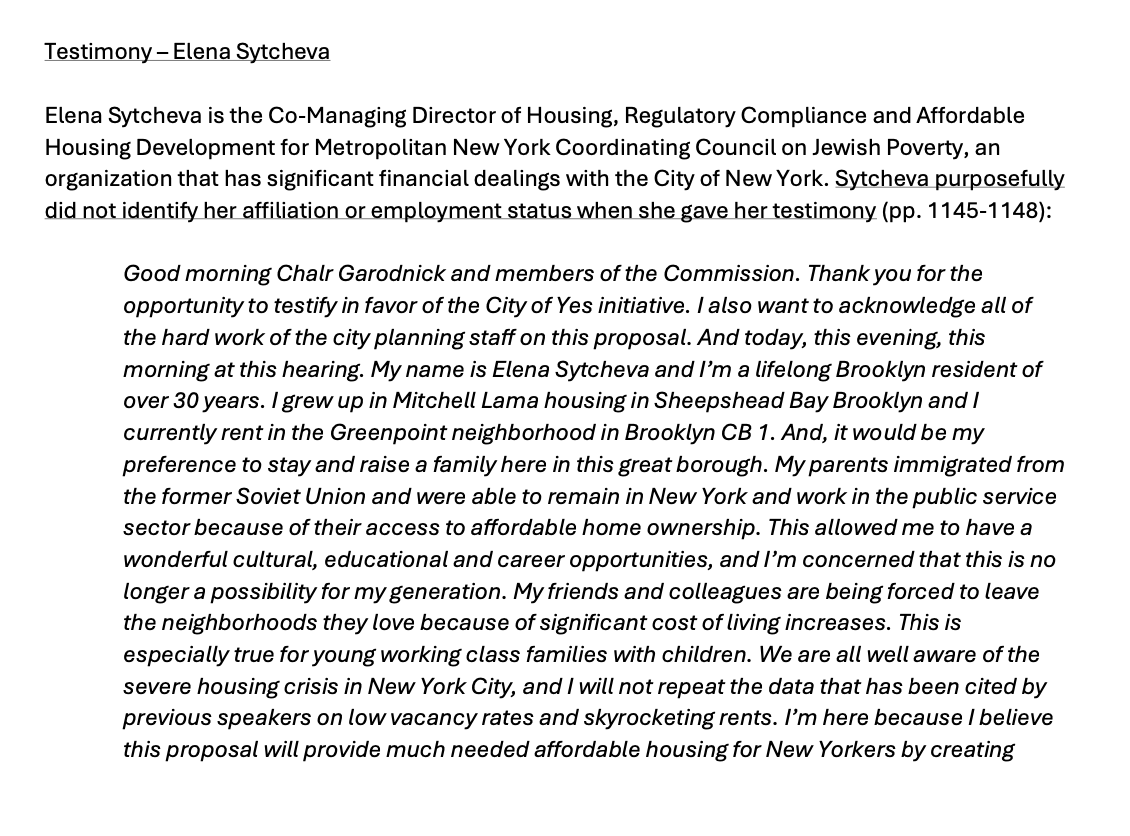
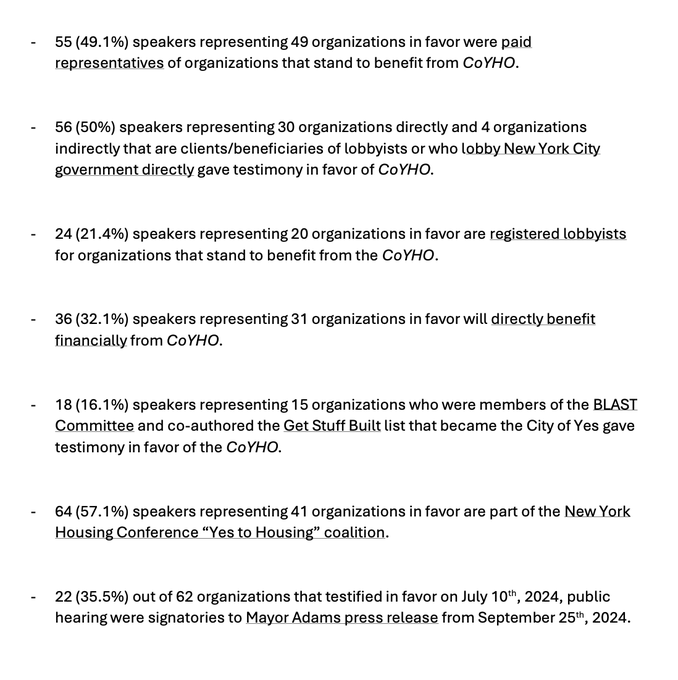
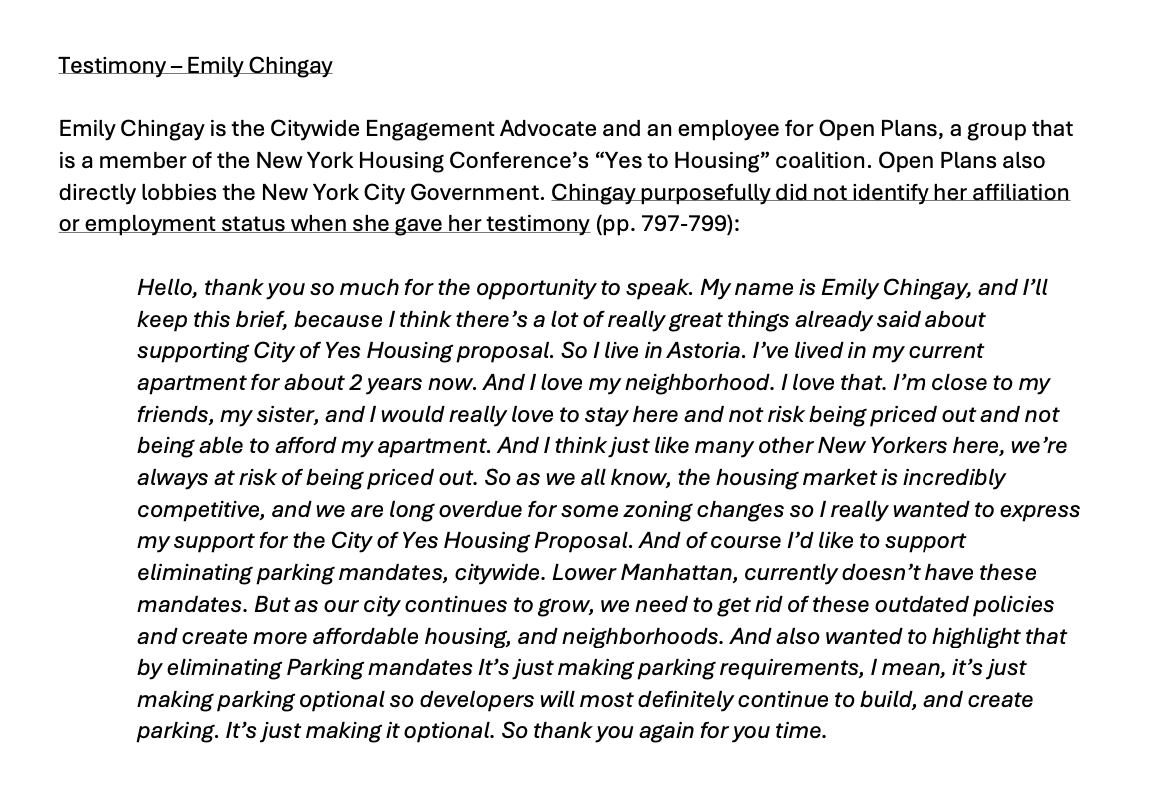
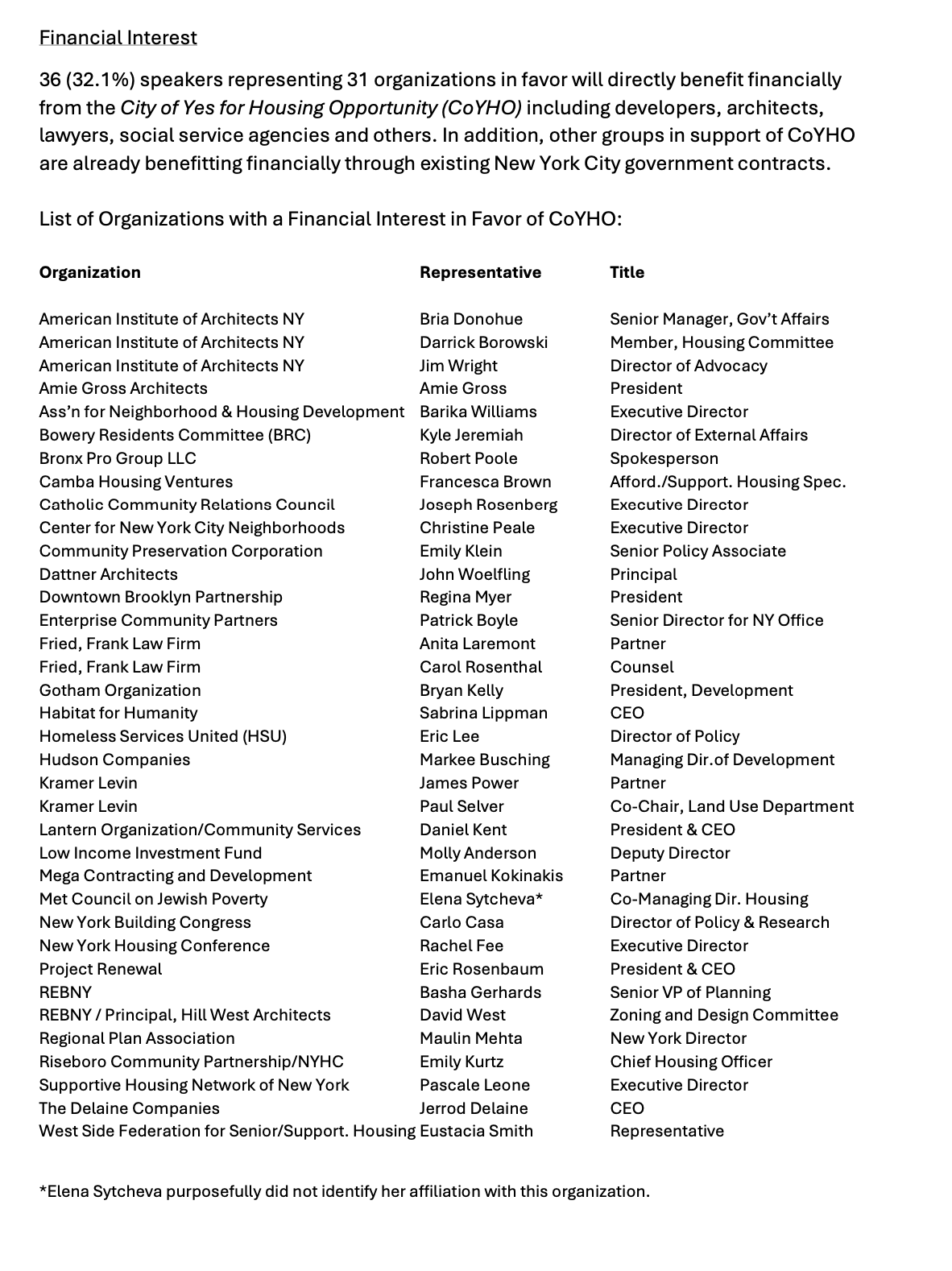
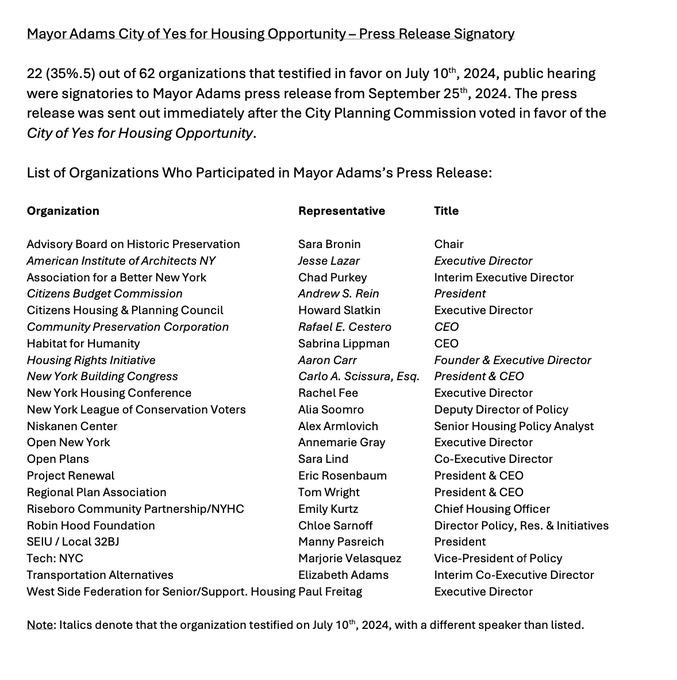
With the City of Yes of Housing Opportunity about to get heard by City Council and New Yorkers the next two days, Intrepid City Planner Paul Graziano dropped a report on the sneaky tactics at the previous zoom hearing and sneaky people trying to get the worst housing plan in New York City history approved in spite of majority rejection by community boards and residents.

Here are the best parts on Paul's X account.


https://pbs.twimg.com/media/GaLEUU0X0AEoDw7?format=png&name=smallImageImageImageImageImageImagehttps://pbs.twimg.com/media/GaLFuEYXQAAP4OU?format=png&name=mediumImagehttps://pbs.twimg.com/media/GaKyiduWIAAbRBa?format=png&name=smallImage

ImageThttps://pbs.twimg.com/media/GaK0IOvWYAAodS6?format=png&name=smallImage

The video above happens to be from this farcical rally with everyone from Paul's COY list. They can't even answer housing related questions and defend their agendas without their YIMBY scripts and talking points. And they refuse to answer the most important question no one is asking these dopes, who is going to build this City of Yes?Image

Saturday, August 17, 2024

DOT held pop-ups to pass Paseo Park funding

 https://bloximages.chicago2.vip.townnews.com/qchron.com/content/tncms/assets/v3/editorial/7/e7/7e73f24b-ff4f-5a41-a431-ea789c681c59/66bdfe17d913c.image.jpg

 Queens Chronicle

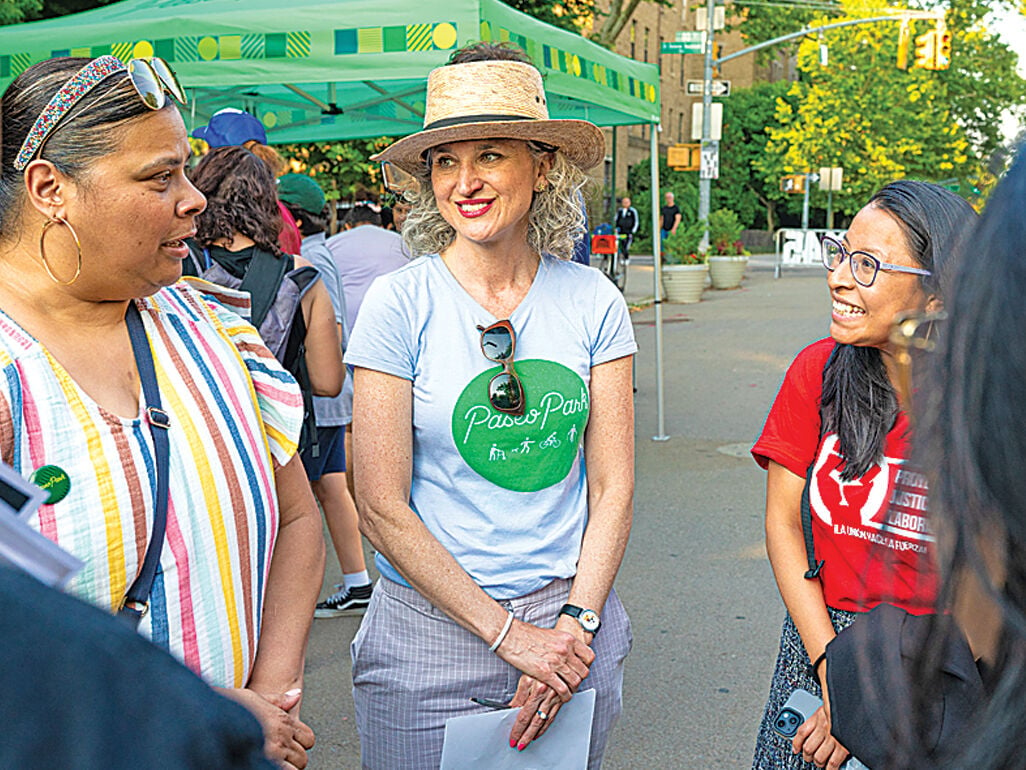
Want to be a part of planning the future of Paseo Park, the 26-block stretch of 34th Avenue in Jackson Heights that has been transformed into a combination of limited-access roadway and car-free pedestrian plaza?

You’ve got your chance, at pop-up events being held by the Alliance for Paseo Park, which advocates for turning the hybrid corridor into a permanent linear park.

The next event is set for tonight, Aug. 15, from 6:30 to 8 p.m. at the corner of 34th Avenue and 86th Street. Following that is one on Sunday, Aug. 18, from 10 a.m. to noon at the corner with 79th Street, next to the farmer’s market. Then there will be one Tuesday, Aug. 20, from 6 to 8 p.m. at the corner with 89th Street — that event will be held in Spanish.

More outreach is planned, including workshops that will be held by the city Department of Transportation, which led the first event on June 18. The DOT retains jurisdiction over 34th Avenue, though it coordinates with the Parks Department in places where programming and operations might overlap.

The transformation of the corridor began as an Open Streets project in the spring of 2020. Running 1.3 miles from 69th Street to Junction Boulevard, Paseo Park is the largest and most successful open street in the city, according to the Alliance. The city has allocated $88 million to transforming it.

“We are working on improvements to the existing design that will further enhance the quality of this public open space and the overall Open Street,” the DOT told the Chronicle via email. “We will monitor such upgrades and use them to inform the capital design.”

The Alliance uses more enthusiastic language.

“I grew up in this neighborhood without access to green space,” Luz Maria Mercado, the group’s board chair, said in a statement accompanying the announcement of the public engagement series. “I could only peek through the gates of the private co-op gardens. Green spaces should be for everyone. It’s crucial that we, as a community, lead this, by gathering as much feedback as possible from our neighbors, reaching every corner of our diverse community with a multi-lingual, multi-level approach.”

Jackson Heights has very little park space, and further transforming 34th Avenue would give it up to 7.5 acres, the group says.

The Alliance also recognizes that not everyone is on board with its dreams.

“We are committed to working together and building consensus with our neighbors, including those who may not share our vision,” Executive Director Dawn Siff said in her statement accompanying the announcement. “We believe good design can solve many people’s legitimate concerns and together we can create a space that prioritizes the safety, health and enjoyment of our community.”

Siff says turnout has been great at the Alliance’s events, as people are drawn in by the group’s bright green tent and large, interactive map — as well as coloring pages set out for the children.

“Most importantly, we are having more in-depth conversations with our neighbors and giving space to hear people’s ideas, hopes, questions and concerns,” she said in an email to the Chronicle.

Siff said that overwhelmingly, people are excited, with many wanting the avenue to be a park with green space and shade. Some are concerned that the existing layout is confusing and causes conflict among different users, such as pedestrians, bicyclists and kids on scooters. She noted that the design is temporary. There also are safety concerns because cars, mopeds and motorcycles still speed through even though the space is not supposed to be used as a through street anymore.

Usually at the DOT fake workshops with the public, they would have a half dozen interpreters to translate for them, so will this Spanish one have an English interpreter so locals who can make this one can know what's going on and what's being said? 

They really want this 88 million dollars, which I think a chunk of it is going to Dawn's buddies WXY. 

The conversations are overwhelmingly positive, reflecting what we see each day, with the constant use of Paseo Park/34th Avenue for recreation, exercise, gathering, safe commuting and more,” Siff said, reiterating her belief that good design can address valid concerns people have. “This is why we’ve engaged WXY, to help surface these concerns and make recommendations about how they can be addressed.”

WXY Architecture + Urban Design is a firm dedicated to community-driven processes for planning public spaces.


Wednesday, January 3, 2024

Council member sneaks in street renaming for fake park for his favorite lobbyists

 https://pbs.twimg.com/media/GCOsqPbWUAA80-_?format=jpg&name=4096x4096

Streetsblog

It’s all in the name. 

The 26-block car-free open street on 34th Avenue in Queens is officially a park after the City Council voted Wednesday to officially dub the strip Paseo Park.

The name — which means "stroll" in Spanish — is a nod to the diverse community of Jackson Heights, which ranks last in the city in green space. Community members created the new public space in 2020 in the depths of the pandemic.

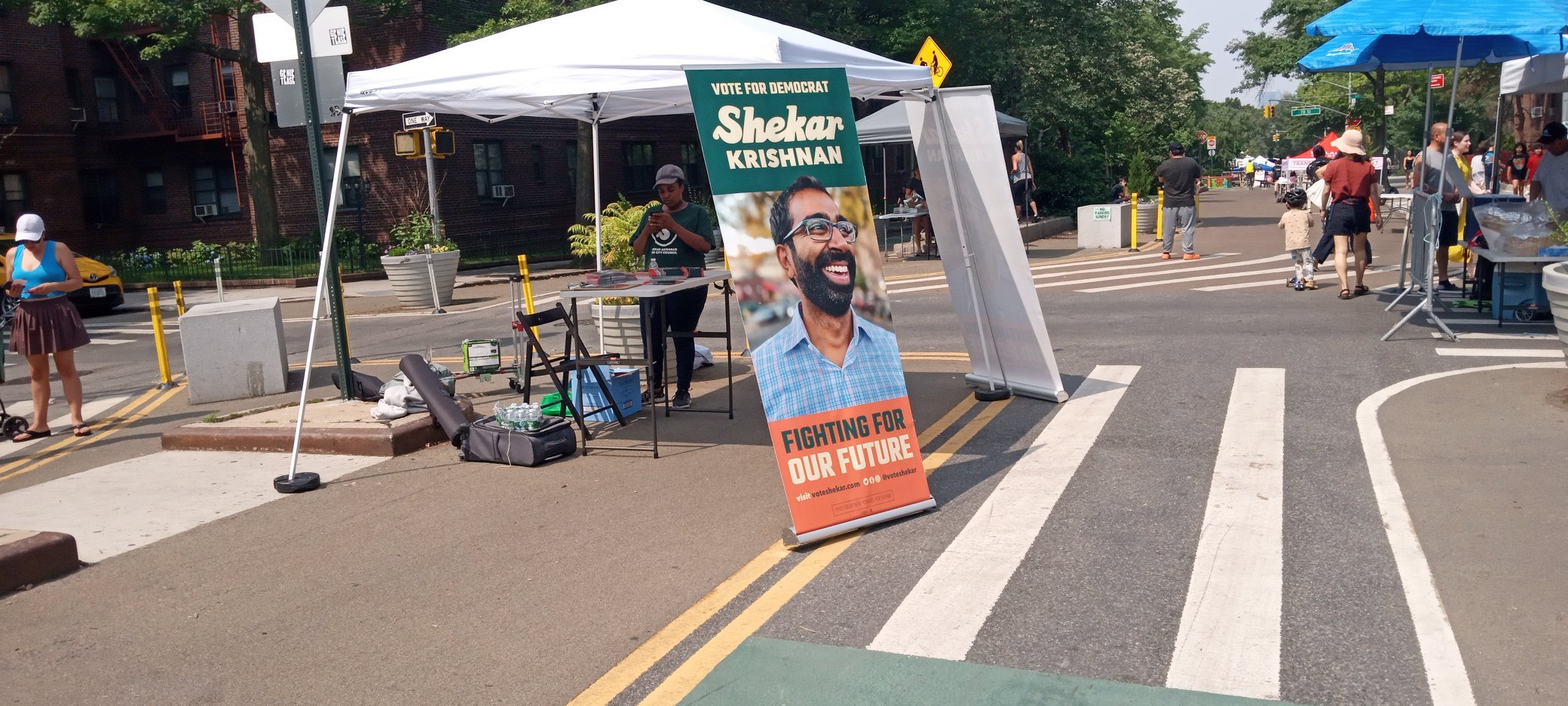
"Thirty-Fourth Avenue Paseo Park is the incredible story of a community coming together during a crisis to create new open space, filling it with families, music, and joy," said Council Parks Committee Chair Shekar Krishnan (D-Jackson Heights).

“As a child of an immigrant, who grew up in Jackson Heights longing for park space, I am proud of how far we’ve come in organizing for Paseo Park," said Luz Maria Mercado, board chair of Alliance for Paseo Park.

"I love that our Spanglish nickname for this vital community space caught on and will soon be on maps."

Not so fast Open Plans (lobby that runs the fake news site)

Transportation Alternatives favorite regulatory captured council rep Shekar Krishnan took advantage of a few loopholes in the charter to name 34th ave a "Park" to validate its open streets in a bill for dozens of other street renamings. Which includes one for a crossing guard killed by a truck driver and Tony Bennett. Even though the renaming is only good for one block and not for nearly a mile of streets. Especially a bunch of open streets. 

What makes "Paseo Park" also illegitimate is that has no genuine cultural significance either, it's just something an org with ties to bike lobby Transportation Alternative made up. But what makes Shekar's machinations super sleazy is that he's the chair of the parks committee not DOT, so he and his agency captors can make believe it's a park. An 85 million dollar park to be exact.

https://pbs.twimg.com/media/GCOsp_cXQAA8ed_?format=jpg&name=large


Saturday, September 10, 2022

Governor Kathy Clown let pandemic profiteering donor gouge taxpayers for COVID-19 tests

 https://nypost.com/wp-content/uploads/sites/2/2022/09/hochul-yesterday1.jpg?quality=75&strip=all 

Times Union

 Last December, Gov. Kathy Hochul’s administration received an offer to buy 26 million at-home coronavirus tests from a New Jersey-based distributor that happened to be a major campaign donor to the governor.

The price offered by Digital Gadgets founder and CEO Charlie Tebele was $13 per test, far steeper than what other companies were proposing for similar rapid antigen tests. Hochul’s administration had just approved a deal with another firm to buy 5 million tests for just $5 each.

Still, the Hochul administration quickly agreed to pay $338 million to Digital Gadgets at the higher per-test price. The state Division of Budget and Hochul’s office signed off on the deal on Dec. 20, the same day Tebele made the proposition.

Despite that tight timeline, Digital Gadgets contends the deal was "thoroughly negotiated."

The Times Union reported in July that Tebele and his family members have donated nearly $300,000 to Hochul’s campaign, including $70,000 before last winter. That's when Hochul's administration signed two purchase orders to buy $637 million in tests. Tebele subsequently hosted a campaign fundraiser for Hochul in April, records show.

While three other companies sold tests to the state Department of Health last winter for $7.80 each or less, Digital Gadgets charged an average of $12.25, according to records provided by the state comptroller's office.

Despite buying 52 million tests in bulk, the administration paid Digital Gadgets as much or more than consumers would pay in a retail store, according to Bill Hammond, senior fellow for health policy at the Empire Center for Public Policy.

Hammond reviewed the records obtained by the Times Union and was struck by the significantly higher price the administration paid Digital Gadgets, resulting in hundreds of millions in additional spending.

“The Hochul administration is saying it was not because they were a donor, but should answer the question of why they so eagerly got into business with this very high-priced vendor — and bought more than half their total amount from this one supplier — when they knew it was charging a much higher rate than they had been paying,” Hammond said.

Hochul has argued that Digital Gadgets was uniquely able to deliver a significant quantity of rapid tests before schools reopened in early January, a time when the highly contagious omicron variant was threatening to keep them closed. She's noted the state was getting "slammed" by the variant by mid-December. 

"I was not aware that this was a company that had been supportive of me," Hochul said during a July 20 press briefing, referring to the campaign donations. "I don't keep track of that. My team, they have no idea."

 "But the fact that there was someone who could meet that need at that time allowed us to deliver critically important test kits when nobody else — including the federal government — could get their hands on it," she said. "As a result, we got kids back in school in January, as opposed to sitting home another semester."

But as Hammond has written, the administration continued paying for significant quantities of Digital Gadgets tests after the omicron wave subsided. 

The $637 million in spending began on Dec. 30, and the Department of Health made 239 separate payments through March 25 to Tebele's company, paying for the tests as they were delivered. Sixty-two percent of the payments, or roughly $395 million, were made after COVID-19 hospitalization levels had returned to pre-spike levels in late February, according to Hammond. By that time, tests from other vendors were more available. 

According to Digital Gadgets, the bulk of the tests had been delivered by late February and the company was owed significantly more than $395 million at that point.

Though the state's purchase orders were signed in December and January, New York likely would have been able to stop making the purchases before spending the whole $637 million.

In March 2020, state Budget Director Robert Mujica issued a directive to all state agencies instructing them to include "into all COVID-19-related purchases" language reserving the right to terminate those orders with 30 days’ notice "for any reason." And for "medical equipment, personal protective equipment, or similar products and services," the state could terminate an order with only two days’ notice.

Agencies could seek an exemption, but there's no indication the health department sought one for the Digital Gadgets' orders.

The Department of Health declined to say whether it could have rescinded its deal with Digital Gadgets once the omicron variant waned, saying it does not comment on "legal hypotheticals."

Saturday, January 15, 2022

I, Eric

 Mayor Eric Adams speaks during a news conference in Brooklyn on Jan. 4.

Patch

 A frustrated Mayor Eric Adams offered a simple defense over accusations of nepotism and cronyism in a spate of high-profile hires: "I'm the mayor."

"I'm going to hire the best people for the job that I've known throughout my years in government and their talents," he said Friday. "And the reason I can do that is because I'm the mayor. I'm the mayor of the city of New York, and it's going to take a while before people realize that I am responsible for building a team to end the inequality in our city."

But a rising chorus of critics have argued that Adams' hires — which included his brother Bernard Adams in a $210,000-a-year position — are questionable at best.

Shortly before Adams — again — defended his hires Friday, the New York Times reported a jail investigator accused new Department of Correction chief Louis Molina of telling her to "get rid" of 2,000 discipline cases against officers. She was fired by Molina — a move she believed came at the behest of the correction officers' union, the Times reported.

Adams' officials' closeness with powerful unions aside, other hires face questions over their ethics and qualificiations.

Close Adams ally Philip Banks now serves as a deputy NYPD commissioner, despite the fact he resigned after being named as an unindicted co-conspirator in a federal police corruption case.

Adams on Friday cast the criticism as unfair elitism, rather than stemming from concerns of potential corruption and cronyism.

"When other mayors hired their lower partners, they hired their people they knew from school that they came up through the ranks — how there was nothing to say about it?" he said. "But I have the audacity to hire blue-collar people, everyday folks who are union members, retired members, it's like, 'Who do you think you are putting these blue collar workers, these everyday people who came here to this country eked up through a living, went to school at night... who do you think you are think you could do that?'"

Friday, December 10, 2021

de Blasio's pay to play and pandemic secrets and lies


THE CITY 

Mayor Bill de Blasio violated ethics rules twice by hitting up real estate industry players for donations to a nonprofit he created to boost pet projects, a city board found — but he got away with just warning letters.

City Hall released the two letters Wednesday from the Conflicts of Interest Board, dating from 2014 and 2018, after losing a protracted legal battle with The New York Times to shield the missives from public view.

It was a Department of Investigation report obtained by THE CITY in April 2019 that initially revealed the mayor had solicited funds from donors who had business pending with his administration.

The ethics letters concern the Campaign for One New York, a group that raised over $4 million between 2014 and 2016 to tout such initiatives as pre-K and affordable housing — and promote de Blasio himself as he sought to influence the 2016 Democratic presidential primary.

The records reveal for the first time that the conflicts board cited de Blasio just six months into his administration, in July 2014, for violating ethics rules by personally soliciting $150,000 in donations from people or entities with business before the city.

Not even seven months after receiving the 2014 warning, he kept making similar fundraising calls — asking for donations from two additional developers and James Capalino, a lobbyist who had helped buoy his campaign for mayor, according to the 2018 warning letter.

Both violations occurred after the board had advised de Blasio’s campaign lawyer just after the mayor’s January 2014 inauguration that solicitations of that nature are prohibited by the city’s charter.

 The conflicts board noted in 2018 that the mayor also failed to provide a disclaimer to potential donors that their donations wouldn’t influence any city decisions.

“By soliciting these three donations from firms with business pending or about to be pending before executive agencies, and providing no disclaimers, you not only disregarded the Board’s repeated written advice, but created the very appearance of coercion and improper access to you and your staff that the Board’s advice sought to help you avoid,” the September 2018 letter says.

Despite the stern wording of the letter, it concludes that because the mayor’s nonprofit was disbanded in March 2016 — and because City Council passed legislation further regulating donations to city-affiliated nonprofits — that no discipline was warranted other than the warning.

THE CITY 

 As COVID-19 ravaged New York in March 2020, officials at the city Department of Health and Mental Hygiene began plotting out where the virus was striking hardest across the five boroughs.

A map of fatalities, broken down by ZIP code, was ready to go online in the first week of April as New York neared the expected peak of deaths, according to people familiar with the matter and to emails reviewed by THE CITY.

“I think that the reality of this scenario is we need to be transparent to the highest level,” one top health department doctor wrote in an April 5, 2020, email, two days before coronavirus fatalities reached their apex.

But City Hall did not approve public release of neighborhood-level death data until May 18. New York City saw 12,923 confirmed and 3,399 probable deaths from the coronavirus between April 5 and May 18, 2020.

The emails provide a window into Mayor Bill de Blasio’s management of pandemic information in the harrowing early weeks of the COVID crisis — a glimpse revealed at a moment when his Department of Health once again demands the trust of New Yorkers as new variants, including Omicron, spread.

On Monday, the mayor announced a broad vaccine mandate for all private-sector employees — calling the move a “pre-emptive strike” against another possible wave of infections.

“We can talk about all the other tools and we will, but vaccination is the central weapon in this war against COVID,” he said.

“It’s the one thing that has worked every single time across the board on a strategic level. It’s the reason New York City is back in so many ways.”

Nearly 35,000 New Yorkers have died of COVID-19 since the first death was confirmed in early March 2020.

When New York faced its first COVID wave that spring, longtime city health department staffers believed it was vital to release information about where people were dying — even with caveats of imperfect data and a rapidly changing situation, according to people familiar with the matter and to the emails reviewed by THE CITY.

But information languished after being approved by the health department, which couldn’t publish anything without City Hall’s OK, those familiar with the matter said.

City Hall officials, though, blamed the delay in releasing the granular fatality data on a split within the health department, where, they said, some officials contended that ZIP code-level maps could create a stigma in hard-hit communities and a false sense of safety in other neighborhoods.

At that point, the virus was surging: Hundreds of New Yorkers a day were dying of COVID-19, with 815 people succumbing on April 7 — the deadliest day for the city during the pandemic’s so far 21-month toll.

Using borough-level fatality data then available, THE CITY had revealed on April 3, 2020, that Bronx residents were dying at a rate double that of the city, spurring calls for focused help and resources. When the city’s first fatality map was finally released on May 18, 2020, it showed that COVID largely slammed poor neighborhoods hardest.

Meanwhile, Dr. Oxiris Barbot, then the health commissioner, was battling behind the scenes with de Blasio over the city’s response to the unprecedented health crisis. De Blasio also clashed frequently with then-Gov. Andrew Cuomo.

Danielle Filson, a spokesperson for de Blasio, responded to THE CITY’s inquiries with a statement:

“City Hall swiftly delivered critical information to New Yorkers, and did so with accuracy and integrity,” she said. “We led the nation in our response to the pandemic — holding daily press conferences while setting up a testing and vaccine infrastructure that has kept New York City safe.”

Saturday, October 16, 2021

City Council Cronies give more tax breaks and zoning perks to developers if they build elevators for the MTA

https://bloximages.chicago2.vip.townnews.com/qchron.com/content/tncms/assets/v3/editorial/d/4b/d4b0f9a6-2d0a-11ec-9a04-c775a39b9215/6168595240dbe.image.jpg?resize=750%2C500

Queens Chronicle 

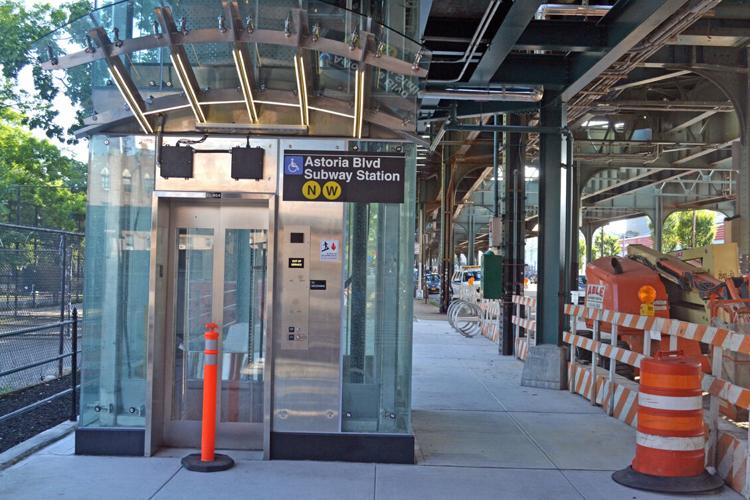
The Metropolitan Transportation Authority now will be enlisting private developers in its effort to make more subway stops handicapped accessible with a zoning change approved by the City Council on Oct. 7.

The Zoning for Accessibility initiative expands the areas where the city can offer incentives to developers of large projects near subway stations who allow easements for elevators, ramps or other accommodations.

When signed or enacted into law by mayoral inaction — Mayor de Blasio supports the bill — it will require developers of large projects that are adjacent to underground or elevated subway lines to consult with the MTA to determine if an access easement and infrastructure are needed.

In return, developers could receive one or more accommodations from the city, such as in increase in allowable density, more floor space, or partial relief from some zoning requirements for things like parking spaces, property line setbacks and landscaping.

In a statement from the MTA, acting Chairman and CEO Janno Lieber said the move will augment the accessibility projects already underway within the agency.

“This initiative reflects Gov. Hochul’s and the MTA’s shared commitment to all New Yorkers — particularly riders with mobility disabilities, seniors and parents of young children — to modernize the entire transit system as quickly and efficiently as possible,” he said. And the help is needed.

Only 136 of the city’s 493 subway stations, or 28 percent, are accessible. In Queens the total is 22 out of 80, or 27.5 percent. That includes the Court Square station, where the No. 7 line is accessible but the G is not; and Rockaway Park-Beach 116th Street, where the A train is accessible only during rush hours. The E and M trains at Court Square-23rd Street are only accessible for Manhattan-bound passengers.

The MTA’s five-year, $5 billion capital plan for 2020-24 includes elevators or other upgrades at 77 more stations, which in theory would leave a rider no more than two stations away from an accessible stop.

The MTA believes working with private developers will get more stations in compliance more quickly, with less strain on the MTA’s seemingly always-challenged budget.

“This is a game changer for millions of New Yorkers,” Council Speaker Corey Johnson (D-Manhattan) said in the press release.

Tuesday, October 12, 2021

4motherf-ck-n000,000,000


NY Post

More than $4 billion has flowed from City Hall to scandal-tarred shelter operators over the last eight years, accounting for more than a quarter of the money spent by the Big Apple to tackle its homelessness crisis, an examination of city records reveals.

The $4.6 billion in contract identified by the Post account for 29 percent of the $15.8 billion in contracts let by the Department of Homeless Services over Mayor Bill de Blasio’s nearly eight years in office.

The money has gone out to more than half a dozen shelter operators — including the embattled CORE Services Group — which have each been accused of issues ranging from failing to deliver on multi-million dollar contracts to executive profiteering.

Recent newspaper exposés revealed, for instance, that CORE’s CEO Jack Brown established for-profit vendors that paid him handsomely thanks to millions in taxpayer funds from CORE, which also employed several of his friends and relatives. 

 “The idea that public dollars are going to fund lavish lifestyles of nonprofit executives and their families, instead of helping the neediest, should outrage every New Yorker,” said an outraged Councilman Stephen Levin (D-Brooklyn), who chairs the Council committee who oversees the DHS, when told of The Post’s findings.

“That money should be going to get families and children out of shelters and into apartments,” he added. “A child should not be spending a year and a half of their life living in a hotel room.”

For years, homeless activists and social service providers have argued that City Hall underfunded contracts to operate the Big Apple’s shelter system — and, compounding the problem, often failed to pay them on schedule.

That meant well-established organizations often refused to bid on the work, opening the door to less reputable providers.

“The amount of money identified and the amount of scandal suggests there are major, major problems with these contracts,” said John Kaehny, the head of government watchdog group Reinvent Albany, who called on the feds to get involved.

“Only federal investigators have the money and the resources to get to the bottom of this massive systemic failure,” he added. 

 Stephen Levin is outraged about all this, yet he was the one who was appointed to make sure that these "non"-profit provider executives would be grossly profiting off the homeless crisis which has exacerbated under his watch in the last 8 years. The Blaz couldn't find a better sycophantic feckless enabler.


Tuesday, September 28, 2021

Homeless service provider forms LLC to take over Trump golf course

https://cdn.vox-cdn.com/thumbor/HJrpHS6668VXsOVm7Fqzt0Ai89Y=/0x0:3000x2000/920x0/filters:focal(0x0:3000x2000):format(webp):no_upscale()/cdn.vox-cdn.com/uploads/chorus_asset/file/22882785/trump_links_2.jpg


 THE CITY 

 While Donald Trump battles Bill de Blasio over the mayor’s decision to dump the former president as operator of a Bronx golf course, the city is playing through — proposing a new firm to run the Ferry Point links.

A notice published Monday shows a company called Ferry Point Links LLC is set to be awarded a 13-year Parks Department deal to take over the Jack Nicklaus-designed 18-hole course at the foot of the Bronx-Whitestone bridge.

A firm incorporated under that name in late August, state corporation records indicate — sharing both an executive’s name and address with one of the city’s biggest homeless shelter operators, CORE Community Services.

An attorney for the former president vowed to fight the city — and the proposed new golf course operators — for control of the links, charging Trump is a victim of “political retaliation.”

A spokesperson for the city Department of Parks and Recreation said that CORE will be teaming up with Bobby Jones Links, an Atlanta company that will be “managing the operation of the concession.” CORE Community Services did not respond to requests for comment Monday, and Bobby Jones Links was not immediately reachable.

According to the notice posted in Monday’s City Record, Ferry Point Links, LLC will pay a minimum of $300,000 a year to the city — or a share starting at 7% of the gross proceeds and gradually escalating to 10% by year 13, whichever is higher.

Those terms are slightly more favorable to the operator than those granted to Trump in 2012, in a 20-year deal struck to salvage a troubled project. Trump also committed $10 million to build a clubhouse.

Sunday, August 15, 2021

Carl Heastie lets Andrew Cuomo escape

https://cdn.newsday.com/polopoly_fs/1.50333998.1628904277!/httpImage/image.jpg_gen/derivatives/landscape_768/image.jpg

Newsday 

 The state Assembly won’t pursue impeachment charges against Gov. Andrew M. Cuomo once his resignation takes effect, Assembly Speaker Carl Heastie announced Friday.

Heastie (D-Bronx), in an interview with Newsday, said an Assembly investigation found "credible evidence" against Cuomo and likely would have resulted in impeachment charges.

But the primary purpose of the impeachment proceeding was to determine whether the governor should stay in office following sexual harassment claims and other allegations regarding actions that Cuomo took during the pandemic, Heastie said.

The governor’s decision to step down, announced Tuesday, effectively makes the question moot. Cuomo's resignation is to take effect Aug. 24.

 Heastie said another driver in the decision to "suspend" proceedings is that the state constitution doesn’t clearly "authorize the Legislature to impeach and remove an elected official who is no longer in office."

"We don’t believe we do" have the authority to continue once Cuomo departs, Heastie said. The speaker added that he understood and agreed with Cuomo accusers who say the governor should be held accountable, but impeachment wouldn’t be an available avenue once the governor leaves.

 Legislators would not have finished their investigation before Aug. 24.

Instead, the Assembly will do the "next best thing": turning over its evidence to various law enforcement agencies investigating Cuomo, Heastie said.

The attorney general has been looking into Cuomo’s $5.1 million book deal, Heastie noted. The U.S. Justice Department is investigating the nursing home data. And prosecutors in five counties, including Nassau, have said they are looking into alleged sexual harassment incidents.

"The thing is, the federal government, the ... [attorney general] and local ... [prosecutors] are doing their own investigations," Heastie said. "We have not finished gathering evidence and we didn’t want to interfere with their investigations. So the next best thing to do is to turn over our evidence so they can conclude" their investigations.

Because of those other ongoing investigations, the Assembly won’t make the evidence publicly available at this time, a Heastie spokesman said.

Cuomo will be gone but nothing will fundamentally change.


Tuesday, August 10, 2021

Gowanus rezoning likely could become more diverse racial impact study report finds

 Image

Image 

THE CITY

 Brooklyn’s Gowanus neighborhood would likely become more diverse and less segregated under a proposal to allow more development in the neighborhood, according to a first-of-its-kind study on the contentious rezoning’s potential racial impact.

The analysis of the Gowanus Neighborhood Plan, conducted by a Columbia University professor with City Council staff, comes as the controversial proposal — previously delayed for months by a lawsuit — now makes its way through the city’s public review process.

The study also offers the first glimpse at the potential value of a Council bill passed just weeks ago requiring “racial equity reports on housing and opportunity” for rezonings in the future.

While that legislation will not take effect until mid-2022 and does not apply to the Gowanus plan, those backing the rezoning thought it was best to study the issue anyway. Those supporters include area Councilmembers Brad Lander and Steven Levin as well as the local housing nonprofit Fifth Avenue Committee, which helped fund the study.

“If our goal is a more inclusive neighborhood, with meaningful opportunities for New Yorkers of color, then we need to find the courage to move forward thoughtfully. And I really believe this provides clarity about that,” Lander said of the new research.

The Gowanus plan aims to change development rules within an 82-block area along Fourth Avenue between Atlantic Avenue and 15th Street and stretching west to Bond and Smith streets.

Commercial Observer 

 The city’s rezoning of Gowanus, Brooklyn, which some groups tried to sue to stop, would likely make the neighborhood more diverse and less segregated, a new report found.

The report, conducted by Columbia University and New York City Council staff, found that the rezoning calls for 35 percent of the nearly 8,000 new housing units to be set aside for affordable housing, a much greater share than in other recent rezonings.

The nearly 3,000 affordable housing units would be offered to families making between $30,000 to $100,000, or 40 to 80 percent of the area median income, and would help Gowanus “much more closely match the diversity of New York City rather than the population of the local area  a neighborhood that is significantly whiter and wealthier than the City as a whole,” according to the report.

It estimates that 20 to 25 percent of the new housing would be rented by Black families and 25 to 37 percent by Latino families.

“The report shows that in recent decades, Gowanus and surrounding neighborhoods have grown increasingly exclusionary, causing displacement of many lower-income residents of color, and becoming one of the whitest and wealthiest communities in the city,” Council Member Brad Lander, who represents the neighborhood, said in a statement. “We can share it better.”

Landers and others touted the report as one of the first racial-impact studies done for a rezoning, which will soon be required by city law, and as showing the benefit of including them for future plans.

“Racial equity analyses represent a stark break from business as usual in land-use planning,” Lance Freeman, a Columbia professor and one of the co-authors of the report, said in a statement. “Instead of exacerbating or ignoring racial inequality — as much land-use planning has done in the past — racial equity analyses will require policymakers to take into consideration how their actions impact racial equity.

“We hope this report can help change the conversation around the racial impact of rezonings as we work to overcome decades of segregated growth in New York City,” Freeman added.

Brad Lander is all over this study, it wasn't long ago when he was spewing this racial inclusivity and equity drivel when he was blubbering during those zoom calls advocating for Cojo's disastrous and universally rejected Planning Together. Come on man


Monday, April 19, 2021

Maya Wiley's advisory malfeasance extended to City Hall's official non-profit fund


 NY Daily News

Before Maya Wiley became an MSNBC commentator and candidate for mayor, her most public moments came when she fell under the media’s glare for her role advising Mayor de Blasio and his administration on how to raise money legally.

The unwanted attention started during the first three years of de Blasio’s first term and it continues to linger.

In 2015, in what may now seem like a prescient assessment, Wiley summed up her role as de Blasio’s legal counsel in a video posted online by his wife, Chirlane McCray.

“I’m Maya Wiley. I’m counsel to Mayor Bill de Blasio, and that means I’m — I keep him out of jail,” she said jokingly. “I advise him on legal issues, but I’m also part of his senior team.”

De Blasio has so far avoided jail, despite allegations of fundraising malpractice. But now, about four months into Wiley’s run for mayor, exactly what role she played in counseling Team de Blasio — and in vetting donations to his cause — is still not entirely clear.

But documents obtained by the Daily News show that the part Wiley did play appears to be much more extensive than has previously been reported.

The newly unearthed records show that, aside from her connection to the controversial Campaign for One New York, Wiley also appears to have played a key part in vetting donors to the Mayor’s Fund to Advance NYC, a nonprofit dedicated to improving the lives of New Yorkers.

Wiley, who served as the mayor’s legal counsel for about two years, joined the de Blasio administration in the first year of his first term in office. Within months, she became involved in providing legal advice on how to ensure compliance with conflict-of-interest rules when it came to the Campaign for One New York, part of de Blasio’s fundraising apparatus.

The Campaign for One New York, also known as CONY, was established just weeks before de Blasio took office in 2014 and almost immediately began collecting donations to help promote his efforts to launch universal pre-K, widely regarded as his signature policy achievement in City Hall. After pre-K launched, the nonprofit took on a more general focus, but continued to raise — and spend — money to promote de Blasio’s priorities.

But it didn’t take long for CONY’s operation to come under scrutiny. Eventually, that led to probes from the city’s Department of Investigation, the Manhattan district attorney’s office and the state’s Joint Commission on Public Ethics.

Friday, March 19, 2021

Shaun Donavan needs his daddy to make him mayor

ImageImage 

 New York Times

With New York City’s mayoral primary a little more than three months away and a deadline to qualify for the city’s generous matching-funds program having just passed, pleas for donations have been in overdrive in recent days.

But in the background, another spigot of money has quietly opened for two Democratic mayoral candidates who are trailing in early polls: Raymond J. McGuire and Shaun Donovan.

An independent expenditure committee for Mr. McGuire, a former Wall Street executive, has garnered more than $3 million since Feb. 1, with more than 70 donations from business magnates, including Kenneth Langone, the billionaire co-founder of Home Depot; the art world philanthropist Agnes Gund; and the real estate developer Aby J. Rosen.

A new super PAC for Mr. Donovan, a former cabinet member in the Obama administration, in contrast, has drawn $1.02 million from just two donors — the primary benefactor being his father, Michael Donovan, an executive in the ad tech industry who donated $1 million.

In an interview, Mr. Donovan, the candidate’s father, said he was trying to “level the playing field,” particularly since some candidates began raising money before they even declared they were running for mayor.

“I can’t give very much to Shaun directly, and seeing the amount of money McGuire had raised and all these other people, I felt he needed enough to go out and compete and get the message across,” Mr. Donovan said.

 Impunity City

In other words, Shaun Donavon, a man who recently turned 55 years old and worked for Mayor Mike Bloomberg and President Obama, saw his current predicament in the mayor’s race and said:

“DADDY I WANNA BE MAYOR OF NEW YORK CITY RIGHT NOW!!!!” 

“GIMME A MILLION DOLLAAAARRRSSS!!!”

It’s not even worth going into why he’s running and why he’ll be a shit mayor just like the current shit mayor who’s been stinking up city hall for 7.3 years, but to summarize Shaunny will not to do a thing to improve the housing crisis and the continuing demolition by neglect of public housing in the five boroughs considering they never improved in his time running city housing in New York and Housing and Urban Development in the White House.

Wednesday, February 17, 2021

Jessica Ramos used community fridge funding for herself


NY Daily News

A Queens politician who raised more than $35,000 to replace a vandalized community refrigerator accepted the contributions through her campaign account, raising questions about the transparency of her charity effort.

When a fridge providing free food to the hungry outside state Sen. Jessica Ramos’s East Elmhurst office was damaged last month, the outcry was loud and contributions to replace it poured in quickly.

“The community fridge outside our district office was vandalized and destroyed last night. So many of our neighbors depend on the generosity of other neighbors to get through these difficult times. Now this lifeline is gone. I’m heartbroken,” Ramos tweeted Jan. 2., garnering coverage from multiple news outlets.

In a follow-up tweet, the Democrat included a link to accept contributions, explaining, “We’re going to need your help to keep our community fridge project going. Any little bit helps! 100% of your donations will keep our fridge stocked for our neighbors.”

But the link took visitors to an ActBlue page for her campaign account. The page, since taken down, stated, “All proceeds from this link will go directly to keeping the refrigerator stocked for our neighbors in need.” Above boxes used for specifying the amount of one’s contribution, the page said, “Your contribution will benefit Jessica Ramos.”

The more than $35,000 in contributions raised through the effort made up the majority of Ramos’s campaign haul for January, according to state filings.

 She spent $6,000 on consultants and a few hundred on staff meals and transportation — but no money for the fridge or food for the community.

“It’s not right,” Betsy Gotbaum, executive director of government watchdog Citizens Union, told the Daily News. “I would not mix campaign work with charity.

Thursday, November 12, 2020

de Blasio's Citywide Administration Services allowed contractors to swindle the city during the start of the pandemic by sending the wrong face masks

 THE CITY 

 Last spring, frontline medical workers scrambled in vain to find proper surgical masks as the coronavirus swept through hospitals across the city.

Doctors, nurses and medical technicians were forced to reuse the same mask over and over — a dangerously ineffective method to stem infection from a virus that’s now taken the lives of more than 24,000 New Yorkers.

City officials jumped into action, signing more than $1 billion in emergency no-bid contracts with seemingly anybody who claimed they could produce high-quality masks and other crucial COVID gear — including ventilators.

Among them: Genuine Parts Company, an Atlanta-based firm that specializes in auto parts. The Department of Citywide Administrative Services (DCAS), which handles most of City Hall’s purchases, had bought parts for city vehicles from Genuine in the past.

An auto parts company from Atlanta?? Why? 

Go on...

According to internal records obtained by THE CITY, DCAS paid $348,000 for what was described by Genuine as 300,000 “non-Latex surgical masks” that were marked as “received” by the city on April 7. That was at the peak of the virus’ spread in New York City, when the seven-day average for daily hospitalizations hit 1,642, compared to this week’s 52.

 But records show that when DCAS’ Bureau of Quality Assurance inspected the delivered goods, workers discovered not surgical masks but “disposable single-use non-surgical mask/dust mask/Not FDA approved.”

The items were nevertheless deemed “accepted due to public necessity.” DCAS paid full price and placed subsequent orders for more masks from the car parts dealer, records show. DCAS then “redirected” the masks — useless in emergency rooms — elsewhere for non-medical use.

The Genuine mask purchase is part of a disturbing pattern uncovered during an investigation by THE CITY of DCAS’ pandemic-spurred emergency buying spree.

During some of the most dire weeks of the crisis, THE CITY found, the agency lost track of key equipment from masks to ventilators — driving an exasperated DCAS official to declare in one early May meeting: “Stop this s—t! Stop this s—t! Fix the problem!”

 And guess who also was involved in this honest incompetence graft? The Blaz's art dealer buddy Contractor Gadget

A similar scenario unfolded with another vendor, Digital Gadgets, an electronics firm whose CEO, Charlie Tebele, along with family members, has been a frequent donor to de Blasio’s various political campaigns.

In late March, DCAS awarded $19 million in no-bid contracts to Digital for high quality N95 masks and lower quality KN95 masks. That included an $8 million contract for what the firm promised would be two million “surgical grade N95s,” according to internal DCAS documents. 

 The company also won a $91 million contract to provide DCAS with ventilators that was later cancelled because, Benson told THE CITY, the agency “decided to order a different ventilator model.”

Digital Gadgets — which previously supplied hoverboards to QVC — did deliver masks. But DCAS records reveal that the agency’s Bureau of Quality Assurance discovered the masks Digital delivered were not “surgical grade N95s” as promised and had not been approved by either the Food and Drug Administration (FDA) or the National Institute for Occupational Safety and Health.

Wednesday, August 19, 2020

Contractor Gadget buys a seat on the EDC board

THE CITY

 
A major donor to Bill de Blasio’s aborted presidential campaign and seller of COVID-related gear to New York has scored a seat on a powerful board controlled by the mayor.

Charlie Tebele, whose business has hawked hoverboards out of a New Jersey warehouse, joined the board of the New York City Economic Development Corporation, with his first appearance on May 6, meeting minutes indicate.

A spokesperson for de Blasio said the mayor made the appointment on March 18 — one week before Tebele and the city signed the first of nearly $119 million in no-bid contracts for masks and ventilators.

The nonprofit is the city’s chief vehicle for steering subsidies and real estate to private businesses, including the failed 2018 proposal to usher Amazon to Long Island City. Last year, EDC received more than $2 billion via exclusive contracts from the city Department of Small Business Services, making it City Hall’s single largest contractor, according to city comptroller records.
As THE CITY has previously reported, Tebele’s firm Digital Gadgets LLC secured three emergency contracts in late March to sell masks and ventilators to the de Blasio administration as the coronavirus crisis surged and the city scrambled to secure gear.

The administration later canceled the largest of those contracts, for $91 million in ventilators and breathing kits, after the life-saving ventilators did not arrive — but not until after advancing $9.1 million to Digital Gadgets.

The firm has continued to be a major supplier of N95 and other masks to city government, with payments totaling more than $25 million since March 30 registered in the comptroller’s Checkbook NYC system.

Federal records show that Digital Gadgets received Paycheck Protection Program aid of between $150,000 and $350,000, covering a dozen workers in New Jersey — even as the firm and a new Manhattan-registered company associated with Tebele called Digital Gadgets Medical LLC scored tens of millions of dollars in COVID-related business from New York, followed by Cook County, Ill., and other local governments across the U.S.


Sunday, July 5, 2020

City defunds the police by abolishing placard abuse enforcement


NY Post


City Hall has pulled the plug on its latest effort to tackle rampant placard abuse by municipal employees, shutting down the NYPD unit meant to enforce the most recent crackdown.

Officials said Friday they are axing all 116 positions that were dedicated to placard enforcement through attrition and zeroing out the unit’s $5.4 million annual budget — just a little more than a year after Mayor Bill de Blasio rolled out the effort to great fanfare.

“A dedicated unit is no longer needed because we are enhancing enforcement coverage by introducing new technology and other advancements that allow any TEA to do this work more seamlessly,” said City Hall spokeswoman Laura Feyer, explaining away the budget cuts.

The cuts are projected to remain in effect for at least the next four years — effectively permanently disbanding the effort.

 The de Blasio administration also admitted in response to questions submitted early Friday that officials had yanked just five placards from city employees under de Blasio’s three-strike policy for placard abuse, which was another highly touted policy announced in City Hall’s February 2019 crackdown.


Tuesday, May 26, 2020

New York State and New York City pandemic recovery teams consists of two Big Clubs of Cuomo's and de Blasio's donors

NY Daily News

Gov. Cuomo appointed dozens of generous donors to a board helping advise the state on re-opening and lifting New York coronavirus restrictions, The Daily News found.

Thirty-seven Cuomo donors who’ve collectively given him nearly $1 million were put on the “New York Forward Re-Opening Advisory Board” created last month, according to a News analysis of campaign filings.

Nineteen advisory board members have donated at least $10,000 to Cuomo campaigns and all but two have given $1,000 or more.

The Cuomo donors account for 28% of all advisory board’s 134 members – and 21 have shelled out $427,550 for the governor since January 2017 alone.

Cuomo said in April the board will “help guide” the state’s phased re-opening “and ensure businesses are following the necessary guidelines to preserve public health as we work towards a new normal."


The advisory board includes leaders of unions, trade associations, businesses, education institutions, nonprofits and sports teams, as well as big names in real estate, health care, finance and commerce.

Advisory board members are unpaid but their advice will help Cuomo and the state develop coronavirus policies that could ultimately benefit their industries or the businesses and organizations where they work.

“It is deeply disturbing that Governor Cuomo is exploiting the pandemic to promote his billionaire campaign donors to lead the recovery while ignoring the needs of parents, children and educators," said Jasmine Gripper, executive director of the Alliance for Quality Education. "We need a Governor who will demand New York’s billionaires pay their share so our state can recover from COVID-19 — instead of cutting schools and furthering pay-to-play politics.”

NY Daily News

Some things never change — even during a pandemic.

Mayor de Blasio appointed at least 80 donors to advisory groups that were formed to help shape New York City’s response to the coronavirus pandemic, the Daily News found.

The coronavirus advisers have collectively given Hizzoner at least $176,282 — including $44,320 last year, according to a News analysis of campaign filings. That’s not counting thousands that their relatives gave to de Blasio or any taxpayer funding that the mayor got when certain donations were matched with public financing in city races.

The donors account for nearly a quarter of some 330 people de Blasio appointed to 10 COVID-19 advisory councils and a “fair recovery task force" this month.

While the advisers are unpaid, their guidance will help the city develop coronavirus policies that could benefit the businesses and organizations where they work.

De Blasio has faced multiple investigations into his fund-raising practices, including whether his administration was favorable to donors and others with business before the city. Prosecutors eventually decided against charging de Blasio or his aides — but they still said he intervened on behalf of donors seeking favors from City Hall.

The mayor’s office said advisers have “no decision-making power,” but de Blasio himself has stressed the importance of seeking outside input to bolster the city’s response to coronavirus and other issues.

The councils include industry leaders, head honchos and prominent figures in all aspects of city life: transportation; large business; small business; construction and real estate; education; faith; labor; nonprofit and social services; health, and arts, culture and tourism. While the 10 sector advisory councils will help shepherd the city’s efforts to reopen the economy and lift coronavirus restrictions, the “fair recovery task force” is focused on a broader postpandemic recovery.

“We know that we as a city government, we can take all the best information and come up with the right game plan, but we need to always run it by the people who actually do the work,” de Blasio said last week.