Showing posts with label bankrupt. Show all posts

Tuesday, February 27, 2024

NYC transit yachts are broke

 https://pyxis.nymag.com/v1/imgs/b19/b16/ecd745abe635dc3167b88909292b8051a9-nyc-ferry.rhorizontal.w700.jpg

 Curbed

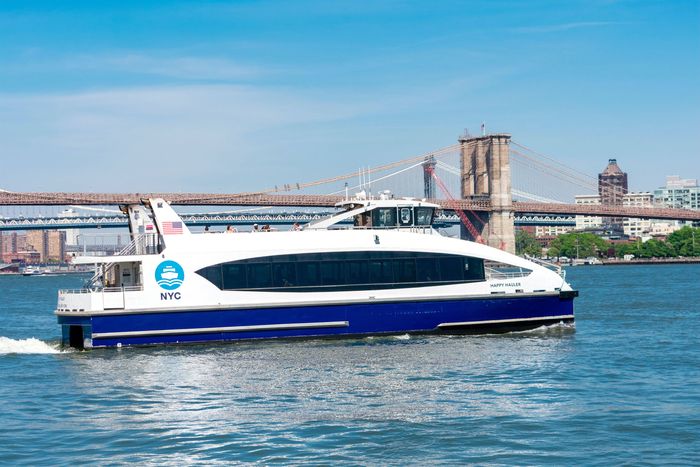
Hornblower Group, the San Francisco–based company that operates NYC Ferry, filed for bankruptcy yesterday, claiming it could not manage its roughly $1.2 billion of debt. One of its investors, the private equity firm Strategic Value Partners, agreed to acquire the company in a debt-for-equity swap that’s part of a larger restructuring, according to The Wall Street Journal.

Hornblower operates three primary divisions: an Australian company that seems to be doing well, a ferry and sightseeing division, and a luxury cruise division, American Queen Voyages. It’s this last unit, which mostly consists of old-timey paddlewheel riverboats, that Hornblower representatives in court said was the company’s “Achilles’ heel” that never recovered from the pandemic, according to Emily Lever of Law360. The company took on hundreds of millions of dollars in debt after its revenue dropped to $175 million in 2020 from $690 million just a year earlier.

Exactly how New York City’s ferry service fits into Hornblower’s restructuring is unclear. For now, CEO Kevin Rabbitt is adamant that service will not be affected, claiming the restructuring will allow Hornblower to eliminate debt unrelated to the ferry system while continuing “record growth across the five boroughs.” Indeed, a court filing described NYC Ferry as a bright spot in the company’s portfolio. Just last year Hornblower re-upped its contract with the Economic Development Corporation, the city nonprofit that oversees NYC Ferry, at $405 million over the next five years, with two optional three-year extensions. The EDC chose Hornblower despite a 2022 audit by comptroller Brad Lander that put the total taxpayer subsidy for ferry rides in 2021 at $12.88, nearly double the city’s previous estimate. (A 2019 study by the Citizens Budget Commission estimated taxpayers contributed ten times more to each ferry ride than each subway ride and, for a voyage on the ferry’s Coney Island route, taxpayers covered $24.75.) According to the EDC, the subsidy has since been reduced to $8.55 per ride.

Hornblower originally won the NYC Ferry contract in 2016 in a somewhat controversial deal. According to The City, Hornblower beat out a team of three local ferry operators, but Hornblower’s underbid came with a hidden cost. While the local operators had proposed using their own armada of water taxis, Hornblower asked taxpayers to front $232 million to buy 38 vessels and an additional $137 million at a later date for more boats. A spokesperson for the EDC at the time justified the arrangement, in part, by saying it was smart for the city to own its vessels — logic that flies in the face of the old adage that a boat is a hole in the water you throw money into.


Tuesday, March 23, 2021

St. Saviour's developer bankrupt, likely headed to prison

From The Real Deal:

It’s collection time for accused fraudster Tomer Dafna.

More than two years after the investor and developer was indicted for participating in a mortgage fraud scheme, the industry players Dafna borrowed money from are coming out of the woodwork to recover funds they claim they’re owed.

Two of Dafna’s creditors filed a petition for his involuntary Chapter 7 bankruptcy last week, citing $1.3 million in claims, court records show. But that number could balloon to more than $20 million if the parties behind numerous lawsuits and outstanding judgments against Dafna become creditors.

The case against Dafna and his co-defendants is ongoing. Each man faces a $1 million fine and up to 30 years in prison if convicted.

In the meantime, private lenders are coming after Dafna to recoup funds they say he never repaid.


For those who don't recognize the name, Tomer Dafna was a co-owner of the St. Saviour's property in Maspeth. Karma is not always instant but it is most certainly a bitch, ain't it?

Wednesday, September 30, 2020

40%


Bloomberg


The pandemic has battered New York City businesses, with almost 6,000 closures, a jump of about 40% in bankruptcy filings across the region and shuttered storefronts in the business districts of all five boroughs.

It’s going to get worse.

This fall, the nation’s largest city will see even more padlocked doors as companies burn through federal and private loans they tapped in March, landlords boot businesses that can’t make rent, and plummeting temperatures chill outdoor dining and shopping.

“By late fall, there will be an avalanche of bankruptcies,” said Al Togut, a lawyer who has handled insolvencies for small businesses and huge corporations like Enron. “When the cold weather comes, that’s when we’ll start to see a surge in bankruptcies in New York City.”

New York City and its businesses have reached a pivotal point. After over six months with the specter of Covid-19 hovering in every subway car and corner bodega, the virus is showing signs of resurgence.

The state of New York on Saturday reported more than 1,000 new cases for the first time since early June. Spikes emerged in south Brooklyn and Queens neighborhoods with large Orthodox Jewish communities, just as they observed Yom Kippur. Meanwhile, principals called on the state to take over schools days before they restart in-person classes, saying Mayor Bill de Blasio failed to ensure enough staff to open safely.

The coming wave of business closings will touch every New Yorker as jobs get scarcer, neighborhoods lose beloved shops and families run out of cash.

Already, dwindling tax revenue has led to cutbacks in municipal services. Trash on sidewalks, unkempt parks and an increase in shootings have made it more difficult to persuade workers to return to offices, more than 150 executives told the mayor in a letter this month. A dearth of office workers is a death knell for many merchants.

“It’s a crisis, and we need to act—our economy can’t recover without saving small businesses,” said city Comptroller Scott Stringer, a candidate in next year’s mayoral election. “When they close, we don’t just lose our beloved Main Street businesses. We lose jobs, tax revenue and the economic backbone of our city.”

The pandemic could permanently close as many as a third of New York’s 230,000 businesses, according to the Partnership for New York City, a business group.

Friday, March 17, 2017

Illegal hotel owner gets off easy

From Crains:

The owner of a Midtown apartment building that for years has been dogged with lawsuits has agreed to settle millions of dollars' worth of outstanding violations for $375,000 and bring the property up to snuff, according to federal bankruptcy court documents.

Ben Zion Suky was one of several owners of 440 W. 41st St. and for years rented apartments for less than 30 days in violation of city code, according to City Hall. In 2015 the Mayor's Office of Special Enforcement filed a lawsuit seeking to shut down the illegal inn and collect damages. Before it was resolved, however, Suky sold the 96-unit building to a company controlled by David Goldwasser, who then filed for bankruptcy protection.

The city argued that Goldwasser was responsible for the outstanding violations and penalties, which totaled more than $2 million, according to the documents. Now the two sides have agreed to settle the suit for $375,000 on the condition that Goldwasser bring the property up to code and cease all illegal hotel operations.

Friday, October 21, 2016

Willets Point businesses may get evicted from the Bronx

From NY1:

An 80,000-square-foot warehouse in the South Bronx was just renovated.

It was supposed to house a collection of 45 auto-repair businesses, but it stands empty. There is not a car in sight.

For years, the 45 businesses operated in the shadow of Shea Stadium, and then Citi Field, in Willets Point, Queens. But Mayor Michael Bloomberg's administration wanted them out to make way for a $3 billion residential and retail development. The city paid them $7.6 million to move to the South Bronx, but their money ran out before their new home - that warehouse - was completed.

The 45 businesses operate as the Sunrise Cooperative. Their money gone, the businesses face eviction by the owner of the warehouse, but they have filed for bankruptcy hoping to prevent that. They want the city's Economic Development Corporation to provide $3 million more so they can pay their bills and finish construction.

And the auto workers aren't asking for a handout. They are willing to pay the city back to simply complete the project.

But the EDC tells NY1 the businesses should look elsewhere to borrow money.

Salamanca says it's the city's responsibility to help these mostly immigrant businesses.

"These businesses didn't ask to be put in this position," he said.

Friday, February 19, 2016

Jamaica Estates squatters are finally out


From WPIX:

Ex-NYPD cop Winston Bailey and his family finally got the boot from the Jamaica Estates home where they’d been living for more than two years without paying rent.

...On Tuesday afternoon, Feb. 16, the clock finally struck midnight. Time ran out for the Baileys. A city marshal and five NYPD cops showed up to get them out. They were evicted.

Byrne is grateful, but .. there’s always a “but” with these people.

The Baileys went back to court the next day. And according to Byrne, civil court Judge Louis Vilella gave them one hour a day for a week to get the rest of their belongings out of Byrne's house.

Judge Vilella will consult with the judge handling the federal bankruptcy action to make sure he’s not missing anything. And then he’s due to issue a ruling on Feb. 29, presumably a final ruling.

Tuesday, September 8, 2015

Whitestone brownfield won't get cleaned up

From the Times Ledger:

The Great Atlantic Pacific & Tea Company currently has no definite plans to clean up a brownfield at the former Johnny on the Spot Dry Cleaners site in Whitestone after the company filed for bankruptcy in July, according to the state Department of Environmental Conservation.

At the end of July, A&P, which also owns Pathmark and Waldbaum’s, announced it had agreed to sell 120 stores for about $600 million. The company said it secured financing of $100 million and voluntarily filed for Chapter 11 bankruptcy protection.

In July 2014, A&P submitted an application on behalf of the former Johnny on the Spot Dry Cleaners at 152-45 10th Ave. to the DEC’s Brownfield Cleanup Program, a voluntary program that helps repair and redevelop brownfields, or contaminated properties.

Wednesday, July 1, 2015

Do people even read books anymore?

From Crains:

At one time, New Yorkers regarded chain bookstores as corporate invaders certain to drive independently owned bookshops out of their communities.

But now it is the chain bookstores that need saving—and in one Queens neighborhood, locals are stepping up.

Forest Hills residents are trying to rescue a Barnes & Noble that appears to be on its final chapter. The business, which like all brick-and-mortar bookstores has lost sales to Amazon and other Internet retailers, is minimally profitable and faces closure when its lease expires Jan. 31.

"Saving a chain store may seem ironic at first sight, but we already lost all of our small bookstores in the area," said Michele Dore, co-founder of the new (if awkwardly named) civic association Forest Hills, Rego Park, Kew Gardens—Our Communities. "This is where locals have been going to for decades. It's simply a part of Forest Hills history."

Since 1995, the store at 70-00 Austin St. has become a popular hangout spot for teens, seniors and families. But talks between Barnes & Noble and its landlord, Muss Development, have bogged down over a proposed rent increase.

“We would like to extend the store at the rent we're paying or somewhere around it,” said David Deason, vice president of development at Barnes & Noble. “As a public company, we can't afford to operate a store and lose money. We have shareholders to think about. We will stretch as far as we can go.”

But competition from e-commerce has eroded the store's elasticity. Muss Development's chief operating officer, Jeff Kay, said Barnes & Noble has received multiple rent reductions in the past.

Saturday, March 22, 2014

CitiBike not popular among tourists


From the Wall Street Journal:

Leaders of Citi Bike are moving quickly to raise tens of millions of dollars to rescue the popular bike-share program as it loses money, according to people familiar with the matter.

Leaders of New York's Citi Bike are moving quickly to raise tens of millions of dollars to rescue the popular bike-share program as it loses money. Andrew Tangel reports on the News Hub. Photo: Getty Images.

Citi Bike's bright blue bicycles have become a seemingly indispensable part of some city neighborhoods, but its managers don't believe it can survive if it doesn't become more appealing to tourists and expand to new neighborhoods, the people familiar with the matter said.

The program's leaders have approached officials in Mayor Bill de Blasio's administration about raising Citi Bike's rates, the people said.

One issue is that Citi Bike has proved more popular than expected with annual users who generate comparatively little revenue. Some 99,000 people pay $95 a year plus tax to be able to use the bikes for 45 minutes at a time.

The potential for far greater revenue, however, is with short-term users. Many of those were expected to be tourists, and they haven't used the bikes nearly as much as officials had anticipated, people familiar with the matter said.

A 24-hour pass costs $9.95 plus tax and a seven-day pass costs $25 plus tax. Purchasing short-term passes has proved difficult due in part to balky kiosks that accept payment for the bikes and computer glitches.

Operational difficulties have also troubled Citi Bike. The task of moving bikes to respond to the patterns of commuters—those who grab a bike in the West Village to Midtown in the morning but may not ride it home at night—has been more cumbersome than expected in New York City traffic. That has raised costs.

Also, some 50 batteries have to be changed manually at the system's 330 docking stations every night, requiring Citi Bike to hire a subcontractor just to do the job, according to people familiar with the matter.

Citi Bike has been forced to lay off some workers because of the financial strain, which has made it more difficult to operate the sprawling network and respond to customers, the people familiar with the matter said.

Sunday, January 26, 2014

Bikeshare blues

From Crains:

Now some news out of Canada bodes poorly for urban transportation utopians. Public Bike System Co., the company that designed the sturdy bikes and nifty solar-powered docking stations used in New York and more than a dozen other cities around the world, was forced into bankruptcy protection in Montreal, where it also administers the local sharing program. The nonprofit, known as Bixi, has debt of nearly $46 million.

Bixi's financial troubles have persisted for years; Montreal gave it over $100 million bailout in 2011. Part of Bixi's shortfall is a result of New York and Chicago program operators withholding payments of over $5 million because of problems with the software that runs the bike docking stations.

Bixi acts as a supplier to Alta Bicycle Share Inc., which administers New York's Citi Bike and similar programs in Chicago, Boston and elsewhere. Alta said on its website Jan. 20 that its systems "are up and running and ABS will ensure that they continue to operate without interruption."

Citigroup said its program is safe.

"Alta has reassured us that they have appropriate plans in place, and we are confident Citi Bike operations will not be negatively impacted for users," said a bank spokesman.

It's not clear, though, what Bixi's troubles mean for CitiBike's scheduled move into new areas of New York City. Citi Bike is operated by Alta subsidiary NYC Bike Share.


From the Epoch Times:

As the weather got colder this winter, more New Yorkers set aside their Citi Bikes. On Jan. 3, the day after a howling overnight snowstorm, the city’s bike share system logged the fewest number of trips for a 24-hour period since launching in May last year, according to data posted on its website.

Riders checked out the blue bicycles a record-low 1,230 times across the city, compared to an average of over 30,000 times per day during the summer.

Snow was not the only cause for the record low reached on Jan. 3. The number of daily bike share rides has declined steadily as average temperatures have dropped. Citi Bike users rode the bikes four times less in January compared to the system’s record month of September.

The seasonal drop is likely to make a financial dent for the Alta Bicycle Share. Bloomberg said in October that Alta was still losing money due to the costs of rolling out the system.

The mayor’s office and NYC Bike Share did not return requests for bike share’s financial data.


It would probably help if someone plowed/shoveled the bike lanes. But that's not likely to happen.

Friday, June 28, 2013

Tenants of foreclosed buildings want fixes


From the Queens Courier:

Hany Taha is afraid that his ceiling will collapse on him.

He has lived in the same apartment for 26 years, but now the ceiling is sinking. Although he has complained about it for seven months, nothing has happened.

Taha is a resident of one of six low-income apartment buildings in Ridgewood owned by Ridgewood Realty of L.I. The structures have accumulated a total of nearly 550 violations, according to the Department of Housing Preservation and Development.

At a rally on June 19 outside Manhattan’s bankruptcy court, residents and officials demanded to meet with the company that owns the mortgages — an investment firm called Stabilis Capital Management — to discuss finding a “new, responsible owner.”

About thirty families rent at the buildings in question, which have six units each. The rent ranges from $900 to $1,050 a month. Tenants make payments to a court-appointed receiver.

Residents want to continue living in the buildings, but fear that Stabilis will sell them to a group that wants to build luxury apartments.

“We are trying to resolve it, but we don’t own the buildings. We don’t have control over them,” a representative from Stabilis said. “We are prevented from taking action because of the bankruptcy that was taken by the owner.”

Residents’ complaints include no heat in the winter, leaks from ceilings, rat infestations, mold and cracked walls. The front doors to some of the buildings are missing knobs, and a number of locks are broken.

Tuesday, March 27, 2012

Another hospital bites the dust

From the Daily News:

Peninsula Hospital’s recovery efforts have flatlined and the hospital will be closing, officials confirmed Monday.

The troubled Far Rockaway facility had flunked a state inspection of its lab last month, forcing ambulances to be diverted and most patient care to be suspended.

Peninsula was months — not weeks — away from reopening the lab, according to bankruptcy documents filed by trustee Lori Lapin Jones on Monday.

The state Department of Health “determined that substantial additional time, effort and expense would be required before the laboratory would be eligible for re-certification,” Jones wrote to the bankruptcy court.

With insufficient money to keep the hospital afloat for that length of time, Jones wrote that closure was necessary.

Saturday, March 10, 2012

Having health insurance and still going bankrupt

From the Daily News:

Big insurance companies and some greedy doctors are to blame for the growing number of New Yorkers whacked with ”surprise” medical bills, a state inquiry has found.

Department of Financial Services Superintendent Benjamin Lawsky Wednesday released the results of his probe into the unanticipated bills that are slamming consumers.

"Simply put, surprise medical bills are causing some consumers to go broke," the report states.

His agency reviewed 2,000 complaints from 2011 and surveyed the 11 big insurers and HMOs who cover 95% of the New Yorkers who have health insurance.

The review found that patients who went out of their way to make sure the non-emergency treatment they sought was covered by their plan still wound up with bills from specialists — such as assistant surgeons, anesthesiologists and radiologists — who were outside their plan.

That’s because insurers often don’t make clear who will be involved and how much it will cost, the report found.


Also from the Daily News:

The fix here is pretty simple.

One, the Legislature must cap an individual patient’s responsibility for the cost of emergency care. A heart attack or late-stage cancer discovery should not bankrupt a family.

Two, nonemergency patients must be given reasonable notice if an out-of-network practitioner is scheduled on their case.

Three, the “small but significant number” of out-of-network doctors who the state says are inflating bills for treatment must feel the wrath of state watchdogs.

And — this is absolutely critical — insurance companies must be required to clearly disclose, up front, precisely what they will pay for out-of-network services so consumers can accurately compare health plans.

Thursday, December 8, 2011

Hospital may not make payroll


From the Daily News:

The federal judge overseeing the Peninsula Hospital bankruptcy case expressed her frustration Monday, urging the stakeholders to hammer out a deal before the financial axe drops on the hospital later this month.

Without a much-needed cash infusion, the Far Rockaway facility will be unable to meet payroll after Dec. 26 — a fact that is causing “enormous anxiety” among employees, union officials said.

Judge Elizabeth Stong urged Peninsula and its creditors to settle their differences before the eleventh hour.

“It’s not a good idea to wait until the last minute,” Stong said.

She noted during the hearing at Brooklyn federal court that she refused to let the stakeholders’ “emergency” become the court’s “problem.”

Before the embattled facility can get a cash infusion, the court must approve terms of the loan, including compensation for creditors. Peninsula filed for Chapter 11 bankruptcy protection in September following a precarious summer when it seemed it may close, potentially putting hundreds of people out of work.

Tuesday, September 6, 2011

Hospital code red

From the NY Post:

At least six of the city’s private hospitals are on life support and could be candidates for retrenchment or even closure, shocking financial records show.

The cash-strapped hospitals include Brookdale, Wyckoff Heights and Interfaith in Brooklyn, Westchester Square in The Bronx and Jamaica and Flushing in Queens.

The troubling deficits and crushing debt were spelled out by the hospitals’ own financial reports filed over the past two years with the state government.

Each of the hospitals’ accountants had warned, “These factors raise substantial doubt about the medical center’s ability to continue as a going concern.”

All the hospitals are considered “safety net” facilities that serve mostly poor, medically underserved neighborhoods.

* Jamaica Hospital had a deficit of $72.18 million in 2009. The Queens facility was “delinquent” in making contributions to union-worker benefit plans.

Despite its woes, Jamaica has agreed to provide one-year severance pay to all its vice presidents and senior managers if there’s a shakeup.

* Flushing Hospital had a deficit of $35.45 million in 2009. It had previously filed for bankruptcy protection in 1998.

Jamaica, Flushing and Brookdale are part of the MediSys Health Network.

Eight city hospitals have closed since 2007.

Monday, August 29, 2011

LIC's Pathmark in jeopardy?

From the Queens Chronicle:

Jackie Kozody has worked at the Long Island City Pathmark for 14 years.

She would like to continue to do so, but said she and her coworkers have been on edge since December when A&P, or the Great Atlantic and Pacific Tea Co., filed for bankruptcy.

A&P owns 15 supermarkets in Queens under the Pathmark and Waldbaum’s brands, and a total of 58 in New York City under various names including 16 Food Emporium stores in Manhattan.

Kozody manages customer service, cashiers, bookkeepers and customer complaints in a store with more than 100 employees.

“The fear is not having a job, that at any moment the store could close,” she said, “that at any moment the store is going under or being sold to someone we don’t know. There’s a lot of tension, worrying about how we would make ends meet or standing in the unemployment line.”

Chapter 11 bankruptcy rules allow A&P, the 151-year-old grocery chain, to be protected from its creditors while it reorganizes under a new management team.

Sunday, July 24, 2011

Bye, bye Borders!

From the Times Ledger:

One of the keystone businesses at The Shops at Atlas Park has filed for Chapter 7 bankruptcy.

Borders, which occupies a prominent space at the shops, at 80-00 Cooper Ave., announced Monday it will begin the process of liquidation.

The collapse of the book-selling giant will eliminate roughly 11,000 jobs at roughly 400 stores and will be the final chapter for the store in Queens, even though the Atlas Park site avoided a similar fate earlier this year.

In February, Borders filed for Chapter 11 bankruptcy protection and closed 200 stores around the country, but The Shops at Atlas Park was spared.

Thursday, June 9, 2011

Brooklyn's hospitals struggle to survive

From Crains:

The chief executives of three ailing Brooklyn hospitals are finalizing a de facto merger proposal that they expect to submit to state officials as early as this week. Their plan, which calls for a “northern Brooklyn health care alliance,” could include a major restructuring, closure or repurposing of at least one of the hospitals.

Interfaith Medical Center, Wyckoff Heights Medical Center and Brooklyn Hospital Center say the aim of the suggested alliance is to strengthen their bottom lines and to command higher reimbursement under federal and state Medicaid reforms.

The first two hospitals have carried large losses and crippling liabilities for years. The third, which emerged from bankruptcy in 2007, faces a major debt payment next year.

Five of Brooklyn's 10 private hospitals have financial problems. Long Island College Hospital would be No. 6—its most recent financial statement showed a $39 million loss in 2009—had it not been merged with a state institution, SUNY Downstate Medical Center's University Hospital of Brooklyn. The $62 million deal was brokered during the Paterson administration and finalized last month.

The financial instability of Brooklyn's hospitals has attracted the attention of state Department of Health officials, who have been meeting with facility executives in the past few months.

Saturday, April 16, 2011

Bye, bye Blockbuster

From the Daily News:

On a recent Saturday evening, drivers pulled off Union Turnpike and into a strip mall in Kew Gardens Hills, lured by a banner that blared, "Store Closing."

They rummaged through stacks of discounted DVDs, video games and even candy. With bags full of 99-cent movies, the crowd helped to empty out the Blockbuster Video, an area mainstay, before its closing this week.

It's a scene playing out across the country - and at several stores in Queens - after the Dallas-based chain filed for bankruptcy in September.

Queens residents will no longer be able to rely on Blockbuster to plan family movie nights as stores are closing in Astoria, Bayside, Forest Hills and Howard Beach, among others.


Great, those stores tend to be large, so that leaves a lot more room for Queens Crap.

Thursday, March 24, 2011

Council members are not great money managers

From the Daily News:

The City Council manages your tax dollars through the city budget, but for some lawmakers, managing their own money has been a disaster.

The homes of Queens Councilmen James Sanders, a Democrat, and Daniel Halloran, a Republican, are now in foreclosure.

Two years before her first Council run in March 2001, Elizabeth Crowley (D-Queens) emerged from personal bankruptcy.