Showing posts with label NYC Economic Development Corporation. Show all posts

Wednesday, November 9, 2022

Economic Development Corporation gets funding to destroy Hunters Point park space for new NYC Ferry dock

https://queenspost.com/wp-content/uploads/2022/11/ferry-5.jpg 

Queens Post 

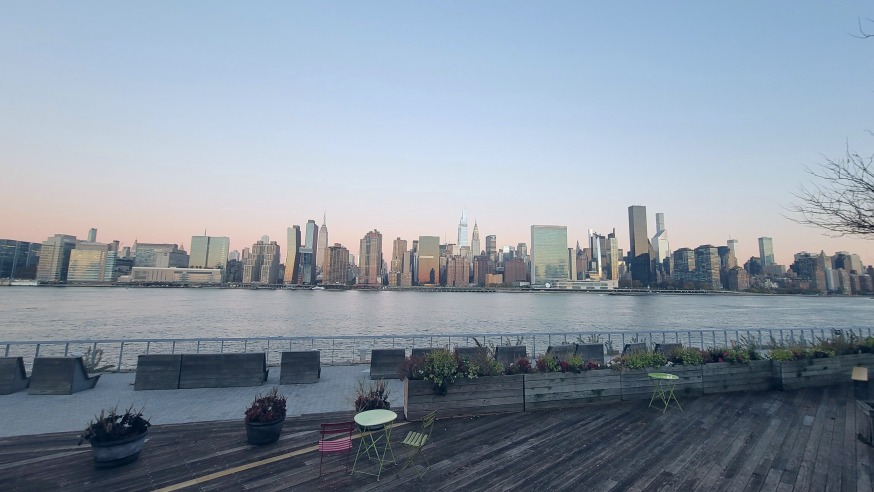
The New York City Economic Development Corporation plans to demolish the existing ferry terminal at Hunter Points South Park and build a new dock about 300 feet away in front of the main boardwalk by the Oval.

The EDC, which oversees the city’s ferry routes, filed permits on Oct. 18 to build a floating dock in front of the boardwalk that runs parallel to the outdoor dining area near the Oval. If all goes to plan, the new dock would be completed by 2023.

The new ferry terminal would allow for an expansion of ferry operations at the site with the landing being able to accommodate two ferries simultaneously, according to the permit application. The current terminal can only handle one boat at a time.

The plans would see the construction of a large floating barge about 100 feet out from the boardwalk. Two boats would be able to dock at the barge.

A concrete platform would be built directly adjacent to the boardwalk and a long footbridge, known as a gangway, would then connect the platform to the floating barge.

The new ferry terminal would replace the current landing structure that is located in front of the beach volleyball court. The current terminal, which includes a 20-foot-wide floating barge, would be torn down should the project be approved.

The city has authorized $12.2 million in funding for the project, according to the EDC.

The plans, which were filed with the US Army Corps of Engineers, would bring about significant change to the waterfront. They have already drawn criticism.

For instance, the Hunters Point Parks Conservancy, a volunteer group that helps with the upkeep of the waterfront parks, is opposed to the project arguing it would spoil the view of the Manhattan skyline and fill the boardwalk with hundreds of passengers.

The group was also critical of the EDC, saying that it did not consult them about the plans when they were filed last month.

Meanwhile, Councilmember Julie Won, who has been briefed on the plans, said she has not yet taken a position on the matter and is waiting to hear community feedback.

Friday, September 23, 2022

Judge finds vaccine mandate illegitimate and orders restitution against the city

Mayor Adams is starting a pro-over-development caliphate to supersede City Council powers and community interests


 MTOPP

Mayor Eric Adams Blasting

His Way Into Your Community!

Mayor Eric Adams directed a commission to create a blueprint that would allow development projects to happen faster and cost less to developers.  The NYC Economic Development and Housing committee, working with Citizens Budget Commission (CBC), a nonprofit organization organized a report to address Adams’ agenda.  They made recommendations for changes in both the law and City and State administrative  policies regarding applications for development requiring rezonings. Their main justification is an economic model of supply and demand, the more supply (increase heights of buildings) the lower and more affordable the rents will be.

Of course they are ignoring all of the evidence which shows the opposite.  That increase development has in fact caused rents to increase and homelessness to sky rocket, as a recent study just revealed.  

13 Points of Change to the Rezoning Process of New York City and New York State

  1. No more court cases brought against developers or the City, instead the rezoning project will be reviewed by the City Planning Commission.
  2. The elimination of the New York State's Environmental Review process for all development projects.
  3. In the alternative, the Environmental Review Process,  does not have to be completed until the end of the Uniform Land Use Review Process "ULURP".
  4. In addition, New York State will reduce the number of environmental impact categories.
  5. The Community Board’s and Borough Presidents review of a rezoning application during the ULURP process, will be eliminated. 
  6. In the alternative, only the Borough President should review rezoning projects.
  7. The Community and Borough President review of a rezoning application should take place before an application is certified and starts the ULURP process.  
  8. The City Council Deference (the power to say no to a rezoning project in their district) should be eliminated.
  9. In the alternative, when the City Council disapproves a project, immediately an alternative group of decision makers would convene with the power to overturn the City Council’s vote. The group would consist of the Mayor, Public Advocate, Borough President and Council Speaker.
  10. Additionally, the City Council would need to have a Super Majority, not just a majority to overrule the City Planning Commission’s recommendation on a project.
  11. All development projects that are not near or in sensitive wetland and greenfield sites (not brownfields) should be “as of right”. 
  12. Instead of focusing on environmental concerns and their impact upon a community’s land, air and water, the focus should be on negative consequences vs. benefits.
  13. Streamline the Environmental Process by not interacting with other government agencies that specialize in a particular environmental impact concern.  Instead, have one agency  – i.e. the City Planning Commission – conduct  all of the environmental impact analyses.

The Real Estate's Dream
 

Overall, these proposed changes reflect the real estate’s industry’s determination to escape any and all requirements for environmental reviews, with 99% of their projects being considered “as of right”.  This terms means developers can build what they want, where they want with no one having a say or being able to stop them.

  All of these proposals would require New York State to make changes to its legislation, for NYC to make revisions to the New York City Charter, as well as an unknown number of administrative changes in both the State's and the City's regulations.

  The importance of this Commission’s report and the creation of the

*“BLAST” commission to engage in some of these changes lies not only in its revelation regarding the intent to drastically reduce the power of the community to protect itself against developers, but what it reveals about Mayor Eric Adams’ plans for the next four (to eight!) years of his administration.

*We don't remember exactly what "BLAST" stands for but it hit us how arrogant and powerful the Mayor and the Developers believe that they are in even naming a commission BLAST.   They are sending a clear message of their intention to BLAST there way into any community, any neighborhood and harming any environment that they see fit.

Note: Please take this commission's report seriously.  There are already "opinion” pages popping up everywhere stating the ULURP process is broken, that what we need is more development projects and that the New York City Council's powers need to be reduced.  Even Brooklyn Borough President Reynoso is proposing a "borough wide" rezoning, based upon his failed rezoning process in his council district when he was its councilperson.  He is claiming that the 99% success rate of developers’ ULURP applications and 100% success rate for City sponsored district wide rezonings are not working for developers and/or the City!

Six Things You Can You Do!


1. Please forward this email by clicking on the link above and spread the word.

2. Testify at the CB9's hearing on these proposed changes.

Community Board 9 Hearing on City Citizens Budget Commission Proposal for Rezoning
Date:

Wednesday, September 28 at 7 pm sharp!
 Please click the link below to join the webinar:
https://us06web.zoom.us/j/84858396883
Dial In: 1(646) 558-8656  
Webinar ID: 848 5839 6883; No Password

This hearing will only last for half an hour so please come on time!

3. Read a more detailed description of the changes along with their rationale and MTOPP's position by clicking on this link.

4. Read the upcoming emails coming within the next couple of days and pass those along to others.

5. Write your own opinion pages in local media outlets etc...

6. Ask your Community Board to conduct its own hearing on the proposals.

Friday, August 12, 2022

Adams shooting craps hiring casino cop crony to EDC position

https://static01.nyt.com/images/2022/08/10/nyregion/00ny-Pearson/00ny-Pearson-articleLarge.jpg?quality=75&auto=webp&disable=upscale
New York Times

Mayor Eric Adams has appointed a former New York City police official and close confidant as a paid senior adviser — while allowing him to keep his job as an executive at the Resorts World New York City casino in Queens, according to city officials and a person close to Resorts World.

Since May 31, the adviser, Timothy Pearson, a retired police inspector, has served as both a city official and the vice president responsible for overseeing security at the casino, which is seeking state approval to expand its gambling offerings in Queens. City support for its bid could prove pivotal.

On top of what he earns from the casino job, Mr. Pearson receives a city-funded salary through the nonprofit New York City Economic Development Corporation under an unusual arrangement that allows him to continue collecting his $124,000 annual Police Department pension.

State law prohibits city officials from simultaneously receiving a salary and a pension from the city. Mr. Pearson is able to do so because he is being paid by the development corporation, a nonprofit controlled by the mayor.

Initially, Mr. Pearson had worked on Mr. Adams’s behalf without pay during his mayoral transition last fall, and for the first five months of his administration before he was put on the public payroll as a senior adviser to the mayor for public safety and Covid recovery, said Fabien Levy, a spokesman for Mr. Adams.

Mr. Adams’s administration has declined to answer other questions about the arrangement, including how much the city is paying Mr. Pearson. According to Mr. Levy, the Economic Development Corporation reached out to the New York City Conflicts of Interest Board on Mr. Pearson’s behalf. He said Mr. Pearson is following all applicable laws.

As of Tuesday, the board had issued no waivers of the conflicts of interest law to Mr. Pearson, records show.

“New Yorkers are lucky to have such a knowledgeable and experienced individual agree to serve and bring his expertise to the greatest city in the world, especially after he did the job without being paid a single dollar for months,” Mr. Levy said in a statement.

Mr. Levy said Mr. Pearson’s municipal job responsibilities had no overlap with casino policy, and instead included working with law enforcement to help improve the city’s public safety, the centerpiece of Mr. Adams’s mayoral agenda. Mr. Levy also said Mr. Pearson would recuse himself should any interaction between the casino and the development corporation arise.


Thursday, August 11, 2022

Rockaway zombie courthouse coming back as a wework imitation


THE CITY

A long-shuttered former courthouse in Queens that the city sold for just $50,000 nearly a decade ago to build a medical facility can now be used for commercial and office space instead.

The board of the city’s Economic Development Corporation voted unanimously Tuesday to approve a change to the deed with the former Rockaway Courthouse, which has now been closed for 60 years.

The move allows the owner, Uri Kaufman of The Harmony Group, to lease the space to commercial tenants — a request he made for years. 

The city approved the transfer of the courthouse building to Kaufman in 2013, and he officially purchased it in 2015 for $50,000, according to an EDC spokesperson. The low price was meant to allow for major renovation of the 1931 building, which is listed on the National Register of Historic Places.

Construction and asbestos abatement was completed by 2020. Overall, Kaufman has spent around $11 million in repairs, he told THE CITY.

Kaufman said the courthouse was “one of the toughest buildings we ever did,” noting it originally had only one exit — so they had to construct an additional wing out the back for fire safety.

Friday, August 5, 2022

Alleged affordable housing building completed in Far Rockaway

https://qns.com/wp-content/uploads/2022/08/Beach2117-1-700x466.jpg 

QNS

The 100 percent affordable housing project — called Beach 21st — transformed the vacant lot on city-owned land near the Far Rockaway-Mott Avenue subway station, delivering on key commitments from the “Downtown Far Rockaway Roadmap for Action,” a comprehensive plan released in 2016 to revitalize the neighborhood and improve the quality of life for local residents.

“Seven years ago, I convened the Downtown Far Rockaway Working Group to develop a $288 million roadmap for this community’s revitalization and reverse decades of deliberate disinvestment,” Queens Borough President Donovan Richards said. “I could not be more proud of the life-changing progress we are delivering for the families of this neighborhood in the form of housing, open space, education, and beyond — it truly is a new day for Far Rockaway, where its residents are finally being heard loud and clear.”

The multi-agency effort, led by the New York City Economic Development Corporation (NYCEDC), delivered street safety upgrades, new pedestrian space, climate resilience, and flood protection measures to an area that was pummeled nearly a decade ago by Superstorm Sandy.

Councilwoman Selvena Brooks-Powers applauded the Department of Transportation for completing a $114 million infrastructure project that was completed three months early and $25 million under budget, the NYCEDC and community partners for their commitment to “synergetic community spaces to strengthen the neighborhood, provide vital housing to residents, and construct a stronger, better downtown Far Rockaway.

“Thriving communities need vital open spaces, community spaces, community engagement, affordable housing, and a formidable connection to critical services,” Brooks-Powers said. “The Beach 21st Street mixed-use development has the necessary synergy to assure that our community stays on the trajectory of vibrancy.”

Friday, April 8, 2022

A more equitable and rational Citibike expansion proposal for Queens


Juniper Park Civic 


The Citibike expansion to Queens got a good do over by Juniper Park Civic. Taking DOT's original proposals which would've usurped street curb spaces from residential and commercial parking (spitefully in my opinion) onto ample sidewalk spaces nearby them instead.
 
Let's see how Transportation Alternatives responds... 


Thursday, April 7, 2022

de Blasio's boondoggle ferry service is mostly used by the rich and White, as expected


AMNY 

 Riders of the heavily-subsidized NYC Ferry system became even wealthier and whiter during the pandemic, according to city statistics.

Annual surveys by the Economic Development Corporation — which oversees the waterborne transit system — show that in 2021 the average income of passengers jumped to six figures at $100,000-$149,999, compared to $75,000–$99,999 for both 2020 and 2019.

In a system long criticized for serving largely the well-off and white living along the Big Apple’s waterfront, a mere 32% of passengers identified as non-white or multiracial last year, declining slightly from 34% in 2020, and 36% in 2019.

The city questionnaire also found that more out-of-towners are coming back to the ferries, as tourism began recovering from a COVID slump in 2021.

Last year 88% of ferry riders were residents of the Five Boroughs, compared to an all-time high of 95% during 2020, and 86% in 2019.

EDC’s most recent report gathered data from 4,100 people in early October. The figures appear to have been published in December, according to its hyperlink address, but have not previously been reported. 

The chairperson of the City Council’s Transportation Committee lamented that the ferry system has continued to leave out needier New Yorkers, despite footing the bill for the service through their tax dollars. 

“The communities that are in need, that are a part of transit deserts, and that have lower household incomes, those are not the communities, unfortunately, that have the pleasure of having a ferry system,” Queens Councilmember Selvena Brooks-Powers told amNewYork Metro. “We need to make sure that it’s not leaving out a community that could greatly benefit from the access and from it being subsidized, quite honestly.” 

The 2021 study notes that the higher incomes last year were “in line” with data the city collected in 2017 and early 2018, however that was before EDC expanded its ferry service area to more blue collar parts of the city like Soundview in the Bronx, which opened a landing in August 2018.

On that route, the majority of passengers make less than $100,000 a year and ridership has the largest share of people of color compared to other circuits — which is still less than half, according to graphics in the report.

Monday, June 21, 2021

de Blasio and the EDC are playing down the capability and spread of the Delta Variant


Progress New York

 Two days after the de Blasio administration released the findings of its recent weekly COVID-19 variant sequencing study, showing that the prevalence of the dangerous new strain known as the Delta variant had fallen from 8,4 per cent. to 6,7 per cent., a London newspaper, the Financial Times, published a report, estimating the prevalence of the Delta variant in the U.S. at 31 per cent.

For weeks, Progress New York has published reports, which have raised questions about the accuracy of the weekly variant sequencing studies. These reports initially focused on the plunge in the sample size used in the studies. The de Blasio administration responded by changing the presentation of the variant study results. Then, last week, some data was restated almost wholesale.

It is unknown how Mayor Bill de Blasio (WFP-New York City) will explain the divergence in the variant data. The press office supporting Mayor de Blasio refused on Sunday to admit that the administration was presenting unreliable variant study data.

There’s little transparency to the methodology used by the laboratory to sequence the COVID-19 variants.

Many critics are coming to the fore about the de Blasio administration’s lack of transparency about its weekly variant sequencing studies. One critic, known as @BWMosher on the Twitter social media platform, published some analysis of the latest sequencing study, noting some of the restatements to the data underpinning the weekly studies. In that review, it was noted that the laboratory used by the de Blasio administration to conduct the variant studies, the Pandemic Response Lab, was a creation of the City’s controversial arm that intervenes in the free market system to provide subsidies to large corporations.

The lab, also known by the mnemonic “Pearl” for its initials, or PRL, was created in the summer of 2020 by the New York City Economic Development Corporation, or the NYCEDC, first to conduct tests for COVID-19, according to City Hall information. At some point, PRL began to sequence for variants. That the NYCEDC is behind PRL presents a conflict of interest, because the chambres of commerce in New York City have been pressuring Mayor de Blasio to reopen the economy, so that workers can return to office buildings that still remain largely empty. To that end, the titans of industry have been pressuring for the full reopening of public schools from mere months into the pandemic, so that working families could rely on schools as day care. The reliance on public schools as day care for working families was noted in a mid-year budget report issued in 2020 by the Office of the Comptroller of the City of New York Government. “If public schools don’t reopen, parents of up to a million school children will have to provide their own childcare on at least a part-time basis, inhibiting many parents’ ability to return to full-time work,” the report noted.

Were PRL to report prevalence rates for the Delta variant that mirrored the Financial Times model, then businesses, office buildings, and public schools would face pressure to delay, or cancel, their reopenings. It is not known whether the unreliable sequencing data is a result of the appearance of a conflict of interest for the NYCEDC.


Saturday, June 19, 2021

Developers clean up in a matter of days

https://queenspost.com/wp-content/uploads/2021/06/51252731530_03f3ffc30a_k.jpg

Queens Post 

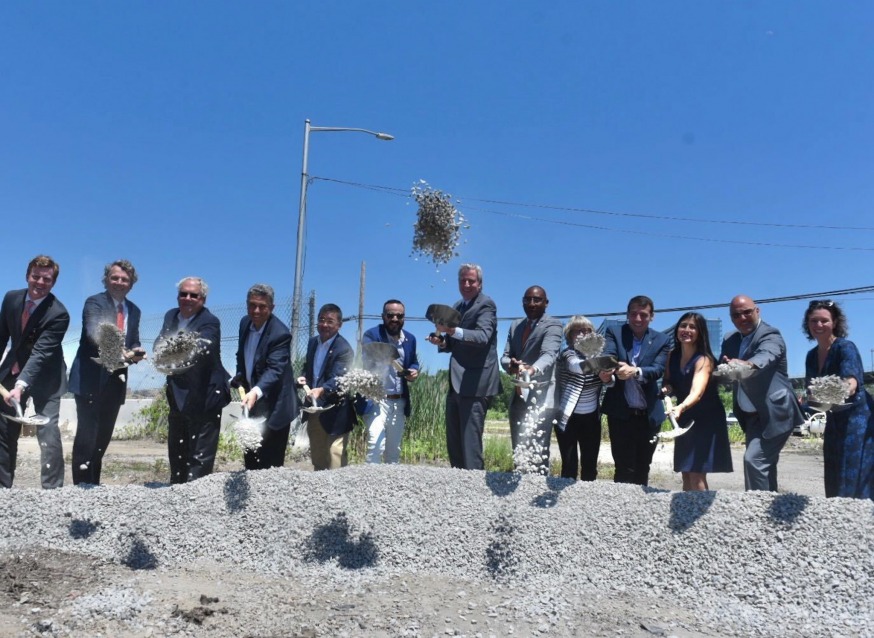
 City officials and local lawmakers celebrated the start of the environmental cleanup of Willets Point Wednesday — which paves the way for the redevelopment of the area.

Six acres of land near Citi Field is being remediated to prepare for the construction of three buildings that will include 1,100 affordable apartments, retail and community facility space. There will also be a stand-alone school and public open space.

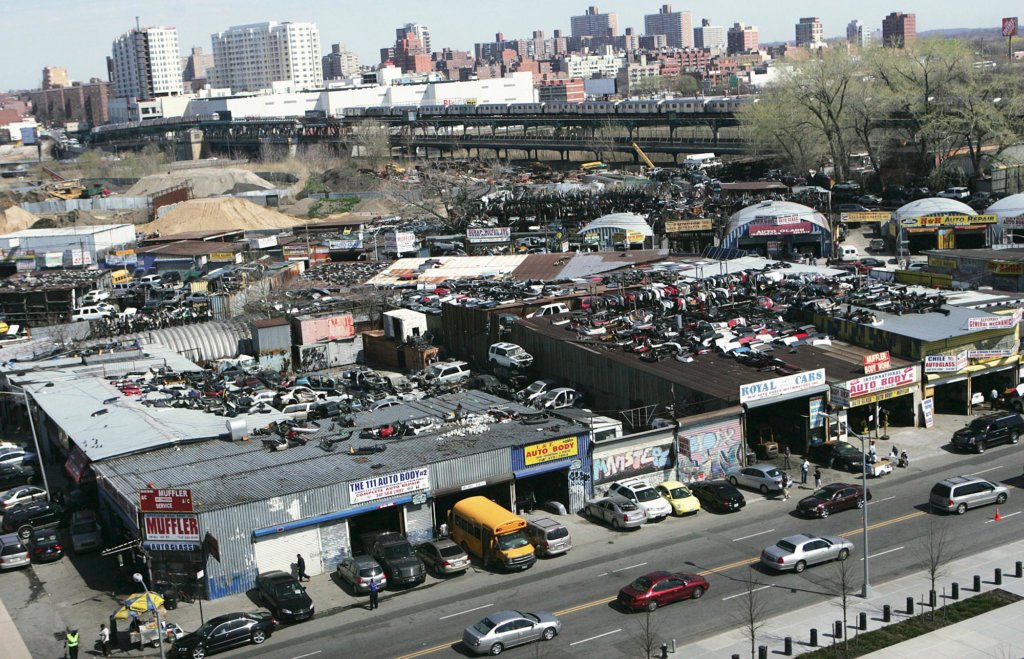
The ceremonial groundbreaking follows nearly 15 years of wrangling over the fate of the area that has long been occupied by autobody shops and junkyards. The remediation work begins as the city looks to recover from the economic fallout caused by the pandemic.

“A recovery for all of us is happening right here in Queens,” said Mayor Bill de Blasio at the groundbreaking. “Willets Point represents the best of our comeback – new units of affordable housing, more school seats for our children, adding public space and detailed infrastructure improvements.”

The environmental remediation will remove contaminated soil in the brownfield-designated area and replace it with clean fill. Workers will also raise the ground so that the future buildings and infrastructure will be above the floodplain.

The remediation efforts will be completed in 2023. Infrastructure construction is expected to begin in 2022, followed by the construction of the apartment buildings and school in 2024.

The cleanup and first phase of construction will lead to more than 800 construction jobs, according to the city. Upon completion, nearly 200 permanent jobs will be created.

“The environmental cleanup is a critical step in the first phase of the Willets Point project,” said Council Member Francisco Moya, who noted that New York has been dealing with an affordable housing crisis and overcrowding in schools for some time.

“Today we are taking another critical step forward in tackling these issues,” he said.

Queens Post 

 A large development company has purchased the vacant lot next to St. Sebastian’s School in Woodside for $5.5 million.

United Construction and Development, which has a portfolio of mixed-use buildings throughout Queens, bought the vacant lot from St. Sebastian’s Roman Catholic Church on March 25.

The company confirmed that it purchased the 39-53 57th St. site under the name Woodside 57 Street Realty.

United Construction, located on Northern Boulevard in Corona, is a major player in several large developments in Queens.

It is part of a consortium of developers behind the 68-story Skyline Tower in Long Island City, the tallest building in Queens. It also is the developer of the Justice Avenue Tower in Elmhurst, near the Queens Place Mall.

The Woodside site, once a playground for school children at St. Sebastian’s, is large with a frontage on 57th and 58th streets. The property is 1/2 an acre in size.

On June 8, United Construction filed plans with the Dept. of Buildings calling for the site to be subdivided into 8 tax lots. The company has yet to file building plans.

Wednesday, June 9, 2021

Droppin' a half a billion on science

https://external-content.duckduckgo.com/iu/?u=https%3A%2F%2Fs.abcnews.com%2Fimages%2FTechnology%2FWireAP_9bf8b23a8fe347f38a157e172696df12_16x9_992.jpg&f=1&nofb=1

 AMNY

 Mayor Bill de Blasio announced that the city will invest another $500 million into the life sciences industry, doubling down on its initial investment back in 2016.

The combined billion-dollar bet is part of de Blasio’s plan to make New York City the public health capital of the world. The original investment helped create labs at academic institutions, funded paid internships, and created over 2 million square feet of new life science space. The additional investment will help to spur on that growth. 

De Blasio likened the investments into the life sciences industry to how the five boroughs grew its tech industry.

“We need to build up life sciences, this is the future,” said de Blasio. “This is what’s going to make New York city great going forward.”

De Blasio says the investments into life sciences will allow for the space and opportunity to create innovations for the future. He frequently mentioned the city’s effort during the height of the COVID-19 pandemic last year, as evidence that the life sciences industry is crucial to the city’s growth and future. 

“We have the talent base, we have the hospitals, the universities, we have the ability to do the research that could blow away the capacity of any other part of the country,” said de Blasio.

The expanded initiative is expected to create 40,000 jobs. The city will provide up to $112 million in capital to award $20 million to support one or more innovation projects.

Multiple awardees can access up to $20 million each.

I don't know what "life sciences" is supposed to mean but I know the city better not give a contract to Ecohealth.

Thursday, May 13, 2021

Willets Point housing development can begin

 https://qns.com/wp-content/uploads/2021/05/qns_willets_point.jpeg 

QNS


The Queens Borough Board on Monday, May 10, voted to approve a long-term lease for Phase 1A of the Willets Point Development, which will contain affordable residential units, a public school, community facility space and public open space. 

Borough President Donovan Richards approved the motion receiving nine votes and one abstention, on the condition that the New York Economic Development Corporation (NYCEDC) conduct reporting on the school remediation cleanup to the local board and borough president’s office, a meeting every other month to address concerns of the community as the development proceeds, and that Community Board 7 receive a 50 percent allotment of affordable housing, unless there are changes under the federal, state or Housing Preservation Department (HPD). 

Councilman Francisco Moya, who is the chair of the Subcommittee on Zoning and Franchises and represents the area, said the historic vote is an exciting step toward getting affordable housing for residents. 

“After decades of bad deals and failed attempts, no project has gotten this far under Council members in past administrations. This is historic,” Moya said. “This historic project will bring the deepest levels of affordability: 1,100 units of affordable housing, zero market rate units, and units set aside for older New Yorkers and those transitioning out of the shelter system or formerly without housing. It will also bring a publicly accessible open space, a new public elementary school and environmental remediation.” With limited infrastructure and a history of environmental degradation, Willets Point — situated between Corona and Flushing — is located within the 100-year floodplain. The site is within proximity of the No. 7 train line, LIRR, major highways, LaGuardia Airport, Citi Field and Flushing Meadows Corona Park. It is also adjacent to Flushing Bay and Flushing Creek. 

The city has been working with community partners such as Queens Community Boards 7, 3 and 4, to reimagine Willets Point in ways that would create new opportunities for residents and businesses, according to NYCEDC, a major partner in the city’s efforts to continue growing and diversifying economic growth throughout Queens. 

During its virtual presentation, NYCEDC’s 384B4 proposal for the site includes their policy goals, lease business terms, and the next milestones for the area that will become a major new mixed-income neighborhood. 

“Queens deserves better and Willets Point could be a place that truly serves the borough and surrounding communities,” said Jana Pohorelsky, assistant vice president of NYCEDC. “Under this administration, the city has been focused on delivering the first phase of the entire 61-acre special Willets Point District.” 

NYCEDC’s business terms for the Willets Point Development include new utilities and streets; approximately 1,100 units of affordable housing with 220 units designated for seniors; 25,000 square feet of retail space; 3,000 square feet of community space; 310 parking spaces; 1 acre of open space; and the School Construction Authority (SCA) development of a K-8 school that will have 650 seats — a 44 percent increase from the number of seats announced in 2018. 

About 23 acres of the site is under city control, according to Pohorelsky, with a focus on the first 6 acres of land, that is referred to as Phase 1, kickstarting the remediation and infrastructure investment that will pave the way for long-awaited public benefits for the area. 

According to NYCEDC, the site will be leased to Queens Development Group, a joint venture of Sterling Equities and Related, pursuant to multiple ground leases each for a term of up to 99 years, on terms consistent with HPD affordable housing programs. QDG will participate in HireNYC, offering prevailing wage and setting a 25 percent target for hiring minority and/or women-owned business enterprise (MWBE) firms. 

Wednesday, September 30, 2020

Abolish the EDC


THE CITY

The mayorally controlled city Economic Development Corporation diverted tens of millions of dollars in rent receipts from publicly owned Times Square real estate holdings to help operate the costly NYC Ferry system, the corporation’s latest financial filings show.

Budget statements prepared for the EDC’s Wednesday morning board meeting show just $28 million in 42nd Street and other proceeds being sent to the city treasury for the fiscal year that ended June 30. That’s down from $125 million in 2014 and $103 million in 2016.

Mayor Bill de Blasio launched NYC Ferry in 2017, heralding its arrival as “a new day for our city.”

 The ferry system racked up $53 million in net costs for EDC in fiscal year 2020, the new numbers indicate, as it did in 2019. The watchdog Citizens Budget Commission a year ago calculated that with passengers paying just $2.75 a ride, each ferry trip costs the government $9.34 a ride.

State Sen. John Liu (D-Queens), who as city comptroller slammed EDC in 2010 in an audit that found it had failed to deliver more than $125 million owed to city taxpayers, said he now believes EDC should be abolished — calling it “a slush fund for whoever runs City Hall.”


Wednesday, August 19, 2020

Contractor Gadget buys a seat on the EDC board

THE CITY

 
A major donor to Bill de Blasio’s aborted presidential campaign and seller of COVID-related gear to New York has scored a seat on a powerful board controlled by the mayor.

Charlie Tebele, whose business has hawked hoverboards out of a New Jersey warehouse, joined the board of the New York City Economic Development Corporation, with his first appearance on May 6, meeting minutes indicate.

A spokesperson for de Blasio said the mayor made the appointment on March 18 — one week before Tebele and the city signed the first of nearly $119 million in no-bid contracts for masks and ventilators.

The nonprofit is the city’s chief vehicle for steering subsidies and real estate to private businesses, including the failed 2018 proposal to usher Amazon to Long Island City. Last year, EDC received more than $2 billion via exclusive contracts from the city Department of Small Business Services, making it City Hall’s single largest contractor, according to city comptroller records.
As THE CITY has previously reported, Tebele’s firm Digital Gadgets LLC secured three emergency contracts in late March to sell masks and ventilators to the de Blasio administration as the coronavirus crisis surged and the city scrambled to secure gear.

The administration later canceled the largest of those contracts, for $91 million in ventilators and breathing kits, after the life-saving ventilators did not arrive — but not until after advancing $9.1 million to Digital Gadgets.

The firm has continued to be a major supplier of N95 and other masks to city government, with payments totaling more than $25 million since March 30 registered in the comptroller’s Checkbook NYC system.

Federal records show that Digital Gadgets received Paycheck Protection Program aid of between $150,000 and $350,000, covering a dozen workers in New Jersey — even as the firm and a new Manhattan-registered company associated with Tebele called Digital Gadgets Medical LLC scored tens of millions of dollars in COVID-related business from New York, followed by Cook County, Ill., and other local governments across the U.S.


Thursday, March 5, 2020

de Blasio rigging building permits to favor a EDC board member and reliable donor

 NY Daily News

A preservation group is accusing Mayor de Blasio of political patronage after one of his donors was allowed to build a controversial new hotel near Manhattan’s Union Square — and now the city is pushing to limit other new hotels from sprouting up nearby.


The city’s new proposal would require hotel builders to get a special permit for new projects in the area roughly between 14th and 9th Sts. and Third Ave. and University Place.


That initiative comes four years after David Lichtenstein, a donor to de Blasio’s political causes, secured the go-ahead from the city to tear down five historic buildings so he could erect the boutique Moxy Hotel on E. 11th St., within the bounds of the newly proposed restricted zone.


“It’s telling that this proposal is only moving forward after the mayor’s campaign donor and political ally David Lichtenstein got to build his Moxy Hotel,” said Andrew Berman, head of the Greenwich Village Society for Historic Preservation.


“If enacted, the plan will only protect Lichtenstein’s hotel from competition and allow tech office developers to swoop in and raze the remaining low-rise historic buildings in the area and develop those sites.”


The 286-room “millennial-focused” Moxy Hotel, part of the Marriott International chain, opened in September and boasts several upscale restaurants and bars. Each of the hotel’s 13 floors pays tribute to a different era in East Village history, creating a “vertical timeline.” Rates start at $179 per night.


About 100 protesters gathered outside the future site of the hotel in 2016 to decry the loss of the townhouses.


De Blasio appointed Lichtenstein to the city’s Economic Development Corporation’s board in 2015.

A Lichtenstein company, A&J Contracting, gave $50,000 to de Blasio allies in 2016 — one of several contributions that drew the attention of federal and state investigators.


“We make decisions based on the merits and all of these claims are ridiculous,” de Blasio spokeswoman Jane Meyer said of Berman’s accusations of patronage. “This hotel was built under existing zoning and didn’t require any special approval.”

What makes this especially interesting is that de Blasio felt all of sudden that there needed restrictions to prevent hotel over-development when it concerned one of his biggest donors, while hotels keep popping up like dandelions in Queens, which usually wind up as homeless shelters when they can't attract visitors to this city. With this favorable proposal benefiting Lichtenstein; just in case when the MOXY starts losing customers, it could easily be transformed into the biggest homeless hotel in the East Village. Then Lichy can also profit from this infinite homeless crisis. Hell it already looks like one:


And just to refresh everyone's memory, David Lichenstein is the person who compared Amazon bailing out of the L.I.C. HQ2 land grab to the terrorist attack on this nation on 9/11/01.

Friday, February 28, 2020

AOC drops out of EDC's Sunnyside Yards development committee


 https://upload.wikimedia.org/wikipedia/commons/1/1f/Sunnyside_Yard_East_jeh.JPG

QNS


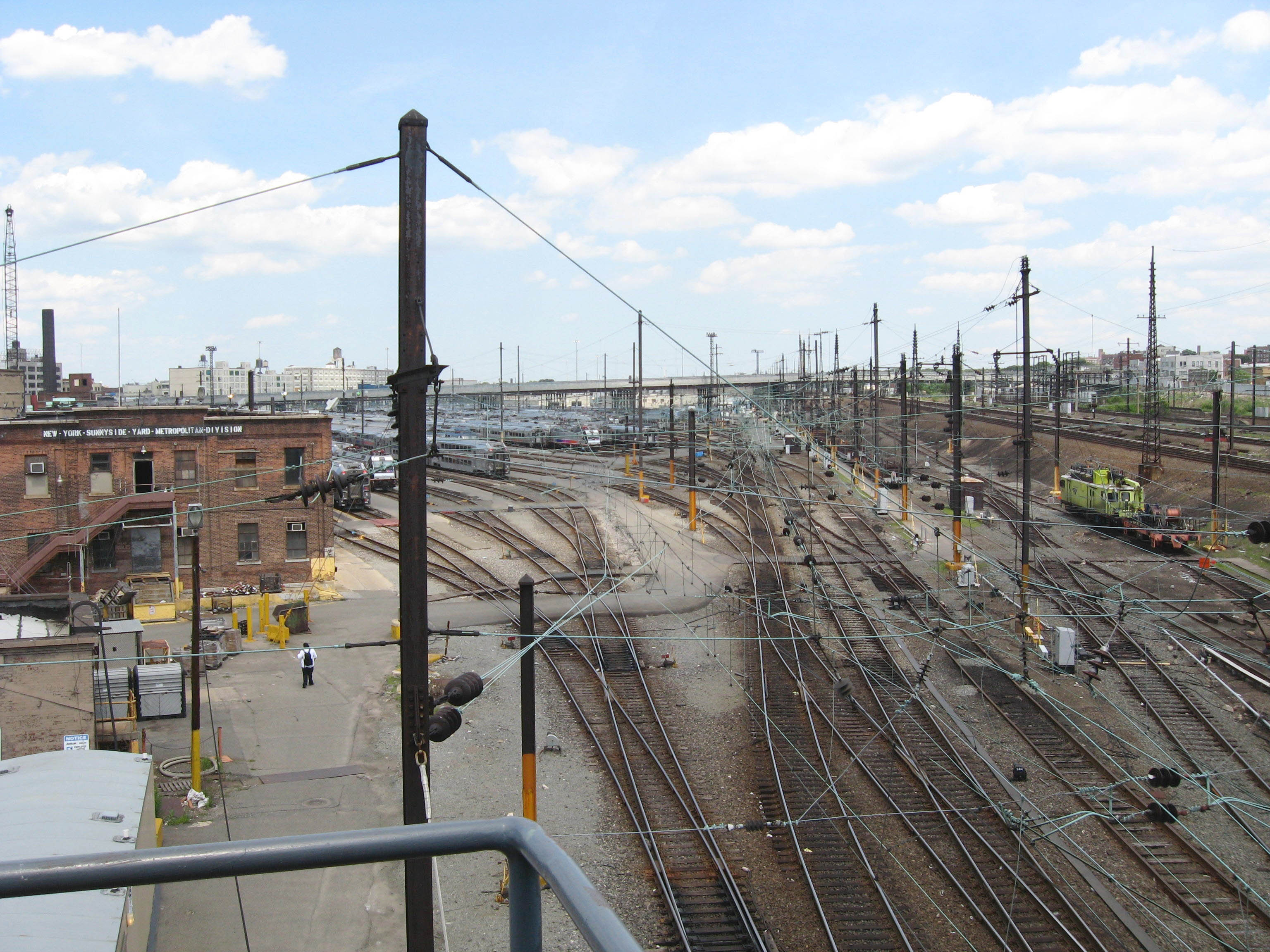
The Sunnyside Yards Steering Committee, organized by the Economic Development Corp. (EDC), officially lost two members in Congresswoman Alexandria Ocasio-Cortez and Justice for All Coalition Chair Sylvia White.

The EDC is leading a multibillion-dollar effort to build new land atop Sunnyside Yards, a 180-acre rail yard considered one of the busiest in the country, partly owned by Amtrak, MTA and the city. 

They created the Steering Committee with citywide and local leaders to advise and guide them through their Master Planning process.

But after several months of the EDC’s community outreach portion of the process, many Queens residents and leaders are protesting the project and calling for the city to instead use the funds they want to allocate for the project toward the community’s more immediate needs.

Justice for All Coalition (JFC), a community organization based in Astoria and Long Island City, is one of the organizations leading the fight against Sunnyside Yards. In November 2019, they sent letters to several elected officials asking that they step down from the EDC’s Steering Committee.

In response, Councilman Jimmy Van Bramer and Ocasio-Cortez sent a joint letter, obtained by The City, in which they emphasized that their roles in the Steering Committee didn’t “imply endorsement of the project” and that the EDC’s current proposal “reflects a misalignment of priorities.”

Senator Michael Gianaris also sent a letter, stating that while his name and office appeared in the  Steering Committee, he never accepted the invitation. Gianaris added that although the planning process includes some public input, “that input does not appear to be reflected in the public facing materials released about the project and rather tinkers around the edges providing a few token benefits.”

On Jan. 24, Ocasio-Cortez sent the EDC her letter of resignation. She wrote that while she understands that the ambitious project requires a “lengthy, complex, and multi-stakeholder driven planning process,” she felt the need to resign due to the project’s proposal.

“Despite the many outreach meetings that you have cited, I have yet to see sufficient inclusion of the feedback from those meetings in the current plan,” Ocasio-Cortez wrote in the letter. “This feedback, both from community members and from my office, includes but is not limited to community land trusts, truly affordable housing, and public and green infrastructure of the scale necessary to meet our 21st-century housing and environmental justice challenges.”


Sunday, January 19, 2020

The BQX just hired a new friend


QNS


The nonprofit organization that has been advocating for a streetcar system along the Queens and Brooklyn waterfront since 2014 made a change in leadership just as the city launches a wide-ranging community engagement process.


The Friends of the Brooklyn Queens Connector recently named Brooklyn resident Christopher Torres as its new executive director to replace Jessica Schumer, who left at the end of the year to pursue a new opportunity.


“Jessica had a tremendous run with Friends of the BQX and we thank her for outstanding work over the past three years,” a Friends of the BQX spokesperson said. “With its environmental review in full swing and a public review process ahead, we’re glad to have Chris at the helm as we head into a big year for the BQX.”


Torres was an organizer for the Working Families Party, where he helped lead campaigns in Arizona, Wisconsin, and, most recently, for Public Advocate Jumaane Williams. Torres also worked with Make the Road New York Action Fund as its director of field operations, where he spent five years working to build electoral power in immigrant communities through grassroots and community driven campaigns in New York and Pennsylvania. He views public transportation as a social justice issue.


“It makes all the difference in getting your mother to her doctor’s appointment on time, getting your children to school, or in some cases keeping your job,” Torres wrote Monday to board members. 

“This belief must be the foundation of our work if we are going to change the landscape of NYC and build a robust transit system for all New Yorkers.”


The controversial proposal for the $2.7 billion state-of-the-art light rail system, which would run along an 11-mile corridor from Astoria to Red Hook, Brooklyn, would provide a crucial north-south transit option for the 400,000 people who live along the corridor and the 300,000 who work along the fastest-growing business corridors in the city. The city’s Economic Development Corporation has launched an extensive community engagement process that will include presentations to community boards and public workshops that will focus on community priorities, suggestions and concerns.


“There are myriad reasons why we want to see the BQX happen. For me, one stands out more than most: implementing quality public transit access for those who have been historically neglected by city planners,” Torres wrote. “From Astoria, Queens, to Red Hook, Brooklyn, no one feels the sting of walking more than a half mile on a rainy day to a delayed subway or bus more than the folks who live in public housing along the route. This year we will work to broaden and strengthen our support in NYCHA with the help of the resident association presidents who share our vision.”

Puh-leeze, the only reason why Jessica Schumer is gone and replaced with this young man is not to promote diversity or transit equity, but because this piece of shit trolley needs federal funding to pay for the cost of building it, which keeps rising every year. Also, Schumer is Senator Chuck's daughter and that would have been a huge conflict of interest, and it seems the Mayor and his developer overlord donors have had their fill with that. Or so it seems, the ferry's are still costing the city more money last time I/we checked.

Couldn't find a better guy to push your trolley agitprop NYC EDC. Have fun pissing away our tax dollars, Chris.


...Sorry mom, the developers have spoken

The gentrification trolley that refuses to die


Gothamist

 In 2016, Mayor Bill de Blasio announced that the city would begin working on the Brooklyn Queens Connector, a $2.5 billion streetcar that would trace the waterfronts of the two boroughs from Astoria to Sunset Park. The mayor's announcement came after a group of real estate developers somehow had the same idea, and donated nearly $250,000 to de Blasio's nonprofit, but the mayor assured everyone that the BQX would pay for itself, thanks to rising property values.

A year and many "visioning sessions" later, Sunset Park residents fought to take their neighborhood off the BQX's map, leaked documents and independent reports showed the city's funding scheme to be extremely dubious, the streetcar route was found to be susceptible to serious flooding, and the BQX looked to go the way of the carriage horse ban: a full-throated promise backed by stacks of cash that turned into a whisper in the wind.

But the BQX wasn't dead, just dormant. The de Blasio administration released a new plan for the streetcar in 2018 with a shorter, 11-mile route from Astoria to Red Hook and a bigger price tag, $2.7 billion.

This week the city's Economic Development Corporation and Department of Transportation pledged to start presenting their case to the public early next month, with the goal of coming up with a final design by 2023, and finishing construction in 2029—eight years after Mayor de Blasio leaves office.
In the short-term, the city is aiming to get a draft Environmental Impact Statement done by 2021, de Blasio's final year in office.

“From community board presentations and on-the-ground outreach to briefings with elected officials and public workshops, NYCEDC and NYC Department of Transportation are moving forward with a far-reaching process that provides multiple opportunities for feedback prior to the environmental review phase," the city said in a statement.

Hate to say that I told you so, but I told you so.

Update:

Thought this interview with the dope from park slope needed to be included, as the Blaz tells Errol Louis (who hilariously presumed that this was dead) that even though the city is earmarking another 2 billion to get the BQX started, it's going to need federal funding. Surely because everyone in the towns that it will traverse and the district council members are all dead set against it. Just quit it, Bill.