Showing posts with label Kathy Hochul. Show all posts

Thursday, August 13, 2026

Kathy Clown's senior day care donor money laundering circus

 Anti-fraud Club

Governor Kathy Hochul’s campaign received $55,000 from social adult daycare centers in Flushing, the New York City neighborhood where Nick Shirley investigated alleged fraud. This month, the New York Post reviewed donation records, visited the two largest donors, and found both centers empty of patients during business hours. Nick had found the same situation there about a month earlier.

There are nearly 400 of these centers in New York City, but only nine donated more than $5,000 to Hochul’s first campaign for governor in 2022. Those nine centers billed Medicaid about $49 million that year. In July, Nick’s investigation described Flushing as a place where billing no longer matched the population it was meant to serve. The Post’s donor list comes from this same small group of operators.

Nearly half of the donations came from two men. Baoli Zhang, gave $10,000 himself and another $5,000 through his business, Bao Kang Adult Day Care, according to financial records reviewed by the Post. Since 2018, Zhang’s businesses have claimed at least $32 million from Medicaid for tens of thousands of listed patients. He also owns Confucius Social Daycare Center in Manhattan’s Chinatown, which billed $15.7 million during the same time.

The other major donor is Jiemin Shang, who runs Livingwell Day Care. Livingwell gave Hochul $5,000 in 2022 and billed Medicaid $5.8 million that year. Another $5,000 donation came from Finest Adult Day Care, which Shang also manages. Livingwell’s Medicaid billing grew from $114,000 in 2018 to $8.05 million by 2024. Bao Kang’s billing rose from $1.5 million to $7.22 million in the same period. Overall, monthly daycare revenue in Flushing has almost doubled since before the pandemic.

At Bao Kang, a worker told Post reporters the center serves between one hundred and two hundred people each day, but then checked a security monitor and saw the common areas were empty. In July, a staff member at another Flushing center told Nick on camera that the thousands of names on its records were not actually present in the building. None of the centers mentioned in the Post’s report have been charged with a crime.

An industry source told the Post that these centers were struggling during COVID until someone helped them out, describing the situation as “Take care of me, I’ll take care of you.” This is just one anonymous person’s opinion about why the donations began, not a proven fact. There is no public evidence that Hochul or her campaign gave anything in return. Political donations from business owners are legal. The Post’s reporting shows that the centers donating to the governor are the same ones billing Medicaid at levels their facilities cannot explain.

Federal prosecutors have been investigating this type of spending throughout the summer. On August 4, the Justice Department’s Fraud Division charged 19 people in Medicaid home care schemes and expanded its Northeast Health Care Fraud Strike Force. The department links this work to the fraud task force led by Vice President JD Vance. CMS Administrator Dr. Mehmet Oz, who visited Flushing with Nick in July, said in the announcement that the agency is creating safeguards to spot criminal activity before any money is paid out.


Friday, February 21, 2025

Sanction City

  Image

Patch

On Tuesday, Hochul met with Rev. Al Sharpton, Queens Borough President Donovan Richards, Council Speaker Adrienne Adams and Comptroller Brad Lander at her Midtown office to discuss the mayor. 

Gov. Kathy Hochul is poised to implement legal sanctions on Mayor Eric Adams and has decided against removing the mayor from office for now.

Proposed sanctions are expected to include legal limits on the mayor's power as an executive and could include an ethical watchdog to sure the mayor is acting ethically.

The governor is drafting legislation that would need City council and state legislature approval, according to reports.

Hochul could release the sanctions against the mayor later today.

In addition, the governor could unveil new state and city bills that would increase oversight of the mayor’s office. That includes creation of a new state deputy inspector general with authority to watch over the city’s dealings, according to the report.

Lander has called on Adams to form a plan to stabilize the government by Friday. If not, Lander said he would convene an Inability Committee, which would determine Adams' fitness for office, and could have the power to remove him, Patch previously reported.

The news on the sanctions was first reported by NY1 and FOX5 New York.

State law gives Hochul the ability to remove certain local officials, including mayors. It requires the governor to provide the mayor with a copy of the charges he’s facing and due process to defend himself.

Hochul could also suspend the mayor for 30 days during that time.


Tuesday, September 3, 2024

Sunny Espionage Delight

https://media-cldnry.s-nbcnews.com/image/upload/t_fit-560w,f_auto,q_auto:best/rockcms/2024-09/240903-linda-sun-ew-350p-cc8e34.jpg 

NBC News 

A former top aide to New York Gov. Kathy Hochul was arrested Tuesday on federal charges of acting as a secret agent of the Chinese government, authorities said.

Linda Sun, 41, is accused of using her high-ranking positions in state government to serve the interests of the Chinese government and the Chinese Communist Party in exchange for millions of dollars. Her husband, Chris Hu, 40, was also arrested in the alleged scheme.

Sun was charged with violating and conspiring to violate the Foreign Agents Registration Act, visa fraud, alien smuggling and money laundering. Hu was charged with money laundering conspiracy, conspiracy to commit bank fraud and misuse of means of identification.

Both pleaded not guilty Tuesday afternoon. Sun was set to be released on a $1.5 million bond, her husband on a $500,000 bond.

“We are disappointed by the filing of these charges, which are inflammatory and appear to be the product of an overly aggressive prosecution," Sun's lawyers, Jarrod Schaeffer and Kenneth Abell, said in a statement after the hearing. "We are also troubled by aspects of the government’s investigation. As we said today in court, our client is eager to exercise her right to a speedy trial and to defend against these accusations in the proper forum—a court of law.”

The arrests come six weeks after FBI agents searched the couple's $3.5 million home in a gated community in Manhasset on Long Island. 

Sun worked in state government for roughly 15 years, holding positions in the administration of then-Gov. Andrew Cuomo before becoming Hochul’s deputy chief of staff, according to her LinkedIn profile.

Avi Small, a spokesman for Hochul, said Sun was hired more than a decade ago and fired in March 2023 after "evidence of misconduct" was discovered. Small said Hochul's staff immediately reported her actions to law enforcement and have assisted the authorities working the case.

According to the 64-page indictment, Sun blocked Taiwanese government representatives from getting access to high-ranking New York state officials and altered the messaging of state officials on issues of importance to the Chinese government — all at the request of Chinese officials. Sun also helped Chinese government officials travel to the U.S. and meet with New York officials by providing unauthorized invitation letters from high-level state officers, according to the indictment.

"Sun’s unauthorized invitation letters for the PRC government delegation constituted false statements made in connection with immigration documents and induced the foreign citizens into unlawfully entering the United States," Brooklyn federal prosecutors said in a press release.

"Sun never registered as a foreign agent with the Attorney General, and in fact actively concealed that she took actions at the order, request, or direction of PRC government and the CCP representatives."

Thursday, June 6, 2024

Congestion pricing is dead


 The Village Sun

 Bowing to political pressure and in the face of numerous lawsuits, Governor Hochul on Wednesday declared that the Manhattan congestion pricing plan is on an “indefinite pause.”

“After careful consideration I have come to the difficult decision that implementing the planned congestion pricing system risks too many unintended consequences,” Hochul said. “I have directed the M.T.A. to indefinitely pause the program.”

The Metropolitan Transportation’s traffic-tolling plan was set to start later this month on June 30. It would have walloped car drivers with a $15 once-a-day fee for driving into Manhattan south of 60th Street ($3.75 during off-peak hours) — and trucks with repeated fees of $24 to $36 for each time they entered the zone.

However, the scheme faced eight lawsuits, with plaintiffs ranging from New Jersey, to the teachers union to Chinatown merchants and Lower East Side residents, all of whom said the plan’s financial impact would be unfair and onerous. Among the top arguments was that a comprehensive environmental impact statement, or E.I.S., for the sweeping, first-in-the-nation plan was shockingly never done.

Retired judge and former Councilmember Kathryn Freed, who lives on the Lower East Side and is a plaintiff on a class-action lawsuit against congestion pricing, has become a sort of poster person for the opposition. Yet, she described her reaction to the plan’s shelving as “mixed.”

“I’m not one of the people who’s crazy pro-car or whatever,” she said. “The whole thing is a mess. I don’t know what Hochul was waiting for — it was massively unpopular.”

Indeed, according to a recent Siena College survey, 63 percent of New Yorkers statewide and 64 percent of Big Apple residents oppose the Manhattan congestion pricing plan, with opposition in the suburbs even higher at 72 percent. Fourteen percent said they would not come to Manhattan as often due to the toll.

At the urging of then-Governor Cuomo, the state Legislature passed congestion pricing into law five years ago, with the target of raising a total of $15 billion — at a clip of $1 billion per year — for the constantly cash-poor transit agency.


Friday, March 8, 2024

Operation Hochul Drop

https://s.yimg.com/ny/api/res/1.2/tis09608pT0UftVrNGxT5A--/YXBwaWQ9aGlnaGxhbmRlcjt3PTEyNDI7aD02OTk-/https://media.zenfs.com/en/wnyw_fox_local_articles_540/9f85412280b9746e03a88070db8a8c6f

THE CITY 

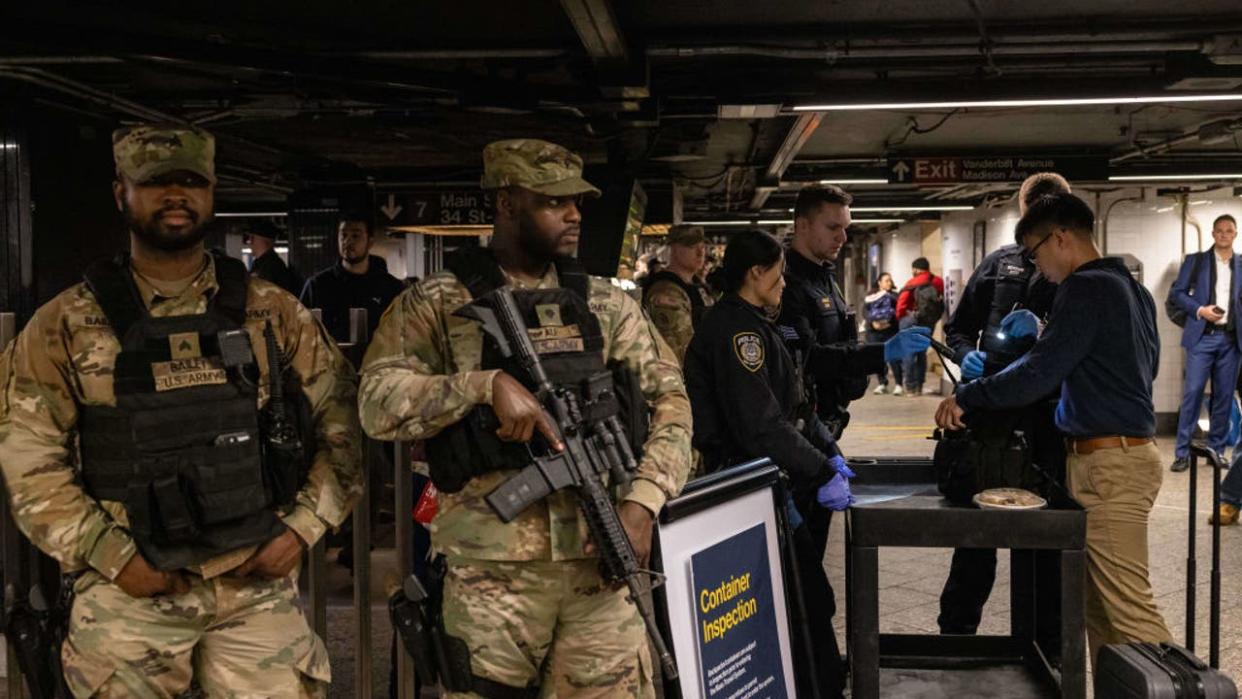
Gov. Kathy Hochul on Wednesday announced the latest in a series of subway safety initiatives, placing MTA police officers, state troopers and 750 National Guard members at some of the city’s busiest stations to conduct bag checks.

Following some headline-grabbing incidents underground — including the slashing last week of a conductor that led to what a top transit official called “some kind of work-stoppage charade” by the transit workers union — Hochul said beefing up the uniformed presence in stations will curb rider and worker fears.

“There’s a psychological impact, people worry they could be next, anxiety takes hold,” the governor said. “And riding the subway, which would be part of your everyday life, is filled with stress and trepidation.”

Hochul unveiled a “five-point plan to rid our subways of people who commit crimes” while standing alongside police officers, National Guard troops and MTA Chairman and CEO Janno Lieber at New York City Transit’s Rail Control Center in Midtown.

The five elements are: deploying about 1,000 more uniformed personnel for bag checks; accelerating the installation of cameras on every train and in conductor cabs; a proposed bill that would allow judges to ban people convicted of assault; expanding the number of mental health response teams; and holding regular meetings between transit personnel, police and prosecutors.

The MTA’s police force, which patrols the Long Island Rail Road and Metro-North, already posts officers at subway stations connected to commuter rail hubs.

The latest anti-crime effort in the subway comes as NYPD numbers show transit crime in 2024 through March 3 is up by 13% from the same period last year and just last week TWU International President John Samuelsen said assaults on workers have increased by nearly 60% from last year.

“No one should have to go through what Alton Scott went through,” Lieber said, citing the veteran subway conductor who was slashed in the neck last week.

Overall, crime in the subway system is rare. According to the MTA’s latest data from January, less than two major crimes took place per one million riders that month. Major crimes are defined by the NYPD as burglary, felony assault, robbery, grand larceny, rape and murder.

Richard Davis, president of Transport Workers Union Local 100, praised the plan to put more police in stations, while saying the union’s calls for beefed-up subway security were ignored for months.

“As a result, riders and workers alike have suffered,” Davis said. “While MTA leadership willfully looked the other way, blood has been spilled.”

Hochul and Mayor Eric Adams — who pinned his absence from the latest subway safety announcement on a scheduling conflict — have previously unveiled multiple versions of plans to cut into subway crime and homelessness by increasing the number of police officers in stations.

In an interview on WPIX-11 Wednesday along with Chief Michael Kemper, head of the NYPD Transit Bureau, Adams insisted the new bag checks would not lead to racial or ethnic profiling. 

“We’re not profiling, we’re random based on the count, a number,” the mayor said. “And people who don’t want their bag checks can turn around and not enter the system. You don’t have to come through and do the bag checks, but they are random.”

Saturday, February 17, 2024

Hollywood Boonddoggle

  Image

Crain's New York

New York’s newly expanded tax credit for film productions is a “net negative” that fails to give taxpayers a return on their investment, even as state leaders have continued pushing to expand it, according to a new study commissioned by the state itself.

New York’s Film Production Credit was grown in last year’s state budget to cover as much as $700 million in costs annually for film and television productions that opt to locate in the state, forgiving 30% of eligible costs for each movie and show. Lawmakers, at the urging of Gov. Kathy Hochul, also extended the program through 2034 — despite longstanding complaints from watchdogs that the incentive may not achieve its stated goal of spurring economic activity and attracting more well-paying jobs.

Those claims are bolstered by the new study by the financial advisory firm PFM Group, which was commissioned by the state’s Department of Taxation and Finance to look into each of New York’s economic development tax credits. The study was required by a 2022 state budget provision and was put together over the course of 2023.

All told, New York gets back just 31 cents for every $1 it invests in film productions through tax breaks, the study concludes after considering the program’s pros and cons. The program has cost the state some $5 billion in the last decade, making it the largest of New York’s many tax incentives.

“Based on an objective weighing of the costs and benefits, the film production credit is at best a break-even proposition and more likely a net cost to NYS,” the authors wrote.

As critics have long argued, the study found that much of the filming activity funded by the credit would have happened in New York regardless, given its existing workforce and infrastructure. And although the productions do attract high-paying jobs, the tax credit’s unlimited duration means it functions more as an “ongoing subsidy” rather than a one-time incentive that could wind down after establishing a steady film industry in the state.

Indeed, many of the productions that continue receiving annual tax credits are long-running television series filmed in New York for years — undercutting the program’s stated goal of attracting new investments. And even the job-creation claim is “inconclusive at best,” the study found. After New York launched the credit in 2004, film industry employment remained stagnant for years until increasing in 2010, and its share relative to the nationwide market has since dropped.

A spokesman for Gov. Kathy Hochul said the office is reviewing the report but pushed back on its conclusions, pointing to other studies that found better results. Among them was a study commissioned by the Empire State Development Corp. which found that New York’s state and local governments reaped a combined $1.70 for every dollar spent on the film tax credit in 2021 and 2022 — although the state by itself (omitting local governments like New York City) still lost out overall, the report found.

“New York's tax credits and incentive programs are critical to growing the state's economy, boosting innovation, and creating good jobs, which is why the Legislature approved them in the first place, and Governor Hochul will continue working with members to improve the programs to maximize benefits for New Yorkers,” spokesman Justin Henry said.

Hochul’s office pointed to the high wages available in film and TV jobs, which often employ people without college degrees. New York has also lost productions to other states that boosted their incentives, such as the 2022 film “White Noise,” which filmed in Cleveland after “extensively scouting New York state,” Hochul’s office said.

The PFM study found that other “qualitative” factors cited by boosters of the tax break are similarly murky, like the exposure that New York state and city might enjoy as a result of all the films and shows set here. Many of those productions, like “Law & Order,” hardly portray New York in a fully positive light, the authors note.

The state’s expansions to the program last year also expanded the credit to cover “above-the-line” salaries for actors, directors, producers and writers, in addition to the “below-the-line” jobs, such as hairdressers and set builders, that had been covered before. Hochul, who pushed for the expansions, argued it would lure more productions to the state and boost an industry that serves as a major union employer.

In the end, the study concludes, the strongest argument for the tax credit may be that it works as a “defense mechanism” — deterring productions from choosing rival states like California and Georgia that offer their own incentives.


Wednesday, January 24, 2024

IBX DOA

 https://www.amny.com/wp-content/uploads/2024/01/01152024_PF_All_Faiths_Cemetery_IBX_151-1200x800.jpg.webpAMNY

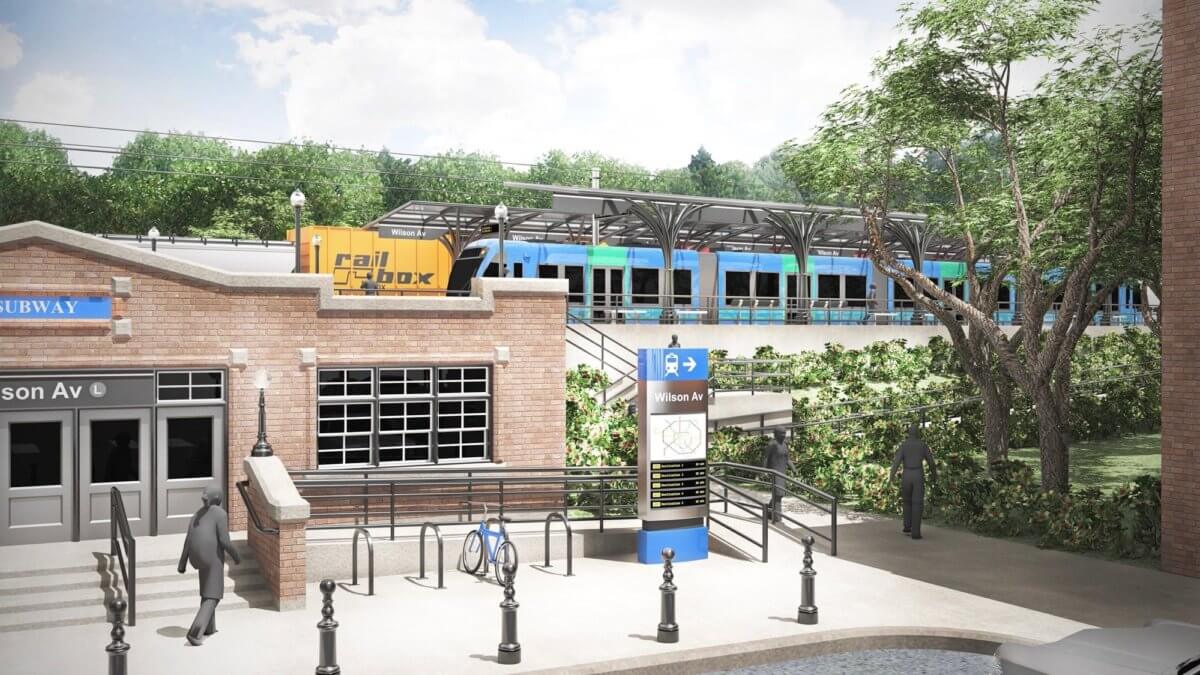
The success or failure of Gov. Kathy Hochul’s marquee transit proposal, the Interborough Express (IBX) connecting Brooklyn and Queens by light rail, is centered on a short, skinny tunnel underneath a Queens cemetery that the MTA says requires the line to be routed away from existing railroad tracks and onto the street.

Based on a long-time dream of transit planners and aficionados, the IBX would utilize existing railroad tracks called the Bay Ridge Branch, which were built for the Long Island Rail Road but have long since been used only by freight, and only about one round trip per day at that. The 14-mile spur runs from Bay Ridge, Brooklyn to Jackson Heights, Queens; Hochul first proposed reactivating the line for passenger service back in 2022.

The project is set to bring rail service to several transit-starved neighborhoods and connect to 17 other train lines, while providing a crucial new link for Brooklyn and Queens residents to move between boroughs without having to take a train through Manhattan first. Hochul has described her vision for the IBX as a “transformative” investment in expanding the city’s transit.

After undergoing a “feasibility study,” the MTA opted not to endorse building a subway along the right-of-way. Instead, the MTA endorsed building light rail, which it has never constructed before in New York City despite being in many cities around the world; the agency said this would be $3 billion cheaper (the overall plan is projected to cost $5.5 billion) without sacrificing speed or capacity.

The basis for that claim lies buried among the dead beneath All Faiths Cemetery in Middle Village, Queens, just across the way from the M train’s Metropolitan Avenue terminus. The cemetery opened for business in 1852, and today its 225 acres are the final resting place for 540,000 people, including the grandparents, parents, and older brother of former President Donald Trump.

Also underneath All Faiths is a short tunnel, about 520 feet in length and 30 feet in width, that freight trains under the CSX banner travel under en route to and from Bay Ridge. The MTA says this tunnel is too narrow to add in passenger tracks alongside the freight ones, and expanding it would be prohibitively expensive and require disturbing final resting places above it.

That, in effect, kills the possibility of using subways on the corridor, the MTA claims. Instead, light rail can be routed out of the railroad right-of-way and onto busy Metropolitan Avenue, turning left on 69th Street before returning to the Bay Ridge Branch tracks after two-thirds of a mile.

 This is never going to happen. 


Thursday, January 11, 2024

Big Mother Hochul's light rail project makes first baby steps

https://www.amny.com/wp-content/uploads/2022/01/IBX-2-1200x675.jpeg

AMNY  

The proposed Interborough Express (IBX) light rail between Brooklyn and Queens is inching forward, with officials hoping the project can be designed and engineering challenges resolved starting this year, Gov. Kathy Hochul announced on Tuesday.

The governor’s 2024 State of the State policy book, accompanying her big speech to a joint legislative session in Albany Tuesday, notes that the MTA will “initiate formal design and engineering” on the IBX, which aims to convert the underutilized Bay Ridge Branch rail spur, owned by the Long Island Rail Road and currently used by CSX freight rail, into a light rail line between Brooklyn and Queens, sharply reducing commute times between the two boroughs.

The line would run 14 miles between Bay Ridge and Jackson Heights, running through many neighborhoods with few transit options while also connecting to 17 other subway lines. The MTA estimates the line would see 120,000 daily riders by 2045, and cost $5.5 billion to construct.

“The [IBX] represents one of the most impactful infrastructure projects initiated by Gov. Hochul,” the policy book reads, “with the potential to substantially cut down on travel times, reduce congestion, and link nearly 900,000 residents in Brooklyn and Queens to more than 17 transit connections.”

Gov. Hochul announced she would pursue the IBX in her 2022 State of the State address, crystallizing a longtime dream by rail advocates. The proposal was based on a long-floating plan by the Regional Plan Association called the Triboro, which would extend the line further into the Bronx, but the Boogie-Down portion was cut due to conflicts with the MTA’s Penn Access project on the same existing tracks.

The governor in 2022 directed the MTA to commence an environmental review for the project, which she has since described as her “baby,” and in the following year’s State of the State, she said the project would move forward as light rail.

Unlike a subway, a light rail can travel at the street level, and the MTA plans to briefly divert the right-of-way onto Metropolitan Avenue and 69th Street in Middle Village for about 2/3 of a mile before returning to the pre-existing tracks. How the MTA would actually go about doing that is one of the key engineering problems they must get to the bottom of, even before worrying about potential lawsuits from local residents.

Friday, December 8, 2023

Governor Kathy Clown brings the housing crisis circus to the crazy house

https://qns.com/wp-content/uploads/2023/12/Screenshot-2023-12-07-at-4.27.40-PM-1200x842.png

QNS 

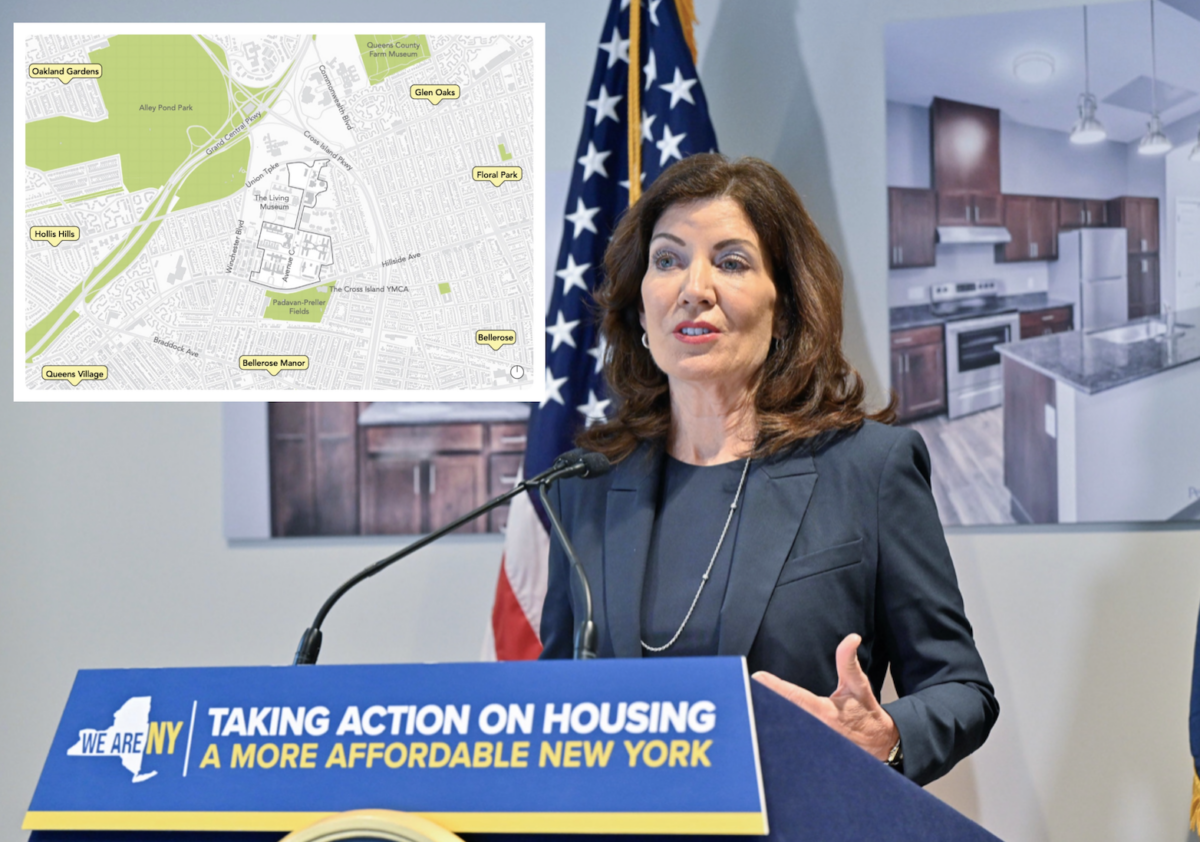
A newly unveiled plan for the Creedmoor campus in eastern Queens seeks to bring 2,800 housing units alongside community amenities to the underutilized plot of land. 

The 93-page Creedmoor Community Master Plan, made public by Governor Kathy Hochul on Dec. 6, proposes the revitalization of 48 acres of the 125 acre plot of the state-owned land. Currently 19 of the 25 buildings are sitting vacant. And in the past year, the site began to shelter some of the city’s new migrants in tent structures. 

The plan proposes a grand total of 2,873 housing units – with 1,633 available for ownership and the rest as rentals. It stands to be the largest housing investment in eastern Queens since the construction of Glen Oaks Village in the 1950s and the newest single expansion for homeownership in the area since the North Shore Towers were constructed in the 1970s. 

“Creedmoor represents a once-in-a-generation opportunity for New Yorkers to reimagine state land and plan for the emerging needs of tomorrow,” said Hochul. “Working together in productive partnership with the community — and thanks to the leadership of Queens Borough President Donovan Richards — we can build more housing, create more jobs, and strengthen Eastern Queens for the next generation.”

Over the past year, seven workshops were held to engage the community and hear from stakeholders on what they want to see in the redevelopment. Attendees expressed a strong desire for recreational family-friendly places to gather, such as open outdoors and an accessible town center. They also wanted new housing to give low and middle income households starter home options, as well as designate units for seniors and veterans.

Tuesday, November 14, 2023

Big Mother

  r/TimPool - Watch how Kathy Hochul's left with a dumb look on her face as MSNBC tells her 'we don't feel safe' in NYC

Reclaim The Net

In response to escalating incidents of harassment, particularly against Jewish and Muslim communities, New York’s Governor Kathy Hochul is today intensifying the state’s counterterrorism measures and is boosting the controversial practice of surveilling social media platforms, and therefore the speech of New Yorkers and other American citizens.

This measure follows ongoing tension in Israel and Gaza. Hochul revealed plans for enhancing the FBI Joint Terrorism Task Force personnel and assigning an extra $2.5 million to the State Police.

“…we’re very focused on the data we’re collecting from surveillance efforts, what’s being said on social media platforms, and we have launched an effort to be able to counter some of the negativity and reach out to people,” Hochul said.

“When we see hate speech being spoken about on online platforms, our media analysis, our social media analysis unit has ramped up its monitoring of sites to catch incitement to violence, direct threats to others.

“And all this is in response to our desire, our strong commitment to ensure that not only do New Yorkers be safe, but they also feel safe.”

This isn’t the first time Hochul has stuck her nose into monitoring online speech.

A New York law aimed at regulating “hateful conduct” online was blocked by a judge. This law, signed by Governor Hochul, required social media networks to report and address hateful conduct, broadly defined as actions that vilify or incite violence based on various identity factors.

Judge Andrew L. Carter, Jr. ruled that the law violated the First Amendment, emphasizing the importance of protecting even hateful speech. The court argued that the law not only restricted the speech of social media users but also compelled social media networks to adopt and endorse the state’s definition of hateful conduct.


Monday, October 9, 2023

Real public space for real people

 https://pbs.twimg.com/media/F7_dxDnWwAA2Rc_?format=jpg&name=medium

GOVERNOR HOCHUL ANNOUNCES COMPLETION OF $17.8 MILLION PROJECT TO CONSTRUCT MASPETH PARK IN QUEENS

Park Provides New Community Space and Recreational Amenities Adjacent to the Kosciuszko Bridge

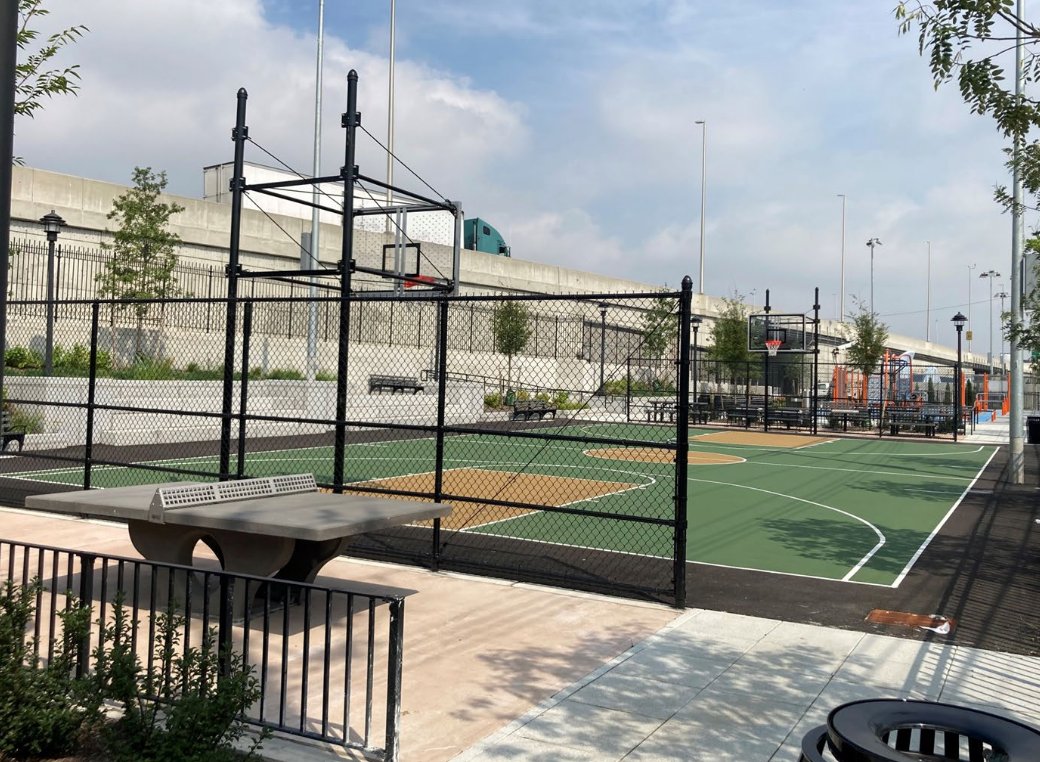
Governor Kathy Hochul today announced the completion of a $17.8 million project to construct Maspeth Park, the first park to be built in the western portion of Maspeth in Queens. The park, completed on schedule, is located within walking distance from surrounding residential neighborhoods, including Sunnyside and West Maspeth. The park includes numerous benefits for visitors to enjoy, such as a recreational area comprised of game tables, picnic tables, a basketball court, and adult fitness equipment. A new world-class skate plaza, designed for all skill levels, has also been constructed. The plaza provides professional sports lighting so that events can be held after dark. The basketball court will also serve as a multi-purpose venue with nighttime lighting and bleacher seating. Events will be held throughout the year and run by New York City Department of Parks and Recreation. The park was built on nearly one acre of underdeveloped land that was previously used by the state as a staging area during the construction of the new Kosciuszko Bridge, which was completed in 2019. The park is located adjacent to the Kosciuszko Bridge at the intersection of 43

Tuesday, July 18, 2023

City aborts migrant tent shelter in Aqueduct (again)


 Image

 Image

Image 

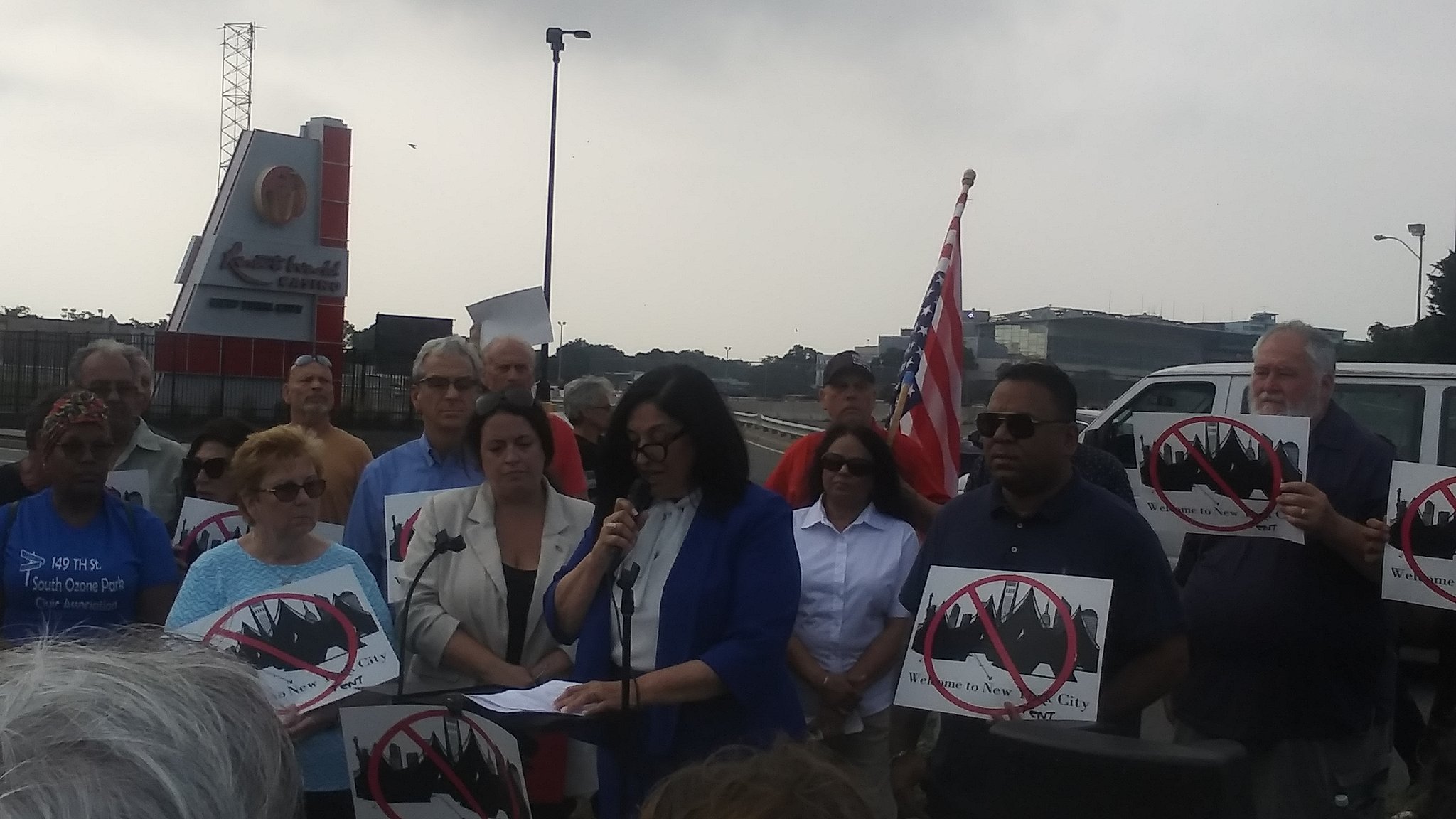
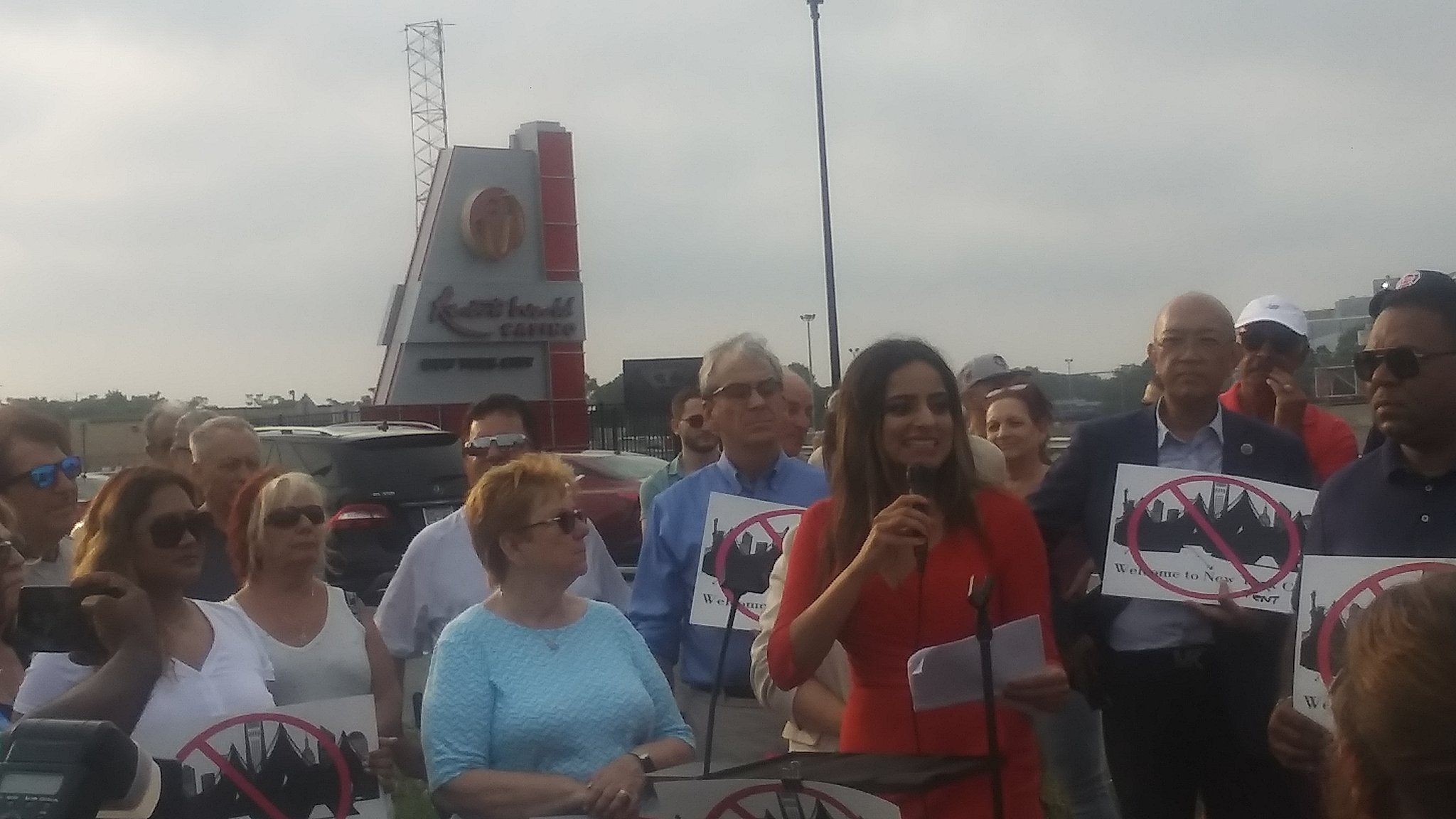
So it turns out that Mayor Adams and his "team" considered using Aqueduct's parking lot for tent shelters before and decided to try again for some reason. It sure looks like this was a stunt pulled to make the civics look like a bunch of intolerant xenophobic racist NIMBY's. But that's hard to do when the officials and civic leaders against this plan and the president's and the city's failing policies on the migrant crisis have this much racial diversity.

Thursday, June 29, 2023

Buffalo gets a big new stadium, Queens gets a little new ER

https://bloximages.chicago2.vip.townnews.com/qchron.com/content/tncms/assets/v3/editorial/1/5e/15e9c996-e615-5c80-8100-9be17fac4d9c/64947aa80e9ab.image.jpg 

Queens Chronicle

Five hundred guests attended a groundbreaking ceremony Friday to celebrate the $150 million expansion of Jamaica Hospital Medical Center’s Emergency Department, which will double in size to accommodate more than 150,000 patients annually.

The funding is a grant from the Statewide Health Care Facility Transformation Program.

Despite having to attend a funeral later that day of a former first responder who died because of a 9/11-related illness, Gov. Hochul made a keynote speech at the Level 1 trauma center in Richmond Hill because she wanted to emphasize that the time of disinvestment in Southeast Queens has ended.

“This is a day of a new beginning,” Hochul said at the June 16 event. “For so many years and decades ... people thought that the people of this community didn’t have political clout to make real transformative changes. That time is over, my friends. With this new beginning, we say that this community matters. This hospital matters.”

Hochul thanked the doctors, nurses, staff and other healthcare workers for their efforts in saving the lives of people who suffer from mental health issues, along with those who fall victim to fentanyl and opioids or contract Covid-19.

“We are going to enhance our psychiatric services, because my God, people are going through so much right now,” Hochul said. “All the work to save lives from overdoses ... we are doing that in real time. We have so much more to do.”

The governor said that the new facility was delayed a bit because of the pandemic, but the commitment of the hospital to get the expansion done while taking care of patients during the height of the spread of coronavirus further highlighted the need for safety-net hospitals.

“There were a lot of hopes and dreams and then in the middle of it all there was a pandemic,” she said. “This demonstrated the compassion and incredible resiliency of this organization and so many of your members, from nurses to doctors to the people who worked in the kitchens, the custodial staff, the doulas and everybody else [who] pulled together to save this community.”

Bruce Flanz, JHMC’s president and CEO, said the hospital was at the epicenter of the pandemic, but with the new funding it will be able to serve more people.

“When completed, the Emergency Department will double in size,” Flanz said.

The hospital will go from having one trauma bay to four major trauma bays, from one isolation room to 22, and the number of treatment areas will nearly triple, he said. There will also be two new intensive care units: a 12-bed neuro-ICU and a 10-bed ICU.

“When the project is complete we will have a total of 48 intensive care unit beds,” Flanz said. “The project will also add much needed space to our mental health program and to our CPAC,” or chest pain center.

Flanz said the improvements are not just necessary to the community, but to its uniformed officers, who say JHMC is their preferred choice for treatment.

Officer Brett Boller, who was shot earlier this year in Jamaica, shared the sentiment.

“I had multiple surgeons and multiple teams work on me,” Boller told the Queens Chronicle. “They communicated well to my family about what was going on and the recovery process. They made me and my family comfortable.”

Lindsey Boller, the officer’s sister, told the Chronicle she was grateful for the care her brother received.

“I’m studying to be a nurse one day and it was just really inspiring to see how great all the nurses and all the doctors were to him,” said the aspiring healthcare professional.

NYPD Chief Kevin Williams, commanding officer of Patrol Borough Queens South, shared their sentiments.

“I’m grateful for their care and the services for our members in the service,” Williams told the Chronicle. “When they come to get treated it’s first-class and we appreciate it.”

U.S. Rep. Greg Meeks (D-Jamaica) said it was a 10-year journey to get here.

“I want to say thank you to all the providers,” Meeks said. “What do we have in life if we don’t have health?”

Meeks’ 700,000 constituents look to JHMC for treatment, said the congressman.

“If it wasn’t for the members of the state Legislature doing their part, this wouldn’t have happened,” he said.

Assemblywoman Alicia Hyndman (D-Springfield Gardens) told the Chronicle that Springfield Gardens doesn’t have a hospital so the constituents in her area look to JHMC for help.

“I don’t have any hospitals in my district,” Hyndman said. “While growing up, everyone knew if you had a car accident, if you were hurt on your bicycle, if there was a shooting, this is the place to come. The chances of you surviving was high because this is a Trauma 1 Center.”

Hyndman’s godson, who was wounded after falling through shower glass, was treated at JHMC.

Borough President Donovan Richards, who was born at the hospital in 1983, was also in attendance.

“We’ve been talking for many years now about the need to invest in healthcare especially coming out of this pandemic,” Richards said. “Today we are changing that. Like the congressman said, it’s about ensuring that no matter what your socioeconomic status is, no matter who you love, no matter what your immigration status is, at Jamaica Hospital, you are welcomed.”

 We could have built 4 more hospitals with the money that went to that Bills stadium.

Tuesday, June 27, 2023

Feds approve congestion pricing tax

 https://pbs.twimg.com/media/FyxXHg9XwAElssp?format=jpg&name=small

 AMNY

Federal regulators have given final approval to New York City’s congestion pricing program, setting up the long-awaited implementation of tolling on vehicles entering Manhattan’s central business district to reduce congestion and fund the region’s mass transit.

 A spokesperson for the Federal Highway Administration (FHWA) confirmed to amNewYork Metro that it had issued a “Finding of No Significant Impact,” or FONSI, for congestion pricing. That means the feds are satisfied that the program will not cause adverse environmental impacts on the region, and the MTA can officially move forward with its plan to toll motor vehicles up to $23 for entering Manhattan below 60th Street.

“Congestion pricing will reduce traffic in our crowded downtown, improve air quality and provide critical resources to the MTA,” Hochul said in a statement. “I am proud of the thorough environmental assessment process we conducted, including responding to thousands of comments from community members from across the region. With the green light from the federal government, we look forward to moving ahead with the implementation of this program.”

The MTA declined to comment. 

I like to make a few:

 Richard Ravitch saved the subway without congestion pricing, and he sure didn't lobby for it like a cuck like our agency captured elected officials have been doing for the last few years. 

Also, the guy in charge of the U.S. Department of Transportation Alternatives is a sociopathic replicant.


Wednesday, May 3, 2023

Big Ugly Hochul budget finally done

  https://freebeacon.com/wp-content/uploads/2022/04/rsz_new-york-governor-kathy-hochul-holds-covid-19-update.jpg

NY1

Nearly a month after its initial due date, New York state lawmakers and Gov. Kathy Hochul have agreed to a $229 billion state spending plan that will make changes to a controversial bail law, boost direct aid to schools by billions of dollars and keep personal income tax rates the same.

"A conceptual agreement has been reached," Hochul said at a press conference Thursday evening.

The state budget will also increase the state's minimum wage in the coming years to $16 an hour in New York City and to $15 an hour north of Westchester County. Phased-in hikes will lead to a $17 minimum wage by 2027. After that it will be indexed to the rate of inflation.

Lawmakers and Hochul have also agreed to an expansion of charter schools in New York City by allowing for 14 so-called "zombie" licenses to be revived.

The child tax credit in New York is set to expand for families with children under the age of 4, addressing the expiration of a similar program on the federal level.

After initially discussing ways in which New York's system of publicly financed campaigns — in which political campaigns match individual donations with public money — on hold, lawmakers have agreed to fund the program without a delay.

Once given final passage in the Legislature, New York's budget this year will be one of the latest spending plans to be adopted since 2010. That year, lawmakers did not approve a final budget until mid-August.

This was Hochul's second budget since taking office in 2021 and her first since she won a full term last year. Hochul struggled to include some of her key items in the budget that she made clear were priorities for her this year. 

Several of Hochul's initial proposals were pared and whittled down during the negotiations if not jettisoned entirely. A proposal to expand housing in New York through a mix of incentives for communities to build out infrastructure while also allowing the state to override local zoning officials for qualified projects was rejected by lawmakers. The proposal would have also set goals for every municipality in New York to expand housing stock in the coming years.

Hochul wants to build 800,000 new units of housing within the next decade. After an effort to reach an agreement ended in a stalemate, Hochul told reporters she would continue to pursue elements of her original plan.

The emergency rental assistance program will be expanded as well $50 million for low-income families to make housing repairs.

But the governor was able to win changes to the state's 2019 law that limited the circumstances in which cash bail is required in criminal cases after a campaign season in which crime and public safety were top concerns for voters.

Hochul also pointed to $40 million for public defenders and a pay raise for assigned attorneys providing indigent defense. She announced money for measures to combat gun violence and the State Police.

The change will give judges greater discretion in criminal cases to set bail for serious charges, loosening what's known as the "least restrictive" requirement when bail is considered.

Hochul had emphasized through the budget process she wants to address New Yorkers' concerns over crime while not undermining the initial intent of the law: addressing inequities in the criminal justice system.

On health care, the state is set to expand Medicaid spending for hospitals and nursing homes by increasing reimbursement rates.

The proposal, a 7.5% and 6.5% rise, is less than what health care networks wanted, but more than what Hochul had initially proposed.

New York will spend $34.5 billion on education, a record setting amount that also boosts direct aid to schools by more than $2 billion. The budget will also provide $134 million for schools to provide free meals regardless of a student's family income.

Hochul's initial plan to expand charter schools was reduced after objections from teachers unions.

A mobility tax to fund mass transit in the New York City area will be increased modestly, Hochul said. A two-year pilot program for free bus service on five lines will be included in the budget.

Hochul's announcement came in the evening after lawmakers left Albany and are not expected to return for several days.

Hochul called the agreement a "conceptual framework" as some legislators continue to review the specifics of the budget.


Thursday, April 20, 2023

Kathy Clown's Housing Compact is kaput but Mayor Swagger's City Of Yes housing plan stumbles on

https://npr.brightspotcdn.com/dims4/default/da42429/2147483647/strip/true/crop/694x346+0+0/resize/1760x878!/quality/90/?url=http:%2F%2Fnpr-brightspot.s3.amazonaws.com%2F85%2F4c%2F41a4eaca43c59388ae07526ef915%2Fhochul-housing-plan.PNG 

THE CITY

With Gov. Kathy Hochul abandoning her proposal to force New York’s suburbs to build more housing, Mayor Eric Adams’ administration and its allies are redoubling their efforts to ensure the city gains the power to spur more housing construction by converting office buildings, extending tax credits for developers and allowing greater density.

To help push those through, the governor for the first time has indicated she is willing to accept a statewide rent voucher program, a key objective of tenant advocates. The program would provide money to the city’s public housing authority to cover unpaid rent, say sources who have been briefed by those in the negotiations. As THE CITY has previously reported, more than 70,000 NYCHA tenants owe a total of $466 million in back rent.

The sudden rush of developments from Albany on Tuesday may serve as a break in the impasse that has held up the state budget, now 19 days late — but they also mean a significant defeat for Hochul.

Tuesday’s concession by the governor comes after she made housing the centerpiece of her policy goals once she won the governor’s race in November. Hochul called on the state to build 800,000 new housing units over the next decade, a number that includes the 500,000 new units that Adams promised to create over the next 10 years.

The governor’s original Housing Compact proposal established goals for new housing in every community and set up a statewide board that could greenlight projects that had been rejected in towns and villages that failed to meet their housing goals. Lawmakers in the state’s suburban districts — especially in Long Island and Westchester — had staunchly opposed the plan, saying it ripped control away from locals.

As word circulated in the capital on Tuesday that Hochul was giving up on her previous housing requirements, the governor essentially conceded defeat.

“After weeks of negotiation, the legislature continues to oppose core elements of the Housing Compact, including the requirement that communities across the state meet growth targets,” Hochul said in a statement. “I will continue to discuss other elements of the plan and policy changes that will increase supply and make housing more affordable.”

Instead of specific requirements for new housing creation, the budget is now likely to include some version of a proposal the legislature has made to create a $500 million fund for infrastructure upgrades, such as improving roads and sewers, to communities that meet goals for new housing.

Groups that have spent the last year arguing that the state’s housing shortage is a result of too little housing development, and that local community resistance preserves segregation in the suburbs, wasted little time in blasting state lawmakers.

“We are extremely disappointed that the legislature failed to address segregation and the housing shortage by rejecting the visionary Housing Compact and instead capitulated to powerful NIMBYs who prefer the status quo,” said Rachel Fee, executive director of the New York Housing Conference. “By doing so, New York’s elected officials have once again let their constituents down and signaled that the ongoing housing emergency is acceptable.”

The housing goals would have applied to every community district in the city as well.

Still alive are proposals advanced by the Adams administration. They include legislation to ease the conversion of obsolete office buildings into residential housing — possibly including a tax break to encourage some of the units to be designated as below-market-rate housing; changes to state law to allow thousands of basement apartments to be legalized, and extending a deadline for completion of residential buildings that poured their foundations before the valuable 421-a tax break expired last spring. 

In a statement on Tuesday, a spokesperson for Adams promised to keep pushing the administration’s plan.

“Our administration has been on the ground daily in Albany in recent months advancing critical tools like flexible regulations for office conversations, lifting the floor area ratio cap, creating a pathway to make basement and cellar apartments safe and legal, and creating tax incentives to develop new housing while maintaining housing quality,” said Charles Lutvak, a spokesperson for the mayor.


Wednesday, March 29, 2023

Southeast Queens Communities open letter to YIMBY Hochul

https://pbs.twimg.com/media/FqDrLjgXwAAeeYr?format=jpg&name=large

Save1FamilyNY

 For decades, Southeast Queens has been held up as a model of the American Dream for those striving for a better life. Our communities in Southeast Queens have more than 220,000 residents claiming African American and Caribbean American heritage, many of whom themselves (or their parents and grandparents) left other denser parts of the city – often at greater cost and expense than most other ethnic groups in the city – to have some breathing room, own their own home, a backyard, grass and trees and to give their children a better life.

From Hillside Avenue to JFK Airport, Lefferts Blvd. to the Nassau County line, our mostly suburban neighborhoods have survived and thrived despite systemic racism and redlining. We cherish our low-density communities in Southeast Queens, and we have consistently defended our detached one-family zoning in places like Addisleigh Park, Cambria Heights, Hollis, Jamaica, Laurelton, Queens Village, Rosedale, St. Albans, South Ozone Park, and Springfield Gardens. Additionally, over 60% of our residents own their own homes, more than double the citywide average.

We want to be clear: we are united with all of our neighbors in Queens, Staten Island, the rest of New York City, the suburbs in Nassau, Suffolk, Westchester and beyond regardless of race, ethnicity or economic background who oppose the “Housing Compact” which, in our estimation, will be the equivalent of a nuclear bomb going off in our communities.

Having the Governor mandate more development in southeast Queens, increasing density by 500% within ½ mile of our LIRR stations, forcing increases in housing if we don’t do it ourselves by overriding local zoning, giving blanket amnesty to dangerous and deadly basement and cellar apartments – these are extinction level policies that will wipe out our neighborhoods, plain and simple. Most of our elected officials from southeast Queens understand this.

Some supporters of Gov. Hochul’s plan, such as Assemblywoman Emily Gallagher of Brooklyn have equated single-family zones with Jim Crow practices, and have deemed the governor's plan as necessary to achieve "racial justice." While historically that is true, it does not apply to our communities in Southeast Queens in 2023.

What we’ve achieved over the years is the ability to live the life we want, where we want and how we want.

The governor's plan, far from bringing "racial justice" to our black and brown communities in Southeast Queens and other areas, would bring devastation throughout our neighborhoods if implemented.

The financial and political gains that African Americans have made in our city, our suburbs and across the State – our top elected officials except for the Governor herself are African American in both the State and the City – all of this will be lost if the “Housing Compact” becomes law.

We are the civic leadership of Southeast Queens. We are Black and we are 100% opposed to Governor Hochul’s “Housing Compact” and the attempts to increase density exponentially in our communities. We hope that the Governor and Legislature are listening very carefully.

Signed,

Addisleigh Park Civic Association
Alpha Street Civic Association
Brinkerhoff Action Association
Eastern Queens Alliance
Greater Triangle Civic Association
Queens Village Civic Association
St. Albans Civic Improvement Association
149th Street South Ozone Park Civic Association
221/222 Street Block Association
South Ozone Park Civic Association West
Sojourner Truth Democratic Club
United Coalition for Veterans & Community Rights (UCVCR)
United Neighbors Civic Association (UNCA)
Wayanda Civic Association

I'm going to leave this here too. This is a malignant thread from Manhattan Twitter, I mean Borough President Mark Levine that wants to destroy community boards as well so this housing compact can get rubber stamped and approved. Even though it still doesn't provide enough affordable housing for lower income working people.


Saturday, March 25, 2023

Homeowners resist Hochul's YIMBY decree

Many homeowners against Hochul plan 1

Queens Chronicle

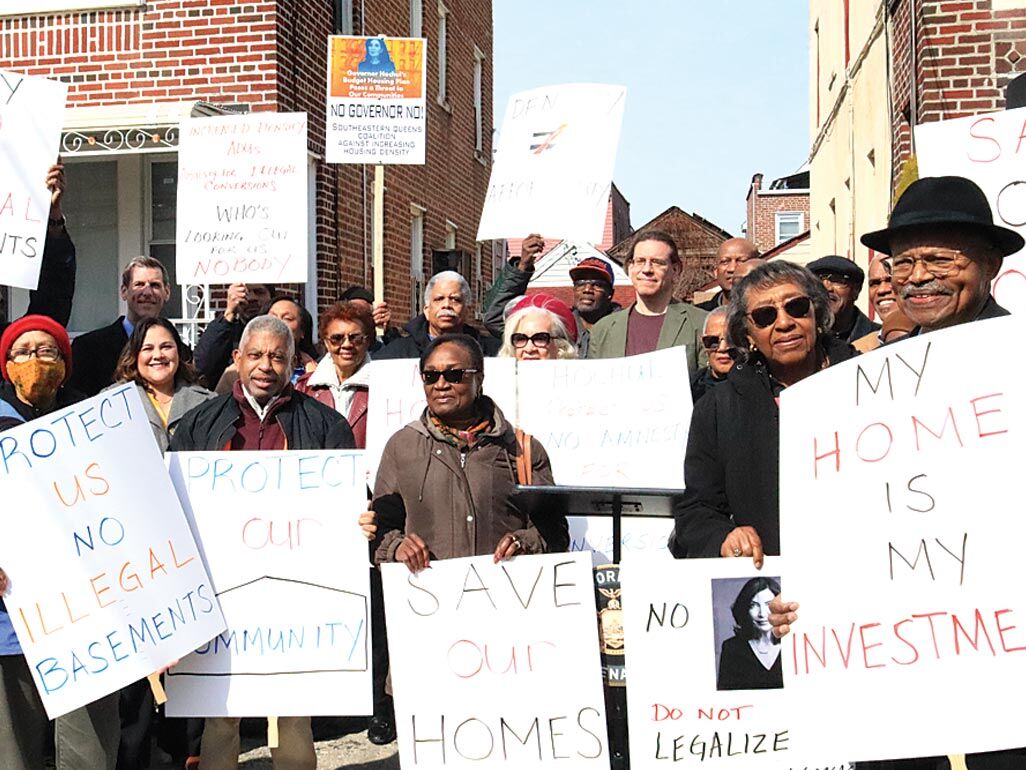
Lawmakers, Eastern Queens civic leaders and homeowners were in Laurelton last week to rally against Gov. Hochul’s proposal to upzone and legalize accessory dwelling units to create more affordable housing in residential neighborhoods.

Many people were concerned about the character of their communities, which consist mostly of one- to -two family homes, changing to become a higher-density area like Long Island City.

The rally was held March 17 in front of the home of Bess de Betham of the Federated Blocks of Laurelton.

“Nearly 52 years ago I moved from Far Rockaway because I liked this neighborhood,” de Betham said at the event. “Why did I move to this neighborhood? Because it had one -and- two family homes and front and backyards. It has treelined streets and spaces between homes on each block. I have not felt crowded or overwhelmed by others living on that block.”

De Betham said that she is not against more affordable housing throughout the city and state, but her family has worked hard and she must protect the biggest investment of her life and of her neighbors’.

“We are here today to let the governor and our state elected officials know that we are not accepting the imposition of mandates of top-down change to the quality of life that we have worked so hard to preserve,” de Betham added. “I hope our elected officials are listening. The people are paying atteniton to not only how you feel on this Housing Compact, but how you will vote on this Housing Compact ... Welcome to my home.”

Hochul’s Housing Compact proposal for the fiscal year 2024 budget is to create 800,000 new homes over the next decade whether it is through new housing production or legalizing accessory dwellings like basement apartments, according to governor.ny.gov. If passed, her proposal would expedite rezonings and give developers tax breaks to make at least 100,000 of the homes affordable.

Hochul said in a statement that the New York dream should be attainable for all who call the state their home and that the objective of the Housing Compact “is for families to stay in New York.”

Bill Perkins of the Rosedale Civic Association said that when homeowners learned about Hochul’s measure had to do their own research to fully understand the extent of the changes she was proposing.

“Many of our communities were downzoned,” Perkins said. “We saw what happened when density wasn’t controlled. It was unbridled and we weren’t prepared for it.”

Perkins said that if Hochul’s proposal were to go through that it would eliminate home rule, with communities being mandated to follow Albany’s growth targets.

“Whenever you have mandates that you are penalized by, that is not the right way to grow our communities,” the Rosedale civic member said. “We grow organically. We think about our growth. We are strategic about it.”

Along with the growth mandates, Perkins does not support amnesty for ADUs.

“About a year ago, nine people died in illegal basements because they could not get out of the basements,” he said, referring to the death toll in Queens from the remnants of Tropical Storm Ida. “You should feel it’s an indictment on you if you are a one- or two-family homeowner because that means it’s taking away ... the ability to be in the community you want to be in.”

Perkins said that Hochul’s bill is doing the opposite of keeping New Yorkers within the state because people like him and de Betham would be less likely to stay.

“We have to be together on this,” he added. “The vote on this is on April 1.”