Showing posts with label Hotels. Show all posts

Saturday, June 24, 2023

7,900,000

https://pbs.twimg.com/media/FqVFACvWcAALO38?format=jpg&name=4096x4096

NY Post 

The Big Apple’s shelter population has now surged to nearly 100,000 – doubling in size since last year — as a never-ending flow of migrants continues to flood into the city amid what has fast become a humanitarian and fiscal crisis.

As of this week, 98,400 people were being housed in city-run shelters — a population roughly equal to the size of Albany, according to City Hall’s latest headcount.

Nearly half of them – 48,700 – are asylum seekers.

In the last month alone, 13,000 migrants have been processed solely at the historic Roosevelt Hotel ever since it was repurposed into an asylum seeker welcome center.

But it’s not just the sheer number of migrants that’s staggering.

It costs roughly $385 a night to put up a migrant family in one of the city’s shelters, officials said – meaning the asylum-seeker crisis is setting taxpayers back about $7.9 million every day.

Mark Krikorian, executive director of the Center for Immigration Studies, warned the growing crisis will only set taxpayers back even more.

“The problem New York City is facing aren’t really Mayor Adams’s fault,” Krikorian told The Post on Friday.

“It’s Joe Biden’s fault. The root cause of these problems is sitting in the Oval Office.”

Saturday, October 15, 2022

Queens gets the migrant crisis

Queens has taken on the largest portion of the migrants sent to the city.

NY Post 

Queens is taking the largest share of migrants into emergency shelters set up by the city — fueling what the borough’s president on Thursday called a “powder keg” of crises and creating a “recipe for a social and economic disaster.”

Queens was housing 4,782 migrants, or 32% of the total 14,777 placed in emergency shelters as of Wednesday, according to data compiled by the Department of Homeless Services and obtained by The Post on Thursday.

That share is more than one-sixth greater than the 27.3% that Queens residents contribute to the city’s total population, according to 2020 census data.

“It’s a powder keg in Queens at this point,” said Queens Borough President Donovan Richards.

He said the migrants were being sent even though “there’s not enough resources being pumped into the communities.”

“There are several crises. You have a recession coming. We have a lack of affordable housing, rising rents. We have food insecurity.

“This is a recipe for a social and economic disaster,” he warned.

Richards specifically cited “not enough bilingual teachers and not enough bilingual mental health counselors — even in Queens,” which is known as “The World’s Borough” because nearly half the 2.4 million residents were born abroad.

“It’s beyond ridiculous,” he emphasized.

What happened to "Queens gets the money" and "#QueensWinning Mr. Borough President...

Monday, August 29, 2022

There is no sanctuary here

https://nypost.com/wp-content/uploads/sites/2/2022/08/migrant-buses-nyc-02.jpg?quality=75&strip=all

NY Post

Overwhelmed city officials are struggling to provide a promised intake center and hotel rooms to migrants being shipped by the busload from Texas to the Big Apple, The Post has learned.

The Department of Homeless Services acknowledged to The Post that it has abandoned its initial plan to operate an intake and processing center dedicated to the recent arrivals alongside a 600-room shelter at the ROW NYC hotel on Eighth Avenue in Midtown.

Officials would only say Sunday that they have finally selected a finalist to operate the yet-to-open Manhattan facility but would not reveal the contractor’s name or its location.

Contracting documents obtained by The Post show that officials had hoped to have the Midtown shelter and intake up and running as soon as Aug. 15 — now 13 days ago.

DHS also admitted that it has yet to select and rent any of the 5,000 hotel rooms the agency said it is seeking to house migrants across the city.

Instead, officials are continuing to commingle migrants with New Yorkers in the city’s existing shelter system — which now includes 15 “emergency” hotel facilities to also help handle a summer population surge, according to the DSS on Friday.

City Hall has refused to say how much the city is spending on housing migrants in the homeless-system hotels, but a Post analysis found the cost could surpass $300 million.


Thursday, August 18, 2022

Hotel homeless shelters are back big time


NY Post

City officials are urgently seeking another 5,000 rooms in Big Apple hotels to house migrants bound for New York City from the southern border, The Post has learned.

There is no price tag attached to the request that was released Wednesday, which was made under the emergency contracting powers invoked by Mayor Eric Adams when the migrant crisis first began in the city.

It marks a dramatic expansion of the city’s efforts to secure temporary housing for the recent arrivals, sources say.

The Department of Homeless Services had previously asked nonprofit social service providers to send in proposals to rent rooms and provide aid for 600 families set to be housed in a luxury Midtown hotel, the Row NYC on 8th Avenue.

The new request for providers to secure thousands of rooms in hotels across the city is in addition to that, city officials confirmed.

And it would come on top of the estimated 200 already secured and providing housing for families at the Skyline Hotel on 10th Avenue.

If fully implemented, it would bring the number of hotel rooms rented for migrants in the city shelter system up to nearly 6,000.

City Hall estimates that more than 4,000 migrants, many of whom are seeking asylum, have arrived in the five boroughs in recent weeks — and have become the subject of a high-profile feud between Hizzoner and Texas Gov. Greg Abbott.

Adams accused Abbott and the Arizona governor of shipping the migrants to New York without telling local officials, claims that both denied at the time.

However, Abbott said he was shipping migrants to the East Coast cities in protest of President Biden’s “willful ignorance” regarding the border crisis.

Friday, July 29, 2022

City resorts to hotels and the Podolskys again to shelter the homeless

https://0d4g9qvxfl-flywheel.netdna-ssl.com/wp-content/uploads/2022/07/20220715CityLimitsShelterHotels-9498Dim1920X1280-771x514.jpg

 City Limits

With the number of families in homeless shelters on the rise, New York City officials have once again turned to a pair of notorious landlords closely aligned with Mayor Eric Adams’ top aide to secure extra bed space.

Brothers Stuart and Jay Podolsky—known for profiting off of poorly-maintained housing, and recent clients of Adams’ Chief of Staff Frank Carone—are leasing at least three of their hotels to the city for use as shelters for homeless families. The sites include the Marcel in Gramercy, which reopened to homeless families earlier this month; the Apollo in Harlem, where staff said families began staying July 2; and the Ellington in Morningside Heights, where work crews began prepping for the return of homeless residents in June after the city moved families out a year earlier.

Despite the Podolskys’ sordid pasts, city officials have long leased hotels and tenement buildings from the brothers for use as temporary homeless shelters. In 2017, the property owners retained Carone, then a partner in the law firm Abrams Fensterman, to represent them in negotiations with the de Blasio administration that led to the sale two years later of 17 buildings housing homeless families in the city’s scandal-scarred “cluster site” program. Under that scheme, the Department of Homeless Services (DHS) placed families on a temporary basis in privately-owned apartments they leased at exorbitant prices. The Podolskys managed to extract $173 million from the city in the portfolio sale—$30 million more than the value assessed by an independent appraiser—after raking in millions from the cluster rentals.

Among advocates for the rights of homeless New Yorkers, the deal was seen as a key step toward finally eliminating the cluster site program that stuck families in miserable—at times fatal—conditions overseen by notoriously neglectful landlords. In the case of the Podolskys, the problems extended beyond neglect: the brothers have been convicted of harassing low-income renters in a campaign of “terror,” prosecutors said, and accused in 2019 of cheating on their taxes while renting apartments to the city.

Still, they managed to cash out with Carone—at the time, attorney for the Brooklyn Democratic Party and a key bundler for then-Mayor Bill de Blasio—at the center of the agreement.

In his first six months as Adams’ gatekeeper, Carone has faced several accusations of influence-peddling and scrutiny of his business ties. But City Hall spokesperson Fabien Levy said Carone had no hand in the latest Podolsky deals and that he sought to avoid conflicts of interest with the Department of Social Services (DSS) when he was appointed to the government post.

“He was not a part of the decision-making process of choosing this site as a shelter,” Levy said. “In fact, months ago, he proactively asked DSS’s general counsel to create a list of matters that he may have worked on or touched on in his capacity as an attorney prior to his joining this administration so that we could properly note and recuse himself from participation in any decision-making or discussion. As such, this matter was never even brought to Frank.”

City Limits submitted a Freedom of Information Law request for the shelter contracts to see how much the Podolskys are getting paid and how many Podolsky hotels are used to house homeless New Yorkers. City-contracted nonprofits rent rooms in at least two others, the Longacre and the ParkView, for homeless adults.

City Hall’s assurances have yet to assuage good government experts, who raised concerns about the latest deal with the Podolskys when contacted by City Limits. Reinvent Albany Executive Director John Kaehny said the agreements illustrate deeper problems with the way social service business gets done in New York City.

“It’s such a rich broth of conflicts of interest with all these powerful people in the city,” Kaehny said. He also criticized the Podolskys’ history of past criminal activity and allegations of tenant harassment.

“The Podolskys are a concern because of more than just their connection with Frank Carone. They seem to be not very good landlords or to be not very good vendors,” Kaehny said. “This far into being a social welfare state, we don’t have better options?”

Wednesday, June 8, 2022

Kathy Clown revives homeless and broke hotels for affordable housing conversions


PIX News 

 New York has relied on hotels to temporarily house the homeless for years, but now underutilized hotel space will be converted into permanent housing under a new plan announced by Gov. Kathy Hochul on Tuesday.

Over the last several years, the homeless crisis in New York City has grown more visible and harder to manage. The coronavirus pandemic shined a light on an existing problems: a lack of affordable housing and a continued reliance on hotels to temporarily house the homeless. Robin, a homeless New Yorker PIX1 News met on the Bowery, is not a fan.

“The hotels, you had no services really, just basically food,” Robin said. “That’s about it really. And a place to sleep.”

Hochul’s new plan involves a detailed application process for hotel owners and developers to convert their facilities. She said that run-down hotels can present a safety risk in their respective neighborhoods.

“With hotels hit so hard by the pandemic, many of them never reopened, an opportunity has arisen to use vacant hotels in a way that’ll lift people up and give them yes, the dignity of a home,” Hochul said.

PIX11 News began reporting on the de Blasio administration’s reliance on homeless hotels almost six years ago. That plan used taxpayer dollars to house the homeless in hotel rooms, with no social service, alongside regular, paying guests. Mayor Eric Adams says this time around, converted hotels will become supportive housing.

“New York needs affordable housing, we cannot argue with that. And to not focus on converting hotels that are currently there, currently on the market, sitting empty – converting those hotels into now apartments with permanent housing,” Adams said. “Repurposing these housing is going to allow older adults, those with families, to take these older buildings and now utilize them to give someone a newer life, a life where they can feel they are receiving the housing they deserve.”

Wednesday, April 6, 2022

de Blasio's boondoggle COVID hotel inmate shelter security contract deemed antiquated by elected officials

  A hotel in Fresh Meadows, Queens was being used to house former inmates, March 2, 2022.

THE CITY

Since the start of the pandemic, 1,700 inmates released from city jails and state prisons have stayed in hotel rooms at taxpayers’ expense, including more than 200 who have been checked in for more than a year, according to new data obtained by THE CITY.

THE CITY previously reported on the dramatic expansion of the program run by Exodus Transitional Community, including at a Fresh Meadows, Queens, hotel where a former inmate alleged she was sexually assaulted by an Exodus employee. THE CITY also found that the security firm hired by Exodus operated without the required state license.

Now, Queens elected officials are demanding that Mayor Eric Adams pull the plug on Exodus, which has run the hotel-release program since 2020 and which recently scored a new $40 million deal.

U.S. Rep. Grace Meng, state Sen. Toby Ann Stavisky, Assemblymember Nily Rozic and Councilmember Linda Lee — all Democrats — wrote to Adams Monday demanding that he reevaluate the effort, which began in an attempt to curb the spread of COVID.

“It has been nearly two years now, COVID-19 rates are at the lowest they have been since last summer and these disturbing reports by THE CITY make it imperative that the contract be terminated immediately,” they wrote.

Last week, two years after the program started, there were still 800 former inmates staying in six hotels scattered across the city, and the mayor’s office could not say how much money has been spent to date on hotel rooms alone.

 peaking with THE CITY Tuesday, Rozic stated, “Our understanding is the housing situation was always intended to be temporary and always contingent on there being a pandemic. Because there’s no metric, they’ve been able to extend and extend no matter how many times we ask them to provide us with an end date.”

Rozic noted that “this state of emergency narrative is what the city hid behind for the hotel to be used,” and added: “We’re ending all sorts of other [pandemic-related] protocols and for one reason or another this one hasn’t ended.”

And though city officials said the hotel program would end once the state of emergency was over, Adams aims to keep it going, even as it’s no longer designated as pandemic related.

The Queens officials pointed to an August 2020 letter to them from Elizabeth Glazer, then-director of the Mayor’s Office of Criminal Justice, who wrote, speaking of the Wyndham hotel in Fresh Meadows: “There are no future plans for use of this hotel beyond the COVID-19 response.”

THE CITY found that the initial COVID contract with the non-profit Exodus Transitional Community to run the program expired in December, but Mayor Eric Adams awarded a second contract in January as a way of “keeping 800 people from flooding the homeless system,” according to mayoral spokesperson Jonah Allon.

That decision contrasts with an effort that began nine months ago in the de Blasio administration to begin moving homeless shelter residents out of hotels where they’d been placed during the pandemic back into shelters as part of the effort to re-open the city.

This falls right in line with Adams keeping mask mandates for toddlers and allowing employers to extort their employees into getting vaccinated. But they are saying nothing about those systems that also abuse pandemic protocols.

Thursday, November 18, 2021

City doing the homeless hotel shuffle with tenants displaced by Hurricane Ida

https://cdn.vox-cdn.com/thumbor/jg1oyQnDUagczkq7lUbGZxVzN5Y=/0x0:3000x2000/920x613/filters:focal(1875x250:2355x730):format(webp)/cdn.vox-cdn.com/uploads/chorus_image/image/70152437/111621_ramos_ida_families.0.jpg

 THE CITY

Families flooded out of Queens homes by the record-breaking Ida rainstorm may soon be forced by the city to relocate from a Radisson hotel near Kennedy Airport and move a borough away.

The looming trip to one of two hotels in downtown Brooklyn could take place before Thanksgiving, the Ida evacuees say they’ve been told by the city Department of Housing Preservation and Development.

“We just want more time,” Eileen Bendoyro, 52, said Tuesday after being informed she and her 13-year-old son Christopher would have to move to Brooklyn after staying at the South Jamaica Radisson since the epic Sept. 1 storm.

 Our activities are in Queens. We have small kids, babies, people who are disabled — to go to Brooklyn, it’s too far,” she said of the group still at the airport hotel.

Bendoyro’s basement apartment in East Elmhurst flooded, destroying nearly everything, she said. A week later, President Joe Biden and other elected officials visited the neighborhood, stopping at an alleyway around the corner from her apartment.

But the visit didn’t help her find a place to stay. She was among 20 families still at the hotel on Thursday when HPD told them they’d have to move by Monday, she said.

By Tuesday, just nine families remained, and they were then told by city officials they could get an extra five days at the Radisson. 

 An HPD spokesman said the city has provided emergency quarters to more than 380 families since the remnants of Hurricane Ida hit and is working to get people into permanent housing.

“We’ve secured extended stays in hotels in downtown Brooklyn for many of those who remain in our care, and will continue to work with the families staying at hotels in Queens to get them back on their feet,” the spokesman, Anthony Proia, said in a statement.

Tuesday, October 12, 2021

The mirage broker

A rendering of the Eastern Mirage

NY Daily News 

A prominent Queens businessman and political donor is facing accusations that he and his wife lured hundreds of unwitting Chinese nationals into pouring a quarter-billion dollars into two development projects with the promise that their investments would help secure residency in the United States.

According to a complaint filed in Brooklyn Federal Court by the U.S. Securities and Exchange Commission, Yi “Richard” Xia and his wife Julia Yue persuaded more than 450 investors to shell out $229 million to fund the construction of two five-star hotels, one in Flushing and the other in Corona.

The Flushing development, which was dubbed the Eastern Mirage Project and supposed to be finished in 2013, remains incomplete, and according to the SEC complaint, is “an unfinished and empty glass tower.” The other development, the Eastern Emerald Project, is “a largely vacant dirt hole surrounded by a concrete wall.”

Xia’s solicitations for investments spanned from 2010 to 2017, the SEC contends.

According to its complaint, Xia, 52, and Yue, 41, pitched the hotel projects as a way for investors from China to obtain American residency through the U.S. Citizenship and Immigration Services’ EB-5 program, which allows foreign nationals to qualify if they invest $500,000 or more in a project that creates or preserves jobs.

But, the SEC claims, the investors who made loans to project developers were being deceived.

Instead of their cash going where it was promised, money investors sent to the Mirage project was redirected to the Emerald development, and money intended for the Emerald project was sent to the Mirage job, the complaint claims.

“Defendants represented to investors that their $500,000 capital contributions would be used only for the construction and operation of that specific project. Instead, defendants repeatedly misappropriated money from one project and used it for another,” the complaint states. “Xia also misappropriated investor funds for personal and other improper expenses.”

To that end, the complaint claims that “at least $9.7 million in ill-gotten gains” were funneled into Yue’s personal bank accounts “for no legitimate business purpose.”

Xia also promised investors the projects would be financed through government bonds and bank loans, according to the complaint, which contends those assertions were false.

Xia and his wife did not immediately return calls seeking comment.

 Campaign finance records indicate that over the years Xia has donated generously to political causes, including contributions to Assemblyman Ron Kim, Councilman Peter Koo, state Sen. John Liu and a Democratic political action committee that wheeled thousands of dollars to former Rep. Joe Crowley.


Tuesday, September 21, 2021

Eric Adams's hotels reset


 Bloomberg

Eric Adams, the Democratic nominee for New York City mayor, called for tens of thousands of shuttered hotel rooms to be turned into housing to ease the city’s housing insecurity.

Adams, speaking at a campaign event on Monday, said the city has a chance to reverse years of bad planning and convert hotels that have become eyesores. The Brooklyn borough president and former cop said he was looking to turn 25,000 rooms into housing, adding that the city should foot much of the bill.

“The combination of Covid-19, the economic downturn, and the problems we're having with housing is presenting us with a once in a lifetime opportunity,” Adams said in remarks outside of the Phoenix Hotel, a vacant property in Brooklyn’s Sunset Park neighborhood. “We can use this moment and find one solution to solve a multitude of problems.”

Adams echoed other recent initiatives to bolster housing security across the U.S. Earlier Monday, Bloomberg CityLab reported that the White House is launching a new national initiative, “House America,” to combat rising homelessness. In August, then-New York Gov. Andrew Cuomo signed a bill that would finance the purchase of distressed hotels and commercial office properties by nonprofits to convert them into affordable housing.

The need for such housing remains urgent in New York City, where more than 45,000 people were being housed in city shelters at last count, and thousands more are grappling with unsheltered homelessness.

The new state law would address, at best, a small slice of Adams’ target of 25,000 units. It sets aside $100 million to help finance building purchases, splitting units evenly between low-income households and people experiencing homelessness. But converting hotels is pricey in New York City. Manhattan hotels sold at a median price of $275,000 per unit in the fourth quarter of 2020, according to data from PWC’s Manhattan Lodging Index. The 100-room Z NYC Hotel in Long Island City, a Queens neighborhood, sold for $384,000 a room in May.

Saturday, September 18, 2021

de Blasio's DHS shuttled homeless people from hotels to shelters despite advisory from de Blasio's health department about resurgent pandemic


City Limits 

Back in May, as New York was on the precipice of reopening after more than a year of COVID-19 restrictions, the city submitted plans to the state’s Office of Temporary and Disability Assistance (OTDA) seeking permission to begin transferring around 9,000 homeless adults from hotel rooms back to the group shelters the city had used before the pandemic.

The rooms, rented by the city at the start of the crisis at some 60 hotels across the boroughs, were intended to help curb the spread of the virus by providing shelter residents with access to more private space instead of the often crowded, dormitory-style sites that make up the shelter system.

The effort worked—just 0.4 percent of the city’s total COVID-19 cases have been among New Yorkers experiencing homelessness, officials say—but their use was always intended to be temporary, Mayor Bill de Blasio repeatedly stressed.

In seeking the state’s permission to cease using the hotel sites, the city’s Department of Social Services (DSS) and Department of Homeless Services (DHS) submitted detailed plans to the state on how it would do so in order to minimize COVID risks, including meeting a series of specific criteria laid out by the city’s Department of Health and Mental Hygiene (DOHMH).

But a month later, then-Gov. Andrew Cuomo lifted the state’s COVID-19 restrictions and social distancing guidelines in light of increasing vaccination rates, meaning the city no longer needed state permission to move forward on the hotel phase-outs. Those earlier required plans, a spokesperson for the former governor told City Limits at the time, were “moot.”

In the months since, the city has pushed forward on the controversial hotel transfers, despite legal challenges that temporarily halted the practice this summer. And the moves have been carried out without needing to meet the requirements the city set for itself in those May plans sent to the OTDA, since it was no longer required by the state to do so.

But those earlier draft plans, obtained through a Freedom of Information Law request by advocates from the Urban Justice Center’s Safety Net Project and shared with City Limits, offer a look at the city Health Department’s initial recommendations for the moves, at odds with how the actual transfers have been carried out since.

The letter city agencies sent to OTDA on May 18 includes a list of Health Department “shelter reopening metrics,” and recommends that shelter populations should “remain in hotels until the criteria laid out in this document are met.” The criteria included, among other things, that the 7-day average hospital admission threshold for COVID-like illnesses remain below 50 cases per day, and that the city sees “no unforeseen changes in the COVID-19 disease landscape” such as “a major increase in COVID-19 variants of concern.”

The Health Department also recommended that the hotel-to-shelter relocations should be “discontinued (if not yet complete) or there should be a return to the use of hotels” if those factors are no longer met. The city’s average COVID-19 hospitalization admissions began to surpass that 50-case threshold beginning in July; it was 54 on Thursday, city data shows. Meanwhile, the highly contagious Delta variant now accounts for 98 percent of positive city COVID tests over the last four weeks, what advocates argue constitutes a major change in the city’s “COVID-19 landscape” that the DOHMH warned about in its draft recommendations.

Tuesday, September 14, 2021

Eric Adams will bail out failed hotels and repurpose them for housing the homeless

Friday, September 10, 2021

Bill Gates is taking over NYC hotels

https://s12.therealdeal.com/trd/up/2021/09/main-Bill-Gates-Cascade-taking-over-Four-Seasons-Hotels-Resorts-705x439.jpg

The Real Deal

Bill Gates’ Cascade Investment is taking a swing in the hotel industry, paying more than $2 billion to take control of Four Seasons Hotels & Resorts.

Cascade is planning to buy 23.8 percent of a stake belonging to Saudi Arabian Prince Alwaleed bin Talal, spending $2.2 billion, according to Reuters. The purchase will give Cascade a 71.3 percent stake and operating control of Four Seasons.

Prince Alwaleed is hanging on to his remaining stake. The purchase values the hotel chain at about $10 billion on an enterprise basis.

Gates is taking a risk in a hotel market that has been struggling throughout the pandemic, despite showing some signs of life more recently. The market in New York City is in the midst of a depression as occupancy rates hover well below typical summer numbers. A CBRE study estimated that the market wouldn’t recover until 2025.

Yet Cascade has shown a willingness to spend big during the pandemic. Last October, Cascade formed a partnership with Singapore sovereign wealth fund GIC for stakes in Storage Mart, a deal valued at about $2.7 billion.

While specializing in hotels and resorts, Four Seasons has expanded to residential rentals as well. The company has more than 100 hotels and resorts around the world. The company doesn’t typically own its properties, instead operating them on behalf of developers.

Wednesday, June 16, 2021

de Blasio is about to kick homeless people out of hotels where they were sheltered in place during the pandemic...which is still continuing


Eyewitness News

  New York City Mayor Bill de Blasio said Wednesday that it is time to move homeless residents who have been housed in hotels during the coronavirus pandemic back to shelters, pending action from the state.

"Everything is ready to go," de Blasio said. "Obviously, the situation is greatly improved. All of our planning is in place. We know exactly what shelters we are going to bring people back to. We are ready to go. What we need is authorization from the state of New York."

 When the pandemic started, the city moved more than 12,000 homeless people out of crowded shelters and into more than 60 hotels to keep them safe and socially distanced.

 However, concerned neighbors have said that while the city fixed one problem, it created another -- including huge quality of life issues in the surrounding neighborhoods.

De Blasio said the city asked for authorization from the state on May 18 but has not yet received it.

"We have not yet gotten that sign off from the state of New York," he said. "Obviously given yesterdays announcement, in particular, it is time to get that clear signoff from the state to move forward."

Taxpayers have been footing the bill of roughly $1 million per night to house the homeless.

Eyewitness News 

 The CDC is now calling the Delta variant, which was first detected in India, a "variant of concern."

The new label raises the profile of the variant significantly. Before, the agency marked the variant as one "of interest."


An alarming rise in infections attributed to the strain inside the U.S. is a warning to communities with low vaccination rates, and recent estimates are that 10% of infections in the U.S. are caused by the Delta variant - a more than 60% increase in this month alone.

CDC reserves the label for variants when there is "evidence of an increase in transmissibility, more severe disease, significant reduction in neutralization by antibodies generated during previous infection or vaccination, reduced effectiveness of treatments or vaccines, or diagnostic detection failures."

The good news is that the vaccines have been shown to be effective against the variant, but much of the population remains ineligible for the vaccine and people who are immunocompromised also remain at risk.


Saturday, June 12, 2021

Affordable housing hotel conversion bill passes

4 Hotels by Suthpin Blvd, Jamaica (JQ LLC)


QNS

With the legislative session winding down in Albany, state Senator Michael Gianaris passed his Housing our Neighbors with Dignity Act (HONDA) in the upper chamber Wednesday, June 9.

The legislation will allow the state to finance the purchase and conversion of distressed hotels and vacant commercial office space into permanent affordable housing by nonprofit organizations to ensure every New Yorker has access to a safe and affordable place to live.

Gianaris noted that $100 million was included in the state budget in April to fund such conversions under HONDA.

“New York has seen a decades-long affordable housing crunch exacerbated by the COVID-19 pandemic and ensuing economic devastation,” Gianaris said. “This legislation is a good way to tackle the dual problems of distressed properties and lack of affordable housing. I am thrilled that this passed, and that we have a funded program that will provide real relief going forward.”

Under the legislation, new affordable housing must be made available to low-income households, and people who were previously homeless. At least 50 percent of the units will be set aside for individuals who experienced homelessness immediately prior to applying for converted units.

The legislation passed in the Assembly Thursday, June 10. Jackson Heights Jessica González-Rojas Assemblywoman co-sponsored the measure. (Let's see how fast this works-JQ LLC)

Friday, April 30, 2021

Yang's version of Planning Together...


 NY Daily News

 Mayoral contender Andrew Yang unveiled an ambitious $32 billion plan to build affordable housing Wednesday, vowing to create and preserve 250,000 units within eight years if elected.

Yang reiterated his intention to make the Big Apple the “anti-poverty” city, but stressed it would be impossible to do that without creating more housing for poor and middle-class New Yorkers “across every neighborhood in all five boroughs.”

Yang plans to spend $4 billion annually on the plan — some of which would come from the approximately $15 billion in federal stimulus money the city expects to receive. The total projected bill, $32 billion, would pay for the creation and preservation of 250,000 new affordable apartments, at a clip of about 30,000 units a year.

“This will be the most since Ed Koch,” said Yang, name-checking the former mayor who cemented his reputation by building up the city’s affordable housing stock. “In many ways, the task ahead for us is tougher than what Mayor Koch faced. He was the first mayor after the fiscal crisis of the mid-’70s, and Ed Koch benefited from lower land prices and a giant store of city-owned properties.”

The current state of play, noted Yang, is much more complicated and challenging.

To simplify the process, Yang is proposing to do away with allowing City Council members informal veto power over new developments in the districts they represent; getting rid of minimum parking requirements often attached to new projects; speeding up the city’s land-use approval process, and bringing back now-illegal single-room-occupancy hotels.

Part of the cash outlay he envisions would go toward converting underutilized hotels and office buildings into affordable apartments and supportive housing for people with extraordinary needs. He also said he’d use vacant city-owned land to build.

Yang made the pitch that he’s the right guy for the job, in part because of his lack of government experience.

“It’s going to take a mayor who is not grown from our bureaucratic machine, who has no ties to special interests to help achieve this,” he said. “It’s going to take a mayor with the courage to challenge our status quo to actually see this through to fruition.”

 Yang is clueless about bodegas, wonder what he thinks would be an affordable amount to rent a studio or room for a month.


Monday, April 5, 2021

Bill to help the housing insecure could make industrial zones more manufacturing insecure


BRKLNR 

 State lawmakers are considering legislation to increase the city’s affordable housing stock, but groups who represent Brooklyn’s working waterfront say it could unintentionally cost the city industrial jobs.

The bill, called the “Housing Our Neighbors with Dignity Act,” looks to allow the state to purchase and acquire distressed commercial real estate, like office buildings and hotels, which it would then sell or transfer to entities that would “guarantee affordable, habitable, and environmentally sustainable housing to asset-limited, low-income individuals and families.”

The proposal was introduced in the State Senate earlier this month by Queens State Senator Michael Gianaris, and comes in the context of a coronavirus-driven shift to remote work that has left many office buildings half-empty as well as a historic drop in tourism that has devastated the hotel industry

The measure has support from both advocates like VOCAL-NY and the Legal Aid Society, and Assembly Speaker Carl Heastie recently signaled support for the proposal. Governor Andrew Cuomo also put forward a similar idea during his State of the State address in January, though Gianaris has criticized the governor’s proposal as offering insufficient requirements for affordable housing.

But groups that represent the city’s Industrial Business Zones (IBZs) fear the legislation, along with another bill that would permit the conversion of class B hotels to permanent residencies, could prompt residential growth in areas primarily set aside for manufacturing, making them less hospitable for industrial businesses whose jobs they say the city desperately needs.

“We understand the pandemic has been awful for low-income communities and particularly for the homeless,” said Leah Archibald, executive director of the Evergreen Exchange, which supports industrial businesses in North Brooklyn. “We agree it’s necessary to engage in creative solutions to address this crisis. But we’re really concerned about the potential for unintended consequences.”

In the decade preceding the pandemic, hotel development expanded rapidly in the city’s light manufacturing zoning districts (M1 zones), driven in part by rapid growth in tourism and the relative permissiveness of the M1 zoning framework (some of those hotels have also been used as homeless shelters).

From 2005 to 2015, the city lost about 18% of its industrial space to residential and commercial uses, according to numbers cited by the Southwest Brooklyn Industrial Development Corporation (SBIDC). That loss prompted fears that hotels would crowd out manufacturing businesses, which some elected officials argued offer higher-paying jobs and upward mobility to workers without college degrees.

In late 2018, the City Council controversially approved legislation that required a special permit to build new hotels within M1 districts, which has essentially halted hotel growth in those areas. A similar restriction on self-storage units in Industrial Business Zones was approved earlier that year. 

But about 13% of the city’s existing hotel rooms are already in M1 districts, and representatives for manufacturing businesses worry those hotels, as well as commercial office spaces, are ripe for residential conversion.

Permitting the conversion of office and hotel space into permanent housing “would have a particularly harmful effect on industrial areas, where the bulk of class B and C office space and hotels of this relatively small size are located,” SBIDC wrote in a template letter that it is encouraging member businesses to send to elected officials.

Given the needs of the city to facilitate an equitable recovery, the letter reads, “any further loss would signal to the market that the city’s Industrial Business Zones are unprotected, open to speculators, and would represent a permanent loss to the stock of industrial real estate and jobs.”


Thursday, April 1, 2021

NYPD commissioner condemns the city's policy for sheltering homeless people in hotels

https://nypost.com/wp-content/uploads/sites/2/2021/03/nypd-shea-asian-attack-06.jpg?quality=90&strip=all&w=1024 

NY Post

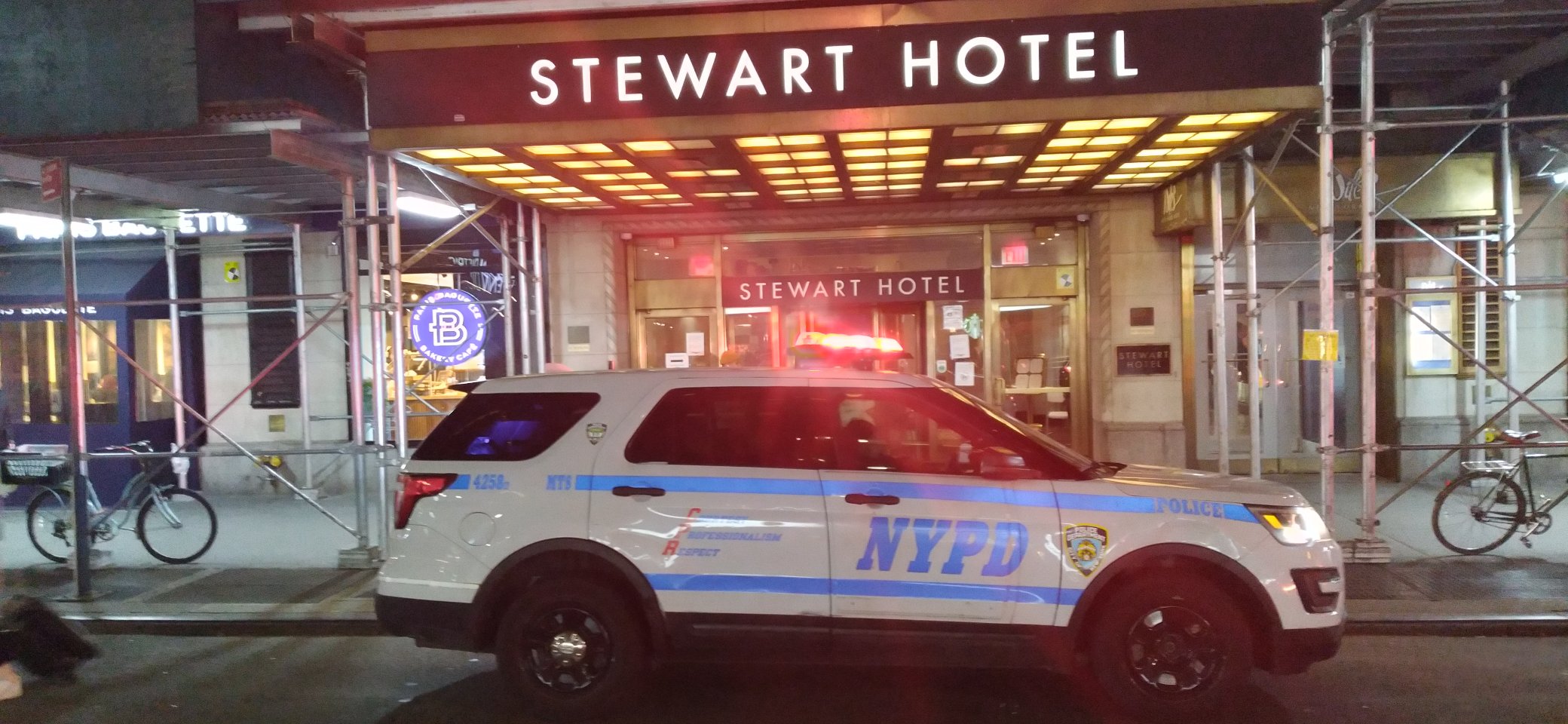
NYPD Commissioner Dermot Shea on Wednesday blamed the city’s homeless shelter system for playing a part in the brutal beatdown of an Asian woman — saying parolees don’t get the help they need to not reoffend.

The city’s top cop would not say whether Brandon Elliot — the 38-year-old brute who was caught-on-camera allegedly assaulting the 65-year-old victim on Monday — should have been let out on parole.

Elliot had been sprung on lifetime parole in 2019 after serving about 17 years for murdering his mother in 2002.

“That’s a question more for the parole board,” Shea said on PIX 11. “But what I would say is, people pay their debt to society. They’ve got to be given second chances.

He added that he has a “different perspective” as police commissioner — as he blasted the lack of resources at the city’s homeless shelters, where Elliot had been staying when he was busted for the broad-daylight attack.

“When you’re releasing people from prison and you’re putting them in homeless shelters, you’re asking for trouble,” Shea said. “There’s got to be a safety net and there’s got to be resources for them.”

He added, “Releasing people and putting them in homeless shelters — I’ve been harping on this for years now — and I think you just shake your head and say, ‘What could possibly go wrong?’ And this is what goes wrong. It just never should happene

Friday, June 26, 2020

REBNY and the City wants to turn your neighborhood hotel into a cheap substitute for "affordable housing"...

...but probably not this one

THE CITY


 City officials are looking to capitalize on a distressed tourism industry by converting commercial hotels into affordable housing — including creating single room occupancy units known as SROs.

The exploration of cheaper alternatives for affordable housing and supportive housing — offering health care and social services for people with mental illness or substance abuse disorders — comes as the city struggles to overcome a fiscal crisis prompted by the coronavirus pandemic.

The effort, which also comes as thousands of homeless people are staying in hotels, highlights just how hard a near-halt in business travel and tourism is slamming New York City.

“Unfortunately, we’re seeing a tremendous hit to our hotels because of the reduction in tourism, because of the lack of travel — and hopefully most of that will come back. But some of it may not,” Vicki Been, deputy mayor for housing and economic development, said this week during an online roundtable on economic development hosted by the Real Estate Board of New York and the law firm Greenberg Traurig. 

...and probably (and definitely) not this one either

 
“So we’ve been looking hard at — are there hotels that we could acquire to turn into supportive housing rather than having to build from ground up?” she added. “We’re looking both at, are there assets that we own that we can make available to affordable housing or other needs — and are there private market buildings that we could acquire to convert into affordable housing at a cheaper cost.”

Department of Housing Preservation and Development Commissioner Louise Carroll, who also participated in the event, said hotels are also under consideration for a shared housing model — which includes SRO-like units that have common areas for residents.
The agency has been testing shared and co-living spaces as affordable housing since 2018.

“Maybe hotels are good for rehab in that way,” Carroll said of SROs.