Showing posts with label Homeless Shelters. Show all posts

Monday, March 6, 2023

Poverty pimping sister act

 https://nypost.com/wp-content/uploads/sites/2/2023/03/Valerie-C-Smith-square-web-1.jpg?resize=1024,1024&quality=75&strip=all 

NY Post

Providing shelter is a family affair at the city Department of Homeless Services.

The firm of Homeless Service Administrator Joslyn Carter’s sister has been awarded 17 contracts with the agency valued at a staggering $1.7 billion, according to data compiled by city Comptroller Brad Lander’s office.

Carter’s sister, Valerie Smith, is vice president of New York City Housing programs for Yonkers-based Westhab Inc., which runs homeless shelters in the city.

She has been a top administrator there since 2017.

Seventeen of the social services contracts were awarded by DHS, many in recent years with Smith working at the agency as the city grapples with a record homeless population fueled by a massive influx of migrants from the southern border.

Three others were awarded by the Department of Youth and Community Development and two by the Department of Education, totaling $4.7 million.

Councilman Robert Holden (D-Queens) demanded an investigation by the Department of Investigation and Conflicts of Interest Board after hearing of the unusual sibling relationship involving the city homeless services honcho and a top contractor awarded business with the agency.

Holden griped numerous times about problems at a shelter for 180 single men run by Westhab on Cooper Avenue in Glendale in his district — including complaints of drug use, violence, masturbating in public and menacing neighbors — some of which were exposed in a CBS report last September.

He suspected something was amiss when he said he failed to get an adequate response from Westhab or the city homeless officials.

“The whole thing stinks to high heaven. Why is Westhab getting all this money?,” Holden said Sunday. “It looks like they have someone on the inside. They’re protected.”

“They’re not doing a good job at the shelter on Cooper Avenue. It’s a mess over there.”

In a Feb. 8 letter to DOI and COIB, Holden said, “I recently learned from a credible source that the Department of Homeless Services Administrator Joslyn Carter is the sister of Westhab’s Vice President of New York City Shelter Programs, Valerie Smith. I am concerned that immediate family members can work on the same contract despite a potential conflict of interest.”

He told the investigative and ethics agencies that there have been 1,500 calls to 911 for the shelter and 156 resident arrests.

“As you know, corruption and criminal acts often occur in the social service industry.
Thursday, August 11, 2022

Mayor Adams and the Department of Social Services covered up violations at shelters housing migrant families arrivals and fires official who tried to warn them

 https://media.nbcnewyork.com/2022/08/Text-messages.jpg?quality=85&strip=all&fit=970%2C1064&w=975&h=548&crop=1 

NBC New York

Several sources tell News 4 that staff at the Department of Social Services, including the agency's legal team, were angry after being instructed to hold off on telling City Hall, and not promptly notify the Legal Aid Society, as has been past protocol.

City officials acknowledge there was a delay in disclosing the violations, but they say top officials at the Department of Social Services including the Commissioner were unaware that they are legally obligated not to house families overnight in their intake office. This, despite the fact that a report is sent out each morning at 4am to notify social services managers of any violations.

The chief spokesperson for New York City's Department of Homeless Services was fired Friday after pushing back against alleged lies and omissions by her boss regarding illegal conditions in the city's homeless shelter system, according to a source familiar with the situation.

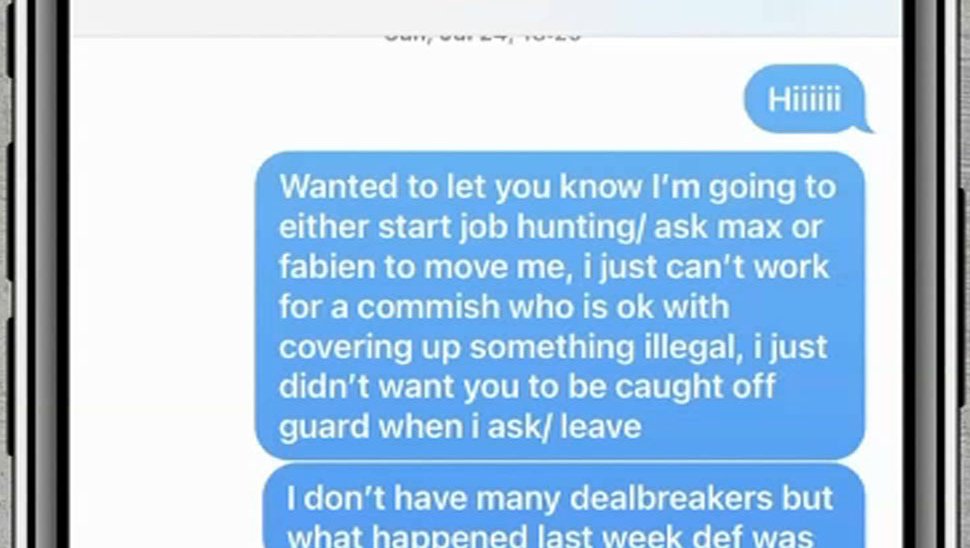
Email and text messages provided to the News 4 I-Team suggest that the Deputy Commissioner for Public Information Julia Savel had resisted efforts by Social Services Commissioner Gary Jenkins to conceal crowded conditions in the city's homeless shelter system from his superiors at City Hall, from the media and from the public.

In one text message dated July 20, Savel indicated to a City Hall spokeswoman that she was planning to inquire about moving to a different agency, saying "Just can't work for a commish who is ok with covering up something illegal."

Staff at the Department of Homeless Services say they learned on July 18 that families with children had been forced to stay overnight in the city's homeless intake office in the Bronx, known as PATH  — a practice that is prohibited under a 2008 court settlement between the City and the Legal Aid Society, which represents people living in shelter.

The text messages imply that Savel gave City Hall a heads up the next day, on July 19. That same day, Mayor Adams announced NYC needed federal funding to help with a surge of 2,800 asylum seekers who had entered the shelter system in recent weeks. But the mayor did not specifically mention any legal violations or families sleeping in the intake office.

Later that week Adams said he did not learn the city had violated its "right to shelter mandate" until July 20.

Several sources tell News 4 that staff at the Department of Social Services, including the agency's legal team, were angry after being instructed to hold off on telling City Hall, and not promptly notify the Legal Aid Society, as has been past protocol.

City officials acknowledge there was a delay in disclosing the violations, but they say top officials at the Department of Social Services including the Commissioner were unaware that they are legally obligated not to house families overnight in their intake office. This, despite the fact that a report is sent out each morning at 4am to notify social services managers of any violations. 

 Suddenly, Stephen Banks doesn't look that bad now.

Monday, April 25, 2022

Mayor Adams throwing more city budget money gas on the homeless shelter fire


AMNY 

Mayor Eric Adams announced Sunday the largest investment made by any city administration to combat homelessness.

Adams declared that his administration will add more than $170 million in the Fiscal Year 2023 executive budget to provide what he says will be high-quality services and resources for homeless New Yorkers. 

The announcement comes as his administration works to dismantle homeless encampments throughout the city and get unhoused individuals out of the subway system. Both efforts received criticism among advocates and homeless people themselves, many of whom said they don’t want to be forced to return to city-run homeless shelters that have proven unsafe in the past.

But Adams said the funding will be used for “Safe Haven” and supportive housing beds that offer residents a peaceful and stable environment by which to rebuild their lives. It’s an effort to build confidence among homeless residents to accept the help the city’s offering them.

“This is not a one and done. This is a baseline that every year this is going to have the funding will include expanded outreach efforts to connect those in need to specialized resources,” Mayor Adams said. “This funding will help expand these efforts including safe havens, stabilization beds, and drop off centers. These are the things people have stated constantly, these are the things you need to do, so now here’s the partnership: Every elected official, every advocate, the state, we want these types of beds we’re saying to them, join us, you know, join us we’re not going to oversaturate one community with the beds that we’re looking for because we have done that historically. We’re not going to do that. This is New York City’s problem, so New York City must ensure that this is happening correctly.”

Monday, January 31, 2022

Adams says more homeless shelters coming


NY Post 

Mayor Eric Adams on Sunday hinted at opening more homeless shelters throughout the Big Apple — as he took aim at some “sacred cow” neighborhoods whose residents have waged war against the facilities.

Adams called out areas that haven’t “had their share of shelters” though stopped short of offering any specifics for how to get vagrants off the streets amid the city’s surging crisis.

“Homelessness is a New York problem,” Hizzoner said at a press conference at Jacobi Hospital in the Bronx.

“We can’t have any sacred cows where some communities believe they are not going to shoulder the burden. That is not going to happen.”

Adams made the comments after being asked about a proposal to have three homeless shelters — which would house up to 540 single adult men — set up in the Bronx’s Community Board 11 region.

I’m going to look at this particular issue. Find out what’s happening. I’m going to communicate with [Department of Homeless Services] and see exactly what’s taking place here,” the mayor insisted.

“I don’t want to overburden certain communities with shelters,” he added.

“You know, I lived on the verge of homelessness as a child. I know what it is not to have a home, I know that. And I also know what it is to oversaturate certain communities with shelters.” 

Wednesday, December 1, 2021

Gimme safer shelter


QNS 

Victor Lopez, 59, has been struggling to hold a job for most of his life. Since the pandemic hit, he got passed around to different homeless shelters, where Lopez said he faced terrible violence. Now, all he wants is to find a safe haven at the Hungry Monk shelter in Ridgewood.  

Lopez said he’s been to many shelters throughout the city but never felt more unsafe than in Harry’s Place in Bed-Stuy, Brooklyn. Close to 50,000 people in New York City are experiencing homelessness and Lopez knows his situation is not unique.

“It’s terrible,” Lopez said. “It’s crazy in there. Why would they put me in a shelter like that? I didn’t give anyone any trouble. I’m out here trying to get better and get help, not to fight with people.”

Lopez has been trying to get a bed at the Hungry Monk facility, but unfortunately, no beds are available. Father Michael Lopez (no relation), who started the nonprofit, said they have rarely had a free bed since they opened in 2019.

Lopez’s problem is indicative of a larger issue faced by many around Queens and the rest of the city. Council member Robert Holden said Department of Homeless Services Commissioner Steven Banks is to blame. Holden said Banks had been an advocate for the large “warehouse” shelters that pack people in without privacy and barely any security, resulting in the dangerous conditions Lopez spoke of. 

Banks announced his decision to step down last week. Holden is hoping this will kick off a more responsible homeless response.

“I would much rather have smaller, faith-based shelters along with letting a community have a say in where they would be located,” Holden told QNS. “The organizations that run the big shelters for the city have contracts that they often do not fulfill, such as providing adequate security, etc. Banks did not hold them accountable. Residents of the shelter often harass neighborhood residents and shopkeepers, as well as steal from them. Banks also created a culture of corruption, with one scandal after another.”


Monday, November 22, 2021

Steven Banks weasels out of the DHS

https://nypost.com/wp-content/uploads/sites/2/2021/11/manhattan-bridge-4.jpg?quality=90&strip=all&w=744 

NY Post

The embattled head of the city’s sprawling network of social and homeless services, Steve Banks, has ended his pursuit of a position in Mayor-elect Eric Adams’ administration and will depart at the end of the year, he announced Monday.

The longtime lawyer’s decision to leave municipal service and return to the courtroom comes after a slew of newspaper investigations and city reviews exposed significant shortcomings and wrongdoing at key nonprofit shelter providers.

“Steve Banks is a skilled and accomplished public servant, who has navigated complex government problems to find essential solutions on behalf of New Yorkers,” Adams said in a statement. “I wish him well in his new endeavor.”

Might as well leave this here too.

NY Post

At least a dozen homeless people — each a “different shade of crazy” — have colonized the historic Manhattan Bridge colonnade, terrifying residents and besmirching the century-old neoclassical structure with shanties, tarps and tents.

Nearby businesses and residents told The Post their new neighbors are not only a blight near the 111-year-old span once hailed as the gateway to the Big Apple — they’re dangerous too, throwing things when jostled, stealing, and even pooping al fresco.

“Every day’s a problem,” said Zhong Yi Wang, 53, who manages his family’s restaurant, Jisu on Canal Street, where he said three bamboo plants — which cost $800 a pop — recently disappeared.

Bridge denizens often urinate on his door, bang on his window, and even barge inside to scream at him, he said.

Urine isn’t the worst of it, according to a woman who works at the nearby Mahayana Temple.

“Somebody pooped in front of the temple,” said the woman, who only have her first name, Cindy. “And when we talk to them, they just will throw things on you and do all kinds of strange things.”

“It’s not so safe,” she continued outside the Buddhist house of worship. “They will try to punch you or kick you, you have to run away.”

Even other homeless people avoid the area now.


Monday, October 4, 2021

Homeless services provider CEO that almost got the contract to run Trump's golf course makes a million a year profiting from the housing insecure

Jack A. Brown III, the chief executive of CORE Services Group. 

NY Times 

Some executives at nonprofit groups that operate New York City homeless shelters are benefiting from the plight of the people they serve.

Soon after Jack A. Brown III quit his job at a private prison company, his former employer accused him of fraud. A few years later, after Mr. Brown started a nonprofit to run halfway houses, a federal audit found that it had failed to deliver key services. The New York State comptroller concluded in another review that Mr. Brown had shown “a disturbing pattern of ethical violations.”

None of that history seemed to bother officials in New York City.

Since 2017, as homelessness has risen to record levels, the city has awarded more than $352 million to a nonprofit run by Mr. Brown to operate shelters. The money is meant to help homeless people regain their footing in life, but it has benefited Mr. Brown, too.

The nonprofit has channeled contracts worth at least $32 million into for-profit companies tied to Mr. Brown, allowing him to earn more than $1 million a year, The New York Times found. Millions more have gone to real estate companies in which he has an ownership interest. He has also hired his family members and given employees perks such as gym memberships and cars.

 When Mayor Bill de Blasio came into office, he criticized a small group of landlords for charging the city exorbitant rates to house people in squalid rooms while doing little to curb homelessness. In 2017, the mayor pledged to open dozens of new shelters that would be managed by nonprofit groups. Their mission, he said, would be altruistic rather than driven by financial gain.

But four years after that change and an extraordinary infusion of city spending, homeless people still crowd shelters and set up camps on the street, while a new group of operators has figured out how to make money off their plight.

An investigation by The Times, based on hundreds of pages of legal filings, business records and tax documents, as well as interviews with homeless people, city officials and shelter employees, found that under the cloak of charity, executives at nonprofits have collected large salaries, spent their budgets on companies that they or their families controlled and installed relatives in high-paying jobs.

One landlord started a nonprofit that handed out millions of dollars to real estate and maintenance companies that he and his family owned. A Bronx shelter operator was charged earlier this year with laundering kickbacks through a consulting company run by his family. A former board member of another homelessness organization is under criminal investigation after the city said the group paid millions of dollars to a web of for-profit entities he secretly oversaw.

For years, Mr. Brown has personally prospered by running an organization to help the homeless.

In addition to serving as the chief executive of the nonprofit he founded, CORE Services Group, Mr. Brown started a security guard company that polices his shelters, a maintenance company that makes repairs in them and a catering company that feeds the residents, records showed. Mr. Brown heads each of them, collecting total compensation that tops $1 million. He is the highest-paid shelter operator in New York, according to a review of available records.

(This guy is the Jeff Bezos of homeless shelters-JQ LLC)

In one year alone, the for-profit companies that Mr. Brown ran spent more than $460,000 on gym memberships for employees, records showed.

Mr. Brown, 53, has profited in other ways: Along with partners, he owns two companies that have rented buildings to CORE, and his mother, sister, aunt and niece have all worked at the nonprofit, in addition to his brother, who has collected a six-figure salary.

At the same time, residents at one of the largest shelters in Mr. Brown’s operation, Beach House in Queens, said they lived with vermin infestations, creeping mold and violent fights in the hallways.

“A lot of money is going into this place,” said Annabelle Alexander, who lived in the Beach House shelter for more than a year before moving out last week. “But it’s not going to us.”

State and federal laws prohibit nonprofit organizations from engaging in many types of self-dealing, the practice of executives benefiting personally from their organizations without proper disclosure. But the line between permissible transactions and illegal behavior can be hazy, and nonprofit executives are rarely prosecuted for financial abuses.

In fact, executives at the groups that run shelters in New York are permitted to run profitable side businesses — all fueled by city money — as long as they reveal the information to the city and follow contracting rules.

This year, the city has directed $2.6 billion to nonprofits to operate homeless shelters, and officials already know they have a problem with some of them. Nine of the 62 groups that run shelters are on an internal city watch list for issues that include conflicts of interest and financial problems, according to records reviewed by The Times. All of them continue to receive city funding.

THE CITY 

A leading homeless shelter operator has pulled out from a deal to take over a Bronx public golf course after the Trump Organization exits the links at Mayor Bill de Blasio’s demand.

“CORE Services Group, Inc. has decided to withdraw from consideration,” an attorney for the Brooklyn-based nonprofit wrote in an email to executives with the city Department of Parks and Recreation and the golf course operator Bobby Jones Links on Wednesday.

THE CITY exposed CORE’s unlikely involvement Monday, after public records revealed Parks’ proposed 13-year deal to put a company registered by CORE CEO Jack A. Brown in charge of the deluxe Jack Nicklaus-designed 18-hole course near the Whitestone Bridge.

“We are disappointed that we are unable to move forward with this project at this time and help bring workforce training and jobs to communities in New York City that are underrepresented in the sport of golf,” a spokesperson for CORE, which has $544 million in current contracts for family and single adult shelters, said in a statement.

“We will continue our work breaking barriers and creating new opportunities for all New Yorkers.”

Asked Tuesday morning about THE CITY’s report on the future of the Trump Golf Links at Ferry Point, de Blasio said that CORE would be “only working on some of the staffing. It is not the organization that’s operating the whole golf course.”

That organization, Parks officials said, will be Bobby Jones Links. Yet the Atlanta-based golf course operator has not responded to multiple inquiries from THE CITY and is not listed in any public records related to Brown’s company, Ferry Point Links LLC.


Thursday, July 22, 2021

Still no place to call home


Queens Post 

 On a sunny day in early April, minutes before flames ignited across a 133-unit apartment building on 89th street in Jackson Heights, Andrew Sokolof Diaz returned home from a doctor’s appointment for his two-month-old son.

He opened the windows to get some fresh air, before leaving to take their dog out for a family stroll.

“So I remember opening the windows and feeling a little nostalgic, like aw, this is our little home. I actually remember that feeling,” said Sokolof Diaz, 33, a leader of the building’s tenant association. “And that’s it. The worst possible thing that could have happened, happened.”

Around 1 p.m., the electrical fire, which fire marshals said was sparked by an overloaded power strip, began burning on the top floor of one wing of the six-story, two-address building and spread rapidly, fanned by an apartment door left ajar.

Tenants scrambled outside, some exiting through the main entrance and others climbing down fire escapes, and watched the destruction from the sidewalk. Billowing plumes of smoke clouded the sky for blocks.

It took 12 hours for hundreds of firefighters to quell the eight-alarm blaze, which injured 21 people. Ultimately, the sprawling building’s more than 140 households — about 500 New Yorkers — were displaced from their homes.

 A season later, more than 100 residents of the rent-stabilized, block-long apartment building are without a permanent home. By the tenant association’s count, some 60 families remain in city-sponsored hotel rooms across Queens and Brooklyn, following Red Cross emergency relocation.

They were told they could stay for a month — two months ago.

After losing their homes and in many cases all their possessions, those former tenants are now confronting difficult choices on offer via the city’s affordable housing program. Some are being offered pricey new rentals in the neighborhood and others, apartments on the far side of the borough.

Meantime, displaced families told THE CITY, the Department of Housing Preservation and Development has attempted to relocate them from the hotel rooms to homeless shelters — first on Father’s Day and then again this month.

For families, that would mean leaving Queens entirely, since HPD doesn’t operate any emergency shelters for displaced people in the borough.

“We are just waiting to see what HPD and other organizations are going to do. I really do not want to go to a shelter,” said 16-year-old Kimberly Sinchi, who’s living in a hotel room in Downtown Brooklyn with her parents and her dog.


Sunday, June 20, 2021

NYC's feckless officials finally help NYC's homeless services...workers


AMNY 

With homelessness one of the most pressing issues in the 2021 mayoral race, it’s more important than ever that those on the street have somewhere safe to sleep. Oftentimes, that means a non-profit shelter. Yet many of the private security officers who work at these shelters are paid so little they can barely afford health insurance  – and are even in danger of homelessness themselves.

Now the New York City Council and Mayor Bill DeBlasio are moving to change this, committing 40.5 million dollars to ensure that these essential workers are paid fair, livable wages.

“For over 4,000 working families – their lives are going to change, this year,” said Mayor DeBlasio at a press conference this afternoon. A group of working people, each wearing union shirts, stood behind him. “You can’t ask someone to help solve one of the most challenging problems in society, but not give them enough to put food on their tables, or pay their rent, or take care of their families.” 

His description was borne out by a number of speakers. Homeless shelters can be rife with violence; yet many security officers are paid minimum wage, barely enough to sustain an individual, let alone a family.  “We cannot afford to live in the city we work,” said Shaquille Sheppard, a private shelter security officer who himself grew up in-and-out of shelters. “Private security jobs are poverty jobs.” Kyle Bragg, president of Local 32BJ, a chapter of the Service Employees International Union, substantiated this, saying that, “while helping the City’s most vulnerable, many of these workers struggle to afford things themselves,” and, “may even find themselves homeless.” 

Impunity City 


Mayor de Blasio, who promised to end the tale of two cities, and City Council Speaker Corey Johnson and his Democrat majority City Council Cronies waited 8 years to finally do something about the homeless crisis by finally allocate funding for a long overdue wage hike for security guards. Sure there’s nothing wrong with wanting to give the people more money especially when tasked to supervise the city’s notoriously violent and decrepit homeless shelters. But there are a bunch of conflicting problems with this.

First, why haven’t the non-profit providers of these city shelters who are already receiving city funding already gave these security guards the living wages they needed?


Wednesday, April 28, 2021

de Blasio's homeless shelter policy cited for spreading COVID


NY Daily News

 The number of single adults living in homeless shelters across the five boroughs reached an all-time high during the pandemic, likely contributing to a disproportionate spike in coronavirus deaths among that population, according to a new study.

The study, conducted by the Coalition for the Homeless advocacy group and provided exclusively to the Daily News before its Wednesday release, found that the number of single adults sleeping in New York City shelters rose precipitously throughout last year, reaching a new record of 20,822 on average every night this past February.

Through the same reporting period, the COVID-19 death rate for sheltered single adults was 54% higher than the citywide average, the study says.

 Giselle Routhier, a policy director at the Coalition for the Homeless, said many homeless single adults suffer from underlying health conditions and acknowledged that may have partially contributed to the high coronavirus death rate.

But Routhier also said the record-high shelter occupancy played a part, especially since single homeless adults are typically placed in congregate, dorm-style shelters where social distancing is difficult.

“That means more people were at risk,” Routhier said in an interview. “We saw how that impacted them in these really devastating mortality numbers.”

Thursday, April 1, 2021

NYPD commissioner condemns the city's policy for sheltering homeless people in hotels

https://nypost.com/wp-content/uploads/sites/2/2021/03/nypd-shea-asian-attack-06.jpg?quality=90&strip=all&w=1024 

NY Post

NYPD Commissioner Dermot Shea on Wednesday blamed the city’s homeless shelter system for playing a part in the brutal beatdown of an Asian woman — saying parolees don’t get the help they need to not reoffend.

The city’s top cop would not say whether Brandon Elliot — the 38-year-old brute who was caught-on-camera allegedly assaulting the 65-year-old victim on Monday — should have been let out on parole.

Elliot had been sprung on lifetime parole in 2019 after serving about 17 years for murdering his mother in 2002.

“That’s a question more for the parole board,” Shea said on PIX 11. “But what I would say is, people pay their debt to society. They’ve got to be given second chances.

He added that he has a “different perspective” as police commissioner — as he blasted the lack of resources at the city’s homeless shelters, where Elliot had been staying when he was busted for the broad-daylight attack.

“When you’re releasing people from prison and you’re putting them in homeless shelters, you’re asking for trouble,” Shea said. “There’s got to be a safety net and there’s got to be resources for them.”

He added, “Releasing people and putting them in homeless shelters — I’ve been harping on this for years now — and I think you just shake your head and say, ‘What could possibly go wrong?’ And this is what goes wrong. It just never should happene

Tuesday, March 24, 2020

The city has implemented a hospital to shelters pipeline for homeless people who tested positive for coronavirus

THE CITY


City hospitals are sending apparently homeless people who test positive for coronavirus but aren’t in need of intensive medical care to the shelter system for isolation, THE CITY has learned.


Meanwhile, the number of homeless people with coronavirus infections living in city shelters more than doubled over the weekend as social services officials grappled with how to handle the growing number of cases affecting some of the most vulnerable New Yorkers.


The Department of Homeless Services confirmed Monday that the number of shelter residents with COVID-19, the disease caused by the virus, jumped from seven on Friday to 17 by Sunday night. That’s a major increase from 10 days ago when only one shelter resident had registered a positive test.


Homeless people with the virus have now been found in 12 shelters across the city, DHS said.

Now the city-run hospital system is transferring patients who’ve tested positive for the virus into the shelter system if the person has no known address and isn’t deemed to require acute medical care.


As of Sunday, one such patient had been sent to the city homeless shelter system. Isaac McGinn, a DHS spokesperson, said the person only needed isolation.


Four of the 17 shelter residents with COVID-19 remained hospitalized, while the other 13 were “only exhibiting mild illness and do not require intensive hospital care at this time,” McGinn said.


Most of those with the lower-level symptoms were taking up beds in an isolation ward DHS has set up at an unspecified location, he said.


Saturday, February 29, 2020

No city for old people


City Limits 

Florina, 62, and her husband, who is 63, haven’t paid rent on their rent-regulated Bronx apartment in months.

The husband has not been able to work in 16 years and is blind. Florina does sporadic cleaning work to bring in extra income but is otherwise retired. Neither receives any kind of disability or Social Security benefit, due to their immigration status.

In January of 2019, Florina received a notice saying that her rent would go up by 30 percent, an amount the family couldn’t pay.

The couple are one of a few dozen residents of a building in the Bronx who are now on a rent strike. 

The couple, along with their children and grandchildren, with whom they live, are protesting a Major Capital Improvement – a rent hike on regulated units intended to fund building-wide repairs that they said raises their rent beyond what they can pay. The hike was approved prior to last summer’s rent reforms, which curtailed the practice. They are also protesting deteriorating conditions in their home.

In response, their landlord took the couple to court in an attempt to evict the family. Their hearing has been postponed until March, thanks to the intervention of a lawyer. But Florina and her husband still fear they will be evicted, along with their working age children and young grandchild.
Florina is fortunate, she says, that she lives with children – her son, 39, works at a bakery and her daughter, 30, is a home-health aide. While their combined income does not pay for the increased rent on their apartment, being partially supported by a younger generation is not something all elder New Yorkers have.

Many elder New Yorkers without such family ties and with little retirement savings end up displaced, segregated to an adult home, or worse, shuffled into the city’s homeless shelter system when they become ill.

“Sadly a lot of older, disabled people believe ‘they can’t throw me out into the street’,” says Justin La Mort, a housing lawyer with the group Mobilization for Justice who works with elders. “The bad news is, in fact, they can. It’s just a matter of time.”

The city uses a patchwork of social services and subsidies to keep elders aging in place, but they can be difficult to qualify for and their funds are limited. For those without savings or income from work, federal programs—SSI, SSDI or social security—can come too late and, when they do arrive, may not meet the high cost of rent in New York City. The result is a permanent sense of precarity among the city’s most vulnerable, sometimes culminating in homelessness or displacement.

A lack of retirement savings compounds the problem. According to the commissioner of the city’s Department of Consumer Affairs, half of New Yorkers 55 and older have no money in traditional retirement accounts. 40 percent of New Yorkers between 50 and 64 have less than $10,000 saved in such accounts. Nationally, 29 percent of adults above 55 have neither a pension nor retirement savings, according to the Government Accountability Office.

This lack of assets can have material effects when older adults face hardships: a recent study from the non-profit Robin Hood looked at material hardship, spurred by housing insecurity, job loss or illness. The study found that 53 percent of New Yorkers experienced such hardship for at least one year in the survey’s four year timespan.

According to the same report, 23 percent of respondents experienced poor health between 2012-2018. The study also found housing subsidies and rent regulations had reduced the poverty rate by 5 percent.

Elders who become disabled suddenly can find themselves in a grey area where social services can’t help them. Awaiting disability benefits, for which they may be rejected, they could find themselves in arrears and face evicted for unpaid rent. Still others who receive Supplemental Security Income (SSI) or Social Security Disability Insurance (SSDI) may be surprised to learn that their income is less than what they owe in rent but too much to qualify for a city or state subsidies to prevent homelessness. 

As City Limits has reported, the percentage of older adults in New York City’s shelter population is increasing. There is no way to determine how many elders become homeless each day through eviction, as eviction data made public by the city does not include age as a data point. While the number of adults in city shelters who are age 65 and above increased 300 percent between 2004 and 2017, older adults who are evicted don’t always enter shelter. And seniors don’t have to be formally evicted to be displaced by the threat of eviction; if they move out ahead of being uprooted by a marshal, or take a buyout, the result can be the same. Few elders are fortunate enough to find more affordable housing in the city, and some are forced to relocate to other states.

Evictions have been decreasing overall across New York City, thanks to a raft of pro-tenant legislation that closed loopholes for regulated apartments and provide access to counsel. Evictions executed by city marshals decreased 25 percent between January 2019 and January 2020. But for tenants who can no longer gain any income from work because they are elderly or disabled, eviction or displacement are more difficult to put off.

Monday, December 9, 2019

Hotel owners are profiting off of the homeless crisis


https://external-content.duckduckgo.com/iu/?u=https%3A%2F%2F2sei0v2s93y31n9ndy1lrzmh-wpengine.netdna-ssl.com%2Fwp-content%2Fuploads%2F2016%2F08%2FMaspeth-rally-web.jpg&f=1&nofb=1

NY Daily News


Owners of dozens of recently-built homeless hotels are saving millions of dollars on city taxes through an obscure rebate program that allowed them to hold on to $12.5 million in the 2018-2019 tax cycle.

Of the owners benefiting from the tax break — known as the Industrial and Commercial Abatement Program — the biggest winners include Sam Chang, Harshad Patel and Riverbrook Equities, according to a New York Hotel Trades Council analysis obtained and vetted by the Daily News.
Chang, for example, has built 49 hotels since 2006.

Of those, 14 have housed the homeless. Five have received ICAP rebates and saved approximately $2.3 million on their 2018-2019 tax bills, city records show.

Chang, who still retains ownership in one of the hotels, the Holiday Inn JFK, saved $791,323 in taxes for that property during the last tax cycle.

In all, 44 homeless hotels appear to have received both the ICAP rebate and homeless subsidies within the past four years, city records show. There are a total of 151 hotels that get ICAP rebates. From 2015 to 2019, homeless hotels that got the rebates saved more than $30 million.

All the while, owners like Chang and other operators who get the tax rebates are getting paid by the city to house the homeless. That money is routed to the hotels through homeless service “management companies,” which get the money directly from the city.

A spokeswoman for Chang’s McSam Hotel Group said the company has done nothing wrong.

“McSam Hotel Group complies with New York City laws, rules and regulations in building hotels. We never build hotels with the intent of housing homeless persons," spokeswoman Lisa Linden said. 

"McSam Hotel Group makes no decisions regarding whether homeless persons are housed in hotels. The management companies make those decisions.”

Harshad Patel said the rebate fulfills its mission of creating jobs and that critics are ignoring the big picture.

“It’s the only reason we are building,” he said. "We have a lot of expenses.”

The city projects it will spend $2.1 billion overall on tackling the homelessness crisis in 2020. In 2018, $384 million went from city coffers to housing homeless people in hotels. Less clear is how much of the city’s homeless budget is going specifically to hotels that already receive the ICAP rebate.

Whatever the cost, affordable housing advocates believe it’s a waste of taxpayer money.

“What the city needs to do is build housing to house the homeless,” said Cea Weaver, Housing Justice for All’s campaign coordinator. “It’s a better use of our resources. It’s better than paying hotel owners twice.”


Saturday, November 23, 2019

Assemblyman Hevesi demands accountability from city's homeless provider non-profit groups


 A Queens lawmaker wants the state comptroller to take a look at the books of the city’s top homeless shelter providers.

Assemblyman Andrew Hevesi is asking Thomas DiNapoli to audit 12 nonprofits responsible for housing and helping homeless New Yorkers and probe whether taxpayer money is being spent efficiently as homelessness rates continue to climb.


Hevesi, the chair of his chamber’s social services committee, said he’s witnessed a multitude of problems plaguing shelters in recent years, including exorbitant salaries for top executives and facilities with major safety and maintenance concerns.


“While some providers use all of their resources appropriately and provide exemplary services, it is also clear that many providers are failing to achieve their mission. In fact, the overall average length of shelter stays has increased, as has the rate of clients subsequently returning after leaving,” the Democrat wrote to the comptroller in a letter obtained by the Daily News.


In January, Coalition for the Homeless found that a record number of people — nearly 64,000 — were living in city shelters. The total has fluctuated since, but as of September, there were 62,391 homeless, including 14,962 families with 22,083 children, according to the advocacy group.


More than 114,000 students in city public and charter schools — one out of every ten — was homeless during the 2018-2019 school year, according to a survey released last month by the education nonprofit Advocates for Children.


As the number of people relying on city shelters has grown, so too has the amount of issues at the facilities, Hevesi said.


“There are several providers whose services strip the dignity of their clients and put clients in dangerous situations and that shouldn’t be occurring with these huge sums of taxpayer money that we’re putting into this industry,” the lawmaker told The News.


Saturday, November 16, 2019

Bill de Blasio's latest plan for homeless crisis will involve 18,000 city workers as monitors

NY Times


New York City will direct more than 18,000 of its municipal workers to use 311 to give social service workers real-time information to help them steer the almost 4,000 people who live on the streets into shelters.

The effort, known as Outreach NYC, is the latest attempt from Mayor Bill de Blasio to tackle perhaps the most intractable problem his administration has faced: street homelessness. The problem was highlighted in October when a homeless man, Randy Santos, allegedly bludgeoned four other homeless men to death in Chinatown.

Workers from the departments of parks, sanitation, buildings, fire and health and mental hygiene will be trained to use 311 apps to send detailed service requests to the new homeless services joint command center.

The information will help outreach workers identify the street homeless and begin the delicate and complicated work of convincing them to accept services and shelter.

The mayor has also committed $19 million to hire almost 200 new homeless outreach workers, bringing the total to close to 600.

City officials said Mr. de Blasio was committed to the strategy as a way to reduce the number of unsheltered people as he enters the last two years of his administration. Leading the effort will be Dr. Raul Perea-Henze, who will be announced on Thursday as the new deputy mayor to oversee health and human services.

“We cannot attempt to address this issue in a vacuum,” Mr. de Blasio said in a statement. “Outreach NYC is our all-hands-on-deck approach to bring even more people in off the streets.”

Mr. de Blasio has dealt with record homelessness during his six-year tenure. The approximately 4,000 street homeless represent 5 percent of the 79,000 total homeless people in the city, most of whom are in shelters. As of Tuesday, there were 60,479 people in the city’s primary shelter system, including almost 22,000 children. 

 Part of the issue is that many of the persistent street homeless may suffer from mental illness; Mr. de Blasio has faced regular criticism over the failure of ThriveNYC, the $1 billion plan to tackle mental health launched by his wife, Chirlane McCray, to help the most seriously mentally ill.

There are also new concerns about overpolicing of the poor, minorities and the homeless after Gov. Andrew M. Cuomo announced plans to hire 500 new police officers to help deal with homelessness and crime in the subways.

Ms. Routhier said the increase in police officers and the new outreach program would add “more points of contacts without solutions.”

“This looks like mass surveillance of homeless people,” she said.

That's because it is. The Outreach NYC program is basically de Blasio's Homeless Gestapo.

Tuesday, November 12, 2019

Acacia Network's poverty profiteering off the city's homeless population


Sludge


Annie was already retired when she lost her apartment. With no source of income save for her Social Security work benefits, it wasn’t long before she ended up in the New York City shelter system. That’s where she would learn the name Acacia Network. 

Acacia is the largest provider of homeless housing in New York’s metropolitan area, but it is not just a shelter operator. Over the decades, Acacia has built a small empire with connections running up the ladder of city government. It has amassed a web of interconnected nonprofits and for-profits that offer shelter, affordable housing, addiction and medical services, and security. According to the city’s Department of Homeless Services website, Acacia manages “750 individual family units and four buildings for approximately 550 homeless adults.”

Annie, whose name has been changed for this article, has been living in one of these for the last several years. But right away, she knew things were askew—and it wasn’t just that another resident had threatened to murder her. She would soon come to realize that the problem was multi-tiered: a pattern of mismanagement that left the shelter understaffed, undersupplied, and dangerous for its residents. 

“No nurse practitioner is ever there to give out the medication. The staff has to give out the medication,” Annie tells Sludge, noting that this leaves residents frequently out of sync with their individual treatment regimens with some dire consequences. Every other day, she sighs, “the ambulance seems to be there for one reason or another.” 

Compounding the issue, she says, is a lack of adequate security—something online reviews of the establishment have touched on. One reviewer says they never “felt safe” while living there.

“They’re supposed to have a guard on every floor,” Annie explains. “That rarely happens because people are always calling out. So one guard usually has to do two floors or sometimes three.”

On one occasion, Annie tells us someone at the shelter was hit over the head with a lead pipe smuggled in from a nearby construction site. Another time, she says, someone got hot water thrown on them in the dining room. 

There are other issues caused by Acacia not sufficiently treating residents, Annie says. This past summer, she explains, there was a string of toilet backups due to people flushing entire rolls and other objects.

Frustrated, Annie notes that the shelter tends to respond to these incidents in ways that hurt residents. After the hot water attack, for example, management removed hot water for tea and coffee from the dining room altogether. To address the toilet problems, the shelter’s cleaning staff stopped stocking rooms with toilet paper as soon as the facility’s annual “Callahan” inspection—named for the 1981 court case that established the “right to shelter” in New York City—had completed. 

“When you need toilet paper you have to go down to the front desk and they give you a wad…and you have to ration,” she laments.

What Annie describes is a complete culture of neglect, which doesn’t square with the large amount of money Acacia rakes in from the city. In the 2019 fiscal year alone (July 2018 through June 2019), it received $259 million in contracts from the Department of Homeless Services (DHS), which accounted for 18.5% of the department’s contracts that year. Acacia gets additional funding from the Department of Social Services and the Department of Housing Preservation and Development. Since the 2011 fiscal year, it has received over $1.1 billion worth of city contracts. 

 Acacia has seen its funding increase since Mayor Bill de Blasio took office. As luxury condominium developments rose and more of the city’s available housing stock was left empty, de Blasio found himself facing a simultaneous rise in homelessness. In response, he set out to increase the number of homeless shelters in the city. In 2017, he announced a plan, called “Turning the Tide on 
Homelessness in New York City,” to close unsafe and expensive cluster-site and hotel shelters and build 90 new shelters over five years.

Acacia and its multiple linked entities have been the biggest beneficiaries. In total, 10 Acacia entities have received roughly $1.17 billion in city funding since 2010.

Saturday, August 24, 2019

Glendale and Ridgewood are getting new homeless shelters


https://2sei0v2s93y31n9ndy1lrzmh-wpengine.netdna-ssl.com/wp-content/uploads/2016/04/sheltersite-e1515783100633.jpg


Central Queens residents who thought they successfully beat back city plans to place a homeless shelter in their area should think again.


Now, they’re getting two.


The move comes despite years of opposition from Maspeth residents who yelled at officials, protested outside a top city official’s home and even voted out their Dem council member in favor of an opponent who ran on the Republican line.


One facility, to be located at 78-16 Cooper Ave. just outside Maspeth, will house 200 single adults. 

The other, at 1616 Summerfield St. in Ridgewood, will be for 132 families with children.


“While the narrative is that communities oppose shelters, the reality is that most communities have accepted the opening of shelters because we’re providing the ability to shelter people from that area,” Social Services Commissioner Steve Banks told the Daily News.

The Cooper Avenue shelter, scheduled to open early next year, replaces a temporary shelter that had been located at a Holiday Inn Express. Like the temporary shelter, the new facility will emphasize getting residents employed. It will be run by Westhab, a Westchester-based non-profit.


The Summerfield Street shelter will open by end of 2020 and is aimed at enabling homeless Queens children to continue to go to their neighborhood schools, Banks said. CORE Services Group, which has worked with the city on other shelters, will run this one.


The Department of Social Services promised to establish “community advisory boards” that will work with residents in the area.

QNS 

The Cooper Avenue site will house 200 single individuals who are currently employed or seeking employment and open in early 2020. 
Holden said in an Aug. 23 press release that Westhab, a service provider based in Westchester County, will operate the Glendale shelter. “A significant portion of the men housed at the shelter will be from the now–closed Maspeth Holiday Inn temporary shelter, per DHS,” according to Holden’s office.

The Ridgewood location, located at a former factory at 1616 Summerfield St., will house 132 families with children with a late 2020 opening date.


Priority at both locations will be given to those originally from Community Board 5, most of which is represented by Holden, who are experiencing hardship, DHS said.


“Homeless New Yorkers come from every community across the five boroughs, so we need every community to come together to address homelessness,” a DHS statement read. “With zero shelters in Queens Community District 5, these sites will give individuals and families with children the opportunity to get back on their feet closer to their anchors of life. Working together with neighbors and not-for-profit service provider partners, we’re confident that these New Yorkers will be warmly welcomed—and through collaborative support and compassion, we will make this the best experience it can be for these individuals as they get back on their feet.”


Holden claimed that he and others would rally against the plan to provide services to about 330 in southwestern Queens, which DHS claims has no full service shelters at this point in time.


“I along with other elected have  just been informed by [DHS] that they intend on moving forward with a shelter in Glendale,” Holden said on Twitter. “We’ll be meeting with community leaders/members in the coming days to start planning how we as a community will fight against this irresponsible decision.”


A furious Holden blasted the city on Aug. 23 for not considering his alternate plan to build a school on the site instead of a shelter.


“I am disgusted with the way City Hall does business when it comes to housing the homeless,” said  Holden. “I presented a strong plan to have a new District 75 school built on the Cooper Avenue property and I was told by all involved city agencies that this was an ideal solution. But as soon as DOE Chancellor Richard Carranza got involved, he decided it would be better to continue wasting our tax dollars and let the District 75 special needs students suffer in a century-old building surrounded by heavy truck traffic.”


Holden was a driving force in the protests against homeless shelters in Queens during the 2016 demonstrations in the midst of a homelessness crisis. Since then, he has used that influence, in part, to  successful unseat former Councilwoman Elizabeth Crowley in November 2017.


“I tried to fight against this shelter the right way, by negotiating with city agencies and coming up with reasonable proposals, only to have the rug pulled out from under me,” added Holden on Friday. 

“I was told countless times that DHS and SCA loved my plan to build a new school on Cooper Ave, and the Mayor’s approval was all that was needed. But the mayor recently told me he knew nothing about the plan. I’m sick of playing this game with City Hall, so now I will fight back the best way I know how, with my neighbors by my side.”


Among the complaints against shelters in nearly any part of the borough, critics often point to the proximity of facilities to schools or cite the areas lack of accommodations such as transportation or grocery stores.


State Senator Joseph Addabbo also vowed to oppose what he deemed to be “large scale” shelters in favor of smaller facilities he views as more appropriate for the community.


“With my district on the verge of having Mayor De Blasio place a fourth large population of homeless men within its boundaries, most recently proposed for Glendale, I will continue to oppose larger scaled shelters with limited services and inadequate transportation, while advocating for smaller, more community-appropriate sites that would better serve the homeless individuals in need,” Addabbo said. “What about utilizing city-owned sites and properties for cost-efficient modular housing as done in other states? What about developing abandoned zombie homes and providing a better living environment for homeless families, especially the children? I guess after witnessing 5 years of the De Blasio administration’s treatment of the homeless crisis, we may never know the answers.”

This decision comes over a year and a half after the city said they were not going to make it a shelter.

(Also, neither Cooper Ave nor Summerfield Street are anywhere near Maspeth.)