Showing posts with label Breezy Point. Show all posts

Sunday, October 27, 2024

Graveyard Bay


 NY Post

Jamaica Bay is quietly earning a reputation as the Big Apple’s version of the Bermuda Triangle — with at least eight dead bodies discovered in and around the area over the past year, some under mysterious circumstances. 

Investigations into five of the eight “floaters” who washed ashore or turned up in either Jamaica Bay or the nearby Atlantic Ocean side of The Rockaways have been closed, authorities said.

However, many questions still remain.

The “manner of death” on four of the bodies was deemed “undetermined” by the city Medical Examiner’s office, including Emmy-award winning cinematographer and photographer Ross McDonnell, who authorities have said loved to “wild swim” in the ocean and other waterways.

The 44-year-old Irishman’s headless, armless torso washed up on a Breezy Point beach Nov. 17, two weeks after leaving his Brooklyn home. 

 Police initially said they believed McDonnell likely drowned taking a late-night dip, but the ME said it declared the cause of death “undetermined” based on the lack of evidence off the predominantly sparse skeletal remains found.

 Three other deaths remain under investigation by authorities, including Marco Ramirez, 48, of Brooklyn, who was found dead Oct. 15 along the Cross Bay Boulevard shoreline of the Jamaica Bay Wildlife Refuge in Broad Channel, and an unidentified female who washed ashore in Breezy Point on Oct. 5.

City coroners have so far only been able to determine both the cause and manner of death for one of the eight deceased — a headless man whose unidentified remains were found in April by a fisherman near 165th Avenue and Cross Bay Boulevard in Queens.

About a 1,000 feet away, authorities found a rope hanging from the Joseph P. Addabbo Memorial Bridge.

That case was declared a hanging suicide, according to the Medical Examiner’s office.

Councilwoman Joann Ariola (R-Queens), who represents much of The Rockaways, said she expressed concerns to authorities over the summer after the body count reached five — only to be told by law enforcement they didn’t believe the deaths were connected.

Thursday, October 22, 2020

Breezy Point stands by the President

New York TimesJane and Ed Deacy, who both contracted the coronavirus this summer, say their support for President Trump has only been bolstered by the way he has handled the pandemic, and even by his own battle with Covid-19. Their loyalty has also not been shaken by the president’s style in his combative debate with Joseph R. Biden Jr. or at his recent rallies.

“I think he has done a phenomenal job dealing with an unknown virus,” Ms. Deacy said. “His record of the past three and a half years stands, and his accomplishments have not changed.”

Like most of their neighbors in their predominantly white, middle-class community, the Deacys voted for Mr. Trump in 2016, and enthusiastically intend to do so again on Nov. 3. But the Deacys do not live in a solidly red state.

They occupy an unusual slice of Trump country in New York City — Breezy Point, a private beach community in Queens where residents enjoy glimpses of the Manhattan skyline and display banners with slogans like, “Yes, I’m a Trump girl. Get over it!”

 The community has long been home to police officers, firefighters and other first-responders, many of whom own modest houses that have been in their families for generations. They embrace Mr. Trump, who hails from a wealthier part of the borough, and hold fast to local traditions that include conservative politics and outspoken support for the police and the military.

Their fealty to the president stems in part from a prevalent view that the city outside their gates is being driven into the ground by hopelessly progressive Democrats under whose leadership crime is rising and respect for law enforcement is dropping. The enclave has few residents of color, and skepticism of the Black Lives Matter movement is widespread.

While Mr. Trump’s claim that New York City has fallen prey to anarchy may be greeted with scorn by many New Yorkers, it resonates in Breezy Point.

Monday, September 2, 2019

Bigoted graffiti found on Rockaway Beach resort club


https://proxy.duckduckgo.com/iu/?u=https%3A%2F%2Ftse2.mm.bing.net%2Fth%3Fid%3DOIP.Kl4Y8ukC03xCNTSVSvowNAHaFj%26pid%3DApi&f=1


New York Times


On the Friday evening before the final big weekend of summer, members of one of New York’s last private beach clubs, the Silver Gull in Queens, received an ominous email.

The club’s playground would be closed, the manager wrote, “due to the recent and increasing incidence of vandalism from within the club.”

Word soon spread that the playground had been covered with racist and anti-Semitic graffiti. “Heil Hitler” was scrawled in large block letters. White walls were smeared with a red swastika and racial slurs targeting black people. The words “gas chamber” were painted on a door, according to photos shared with The New York Times.

 The graffiti at the club, which sits on federal seashore, was quickly painted over by the management, according to a club member, and the police were called.

Sgt. Richard Firrito, a spokesman for the United States Park Police in New York, said the incident was being investigated as a bias crime.

Investigators believe a group broke into a shed that the club uses for arts programs on Friday and vandalized the interior. The vandals then proceeded to “trash the room,” Sergeant Firrito said. He first said the incident appeared to have happened after the beach club had closed for the day, but later clarified that it apparently had occurred during opening hours.

Harold Bretstein, a son of Holocaust survivors who has been a member of the oceanfront club for about 20 years, said the incident hurt.

“You can gloss it over. You can talk about it being a prank,” Mr. Bretstein said. “But it’s much more than a prank, especially in terms of the times we’re living in when you’re seeing a rise in anti-Semitism everywhere.”

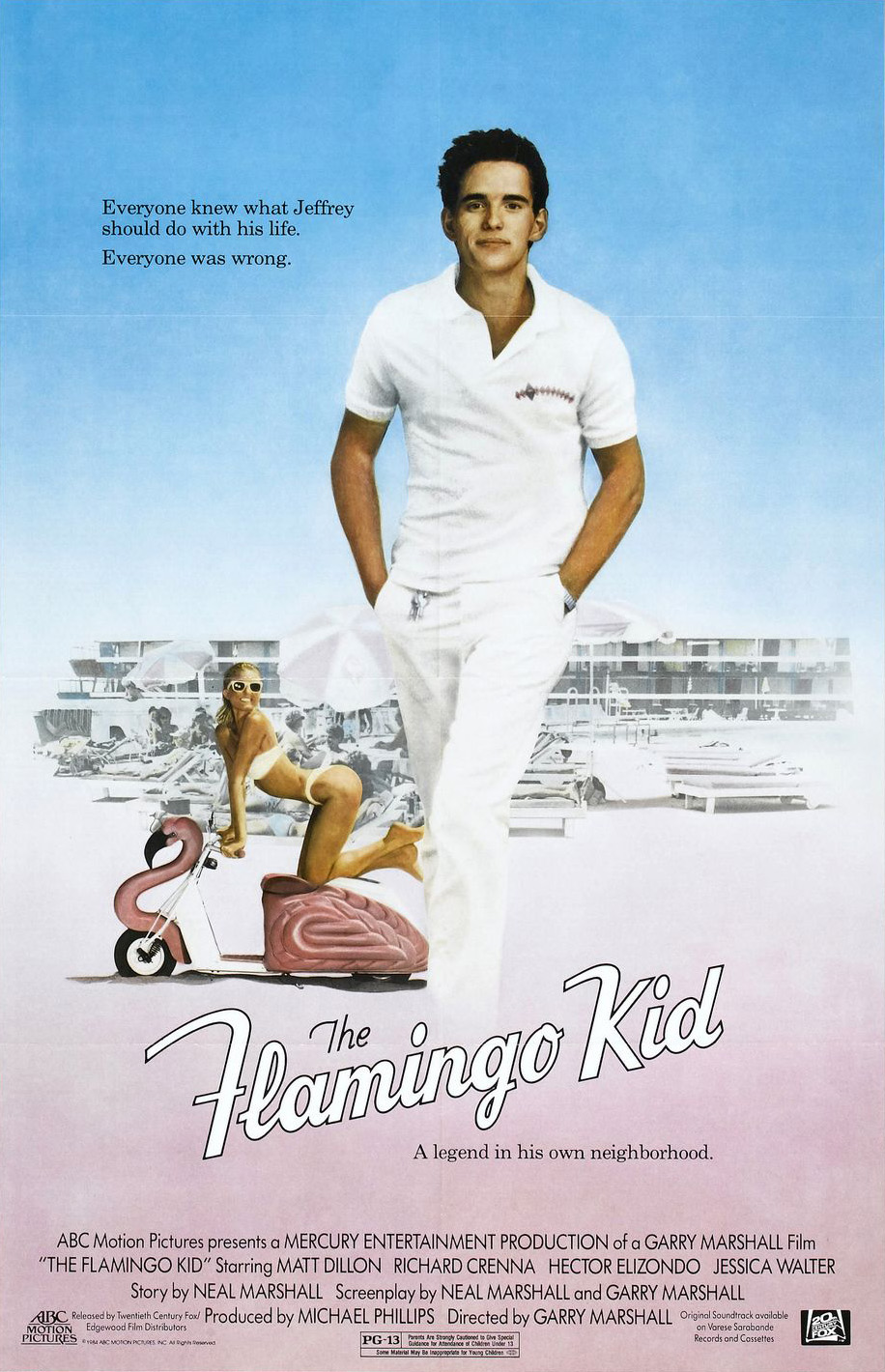
 This is where the classic movie The Flamingo Kid was filmed 35 years ago.

 https://m.media-amazon.com/images/M/MV5BY2IyNDI0YjYtNGFiMi00YWIxLTkyMjgtNDdkMjY2YjM5YzBjXkEyXkFqcGdeQXVyMTQxNzMzNDI@._V1_.jpg


Sunday, May 14, 2017

Flood barrier need questioned

From NY1:

Beautiful views off Breezy Point in the Rockaways could change; Connecting Queens all the way to Sandy Hook, New Jersey could be a barrier to shelter the city from flooding.

"This would save lives," said Bob Yaro of Storm Surge Working Group. "It will save tens or even hundreds of billions of dollars over its life in avoided flooding and disruption of the economy in the region."

Yaro's group calls not just for a barrier in the outer harbor, but also tying Queens to the Bronx near the Throgs Neck Bridge.

The group notes that New York lags behind London, the Netherlands, and even Russia.

"We're kind of standing down on the beach with our pants down around our ankles," Yaro said. "This is not how we want to protect this great city from these dangers."

And in a sign of its influence, a conference on the "urgent need for a regional barrier" is co-sponsored by the Port Authority.

But building a barrier isn't easy. The whole harbor system could cost $25 billion.

A rendering, seen in the video above, shows laying a highway on top to help pay, if it's given a permit.

Complicating matters further, Breezy Point is a private, gated community, whose residents aren't seen as exactly eager for interstate traffic to come through.

The group pushing the barrier says it's just an idea. Others question whether the barrier is needed at all.

Thursday, October 1, 2015

Breezy Point home still not repaired


From WPIX:

Jean Marie Bach has been waiting three years to move back into her home on Breezy Point, Queens.

When Superstorm Sandy hit, she hired contractor Richard Kloska, from American General Contracting to repair her 2-bedroom bungalow that she lived in year-round. Bach says he promised hers would be one of the first homes he’d work on.

Although Kloska was licensed, Bach made the mistake of not getting a written estimate or a detailed contract.

“I trusted him,” she said, “I believe he would finish the job.”

She estimates she paid him almost $150,000 to raise the home, put in a new foundation, and then lower the house onto the foundation. In addition, the inside of the home needed to be redone, and siding and decking were supposed to be completed on the outside.

Bach says Kloska didn’t do most of the work.

Wednesday, August 6, 2014

State approves protection system for Breezy Point

From CBS New York:

A multimillion-dollar request for a dune system and other coastal protections for Breezy Point, Queens is moving forward, New York State officials announced Monday.

Breezy Point lost 355 homes to fire and flooding during Superstorm Sandy two years ago.

The $58.2 million request submitted to the Federal Emergency Management Agency entails building a double dune on the side of Breezy Point that faces the ocean, as well as potentially constructing a seawall and groins along the bay in both Breezy Point and nearby Roxbury to prevent flooding and erosion.

The state said $1.2 million was awarded to support technical, feasibility and permitting needs for the project. Another $57 million in funds for design, engineering and construction could follow, according to the governor’s office.

Sunday, March 16, 2014

"Storm proof" home proposed for Breezy Point

From the Daily News:

A pair of Australian architects believe they have designed a storm-resistant home of the future in Breezy Point.

The so-called “Bayside Bunker,” a prefab, solar-powered home with debris-proof windows by designers Rayne Fouche and Larissa Searle, bested 19 other submissions to win The Urban Green Council’s R3Build competition Wednesday night.

“We could, in many ways, relate to the geographic character of Breezy Point and the extreme weather conditions,” said Fouche, who with Searle graduated from the University of Queensland. “Living on the east coast of Australia, we have seen extreme floods and coastal erosions, which have destroyed homes and swallowed front yards.”

Designers were asked to envision homes that would fit in the Hurricane Sandy-battered Rockaway neighborhood, where hundreds of structures were destroyed by fire and flood waters.

Sunday, August 11, 2013

Breezy Point still struggles to recover

From the Brooklyn Eagle:

On a desolate stretch of sand and concrete rubble in a beachfront community, a lone home is rising amid the ruins of nearly 130 houses that burned to ashes during Superstorm Sandy.

Nine months after the fire tore through Breezy Point, a neighborhood of tightly packed homes in New York City, this house is the only one under construction in the burn zone, the swath of homes that went up like tinderboxes during the storm.

Rows of rectangular boxes sunk into the sand form a graveyard of wrecked homes. American flags waving feebly from the ground help mark where a street once existed.

"That fire zone is the one scar out of all of this that won't go away," said Kieran Burke, a firefighter whose home was destroyed in the blaze. "These aren't just beach homes. These are people's lives. This is a way of life."

A perfect storm of government inefficiency, cumbersome permit laws and general confusion has hampered the recovery effort in Breezy Point, which became a symbol of the storm's devastation after images of the charred neighborhood were broadcast to the rest of the world.

About 350 of the nearly 3,000 homes in Breezy Point were wrecked beyond repair from flood or fire during the storm. But while many of the flooded homes began repairs months ago, the people who once lived in the fire zone are stuck in no-man's land.

Some homeowners have filed plans to rebuild, but few have been approved by the city or by the Breezy Point Cooperative, which runs the neighborhood.

Some people are battling with insurance companies. Others waited months for the Federal Emergency Management Agency to finalize its newly updated flood maps, which put Breezy Point in a more stringent flood zone with higher elevation requirements. And still more are waiting for the government and the cooperative to approve a long list of permits and plans that stand in the way of starting construction.


If the city can give millions of dollars in tax breaks to developers to build along the shore, then why not these folks? This is true affordable housing.

Wednesday, July 3, 2013

Breezy Point homeowners suing LIPA & National Grid

From CBS New York:

Scores of Breezy Point homeowners have filed a lawsuit against the Long Island Power Authority and National Grid, CBS 2 has learned.

According to the suit filed by 120 homeowners, the utility companies failed to de-energize the power grid ahead of superstorm Sandy.

Nearly 130 homes burned to the ground in Breezy Point and in Rockaway Beach, Queens after electrical fires broke out.

Earlier this year, 17 homeowners had announced plans to sue the utilities for failing to cut power ahead of the Oct. 29 storm’s landfall.

At the time, residents argued that if LIPA had turned off the power ahead of time, all they would be facing now is flood and wind damage and not a neighborhood wiped off the map by flames. They said homeowners’ insurance will cover much of the damage, but not the loss of so many irreplaceable items.

Tuesday, May 14, 2013

Bloomberg hiring developers to rebuild Sandy-damaged homes

From Crains:

The Bloomberg administration has launched a program to help speed up the restoration of New York City waterfront communities that were battered by Superstorm Sandy.

The city's Department of Housing Preservation and Development released a request for qualifications last week seeking developers who would help rebuild one- to four-family homes. More than six months after Sandy, hundreds of houses across the five boroughs still need to be rebuilt. The city said putting the rebuilding work in the hands of a few experts would not only make it easier for displaced families to return home but also create more continuity within affected neighborhoods. The program is entirely voluntary, however, and if individual homeowners want to work with their own developers, designers and contractors, they can.

New zoning and building codes tied to new FEMA flood maps and other regulations stemming from the storms, such as raising homes and using new materials, have been implemented.

Under the request for qualification process, the city has divided affected areas up into six groups, and developers would take charge in each area: Breezy Point in Queens; the rest of the Rockaways and Broad Channel in Queens; Staten Island; Coney Island, Brighton Beach, Manhattan Beach and Gerritsen Beach in Brooklyn; scattered home sites in the Bronx, Queens and Manhattan; and scattered mixed-use buildings (residences with attached commercial spaces, usually ground-floor retail) in Brooklyn, Queens and Staten Island.

The program is aimed at rebuilding 400 to 750 properties with a portion of the $350 million in funding allocated to repair smaller properties from the $1.77 billion in federal Sandy aid being provided to the city. However, the total money spent for the program depends on how many homeowners participate.

Sunday, December 2, 2012

Is this in our future?


From the Daily News:

Picture an 80-foot rock barrier rising from the Atlantic Ocean, stretching for 5 miles from Breezy Point, Queens, to Sandy Hook, N.J. — and topped with a new highway.

Or a 1,700-foot wall spanning the Arthur Kill, featuring a pedestrian walkway, a bike path, hydroelectric power and a system of locks for passing ships.

Or maybe a towering structure in the shadow of the Verrazano Bridge, with the Statue of Liberty as a backdrop, complete with twin 640-foot gates.

In post-Sandy New York, plans to harness New York Harbor and its surrounding waterways with such multibillion-dollar projects almost instantly turned more tangible than theoretical.

In the search for answers, it’s now like Robert Moses is battling King Poseidon in the globally-warmed waters around the nation’s largest city.

Proponents suggest the barriers — already successful in Russia’s St. Petersburg and across the flood-prone Netherlands — could prevent a disaster repeat.

Count City Council President Christine Quinn among that group. She’s proposed a $16 billion storm surge barrier as part of a possible plan to safeguard the city.

Count Mayor Bloomberg among the skeptics. After Sandy, he noted that “you can’t build a wall up to the sky.”

But you can build one to lessen the impact the next time a hurricane hits town, engineers and experts say — and the city has already endured two in as many years.

Sunday, November 18, 2012

Now that's compassion for you


From DNA Info:

The city’s Department of Buildings has slapped violations on homeowners of condemned homes in Breezy Point that were destroyed during Hurricane Sandy, DNAinfo.com New York has learned.

Dozens of already shell-shocked homeowners trying to deal with the aftermath of the storm found tickets nailed to their crushed homes this week.

One violation cited “failure to maintain” the building, and the ticket's wording threatened “criminal prosecution” if the problem was not “immediately corrected.”

“It was shocking,” one homeowner said after finding the summons taped to a mangled storm door Friday.

“Here I am dealing with a house that's off its foundation, it is condemned, and I finally found a contractor with a bulldozer to push it to the curb so that it can be taken away by FEMA,” said the owner, who requested anonymity.

“And just as I am about to watch my house be carted away on the back of a trailer by FEMA forever, the contractor sees a white piece of paper tacked to it."

A spokesman for the Buildings Department told DNAinfo.com that the notices were simply a formality of the process, not intended as a notice of civil action.

"These violations were issued to document the damage that occurred and do not carry any monetary penalties for the property owner," said department spokesman Tony Sclafani.
Still, that offered little consolation for the homeowners left with nothing, after their homes were torn down, but the words on that piece of paper.

“I did not know what it was, and then I stood in the street, watching my house being taken away, and I am reading the paper and it is a summons for a building violation,” said the homeowner.

“What are they smoking down there?” he wondered about the Buildings workers.

The remedy, it says, is “Obtain all necessary permits for demo/repairs.”


Will fee for the permits be waived, at least?

From the NY Times:

New York City is moving to demolish hundreds of homes in the neighborhoods hit hardest by Hurricane Sandy, after a grim assessment of the storm-ravaged coast revealed that many structures were so damaged they pose a danger to public safety and other buildings nearby.

About 200 homes will be bulldozed in the coming days, almost all of them one- and two-family houses on Staten Island, in Queens and Brooklyn. That is in addition to 200 houses that are already partially or completely burned down, washed away or otherwise damaged; those sites will also be cleared.

The Buildings Department is still inspecting nearly 500 other damaged structures, some of which could also be razed, according to the commissioner, Robert L. LiMandri.

One challenge facing the department is reaching owners of the homes facing demolition. Many are now living elsewhere — with friends or family or in hotels or shelters — and are barred from entering the houses because they are unsafe.

The city is trying to proceed with sensitivity, with Buildings Department staff members walking the streets in these neighborhoods, trying to track down those affected through their friends and neighbors and urging them to go to one of the six recovery centers set up by the city and to register their damaged homes by calling 311.

But, in some cases, where the danger is imminent, the department will issue an emergency declaration to bulldoze the buildings, even if the owners have not been contacted.

“This is not easy, in this case, because of all these displaced people, but we’re going to do the best we can, but we may have to move on it if we can’t find them,” Mr. LiMandri said.

Wednesday, November 7, 2012

Rockaways taken off LIPA outage map


From CBS New York:

Some areas of Long Island and the Rockaway Peninsula in Queens have been taken off the outage map maintained by the Long Island Power Authority, on the grounds that they are too damaged to accept electrical service.

The Rockaways — which, unlike most of New York City, get their power from LIPA rather than Con Edison – no longer appeared on the outage map as of Monday night, according to a news release.

The peninsula sustained severe damage, beach erosion, and subsequent looting following Superstorm Sandy. One neighborhood, Breezy Point, was also struck by a fire that destroyed 111 homes.

Also removed from the outage map due were the hard-hit barrier island communities of Long Beach, Atlantic Beach and Fire Island.

The reason, LIPA said, was not because their power had been restored, but because it cannot be – at least for now.

“Many homes and businesses in these areas are currently unable to accept electric service due to severe damage caused by the recent storm,” LIPA said.

But LIPA said the communities remained a top priority for power restoration.

Sunday, September 9, 2012

Scary moments at Breezy Point


From CBS:

The unsettled weather, part of a cold front that crossed over the Eastern Seaboard, toppled trees and power lines and damaged buildings as it passed through. Wind gusts reached 70 miles per hour in some places.

Videos taken by bystanders showed a funnel sucking up water, then sand, and then small pieces of buildings as the first tornado moved through the Breezy Point section of the Rockaway peninsula in Queens.

At the Breezy Point Surf Club, it ripped the roofs off rows of cabanas, scattered deck chairs and left a heavy metal barbecue and propane tank sitting in the middle of a softball field, at least 100 yards from any home.

Saturday, July 21, 2012

Someone at Breezy Point pilfered plover eggs


From DNA Info:

Cops are on the hunt for the bird-brained bandit who swiped all of the eggs from two piping plover nests in Breezy Point, part of the Gateway National Recreation Area where the endangered animals live.

Authorities are hunting for an individual who went up to the two nests on the night of July 3rd, ripped off the wire netting protecting them and swiped the eggs inside, U.S. Park police said.

They believe that one person is responsible because a single set of human footprints was found in the sand.

Piping plovers are considered endangered birds and individuals convicted of violating the law that protects them can be slapped with a hefty fine ranging from $5,000 to $ 250,000 or be tossed behind bars for up to two years, authorities said.

Wednesday, December 28, 2011

Crime way up in "good" parts of Rockaway

From the NY Post:

The Rockaways are getting rocked by crime!

Felonies in the 100th Precinct in Queens, which blankets Belle Harbor, Breezy Point, Broad Channel and other western areas of the peninsula, have gone through the roof, according to the latest police statistics.

Burglaries have jumped 144 percent, from 54 last year to 132 this year. Felony assaults have soared 66 percent, from 78 to 130. Robberies have gone up 31 percent, from 63 to 83. Grand larcenies are up 26 percent over last year. The crime wave is so pervasive that a local deli is even offering pamphlets that warn customers, “Do You Feel Safe and Secure? We Hope You Do ... But Maybe You Shouldn’t!”

Meanwhile, crime in Manhattan’s 20th Precinct, which covers the Upper West Side, showed the most significant drop, plunging 12.8 percent this year, police statistics through Dec. 18 reveal.

Wednesday, December 15, 2010

Sunday, July 18, 2010

Nothin' but blue skies from now on

Coastal Queens looks pretty inviting in this photo series from 10000 Birds.

Sunday, July 4, 2010

Catching them red-handed

From Forbes:

At 3:15 in the morning, Jamie Powers and Kevin Thomas, environmental conservation officers for New York state, ease their 31-foot boat into the inky waters of Jamaica Bay, which bisects the boroughs of Brooklyn and Queens. The city's lights project ethereally across the starry, cloudless sky. There isn't a hint of wind in the air. "Can't ask for a better night," says Powers. "They'll be out there I bet."

"Out there" is Breezy Point, the westernmost part of the Rockaway peninsula in Queens, a fish-rich stretch of water that's the unofficial separation of the Atlantic from the harbor of New York. "They" are the poachers who haunt those waters, men who catch more than the legal limit of fish--striped bass, sea bass, fluke and blackfish (tautog)--then sell them on the black market.

The illegal fish eventually end up in Chinatown, the Fulton Fish Market, various city mom-and-pop seafood stores and even on the plates of high-end Manhattan restaurants. Worse still, some of those fish are full of polychlorinated biphenyls (PCBs), which at worst, cause cancer and at best wreck humans' immune, reproductive, nervous and endocrine systems.

The lobster rig, owned by Louis Benitto, the man at the helm, docks in a marina in Brooklyn's Gerritsen Creek. As the boats pull up to the dock, an Asian man wearing a yellow-and-white rain coat crouches on a knoll, staring out at the boats. "That's the buyer," says Thomas. The DEC officers know him only as Sammy. He's the conduit to the legitimate and illegitimate markets, Thomas believes. If Sammy is surprised to see the police boat, he hides it well--he doesn't move a muscle. Perhaps he knows that Powers and Thomas have nothing on him this morning. Sammy can just claim he was there to buy the 24 legal fish.

Sunday, May 23, 2010

DEP planting marsh grass

From the Times Ledger:

The city began a new organic operation to help save the wetlands in Jamaica Bay last Thursday that they hope will stop the deterioration of the marshlands at the heart of the problem.

Cas Halloway, commissioner for the city Department of Environmental Protection, announced the second phase of the agency’s Eelgrass Restoration Project designed to add 1,000 new plants to the ecosystem. The plants not only provide a safe habitat for birds and fish, but also help reduce the excess nitrogen in the bay’s water supply and stop the saltwater marshlands from degrading.

“Restoring eelgrass to Jamaica Bay is another important step in our efforts to improve this invaluable natural resource,” Holloway said in a statement. “This program, if successful, will mark the first time in nearly 100 years that eelgrass is able to survive in Jamaica Bay.”

The eelgrass will be planted at three locations near Jamaica Bay — Breezy Point, the Breezy Point Yacht Club and Dubos Point — and will be protected by special fencing, poles and sandbags, according to the commissioner. The DEP will hold biweekly monitoring efforts to track the progress of the plants and make notes on how it grows and thrives in the ecosystem.